Connect with us

Education

How Nigerian Students Clinched Global Robotics Success In Geneva

Published

on

Students of Government Secondary School, Gwarinpa, Abuja, have emerged fourth globally and the best in Africa at the “For Good Youth Challenge Robotics” competition in Geneva, Switzerland, after developing innovative robotic solutions to address real world challenges.

The school’s robotics team, known as ‘Team Bright Stars,’ competed in the junior category of the competition’s grand finale, where participants from different countries were tasked with designing technology-driven solutions using robotics and Artificial Intelligence (AI).

The school stated this yesterday when its team led by the principal, Mr Abubakar Ajayi Ozovehe, paid a courtesy visit to the LEADERSHIP Group head office in Abuja.

According to the school, the students secured their position through months of training, coding, programming and practical sessions that enabled them to develop robots capable of carrying out tasks in agriculture, safety and emergency response.

During the visit, Ozovehe said the students’ achievement was due to the school’s deliberate effort to expose the learners to emerging technologies and create opportunities for them to develop their talents beyond conventional classroom activities.

He said the school decided to adopt a different approach to student development by introducing programmes that encouraged creativity, discipline and innovation.

“We thought that we could do things differently, especially in terms of discipline. Instead of carrying cane and pursuing everybody that misbehaves, why not do something different and better? We introduced activities and created opportunities for students to engage their talents,” he said.

According to him, the introduction of sports, technology and other co-curricular activities helped students develop confidence and discover their abilities.

See also  Lagos seals Dowen College over indiscriminate waste disposal

“These activities exist side by side with the school curriculum. No one can do without them. We brought in basketball, football and other activities that had never been done before. Students who ordinarily would avoid school activities are now coming because they have a sense of belonging,” he said.

The principal said robotics became one of the major areas of focus because of its growing importance in the global economy.

“Robotics is an area Nigeria is lagging behind. What we are doing is catching up. Those who have started earlier are already ahead, so we must provide opportunities for our young ones to build these skills.

“Our goal is to build a future-ready school. The problems these children will face tomorrow are not necessarily the problems we are facing today. We need to build children who are ready to face those challenges and come up with solutions,” Ozovehe said.

He disclosed that the students’ project at the competition focused on agricultural and safety solutions, including robots designed to support planting, harvesting and movement of hazards to storage areas.

The principal also recalled that the school participated in an international AI competition in Geneva last year, where students developed an earthquake rescue robot capable of identifying victims and assisting in emergency situations.

He appealed for increased investment in robotics education, noting that many schools lacked the resources required to introduce students to advanced technology.

“Robotics education is expensive. The equipment and kits required are costly, and many schools cannot afford them on their own. Our dream is to see every school equipped with robotics facilities, even if they start with basic kits. Government support is essential, but we also need partnerships with the private sector and other stakeholders. If we fail to prepare our children for this technological age, they will be left behind.”

See also  Step-by-step guide for checking 2025 NECO results

Receiving the students, the Senior Vice Chairman and Editor-in-Chief of LEADERSHIP Group Ltd, Azubuike Ishiekwene, commended their achievement, saying it was a source of pride to Nigeria and Africa.

“Let me once again extend a very warm welcome to our bright stars. We are incredibly proud of your outstanding achievement. You have done a remarkable job, and you have made yourselves, your school, your teachers and indeed this country proud,” Ishiekwene said.

Ishiekwene encouraged the students to understand that their achievement could become the foundation for greater opportunities in the future.

The editor-in-chief urged the students to remain focused and appreciate those who contributed to their success.

“None of us succeeds alone. We all stand on the shoulders of people who invest in us, encourage us and believe in us. The best way to repay them is to keep working hard and keep pushing yourselves,” he said.

He added that the Geneva experience had changed the students and expanded their understanding of what was possible. “You may not realise it now, but you are no longer the same students who left Nigeria. This experience has changed you. It has broadened your horizons and prepared you for even greater opportunities,” Ishiekwene said.

Sharing his experience at the global competition, one of the students, Moshood Faizan Oladokun said the team knew they would encounter a different level of competition abroad and prepared themselves mentally.

“We knew before travelling that what we had been practising in Nigeria would be different from what we would meet there, so we prepared ourselves mentally. Once we arrived, we adjusted quickly.

See also  WASSCE result verification fee now N4,000

“Our coach had given us intensive training and practice before the competition, and that really helped us,” he said.

Another student, Ojini Chibuike King David described the moment they achieved global recognition as unforgettable.

“I was very happy and grateful. It was an unforgettable moment,” he said.

Also speaking, Abubakar Ohunene, one of the students, said the Geneva trip was his first international journey, and said everything was beautiful.

“Everything was beautiful. It was a wonderful experience,” she said.

Another team member, Abubakar Akbar Adinoyi, said he was amazed by the environment and the experience of travelling internationally.

Other members of the team are; the Robotics Desk Officer FCT-SEB, Mrs Suleiman Aishatu, lead coach, Mr Toba Mayowa Jerry and second coach, Ms Iyinyemi Dorcas Oluwafisayo.

Source: leadership.ng

FOLLOW US ON:

FACEBOOK

TWITTER

PINTEREST

TIKTOK

YOUTUBE

LINKEDIN

INSTAGRAM

Continue Reading
Click to comment

Leave a Reply

Your email address will not be published. Required fields are marked *

Education

Meet Nigerian professor appointed dean at Canadian university

Published

on

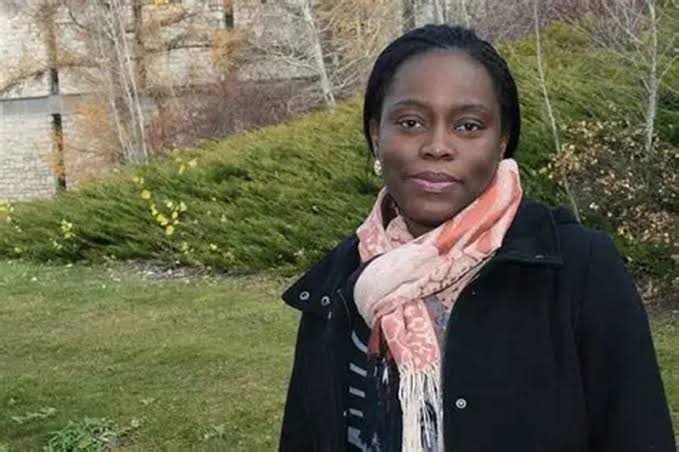
Nigerian-born law professor, Dr. Ibironke Odumosu-Ayanu, has been appointed dean of the College of Law at the University of Saskatchewan, Canada, for a five-year term beginning October 1, 2026.

Odumosu-Ayanu, who is currently the college’s associate dean of research and graduate studies, has been a member of the University of Saskatchewan College of Law since 2008.

The university announced her appointment on Tuesday, September 1, through a statement on its website by Patti McDougall, interim provost and vice-president, academic and chair of the search committee for the new dean.

“Dr. Odumosu-Ayanu’s appointment as dean reflects a distinguished record of academic excellence, collaborative leadership, and dedication to advancing research and graduate education,” McDougall stated.

“Her work as dean will continue to build on the College of Law’s strong reputation for excellence in legal education and research, while strengthening its leadership in Indigenous legal scholarship and engagement with local and global communities.”

Odumosu-Ayanu will succeed Martin Phillipson, who completed two five-year terms as dean and began administrative leave on July 1.

From Lagos to Canada

According to an article on the college website, Odumosu-Ayanu grew up in Lagos, Nigeria, where she developed an early interest in reading and writing.

Although she initially considered pursuing communications, encouragement from her teachers and support from her parents led her towards law.

By the end of secondary school, she had decided to study law and enrolled at the University of Lagos, where she earned her Bachelor of Laws degree.

She later moved to Canada to pursue a master’s degree at the University of Calgary, drawn by its research strengths in natural resources, energy and environmental law.

See also  Zamfara varsity gets new VC

“Since I started law school, I always knew that I wanted to do a master’s and to do one abroad. But I always thought I would go to England.”

She had initially planned to return to Nigeria after completing her master’s degree and work as a lawyer. Instead, she continued her academic journey by pursuing a PhD at the University of British Columbia.

She said she had not initially intended to pursue a doctorate.


After completing her PhD, Odumosu-Ayanu began considering a career in academia and interviewed for academic positions.

She moved to Saskatchewan in 2008 to join the College of Law. A mentor at the University of British Columbia who grew up in Saskatoon had advised her to prepare for the Canadian winter.

Source: punchng.com

FOLLOW US ON:

FACEBOOK

TWITTER

PINTEREST

TIKTOK

YOUTUBE

LINKEDIN

INSTAGRAM

Continue Reading

Education

UN approves new learning institute, Nigeria backs merger of UNITAR, UNSSC

Published

on

The UN General Assembly has approved the merger of two United Nations learning and training bodies, creating a new institution designed to strengthen support for both member states and the UN system itself.

In a resolution adopted on Thursday, the 193-member Assembly, including Nigeria, endorsed the integration of the UN System Staff College (UNSSC) into the UN Institute for Training and Research (UNITAR).

They also approved the establishment of the UN Institute for Capability and Learning Innovation (UNICLI) from January 2027.

The decision is part of the wider UN80 Initiative, which aims to make the United Nations more coherent, effective and responsive to today’s challenges.

The new institute will combine UNITAR’s work helping governments, diplomats and public institutions build skills and capacity with UNSSC’s expertise in training, leadership development and knowledge-sharing for UN personnel.

“Member States and the United Nations system are facing increasingly complex and interconnected challenges.

“The UN must continue to evolve, building stronger capabilities, fostering innovation, and enhancing institutional effectiveness to turn global commitments into tangible results,” said Michelle Gyles-McDonough, UN Assistant Secretary-General and Executive Director of UNITAR.

The merger will create a single platform for learning and capability development, making it easier for member states, UN entities and partners to access expertise and support while reducing duplication and fragmentation.

Overall, the measure better equips the UN system to adapt to a rapidly changing world.

“By integrating UNSSC’s and UNITAR’s expertise in providing training for the UN system and Member States respectively, the new entity will be better positioned to provide a stronger, more coherent capability development function,” Miguel Panadero, Acting Director of UNSSC, said.

Addressing correspondents at UN Headquarters later in the day, spokesman Stéphane Dujarric said the Secretary-General welcomed the Assembly’s decision.

See also  FULL LIST: Covenant University beats UI, UNILAG, UNN, OAU, others to emerge best in Nigeria

“The Secretary-General welcomes the decision, which recognises that capability development, continuous learning and innovation are not ancillary functions, but strategic drivers of the UN’s effectiveness, reform and impact for Member States,” Dujarric said.

“The UN chief invites Member States, UN entities, partners and all stakeholders to join in shaping the new entity’s future and strengthening its contribution to a more sustainable, inclusive and resilient world,” he added.

The transition will take place in phases through the end of 2026 to ensure continuity of programmes, partnerships and services. Until then, UNITAR and UNSSC will continue operating under their existing arrangements.

The new institute will be headquartered in Geneva, while Turin will continue serving as a UN learning campus and centre for leadership development. Existing offices and operations in Bonn, Hiroshima, Madrid and New York will also continue.

The merger represents one of the latest concrete actions taken by member states under the UN80 Initiative, reflecting efforts to build a more agile and future-focused United Nations equipped to meet evolving global needs.

NAN

Source: punchng.com

FOLLOW US ON:

FACEBOOK

TWITTER

PINTEREST

TIKTOK

YOUTUBE

LINKEDIN

INSTAGRAM

Continue Reading

Education

NECO question papers were sold for N3,000 before exams — Minister

Published

on

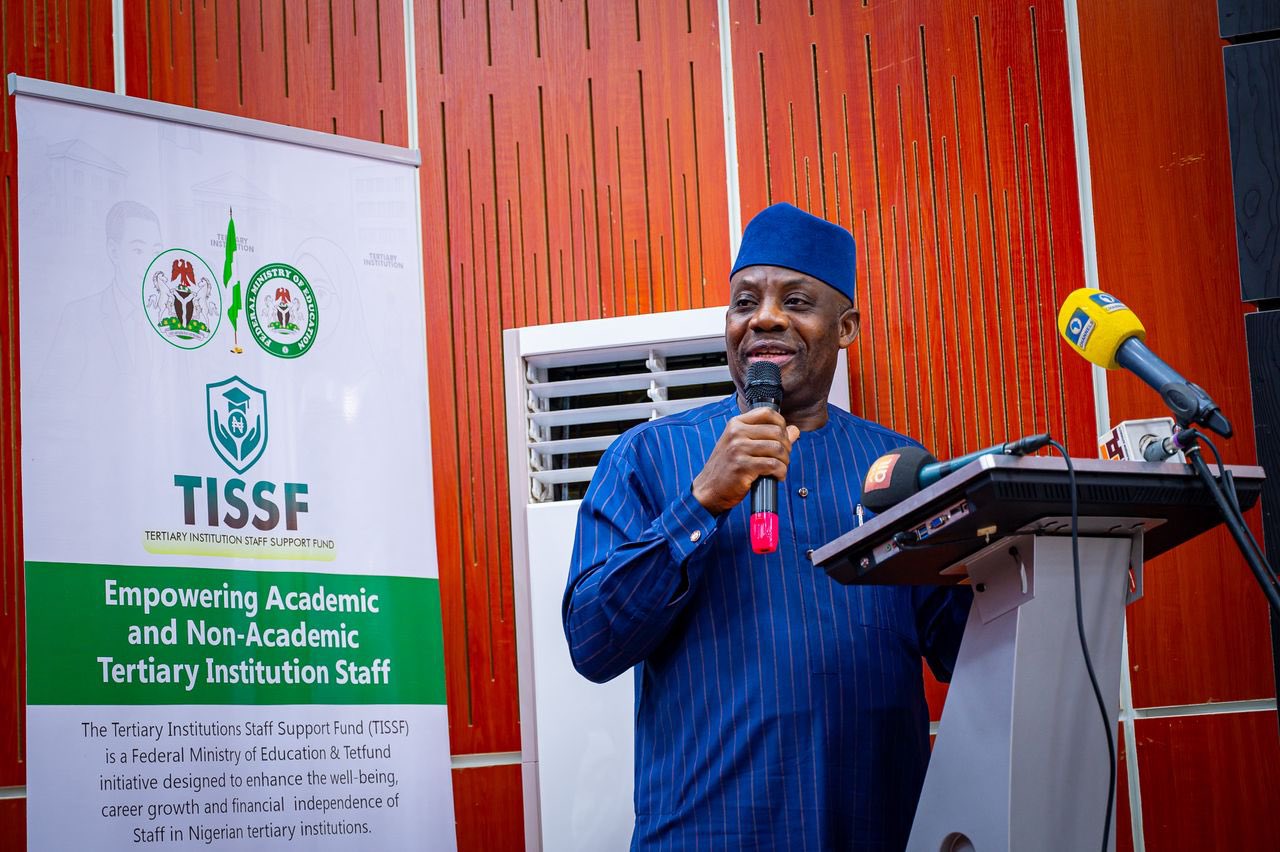
The Minister of Education, Dr Tunji Alausa, has revealed how examination questions were allegedly obtained for N3,000 before the conduct of the National Examinations Council examinations, describing the level of examination malpractice in the country as “mind-boggling.”

Alausa made the revelation on Thursday at a meeting with the National Association of Proprietors of Private Schools and other stakeholders in the education sector, where he warned parents, teachers, proprietors, principals, invigilators and students against practices capable of undermining the integrity of public examinations.

The minister said examination malpractice had, for years, been tolerated in Nigeria, creating an unfair system in which students who prepared genuinely for examinations were disadvantaged by those who gained access to leaked questions.

According to him, the situation was particularly dangerous because it could push honest students into malpractice as they sought to compete with candidates who had access to examination materials before the tests.

Alausa said, “It’s sad. Before she (Minister of State for Education) and I came, the acceptance of examination malpractice, cheating and examination leakages in this country was mind-boggling, and the country accepted it. It was a nightmare,” adding that the “danger was that the good students would also become bad.”

The minister, while recounting his experience in the fight against examination malpractice, alleged that examination questions had previously been made available for sale before candidates sat for the examinations.

He said, “The Registrar of NECO at the time had a name. His name was (Ibrahim) Wushishi. You would go to Wushishi… I didn’t know that Wushishi meant going to the dark website.

See also  Zamfara varsity gets new VC

“They bought his question for N3,000. That was it. Before the examination. They called him Wushishi and bought the questions for N3,000 before the examination.”

Alausa also recalled his experience during the 2025 examination period, saying he was regularly sent examination questions allegedly obtained before candidates sat for the papers.

He said the development forced officials to verify the questions with examination authorities, sometimes confirming that the questions being circulated were actually the ones scheduled for the day.

He said, “During that examination period, during the hardest time of my life, I was always worried, waking up. I would wake up to her text. She would send questions to me… She would say, ‘I just got this question.’

“It could be English or Chemistry. I was always waking up with trepidation every morning, doing work. I would send it to the HNO and ask, ‘HNO, is this correct?’ And the answer I got was, ‘Unfortunately, that’s the question we’re doing today.’

“So, that was a more aggressive intervention because we were seeing the question and confirming from the other side.”

The minister said the revelations demonstrated that examination malpractice was not simply a student problem, insisting that the wider education ecosystem must take responsibility for curbing the practice.

He noted that parents, schools, teachers, invigilators and principals all had roles to play in preventing candidates from gaining unfair access to examination materials.

Alausa said, “You might be in that isolated school, but the school system is also involved. In fact, I don’t blame the students that much. Any child can be bad.

See also  Jigawa federal varsity expels 20, suspends 15 over exam malpractice

“But when we have an ecosystem where parents, schools, teachers, invigilators and principals are in full connivance, the students are the smallest players. The people who should put the deterrents in place are the ones involved.”

He warned that the Federal Government would strengthen measures to protect the integrity of public examinations and ensure that academic qualifications reflected genuine learning and merit.

The minister said the reforms were part of President Bola Tinubu’s broader efforts to restore standards and reposition Nigeria’s education system.

He said, “This is a country with the rule of law. President Bola Ahmed Tinubu is transforming this country in a way that’s never been transformed before. This is Nigeria’s renaissance that we’re building to be sustainable into the future.”

He added that the country had for too long tolerated practices that undermined its education system, but said the Tinubu administration was determined to reverse the trend.

The Minister of State for Education, Prof Suwaiba Ahmad, also called on private school proprietors and other stakeholders to support the reforms, noting that stronger examination controls could initially expose weaknesses in students’ actual preparation.

Ahmad explained that some students who appeared to perform exceptionally well in internal examinations might have become accustomed to accessing leaked questions ahead of external examinations.

She said the introduction of serialised examination questions would make it more difficult for candidates to rely on leaked materials, while encouraging genuine preparation.

The minister urged schools to complete their curricula on schedule and promote consistent study among students, assuring private education stakeholders that the Federal Ministry of Education would continue to engage them during the implementation of the reforms.

See also  JAMB releases 2026 UTME original result slips for printing

The latest warning comes amid longstanding concerns over examination malpractice in Nigeria, including question-paper leakages, impersonation, collusion and unauthorised assistance to candidates.

The Federal Government’s renewed emphasis on examination integrity is aimed at ensuring that results from public examinations provide a credible assessment of students’ knowledge and abilities, while protecting candidates who prepare and compete fairly.

Source: punchng.com

FOLLOW US ON:

FACEBOOK

TWITTER

PINTEREST

TIKTOK

YOUTUBE

LINKEDIN

INSTAGRAM

Continue Reading

Trending