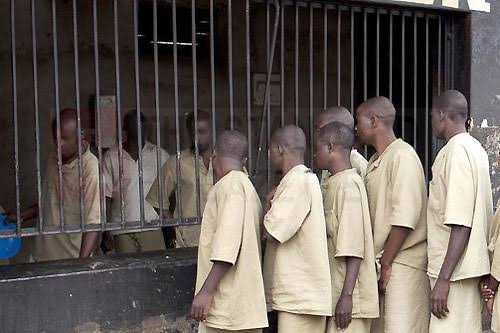
Nigeria’s correctional centres remain severely overcrowded, with tens of thousands of inmates awaiting trial despite repeated government efforts to decongest custodial facilities. While officials point to recent reforms and inmate releases as evidence of progress, fresh statistics and first-hand accounts suggest that prolonged pretrial detention, stringent bail conditions and systemic delays continue to keep many Nigerians behind bars without conviction, NATHANIEL SHAIBU reports
Over the past two years, the Nigerian Correctional Service has repeatedly raised concerns about overcrowding in the country’s custodial centres and the broader challenges confronting the criminal justice system.
In February 2026, while presenting the Service’s 2025 budget performance and 2026 estimates before the House of Representatives Committee on Reformatory Institutions, the Comptroller-General of Prisons, Sylvester Nwakuche, disclosed that inmates awaiting trial accounted for about 64 per cent of the country’s custodial population, which exceeded 80,000.
According to Nwakuche, as of February 9, 2026, Nigeria’s custodial centres housed 80,812 inmates, comprising 51,955 awaiting-trial inmates, 24,913 convicted inmates and 3,850 others under different detention categories. The number of awaiting-trial inmates represented an increase of 1,252 from the 50,703 recorded in December 2025.
Months later, on July 17, 2026, the Minister of Interior, Olubunmi Tunji-Ojo, disclosed at the Regional Conference on the Classification of Prisoners and the Use of Technology in Prisons in Africa that 93 per cent of inmates in Nigeria’s custodial centres were being held for offences under state laws. He added that many of them should never have been incarcerated.
According to the minister, an audit conducted after he assumed office in 2023 revealed that about 4,000 inmates were imprisoned over fines and compensation orders of less than N500,000.
“Ninety-three per cent of our inmates in Nigeria are state offenders. Only seven per cent are federal offenders. Before this administration came on board, many of those in custody were there for minor offences that did not require incarceration,” Tunji-Ojo said.
He added that after the government discovered it was spending more than 10 times the N500,000 benchmark on feeding some inmates alone, it decongested correctional centres by five per cent in a single day. Based on the custodial population cited by correctional authorities, such a reduction would translate into several thousand inmates leaving custody, although the minister did not specify how many of those released were awaiting trial.
Yet, whether viewed through official statistics or the experiences of individual inmates, one reality remains clear: thousands of Nigerians continue to spend months, and in many cases years, behind bars without conviction. The situation has intensified scrutiny of a criminal justice system that critics say is weighed down by delayed trials, stringent bail conditions, poor investigations and overburdened courts.
However, the 2023 presidential candidate of the African Action Congress, Omoyele Sowore, disputes the minister’s assessment, arguing that a significant proportion of inmates remain trapped in prolonged pretrial detention.
Drawing on his experience at the Kuje Correctional Centre, where he spent about nine days in custody in June following a court order, Sowore claimed that roughly 73 per cent of the facility’s inmates were awaiting trial.
“There are 817 awaiting-trial inmates in Kuje out of a total prison population of 1,115, with 47 of them diagnosed with tuberculosis,” he wrote in a post on X on Saturday.
Beyond the figures, Sowore recounted the cases of two inmates — Haruna Garba Gololo and David Nwokorie — whom he described as victims of the slow pace of Nigeria’s criminal justice system.
“When I was in Kuje Prison, I met Haruna Garba Gololo, who was sent there by Senate President Godswill Akpabio. He had been granted bail for nearly three weeks but was still unable to meet the bail conditions.
“I also met David Nwokorie, who was arrested and detained by the Nigeria Police Force following a messy breakup with Genevieve Opara, the daughter of retired Deputy Inspector-General of Police Hilary Opara.
“Last week, when Justice Rita Ajumogobia of the Federal High Court granted David bail after he had spent close to four months in prison, he was required to present a Level 16 officer and a colonel in the Nigerian Army as sureties. These are almost impossible bail conditions,” the Sahara Reporters publisher said.
Sowore further alleged that the Minister of Interior, despite raising concerns about the number of wrongly detained inmates, had also initiated the prosecution of a government critic, Emorioloye Owolemi, over alleged cyberstalking. He claimed Owolemi was arraigned before the Federal High Court in Akure, Ondo State, and spent months in custody.
Taken together, the official statistics and inmates’ experiences paint contrasting but complementary pictures of Nigeria’s correctional system. While figures released by the Nigerian Correctional Service and the Interior Ministry highlight the scale of prison congestion, Sowore’s account underscores the human consequences of prolonged detention, difficult bail conditions and delayed justice.
The contrasting narratives also raise fundamental questions: Why do thousands of Nigerians remain in custody without conviction? To what extent are stringent bail conditions, delayed trials and weak coordination across the criminal justice system driving prison congestion? And are recent government interventions sufficient to reverse the trend?
A senior lawyer, Sampson Erugo, said the causes of prison congestion could not be traced to a single institution, arguing that the failings of Nigeria’s criminal justice system begin long before cases reach the courts.
“It is a collapse of the system in its entirety, starting from the police. And perhaps we should even start from individuals who report civil matters to the police. Once a matter is reported, the police often find a way to criminalise it, even when it is civil in nature. Our system is such that the police can do no wrong,” he said.
Erugo also criticised the legislature for enacting laws that, in his view, have broadened the scope for criminal prosecution and placed additional pressure on law enforcement agencies and the courts.
“I will give you kidnapping as an example. It is a very serious crime. But what legislators in many states have done is to make it easier for allegations of kidnapping to be weaponised. If you want to punish your enemy, you simply make a kidnapping allegation.
“Another example is cybercrime. The law criminalises cyberbullying and cyberstalking, but there is abuse of the system. For every small issue, a report is made and the police move in. The more these cases are brought before the courts, the greater the burden on the judicial system,” he said.
According to Erugo, the prioritisation of certain categories of cases also contributes to delays in the prosecution of less serious offences, further slowing the administration of justice.
He called for a comprehensive overhaul of the criminal justice system, including the establishment of an independent committee to drive reforms.
“There is a need for a general overhaul of the criminal justice system, beginning with citizens who make frivolous complaints simply to punish others. Then there is the police, which criminalises virtually everything.
“I think we should start by ensuring that the police conduct proper investigations before making arrests.
“Bail conditions are becoming increasingly difficult to meet, and that is not healthy. One of the first principles of law we learnt is that bail is not intended to punish a suspect. Bail is meant to secure a defendant’s attendance in court. The entire criminal justice process is fundamentally flawed, and the only way to fix it is to establish a committee to investigate these issues, one that politicians cannot influence,” he added.
Similarly, Senior Advocate of Nigeria Rotimi Jacobs said the large number of inmates prosecuted under state laws was unsurprising, noting that most criminal offences fall within the jurisdiction of state governments.
“If you look at the Constitution, many offences are matters for the states. So even offences such as stealing and murder are largely prosecuted under state laws. Therefore, I am not surprised that states account for a substantial number of prosecutions.
“Most of these cases do not go before the Federal High Court, which explains why the number is so large,” Jacobs said.
Jacobs noted that although many offenders are prosecuted under state laws, they are often held in federal correctional facilities. He argued that addressing prison congestion would require broader constitutional and institutional reforms, including allowing states to establish and operate their own correctional facilities.
“We need major reforms. There is no reason prisons should remain entirely on the Exclusive Legislative List. We need a system that allows states to establish and maintain their own prisons,” he said.
Another Senior Advocate of Nigeria, Mike Ahamba, attributed the prolonged detention of many defendants to entrenched attitudes within the justice system, arguing that some courts remand suspects unnecessarily to avoid any perception of bias.
“The general notion that an accused person is probably guilty is part of the reason some courts adopt this attitude,” he said. “The Constitution does not permit such detention unless there is reason to believe that the accused person will not return for trial.”
Ahamba also observed that some defendants are arraigned without their family members being informed, leaving them unable to satisfy bail conditions and increasing the likelihood of their remand.
He further criticised the Legal Aid Council, saying it had not done enough to protect indigent defendants, and argued that all institutions within the criminal justice system must do more to uphold the rights of accused persons.
“We live in breach of our responsibilities in this country. The Legal Aid Council was established to ensure that these things do not happen. It is supposed to identify such cases and take the necessary steps to secure the release of those who ought not to remain in custody.
“There are several actors within our justice system who are more interested in ensuring that someone is punished than in ensuring that justice is done. This is what happens in many cases.
“I think there should be a seminar on these issues so that stakeholders can identify the problems and develop solutions. It can be stopped. We need all stakeholders to come together and determine both the causes of the problem and the solutions,” he added.
punch.ng
FOLLOW US ON: