Connect with us

News

Storm over fake PFIPC agency probe as Reps prepare final report

Published

on

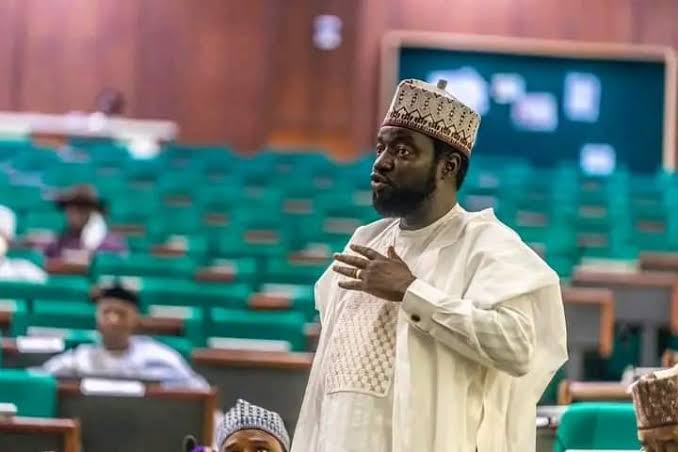
The Chairman of the House of Representatives ad hoc committee investigating the controversial Presidential Foreign Investment Promotion Council (PFIPC), Yusuf Gagdi, has again come under fire as the panel prepares to conclude its assignment.

Barring any sudden twist, the committee will conclude its assignment in the next couple of weeks ahead of the presentation of its report to the House in plenary.

On Monday, a member of the House faulted the decision to appoint Gagdi the chairman of the probe panel.

According to him, it was the Plateau lawmaker (Gagdi) who brought a motion on the floor of the House, praying the Green Chamber to investigate the alleged agency.

He said, “Where have you seen this before that the member who brought an issue for investigation will be made the chair of the committee set up to probe the issues raised in that motion? I am not saying it is in our Rules Book, but it is definitely not a convention. This is where I think the Speaker missed it.

“In every investigation, there is a complainant and a respondent. If the Chief of Staff to the President, Femi Gbajabiamila, wrote to the police in October 2025 concerning the man now in detention, why not invite him to come and adopt those letters?”

The lawmaker, who pleaded anonymity because he did not want to preempt the outcome of the probe, also faulted claims by the panel that signatures of Gbajabiamila in documents tendered before the committee were different from the appointment letter issued to Adeyemi, noting some highly placed persons use more than one signature.

“Again, the chairman declared last week that the signature contained in the letter appointing the ‘fake’ DG is different from those in other letters written by Femi. Is this the first time some important personalities will have two or more different signatures?” he asked.

He also accused the panel of carrying out what he called a one-sided investigation, saying, “They keep saying the Independent Corrupt Practices and Other Related Offences Commission is handling the criminal aspect of the probe.

Does that stop the committee from inviting Femi for questioning?”

He added that Gagdi, in one of the committee’s sittings last week, moderated the session in a one-man show style, even shutting out a panel member who attempted to ask what seemed an important question.

Last Thursday, the Plateau lawmaker invited the House press corps for continuation of proceedings only to fail to show up, without a formal communication to the leadership of the corps.

All these have left many wondering what the outcome of the investigation would be.

Speaking exclusively with The PUNCH, a chieftain of the All Progressives Congress and former Secretary General of the Arewa Consultative Forum, Anthony Sani, said Nigerians expected a comprehensive probe featuring everyone mentioned in the scandal.

He said, “The public expects the probe to be thorough and dispel any misconceptions. The death of the alleged intermediary, Dolapo Tanimola, should be of concern to the probe panel.

See also  Starmer slams Man United’s co-owner Ratcliffe over immigration comments

“I suggest that all circumstances which can lead to the truth should not be left unturned.”

According to him, “The circumstances which led to the death of the intermediary Tanimola should be looked into by the probe panel.”

In a separate interview with our correspondent, the Executive Director, Civil Society Legislative Advocacy Centre, Ibrahim Rafsanjani, said the PFIPC scandal raised fundamental questions about the integrity of Nigeria’s public institutions, budgeting system, security architecture and presidential bureaucracy.

He said, “CISLAC is not sufficiently impressed with the depth, independence and comprehensiveness of the investigation conducted so far by the House ad hoc committee.

“A legislative investigation of this magnitude must go beyond establishing whether an appointment letter was forged or whether the disputed agency had a lawful basis.

“It must determine how the entity penetrated multiple layers of government, who facilitated its operations, who failed in their responsibilities, whether public funds were released or expended, and whether politically exposed persons or senior public officials played any direct or indirect role.

“We are concerned that the committee failed to rigorously question police investigators regarding the circumstances surrounding the death of Mr Dolapo Tanimola and that represents a major gap.

“Mr Tanimola has been publicly identified in allegations as an intermediary who allegedly received N400m purportedly for onward delivery to the Chief of Staff to the President, Mr Femi Gbajabiamila.

“The seriousness of this issue required the committee to demand a detailed account from the police regarding the circumstances, location, date and cause of his death; the status of any autopsy, coroner’s inquiry or forensic examination; persons who last contacted or met him; and whether his death affected the collection or preservation of evidence.”

The CISLAC boss further noted that a credible investigation “cannot simply avoid a controversial death connected to a central allegation,” stressing that “failure to interrogate this aspect creates suspicion, weakens public confidence and leaves a potentially important evidentiary trail unexplored.”

He further noted that “The report that the committee was under pressure to invite Mr Gbajabiamila demonstrates the public expectation that no individual should be considered too highly placed to answer relevant questions.

“An invitation would not amount to a declaration of guilt; it would provide an opportunity to clarify the record and demonstrate that legislative investigation applies to all.”

On the huge amount that allegedly exchanged hands, Rafsanjani said the committee should have demanded evidence concerning the alleged source, movement and intended recipient of the N400m.

“This should include bank statements, withdrawal records, payment instructions, communications, telephone records and evidence from financial intelligence agencies.

“Without following the money, the investigation risks becoming an examination of forged paperwork rather than a comprehensive inquiry into possible fraud, bribery, influence-peddling or abuse of office,” he added.

Citing Gagdi’s remark that the committee was about to close its assignment last week, Rafsanjani said CISLAC remained opposed to the declaration.

“The argument that the disputed appointment letter issued to Adeyemi was fake may address one part of the matter, but it does not answer how the purported council acquired institutional recognition and access within government.

“Forgery may explain the initial entry point, but it cannot by itself explain failures across several government institutions. The committee must avoid presenting the forgery finding as a complete explanation of the scandal,” he added.

See also  El-Rufai Is Not Above The Law, Must Be Probed, Southern Kaduna Groups Tell EFCC, ICPC

CISLAC called on the House committee not to close the investigation merely to meet an administrative deadline. Where critical questions remain unanswered, the House should extend the committee’s mandate and compel the attendance of all relevant witnesses.

In its recommendation, the civil society organisation urged the panel to “invite every principal actor, regardless of political position, to give evidence under oath.”

It also urged the committee to direct the police to “provide a comprehensive report on the death of Mr Tanimola, including medical, forensic and investigative records, while respecting the rights and dignity of his family.”

It further urged the committee to “trace the alleged N400m through financial records and independently verify all claims concerning its source, custody and intended destination.”

Lastly, the organisation urged the panel to “conduct a forensic audit of every account linked to the disputed council and determine whether public funds were released or expended.”

In his contribution, a public affairs analyst, Mr Jackson Ojo, noted, “If the allegations are true, the transaction itself would constitute a critical piece of evidence.

“It would serve as an exhibit and a material fact in establishing what transpired. Unfortunately, that evidence appears to have been overlooked, and no serious effort was made to fully examine it.”

He also expressed worry over what he called the absence of the principal figure at the centre of the allegations during the investigation.

“How do you conduct a thorough probe when there are allegations and counter-allegations, yet the individual who made or is directly connected to the allegations is not present to provide testimony?” he asked.

In his words, “A credible investigation requires hearing from all relevant parties. The person making the allegations should have been invited to present evidence and clarify claims.

“Likewise, those accused or implicated should have been allowed to respond and provide their own account of events.

“For any probe to be fair, transparent and comprehensive, investigators must hear directly from the individuals involved and examine all available documentary evidence.

“Without this, questions will inevitably remain about the thoroughness and credibility of the process,” he added.

For three weeks, the 12-man panel grilled top government functionaries including the Head of the Civil Service of the Federation, Mrs Didi Walson-Jack; the Head of Banking Services at the Central Bank of Nigeria, Hamisu Abdullahi; the Director General of the Budget Office of the Federation, Tanimu Yakubu; the Director, Federal Project Finance Department, Joshua Luka and top police officers representing the Inspector General of Police, Olatunji Disu.

Throughout its sittings, the Gagdi-led panel failed to bring before it for questioning the Chief of Staff to the President, Femi Gbajabiamila, accused by the self-acclaimed Director General of the PFIPC, Adeyemi Adeniyi, of collecting N400m through a deceased proxy, Dolapo Tanimola.

See also  Walker, Texas Ranger star and martial arts icon Chuck Norris dies at 86

Recall that Tanimola allegedly lost his life in a fire incident at Kachi Hotel, Utako, Abuja, where the N400m allegedly exchanged hands.

According to multiple reports, the said hotel was said to have been pulled down by armed individuals, leaving no room for the police to retrieve Closed Circuit Television for examination.

On Sunday, Adeyemi, through his legal counsel, Festus Akhigbe, dared the committee to activate the necessary legal instrument to bring him for questioning, even as he alleged he was being scapegoated by the investigating team.

“We formally request that the panel issue the necessary administrative clearance to allow our client, Prince Adeniyi Adeyemi Matthew, to appear in person and testify.

“Any investigative outcome or final legislative report produced without affording our client a direct hearing would be fundamentally flawed, incomplete, and a breach of the constitutional right to a fair hearing (audi alteram partem),” the statement read.

When contacted, the EFCC’s spokesman, Dele Oyewale, could not be reached as all calls to his line were not answered.

He has also yet to respond to the message sent to him on the matter.

However, a senior EFCC official, who spoke on condition of anonymity because he was not authorised to comment publicly, said all forfeited properties remained government assets and could only be transferred to government agencies on the directive of the Presidency.

The source explained that whenever forfeited assets were allocated to a government institution, the arrangement followed due process and any payment arising from such transactions was made directly into the CBN.

“All properties are forfeited to the government. Any property that the EFCC is giving to a government agency is usually on the instruction of the Presidency.

“When some properties are given, if it is an outright purchase, payment is made into the CBN account. If it is on a lease, the rent is also paid into the CBN account. There is nothing hidden there,” the official said.

The clarification followed allegations by lawyers representing Adeyemi, who, in a statement issued on Sunday, claimed that the EFCC had allocated a property to the council, requested N300m as processing consideration and presented a plaque of recognition to its leadership.

The legal team cited the allegations while defending Adeyemi against claims that PFIPC is a non-existent government agency.

The EFCC source, however, insisted that the commission did not privately dispose of forfeited assets or demand unofficial payments in the course of transferring such properties to government agencies.

The controversy is the latest development in the ongoing dispute surrounding PFIPC, whose operations have come under scrutiny amid investigations into its legal status and activities.

punch.ng

FOLLOW US ON:

FACEBOOK

TWITTER

PINTEREST

TIKTOK

YOUTUBE

LINKEDIN

Continue Reading
Click to comment

Leave a Reply

Your email address will not be published. Required fields are marked *

News

Governors spend N512bn on travels, offices

Published

on

Thirty-three state governments spent at least N512.10bn on Government Houses, Governors’ Offices and travel and transport in the first six months of 2026, an amount about 4,713 times higher than the combined six-month salary of Nigeria’s 36 governors, an analysis of state budget implementation reports has shown on Monday.

The analysis showed that while a governor’s stated monthly salary of N503,000 translates to N3.018m over six months, the combined six-month salary of all 36 governors would amount to just N108.65m.

Against this, the available records showed that N420.01bn was identified under Government House, Governor’s Office and related executive administration expenditure, while another N92.09bn was spent under travel and transport budget heads.

The combined amount stood at N512.10bn. The six-month salary of all 36 governors, therefore, represented only 0.02 per cent of the identified expenditure on executive offices and travel.

The figures offers a striking contrast to the ongoing debate over the official salaries of Nigerian governors.

Delta State Governor, Sheriff Oborevwori, recently said his monthly salary was N503,000, arguing that some senior civil servants, including permanent secretaries earned N900,000 monthly, more than state governors.

But an analysis of the cost of maintaining the offices occupied by governors shows that their salaries represent only a fraction of the wider public expenditure and perks associated with the offices.

While the personal salary of a governor may appear modest compared with the salaries of some senior public servants, the analysis shows that the wider cost of maintaining the executive office runs into hundreds of billions of naira.

The figure is not the personal income of governors. Government House and Governor’s Office budget heads cover a broad range of official expenses, including administrative operations, staff, protocol, maintenance, official residences, utilities, security-related activities, state functions and other expenditure required to run the executive arm of government.

Similarly, travel and transport spending covers official local and foreign trips, transportation and related expenses across the wider state public service.

However, the figures provide an indication of the enormous public cost attached to maintaining the structures surrounding the offices of state governors and the larger fiscal question on the  total public cost of maintaining the office and the administrative structures around it.

The analysis is based on available Budget Implementation Reports for the first and second quarters of 2026, using the largest identifiable Government House, Governor’s Office or executive administration expenditure line in each state, alongside the general travel and transport expenditure head.

See also  Walker, Texas Ranger star and martial arts icon Chuck Norris dies at 86

Abia, Adamawa, Bauchi, Bayelsa, Borno, Cross River, Ebonyi, Ekiti, Enugu, Gombe, Imo, Jigawa, Kaduna, Kano, Katsina, Kogi, Kwara, Lagos, Nasarawa, Niger, Ogun, Ondo, Oyo, Plateau, Sokoto, Taraba, Yobe and Zamfara had the complete data. Comparable data were unavailable for Edo, Osun and Rivers.

For comparison, available records for the first half of 2025 showed N465.07bn spent under Government House, Governor’s Office and similar executive administration heads, while N92.73bn was recorded for travel and transport. The combined figure stood at N557.80bn.

This means that, based on the states and budget heads for which comparable data were available, the first-half 2026 expenditure was about N45.70bn lower, representing a 8.19 per cent decline, compared with the corresponding period of 2025.

Government House and Governor’s Office expenditure accounted for the larger share of the spending.

The amount fell from N465.07bn in the first half of 2025 to N420.01bn in the corresponding period of 2026, representing a reduction of N45.05bn or 9.69 per cent.

Travel and transport spending, however, was largely unchanged. Available records showed that states spent N92.09bn on travel and transport in the first six months of 2026, compared with N92.73bn in the same period of 2025.

This represented a marginal decline of about N643.66m, or 0.69 per cent.

The figures suggest that while spending under Government House and executive administration heads moderated in the available records, the cost of official travel remained broadly stable.

Commenting on the development, a development economist, Aliyu Ilias, said the enormous cost associated with maintaining executive offices showed why it was misleading to focus only on a governor’s basic salary without taking into account the wider expenses and privileges attached to the office.

He argued that executive offices in Nigeria had become excessively expensive to maintain, partly because political office holders had significant influence over how the institutions under their control were structured and funded.

“Ordinarily, anything that has to do with executive office in Nigeria appears to be much more expensive because they actually direct how it works there. And with the docile state assemblies we have, who always concur, it is clear that our democracy is very expensive because of the way we maintain their offices, and that is why it is very juicy.

See also  Demolition notice: Ogun communities cry out, call for Gov Abiodun’s intervention

“Some even want to go as far as borrowing money to win an election and, when they enter office, they believe they are going to repay the money. So, it is not correct to say that a Permanent Secretary is earning better than a governor when you isolate the governor’s salary without adding the other travel perks and expenses attached to the office.

“The governor just wanted to be sensational. But with the addition you have done, it shows that they are taking the bigger cheque from the spending arising from the high income that the state is generating,” Ilias said.

A state-by-state analysis of the 2026 Government House or Governor’s Office expenditure, Kogi recorded the highest amount at N65.34bn, followed by Ogun with N45.26bn and Lagos with N45.04bn.

Kano recorded N25.87bn, while Ekiti spent N25.22bn and Cross River recorded N23.92bn.

Bayelsa recorded N22.99bn, Imo N19.43bn and Enugu N16.20bn.

At the lower end of the available records, Oyo recorded about N1.95bn, Sokoto N2.20bn, Kwara N2.59bn and Abia N2.78bn.

Kogi’s figure alone represented more than 15 per cent of the identifiable Government House and Governor’s Office expenditure captured in the 2026 dataset.

On travel and transport, Plateau recorded the highest identifiable expenditure at N10.11bn in the first six months of 2026.

Lagos followed with N8.23bn, while Taraba recorded N5.16bn.

Niger spent N4.45bn, Ekiti N4.41bn, while Bauchi recorded N3.75bn and Yobe N3.68bn.

Oyo recorded one of the lowest identifiable amounts at N667.52m, while Kano recorded N626.95m.

The figures also showed wide variations in expenditure patterns between 2025 and 2026.

For example, Kogi’s Government House and Governor’s Office expenditure increased from N51.99bn in the first half of 2025 to N65.34bn in the corresponding period of 2026. This represented an increase of about N13.34bn, or 25.66 per cent.

Bayelsa’s identifiable spending rose from N14.48bn to N22.99bn, an increase of N8.51bn, or 58.75 per cent.

Cross River’s expenditure increased from N9.91bn to N23.92bn, representing a rise of about N14.01bn, or 141.37 per cent.

Ekiti, which had no comparable 2025 figure in the dataset provided for this analysis, recorded N25.22bn in the first six months of 2026.

See also  El-Rufai Is Not Above The Law, Must Be Probed, Southern Kaduna Groups Tell EFCC, ICPC

Other states, however, recorded significant reductions.

Ogun’s identifiable Government House and Governor’s Office expenditure declined from N49.83bn in the first half of 2025 to N45.26bn in 2026, a reduction of N4.57bn, or 9.17 per cent.

Kano’s expenditure fell from N28.84bn to N25.87bn, representing a decline of about N2.98bn, or 10.32 per cent.

Niger recorded a smaller decline from N13.13bn to N14.15bn, although the available figures show an increase of about N1.02bn, or 7.74 per cent, underscoring the differences in spending patterns across the states.

Lagos recorded one of the most significant increases in the available data, with identifiable spending rising from N25.86bn in 2025 to N45.04bn in 2026, an increase of about N19.18bn, or 74.16 per cent.

The Revenue Mobilisation Allocation and Fiscal Commission is constitutionally responsible for determining the remuneration of governors and other political office holders. The existing remuneration framework remains in force while a broader review is being processed by the relevant authorities.

In recent weeks, RMAFC said its review of remuneration for executive and legislative office holders had reached an advanced stage, with proposed legislation expected to be considered by the National Assembly.

The spending also comes at a time when state governments have received significantly higher allocations from the Federation Account following the Federal Government’s economic reforms.

An analysis of Ministry of Finance data previously showed that N47.25tn was shared through the Federation Account between 2023 and 2025 alone, accounting for more than half of the N93.13tn distributed over the nine years from 2017 to 2025.

The sharp increase in revenues has intensified public scrutiny over whether the additional resources flowing to states are being translated into better infrastructure and public services.

The records reveal a huge gap between the official salaries of governors and the actual cost of maintaining the executive structures around their offices.

While the basic pay of a governor may appear modest, it represents only a fraction of the public funds required to run Government Houses, Governors’ Offices and official travel. The broader question, therefore, is not simply how much governors earn as salaries, but how much it costs taxpayers to maintain the offices they occupy.

Source: punchng.com

FOLLOW US ON:

FACEBOOK

TWITTER

PINTEREST

TIKTOK

YOUTUBE

LINKEDIN

INSTAGRAM

Continue Reading

News

PHOTOS: Despite Court Warrant, Sunday Igboho Allegedly Stops Police From Arresting Tani Olohun In Ibadan

Published

on

A disturbing incident in Ibadan has raised serious questions about the conduct of the Nigerian Police and the circumstances surrounding the alleged attempted arrest of a traditionalist,Tani Olorun, reportedly over his longstanding religious disagreements with some Islamic clerics in Kwara State.

According to accounts circulating about the incident, a Toyota Hiace bus allegedly arrived at the traditionalist’s residence in Ibadan with four men believed to be police officers. Two were reportedly dressed in police uniform while the other two were in mufti.

What immediately raised suspicion was that the vehicle allegedly had no visible number plate, while the men reportedly failed to produce police identification when requested by the resident’s wife and neighbours. As the situation attracted a crowd, concerns grew that what was being presented as an arrest could instead be an unauthorised attempt to forcibly remove the man from his residence.

The situation reportedly took an even more dramatic turn when Chief Sunday Igboho arrived at the scene and intervened, insisting that the men follow proper police procedures.

The intervention reportedly stopped the attempted removal and the men were ordered to return to their ilorin base.

But the bigger question remains:

Why would security personnel travel all the way from Kwara to Ibadan to remove a traditionalist from his home under circumstances that allegedly failed to meet basic standards of police identification and due process?

The controversy is particularly sensitive because Tani Olorun has reportedly had longstanding disputes with some Islamic clerics over religious issues. He was previously arrested in Kwara following allegations that he defamed an Islamic cleric and reportedly spent a prolonged period in detention before his release.

See also  North-East logs nearly 2,000 explosions in seven years – Report

His subsequent outspoken criticism of religious teachings and defence of traditional African religion have reportedly continued to generate controversy.

This is where Chief Sunday Igboho’s confrontation with the Kwara State Commissioner of Police becomes significant.

Igboho was reportedly heard questioning why the Kwara Police Command[b] appeared to have the resources and urgency to pursue a controversial religious-related arrest in Ibadan, while communities in Kwara continue to complain about kidnapping, banditry and insecurity, including attacks allegedly affecting ordinary citizens and traditional rulers.[/b]

His message was essentially this:

If the police can travel from Kwara to Ibadan to arrest a traditionalist over a religious dispute, why has the same urgency not been demonstrated in confronting the kidnappers and bandits terrorising Kwara communities?

That question deserves a serious answer.

The Nigerian Police Force must not allow legitimate law enforcement to be confused with intimidation, religious persecution or extra-judicial abduction. If an individual is wanted for an offence, the police should identify themselves properly, present the appropriate documentation and follow established legal procedures.

No Nigerian citizen should be secretly taken away from his home under questionable circumstances.

And if this was indeed a legitimate arrest, then the authorities should explain clearly what offence was alleged, what warrant or lawful authority was relied upon, why officers travelled from Kwara to Ibadan, and why the operation reportedly generated such serious concerns about its legitimacy.

Chief Sunday Igboho’s intervention has therefore brought an important issue to the public space:

Law enforcement must protect Nigerians from kidnappers—not create circumstances in which Nigerians begin to fear that the police themselves may come to take them away.

See also  Demolition notice: Ogun communities cry out, call for Gov Abiodun’s intervention

The allegations surrounding this incident should be thoroughly investigated, and the public deserves transparency.

Security must never become a tool for religious vendetta. Justice must never be selective. And an arrest must never look like a kidnapping.

FOLLOW US ON:

FACEBOOK

TWITTER

PINTEREST

TIKTOK

YOUTUBE

LINKEDIN

INSTAGRAM

Continue Reading

News

US plans mass visa revocation for asylum seekers — Report

Published

on

The United States government is planning to revoke the business and tourism visas of as many as 200,000 foreigners who have sought or are seeking asylum in the country, in what could become the largest mass visa revocation in US history.

The planned action targets holders of B1 and B2 visas issued between 2016 and 2026 who entered the US as short-term visitors but subsequently applied for asylum, according to documents obtained by the Associated Press and two US officials, as reported by the agency on Monday.

The State Department is expected to begin announcing the revocations in the coming weeks in coordination with the Department of Homeland Security.

State Department spokesman Tommy Pigott confirmed the planned action but said the number of affected people could change.

“We are coordinating with DHS to identify and revoke the nonimmigrant visas of foreigners who have come to the United States claiming to be short-term visitors, but then file for asylum to stay here permanently,” Pigott said.

He added that “the number of revocations remains dynamic” and that the action would be carried out “on a rolling basis.”

The revocations would not automatically lead to immediate deportation, according to the officials. People with pending asylum applications would instead lose their B1 or B2 status while their cases are considered.

Deputy Secretary of State Christopher Landau defended the proposed policy, arguing that visitor visas should not be used as a route into the US asylum system.

“Asylum isn’t supposed to be a loophole to circumvent immigration law,” Landau said in a post on X.

See also  North-East logs nearly 2,000 explosions in seven years – Report

B1 visas are generally issued for business travel, while B2 visas cover tourism, family visits and medical treatment. Applicants are required to demonstrate that they intend to return to their home countries.

What it could mean for Nigerians

The proposed revocation could affect Nigerians among other foreign nationals, although the US government has not disclosed how many Nigerians may be involved in the 200,000 figure.

Nigerians have historically accounted for a significant share of African asylum applications in the US. According to UNHCR figures previously reported by The PUNCH, 2,827 Nigerians applied for asylum in the US in 2024.

Between 2022 and 2024, US immigration courts granted asylum to 1,372 Nigerians, while 1,534 applications were denied.

For Nigerians currently holding B1 or B2 visas who have applied for asylum, the development could mean losing their visitor status and facing closer scrutiny of their immigration cases. It also signals a tougher environment for Nigerians seeking to use short-term US visas as a pathway to remain in the country.

Source: punchng.com

FOLLOW US ON:

FACEBOOK

TWITTER

PINTEREST

TIKTOK

YOUTUBE

LINKEDIN

INSTAGRAM

Continue Reading

Trending