Connect with us

News

INEC reveals over 103m Nigerians eligible to vote in 2027

Published

on

The Independent National Electoral Commission on Monday said Nigeria’s national voters register had risen to over 103 million following the completion of the three-phase Continuous Voter Registration exercise and final biometric cleanup.

INEC Chairman, Prof. Joash Amupitan, disclosed this in his keynote address at a one-day strategic workshop for editors, organised by the Nigerian Guild of Editors in collaboration with the commission in Abuja.

The development said over 103 million Nigerians are eligible to participate in the 2027 general elections.

Amupitan said the three phases of the CVR exercise produced 10,772,421 new registrations, subject to verification by the Automated Biometric Identification System.

“Following the conclusion of our three-phase Continuous Voter Registration (CVR) exercise, which captured over 10.6 million new applicants, and the completion of the public display of the preliminary register for claims and objections, our Voter Register Department has completed the final Automated Biometric Identification System (ABIS) cleanup.

Nigeria’s National Register of Voters is now over 103 million,” he declared.

INEC first projected the 100 million voter register mark in August, when the INEC National Commissioner for Information and Voter Education Committee, Mohammed Haruna, said the voter register, then standing at over 93 million, was expected to surpass 100 million after the completion of the CVR exercise.

In September, the INEC chairman said the national register was “approaching the 100 million mark,” following 10,772,421 new registrations during the CVR exercise, subject to ABIS verification.

The INEC chairman further announced that the nationwide collection of Permanent Voters’ Cards would commence on Friday, October 9, 2026.

He said the commission had completed the processing and distribution of Phase 1 PVCs to all local government centres ahead of the commencement of collection.

He urged the media to inform citizens about collection locations and encourage registered voters to collect their cards promptly.

The INEC chairman also disclosed that the commission had acquired 57,000 new Bimodal Voter Accreditation System devices ahead of the 2027 general elections.

According to him, the BVAS devices have undergone software hardening, battery optimisation and biometric calibration to prevent accreditation bypass and eliminate manual manipulation.

He said the technological upgrades formed part of the commission’s efforts to strengthen the integrity of the electoral process ahead of the January 16, 2027 Presidential and National Assembly elections and the February 6, 2027 governorship and state Houses of Assembly polls.

See also  PHOTOS: "We're not asking for too much. Give us light" Nigerians in Lagos protest over lack of power supply

“We have instituted hardware, software, and cybersecurity enhancements across our technological architecture. We have acquired 57,000 new BVAS for optimal performance.

“The devices have undergone extensive software hardening, battery optimisation, and biometric calibration to prevent accreditation bypass and eliminate manual manipulation,” the INEC chairman stated.

The commission also said it had taken a firm stance against vote-buying ahead of the elections, noting that it had entered a “strengthened coalition” with the Ministry of Justice and anti-graft agencies to prevent such practices.

“The integrity of the ballot box is fatally compromised when a citizen’s vote is treated as a commodity for sale. The commission is taking an uncompromising stance against vote-buying in all its forms ahead of the 2027 general election.

“Working through a strengthened coalition with the Federal Ministry of Justice, Economic and Financial Crimes Commission, the Independent Corrupt Practices and Other Related Offences Commission, and the Nigerian Financial Intelligence Unit, joint financial monitoring teams will be deployed to track illegal campaign spending and conduct undercover surveillance at polling units nationwide,” the chairman stated.

Amupitan also warned political actors against attempts to trade cash for votes, adding that any party or candidate found in such acts will “face immediate arrest and prosecution under the Electoral Act 2026.”

He added, “Elections must be decided by the conviction of the voter, not the depth of a candidate’s pocket.”

Speaking on the 2027 poll, Prof Amupitan said the commission was targeting the commencement of voting simultaneously across all polling units nationwide.

He said the commission was drawing lessons from recent off-cycle elections and would improve its logistics, personnel and technology ahead of the 2027 polls.

He said INEC was working to ensure that logistics were properly addressed and its technology worked optimally to enable Nigerians to vote without unnecessary delays.

“So some of those lessons from those elections, right from our technology optimisation, must improve. Our logistics must improve.

“I want to see a general election where voting starts in all the polling units in Nigeria at the same time. That is what we are targeting, where logistics is well-addressed, and where our technology works optimally,” he said.

The chairman said the commission had already commenced early procurement and distribution of non-sensitive election materials to state offices, while new operational pickup vehicles had been procured for state offices and local government areas to improve movement of personnel and materials.

See also  Reps intensify fake PFIPC agency probe, give MDAs 48-hour ultimatum

He added that INEC had commenced nationwide zonal readiness assessments, with physical audits and staff engagements already completed in the South-West and North-West zones.

The commission, he said, was using the assessments to identify local vulnerabilities, test contingency systems and address potential bottlenecks ahead of election day.

Amupitan said INEC had also acquired 57,000 new Bimodal Voter Accreditation System devices, with the machines undergoing software hardening, battery optimisation and biometric calibration.

The chairman said the technological upgrades were designed to strengthen accreditation and prevent manipulation, while the enhanced electronic EC8A system would ensure that polling unit result sheets were digitised, cryptographically authenticated and uploaded directly to the INEC Result Viewing Portal.

The INEC chairman also said the commission had identified effective and transparent management of election results as a critical lesson from the challenges that followed the 2023 general elections.

He said the commission had resolved that its processes must ensure that election results were managed “effectively, optimally, and transparently,” with declarations made as soon as the electoral work was completed.

“Because the only way that can save us in this country from all the problems we’ve had since 2023 is if we manage our results effectively, optimally, and transparently, and then ensure that the results are declared as soon as the work of collation is completed,” Amupitan said.

He said the approach was intended to improve transparency and enable citizens to follow the process rather than leave room for suspicion and misinformation.

The chairman also disclosed that INEC had introduced technology aimed at making voter registration and access to voter cards easier.

He said the commission introduced an online registration portal during the third phase of the Continuous Voter Registration exercise to remove barriers associated with distance and time.

He further announced the introduction of printable Permanent Voter Cards in line with Section 18(1) of the Electoral Act 2026, saying the technology was intended to eliminate unnecessary delays in obtaining voter cards.

“Apart from that, we also introduced another technology, which is the printable PVC technology in line with Section 18(1) of the Electoral Act, to ensure that waiting becomes a relic of the past,” he said.

The chairman said the technology had already been tested during the Osun governorship election and used to enable voters whose PVCs had been stolen before the election to exercise their voting rights.

See also  Rivers and Lagos top states where minors consume sachet alcohol

Amupitan said the commission was now 101 days away from the presidential and National Assembly elections scheduled for January 16, 2027, with the governorship and state Houses of Assembly elections fixed for February 6.

He said INEC had executed eight of the 14 major statutory activities contained in its revised timetable and was advancing towards the completion of the ninth milestone.

He called on editors, whom he described as the “bridge in an era of information chaos,” to work with the commission to build a public space of verified information, civic responsibility, and institutional trust.

“When newsrooms prioritise factual accuracy over sensational headlines, when reports contextualise field logistics rather than default to inflammatory speculation, and when information is verified before publication, you perform a sacred public service. You act as the primary filter protecting our democracy against information disorder.

“As the nation prepares for the 2027 General Elections, let us work together to build a public space powered by verified facts, civic responsibility, and unassailable institutional trust,” he concluded.

In his address, the President of the Nigerian Guild of Editors, Eze Anaba, described media credibility as an essential part of a free and fair electoral process.

“The credibility of the media is itself an essential component of the credibility of the electoral process. The Nigerian Guild of Editors is committed to working with INEC, and other stakeholders, to promote elections that Nigerians can trust, and a media that the citizens can rely upon for credible information,” Anaba said.

He noted the challenge of courts deciding elections, urging stakeholders to work towards elections decided by electorates’ votes.

“There’s a need for us to fight for our electoral process to be fair, transparent, and to avoid courts being the last port of call. People are talking about courts speaking for citizens as a last arbiter for voters.

“But hopefully, with this next round of elections, citizens’ votes will speak. We cannot grow as a democracy without a very strong electoral body.

“The Guild believes strongly that a credible election is a shared responsibility. INEC has its constitutional mandate. Political parties and analysts have their responsibilities. The media has its own obligation, and ultimately, citizens must be adequately informed

Source: punchng.com

FOLLOW US ON:

FACEBOOK

TWITTER

PINTEREST

TIKTOK

YOUTUBE

LINKEDIN

INSTAGRAM

Continue Reading
Click to comment

Leave a Reply

Your email address will not be published. Required fields are marked *

News

Ukraine sets age requirements for foreigners seeking citizenship

Published

on

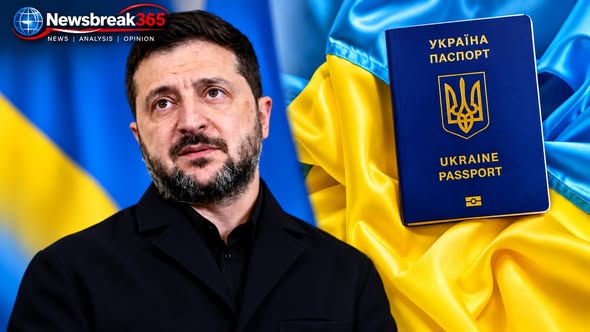
Ukraine has outlined age-based requirements for foreigners and stateless persons seeking citizenship, specifying who can apply and when minors must consent in person.

The State Migration Service of Ukraine published the guidelines in accordance with the Law of Ukraine on Ukrainian Citizenship and Presidential Decree No. 215 of March 27, 2001.

Under the requirements, as obtained by PUNCH Online on Wednesday from the state’s migration service of Ukraine’s website, foreigners and stateless persons aged 18 and above must personally submit their applications for Ukrainian citizenship.

For children below 18, applications must generally be submitted by their parents or legal representatives. However, minors aged between 14 and 17 must personally consent to acquiring Ukrainian citizenship.

This means parents or legal guardians cannot independently secure citizenship for teenagers within that age bracket without their consent.

The guidelines divide applicants into three categories based on age.

Children below 14 must have applications submitted on their behalf by a parent or legal representative, while those aged 14 to 17 must provide personal consent even though an adult handles the application.

Applicants aged 18 and above are required to submit their naturalisation applications independently.

The Ukrainian authorities have also outlined requirements for applicants who already hold citizenship of another country.

“Foreign nationals seeking Ukrainian citizenship under the procedure described by the migration authority must pledge to terminate their existing citizenship within two years of being registered as Ukrainian citizens.

“Applicants who make the required pledge are issued temporary Ukrainian identity cards valid for two years rather than full passports during the transitional period,” the migration service added.

See also  Pentagon restores name of US Pacific Command

A Ukrainian passport is issued after the individual has formally terminated their previous citizenship or submitted a written declaration renouncing it, in accordance with the applicable procedure.

However, stateless persons are exempt from the requirement to pledge to terminate another country’s citizenship and are not subject to the same two-year transitional arrangement.

The migration authority advised foreigners and stateless persons interested in acquiring Ukrainian citizenship to familiarise themselves with the relevant legal provisions and documentation requirements before commencing the application process.

Further information on citizenship applications and the required procedures is available through the official website of Ukraine’s State Migration Service.

FOLLOW US ON:

FACEBOOK

WHATSAPP CHANNEL

TWITTER

PINTEREST

TIKTOK

YOUTUBE

LINKEDIN

INSTAGRAM

Continue Reading

News

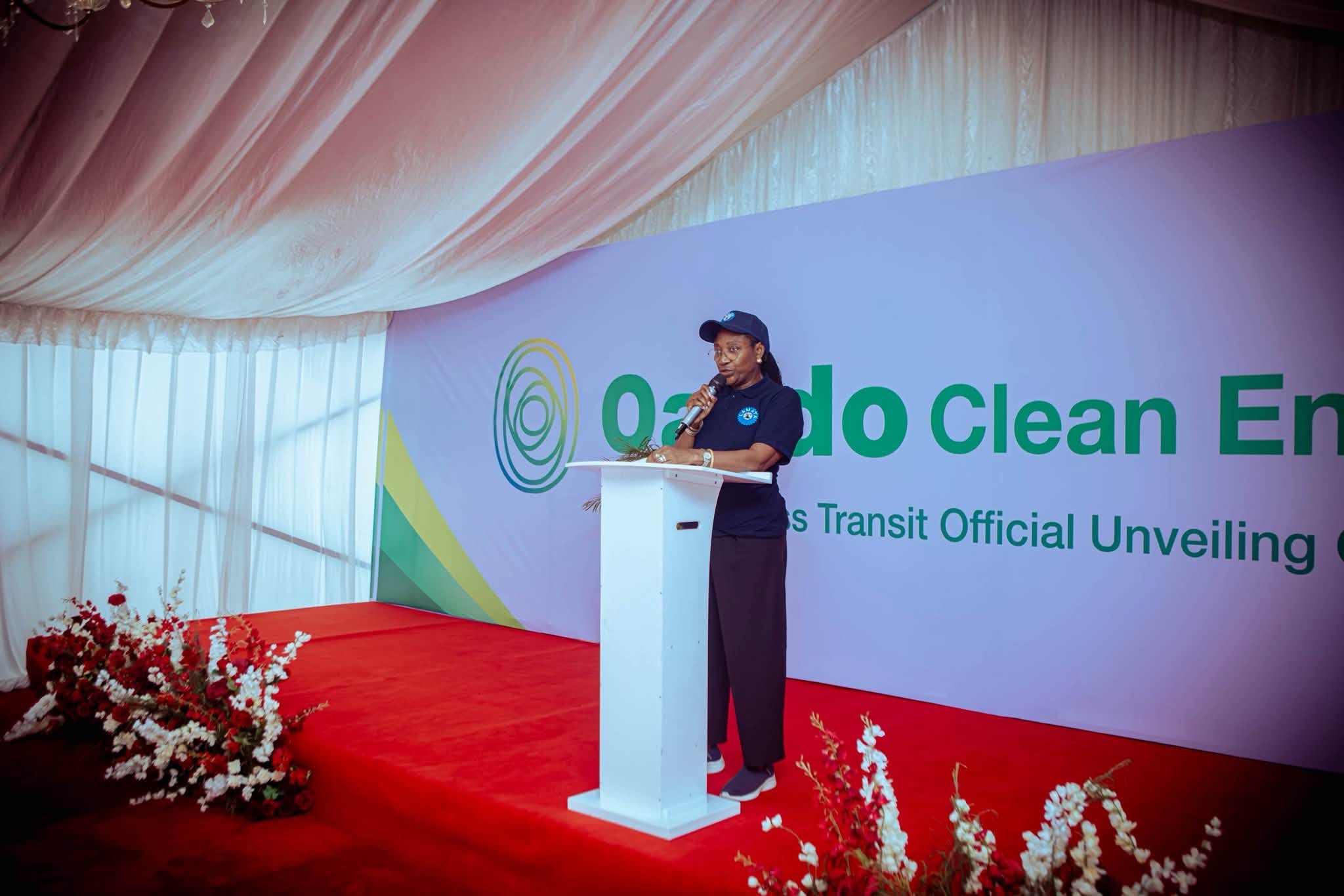
PHOTOS: LAGOS ADVANCES GREEN MOBILITY AS LAMATA, OANDO UNVEIL 11 NEW ELECTRIC BUSES

Published

on

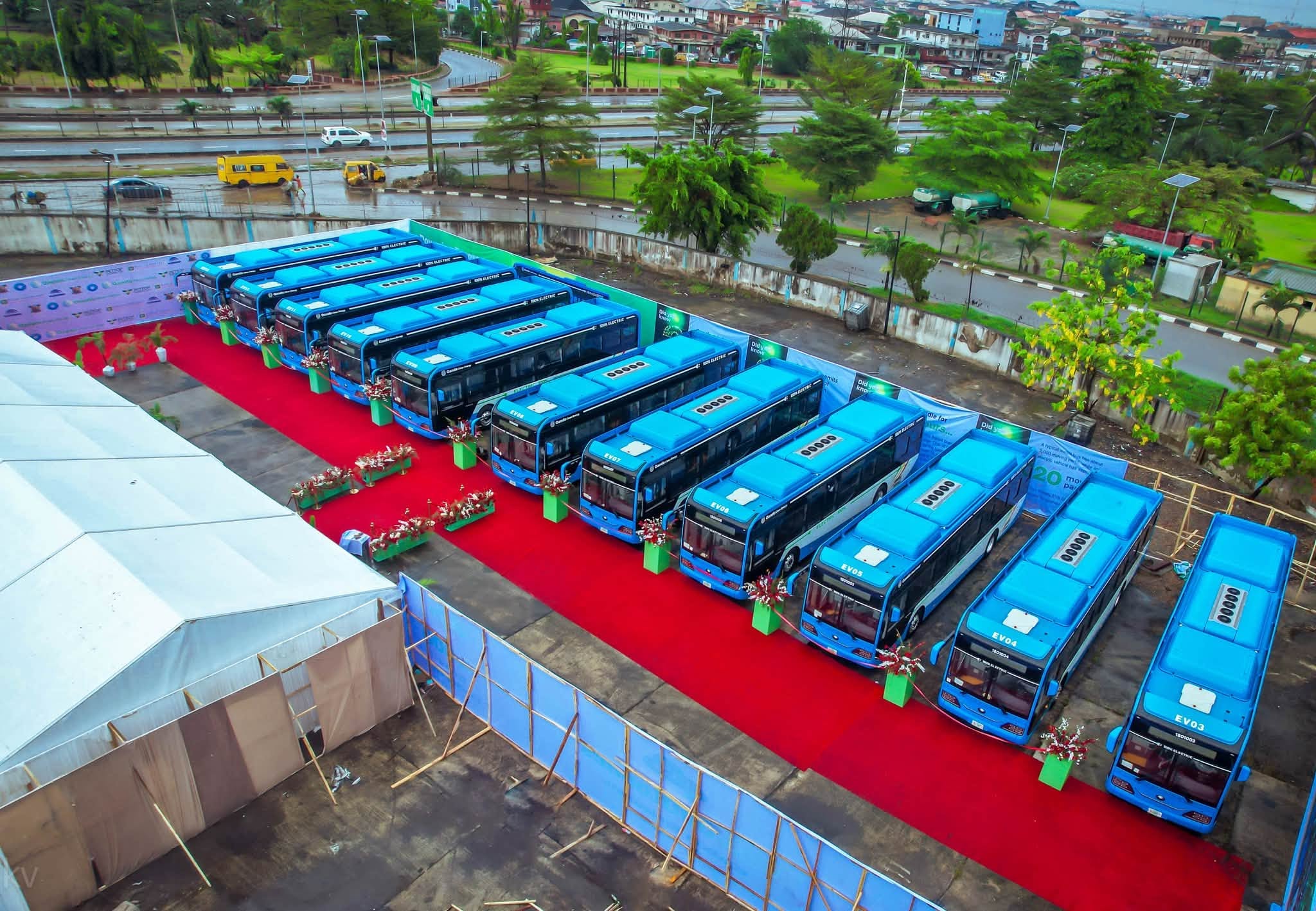
The Lagos State Government has taken another significant step towards transitioning to cleaner and more sustainable public transportation with the addition of 11 new electric buses (EVs) by Oando Clean Energy Limited (OCEL) under the regulation of the Lagos Metropolitan Area Transport Authority (LAMATA).

The presentation of the buses, the first batch of a set of 50-bus commitment under the current phase by Oando, represents a major expansion of the electric bus initiative, which began with two pioneer buses deployed for proof-of-concept operations in 2023.

The initiative is expected to pave the way for the eventual deployment of 552 electric buses across Lagos public transport corridors, reinforcing the state’s ambition to develop an environmentally sustainable and energy-efficient mass transit system.

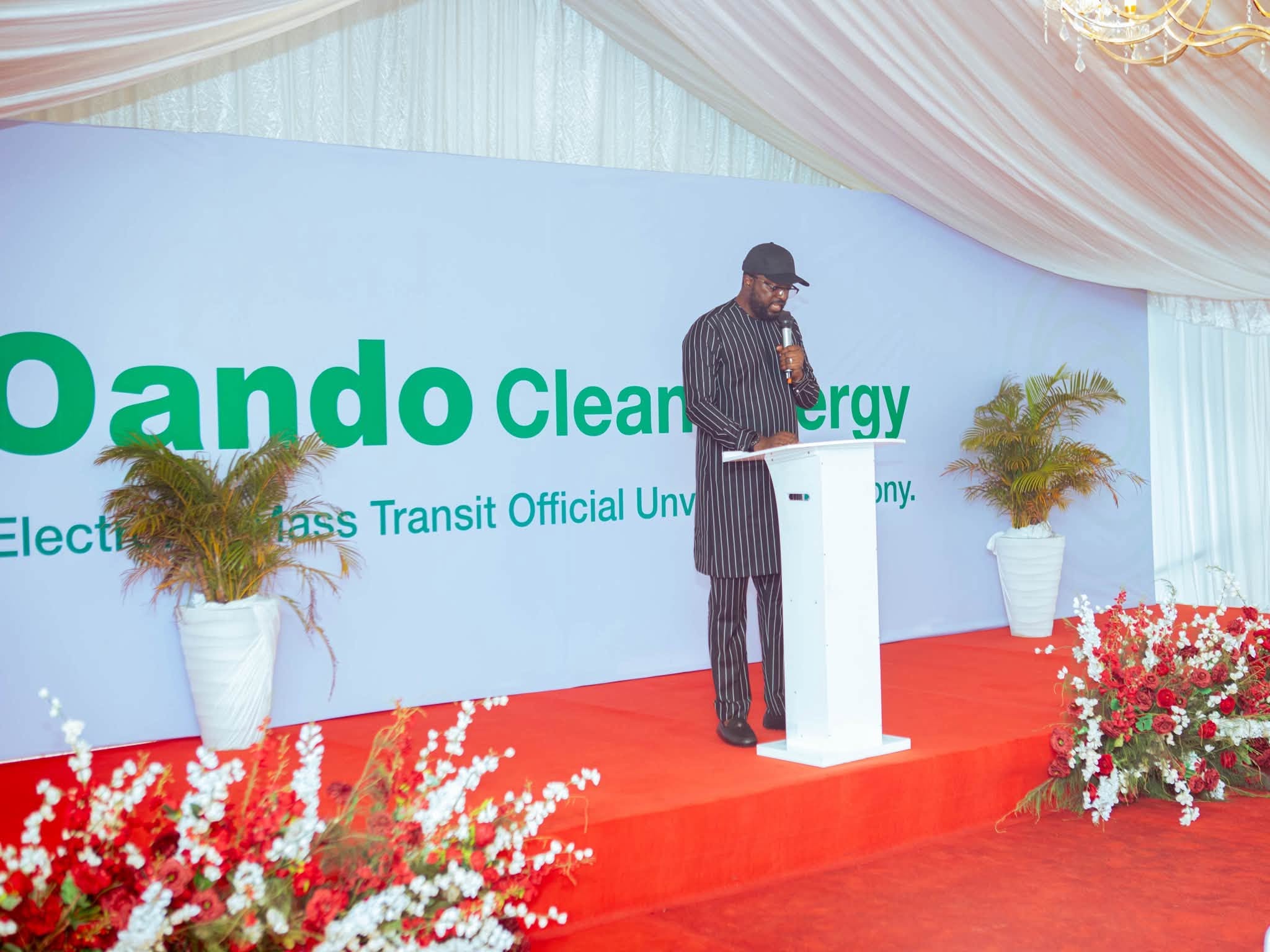
Speaking at the event, the Commissioner for Transportation, Mr. Oluwaseun Osiyemi, said the transition to cleaner energy was essential to meeting the transportation needs of Lagos as its population and economic activities continue to expand.

He noted that the state government recognises that the future of transportation must be anchored on sustainability, energy efficiency, innovation and environmental responsibility.

According to him, Lagos is pursuing a progressive reduction in carbon emissions in line with the State Government’s net-zero ambitions by 2050.

The Managing Director of LAMATA, Engr. Mrs. Abimbola Akinajo, described the presentation as evidence of the progress achieved through sustained collaboration between the state government and its private-sector partners.

She said electric buses offer significant environmental advantages, including reduced greenhouse gas emissions, improved air quality and lower noise pollution, while supporting the development of a more sustainable urban transport system.

See also  PHOTOS: "We're not asking for too much. Give us light" Nigerians in Lagos protest over lack of power supply

Akinajo noted that the partnership with Oando was translating a shared vision for cleaner transportation into practical results, adding that the deployment would strengthen Lagos’ efforts to modernise public transport operations.

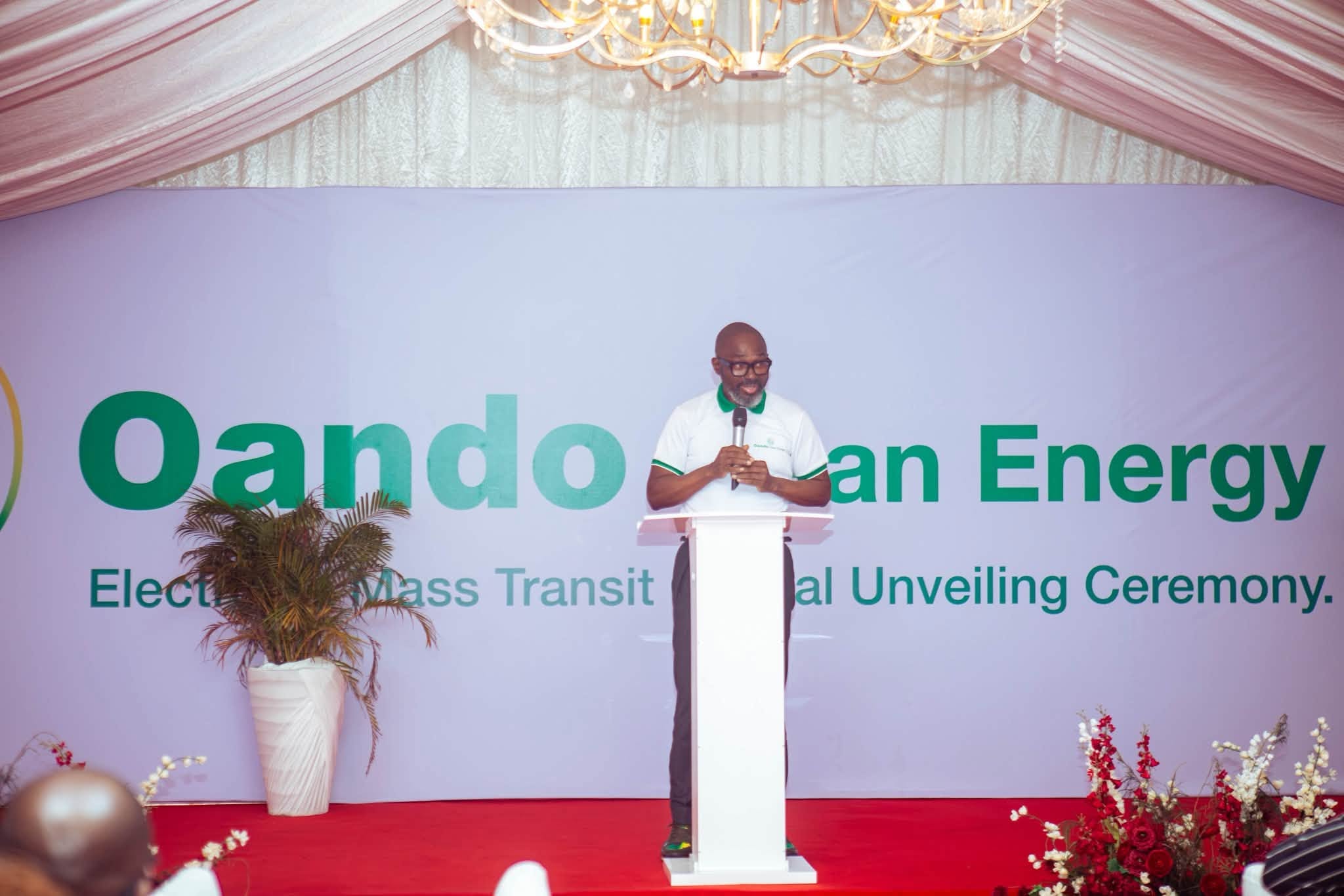
In his remarks, the President and Chief Executive Officer of Oando Clean Energy Limited, Mr. Ademola Ogunbanjo, described the initiative as a defining moment in the evolution of electric mobility in Nigeria and Africa.

He said the project went beyond the introduction of electric buses, representing the foundation of a cleaner, more efficient and sustainable transportation ecosystem that could be replicated across the country and the continent.

Ogunbanjo recalled that the partnership between LAMATA and Oando began with the signing of a Memorandum of Understanding in April 2022, followed by the deployment of two pioneer electric buses in 2023.

He explained that the intervening years had been devoted to testing the technology, evaluating its operational resilience, assessing environmental impact and gauging public acceptance.

According to him, the experience and data gathered over the period provided the necessary foundation for moving from proof-of-concept operations to a larger-scale deployment.

Beyond the supply of electric buses, Ogunbanjo said Oando’s ambition was to establish a comprehensive domestic electric mobility ecosystem comprising charging infrastructure, maintenance facilities, technical manpower development, spare-parts supply chains and, ultimately, local vehicle assembly.

He added that the initiative was being supported by financial and technical partners, including the Bank of Industry, Wema Bank and Yutong, with prospective funding partnerships involving the Africa Finance Corporation (AFC) and the International Finance Corporation (IFC).

The partnership reflects the growing importance of public-private collaboration in mobilising the investment, technology and expertise required to transform urban transportation.

See also  ‘Moles sabotaging military war against banditry’

The deployment of the additional buses is expected to provide further operational experience for the expansion of electric mobility across Lagos, while supporting the state’s broader climate action and sustainable development objectives.

Ogunbanjo expressed confidence in the scalability of the initiative, declaring that the success of electric mobility in Lagos could provide a model for other Nigerian cities.

“If it can work in Lagos, it can work anywhere in Nigeria. The future of mobility is electric, and that future is already taking shape here in Lagos,” he said.

The latest presentation reinforces Lagos State’s determination to position itself at the forefront of Africa’s transition to cleaner urban transportation, with electric mobility emerging as a critical component of its long-term public transport development strategy.

default

FOLLOW US ON:

FACEBOOK

WHATSAPP CHANNEL

TWITTER

PINTEREST

TIKTOK

YOUTUBE

LINKEDIN

INSTAGRAM

Continue Reading

News

Ebola updates: 28 contacts still under surveillance, 34 cleared, says NCDC

Published

on

The Nigeria Centre for Disease Control and Prevention has said 28 people linked to the country’s imported Ebola case are still being monitored, while 34 others have completed the mandatory 21-day follow-up.

The Director-General of the NCDC, Dr. Jide Idris, disclosed this in the agency’s national health security update released on Tuesday.

He said Nigeria had continued to strengthen its response to the outbreak through coordinated efforts involving the Federal Ministry of Health and Social Welfare, the Federal Capital Territory Administration, state authorities and development partners.

According to Idris, the response measures include contact tracing, investigation of reported alerts, laboratory testing, infection prevention and control, safe clinical care and surveillance at points of entry.

“As of 9 November 2026, Nigeria had confirmed only one imported case of Bundibugyo virus disease, with no additional confirmed cases,” he said.

“We continue to investigate reported alerts and maintain heightened surveillance across the country to ensure that suspected cases are promptly identified and investigated.

“A total of 62 contacts have been identified. Of these, 34 have completed their individual 21-day follow-up, while the remaining 28 are still under monitoring.”

The NCDC chief clarified that being identified as a contact did not automatically mean that an individual had contracted the virus.

He explained that the 21-day monitoring period was designed to enable health officials to detect possible symptoms early and initiate appropriate medical interventions.

Idris also cautioned against confusing the monitoring period for individual contacts with the total number of days since the index case was confirmed.

See also  Pentagon restores name of US Pacific Command

Earlier in November, the NCDC projected that surveillance of all 62 contacts traced to the imported Ebola case would be concluded by November 13.

The agency had said, “Contacts are expected to complete follow-up by November. Expected completion dates range from 31 Oct to 13 Nov 2026.”

The Federal Government announced the confirmation of an Ebola case in the FCT in October.

The Coordinating Minister of Health and Social Welfare, Ali Pate, said 44 close contacts had initially been identified for tracing as part of efforts to prevent further transmission.


Pate disclosed that the index patient, a woman who recently arrived in Nigeria aboard an international flight from Uganda, was admitted to a private hospital in the FCT, where she received treatment for several days before the disease was confirmed.

The patient was subsequently evacuated to Switzerland for further medical care.

On October 31, the NCDC also announced the identification of two suspected Ebola cases in the North-East, prompting further surveillance and investigation.

Source: punchng.com

FOLLOW US ON:
FACEBOOK

WHATSAPP CHANNEL

TWITTER

PINTEREST

TIKTOK

YOUTUBE

LINKEDIN

INSTAGRAM

Continue Reading

Trending