Connect with us

News

EFCC reveals why Osun govt accounts were frozen

Published

on

The Economic and Financial Crimes Commission has explained why it froze the bank accounts of the Osun State Government, saying the action was taken to prevent the alleged diversion of public funds despite the state’s August 15 governorship election.

The anti-graft agency disclosed this in a statement posted on its official X account on Wednesday, saying it had been investigating the Osun State Government since March 2026 over the alleged fraudulent handling of about N11bn in Ecology Funds, Intervention Funds and allocations from the Federation Account Allocation Committee.

According to the commission, some officials of the state government, including the Accountant General, had already been questioned as part of the ongoing investigation.

The EFCC said the investigation alone would not have warranted freezing the accounts, but claimed it detected suspicious movement of funds from the government’s accounts beginning August 2.

“These ongoing investigations of the state government would not have warranted any placement of Post No Debit order on its account but for the precipitate and unwarranted movement of funds from the accounts to different suspicious accounts since August 2, 2026.

“The Commission noticed huge transfers of funds into different corporate entities and had to swiftly halt the trend by freezing the accounts from which such heavy funds are being moved,” the statement read.

Defending its decision, the commission said it had a legal responsibility to protect public funds and could not ignore suspicious financial transactions because of the forthcoming governorship poll.

“The Commission’s preventive mandate is a public-inclined framework of safeguarding public funds, assets and resources.

See also  Tinubu recalls NTA DG, ED news, reverses fresh appointments

“The Commission cannot watch idly while a state government’s account is being pillaged. While the Commission is fully aware of the impending governorship election in Osun State, it has a responsibility to act in defence of the sanctity of the funds of the state.

“It will be uncharitable for the Commission to allow an excuse of an upcoming election to fold its arms to perform its legally-assigned functions,” it stated.

The EFCC further disclosed that Osun was not the only state under investigation, saying it was monitoring the finances of several state governments.

“It is equally needful to state that the Commission is keeping watch over the finances of other states like Osun State. Many of these states are on the investigative radar of the Commission to ensure accountability and probity.

“The Commission has always pointed out that it is non-partisan and non-sectarian but always working in the overall interests of Nigerians. The Osun State government account was frozen to save public funds from being looted,” the statement added.

The commission urged Nigerians to ignore what it described as false narratives surrounding the action.

“The public is enjoined to ignore false narratives and deliberate demonization of the works of the EFCC. The interests of all Nigerians are greater and will always be protected by the Commission,” it said.

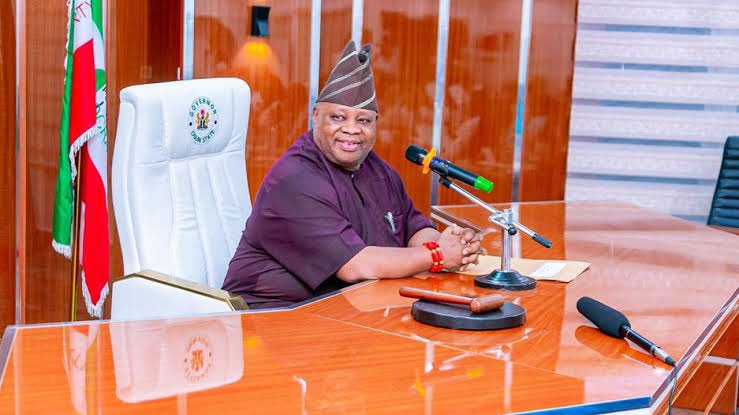
The explanation came hours after Osun State Governor, Ademola Adeleke, challenged EFCC Chairman Ola Olukoyede to publicly justify the freezing of the state’s accounts.

Speaking with journalists at the Government House in Osogbo on Wednesday, Adeleke described the action as illegal, insisting that it was carried out without a court order.

See also  Bus knocks pedestrian dead in Ogun

“All I ask is for the EFCC chairman to explain to the good people of Osun State and to Nigerians in general why he froze Osun State Government Account, and show proof to support whatever reason he presents,” the governor said.

He also directed the state Attorney General and Commissioner for Justice, Oluwole Jimi-Bada (SAN), to challenge the action at the Federal High Court in Osogbo.

Jimi-Bada argued that while the EFCC had the power to investigate government accounts, it lacked the authority to freeze them without first obtaining a court order. He said the state government would seek judicial redress.

punch.ng

FOLLOW US ON:

FACEBOOK

TWITTER

PINTEREST

TIKTOK

YOUTUBE

LINKEDIN

Continue Reading
Click to comment

Leave a Reply

Your email address will not be published. Required fields are marked *

News

UK expands Global Talent visa to over 100 firms

Published

on

The UK government has expanded its Global Talent visa scheme to allow more than 100 research-intensive businesses to recruit leading scientists and engineers from around the world, in a move aimed at supporting innovation, research and economic growth.

Announcing the expansion on Thursday, the government on its website said the scheme would, for the first time, enable exceptional researchers working on funded projects to be supported by eligible commercial research businesses, alongside universities, academic institutions and independent research bodies.

Companies joining the scheme include AstraZeneca, Jaguar Land Rover, Added Value Solutions (AVS), Denroy Plastics and Ffilm Cymru.

The government said the Global Talent visa has already helped more than 12,500 people from over 130 countries build research careers in Britain through the endorsed funder pathway.

It added that the expansion would enable more international researchers to work in sectors including clean energy, life sciences, artificial intelligence, advanced manufacturing and the creative industries.

Secretary of State for Business, Innovation, Science and Trade Jonathan Reynolds said: “The UK is already a magnet for the world’s most brilliant minds – and the discoveries they make here change lives and grow our economy.

“By expanding the Global Talent visa to more than 100 businesses, we’re making it easier than ever for our most innovative companies to recruit eligible researchers who will develop the medicines, technologies and industries of the future right here in the UK, underpinning our industrial strategy, creating skilled jobs and driving growth in the process.”

UK Research and Innovation International, Talent and Skills Champion Professor Christopher Smith said: “By providing a route for exceptional researchers to work in and contribute to the UK, the Global Talent visa is playing an important role in our mission to advance knowledge, improve lives and drive growth.

See also  Cybercrime Act being used to suppress free speech — NBA president

“The expansion of the Global Talent visa to innovative businesses across the country will ensure these benefits are felt across more of the country and in a wide range of sectors, from medicines and AI to the creative and cultural economy.”

Oliver Buckley-Mellor, UK Competitiveness Senior Policy Manager at the Association of the British Pharmaceutical Industry, said: “The UK’s Global Talent visa is one of the most globally competitive routes of its kind, but its potential to boost British science and economic growth was not being fully realised.

“By opening the endorsed funder route to research-intensive businesses, including several ABPI members, the government is helping to address a key gap in our global talent offer.

“We were glad to work with UKRI on this expansion, which is a welcome first step that should be built on enable more exceptional global talent to come to the UK.”

Jonathan Legh-Smith, Executive Director of UKQuantum, said: “Attracting world-class international talent is critical to sustaining the UK’s momentum in quantum. UKQuantum is delighted to have worked with UKRI to expand the Global Talent Visa scheme to the high-growth quantum companies operating in the UK, strengthening the sector’s ability to attract world-class expertise.”

Kate Barclay MBE, Skills Consultant at the BioIndustry Association, said: “Our sector thrives on world-class talent, and the UK’s ability to compete globally depends on attracting and retaining the very best. By supporting our members to take part in this Global Talent visa expansion with UKRI, we are helping innovative life sciences and biotech companies directly access the specialist skills and international experience they need to scale.

See also  ISIS moves operations to West Africa, US warns

“This expansion is a vital, practical opportunity for BIA members to help shape a more agile, responsive immigration system that reflects the realities of a fast-moving, high-growth industry.”

Riverlane CEO and founder Steve Brierley said: “Riverlane is a Cambridge-born company solving one of the hardest problems in computing today: making quantum computers reliable enough to be useful. Building the team to do that means competing for a small pool of world-class talent across borders.

“The Global Talent visa gives us a fast, flexible route to bring the best people to the UK, and that speed matters when the field is moving as quickly as quantum is right now.”

punch.ng

FOLLOW US ON:

FACEBOOK

TWITTER

PINTEREST

TIKTOK

YOUTUBE

LINKEDIN

Continue Reading

News

No ₦11bn was looted in Osun, commissioner replies EFCC

Published

on

The Osun State Government has denied allegations that ₦11 billion was looted from its coffers, describing the Economic and Financial Crimes Commission’s reported claims as “a failed attempt to cover up illegal action through unfounded allegations.”

In a statement issued on Thursday on X by the Commissioner for Information and Public Enlightenment, Kolapo Alimi, the government insisted that there was no financial misconduct and accused the anti-graft agency of acting on the directive of former Governor Gboyega Oyetola to frustrate the payment of palliatives to workers.

“The real reason the commission froze the state account on the order of Gboyega Oyetola was to stop the payment of palliatives which the state government promised the workers some months ago,” the statement said.

The government maintained that despite the account freeze, it had already paid the palliatives to all state workers following negotiations aimed at cushioning the effects of the country’s economic challenges.

“Fortunately, we have paid the palliatives to all Osun State workers,” the statement added, noting that the subsidy “was not the first time such a cost of living subsidy was paid to Osun workers.”

Rejecting allegations of misappropriation, the state government accused the EFCC of pursuing a politically motivated investigation.

“All material facts point to the fact that the commission is pursuing a hatchet job for the Osun APC by illegally freezing the state account and falsely accusing the government of looting ecological and other state funds,” it stated.

The government further declared: “We don’t loot public funds in Osun State; we deliver on public goods and services.”

See also  Bus knocks pedestrian dead in Ogun

According to the statement, available state resources have been spent on infrastructure, workers’ welfare and sectoral development.

“There is no fund to loot in Osun State as the little resources we have are expended on the many mega projects, workers welfare and sectoral developments for the benefit of the masses,” the government said.

It also alleged that the EFCC had been investigating top officials since March 2026 without finding evidence of wrongdoing.

“The EFCC has been conducting a witch-hunting investigation since March, 2026, without any indicting evidence against top officials,” the statement read, adding that officials had been subjected to weekly harassment intended “to distract them from delivering good governance.”

The government argued that if the commission had credible evidence of corruption, it should follow due process instead of freezing government accounts.

“Assuming but not conceding that the EFCC has any evidence of looting as posited, there are established procedures for bringing suspects to book instead of a politically motivated, unlawful freezing of government accounts without recourse to the rule of law,” it said.

Describing the EFCC’s reported allegations as an afterthought, the state government concluded: “It is sad that a commission will lie to destroy the image of a state to cover up an illegal action that has backfired. This alibi from the commission is an afterthought and it cannot stand the test of truth in reality and the court of public opinion.”

PUNCH Online had reported EFCC had explained why it froze the bank accounts of the Osun State Government, saying the action was taken to prevent the alleged diversion of public funds despite the state’s August 15 governorship election.

EFCC reveals why Osun govt accounts were frozen

punch.ng

FOLLOW US ON:

FACEBOOK

TWITTER

PINTEREST

TIKTOK

YOUTUBE

LINKEDIN

Continue Reading

News

Customs seek legislative overhaul of waivers, Customs Act provisions

Published

on

The Nigeria Customs Service has pushed for a comprehensive legislative review of Nigeria’s import waiver and concession regime, urging the National Assembly to examine whether the incentives continue to justify their fiscal cost and support the economic objectives for which they were established.

The Comptroller-General of Customs, Bashir Adeniyi, also urged the legislative arm to commence a review of the Nigeria Customs Service Act 2023, saying three years of implementation had exposed provisions that may require refinement to keep pace with the country’s rapidly evolving trade environment.

Adeniyi made the appeal on Wednesday in Abuja during a two-day retreat organised for the Senate Committee on Customs with the theme, “Legislative Oversight in the Context of Nigeria Customs Service Modernisation and Reforms.”

Rather than focusing solely on the Service’s record-breaking revenue performance, the Customs boss challenged lawmakers to shift legislative oversight from individual cargo clearances to the design of the digital systems driving customs operations.

He argued that the next phase of oversight should interrogate automated risk management, valuation databases, cargo release timelines and the effectiveness of tax exemptions instead of isolated operational decisions.

Speaking on the waiver regime, Adeniyi said a significant volume of imports enters the country under government-approved concessions, the continued relevance of which warrants legislative attention.

He said, “Third, engage us on the exemption regime. A substantial volume of trade enters this country under waivers and concessions granted for policy reasons. Whether those concessions still serve the purposes for which they were created is a legislative question rather than a Customs one, and we would welcome your attention to it.”

The latest call comes weeks after Adeniyi raised fresh concerns over the growing scale of import duty waivers, revealing that exemptions granted by the Federal Government had reached unprecedented levels.

Last month, during an investigative hearing of the Senate Committee on Finance with revenue-generating agencies, the Customs boss disclosed that the value of Import Duty Exemption Certificate approvals granted by the Federal Government on selected imported goods and equipment rose to N34tn in 2025.

“IDEC approvals reached about N34tn in 2025, 60 per cent of which was rightly granted by the government for military hardware procurement, which attracted duty exemptions because of Nigeria’s prevailing security challenges,” he said during the meeting.

See also  US deploys 200 troops to Nigeria

The Customs chief also urged the lawmakers to undertake a post-implementation review of the Nigeria Customs Service Act 2023, describing the legislation as the legal foundation that made the agency’s ongoing reforms possible.

According to him, three years of implementation have generated sufficient evidence for Parliament to determine which provisions are functioning effectively and which require amendment.

He said, “The Act has now been in operation for three years. A statute of that age is no longer a proposition; it is a record. There is now evidence of which provisions have worked as intended, which have proved harder to apply than the drafting anticipated, and which the pace of trade has already begun to overtake.

“A legislature rarely gets to see its own statute at work from the inside. Over these two days you will. I would ask you to treat this retreat as an occasion for reviewing the Act as much as for reviewing the Service, to ask our resource persons not only what we have built, but whether the law you gave us is proving adequate to what we are now being asked to do. Where it is not, we would rather you heard it here than discovered it in three years.”

Adeniyi maintained that Customs modernisation was fundamentally about replacing human discretion with transparent, technology-driven systems capable of producing consistent decisions regardless of the officer handling a transaction.

He explained that the deployment of the indigenous B’Odogwu customs platform and the Trade Modernisation Project represented more than a software upgrade, describing them as reforms designed to eliminate manual processes and improve accountability.

He said, “We mean the replacement of discretion with rules. Every point at which an officer exercises personal judgement over a consignment is a point at which the outcome depends on that officer, on his training, his workload, his integrity and his mood on the day. Modernisation is the systematic reduction of those points and their replacement with risk rules, automated valuation references and data-driven targeting that produce the same answer regardless of who is at the desk.

“That is why the Trade Modernisation Project matters, and why the deployment of B’Odogwu is more than a change of software. A customs administration that runs on paper is an administration in which the file can be found or lost, moved forward or held back. An administration that runs on a single electronic record is one in which every decision leaves a trace, every delay has an owner, and every intervention can be reconstructed after the fact.”

While highlighting the agency’s financial performance, Adeniyi cautioned against judging Customs solely by revenue growth. He disclosed that the Service generated N7.277tn in 2025, exceeding its annual target by 10.24 per cent, while collections between January and May 2026 reached N3.35tn.

See also  Tinubu recalls NTA DG, ED news, reverses fresh appointments

However, he argued that exchange rate adjustments could artificially inflate revenue figures, insisting that the real measure of success lies in institutional reforms.

He said, “Revenue growth in a period of currency adjustment can flatter an administration that has done very little. What matters is whether the growth rests on better systems or on favourable arithmetic. I put it to you that ours rests on systems, and the purpose of this retreat is to let you examine that claim rather than accept it from me.”

The Comptroller-General further called for sustained legislative support for Customs reforms, warning that modernisation efforts often encounter resistance because automation removes discretionary powers that some interests seek to preserve.

He said, “Customs reform fails in most countries not for want of technical capacity but for want of political protection. Every modernisation reduces somebody’s discretion, and discretion is valuable to those who hold it. An administration that automates a process is removing something from someone, and that someone will often be better connected than the officer implementing the change.

“The protection that endures beyond any single administration is legislative protection. Where this Committee makes it known that the reform has the confidence of the Senate, resistance to it becomes materially harder.”

He also urged lawmakers to evaluate Customs based on measurable trade outcomes rather than administrative activities. “Hold us to outcomes rather than to activity. Ask what the release time was, not how many meetings were held about it,” he added.

Earlier, the Chairman of the Senate Committee on Customs, Senator Jibrin Isah, commended the Nigeria Customs Service for surpassing its 2025 revenue target, describing the performance as evidence that ongoing reforms were yielding tangible results.

See also  Excluding Russia from Ukraine Peace talks is a ‘road to nowhere’ —Moscow warns West

According to him, Customs generated about N7.3tn in 2025 against an approved target of N6.5tn. He said, “We must commend the Nigeria Customs Service under the leadership of Comptroller-General Bashir Adewale Adeniyi for surpassing its revenue target in 2025. There has been a quantum leap in revenue generation, improved trade facilitation, and robust anti-smuggling activities.

“On behalf of the Senate, I want to appreciate the Comptroller-General, members of management and staff of the Nigeria Customs Service for this impressive performance.”

The lawmaker assured the Service of the National Assembly’s support in addressing legislative obstacles to its reforms.

He said, “Going forward in 2026, we believe that you can do a lot better. What you need to do is identify your challenges and address them as much as possible so that you can have a much more robust performance in 2026 and beyond. Where you require legislative backing, please do not hesitate to call on us.

“At the end of this retreat, my colleagues will be better ambassadors of the Nigeria Customs Service.”

Isah also congratulated Adeniyi on his re-election as Chairman of the World Customs Organization Council, describing the achievement as international recognition of Nigeria’s growing influence in global customs administration.

The PUNCH reports that the Nigeria Customs Service Act 2023 replaced decades-old customs legislation and introduced sweeping reforms, including legal backing for electronic cargo processing, advance rulings, Authorised Economic Operator status and a new funding framework for the Service.

Since its enactment, the agency has accelerated its digital transformation through the rollout of the indigenous B’Odogwu customs platform and the Trade Modernisation Project, both aimed at reducing cargo clearance time, improving transparency, strengthening risk management and enhancing revenue collection.

The latest call for a legislative review signals that Customs now wants Parliament to assess whether aspects of the law and Nigeria’s longstanding waiver and concession regime remain fit for purpose amid changing global trade patterns.

punch.ng

FOLLOW US ON:

FACEBOOK

TWITTER

PINTEREST

TIKTOK

YOUTUBE

LINKEDIN

Continue Reading

Trending