Connect with us

News

Adeyemi demands media, lawyers’ presence before Reps probe on PFIPC scandal

Published

on

The House of Representatives Ad Hoc Committee investigating the controversy surrounding the Presidential Foreign Investment Promotion Council is yet to decide where it will question the council’s self-appointed Director-General, Adeniyi Adeyemi, a source familiar with the committee’s proceedings has disclosed.

The development comes as Adeyemi insisted that his lawyers and journalists must be present before he submits to questioning by the House committee.

The committee, chaired by the lawmaker representing Kanke/Kanam/Pankshin Federal Constituency of Plateau State, Yusuf Gagdi, is probing how the PFIPC secured official office accommodation within the Federal Secretariat Complex in Abuja and received a budgetary allocation of more than N1.32bn in the 2026 Appropriation Act despite allegedly having no legal existence.

The investigation has attracted significant public attention following allegations that the council operated within government structures despite lacking legal recognition, raising concerns about possible lapses in public financial management and institutional oversight.

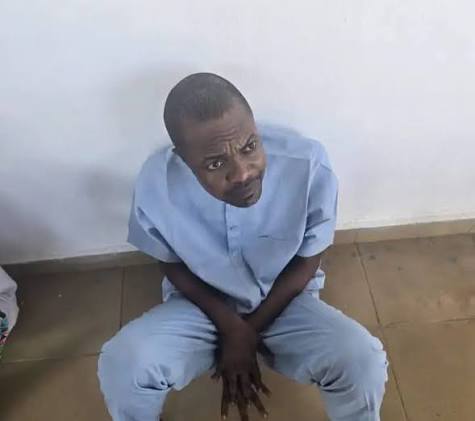
Adeyemi, who has been in police custody over the controversy surrounding the council, is expected to appear before the committee this week, following testimonies from several senior government officials.

However, as of Sunday, the venue for the much-anticipated session remained unsettled.

The source, who spoke on condition of anonymity because he was not authorised to discuss the committee’s proceedings with the media, confirmed the development in response to an inquiry by The PUNCH.

Asked whether the committee had chosen a venue for Adeyemi’s appearance, the source simply replied, “No decision yet.”

The development followed the committee’s hearings with key government officials, including the Head of the Civil Service of the Federation, Didi Walson-Jack; the Director-General of the Budget Office of the Federation, Tanimu Yakubu; the Director of Banking Services at the Central Bank of Nigeria, Hamisu Abdullahi; and representatives of the Inspector-General of Police.

The officials’ testimonies reportedly raised questions about how Adeyemi allegedly presented himself as the head of the PFIPC and secured recognition and access within government circles.

Adeyemi had, through his lawyers, indicated his willingness to appear before the committee publicly and respond to questions concerning the allegations.

However, Gagdi said the committee would determine the venue for the session at a later date.

Meanwhile, the Coalition of United Political Parties has rejected the findings of the Independent Corrupt Practices and Other Related Offences Commission on the PFIPC controversy, describing the investigation as inadequate and calling for a broader and transparent inquiry.

In an interview with our correspondent, CUPP spokesperson, Agu Bryan, said the ICPC’s report, which reportedly cleared the Presidency of wrongdoing while indicting Adeniyi Adeyemi, failed to answer critical questions about how an allegedly non-existent government agency was able to operate at such a high level.

“The ICPC probe of the Presidential Foreign Investment Promotion Council which exonerated the Presidency and indicted Adeniyi Adeyemi is nothing short of a charade,” Bryan said.

He argued that the report appeared to portray Adeyemi as having operated almost entirely alone, despite the scale of activities attributed to him.

See also  Many feared killed in Oyo gas explosion

According to Bryan, such an operation could not have continued without assistance or enabling actions by officials within government institutions.

“As Nigerians, we know that someone could not have operated an alleged high-profile agency of such magnitude without enablers, either within the Presidency or across the government agencies involved,” he said.

Bryan called for a broader examination of the roles allegedly played by government institutions referenced in Adeyemi’s correspondence, including the Office of the Secretary to the Government of the Federation, the Central Bank of Nigeria and the Office of the Head of the Civil Service of the Federation.

He particularly cited the testimony of the Head of the Civil Service of the Federation, Didi Walson-Jack, that her office failed to conduct due diligence on some of the documents associated with the controversial council.

The coalition also questioned how the PFIPC allegedly found its way into the national budget if, as reported by the ICPC, it had no legal foundation.

CUPP said the National Assembly and relevant government ministries owed Nigerians an explanation over how funds were appropriated to an organisation whose legal status had allegedly not been established.

“The National Assembly, particularly the House of Representatives, which appropriated funds to an agency that, according to the investigation, never existed as a creation of law, also owes Nigerians an explanation,” Bryan said.

He asked who within the Ministry of Budget and National Planning processed the budget line attributed to the PFIPC and what verification mechanisms were applied before public funds were appropriated.

CUPP also raised questions about the alleged recruitment of hundreds of staff and the extent to which Adeyemi was granted access to official government activities.

Bryan said the issues went beyond determining whether Adeyemi forged documents, arguing that investigators should establish how he allegedly gained access to government processes and institutions.

The controversy escalated after investigators reportedly established that a signature attributed to the Chief of Staff to the President, Femi Gbajabiamila, was forged.

CUPP said the finding should prompt investigators to examine other official documents and correspondence allegedly used by Adeyemi.

“It is commendable that the House and the Police have established that the signature of the Chief of Staff to the President was allegedly forged. But that raises another critical question: how many other documents, official correspondences and signatures allegedly used by Adeyemi were also forged?” Bryan asked.

He said Nigerians deserved to know the full extent of the alleged deception and whether officials responsible for verifying the credentials of individuals dealing with public institutions failed in their duties.

The coalition further questioned how the PFIPC allegedly acquired sufficient official recognition to participate in government processes and appear in the national budget.

“How did a supposedly non-existent agency attain such a level of official recognition and attention that it found its way into the national budget?” he asked.

CUPP also called for Adeyemi to be given a fair opportunity to defend himself before the House committee, arguing that a transparent confrontation with the evidence could help determine whether other individuals or institutions were involved.

See also  Oyo unveils plans to digitise street, house numbering

“Was Adeyemi given fair hearing thus far? Has he been given the privilege to appear before the Yusuf Gagdi-led Ad hoc Committee of the House of Representatives probing the matter to be interrogated and directly answer questions?” Bryan said.

He invoked the legal principle nemo judex in causa sua—that no person should be a judge in his own cause—in arguing that the investigation should be conducted independently and transparently.

Bryan said anything short of an open and impartial investigation would fail to satisfy public expectations.

He also criticised the ICPC’s handling of the matter and called for independent professional bodies to be considered if the Federal Government was genuinely interested in establishing the facts.

“If President Tinubu is determined to unravel the truth, independent organisations or bodies like the NBA, West African Bar Association or international or private investigators should be allowed to come in and take over the investigation,” Bryan said.

He accused federal security and anti-corruption agencies of lacking sufficient independence to investigate the controversy objectively, a claim the agencies have not accepted.

The House committee’s inquiry follows mounting concerns over how Adeyemi allegedly operated the PFIPC, secured government recognition and participated in official engagements despite questions over the organisation’s legal status.

The controversy has also drawn attention to the roles of several government institutions whose officials allegedly interacted with Adeyemi or processed documents connected to the council.

The committee is expected to hear directly from Adeyemi as it seeks to establish how the PFIPC was created, how it operated, who recognised it and whether public funds were allocated or expended in connection with its activities.


His appearance before the committee could therefore prove significant in determining whether the alleged scheme was the work of an individual or involved officials and institutions within government.

Adeyemi demands media

Adeyemi, through his lawyer, Ademola Oyedokun, had on Wednesday rejected the House committee’s decision to question him at an undisclosed location while he remains in police custody.

The committee subsequently attempted to question him on Thursday, but Adeyemi declined to respond to its questions, prompting the lawmakers to reschedule the interrogation for Monday.

However, a family source said Adeyemi had informed the committee that he would only submit to questioning if journalists and his legal representatives were allowed to be present.

“They eventually rescheduled to Monday and my brother told them that when they are coming, they should come with the media, otherwise he will not grant them audience.

“Initially, they agreed to come with the media, but later they said they would not be coming with any media. They said if he refuses to grant them audience, they will go ahead and conclude their investigation and it will be said that he was the one who failed to grant them audience,” the source said.

The development came a day after Adeyemi’s family raised concerns over an attempt by members of the House committee to question him in police custody without his lawyers present.

Adeyemi’s brother, Peter, alleged that the detained promoter declined to answer questions because his legal representatives were absent.

“The Reps committee came and wanted to interrogate him, but he refused. They are still there trying to make him talk without any of his lawyers being present. We are crying out loud so that the right thing would be done.

“He has stated that he wants to be quizzed the same way others who have accused him have spoken. It’s not that he is not willing to state his side of the story,” he said.

When contacted on whether the police were aware of the committee’s proposed visit and whether the lawmakers would be granted access to Adeyemi, the police spokesperson, Ani Ineidu, said visitors would be allowed provided they met the necessary requirements.

“Yes, if they have necessary documents. I’m not aware if they have relevant documents or authorisation, but if they fulfil the conditions, everybody who is under police custody has a right to visitors.

“So, in a case like this, if they have that right, they will be granted access,” Ineidu said.

In a statement issued on Wednesday, Oyedokun said his client welcomed the House investigation into the alleged establishment and operations of the PFIPC but opposed what he described as a closed-door interrogation.

“We have read that the committee intends to interview our client at an undisclosed date and place. We ask it, respectfully, to think again.

“Everyone else in this matter has been heard in public, and what has been said about our client was said in public. He should be allowed to answer in the same place it was said,” the lawyer stated.

The committee had on Tuesday announced that it would question Adeyemi at an undisclosed location while he remains in police custody.

The Chairman of the committee, Yusuf Gagdi, said the arrangement was necessary to avoid interfering with ongoing investigations by the Nigeria Police Force, the Economic and Financial Crimes Commission and the Independent Corrupt Practices and Other Related Offences Commission.

Gagdi said the committee had invited Adeyemi but was informed by the police that he remained in custody pursuant to a court order.

He added that the National Assembly would not act in a manner that undermined the judiciary or violated the principle of separation of powers, stressing that lawmakers lacked the authority to override an existing court order directing Adeyemi’s detention.


The committee is investigating allegations surrounding the creation and operations of the PFIPC, including claims of impersonation, forgery, financial impropriety and the unlawful use of government facilities and official insignia.

Source: punchng.com

FOLLOW US ON:

FACEBOOK

TWITTER

PINTEREST

TIKTOK

YOUTUBE

LINKEDIN

INSTAGRAM

Continue Reading
Click to comment

Leave a Reply

Your email address will not be published. Required fields are marked *

News

Belgian parliament to legislate to allow police to enter homes to facilitate undocumented migrant removals

Published

on

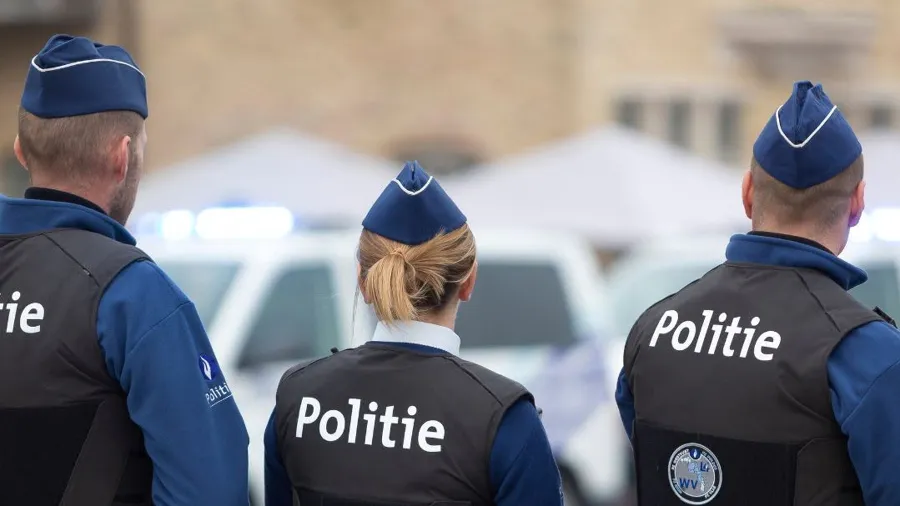
Belgian police will soon be able, in conjunction with the Immigration Office (DVZ), to enter the homes of undocumented migrants who pose a threat to public order or national security. This is set out in a bill drafted by the Belgian Asylum and Migration Minister, Anneleen Van Bossuyt (Flemish nationalist N-VA), and Justice Minister Annelies Verlinden (Flemish Christian democrat CD&V), which has now been approved by the House Home Affairs Committee. The proposal still needs to be OKed during a plenary session of the lower house of the Belgian parliament.

Home searches like these are controversial. The aim is to make it easier to deport people residing here illegally and who persistently refuse to cooperate with efforts to facilitate their return.

The new law will make this possible. Following entry into the home, the police may place the person in question – that is, the individual who poses a threat to public order or national security – under administrative detention. However, prior authorisation from an investigating judge is required to enter the home.

Speaking to press agency Belga, Minister Van Bossuyt referred to this as “an historic breakthrough” and had previously said that this “is the final piece in a firm but humane return policy”.

“This is not a witch-hunt against people who have international protection or are simply in the country illegally (..) The law sets out clear conditions, and a search of a home can only take place with the authorisation of an investigating judge.”

(Overly) broad definitions

The bill did, however, attract a great deal of comment and was extensively discussed in parliament.

See also  Wike vs APC govs: Tinubu may broker truce in France

The opposition, the federal police, investigating judges and lawyers alike were highly critical. They believe that the exact meaning of ‘a threat to public order or national security’ has not been defined clearly enough.

“It will be up to the investigating judge to determine whether someone poses a threat to public order or national security,” says Van Bossuyt. “The judge will independently assess whether that person poses such a threat. That is a crucial test.”

Minister Van Bossuyt finds the debate strange: “The concepts of public order and national security feature in many parts of our legislation. Nowhere is a specific list provided of what they entail.” What is more, according to Van Bossuyt, the Council of State, which vets Belgian draft legislation, has explicitly stated that it is not desirable to define these concepts, as they may evolve over time.

“When the Justice Minister drafts new legislation, she isn’t asked how judges should apply that law, is she?” Van Bossuyt notes.

Van Bossuyt has also tabled an amendment to her own bill: “We have given investigating judges more time to reach a decision, from 5 days to 7.”

She emphasises that their role is not merely reduced to that of a ‘rubber-stamp judge’: “The investigating judge will absolutely not be a rubber-stamp judge, precisely because they play such a crucial role in assessing whether someone poses a threat or not. They will have access to the full case file.”

What about minors?

Another point of criticism concerns the rights of minors. According to critics, these are not sufficiently safeguarded. Government party Les Engagés (Francophone centrist) was only prepared to vote for the bill if greater protection for minors was provided.

See also  No mercy for Messi as Spain seal second world cup title

“When authorising a search of a home, the investigating judge must determine all the conditions under which that search may take place,” explains Van Bossuyt. “If, for example, children are present, the investigating judge can stipulate that the search must take place during school hours. In that case, the likelihood of children being present is very low.”

The investigating judge may also, for example, require a psychologist to be present during the search, says Van Bossuyt. “So, the possible presence of minors has certainly been taken into account.”

The minister also points to the responsibility of the person who poses a threat to public order or national security: “It is that person who is making life difficult for those children,” says the minister.

Desperately needed, according to Van Bossuyt

Government party, Les Engagés, did not secure all the amendments it had requested, so MP Xavier Dubois boycotted the second reading. However, his group leader, Aurore Tourneur, did defend the amendments in the House Home Affairs Committee.

This enabled the majority to approve the bill after all, with the support of the Flemish liberal opposition party Anders. Although they, too, called for further amendments.

The left-wing opposition parties voted against. The far-right Vlaams Belang abstained. According to MP Francesca Van Belleghem, the law has been “so watered down by coalition negotiations that it will have virtually no effect in practice”.

‘This was a sensitive bill for several government parties: that’s no secret. In practice, there was an absolute need for this,’ concludes Van Bossuyt.

The bill must now be put to a vote during a plenary session, where the law can be definitively approved.

See also  Ifa Religion Council calls on Tinubu to declare national holidays for Isese Festival

Speaking to Belga, the minister warned local authorities that have already announced they will not permit home visits, such as Leuven. “Be fully aware of what that choice means. If you refuse to implement this law and things go wrong, do not point the finger at the federal government afterwards. Because then you will be jeopardising the safety of your own residents” she said.

Source: VRT.BE

FOLLOW US ON:

FACEBOOK

TWITTER

PINTEREST

TIKTOK

YOUTUBE

LINKEDIN

INSTAGRAM

Continue Reading

News

Trump rules out new Iran attack before US midterm elections

Published

on

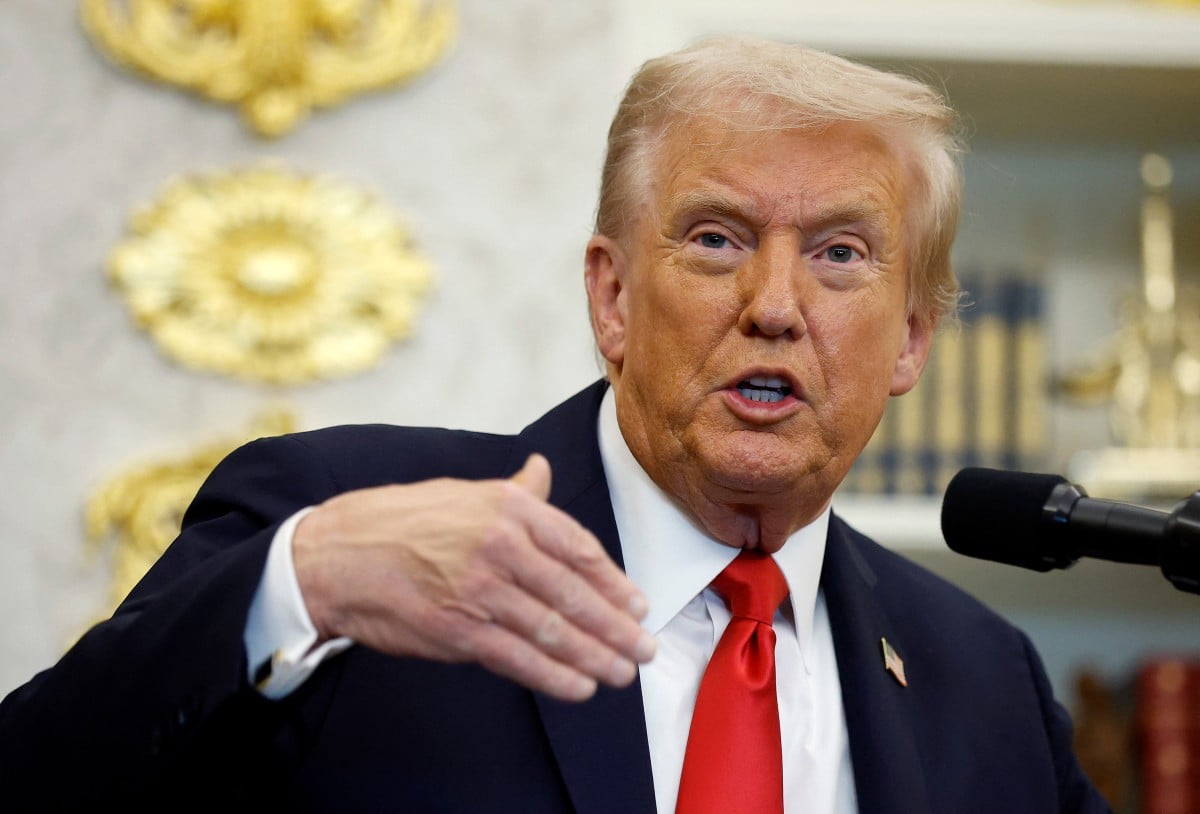
President Donald Trump ruled out Thursday attacking Iran before the US midterms on November 3, saying Washington was holding “productive discussions” with Tehran.

Trump’s announcement on his Truth Social platform followed a surge in oil prices driven by media reports suggesting potential new US strikes prior to the elections.

“I want to make it clear to everybody that, while Iran is in very bad condition, both economically and militarily, and while the Blockade will remain in full force and effect…we will not be attacking Iran at any time prior to the Midterm Elections,” he wrote.

“We are having productive discussions with the Islamic Republic of Iran,” he added.

The Atlantic magazine reported on Wednesday that the White House had asked the Pentagon to develop options to strike Iranian targets that could be used before the midterms.

The New York Times said Thursday the plans were being developed despite Trump’s “ambivalence.”

The surge in crude oil prices has also been fueled by persistent tensions in the Strait of Hormuz — a strategic chokepoint for the global oil trade — as well as hostilities between Yemen’s Iran-backed Houthis and Saudi Arabia.

Polls suggest American voters are strongly dissatisfied with fuel prices, which have soared since US-Israeli strikes against Iran on February 28 triggered the conflict.

Brent North Sea crude, the international benchmark, rallied to as high as $105.88 a barrel on Thursday before retreating to $104.28.

– Putin vows to help –

Russian President Vladimir Putin promised Thursday to “do everything” to help end the Middle East war when he met Iranian counterpart Masoud Pezeshkian for talks ahead of a regional summit, Russian media reported.

See also  Many feared killed in Oyo gas explosion

“We are ready to do everything that is in our power to contribute to the settlement of this situation,” Putin said after arriving in Turkmenistan for a summit of the Commonwealth of Independent States (CIS) that starts Friday in the Caspian Sea resort of Avaza.

He added that Iran had made “real efforts to end the war,” according to Russian news agencies.

Russia and Iran have reinforced diplomatic and military links since Russia launched its offensive in Ukraine in February 2022, becoming increasingly reliant on each other.

Trump has repeatedly insisted in recent weeks that the United States has effectively won the Iran war, despite ongoing unrest and a recent security threat that forced the withdrawal of American bombers from a base in England.

Iran’s President Masoud Pezeshkian insisted Tehran was “engaged in dialogue, but every time we negotiate with the United States, they attack again”, Iranian state media quoted him as saying at the talks with Putin.

Pezeshkian said the Islamic republic wanted to see a “final framework” to end the war.

But he accused the United States of “trying to impose its policies and views on all countries”.

“If the United States insists on pursuing a unilateral approach, a resolution will not be possible,” he said, according to state media.

– Approaching election –

The midterm elections will shape the final two years of Trump’s presidential term as his Republican Party risks losing its current grip on Congress.

Although Trump is not on the ballot, he is holding numerous rallies in an attempt to limit the damage or even turn the political tide.

See also  Boko Haram Fighters Had More Ammunition Than Our Soldiers At Some Point - Goodluck Jonathan

Trump has warned he faces a possible third impeachment if Democrats retake the House of Representatives, and the White House is preparing for a slew of investigations into corruption and abuse of power.

The US president also sought to calm a furor on Thursday over his comments at a rally earlier this week that Iran could “take out” the cities of Los Angeles and San Diego.

The 80-year-old blamed the “fake and artificial news” for misinterpreting the remarks, which Democrats pounced on.

“In actuality, what I was talking about was that a temporary increase in the price of Gasoline is a small price to pay for Iran not having a Nuclear Weapon and, if you want to see a big price, can you imagine what it would be like if they bombed San Diego and/or Los Angeles?” Trump said on Truth Social.

AFP

Source: punchng.com

FOLLOW US ON:

FACEBOOK

TWITTER

PINTEREST

TIKTOK

YOUTUBE

LINKEDIN

INSTAGRAM

Continue Reading

News

INEC displays voter register, begins PVC distribution ahead of 2027 elections

Published

on

The Independent National Electoral Commission has commenced the display of the preliminary register of voters and distribution of Permanent Voter Cards across states as part of preparations for the 2027 general elections.

The seven-day exercise, which begins on Friday and runs through October 15, will allow registered voters to verify their details, raise claims and objections, and collect PVCs from the first phase of the Continuous Voter Registration conducted between August and December 2025.

In Plateau and Sokoto states, the respective Resident Electoral Commissioners announced that the exercise would take place at Registration Area centres, with PVC collection continuing at INEC offices at the local government level after the display period.

In a statement by the Plateau REC, Prof. Sam Egwu, made available to journalists in Jos on Thursday, the commission said the exercise was pursuant to Section 19(1) of the Electoral Act 2026, which mandates it to display the voter register not less than 90 days before the general elections.

He said, “The Independent National Electoral Commission, Plateau State, wishes to inform the good people of Plateau State that the commission will commence display of the Preliminary Register of Voters, attend to the hearing of claims and objections as well as collection of Permanent Voters Cards (PVCs) simultaneously in all the 207 Registration Areas in the state, from the 9th to 15th of October 2026 (7 days and weekends inclusive). Time is 9 am -3 pm daily.”

The statement asked all registered voters to take advantage of the opportunity to check their details.

See also  DSS DG bans operatives from arresting people over civil matters

“All registered voters are encouraged to take advantage of this opportunity to carefully check information they provided, such as their names, photographs, date of birth, polling units and other relevant registration details to make necessary claims and objections within this stipulated period as an accurate voter register is important for free and credible elections,” the REC said.

He further disclosed that PVCs from the first phase of the CVR exercise conducted from August 18, 2025 to December 10, 2025, would be available for collection during the exercise.

In Sokoto, the REC, Umar Garba, while briefing journalists on the commission’s preparations for the 2027 general elections, said the exercise was part of INEC’s activities ahead of the 2027 elections.

Garba, who was at the Nigeria Union of Journalists Press Centre, said the commission was committed to ensuring that eligible voters were given the opportunity to verify their registration details and collect their PVCs.

“The Independent National Electoral Commission will commence the display of the preliminary register of voters for claims and objections, as well as the distribution of Permanent Voter Cards from the 9th to the 15th of October 2026,” Garba said.

He said PVCs relating to lost or damaged cards, transfers, updates and registrations conducted during the second and third phases of the CVR were not yet ready for collection.

Garba said the commission would announce when the affected PVCs became available.

He added that after the exercise at the Registration Area level ended on October 15, distribution would continue at INEC offices in the 23 local government areas of the state.

See also  36 Speakers back state police, final test begins

“This will enable eligible voters who could not collect their cards at the Registration Area level to do so,” he said.

On security, Garba said INEC had continued to take the advice of security agencies into consideration throughout the voter registration process.

“Throughout the registration of voters held recently, the commission took the advice of security agencies very seriously. This contributed to a safe process without any casualties,” he said.

He assured eligible voters that INEC would work to ensure that PVCs were distributed across the state.

On internally displaced persons, Garba said the commission was engaging security agencies to establish the number of IDPs in Sokoto and determine how they could participate in the 2027 elections.

“The commission is always talking with security agencies to ascertain the number of IDPs in the state. We are working to ensure that they vote once they are in official and recognised camps,” he said.

The REC also said INEC would release the total number of registered voters in Sokoto State at the appropriate time.

Source: punchng.com

FOLLOW US ON:

FACEBOOK

TWITTER

PINTEREST

TIKTOK

YOUTUBE

LINKEDIN

INSTAGRAM

Continue Reading

Trending