Connect with us

Lifestyle

Catholic bishops’ inconvenient truth

Published

on

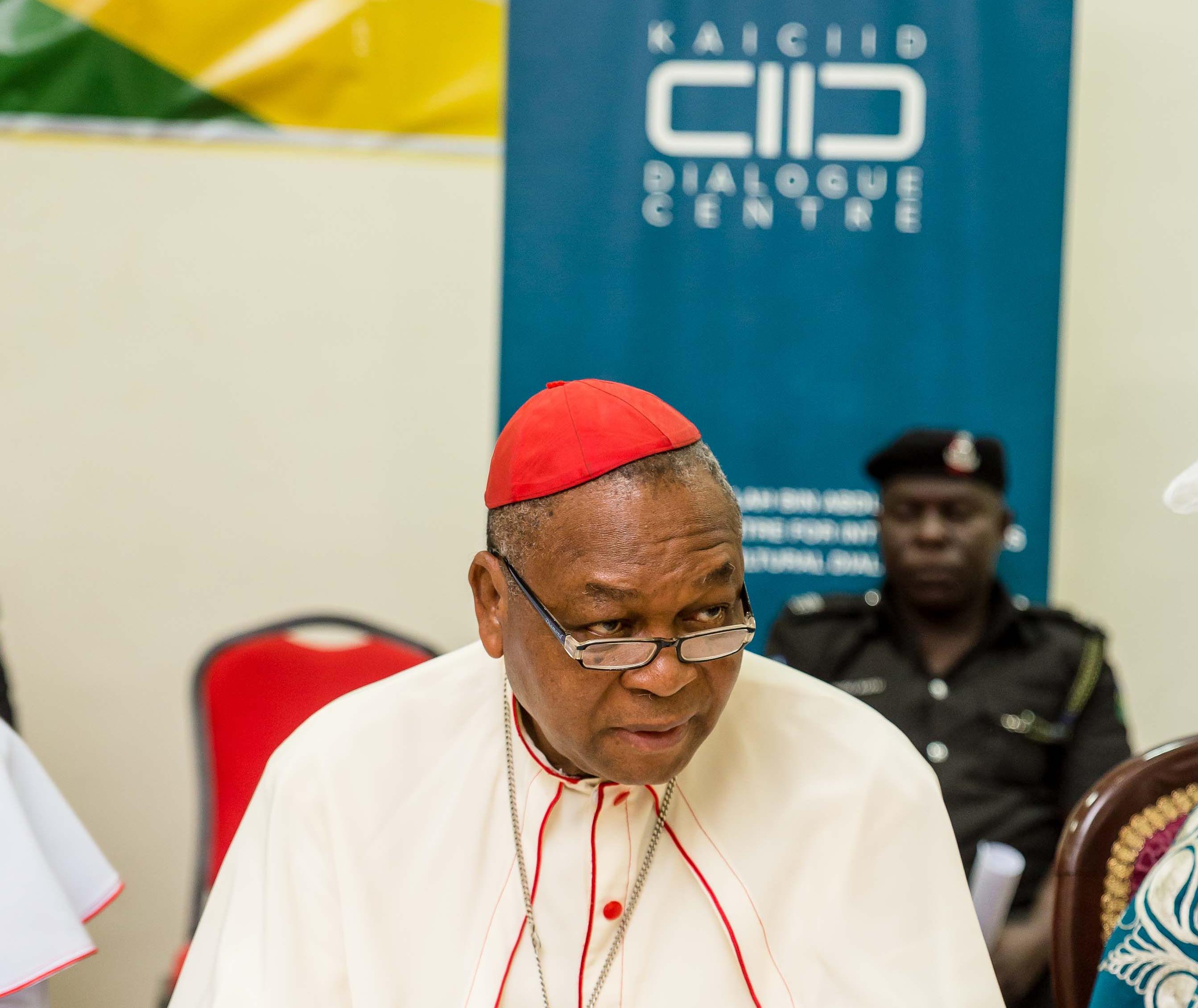
Politics and religion often conflate into a toxic brew. So, it is with the storm over John Onaiyekan’s comments after the recent meeting between President Bola Tinubu and the Catholic Bishops’ Conference of Nigeria. As the waves billow and swell, the encounter opens a window into the tremors in government rather than the cardinal’s intentions.

Instead of treating the bishops’ observations as sincere moral feedback from a respected institution, some of the administration’s vocal defenders responded with personal attacks, accusing the cardinal of partisanship and abuse of clerical privilege.

That reaction was unfortunate and avoidable.

No elected government claiming democratic credentials should treat independent criticism as hostility.

Yet the ferocious responses from the Minister of the FCT, Nyesom Wike; the President’s Special Adviser on Policy Communication, Daniel Bwala; and the SSA on Media, Temitope Ajayi, suggested Onaiyekan had committed a grave offence by saying the bishops told the President Nigeria was “bleeding,” that poverty was worsening, and many were struggling under economic reforms.

The cardinal’s fault was not fabricating facts but speaking publicly about an uncomfortable conversation.

He said the President disagreed, insisting the economy was improving and reforms were laying the foundation for recovery.

The bishops, he said, neither expected agreement nor sought to embarrass the President; they were discharging a moral duty to tell him what many Nigerians could not.

That should have ended the matter. Instead, critics turned a healthy exchange into a public quarrel. Bwala questioned the cardinal’s neutrality, alleging the church supported Peter Obi in 2023.

Ajayi dismissed the bishops as offering only one perspective. Wike argued that having taken sides in a past election disqualified the cardinal from impartiality and faulted the bishops for questioning INEC’s neutrality ahead of 2027 without stronger proof.

These points merit consideration. Religious leaders, like journalists and civil society actors, should aim for fairness as credibility rests on intellectual honesty. Achievements by government should be acknowledged. But fairness works both ways.

The administration’s defenders owe Nigerians an honest engagement with the bishops’ substance rather than attempts to discredit the messengers.

Who the cardinal voted for is irrelevant to whether millions of Nigerians are suffering. Hunger and inflation do not check party membership before striking families.

See also  Nollywood Actor, Williams Uchemba Demands Public Execution Of Kidnappers

One of the weakest responses to public criticism is to attack motives while avoiding the issues raised. That strategy failed to convince many Nigerians. Therefore, it is no surprise that support for Onaiyekan flowed from across civic space.

The Northern Youth Council said he reflected lived realities; the Middle Belt Forum called the attacks unfair; the Catholic Laity Council defended the church’s pastoral duty to speak for the vulnerable.

Former governor and minister Rotimi Amaechi, himself a Catholic, reminded the Presidency that bishops have every right to criticise governments and urged responses based on evidence, not indignation.

Even Orji Kalu, APC senator and former Abia State governor, threatened to resign from the party if the bishops were insulted, noting their similar interventions across Africa.

The public backlash appears to have prompted moderation. Secretary to the Government of the Federation, George Akume, reaffirmed the administration’s respect for the Catholic Church and promised deeper consultations.

That is the mature response expected of a confident government, and it should have been the first instinct.

The episode exposes a deeper problem.

With the 2027 elections on the horizon, there is a growing tendency in official circles to interpret every criticism through a partisan lens.

Independent institutions that refuse to sing from the government’s hymn book risk being branded hostile. Such defensiveness serves neither democracy nor good governance.

Onaiyekan’s sharper point was that too many people around the President paint an overly rosy picture of the country. Whether entirely fair, the observation highlights a real danger that administrations insulated by courtiers and loyalists risk mistaking praise for patriotism.

Presidents need more than briefings, official statistics and flattering presentations. They need uncomfortable truths from independent voices including economists, labour unions, journalists, business leaders, traditional rulers and religious organisations.

Governments that refuse to listen lose touch with the people they govern. That is why criticism is not the enemy of reform; silence is.

The Tinubu administration can rightly argue it inherited an economy in deep distress and that difficult choices were necessary. Removing the petrol subsidy and liberalising the foreign exchange market were politically costly but, many economists agree, economically inevitable.

See also  Remi Lagos: The Legacy of a Nigerian Fashion Icon

The government has expanded fiscal space for states, created NELFUND, launched youth initiatives, and helped end the destructive cycle of prolonged ASUU strikes. These are notable achievements and deserve acknowledgement.

But governments are judged by citizens’ lived realities, not only by economic theory or improving macro indicators.

Foreign reserves have strengthened to $52 billion from about $3 billion, fiscal revenues rose to all-time highs, and the naira exchange rate has stabilised compared with the immediate post-reform shock.

Yet these gains have not delivered meaningful relief for the average Nigerian. Inflation remains punishing at over 15 per cent and above 37 per cent in at least 10 states; food and transport costs are soaring; healthcare and medication are costly; electricity tariffs and rent have escalated; small businesses struggle with high energy costs and expensive credit.

For too many families, over 70 per cent of income is spent on feeding alone. Multidimensional poverty affects 63 per cent of Nigerians, per the World Bank.

The bishops sought to communicate that reality. It cannot be dismissed by citing encouraging macro trends.

The reforms are also incomplete. A parallel foreign-exchange market persists, reflecting distortions and weak confidence.

Oil production remains below projections. Domestic refiners complain of inadequate crude supply even as the government extends Project Gazelle with a new $4.5 billion refinancing, raising concerns about future crude commitments while local refining capacity is planned to double.

External debt keeps rising, increasing exchange-rate exposure and debt-service obligations, which already consume half of revenues.

Terrorism, banditry and kidnapping continue to terrorise large swathes of the country, driving farmers from fertile lands and worsening food inflation.

Official and independent reports indicate that more than 628,000 people have been killed and over 2.2 million abducted since 2023, according to a BusinessDay report in June.

These are measurable national realities, not opposition talking points. Governments need independent voices to speak honestly about them.  No pushback can erase the fact that Nigeria is bleeding.

The Catholic Church has a long history of such moral witness. During military rule, bishops such as Olubunmi Okogie, an Emeritus Cardinal, condemned authoritarianism, corruption and human-rights abuses.

See also  Why I’m Still Single And Childless At 52 – Nigerian Actress, Bimbo Akintola Opens Up

Under democratic governments, the church continued to criticise administrations across the political spectrum over insecurity, governance failures and human suffering. Its loyalty has been to moral principles, not to any party.

Tinubu should not regard himself as uniquely persecuted, nor should his supporters mistake clerical witness for partisan politics.

Religious leaders are, firstly, citizens. They bury terrorism victims, counsel unemployed graduates, comfort widows and feed hungry families. If such leaders cannot speak about poverty, insecurity and governance, democracy becomes a farce.

Political parties are also inconsistent. Many who now defend petrol subsidy removal opposed it when it was proposed under President Goodluck Jonathan. Those who benefited from the freedom to criticise must not deny others the same liberty when roles reverse.

One of the most perilous governance tendencies is believing that criticism weakens government. On the contrary, governments make worse mistakes when they become prisoners of official optimism.

They need independent feedback to test whether policies yield intended outcomes. Economic models and official reports are necessary but insufficient; they must be complemented by honest input from labour, business, academia, the media, civil society and faith leaders. Without it, governments risk governing statistical abstractions rather than human realities.

It is encouraging that the administration now appears to be recalibrating. Akume’s pledge of deeper engagement deserves commendation.

Consultation, not confrontation, marks mature democratic leadership. The Presidency gains nothing by quarrelling with institutions focused on the country’s welfare.

Tinubu has often said he welcomes constructive criticism. He insisted that he sought the job and should not be pitied. This episode is a chance to prove it.

Labelling respected clerics as partisan for voicing uncomfortable truths suggests the administration may lack confidence in the transformative power of its own reforms. That is diminishing.

Nigeria’s problems are too serious for official defensiveness. Reform is a journey requiring constant feedback. The bishops fulfilled their civic and moral duty. The Presidency must perform its constitutional role by listening, not by silencing dissent.

Source: punchng.com

FOLLOW US ON:

FACEBOOK

TWITTER

PINTEREST

TIKTOK

YOUTUBE

LINKEDIN

INSTAGRAM

Continue Reading
Click to comment

Leave a Reply

Your email address will not be published. Required fields are marked *

Lifestyle

Read how Student commits suicide after Oyo police detention over N8,000 debt

Published

on

When Al-Amin Mohammed returned home from the Agodi Custodial Centre in Ibadan, Oyo State, on September 14, his family thought the worst was over.

The 30-year-old aluminium fixer and student of a polytechnic in Kwara State had spent days in police detention and prison custody following a dispute that began with an alleged N8,000 debt.

His parents had stood as sureties to perfect his bail.

He was finally home and free.

But his mother, Simiat Mohammed, said the son who returned to the family was not the same man who had left days earlier.

He barely ate. He withdrew from people. Again and again, she said, Al-Amin complained about the humiliation of being detained, taken to court and remanded in prison over an allegation he insisted was untrue.

“He kept saying that they wanted to tarnish his image because he came from a poor family and that he was sent to prison for a crime he did not commit,” the grieving mother told Saturday PUNCH amid tears.

Three days after his release, tragedy struck.

On September 17, Al-Amin ingested rat poison at his residence in Ibadan.

Before then, according to his family, he recorded a voice note expressing frustration and saying what would become his final words to his mother.

“He said the frustration was too much and asked his siblings to take care of me. He mentioned my name and apologised, telling me not to be angry with him,” Simiat recalled.

The family rushed him from one hospital to another in a desperate attempt to save his life.

His father, Habeeb Mohammed, said three hospitals rejected him before the family eventually got to the University College Hospital, Ibadan.

“We were asked to make some payments before he could be attended to. After we paid, the doctor came and told us that he was dead,” he said.

For the Mohammed family, the death brought a devastating end to a chain of events that they say should never have gone beyond a minor disagreement.

How N8,000 debt became police case

According to Simiat, her son had borrowed N23,000 from a Point-of-Sale operator identified simply as Kazeem.

Al-Amin had repaid N15,000, leaving a balance of N8,000.

But a disagreement subsequently broke out, during which Kazeem allegedly seized Al-Amin’s mobile phone over the unpaid balance.

The 30-year-old later returned to retrieve his phone, leading to a struggle.

His mother said the confrontation was minor, but it set off events that eventually took her son through vigilante detention, a police cell, a courtroom and prison custody.

After the altercation, Al-Amin was allegedly detained overnight by a vigilante said to be the father of one of Kazeem’s employees.

The following day, September 9, he was allegedly handed over to officers at the Sanyo Divisional Police Station in Ibadan.

Simiat said she received a call the next day asking her to come to the station.

Like many mothers visiting a detained child, she went there carrying food.

“When I got to the station, I went with food for my son, but they did not allow me to give it to him. After some time, they brought him out of the cell and I spoke with him,” she said.

During that brief encounter, Al-Amin maintained his innocence over another allegation that had entered the dispute that he damaged a mobile phone belonging to Kazeem.

“He told me that he did not touch the phone, let alone spoil it. He said the only money he owed Kazeem was N8,000 and that he went to retrieve his phone after it had been seized, which led to the struggle,” she added.

See also  When the dock boils over: Rise of unruly defendants in court

‘They said they would jail him’

What Simiat expected would be resolved as a dispute between two young men allegedly took a more serious turn.

She claimed that the Investigating Police Officer, identified as Adekeye, insisted that Al-Amin would be prosecuted despite the family’s appeals for a settlement.

According to her, the family was asked to provide N100,000 for bail and another N70,000 for the damaged phone.

“When Kazeem came to the station, I pleaded with him that we should settle the matter. I also pleaded with the DCO, but he later sent me out of his office.

“The IPO, Adekeye, also said she would ensure that my son was jailed. There was even a police officer pleading on our behalf,” she alleged.

The deceased’s father, Habeeb, gave a similar account.

He alleged that the matter was escalated because the complainant’s father was known to the Divisional Crime Officer.

“When I got there, I begged the DCO that the matter could be settled amicably. But because the father of the complainant was his friend, he said he would deal with my son and send him to prison,” he stated.

The family further alleged that Al-Amin complained of harsh treatment while in detention and said he was pressured to admit that he damaged the phone.

Saturday PUNCH could not independently verify those allegations.

From police cell to prison

On September 10, the family said Al-Amin was taken to court in the Mapo area of Ibadan.

His mother claimed nobody informed the family beforehand.

They only learnt that he had been taken to court after receiving a telephone call.

At the court, the family encountered a lawyer identified as Boluwatife, who, according to Simiat, offered to represent Al-Amin free of charge after hearing about the case.

The court granted him bail in the sum of N100,000 with two sureties in like sum.

But freedom did not come immediately.

Pending the perfection of his bail conditions, Al-Amin was taken to the Agodi Custodial Centre.

For four days, his parents worked to secure his release.

Eventually, Simiat and Habeeb stood as sureties, and their son walked out of custody on September 14.

The family had won his freedom, but his mother said something appeared to have changed.

‘He stopped eating’

At home, Al-Amin became withdrawn.

The young man who combined aluminium work with his studies and helped support his family stopped eating and talking to people.

His thoughts, the mother said, repeatedly returned to the police station and prison.

He felt humiliated by the experience and worried that his reputation had been destroyed.

Three days after his release, Al-Amin allegedly took the substance that claimed his life.

‘He was our shining light’

Al-Amin’s elder sister, Adenike, said the tragedy deprived the family of one of its major sources of support.

She described him as hardworking and ambitious a young man who earned a living fixing aluminium while pursuing his education.

“He was a hardworking boy. He was working as an aluminium fixer and also going to school. He was the pillar of this family and was taking care of our mother,” she said.

Al-Amin was unmarried and had no child.

“We have lost the shining light of our family,” Adenike added.

See also  Nollywood Actor, Williams Uchemba Demands Public Execution Of Kidnappers

A family friend and retired Deputy Superintendent of Police, Isiaka Ayole, said the circumstances surrounding Al-Amin’s arrest, detention and prosecution deserved an independent investigation.

He questioned why the vigilante who allegedly detained the deceased overnight before handing him over to the police was not also investigated.

“This was a simple matter that the police should have helped settle amicably instead of escalating it,” Ayole said.

“I don’t understand the type of policing where somebody is first detained overnight by a vigilante and then handed over to a police officer who is said to be a friend of the complainant’s father.

“The irony is that nothing was said about the person who took the law into his hands. Instead, the person owing N8,000 was taken to court.”

The retired police officer called on the Inspector-General of Police, Tunji Disu, to investigate the officers involved and establish whether there was any abuse of power.

Mother demands answers

For Simiat, however, the questions are more personal.

In just over a week, she watched her son go from an aluminium worker and student to a detainee, a defendant, a prison inmate and, finally, a young man she said became consumed by the stigma of what had happened to him.

The Mohammed family is now appealing to President Bola Tinubu, the IG and the Oyo State Government to investigate the circumstances surrounding Al-Amin’s death.

They want to know whether the dispute was properly handled and whether any police officer abused his authority.

Speaking through tears, Simiat said her family lacked influence or powerful connections but would continue to seek answers.

“Let them investigate what happened to my son. We don’t have anybody except God,” she said.

“We do not want him to die in vain.”

I only wanted my money, not drag any case – Kazeem

Reacting, Kazeem, who operates a phone-charging point and Point-of-Sale business around the Oni-Gaari area of Ayegun, Ibadan, told Saturday PUNCH that he was shocked to learn of Al-Amin’s death.

He insisted that he never intended to pursue the matter beyond recovering his money.

Kazeem explained that sometime last year, Al-Amin withdrew N7,000 from his apprentice, one Maryam, but allegedly failed to transfer the money to her as promised.

“Al-Amin started avoiding the area until Maryam returned to school without informing me about the incident,” he said.

Kazeem said Maryam later told him what happened when she returned from school few months later and asked whether Al-Amin had deposited the money with him.

“She and her sister traced him to his house and he told them he had given the money to me, so they left. Al-Amin later called me and pleaded that he only told Maryam and her sister that he had given me the money so that they would not embarrass him in his house. Later, his grandmother paid the money.”

On the recent incident, Kazeem said he employed another apprentice, one Iya Ajike.

He said he visited the shop on Tuesday, September 8, 2026, for monitoring and account balancing.

He claimed to have met some people pleading with the apprentice to release Al-Amin’s phone.

According to him, Ajike later explained that Al-Amin had carried out a transaction of about N23,000, collected the money and left his phone at the shop, promising to transfer the money after charging the device.

Kazeem said the deceased later returned, collected the phone and transferred N15,000, claiming he had exceeded his transfer limit for the day and would pay the balance the following day.

See also  Sacred Heart Hospital, Abeokuta: Nigeria’s First Hospital

He said when the balance was not paid, Al-Amin allegedly began avoiding the apprentice.

Kazeem explained that Ajike eventually traced him to a location where she found him sleeping with the phone beside him, picked up the device and returned to the shop.

He said Al-Amin later arrived with some friends to plead for the release of the phone, an encounter he witnessed.

According to Kazeem, he insisted that Al-Amin pay the outstanding money before the phone would be released.

He said the matter was later taken up by the landlord association after the deceased indicated that he would pay.

Kazeem said on Wednesday night, he was informed of an altercation involving his apprentice and Al-Amin.

“Iya Ajike called me around 10pm that Al-Amin had come to her house around 9pm that he wanted to collect his phone, that someone had sent money to him and he wanted to transfer the debt to her.

“Iya Ajike told me that she told Al Amin that the phone is in the shop and it is late already that he should come back the following day, but Al Amin said he wanted his phone that night. He tried to snatch an Airtel-branded phone we use for our business, which she was using as a torchlight.

“The phone fell down during the struggle and its screen was damaged,” he said.

Kazeem said the landlord association that night asked the parties to return the following morning to resolve the matter.

“In the morning, I was there; we couldn’t resolve the matter because other people also came forward with similar complaints against Al-Amin that he underpayed them whenever he came to withdraw money.”

He said the matter was subsequently referred to a vigilante group, which directed the parties to the Sanyo Police Station after it could not resolve the dispute.

“When we got to the station, the only thing I told the police was that I wanted Al-Amin to take responsibility for the damaged phone and how he was going to repair it. But Al-Amin denied responsibility for the damage, saying he was not responsible for the damaged phone.”

“So, the police detained him that day and asked us to come the following day. They took him to where the charge was read to him and he pleaded not guilty.”

He said the magistrate subsequently ordered that Al-Amin be remanded and adjourned the case until October 10.

Kazeem said he only learnt on Thursday that Al-Amin had been released on bail.

He maintained that he never intended to drag the matter into a legal dispute, adding that his primary concern was to recover the money owed to him.

“In fact, I was discussing with my lawyer that the money used for his bail, had they agreed at the station, this matter would not have got to court. The money I have spent on the case is more than the amount owed,” Kazeem said.

When contacted, the Public Relations Officer of the Oyo State Police Command, Ayanlade Olayinka, said he was not aware of the incident.

A subsequent message sent to him via WhatsApp had not been responded to as of the time of filing this report.

Source: punchng.com

FOLLOW US ON:

FACEBOOK

TWITTER

PINTEREST

TIKTOK

YOUTUBE

LINKEDIN

INSTAGRAM

Continue Reading

Lifestyle

Parents, Home Training Starts at Home

Published

on

When a child behaves badly in public, people may question the child’s upbringing—but good character begins long before a child steps outside the home.

Parents have a major role to play in teaching children how to behave, communicate and treat other people.

Children need to learn that respect, good manners, responsibility, kindness and self-discipline are values that should be practised every day.

Teach your children to greet people properly, speak politely, respect others, accept correction and understand that their actions have consequences. More importantly, teach them through your own example because children often learn by watching what adults do.

Home training is not about raising children who are perfect. It is about giving them the foundation they need to make responsible choices as they grow.

Parents should not leave the responsibility of teaching values entirely to schools, churches, mosques or society. The home is the first classroom, and parents are a child’s first teachers.

A well-trained child does not only bring pride to the family; good character can also help build a more respectful and responsible society.

What do you think is the most important value parents should teach their children at home?

Share your thoughts in the comments. 👇

NewsBreak365 | News • People • Perspectives

FOLLOW US ON:

FACEBOOK

TWITTER

PINTEREST

TIKTOK

YOUTUBE

LINKEDIN

INSTAGRAM

See also  American R&B group Shalamar to thrill Nigerian fans at Independence concert
Continue Reading

Lifestyle

Read how Mother and four children died in Rivers inferno

Published

on

A mother and her four children were burnt to death on Friday morning in a fire outbreak at their residence in the Okochiri community, Okrika Local Government Area of Rivers State.

Although the cause of the inferno could not be immediately established, a source who spoke on condition of anonymity, said the incident occurred when an individual attempted to discharge petrol into a jerrycan, causing the product to ignite.

The source added that the petrol was suspected to be bad fuel.

Confirming the incident in an interview with our correspondent, the Commander of the Civilian Joint Task Force in Okrika LGA, Igwe Godswill, said details of the incident remained sketchy.

Godswill stated that the lifeless bodies of the woman and her four children were found when he and his team arrived at the scene.

See more Punch stories on Google.

He said, “There are no proper details as to what happened. But when we got there, we saw that about four children and their mother, a total of five persons, were burnt and died.

“The police had already arrived and taken proper details of what happened. It is so disheartening that this is happening again in our community.”

Godswill added that local youths had extinguished the fire before his arrival, though the victims were believed to have died before the flames were put out.

He called for an investigation to determine the exact cause of the incident.

Meanwhile, a video of the incident seen by our correspondent showed a woman complaining about the cramped nature of the building, which had its roof and other parts severely damaged.

See also  Sacred Heart Hospital, Abeokuta: Nigeria’s First Hospital

When contacted, the spokesperson for the Rivers State Police Command, Blessing Agabe, confirmed the incident, saying the mother and three of her children died.

Agabe, an Assistant Superintendent of Police, also disclosed that other occupants of the building sustained injuries, while property worth thousands of naira was destroyed in the inferno.

She added that an investigation had begun to ascertain the immediate and remote causes of the incident.

“Yes, there was a fire incident in which a woman and her three children tragically lost their lives, while others sustained injuries.

“Property estimated at thousands of naira was also destroyed in the inferno. Investigation is ongoing to ascertain the circumstances surrounding the incident and determine the cause of the fire outbreak,” the state police image maker stated.

Source: punchng.com

FOLLOW US ON:

FACEBOOK

TWITTER

PINTEREST

TIKTOK

YOUTUBE

LINKEDIN

INSTAGRAM


Continue Reading

Trending