Connect with us

Crime

NDLEA nabs alleged cocaine baron fleeing to Paris

Published

on

The National Drug Law Enforcement Agency has dismantled an international cocaine trafficking cartel that allegedly used Nigeria as a transit hub for moving illicit drugs to the United Kingdom, other parts of Europe and Asia.

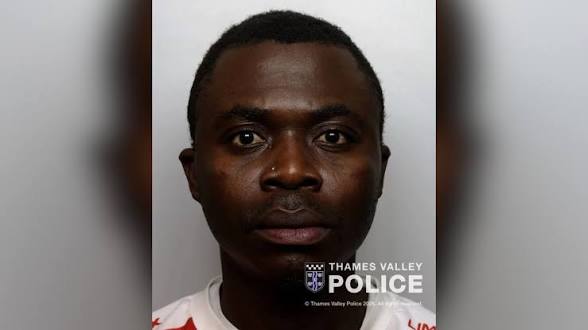
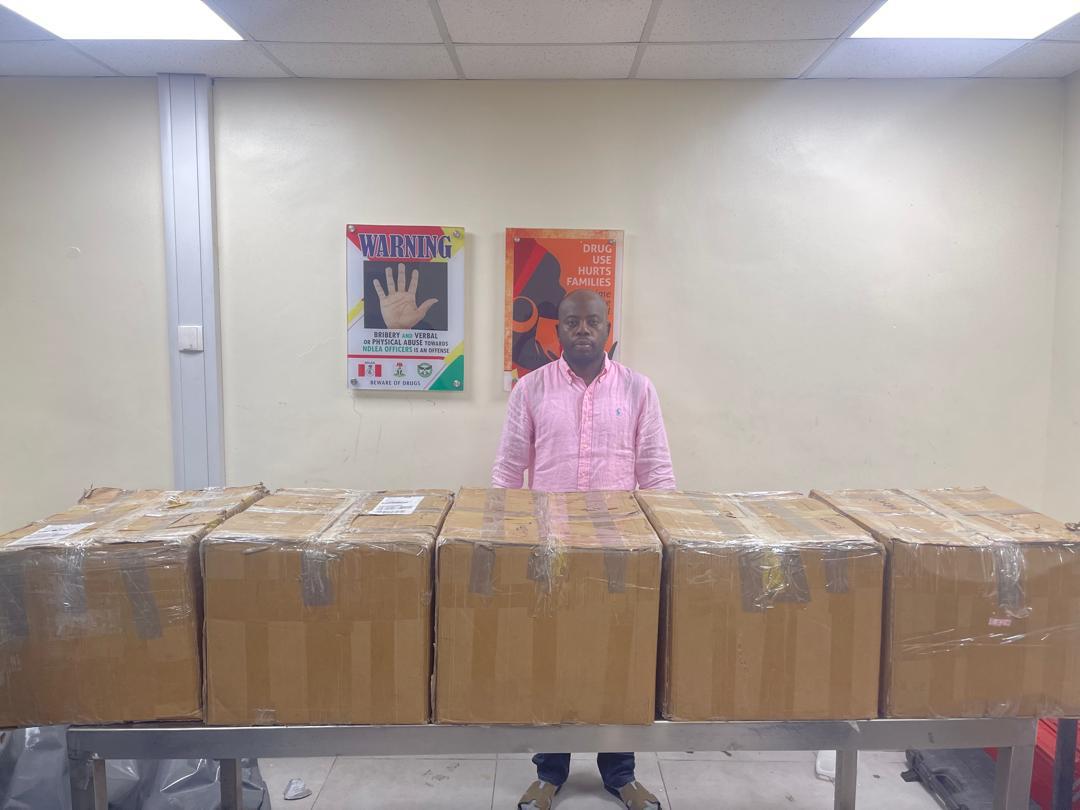
The agency also arrested the alleged Nigerian arrowhead of the syndicate, a self-styled luxury goods dealer and social media influencer, Afolabi Kazeem Michael, popularly known online as “KC Luxury,” as he attempted to flee the country.

A statement by the agency spokesman, Femi Babafemi, said the Chairman and Chief Executive Officer of the NDLEA, Brig. Gen. Mohamed Buba Marwa (retd.), disclosed this while addressing journalists in Lagos on Tuesday.

Marwa described the operation as one of the most significant narcotics investigations undertaken by the agency in recent times, saying it led to the seizure of 184.50kg of cocaine, the largest cocaine seizure made through a courier company in Nigeria.

According to him, the operation began with the interception of the cocaine consignment concealed for onward export through a courier logistics channel in Lagos.

He said following the seizure, he directed the constitution of a Special Investigation Team to trace the entire network behind the shipment, from the couriers to the masterminds.

Marwa said the cartel hoped to realise as much as N39bn from the consignment through its international distribution network.

“The operation began with the interception of a consignment of 184.50 kilograms of cocaine concealed for onward export through a courier logistics channel in Lagos. Given the scale of the seizure, I immediately directed the constitution of a Special Investigation Team, with a mandate to trace the entire network behind the shipment, from the couriers to the masterminds. The cartel was hoping to realise as much as N39 billion from the consignment through their international distribution network,” the statement quoted Marwa as saying.

See also  PHOTOS: Three jailed, fined for Facebook, TikTok fraud in Kaduna

Working with the management of the courier company involved, Marwa said NDLEA operatives unravelled a network of intermediary companies and individuals used to process the consignment, leading to the arrest of two key suspects, among others.

“The first, Lawal Mujab Kehinde, a staff member of the logistics firm through which the cocaine was processed, was found to have a direct and sustained relationship with the cartel’s Nigerian coordinator. Investigation also established that he packages and processes consignments for the syndicate, routes them to the United Kingdom, other parts of Europe and Asia, and was paid in cash.

“The second and more prominent suspect is Afolabi Kazeem Michael, popularly known online as “KC Luxury,” whom investigations identified as the Nigerian arrowhead of the cartel. Parading as a social media influencer and businessman dealing in gold, jewellery, and luxury goods, Afolabi used his glamorous public image to disguise a criminal enterprise moving cocaine along a pipeline stretching from South America, through Nigeria, to the United Kingdom, other parts of Europe and Asia,” Marwa said.

Marwa said Afolabi was arrested at the boarding gate of the Murtala Muhammed International Airport, Lagos, on August 13, 2026, after intelligence indicated that he planned to flee the country on a business-class flight to Paris.

He said the suspect was found in possession of €7,750, £2,800 and N100,000 cash, as well as expensive jewellery.

A subsequent search of his luxury apartment on Banana Island, Ikoyi, Lagos, also led to the recovery of exotic vehicles, according to the NDLEA boss.

Marwa said investigations further showed that the cartel used false identities to conceal the true consignors of its shipments and relied on financial facilitators who moved billions of naira on its behalf.

See also  FG files 13-count treason charge against alleged coup plotters

He added that the syndicate maintained criminal contacts in the UK, some of whom had been arrested by British authorities in connection with the same cartel.

The NDLEA boss linked the operation to recent successes against transnational drug networks, including the dismantling of the Switzerland-based Simon Amadi drug cartel, which allegedly laundered millions of dollars through dark web marketplaces, as well as the takedown of two Nigerian-Mexican methamphetamine syndicates operating clandestine laboratories in forests in Ogun and Oyo states.

Marwa said the latest operation demonstrated that drug traffickers could no longer hide behind luxury lifestyles, forests, ports or courier companies.

“These operations send an unmistakable signal that this Agency’s reach extends into the ports, the forests, the luxury apartments, and the departure lounges alike, and that no sanctuary exists anywhere in Nigeria for those who traffic in poison,” he said.

He noted that drug trafficking organisations had recently shifted from seaports and airports, where scrutiny had intensified, to courier and logistics companies, which they allegedly considered less monitored channels for moving narcotics across international borders.

Marwa said the dismantling of the cartel, from the interception of the cocaine consignment to the arrest of its alleged Nigerian coordinator, demonstrated the agency’s capacity to detect traffickers wherever they operated.

“There is no alternative route into or out of Nigeria for illicit drugs that this Agency cannot police,” he stated.

The NDLEA chief also described the operation as a product of international cooperation, noting the near-simultaneous arrests of suspected cartel members in Nigeria and the UK.

See also  PHOTOS: Bandits k!ll village head, his son and four others in Sokoto community

He commended the agency’s international partners and members of the Special Investigation Team, coordinated by the Director of Operations and General Investigation, for their professionalism in unravelling the syndicate.

Marwa warned individuals who use luxury brands, glamorous lifestyles and social media personas to conceal drug trafficking activities that the agency would track them down.

“To those who believe they can hide behind luxury brands, glamorous lifestyles, and social media personas while trafficking poison into our communities and across our borders, this Agency will find you,” he said.

Source: punchng.com

FOLLOW US ON:

FACEBOOK

TWITTER

PINTEREST

TIKTOK

YOUTUBE

LINKEDIN

INSTAGRAM

Continue Reading
Click to comment

Leave a Reply

Your email address will not be published. Required fields are marked *

Crime

Tinubu orders further forensic probe into fake agency scandal

Published

on

President Bola Tinubu on Wednesday directed the commissioning of a comprehensive forensic investigation into the fictitious Presidential Foreign Intervention Promotion Council scandal.

The Minister of Finance and Coordinating Minister of the Economy, Taiwo Oyedele, disclosed this while briefing State House correspondents after the Federal Executive Council meeting, presided over by Tinubu at the Aso Rock Villa, Abuja.

Oyedele said, “That is to do with the fake agency that is called the Presidential Foreign Intervention Promotion Council. Mr President gave us the updates about the work the ICPC has done, and as a result of that, the council has directed that we commission a forensic investigation that will look into our processes, our procedures, internal control weaknesses that allow some of these things to happen, because the findings discovered that we indeed have additional fake agencies.

“What is important is to establish what went wrong, how it can be prevented, and going forward, how we can make our systems stronger.

“Systems are built when you find problems, you deal with them decisively, and that’s exactly what Mr President and council have directed today.”

The former tax reform chief said the Attorney-General of the Federation and his own office had been directed to work with other relevant agencies to address the matter holistically, spanning its administrative, accounting and governance dimensions.

He disclosed that the President had specifically ordered the review to extend to the Integrated Personnel and Payroll Information System, warning that fake agencies likely mean fake employees somewhere within the federal payroll.

“Mr President directed that the review should extend to IPPIS, because if you have fake agencies, you most likely have fake employees.

See also  Soldiers foil terrorists attack in Taraba, kill two suspects

“In a country where you would have seen Mr President doing everything to ensure we enhance payroll, salaries and wages, we can’t afford to have fake people hanging around. It undermines our ability to pay our people well, who are doing the hard work,” he said.

He disclosed that N9.495tn in subsidy savings and incremental revenue had gone into incremental payment of salaries and allowances to civil servants, a figure he said exceeded the actual savings that accrued to the Federal Government from the subsidy removal.

Oyedele explained, “So we don’t want to be further constrained by fake agencies and fake personnel. This is something we take very seriously, and the Nigerian people will get updates as we progress.

“It’s collective responsibility. Something went wrong. Someone managed, with whatever people they colluded with, to create a fake agency that had an office within the institution of the Federal Government.

“They managed to register and obtain an administrative code as well as a TSA code. The only thing that didn’t happen was we didn’t pay any money to those accounts. But it’s gone too far to even get to that level. Now the idea is we want to find out what went wrong and strengthen the system.”

The Minister of Information and National Orientation, Mohammed Idris, provided further context on the ICPC’s findings, confirming that the commission’s report identified more than the initially known fake council.

“The President was informed that it is not just about the so-called Presidential Foreign Promotion Council and the fake DG that was there, but that there were at least two additional fake agencies that were in that process.

“So what the President said was that this is not just about accounting; it is also about the administrative looseness that was discovered by the ICPC,” Idris said.

See also  FG files 13-count treason charge against alleged coup plotters

He explained that the President had directed the Attorney-General and the Finance Minister to jointly examine both the administrative and accounting systems to identify the lapses that enabled the scandal, and to engage professional audit firms for a forensic, total evaluation of the system.

“So that we have a forensic, total evaluation of this system, with a view to plugging this once and for all, so we don’t have this national embarrassment again,” he said.

Idris cautioned that the scandal likely predates the current administration, saying, “I want you to know that this didn’t just happen now. This may date back longer than when the President was in office.”

“The President is not just looking at this; he is looking at the possibility that this may also have occurred elsewhere, and trying to find a solution that will block this from recurring going forward,” he added.

The controversy emerged after Adeniyi Adeyemi presented himself as the Director-General of the PFIPC and the purported council operated from an office within the Federal Secretariat in Abuja.

Questions were subsequently raised during the probe by the House of Representatives ad hoc committee headed by Yusuf Gagdi over how an organisation without a legal foundation was able to function as a government agency and gain access to official processes.

The matter escalated after allegations that the council had been allocated about N1.3bn in the 2026 Appropriation Act.

The House of Representatives consequently constituted an ad hoc committee to investigate how the purported agency was created, how it found its way into the budget and whether government institutions or officials facilitated its operations.

See also  PHOTOS: Customs intercepts N93m worth of petrol in Adamawa

Earlier in his briefing, Oyedele disclosed that council approved the signing of Double Taxation Avoidance Treaties between Nigeria and Ghana, Nigeria and Tanzania, and Nigeria and Switzerland.

“The overall objective of these treaties is to ensure that Nigeria can expand the opportunities available to our businesses to invest in other countries, and also for us to attract investment from those countries.

“We’re hoping that Nigeria can develop a very robust tax treaty network to compete with leading countries in Africa, like South Africa, which has over 60. But we’re making good progress,” he said.

Oyedele also disclosed that the council approved a $1.25bn financing facility from the International Development Association and the International Bank for Reconstruction and Development in support of Nigeria’s Actions for Investment and Job Acceleration development policy financing.

“This is a concessional facility with repayments of about 30 years, which we are going to dedicate to helping accelerate job creation. If we have any priority as a country, this clearly has to be one of them,” he stated.

Source: punchng.com

FOLLOW US ON:
FACEBOOK

TWITTER

PINTEREST

TIKTOK

YOUTUBE

LINKEDIN

INSTAGRAM

Continue Reading

Crime

Police impound five Air Peace vehicles over runway blockade

Published

on

The number of Air Peace vehicles impounded by the police for investigation following the recent Lagos airport runway blockade has increased from three to five.

The PUNCH reliably gathered that the vehicles, which are currently in police custody, are marked AJJ 589EX, KTU 440EZ, AAA 831F, KTU 85FH and EPE 656HF.

The development followed an incident in which some persons suspected to be staff members of Air Peace allegedly positioned the vehicles on the airside of the Lagos airport, disrupting the smooth movement of aircraft.

The PUNCH had earlier reported that three Air Peace buses were towed into police custody by the Federal Airports Authority of Nigeria after they were found parked in a manner capable of obstructing airport operations.

Although the police initially confirmed that three vehicles had been impounded, further findings by The PUNCH showed that the number had risen to five.

Speaking with The PUNCH, the spokesperson for the Airport Command of the Nigeria Police, Muhammed Adeola, confirmed that five Air Peace vehicles were now in police custody.

Adeola said that, as part of the investigation, the police had contacted Air Peace and asked the airline to produce the drivers who took the vehicles to the sensitive area of the airport.

He said the airline, however, claimed that some impostors might have been responsible for the alleged unruly conduct involving the vehicles and promised to conduct an internal investigation to identify those responsible.

As of the time of filing this report, Adeola said Air Peace had yet to provide the police with the outcome of its investigation. He added that the vehicles would remain in police custody until the airline produced the drivers who operated them.

See also  Ogun court denies Portable bail after arraignment

He said, “Yes, you are correct, there are five in our compound. When we started our investigation, we met with Air Peace and expected them to provide us with the drivers. But they told us that they believed some saboteurs must have driven their vehicles and all of that.

“They then promised to conduct an internal investigation and provide us with whoever they found to have driven the buses. Until then, the vehicles will be in our possession, since we must know those who attempted to disrupt the smooth running of airport operations.”

The incident occurred amid an industrial action by aviation unions over Air Peace’s alleged refusal to remit the five per cent Ticket Sales Charge to the Nigeria Civil Aviation Authority, as required by law.

The action, which grounded Air Peace’s operations at the Lagos and Abuja airports, disrupted travel plans and left passengers scrambling for alternative means of transportation. The unions had targeted Air Peace over claims that the airline was the largest debtor of funds due to the NCAA.

Prior to the action, the unions had issued three stages of warnings, threatening to picket airlines that allegedly failed to remit the five per cent TSC to the NCAA. The unions also alleged that some domestic airlines had made it difficult for employees to freely join trade unions, claiming that workers were afraid to express interest in union membership for fear of discrimination or victimisation.

The unions, however, described the industrial action as a measure of restraint, saying they had given the affected airlines several weeks to resolve the issues.

See also  PHOTOS: Bandits k!ll village head, his son and four others in Sokoto community

Efforts to get a reaction from the airline were unsuccessful, as the airline’s spokesman, Efe Osifo-Whiskey, did not respond to questions on the matter.

Source: punchng.com

FOLLOW US ON:
FACEBOOK

TWITTER

PINTEREST

TIKTOK

YOUTUBE

LINKEDIN

INSTAGRAM

Continue Reading

Crime

UN, NSCDC move against terror funding, Illegal mining

Published

on

The United Nations Office on Drugs and Crime has called for deeper collaboration with Nigeria Security and Civil Defence Corps Mining Marshals as concerns mount over the growing links between illegal mining, organised crime and terrorism across Nigeria, West Africa and the Sahel.

The call was made during a strategic visit by a UNODC delegation to the Mining Marshals Corps, where the international body commended the specialised unit for its expanding role in tackling illegal mining and related criminal activities.

The Commander of the Mining Marshals, Assistant Commandant of Corps, John Attah, disclosed this in a statement issued in Abuja on Monday.

The UNODC delegation was led by the Chief of the Africa Section of the Terrorism Prevention Branch, Tullio Santini, who praised the Mining Marshals for their enforcement efforts.

“The rising number of arrests and prosecutions is evidence of Nigeria’s commitment to tackling the illicit trade,” he stated.

The visit was part of a broader UNODC mission to strengthen partnerships in Nigeria, engage development partners and review ongoing field operations.

A major focus of the meeting was the introduction of the UNODC Coordination through Operational Networks against the Crime-Terrorism Nexus initiative by a law enforcement expert from the Swedish Police, Robert Haslinger.

The CONNECT Initiative is designed to strengthen cooperation among governments and law enforcement agencies in disrupting the financial and operational links between organised criminal networks and terrorist groups.

Nigeria is among the countries invited to participate in the initiative, which is scheduled for launch in November 2026.

See also  PHOTOS: Bandits k!ll village head, his son and four others in Sokoto community

Responding, Attah, who represented the NSCDC Commandant-General, Prof Ahmed Audi, welcomed the UNODC delegation and described the organisation as a critical partner in strengthening the operational capabilities of the Mining Marshals.

He said, “The previous UNODC-supported training programmes had significantly improved collaboration between the Mining Marshals and the Nigerian Financial Intelligence Unit, enhancing the ability of both institutions to coordinate investigations and intelligence-led operations against illegal mining syndicates.

“The Mining Marshals occupy a unique position within Nigeria’s security architecture, reporting to the Ministry of Interior, the Ministry of Solid Minerals Development, and the NSCDC.

“While their primary mandate remains the suppression of illegal mining activities, the officers, drawn from the NSCDC, also support broader national security operations when required.

“We also use this opportunity to advocate for the formal inclusion of the Mining Marshals in the CONNECT Initiative because disrupting the financial foundations of terrorist organisations requires greater attention to the illegal exploitation of mineral resources.”

Attah said the growing nexus between illegal mining and terrorism had become increasingly relevant to Nigeria’s national security calculations.

He added that the development partly explained the Federal Government’s ongoing reforms in the mining sector, with the Mining Marshals emerging as a key enforcement instrument in the fight against illegal exploitation of the country’s mineral resources.

The Marshals commander also called for expanded capacity-building programmes covering terrorism-related concepts, regional intelligence cooperation and peer-learning opportunities to enhance the unit’s ability to tackle evolving threats associated with illicit mining.

Illegal mining has increasingly attracted security concerns in Nigeria, with authorities warning that proceeds from illicit exploitation of mineral resources can fuel organised criminal activities and insecurity.

See also  Soldiers foil terrorists attack in Taraba, kill two suspects

The UNODC officials commended the institutional structure of the Mining Marshals, describing it as a notable model within Nigeria’s law-enforcement ecosystem.

They noted that the unit had an unusually broad operational mandate, allowing it to handle illegal mining cases from intelligence gathering and prevention to arrest, investigation and prosecution.

The officials also highlighted the unit’s use of non-kinetic measures, including stakeholder engagement and community outreach, in addressing illegal mining.

The meeting ended with an exchange of publications, a commemorative photograph session and renewed commitments to strengthen collaboration against the growing convergence of resource-related crime and terrorism in Nigeria and the wider region.

Source: punchng.com

FOLLOW US ON:

FACEBOOK

TWITTER

PINTEREST

TIKTOK

YOUTUBE

LINKEDIN

INSTAGRAM

Continue Reading

Trending