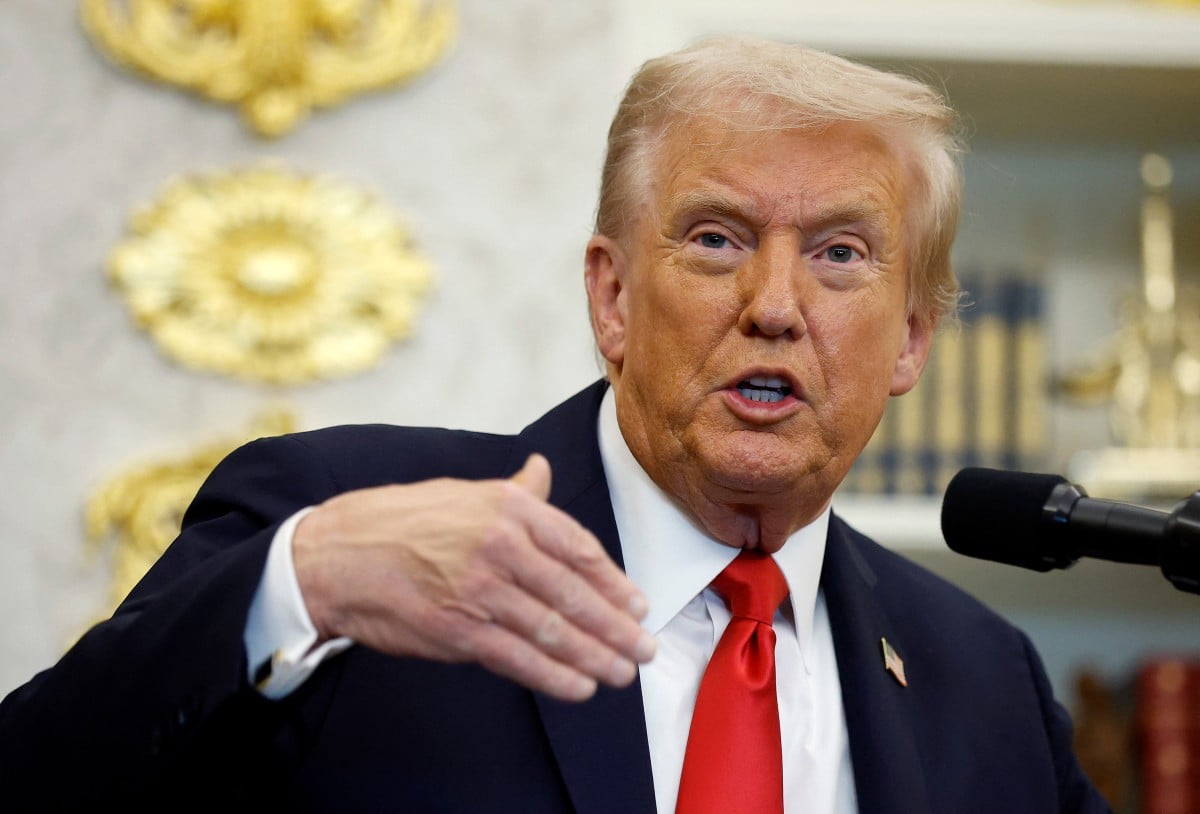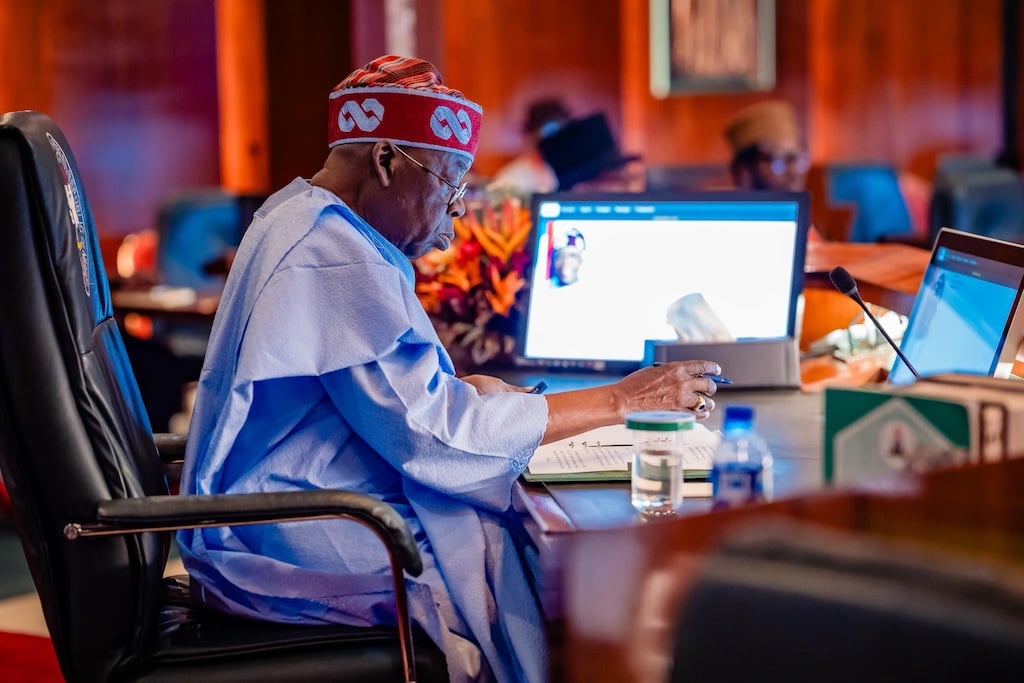
President Tinubu on Wednesday declared a nationwide security emergency, ordering the army, police and intelligence services to immediately expand recruitment and deploy thousands of additional personnel.
He also urged the National Assembly to initiate the process of legalising state police to tackle the escalating wave of kidnappings and terrorist attacks across the country in the past week.
But in a rare departure from the usual solidarity with the executive, several Senators and House of Representatives members criticised the Federal Government for negotiating with bandits for the release of hostages seized in separate attacks in Kwara and Kebbi States.
The lawmakers demanded a halt to the negotiation with the terrorists and punishment for the official who ordered the withdrawal of troops from the Government Girls Comprehensive Secondary School, Maga, Kebbi State, where 24 students were kidnapped on November 17.
The bandits also stormed St. Mary’s Catholic School, Papiri, in Agwara LGA of Niger State, abducting over 300 pupils and 12 teachers just four days after 24 schoolgirls were taken from GGCSS.
During the Kebbi attack, the vice principal, Hasan Makuku, was shot dead, while the principal was injured. About 50 girls later escaped, but the rest are still with their captors.
Another gang invaded a CAC church in Kwara State, killing at least two worshippers and abducting 38 people. The victims were released on Sunday, while the students were freed on Tuesday.
The abductions resulted in the closure of scores of schools in Kebbi, Bauchi, Yobe, Adamawa, Taraba, Plateau, Niger, Katsina and Kwara States.
The Federal Government also ordered the closure of 41 Federal Unity Colleges across the country.
The Presidency had defended the resort to negotiation with the bandits, noting that this was done to ensure the safety of the victims.
The Special Adviser on Information and Strategy to the President, Bayo Onanuga, dismissed speculation that a ransom was paid for the release of the hostages.
He said the security agencies decided not to engage the bandits at their hideout because the victims were being used as a shield.
“What sometimes restrains them from going after them is the risk of collateral damage. They go about abducting our people, and they use them as a shield so they will not be attacked.
“So, they don’t just want to be attacking them. They need to be sure that they are not using our people as a kind of shield,” he stated.
But senators and House members did not buy his argument, asserting that the approach may further embolden the criminals and worsen the country’s security crisis.
There was a heated exchange during Senate plenary as the lawmakers warned that the nation was “under attack” and on the brink of losing public confidence.
The debate in the chamber came just hours after the Senate adopted a separate motion commending President Tinubu and the security agencies for the release of the abducted victims in Kwara and Niger States.
The motion, sponsored by Senator Asiru Yisa (Kwara South), demanded the immediate creation of a Joint Task Force for the Kwara–Kogi corridor, an area security agencies describe as a major escape route for bandits.
Yisa told the chamber it was “deeply disturbed” by the attack on Christ Apostolic Church, Eruku, where gunmen killed two worshippers and kidnapped 38 others.
He further raised an alarm over reports that soldiers were withdrawn from the Kebbi school hours before bandits invaded.
Reacting, Deputy Senate President, Barau Jibrin, said the escalating violence had made it clear that Nigeria must seek broader support.
“We should seek assistance from overseas, urging collaboration with global partners to stem the crisis,” he said, insisting that the country could still overcome its security challenges with the right structure and support.
Senate Leader, Opeyemi Bamidele, described the current wave of attacks as a defining moment for the nation, warning that “business as usual” could lead to catastrophe.
While welcoming the rescue of abducted victims, he expressed concern that security agencies offered no information on terrorists neutralised during the operations.
He also cautioned colleagues against attention-seeking, referencing earlier calls in the House of Representatives for a shutdown of the National Assembly.
Bamidele further charged the Senate to examine its own internal systems. “If we are calling on the President to rejig the security architecture, we must also look into our own arrangement. I am not impressed with our Committee on Security and Intelligence. We should rejig it ourselves,” he said.
But Senator Enyinnaya Abaribe pushed back against attempts to blame previous administrations, insisting the current government must accept responsibility for its failings.
He cited reports that troops were withdrawn hours before the Kebbi school attack. “Who asked them? Nobody knows. If I were the Commander-in-Chief, I would demand answers.”
Senate President Godswill Akpabio expressed concern that intelligence failures and internal sabotage were undermining the security agencies, citing reports that the location of a brigadier general killed in Borno was compromised.
He found it troubling that despite security advisories issued to schools in Kebbi, bandits still struck unhindered.
Tension heightened when Senator Seriake Dickson warned that Nigeria was “losing prestige and integrity” due to constant attacks, accusing the majority caucus of massaging the issues rather than addressing them head-on.
His remarks triggered an uproar from APC senators, forcing the presiding officer to cut off his microphone.
As some lawmakers reiterated claims that security agencies were aware of the locations and motives of terrorists, Akpabio cautioned against turning the crisis into a sectarian narrative.
“This is orchestrated to damage the image of democracy. There is nothing like targeting Muslims or Christians. It is an attack on all. This country is under attack,” he said.
Senator Adams Oshiomhole rose in defence of President Tinubu, arguing that the administration was doing its best under severe pressure. He demanded an investigation into the troop withdrawal in Kebbi.
“Who ordered the military to withdraw? That person should be tried for terrorism. The Senate should adopt this demand among its resolutions,” he said.
He also queried alleged inconsistencies in the justice system, noting that a convicted terrorist was sentenced to 20 years while someone who killed a bandit in self-defence was condemned to death.
Some lawmakers renewed calls for the death penalty for kidnappers.
Reps tackle Tinubu
In a statement on Wednesday, a coalition of lawmakers from the six geopolitical zones decried the rising insecurity and the daily fear Nigerians endure.
The lawmakers criticised Tinubu’s approach to security, saying, “This is not leadership. This is an abdication of responsibility.”
Earlier on Tuesday, at a special session of the House of Representatives, lawmakers decried the rising insecurity and urged the Federal Government to urgently address the crisis.
In their statement signed under the banner, ‘House to the Rescue,’ the group of lawmakers condemned the Federal Government’s negotiations with the bandits.
The coalition members include Muhammed Soba (North West), Zakari Mohammed (North Central), Olasupo Abiodun (South West), Sadiq Ibrahim (North East), Uko Nkole (South East), and Bassey Ewa (South South).
Titled, ‘FG’s secret negotiations with bandits are a betrayal of the Nigerian people,’ the Rep members accused the government of choosing dialogue with criminal elements instead of apprehending them.
“The House to the Rescue unequivocally condemns the Federal Government’s ongoing negotiations with bandits and criminal networks responsible for the wave of kidnappings tearing through Nigeria.
“At a time when citizens are crying out for protection, the government has chosen to sit at the same table with those who abduct children, violate women, terrorise communities, and undermine the authority of the Nigerian state,” the statement read in part.
Citing the fresh kidnappings in Kano, Kwara, Kebbi and other states, the coalition said, instead of decisive action, the Federal Government had offered “silence, excuses, and back-door concessions to violent groups.”
“No functioning nation rewards criminality with dialogue. Negotiation with bandits has never worked anywhere,” they warned, adding that “Global history warns us that countries that tried this path paid dearly for it.”
The lawmakers pointed at examples from around the world, noting that in Colombia, “Talks with the Revolutionary Armed Forces emboldened kidnappers, increased ransom operations, and strengthened the group militarily.”
They added that in Mexico, “Back-channel contacts with cartels worsened kidnapping rates, empowered gangs, and created a security collapse from which Mexico still suffers.”
In Afghanistan, they argued that concessions to the Taliban, “including prisoner swaps—allowed the group to regroup and eventually overthrow the entire government.”
‘’In Somalia, engagement with warlords only deepened the conflict and gave militias space to expand, while in Mali, deals with jihadist/bandit groups allowed them to spread violence into neighbouring countries.”
The lawmakers cautioned the Federal Government that “Negotiating with violent non-state actors leads to more violence, not peace. Nigeria is not an exception.”
According to them, “Nigeria will not be the first country where bandit negotiations succeed,” arguing that the government was legitimising criminality and endangering the entire nation.
“By entering talks with bandits, the Federal Government is signifying weakness, incentivizing more kidnappings, giving criminals political relevance, undermining security agencies, and destroying public trust in the state.”
The group added that this approach had created “a dangerous business model where abductors take citizens and wait for government representatives to arrive with negotiations instead of force.”
It further asked the government to “Stop all negotiations and covert dealings with bandits immediately, launch a coordinated, intelligence-driven national security operation to rescue victims and dismantle kidnapping networks.’’
The statement further advised the Tinubu administration to “Publish a clear security strategy with timelines, responsibilities and accountability mechanisms.
“Activate full National Assembly oversight to investigate all government officials and state actors involved in unauthorised contacts or negotiations with criminals.”
The lawmakers insisted that “Government’s first duty is the protection of lives and property,” adding that “Any administration that chooses compromise with criminals over the safety of its people has lost moral authority to lead.”
According to them, “Nigerians deserve a country where criminals fear the state, not a country where the state fears the criminals.”
The African Democratic Congress, likewise, cautioned President Tinubu against entering into secret deals with bandits, warning that such actions could worsen the country’s security crisis.
The party’s National Publicity Secretary, Mallam Bolaji Abdullahi, who addressed journalists at the ADC national secretariat in Abuja after a closed-door meeting of party and coalition leaders, insisted the government must explain the “opaque and troubling manner” in which the victims were released.
Abdullahi said the ADC was pleased that several abducted victims had regained freedom.
‘’We strongly believe that this administration is negotiating deals with insurgents,” describing conflicting official accounts as evidence that “the Federal Government is not being honest with Nigerians.”
The former minister faulted comments credited to the Inspector-General of Police and the Presidential spokesman that the kidnappers “Came out voluntarily for the peace talk” or released the victims because the government “Asked them nicely,” stating they were unacceptable in a country battling violent crime.
He added, “Is the Nigerian government paying ransom to insurgents? What exactly was exchanged for the so-called surrender of weapons? And if these bandits truly surrendered weapons, what prevents them from simply acquiring new ones and continuing their criminal enterprise?”
The ADC warned that negotiating with bandits would “expand the banditry economy,” pointing out that attackers returned to Ekiti Local Government in Kwara State barely a day after releasing earlier victims, abducting 11 more residents.
The party also condemned the recent closure of unity schools, saying the decision signalled weakness and emboldened terrorists.
Abdullahi said, “By closing schools, the Tinubu administration is reinforcing the very ideology Boko Haram was built upon. This government is effectively telling the world that it cannot protect Nigeria’s schoolchildren.”
The ADC urged the Federal Government to revive the Safe Schools Initiative, deploy NSCDC personnel to unity schools, and ensure the immediate rescue of all abducted children.
The ADC meeting was attended by several coalition leaders, including ADC National Chairman, Senator David Mark, former SGF Babachir Lawal, former Kaduna State governor, Nasir El-Rufai, ex-Rivers State governor, Rotimi Amaechi, former ADC chairman Dr Ralph Nwosu, and Abdullahi.
The gathering is part of efforts by the coalition to build a stronger opposition front after former Vice President Atiku Abubakar picked up his ADC membership card on Monday.
In a similar vein, Atiku Abubakar criticised the decision of the Tinubu government to negotiate with the bandits responsible for the abduction of several Nigerians, including students.
In a statement on Wednesday by his media office, Atiku faulted comments by Presidential aide, Onanuga, who had described the release of the abducted students as a “triumph.”
“After the incident happened, the DSS and the military were involved in the rescue efforts. They got in contact with the bandits to release those people unharmed, and finally, on Sunday, they were able to get them out,” Onanuga had said.
Atiku described the Federal Government’s approach as an attempt to conceal incompetence, questioning why the criminals were not arrested or killed if the security agencies indeed tracked them as claimed.
The statement read in part: “Why were these criminals not arrested, neutralised, or dismantled on the spot? Why is the government boasting about talking to terrorists instead of eliminating them? Why is kidnapping now reduced to a routine phone call between criminals and state officials?
“This irresponsible and reckless narrative exposes the truth: Under Tinubu, terrorists/bandits have become an alternative government — negotiating, collecting ransom, and walking away untouched — while the presidency celebrates their ‘compliance.’
“No serious nation applauds itself for negotiating with terrorists it claims to have under surveillance. No responsible government congratulates itself for allowing abductors to walk back into the forests to kidnap again.”
Tinubu orders police recruitment
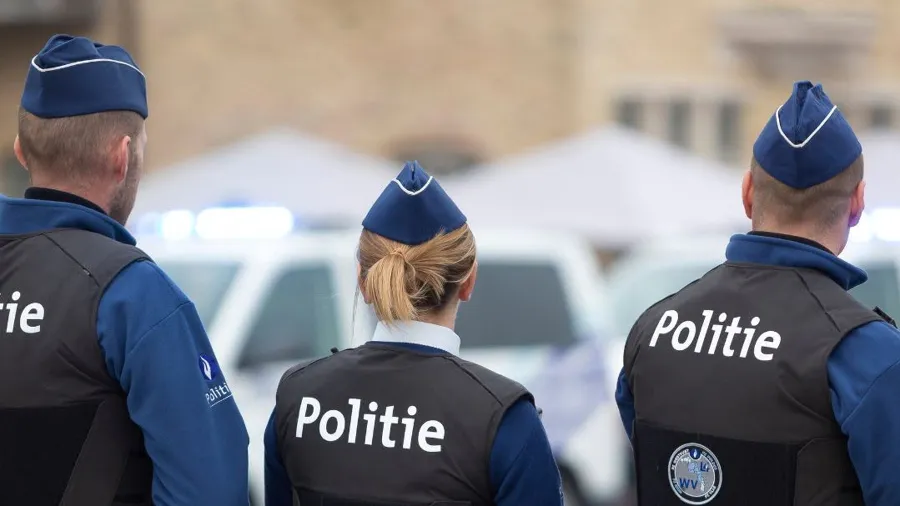
In a statement he signed on Wednesday, the President authorised the Nigeria Police Force to recruit 20,000 additional officers, bringing the ongoing recruitment drive to 50,000, and directed the military to similarly enlist more personnel for rapid deployment.
“Today, in view of the emerging security situation, I have decided to declare a nationwide security emergency and order additional recruitment into the Armed Forces,
“By this declaration, the police and the army are authorised to recruit more personnel. The police will recruit an additional 20,000 officers, bringing the total to 50,000,” Tinubu declared.
He also approved the temporary conversion of National Youth Service Corps camps into police training depots to fast-track the preparation of recruits.
Police officers recently withdrawn from VIP escort duties are to undergo “crash training” and be redeployed to high-risk zones.
“Although I had previously approved the nationwide upgrade of police training facilities, the police authorities are, by this statement, authorised to use various National Youth Service Corps camps as training depots.
“The officers being withdrawn from VIP guard duties should undergo crash training to debrief them and deliver more efficient police services when deployed to security-challenged areas of the country,” he noted.
The announcement comes after more than 300 persons, mostly schoolchildren, were abducted in Kebbi, Niger and Kwara states in barely one week, triggering national outrage and prompting the President to cancel his trips to South Africa and Angola.
Tinubu also directed the Department of State Services to deploy all trained forest guards into the field “To flush out the terrorists and bandits lurking in our forests,” adding that the agency has presidential approval to recruit even more personnel.
“The DSS also has my authority to immediately deploy all the forest guards already trained to flush out the terrorists and bandits lurking in our forests.
“The agency also has my directive to recruit more men to man the forests. There will be no more hiding places for agents of evil,” he declared.
Calling for nationwide vigilance, the President urged citizens to support security forces by reporting suspicious activity.
“Fellow Nigerians, this is a national emergency, and we are responding by deploying more boots on the ground. As Nigerians, we should all get involved in securing our nation.”
The President commended security agencies for the successful rescue of the 24 abducted schoolgirls in Kebbi and 38 church worshippers in Kwara, while noting that efforts continue to locate the remaining missing students from the Catholic school in Niger State.
Tinubu also urged the National Assembly to commence legislative work on enabling states to establish their own police formations.
The establishment of state police has stalled at the National Economic Council for months since Tinubu first mulled the idea in February 2025.
“Our administration will support state governments which have set up security outfits to safeguard their people from the terrorists bent on disrupting our national peace.
“I call on the National Assembly to begin reviewing our laws to allow states that require state police to establish them,” he announced.
The President advised states to discontinue siting boarding schools in remote locations without adequate protection and called on churches and mosques in high-risk areas to proactively request security cover.
He stated, “States should rethink establishing boarding schools in remote areas without adequate security.
“Mosques and churches should constantly seek police and other security protection when they gather for prayers, especially in vulnerable areas.”
Reiterating his administration’s creation of the Federal Ministry of Livestock Development, the President urged herder associations to take advantage of the ministry’s programmes and abandon open grazing.
“Ranching is now the path forward for sustainable livestock farming and national harmony,” he said.
Tinubu condoled with families affected by multiple attacks in Kebbi, Borno, Zamfara, Niger, Yobe and Kwara, and paid tribute to fallen military personnel, including Brig. Gen Musa Uba.
Those behind the recent attacks, Tinubu warned, must not misinterpret restraint as weakness.
“Those who want to test our resolve should never mistake our restraint for weakness. This administration has the courage and determination to keep the country safe.”
The President urged Nigerians to remain calm and vigilant, assuring that the security overhaul will restore peace.
He stated, “Fellow Compatriots, I urge you not to give in to fear and never succumb to despair. Let’s stand together in purpose and strength to defend our freedom and values. Our administration will continue to guarantee peaceful co-existence and preserve our union.
“I urge all Nigerians to remain calm and vigilant. Report suspicious activities. Cooperate with security agencies. We are in this fight together, and together we shall win. May God continue to bless Nigeria and keep our armed forces safe.
Meanwhile, the governor of Ogun State and Chairman of Southern Governors’ Forum, Dapo Abiodun, has said that the establishment of state police is no longer negotiable.
Abiodun pointed out that the renewed assault by non-state actors against the nation’s security architecture has lent credence to the fact that no region is insulated from the deviant actions of the criminals.
Addressing the Southern Governors’ Forum meeting held at his Iperu Remo private residence in the Ikenne Local Government of Ogun State, on Wednesday, the governor hailed the President for demonstrating what he called “exceptional leadership” by coordinating the efforts to rescue the abducted citizens.
Those who attended the meeting are Governors Siminalayi Fubara of Rivers State, Alex Otti (Abia), Biodun Oyebamiji (Ekiti), Francis Nwifiru (Ebonyi), Peter Mbah (Enugu), Charles Soludo (Anambra), Babajide Sanwo-Olu (Lagos) and Lucky Aiyedatiwa of Ondo State.
The deputy governors at the meeting include Kola Adewusi of Osun State, Bayo Lawal (Oyo), Peter Odey (Cross River) and Dennis Idahosa of Edo State.
He stressed the need for the governors in the region to work together with the traditional rulers to ensure that the security architecture across the region remains impregnable to criminals.
“Distinguished colleagues, as we deliberate on the security architecture of Southern Nigeria, it is important to state clearly that the creation of state police remains a non-negotiable component of our collective demand for true federalism and effective grassroots security.
“Our region has consistently advocated for a policing system that is closer to the people, more responsive to local realities, and better equipped to address the rapidly evolving threats we face.
“The recent incidents across the country reinforce the urgency of decentralising policing so that states can take direct responsibility for safeguarding their citizens.
“A unified Southern position on state police will not only enhance intelligence gathering and early-warning capabilities, but also strengthen our ability to secure schools, farmlands, border communities, and critical infrastructure across our states.’’
PSC, police raise committee
In response to a presidential directive, the Police Service Commission and the Nigeria Police Force have inaugurated a joint ad-hoc committee to begin the recruitment of 30,000 new police personnel.
The committee was inaugurated on Wednesday by the PSC Chairman, DIG Hashimu Salihu Argungu (retd.).
The decision followed the withdrawal of police officers attached to Very Important Persons and a presidential approval for the recruitment of 30,000 cops.
In a statement by Torty Kalu on behalf of the Chairman, Nigeria Police Force Matters Committee, he said the joint committee is tasked with developing a transparent and efficient recruitment process and ensuring that the exercise is conducted with integrity and in line with established guidelines.
“The PSC and the NPF have established a high-powered joint ad-hoc committee to drive the immediate commencement of the recruitment of 30,000 new police personnel.
“The ad-hoc committee was inaugurated today, 26th November 2025, by the Chairman, Police Service Commission, DIG Hashimu Salihu Argungu (retd.), at the Police Service Commission Corporate Headquarters, Jabi, Abuja, following the presidential directive to bolster the numerical strength of the NPF and enhance national security.
“The primary mandate of the joint ad-hoc committee is to collaborate and brainstorm on creating a seamless, transparent, and efficient recruitment process. The committee will work to ensure the exercise is conducted with the highest standards of integrity and merit,” the statement partly read.
Argungu, represented by DIG Taiwo Lakanu (retd.), who also chairs the Commission’s Police Force Matters Committee, said collaboration between the PSC and the NPF was essential to ensure a credible recruitment exercise.
The Inspector-General of Police, represented by CP Edwin Eloho of the Department of Training and Development, said the recruitment was necessary to strengthen the capacity of the police to protect citizens and assured the PSC of the NPF’s full cooperation.
The inauguration of the committee is part of the Federal Government’s broader efforts to address security challenges and improve the police-to-citizen ratio.
FCT launches school intelligence network
The FCT Commissioner of Police, Miller Dantawaye, says security agencies have launched an aggressive intelligence-gathering network with schools across Abuja as part of the newly relaunched Operation Sweep, aimed at keeping kidnappers and other criminals away from the capital.
The CP disclosed this after a security meeting presided over by FCT Minister Nyesom Wike on Wednesday.
Dantawaye said schools are now at the centre of a coordinated intelligence drive, stressing that the move became necessary following rising abductions in parts of the country.
“As I said, we have experienced the kidnapping of school students here and there within the country. We have experienced raiding of religious institutions, and we feel that that cannot happen.
“So we have activated, through this operation, serious and very robust interaction with schools, gathering as much intelligence as we can get,” he explained.
In response to the escalating kidnap wave, the CP said officers have begun profiling, patrolling and securing schools, especially those on Abuja’s fringes, where criminals are “most likely to attempt” attacks.
Dantawaye also confirmed deployment to religious centres.
Parents of abducted children die
Two parents of some of the abducted children have reportedly died after the abduction of their wards.
Anthony Musa was said to have suffered a heart attack, while another woman, whose identity was not immediately known, passed on from an undisclosed ailment.
Their children were among the 315 pupils abducted by terrorists in St Mary Private Catholic Primary and Secondary School.
The Chairman of the Christian Association of Nigeria and Catholic Bishop of Kontagora Diocese, Most Rev. Bulus Yohanna, confirmed the deaths on Wednesday, through his media aide, Daniel Atori.
Yohanna, who is also the proprietor of the school, said, “The man, Anthony Musa, died of a heart attack, but the female we don’t have the details yet because we couldn’t get the family.”