Connect with us

Lifestyle

PHOTOS: Superstitious Beliefs: How Do They Affect Your Life?

Published

on

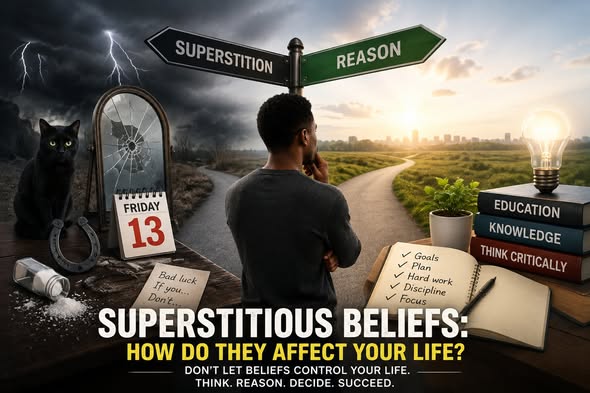
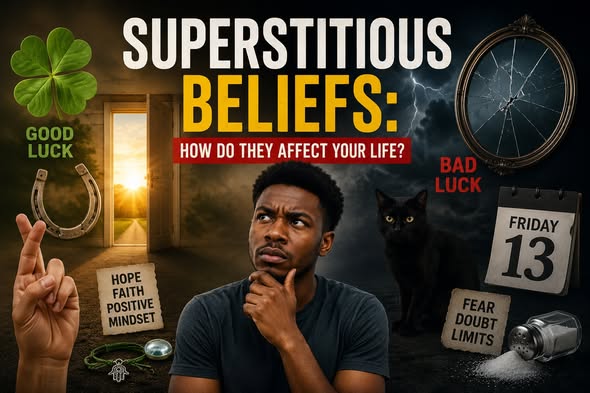
Superstitious beliefs are part of everyday life in many societies. People may avoid certain activities on particular days, believe that some objects bring good or bad luck, or interpret unusual events as signs of what is about to happen.

Some people follow these beliefs seriously, while others say they do not believe in them but still find themselves observing certain traditions “just in case.”

But how much influence do these beliefs really have on our lives?

What are superstitious beliefs?

Superstitions are beliefs that connect particular actions, objects, numbers or events with good or bad luck, even when there is no reliable scientific evidence showing that the connection exists.

For example, someone may believe that a particular number is unlucky, that breaking a mirror brings bad luck, or that a particular ritual can prevent something bad from happening.

Psychologists have suggested that superstition can partly arise from the human tendency to look for patterns and connections between events. Our brains naturally try to identify relationships between things, sometimes finding a cause-and-effect connection where one may not actually exist.

Why do people believe in superstitions?

One important reason is uncertainty.

When people don’t know what will happen, having a ritual or belief can make them feel that they have some control over the situation. Research has described superstition as a possible way of coping with uncertainty and anxiety, although relying on it can also interfere with ordinary decision-making.

Imagine someone preparing for an important examination. They may have a particular pen they consider “lucky” and insist on using it every time they take an exam.

See also  Akinwumi Isola: Professor who stood for the Yoruba people, his last words

The pen itself does not determine whether they pass or fail. But the person’s belief in it may make them feel calmer and more confident.

That raises an interesting question:

Is the belief helping the person—or is the person becoming dependent on the belief?

Superstition can influence decision-making

This is where superstition can become more serious.

If someone believes that an event is a sign of what will happen in the future, they may make important decisions based on that belief rather than evidence.

Studies have found that superstitious beliefs can influence decision-making, particularly when people are dealing with uncertainty or risk.

For example, someone might refuse a business opportunity because they believe a particular event is a bad omen. Another person might spend money on a supposed lucky object because they believe it will bring financial success.

The danger is not simply believing in a superstition. The bigger problem is allowing the belief to control important decisions.

Superstitions can affect confidence

Beliefs can influence how people feel and behave.

If someone repeatedly tells themselves that they are going to experience bad luck, they may become anxious and pay greater attention to negative events.

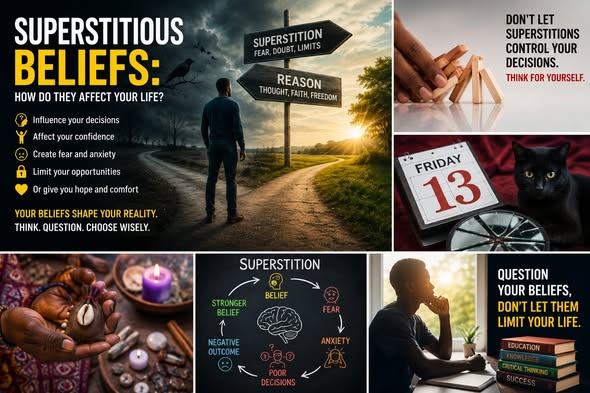
That can create a cycle:

Belief → fear → anxiety → poor decisions → negative outcome → stronger belief.

For instance, if someone believes that seeing a particular animal means something bad will happen, they may become worried after seeing it. Their anxiety could then make them distracted or less confident, potentially contributing to mistakes.

The person may subsequently conclude that the superstition was correct.

See also  No other country sees daily killings like Nigeria – Kukah

Psychologists describe related processes in which expectations can influence behaviour and make an expected outcome appear more likely.

But are all superstitions harmful?

No.

Not every superstition has a serious negative effect.

Some beliefs are simply cultural traditions. People may participate in them because they are part of their family’s history, community or culture.

A person can enjoy a cultural tradition without allowing it to control their life.

The important distinction is between:

“This is a tradition I enjoy.”

and:

“I cannot make an important decision unless I follow this belief.”

The second situation can become problematic.

Superstition and African society

Across Africa, many traditional beliefs have been passed from one generation to another.

Some are connected to cultural customs, while others involve interpretations of dreams, unusual occurrences, animals, particular days, numbers or events.

It is important to approach these subjects with respect because cultural beliefs can have deep meaning for communities.

At the same time, respecting a tradition does not mean that every claim associated with it should automatically be accepted as fact.

A healthy society should be able to preserve valuable cultural traditions while also encouraging critical thinking, education and evidence-based decision-making.

When superstition becomes dangerous

Superstition becomes particularly concerning when it causes people to:

Avoid necessary medical treatment.
Lose significant amounts of money.
Make major financial decisions without evidence.
Live in constant fear.
Blame innocent people for misfortune.
Discriminate against others.
Allow beliefs to prevent education or personal development.
Make important life decisions entirely on the basis of omens.

Research on superstitious thinking has found associations with judgment and decision-making, which is why examining these beliefs critically can be valuable.

See also  Marital dispute: Edo Assembly summons 2Baba’s wife

The question we should ask ourselves

We don’t necessarily have to fight every superstition.

Instead, we should ask:

Does this belief improve my life, or does it control my life?

If a tradition brings cultural connection, enjoyment or harmless comfort, a person may choose to keep it.

But if a belief prevents someone from pursuing an opportunity, seeking appropriate help, making rational decisions or living without fear, it may be time to reconsider it.

Final thought

Superstitions have existed for centuries, and they are unlikely to disappear completely. Human beings naturally look for patterns and explanations, particularly when faced with uncertainty.

The goal should not necessarily be to ridicule people for what they believe.

The better goal is to think critically, examine our assumptions and make important decisions based on reliable information rather than fear.

After all, a belief should be something you can question—not something that controls your life.
FOLLOW US ON:

FACEBOOK

TWITTER

PINTEREST

TIKTOK

YOUTUBE

LINKEDIN

INSTAGRAM

Continue Reading
Click to comment

Leave a Reply

Your email address will not be published. Required fields are marked *

Lifestyle

A Strong Marriage Is Built on Trust, Honesty and Decisions Made Together

Published

on

Marriage is more than living under the same roof or sharing a family name. A strong and healthy marriage is built every day through trust, honesty, communication, respect and teamwork.

Love is important, but love alone cannot solve every problem. When challenges come, couples need a solid foundation that allows them to face difficulties together rather than turning against each other.

Trust Is the Foundation

Trust gives a marriage security. When couples trust each other, they can communicate openly without constantly living in fear, suspicion or doubt.

Trust does not mean that partners will never make mistakes. It means both people are willing to be accountable, communicate honestly and work to rebuild confidence when it has been damaged.

Without trust, even simple situations can become sources of unnecessary conflict.

Honesty Matters, Even When the Truth Is Difficult

Honesty is another essential part of a strong marriage.

There will be moments when telling the truth is uncomfortable. However, hiding important information, deliberately misleading a spouse or keeping major decisions secret can create problems that become much bigger over time.

A healthy marriage should provide a safe environment where both partners can speak honestly while still showing respect for each other.

Important Decisions Should Be Made Together

Marriage is a partnership, and important decisions should not always be made by one person alone.

Financial matters, family responsibilities, major purchases, relocation, parenting and other important issues can affect both partners. Whenever possible, couples should discuss these matters, listen to each other’s opinions and reach decisions together.

See also  Akinwumi Isola: Professor who stood for the Yoruba people, his last words

Making decisions together does not mean that a husband and wife must agree on everything. Healthy couples can disagree while still respecting each other.

Communication Can Prevent Many Problems

Sometimes the biggest problem in a marriage is not the disagreement itself but the refusal to communicate.

Silence, assumptions and unresolved resentment can gradually create emotional distance between two people.

Couples should learn to talk about problems before they become bigger. Listening is just as important as speaking. A conversation should not always be about proving who is right; sometimes it should be about understanding how the other person feels.

Marriage Should Be a Partnership

A strong marriage is not a competition between husband and wife.

It is not about one person controlling every decision while the other simply follows. It is about two people working toward a shared future.

There will be difficult seasons, disagreements and mistakes. But when both partners are committed to trust, honesty, respect and teamwork, they have a stronger foundation for dealing with those challenges.

Final Thoughts

A successful marriage does not happen by accident. It requires daily effort from both partners.

Trust creates security. Honesty creates transparency. Communication creates understanding. Shared decisions create partnership.

When two people learn to trust each other, communicate honestly and make important decisions together, they are not simply maintaining a marriage—they are building a stronger future together.

A strong marriage is built one conversation, one decision and one act of trust at a time.

What Do You Think?

What do you believe is the most important foundation of a successful marriage: trust, honesty, communication or mutual respect?

See also  ‘99% Of Nigerian Men Cheat’ – Nollywood Actress, Bimbo Akintola

Share your thoughts in the comments.

FOLLOW US ON:

FACEBOOK

TWITTER

PINTEREST

TIKTOK

YOUTUBE

LINKEDIN

INSTAGRAM

Continue Reading

Lifestyle

Fear May Explain Our Choices, But It Should Never Justify Deception

Published

on

By NewsBreak365 Editorial Team

Fear is a powerful emotion. It can influence the decisions we make, the words we speak and even the way we treat people we love. Sometimes, people make poor choices because they are afraid of losing someone, facing rejection, being exposed or dealing with the consequences of their actions.

But there is an important difference between understanding why someone deceived us and accepting deception as justified.

Fear may explain a person’s behaviour, but it does not automatically make that behaviour right.

Fear Can Influence Our Decisions

People often respond to fear by trying to protect themselves.

Someone may hide the truth because they are afraid of an argument. Another person may tell a lie because they fear losing a relationship. Someone else may conceal an important fact because they are worried about how others will react.

These fears may be real.

However, difficult emotions do not remove personal responsibility.

We can understand why someone made a particular choice without pretending that the choice was acceptable.

Deception Can Destroy Trust

Trust is one of the foundations of any healthy relationship.

Whether it is between spouses, partners, friends, family members or colleagues, trust takes time to build. But deception can damage it very quickly.

The most painful part of deception is often not only the lie itself. It is the realisation that someone deliberately chose to hide the truth while expecting another person to continue trusting them.

Once trust is damaged, even the truth can become difficult to believe.

See also  Marital dispute: Edo Assembly summons 2Baba’s wife

That is why honesty matters, especially when telling the truth is uncomfortable.

Privacy Is Not the Same as Deception

There is also an important distinction that should not be ignored.

Everyone has a right to privacy.

You do not have to reveal every personal thought, every conversation or every detail of your life simply because someone asks.

Having boundaries is not the same as lying.

But deliberately creating a false impression, hiding important information or misleading someone while knowing they are relying on false information is different.

Privacy protects personal boundaries.

Deception deliberately distorts reality.

Tell the Truth Before the Lie Becomes Bigger

Sometimes people tell one lie to cover another.

They may think they are buying themselves time or avoiding immediate conflict. Unfortunately, the problem often becomes bigger.

One lie can require another explanation. Another explanation can require another lie.

Eventually, maintaining the deception can become more difficult than simply admitting the truth.

The Bible offers a clear reminder:

“Wherefore putting away lying, speak every man truth with his neighbour.”
— Ephesians 4:25 (KJV)

Proverbs 12:22 also says:

“Lying lips are abomination to the LORD: but they that deal truly are his delight.”

For people who value faith, honesty is therefore not merely a social principle; it is also a matter of character.

Accountability Matters

Making a mistake does not make someone a bad person forever.

People can make wrong decisions, recognise their mistakes and change.

What matters is what happens after the mistake.

Do you accept responsibility?

Do you apologise?

Do you tell the truth?

See also  Your Spouse Is Not Your Ex: Stop Making Innocent People Pay for Past Betrayals

Do you make an effort to repair the damage?

Or do you continue creating excuses and blaming circumstances, fear or other people?

Taking responsibility is often the first step toward rebuilding trust.

Sometimes the Truth Hurts—But Lies Can Hurt More

The truth may cause an uncomfortable conversation.

It may lead to disappointment.

It may even change a relationship.

But protecting a relationship through deception can create an even deeper problem. A relationship built on false information cannot have the same foundation as one built on honesty.

Sometimes the most courageous thing a person can say is:

“I was afraid, I made the wrong choice, and I should have told you the truth.”

That statement may not immediately repair the damage, but it demonstrates accountability.

The Real Question

The issue is not whether fear is real.

Fear is real.

The bigger question is whether fear should be allowed to control our character.

We can be afraid and still choose honesty.

We can be nervous and still tell the truth.

We can make a mistake and still accept responsibility.

Fear may explain our choices, but it should never become an excuse for deception.

In the end, honesty may cost us something in the short term, but deception can cost us something far more valuable: trust.

What Do You Think?

Can fear ever justify lying to someone you love?

Is a lie more understandable when it was motivated by fear of losing a relationship—or does deception remain deception regardless of the reason?

Share your thoughts in the comments.

NewsBreak365 — Real Stories. A Better Tomorrow.

#Fear #Deception #Honesty #Truth #Trust #Relationships #Integrity #LifeLessons #Faith #Wisdom #KJV

FOLLOW US ON:

FACEBOOK

TWITTER

PINTEREST

TIKTOK

YOUTUBE

LINKEDIN

INSTAGRAM

Continue Reading

Lifestyle

Silence Can Destroy Relationships Faster Than Conflict — But Healthy Boundaries Matter

Published

on

By Newsbreak365

Sometimes the biggest threat to a relationship is not the argument itself, but what happens when communication completely stops.

Every relationship experiences disagreements. Couples will not always agree on money, family, parenting, expectations, or everyday decisions. Conflict itself does not necessarily mean that a relationship is failing.

In many cases, how couples handle conflict matters more than the conflict itself.

One of the most damaging responses, however, can be prolonged silence—especially when silence is deliberately used to punish, control, manipulate, or emotionally hurt a partner.

When Silence Becomes a Wall

There is a major difference between taking time to calm down and deliberately shutting someone out.

A person may genuinely need some time alone after a heated argument. Saying, “I am too angry to discuss this right now; let’s talk when we are both calm,” can be a healthy decision.

But refusing to communicate for days, deliberately ignoring messages, withholding affection to punish someone, or making a partner constantly wonder what they did wrong can create emotional distance.

Eventually, two people can live under the same roof while feeling completely disconnected.

The Bible says:

“A soft answer turneth away wrath: but grievous words stir up anger.”
— Proverbs 15:1 (KJV)

The principle is simple: communication can calm conflict when it is handled with wisdom and respect.

You Don’t Have to Win Every Argument

Relationships are not competitions.

Sometimes, being right is less important than preserving peace and understanding.

A couple can disagree without insulting each other. They can express anger without threatening each other. They can have different opinions without destroying each other’s dignity.

See also  ‘99% Of Nigerian Men Cheat’ – Nollywood Actress, Bimbo Akintola

The Bible says:

“He that is slow to wrath is of great understanding: but he that is hasty of spirit exalteth folly.”
— Proverbs 14:29 (KJV)

Being slow to anger does not mean pretending that nothing is wrong. It means learning how to respond without allowing anger to control your actions.

Healthy Relationship Boundaries Are Also Important

While communication is essential, communication should never be used as an excuse to tolerate abuse.

You can love your partner and still establish boundaries.

You can say:

“I will not accept insults or humiliation.”
“I will not continue a conversation when I am being threatened.”
“I need some time to calm down, but I am willing to return to this conversation.”
“I will not accept physical violence in this relationship.”
“My personal boundaries deserve to be respected.”

Healthy boundaries do not destroy relationships. In many cases, they help establish respect, safety and accountability.

The Bible says:

“The prudent man foreseeth the evil, and hideth himself: but the simple pass on, and are punished.”
— Proverbs 22:3 (KJV)

If someone is facing violence, threats, intimidation, or abuse, creating distance and seeking help can be necessary. Safety should come before winning an argument or preserving appearances.

There Is a Difference Between Space and the Silent Treatment

Taking healthy space can sound like:

“I love you, but I am too angry to talk properly right now. Give me some time, and let’s discuss this later.”

The silent treatment can look very different:

“I know you are trying to reach me, but I am deliberately ignoring you because I want you to suffer.”

See also  Professor Kenneth Onwuka Dike (1917–1983): Nigeria’s First Professor of History (PHOTOS)

One creates an opportunity for emotions to settle.

The other can create fear, resentment, confusion and emotional disconnection.

That distinction matters.

Don’t Let Pride Destroy What Love Built

The Bible also says:

“Be ye angry, and sin not: let not the sun go down upon your wrath: Neither give place to the devil.”
— Ephesians 4:26–27 (KJV)

Not every disagreement will be solved immediately. Sometimes people need time before they can have a productive conversation.

But when the situation is safe, continually postponing communication can allow resentment to grow.

A simple apology can sometimes open the door.

A simple conversation can clear up a misunderstanding.

A simple act of listening can remind someone that they are still valued.

Love Requires Communication — and Respect

A healthy relationship is not one without disagreements.

It is a relationship where two people can disagree while maintaining respect, safety and dignity.

Talk when you can.

Take space when you need it.

Set boundaries when necessary.

Seek help when the situation becomes unsafe.

And never confuse peace with silence or love with tolerating mistreatment.

Final Thought

Sometimes a relationship does not begin to fall apart when the argument starts.

Sometimes it begins to fall apart when both people stop trying to communicate.

Conflict can sometimes be resolved through honest conversation.

Silence, when used as punishment, can create a distance that becomes much harder to repair.

Talk. Listen. Respect. Forgive. Set healthy boundaries. And protect your peace.

What Do You Think?

Is prolonged silence more damaging to a relationship than an argument?

Or do you believe that sometimes silence and distance are necessary to protect yourself?

See also  Akinwumi Isola: Professor who stood for the Yoruba people, his last words

Share your thoughts in the comments.

FOLLOW US ON:

FACEBOOK

TWITTER

PINTEREST

TIKTOK

YOUTUBE

LINKEDIN

INSTAGRAM

Continue Reading

Trending