

Connect with us

Lifestyle

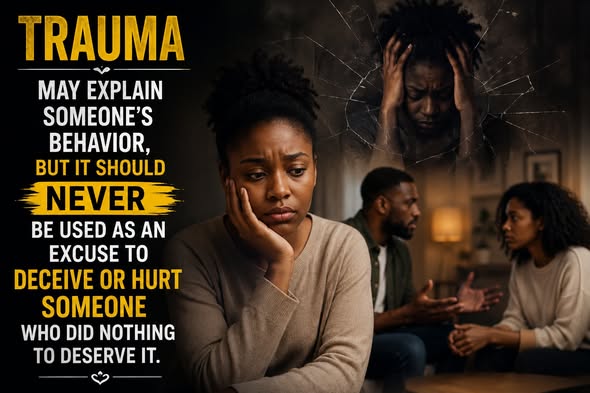
TRAUMA MAY EXPLAIN SOMEONE’S BEHAVIOR, BUT IT SHOULD NEVER BECOME AN EXCUSE TO DECEIVE OR HURT AN INNOCENT PERSON.

Published

on

Pain can explain why someone struggles, but it does not give them permission to lie, manipulate, betray, or deliberately hurt another person. We should have compassion for people who have been wounded, but compassion does not mean excusing wrongdoing.

The Bible teaches us to treat others with love, truth, mercy, and righteousness. What someone else did to you in the past should not become a reason to punish someone who had nothing to do with your pain.

“And be ye kind one to another, tenderhearted, forgiving one another, even as God for Christ’s sake hath forgiven you.”
— Ephesians 4:32 (KJV)

Being hurt does not give us the right to hurt others. Being betrayed does not justify becoming a betrayer. Being deceived does not justify deceiving someone innocent.

“Recompense to no man evil for evil. Provide things honest in the sight of all men.”
— Romans 12:17 (KJV)

We are responsible for our own actions. We cannot blame our past, our wounds, or the mistakes of other people for the choices we make today.

“For every man shall bear his own burden.”
— Galatians 6:5 (KJV)

If you have been wounded, seek healing without making an innocent person pay for someone else’s sins. Learn to communicate. Learn to forgive. Seek wisdom. Seek God. And most importantly, choose not to become the very person who hurt you.

“Be not overcome of evil, but overcome evil with good.”
— Romans 12:21 (KJV)

Your trauma deserves understanding, but another person also deserves honesty, respect, and justice. Your pain may explain your struggle, but it should never become a weapon against someone who did nothing to deserve it.

See also  States, tour operators demand more slots for Nigerians ahead of 2026 Hajj

Choose healing over revenge.
Choose truth over deception.
Choose forgiveness over bitterness.
Choose love over hurting others.
Choose God’s way over the cycle of pain.

FOLLOW US ON:

FACEBOOK

TWITTER

PINTEREST

TIKTOK

YOUTUBE

LINKEDIN

INSTAGRAM

Continue Reading
Click to comment

Leave a Reply

Your email address will not be published. Required fields are marked *

Lifestyle

Karma Is Real: You Reap What You Sow

Published

on

Karma is often described as the idea that what you do to others eventually comes back to you. The Bible expresses a similar principle in a powerful way: you reap what you sow.

The evil we do to others may sometimes appear to go unpunished, but God sees everything. We may deceive people, hurt them, betray them, or take advantage of them and think we have gotten away with it. But God’s Word reminds us that our actions have consequences.

“Be not deceived; God is not mocked: for whatsoever a man soweth, that shall he also reap.”
— Galatians 6:7 (KJV)

If you sow hatred, do not expect love to grow from it. If you sow cruelty, do not be surprised when you eventually experience the consequences of your actions. If you sow kindness, mercy, honesty, and love, you are planting seeds that can produce something good.

The Bible also warns:

“For he that soweth to his flesh shall of the flesh reap corruption; but he that soweth to the Spirit shall of the Spirit reap life everlasting.”
— Galatians 6:8 (KJV)

You may think you have escaped the consequences of what you did to someone, but God knows the truth. You do not need to revenge yourself or wish evil upon anyone. Leave judgment in God’s hands.

“Dearly beloved, avenge not yourselves, but rather give place unto wrath: for it is written, Vengeance is mine; I will repay, saith the Lord.”
— Romans 12:19 (KJV)

So, be careful about the seeds you plant in other people’s lives. The pain you cause today may become the lesson you learn tomorrow.

See also  Vintage Mid-20th Century Black and White Television: A Glimpse into Early Home Entertainment (PHOTOS)

Do good. Show kindness. Forgive. Be honest. Treat people with respect.

Because in the end, what you sow, you will reap.

“Whatsoever a man soweth, that shall he also reap.” — Galatians 6:7 (KJV)

FOLLOW US ON:

FACEBOOK

TWITTER

PINTEREST

TIKTOK

YOUTUBE

LINKEDIN

INSTAGRAM

Continue Reading

Lifestyle

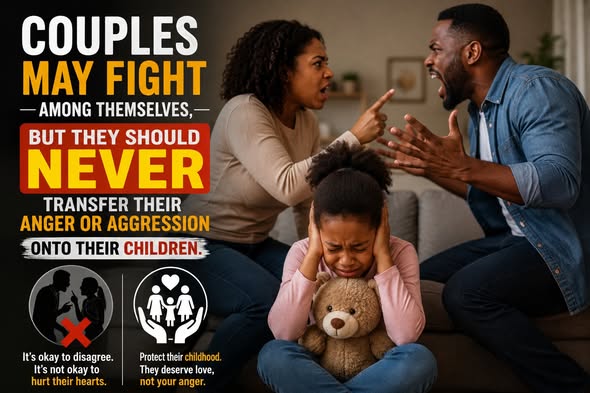
Couples May Fight, But Do Not Transfer Your Anger to Your Children

Published

on

Every marriage will face disagreements. Couples may argue, misunderstand each other, or become angry, but children should never become the target of that anger or aggression. A disagreement between husband and wife should not become emotional punishment for the children.

The Bible teaches us to control our anger and to be careful about the way we treat others:

“Let not the sun go down upon your wrath.”
— Ephesians 4:26 (KJV)

When parents allow anger to control their words and actions, children can carry the emotional wounds long after the argument is over. Instead of using children as messengers, taking out frustration on them, or making them choose sides, parents should strive to resolve their disagreements with wisdom, patience, and love.

The Bible says:

“A soft answer turneth away wrath: but grievous words stir up anger.”
— Proverbs 15:1 (KJV)

Parents should remember that children are not responsible for marital problems. They need reassurance, stability, discipline, and love from both parents. Even when husband and wife disagree, they should work to create a peaceful environment for their children.

Scripture also teaches:

“And be ye kind one to another, tenderhearted, forgiving one another, even as God for Christ’s sake hath forgiven you.”
— Ephesians 4:32 (KJV)

And to parents, the Bible gives this important warning:

“And, ye fathers, provoke not your children to wrath: but bring them up in the nurture and admonition of the Lord.”
— Ephesians 6:4 (KJV)

A marriage may have disagreements, but children should not have to suffer for them. Learn to separate marital conflict from parenting. Correct your children when necessary, but do not punish them because you are angry with your spouse.

See also  LOCAL SPOTLIGHT: Meet The Nigerian Studio Making Games In Yoruba, Hausa

Fight the problem, not the child. Control your anger, protect their hearts, and let your home be a place where love, forgiveness, and peace can grow.

FOLLOW US ON:

FACEBOOK

TWITTER

PINTEREST

TIKTOK

YOUTUBE

LINKEDIN

INSTAGRAM

Continue Reading

Lifestyle

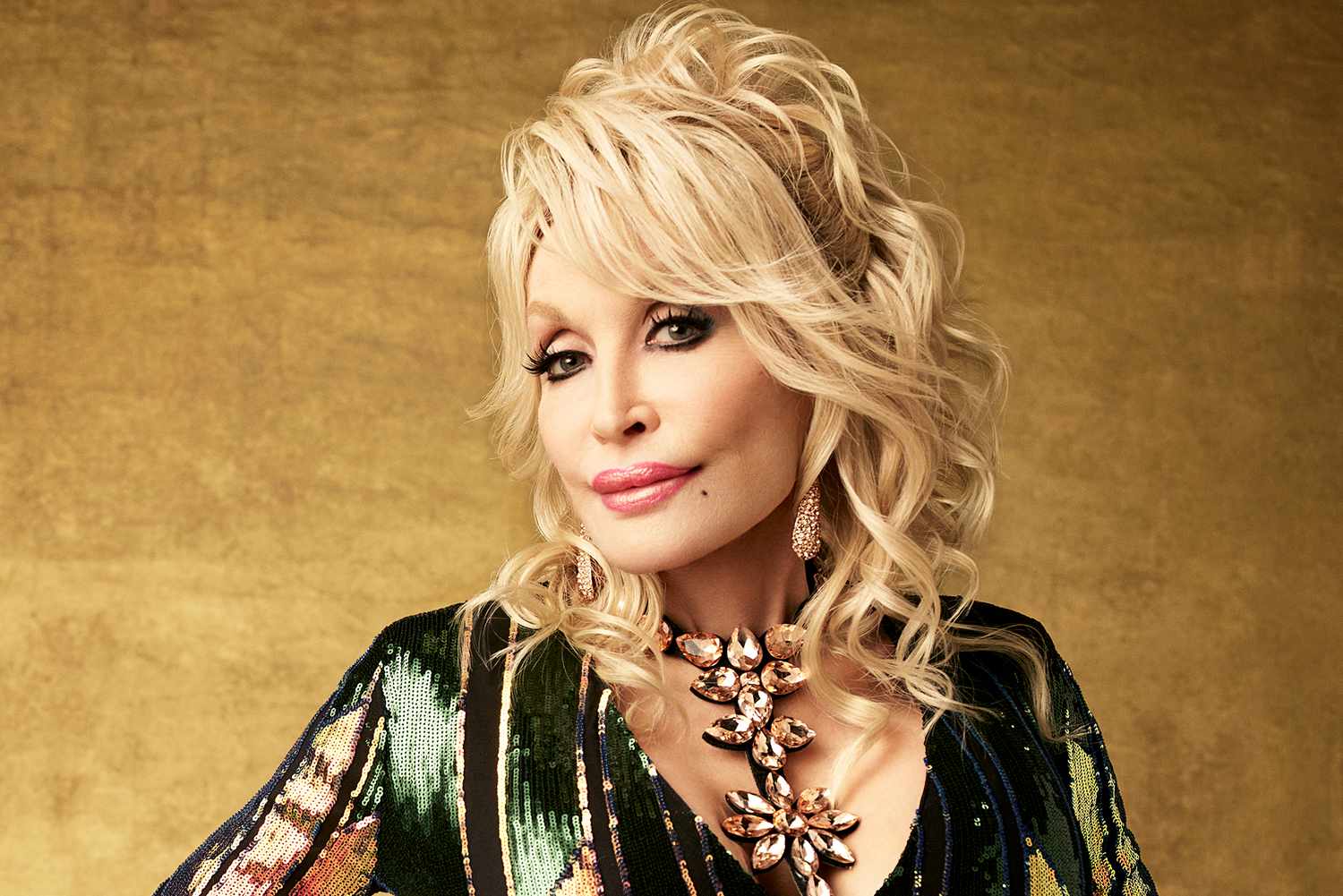
Dolly Parton dies at 80, US lowers flags for one week

Published

on

Country music icon Dolly Parton has died at the age of 80, according to multiple reports, including The Independent, The Guardian and Sky News.

Parton’s death was reportedly announced by her nephew, Bryan Seaver, on Instagram on Tuesday.

“I have imagined the heaviness of this moment but haven’t truly felt it until now.

“It is an honour, an honour that is mixed with absolute pride and great sadness,” Seaver said.

In her honour, United States President Donald Trump ordered American flags across the country to be lowered for one week.

Trump described her death as a “true loss for millions of people.”

Parton, who rose from humble beginnings in Tennessee to become one of country music’s most celebrated singer-songwriters, had a career spanning more than six decades.

She sold more than 100 million records globally and became known as the “Queen of Country”, with hits including “Jolene”, “9 to 5” and “I Will Always Love You”.

Parton wrote more than 3,000 songs and won 11 Grammy Awards. She was also a successful actor, appearing in films including 9 to 5, The Best Little Whorehouse in Texas, Steel Magnolias and Joyful Noise.

Born on January 19, 1946, in a two-room log cabin on the banks of the Little Pigeon River in Tennessee, Parton was the fourth of 12 children.

Her father was an illiterate sharecropper who later worked his way up to owning a small tobacco farm.

Parton described her family as “dirt poor” but credited her mother with passing on her love and knowledge of traditional folk ballads and her father for his work ethic.

See also  The Creation of the Council of Obas in South West Nigeria

Parton began performing as a child. By the age of 13, she had appeared on local radio and television in East Tennessee, performed at the Grand Ole Opry in Nashville and recorded her first single, “Puppy Love”.

After graduating from high school in 1964, she moved to Nashville the following day and began establishing herself as a songwriter.

She released her debut album, Hello, I’m Dolly, in 1967, the same year she joined the weekly television programme The Porter Wagoner Show. Wagoner, an established country star, mentored Parton, and the pair released a series of successful albums as a duo.

In 1973, Parton decided to concentrate on her solo career and wrote “I Will Always Love You” about their professional separation. The song became a hit for Parton and was later famously recorded by Whitney Houston for the 1992 film The Bodyguard.

Parton also wrote “Jolene”, one of her signature songs, around the same period. Both songs were included on her 1974 album Jolene, which helped introduce her to a wider audience beyond country music.

Her 1977 album, Here You Come Again, became her first to sell a million copies and earned her first Grammy Award after almost a decade of nominations.

In 1980, Parton made her acting debut alongside Jane Fonda and Lily Tomlin in the workplace comedy 9 to 5. She also wrote and performed the film’s theme song, which became a number one hit and earned an Oscar nomination for Best Original Song.

The film’s success helped launch Parton’s acting career, with roles in films including The Best Little Whorehouse in Texas (1982), Steel Magnolias (1989) and Joyful Noise (2012).

See also  Seriki Williams Abass: From Captive to Contested Power in Badagry (PHOTOS)

Parton also built a business empire that included television specials, food products and Dollywood, the Tennessee theme park she acquired an interest in and renamed in 1986.

Beyond music and acting, she was known for her philanthropy, particularly through the Dollywood Foundation’s Imagination Library, which promotes childhood literacy.

She also supported medical research, disaster relief and other charitable causes, including donating $1 million towards COVID-19 vaccine research.

In 2022, she was awarded the Carnegie Medal of Philanthropy.

“I just give from my heart. I never know what I’m going to do or why I’m gonna do it. I just see a need and if I can fill it, then I will,” she said at the time.

Parton’s health concerns became public in September 2025 when she postponed her Las Vegas residency. In recent weeks, she had also withdrawn from public appearances amid ongoing health issues.

Parton’s death comes months after the death of her husband of nearly 60 years, Carl Dean, who died in March 2025 at the age of 82.

The couple married in 1966.

In a post on his Truth Social account on Tuesday, which was also shared by the White House on its X handle, Trump wrote: “Very sad to report that Dolly Parton, one of the greatest Country singers, and far beyond, EVER, has just passed away. This is a true loss for millions of people.

“There has never been anyone like her, and never will. In her honour, I am lowering the American flag throughout the United States for one week beginning tonight at 6:00 PM. Rest in Peace, Dolly! The World loves you. President DONALD J. TRUMP.”

Continue Reading

Trending