Connect with us

Lifestyle

A BURNING LAMP CAN SEE THE FAULTS OF ANOTHER, BUT CANNOT SEE ITS OWN

Published

on

A burning lamp can shine brightly and reveal what is hidden in the darkness, yet it cannot see the darkness within itself. In the same way, a person may be very quick to identify the faults, mistakes, and weaknesses of others while failing to examine his or her own life.

The Bible warns us against such hypocrisy:

“And why beholdest thou the mote that is in thy brother’s eye, but considerest not the beam that is in thine own eye?”
— Matthew 7:3 (KJV)

Before we condemn another person, we should first examine ourselves. It is easy to point fingers at someone else’s wrongdoing, but true wisdom begins with self-examination.

Jesus continued:

“Thou hypocrite, first cast out the beam out of thine own eye; and then shalt thou see clearly to cast out the mote out of thy brother’s eye.”
— Matthew 7:5 (KJV)

A lamp is useful because it gives light to others, but we must remember that we also need God’s light to search our own hearts.

The Psalmist prayed:

“Search me, O God, and know my heart: try me, and know my thoughts.”
— Psalm 139:23 (KJV)

Let us therefore not become people who are experts at exposing the faults of others while ignoring our own shortcomings. Before correcting another person, let us humbly ask God to correct us first.

“For if we would judge ourselves, we should not be judged.”
— 1 Corinthians 11:31 (KJV)

The lesson is simple: A lamp may illuminate another person’s path, but it also needs to be examined. Let your light shine, but never become blind to your own faults. Self-examination, humility, and repentance are signs of true wisdom.

See also  REMEMBER YOUR AGE GROUP TODAY, AND DO NOT FORGET YOUR PURPOSE IN LIFE.

FOLLOW US ON:

FACEBOOK

TWITTER

PINTEREST

TIKTOK

YOUTUBE

LINKEDIN

INSTAGRAM

Continue Reading
Click to comment

Leave a Reply

Your email address will not be published. Required fields are marked *

Lifestyle

SOME PEOPLE WILL DO ANYTHING — EVEN EVIL — JUST TO MAKE MONEY!

Published

on

In Nigeria today, one question deserves serious attention: Have we reached a point where the amount of money you have matters more than how you made it?

Look around. Someone builds a mansion, buys an expensive SUV, wears designer clothes, or sprays bundles of ₦1,000 notes at parties, and suddenly, everybody wants to associate with them. They are celebrated, respected, and treated like champions—even when nobody knows the true story behind their wealth.

But why are we so quick to celebrate money without asking questions?

Millions of Nigerians wake up every morning to work honestly. Traders struggle to keep their businesses alive. Teachers work hard for their salaries. Young graduates search endlessly for jobs. Parents make sacrifices to feed their children and pay school fees. Yet, some people feel that honest work is too slow and that becoming rich by any means necessary is the only way to survive.

That is where the real danger begins.

When society celebrates wealth without integrity, some people may become tempted by internet fraud, scams, corruption, exploitation, and other harmful practices. Others may even turn to alleged ritual practices because they believe wealth must come at any cost.

The problem is not that Nigerians want to become rich. The problem is when the desperation to become rich destroys people’s conscience.

Think about the message we are sending to the younger generation. When a young person sees someone flaunting millions online and receives more admiration than a hardworking professional, what lesson are we teaching?

See also  Nene Etule: The 1959 Miss Nigeria Who Made History as the Only Non-Nigerian Winner

Are we teaching our children to value education, creativity, patience, and honest business? Or are we teaching them that the only thing that matters is having money, regardless of its source?

At parties, we celebrate the person spraying cash. On social media, we admire the person showing off a fleet of cars. In some communities, people who suddenly become wealthy receive praise before anyone considers how that wealth was acquired.

Meanwhile, honest people who are struggling financially can be mocked, ignored, or treated as failures.

WHEN DID POVERTY BECOME A SHAME, AND WHEN DID QUESTIONABLE WEALTH BECOME A BADGE OF HONOUR?

Nigeria needs a change in values. We need to celebrate honest entrepreneurs, hardworking workers, innovative young people, and those who build successful businesses without destroying other people’s lives.

We must also stop confusing expensive possessions with genuine success. A luxury car does not prove good character. A mansion does not guarantee peace of mind. And a fat bank account does not automatically make someone a role model.

There is nothing wrong with dreaming of wealth. Nigerians deserve good jobs, profitable businesses, financial freedom, and a better quality of life. But no amount of money should be worth sacrificing your humanity, integrity, or another person’s future.

LET’S HAVE AN HONEST NIGERIAN CONVERSATION!

👇 QUESTION 1: Do you think Nigerian society celebrates wealthy people too much without asking how they made their money?

👇 QUESTION 2: Has the pressure to become rich made some young Nigerians lose sight of the value of honest work?

👇 QUESTION 3: If someone is rich but acquired their wealth through dishonest or harmful means, do they deserve to be celebrated?

See also  I’m the highest-ranked Christian in govt – Akpabio boasts

Drop your opinion in the comments. Don’t just read and scroll past—let’s discuss this important issue.

📢 Share this post. The conversation about money, morality, and success needs to happen.

Newsbreak365 — News • People • Perspectives

#Nigeria #NigerianSociety #DirtyMoney #YahooBoys #Corruption #MoneyAndMorality #NigerianYouth #HonestWealth #SocialCommentary #Newsbreak365

FOLLOW US ON:

FACEBOOK

TWITTER

PINTEREST

TIKTOK

YOUTUBE

LINKEDIN

INSTAGRAM

Continue Reading

Lifestyle

STOP CONFUSING WEALTH WITH SUCCESS! NOT EVERYTHING THAT GLITTERS IS GOLD!

Published

on

In Nigeria today, if you drive an expensive car, build a mansion, wear designer clothes, and spray money at parties, many people will automatically call you a successful person.

Nobody asks questions. Nobody looks deeper. Everybody wants to associate with you!

But if you live in a modest house, drive an ordinary car, and live within your means, some people will look down on you as if you have failed in life.

What a dangerous way to measure human worth!

We live in a society where appearances can earn you more respect than character, where people are celebrated for displaying wealth but rarely questioned about the values behind it.

A man may build a magnificent mansion while his family is falling apart. A woman may post beautiful pictures every day while struggling emotionally. Someone may spray millions of naira at parties but owe people money. Another person may be living quietly, paying their bills, raising their children, and building a secure future without making noise on social media.

Who is truly successful?

The problem is not wealth. There is absolutely nothing wrong with being rich, driving a luxury car, or living in a beautiful house. The problem begins when we judge people entirely by what they possess instead of who they are.

In Nigeria, we must stop teaching our children that success means becoming rich at all costs. We must stop worshipping politicians and celebrities simply because they display wealth. We must stop assuming that everybody who travels abroad is doing better than those who remain at home.

See also  Major General Hassan Usman Katsina, OFR, PSC, Ciroman Katsina (1933–1995)

A person’s lifestyle is not proof of their character, the source of their wealth, or the happiness they experience behind closed doors.

Dear Nigerians, learn to think beyond what your eyes can see. Ask questions. Examine facts. Value integrity over intimidation, wisdom over showmanship, and peace of mind over public applause.

Because at the end of the day, the size of your house cannot measure the quality of your life, and the price of your car cannot determine your worth as a human being.

LET ME ASK YOU A QUESTION:

If a Nigerian man drives a ₦150 million car but has no peace of mind, while another man drives an ordinary car, pays his bills, has a loving family, and sleeps peacefully every night, WHO IS TRULY RICH?

Are we celebrating genuine success in Nigeria, or have we become prisoners of appearances?

Drop your honest opinion in the comments. Let’s have a serious discussion!

Share this message if you believe Nigerians need to change the way they define success.

#Nigeria #NigerianSociety #NotEverythingThatGlittersIsGold #TrueSuccess #CriticalThinking #LifeLessons

FOLLOW US ON:

FACEBOOK

TWITTER

PINTEREST

TIKTOK

YOUTUBE

LINKEDIN

INSTAGRAM

Continue Reading

Lifestyle

AFRICAN FAMILIES: WHY DO WE KEEP REPEATING THE SAME MISTAKES FROM ONE GENERATION TO THE NEXT?
Published

on

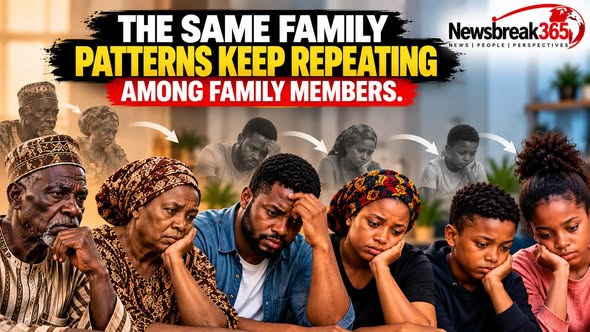
In many African families, the same problems seem to travel from grandparents to parents and from parents to their children. Different faces, different years, but sometimes the same suffering.

A grandfather who ruled through fear raises a father who believes that shouting is leadership. A mother who was silenced throughout her marriage may teach her daughter to endure the same treatment. Children who grew up watching their parents fight may enter adulthood without learning how to resolve conflict peacefully.

And when somebody dares to challenge these patterns, the response is often:

“THAT IS HOW WE WERE BROUGHT UP!”

But since when did the way we were raised become proof that everything we learned was right?

In some African households, questioning an elder is considered disrespect. Family secrets must remain hidden to protect the family name. Children are expected to obey, even when adults refuse to listen. Marriage problems are sometimes concealed to avoid public shame, while relatives pressure people to tolerate situations that deserve to be addressed.

We tell our children to respect their elders, but do we teach elders to respect their children?

We tell young people to preserve our culture, but do we encourage them to distinguish between valuable traditions and harmful habits?

We demand that children become successful, but do we examine the behaviours, attitudes, and family environments that shape their future?

AFRICAN CULTURE IS NOT THE PROBLEM. THE PROBLEM IS WHEN WE REFUSE TO QUESTION HARMFUL BEHAVIOURS SIMPLY BECAUSE THEY HAVE EXISTED FOR GENERATIONS.

See also  Murtala Muhammed’s simplicity led to his assassination – Daughter

Our ancestors passed down wisdom, courage, community spirit, and valuable traditions. We should preserve those things. But we should not blindly inherit every fear, prejudice, unhealthy relationship pattern, or destructive family rule.

Respect does not require silence. Love does not require suffering. Tradition does not excuse wrongdoing.

The African family must learn that breaking a harmful cycle is not a betrayal of one’s parents. Sometimes, it is the greatest gift a person can give the next generation.

Imagine an African generation that teaches boys emotional intelligence instead of aggression, girls self-respect instead of silent endurance, parents communication instead of intimidation, and families honesty instead of protecting appearances.

THAT IS HOW GENERATIONAL CHANGE BEGINS.

One generation must have the courage to question what the previous generation accepted.

One generation must be willing to heal what the previous generation ignored.

One generation must decide that its children deserve better.

LET’S TALK! 👇🏿

What is one harmful pattern in African families that you believe must end with our generation?

Is it excessive parental control, favouritism among children, family pressure, toxic marriages, fear of questioning elders, or hiding family problems to protect the family name?

Speak your mind respectfully. Someone reading your comment may realise that a cycle they considered normal can actually be changed.

#AfricanFamilies #AfricanCulture #BreakTheCycle #GenerationalPatterns #FamilyValues #AfricanSociety #Newsbreak365

FOLLOW US ON:

FACEBOOK

TWITTER

PINTEREST

TIKTOK

YOUTUBE

LINKEDIN

INSTAGRAM

Continue Reading

Trending