Connect with us

Politics

870 killed in election violence in 11 years despite Peace Accord

Published

on

Nigeria’s struggle with electoral violence has continued despite repeated peace accords signed by political parties and candidates, with no fewer than 870 people reportedly killed in election-related violence since the National Peace Committee began its intervention in 2015.

The figure has renewed concerns over the effectiveness of the peace agreements, particularly with political parties and presidential candidates preparing for the 2027 general elections.

Politics in Nigeria appears to have strayed far from political scientist David Easton’s description of politics as the “authoritative allocation of values”, with contests for political power frequently degenerating into violence, intimidation and destruction of lives and property.

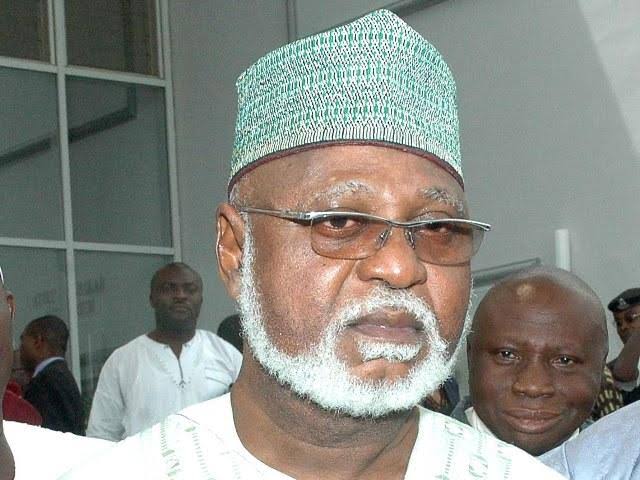
The National Peace Committee, chaired by former Head of State, Gen Abdulsalami Abubakar and co-chaired by the Catholic Bishop of Sokoto Diocese, Matthew Kukah, introduced the peace accord ahead of the 2015 general election as an attempt to prevent violence before, during and after elections.

Ahead of the 2015 presidential election, the then presidential candidates of the All Progressives Congress, Muhammadu Buhari, and Peoples Democratic Party, Goodluck Jonathan, signed the agreement in Abuja, pledging to accept the outcome of the election and refrain from acts capable of undermining the democratic process.

Despite the optimism generated by the initiative, election-related violence persisted.

A 2016 report by the Council on Foreign Relations put the number of deaths recorded during the 2015 elections at 106.

The situation was considerably worse in 2019. The Nigeria Civil Society Situation Room, in its General Election Final Report, estimated that 626 people were killed in the six months between the commencement of electioneering activities and the start of the elections.

For the 2023 general elections, the Centre for Democracy and Development reported about 109 deaths, despite presidential, governorship and National Assembly candidates signing peace agreements in which they pledged to reject violence.

The trend, according to reports, continued during the recently concluded Osun State governorship election won by Governor Ademola Adeleke, where at least 29 deaths were reported.

The figures have consequently raised questions over whether the peace accords have evolved beyond symbolic ceremonies into effective instruments capable of preventing electoral violence and holding perpetrators accountable.

With the 2027 elections approaching, the National Peace Committee, a fortnight ago, brought political parties and prominent presidential contenders together to sign a fresh peace accord.

See also  Utomi leads talks with Atiku, Obi on single candidate ahead of 2027, read details

President Bola Tinubu was represented at the ceremony, which was held in Abuja, by the Secretary to the Government of the Federation, George Akume.

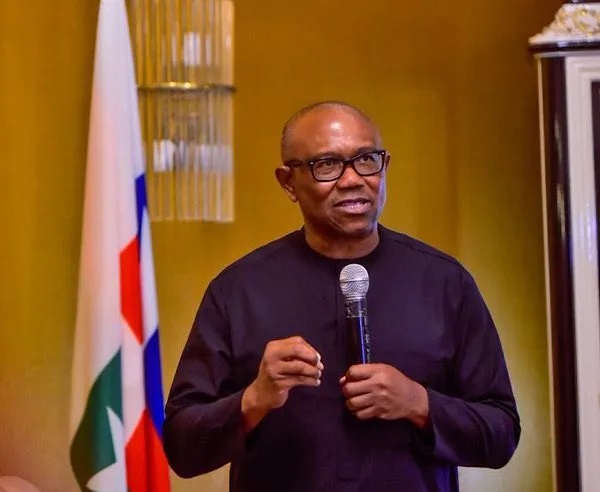
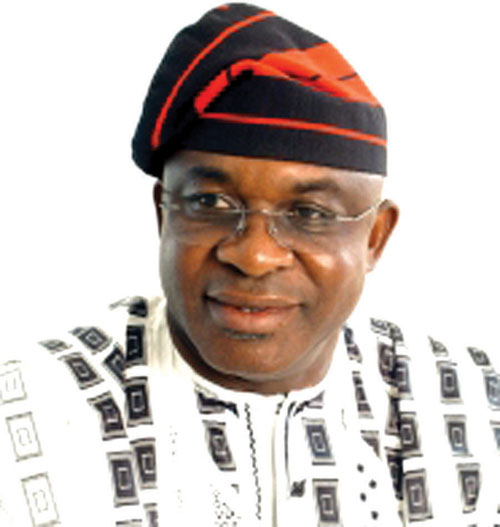
Also present were the presidential candidate of the Nigeria Democratic Congress, Peter Obi, the Social Democratic Party candidate, Adewole Adebayo, Omoyele Sowore of the African Action Congress and former Cross River State governor, Donald Duke, who is contesting the presidency on the platform of the People’s Redemption Party, among others.

However, former Vice-President Atiku Abubakar, the presidential candidate of the ADC, was conspicuously absent.

Explaining the ADC’s decision not to participate, the party’s National Publicity Secretary, Bolaji Abdullahi, told The PUNCH that the committee needs to go beyond obtaining signatures from politicians and ensure that breaches of the agreement attract consequences.

“We felt the accord needs to go beyond ceremonial signing. The peace committee should be able to call out whoever violates the peace agreement in words and deeds. We recognise the importance of what they are doing, but we say they need to do more,” Abdullahi said.

The criticism has been echoed by international bodies and civil society organisations, which have questioned the absence of effective sanctions against politicians and their supporters who engage in inflammatory rhetoric or acts of violence.

The Country Director of Amnesty International, Isa Sanusi, said although the objective of the peace accord was commendable, previous agreements had done little to prevent electoral violence.

“The peace accord is on the surface good, but in reality, it never prevents or discourages anything. There must be sanctions, and there must be a mechanism for monitoring and documenting breaches of the peace accord,” Sanusi told our correspondent.

According to him, a peace agreement “is not supposed to be a mere public event,” warning that “early signs show the peace accord is weak and is not helping matters.

“Already, some politicians have started hateful rhetoric,” he said, adding that “politicians who incite hatred or cause violence must be held to account.”

The SDP also called for stronger enforcement of electoral laws, arguing that signing an agreement without consequences for violations would do little to change the behaviour of political actors.

The party’s National Publicity Secretary, Rufus Aiyenigba, said, “Our presidential candidate spoke the mind of the party on the matter on the sidelines of the event. The signing of a peace accord has become mere seasonal political ritual good only for its symbolism.

See also  Panic in ADC as EFCC goes after key members

“We need to enforce strong punitive measures against electoral offenders to sanitise our elections.”

The SDP had made a similar demand in the aftermath of the Osun governorship election.

However, security expert and Managing Director of Beacon Security and Intelligence Limited, Kabir Adamu, disagreed with the argument that the peace accords had become ineffective simply because electoral violence continued after their signing.

According to him, the question should not be whether a signed agreement, by itself, can stop violence, but whether the existence of the accord provides a stronger framework for monitoring political conduct and responding to violations.

“Those questioning the effectiveness of the peace accords and who believe that they are unnecessary given the scale of violence that has greeted elections in the past few years, are asking the wrong question,” Adamu said.

He continued, “The issue was never whether a signed accord, by itself, stops violence, as it doesn’t, and no one on the National Peace Committee has ever claimed it does. The real question is what happens to political conduct in the absence of one, and whether this year’s accord is materially different from the ones that came before it.

“We saw the old peace accord model’s limits play out in Osun, where a state poll with its own peace accord still recorded loss of lives. So I understand why some Nigerians, and even some candidates, ask what the point is.

“Omoyele Sowore called the August 18 signing a ritual. Adewole Adebayo argued past accords were violated without consequences. Peter Obi questioned why office-seekers need to sign a pledge to behave the way public office already demands. Those are fair criticisms.”

Adamu, however, said the 2026 accord introduced mechanisms that could make it more consequential than previous agreements.

In his words, “the 2026 accord is not the same instrument as 2019 or 2023. Two things changed. First, in March 2026 the National Peace Committee, working with the Kukah Centre, presented legal annotations tying the accord’s provisions directly to the Constitution and the Electoral Act and moving it from a moral pledge to an instrument with defined legal consequences for violation, including for the fake news and incitement that spokespersons and supporters, not just candidates, are typically responsible for.”

See also  Atiku Considers Makinde, Ihedioha, Akobundu As Running Mates

He added that “the involvement of the Nigeria Police Force and the Independent National Electoral Commission,” which he described as “the two organisations with the most responsibility for ensuring compliance,” was another important development.

Adamu also pointed to the Kukah Centre’s Election Security Information Hub, which he said represented a significant departure from the traditional approach to election monitoring.

“Second, and more significant in my view, is the Kukah Centre’s Election Security Information Hub. The ESI Hub is a modern, technology-driven information collation and analysis centre that has logged over 2,500 security incidents and more than 380 electoral offences since mid-2025, mapped to specific hotspots, and that data is meant to feed public compliance scorecards and early-warning responses rather than sit in a drawer until after the vote,” he said.

For Adamu, the significance of the latest accord lies not in the ceremony itself but in whether the new mechanisms for monitoring, verification and sanctions are actually deployed.

“This is the real shift,” he said, arguing that verification and consequences had been built into the accord’s architecture, “making it not just a signing ceremony.”

The debate over the effectiveness of the peace accord comes against the backdrop of Nigeria’s long history of electoral violence, in which political competition has frequently been accompanied by intimidation, hate speech, attacks on political opponents, destruction of campaign materials and killings.

The latest agreement therefore faces a familiar test: whether political actors will merely sign another pledge or whether institutions responsible for electoral security and justice will act decisively when the commitments are breached.

With the 2027 general election drawing closer, the effectiveness of the new mechanisms will ultimately be judged by whether they can deter violations, identify perpetrators and ensure consequences for those who resort to violence.

For now, the central question remains whether the latest peace accord will become another symbolic political ritual or mark a genuine turning point in Nigeria’s efforts to curb electoral violence.

Source: punchng.com

FOLLOW US ON:

FACEBOOK

TWITTER

PINTEREST

TIKTOK

YOUTUBE

LINKEDIN

INSTAGRAM

Continue Reading
Click to comment

Leave a Reply

Your email address will not be published. Required fields are marked *

Politics

ADC demands probe, autopsies over deaths of 37 illegal miners

Published

on

The African Democratic Congress has demanded an immediate, independent and transparent investigation into the deaths of 37 Nigerians in the custody of the Nigeria Security and Civil Defence Corps in Niger State.

In a statement signed by its National Publicity Secretary, Bolaji Abdullahi, on Friday, the party called for independent autopsies, the publication of the victims’ identities and detention records, compensation for their families, and the prosecution of officials found responsible for the deaths.

Thirty-seven suspected illegal miners arrested in M.I. Wushishi and Lukoto villages in Niger State on Thursday died while in the custody of the Nigeria Security and Civil Defence Corps.

The NSCDC Commandant in the state, Suberu Aniviye, in a statement said that the suspects were arrested during operations conducted on September 15 and 16.

Reacting, the ADC said the victims’ arrest during raids on mining sites did not extinguish their constitutional rights to life, dignity and due process, insisting that poverty, unemployment or allegations of illegal mining should not result in the loss of citizens’ lives.

The party stated, “Thirty-seven Nigerians entered government custody alive. Their families are now being asked to receive their bodies. This is an indictment of this government about the value of the average Nigerian life. Low-income Nigerians are not disposable, and no Nigerian should lose his or her life simply because they were arrested while struggling to survive.

“We must be clear: poverty is not a capital offence. Unemployment is not a death sentence. No accusation, whatever the case, gives any government institution the right to return citizens to their families in body bags.

See also  Atiku Considers Makinde, Ihedioha, Akobundu As Running Mates

“The incident cannot be separated from the worsening cost-of-living and unemployment crises that have pushed millions of Nigerians into desperate and dangerous means of survival.

“The same APC-led federal government that has failed to provide jobs is now criminalising the desperation created by its own policies. Food is unaffordable, transportation has become a luxury, businesses are closing and legitimate opportunities are disappearing. Yet, rather than confront these failures, the government continues to punish the victims of its failures.”

The ADC also alleged that the government targets poor miners for arrest while failing to identify and prosecute influential individuals and criminal networks involved in illegal mining.

It continued, “The poor are arrested for digging to survive, while the powerful men who finance illegal mining, sponsor insecurity and cart away Nigeria’s mineral wealth remain beyond the reach of the law. The Tinubu administration has made honest work scarce, survival expensive and insecurity profitable.

“President Tinubu must decide whether Nigeria’s security institutions exist to protect citizens or punish them for being poor. Nigerians need jobs, security and justice, not an economy that impoverishes them and institutions that treat their lives as disposable.”

Source: punchng.com

FOLLOW US ON:

FACEBOOK

TWITTER

PINTEREST

TIKTOK

YOUTUBE

LINKEDIN

INSTAGRAM

Continue Reading

Politics

SDP pledges to rebuild, transform Nigeria if elected in 2027

Published

on

The Social Democratic Party has promised to liberate and rebuild Nigeria from its current socio-economic and insecurity challenges if elected in the 2027 general elections.

The National Chairman of the SDP, Prof Sadiq Gombe, made the pledge on Friday while receiving a delegation of the Confederation of West Africa Youth at the party’s national secretariat in Abuja.

Gombe, represented by the party’s Deputy National Chairman, Senator Ugochukwu Uba, said the party’s ideology is anchored in Chapter II of the 1999 Constitution, particularly the welfare and security of Nigerians.

He said the growing interest of young Nigerians in the SDP indicated that the party’s message was gaining traction, adding that Nigeria had reached a point where it needed to be rebuilt.

“The SDP is a party that has its ideology threaded. This ideology is based on Chapter 2 of the Constitution of the Federal Republic of Nigeria, which talks about provision for the welfare and security of Nigerians. That is what guides the policies of this party.

“So I find it interesting that many Nigerian youths are taking interest in the party. It means that the message we are sending is getting through to the people. This country has derailed to a situation where we need to rebuild. And if you look at our message and the manifesto that was presented to the public last week, you will see a comprehensive programme for the transformation of this country.

“We cannot continue drifting. The SDP wants to put this country back on track. Fortunately, we have a presidential candidate who knows his onions, determined, young and ready to turn things around. So, we want to do something different that will lead to the liberation of this country if we come to power.”

See also  Panic in ADC as EFCC goes after key members

Also speaking, the SDP presidential candidate, Prince Adewole Adebayo, urged members and supporters of the party to concentrate on grassroots mobilisation ahead of the 2027 elections.

Adebayo said political influence was ultimately determined at the community level, stressing that national visibility or eloquence would not translate into votes without effective engagement with voters at the polling-unit level.

He said, “Politics is done in the neighbourhoods. We have 176,846 polling units across the country. Any amount of command of English you have that does not convince your neighbour about how they are going to vote is wasted.

“Any influence you have from Timbuktu to Accra that cannot influence how people vote in the community where you come from, that influence is academic. So we must go back.

“Politics is not a game of the mouth. It’s a game of the heart because the burden of politics is not easy. It is the love of your country and the vision of the future that will make you last long in politics.”

The Regional President of the Confederation of West Africa Youth, Israel Akinola, who spoke during the visit, said Nigerians needed to pursue a new political direction ahead of the 2027 elections.

Akinola said public and private sector stakeholders must work together through public-private partnerships to drive development.

He also criticised the tendency of Nigerians to celebrate governments for providing basic services, which he described as citizens’ fundamental rights.

Source: punchng.com

FOLLOW US ON:

FACEBOOK

TWITTER

PINTEREST

TIKTOK

YOUTUBE

LINKEDIN

INSTAGRAM

Continue Reading

Politics

Toyin Abraham distances self from Lagos APC campaign council ahead of 2027 elections, see why

Published

on

Actress Toyin Abraham has rejected her inclusion in the Lagos State All Progressives Congress Campaign Council, saying she is “staying out of politics” and asking the public to disregard her reported membership of the council.

Abraham was listed as a member of the Entertainment and Creative Economy Directorate of the campaign council unveiled by the Lagos APC on Thursday ahead of the 2027 elections. She was listed alongside actors Jide Kosoko, Eniola Badmus, Bimbo Akintola, Adebayo Salami, Saheed Balogun and Bukky Wright, as well as Fuji musicians including Wasiu Alabi Pasuma, Obesere and Adewale Ayuba.

However, reacting to the list in an Instagram Story on Thursday, Abraham said she had not joined any campaign council and had recently made her position clear.

“I’m not a member of any campaign council. I have said it recently. I am staying out of politics. Please disregard the supposed inclusion of my name in any campaign committee,” she wrote.

The development comes three years after Abraham’s public support for President Bola Tinubu during the 2023 presidential election triggered sustained criticism and personal attacks against her on social media.

In March 2023, the actress spoke about the backlash during a Twitter Space, saying some supporters of Peter Obi had petitioned Netflix to remove her films from its platform and had also targeted brands associated with her. She shared screenshots of messages urging Checkers Custard to drop her as an ambassador and described receiving daily curses and insults directed at her, her husband, Kolawole Ajeyemi, and their son.

See also  PDP attacks APC over Fubara’s defection

The controversy resurfaced repeatedly after the election, with Abraham continuing to face criticism over her political choice. PUNCH reported in July 2024 that social media users continued to lambast the actress, while the situation escalated after she took action against individuals she said had made derogatory and defamatory comments about her and her family.

One of the incidents involved an X user identified as Big Ayo, who had made a post accusing Abraham of using money allegedly linked to Tinubu to pay for a hair transplant for her husband. Abraham denied the allegation and reported the matter to the cybercrime authorities.

She later clarified that she had not caused the arrest of the man’s mother, as had been alleged online, but had filed a petition over what she described as cyberbullying and defamatory content.

Big Ayo was subsequently released from police custody amid an online campaign and pleas calling for his release.

The arrest and its aftermath triggered another wave of criticism against Abraham. Some social media users threatened to report her films to streaming platforms, while others circulated messages urging Netflix to remove her movies.

Amid the controversy, Abraham made an emotional Instagram Live appearance in July 2024 in which she described the sustained online attacks and said she had been pushed to the limit.

“I want to die,” she said during the broadcast, while also saying that her child had been cursed and that she had been subjected to prolonged bullying and defamation. PUNCH reported that she said she had only exercised her rights as a citizen by filing a petition with the cybercrime department.

See also  Why I Joined Atiku, Kwankwaso To Protest Against INEC – Peter Obi

In another statement during the same period, Abraham said she could tolerate insults directed at her but would not accept attacks involving her children.

The actress’s latest decision to distance herself from political campaigning therefore follows a history of controversy surrounding her political involvement, particularly after her support for Tinubu in 2023.

The Lagos APC campaign council, meanwhile, lists Toke Benson-Awoyinka as Director of the Entertainment and Creative Economy Directorate, with Kosoko as Co-Director and Badmus as Deputy Director. Abraham remains listed as a member of the 33-person directorate in the published council document despite her public rejection of the reported appointment.

Source: punchng.com

FOLLOW US ON:

FACEBOOK

TWITTER

PINTEREST

TIKTOK

YOUTUBE

LINKEDIN

INSTAGRAM

Continue Reading

Trending