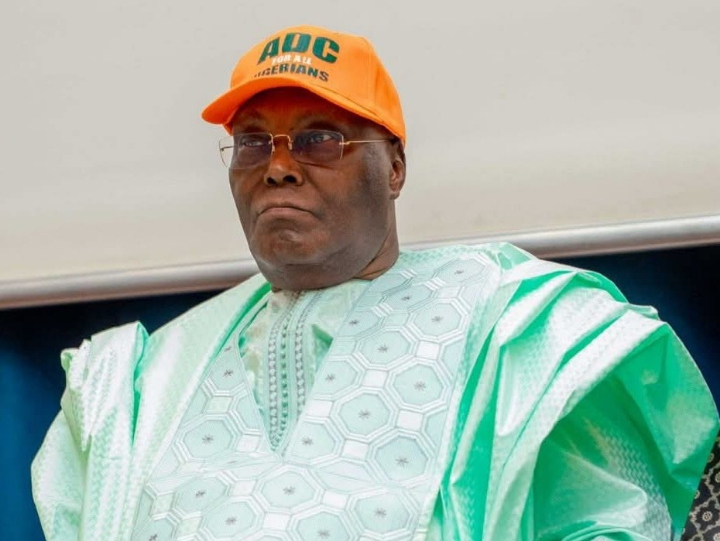
The controversy over petrol subsidy removal has intensified ahead of the 2027 elections, with the All Progressives Congress attacking former Vice-President Atiku Abubakar’s plan to restore the subsidy, while the African Democratic Congress challenged the Federal Government to account for the N15.8tn in additional revenues it said accrued from the reforms.
The National Chairman of the APC, Prof Nentawe Yilwatda, warned that Atiku’s proposal to return Nigeria to the old fuel subsidy regime could reverse the economic gains recorded under the ongoing reforms, with negative consequences for workers’ wages, education, infrastructure and the fiscal stability of states.
The APC national chairman, in a statement issued by his Special Adviser on Media and Information Strategy, Abimbola Tooki, on Sunday, said the former Vice President’s proposal to reinstate fuel subsidy would return Nigerians to fuel queues, threaten the payment of the current minimum wage and lead to the cancellation of education grants for Nigerian students, among other negative consequences for the masses.
On May 29, 2023, President Bola Tinubu, during his inauguration, declared that fuel subsidy was gone, in line with his campaign promise.
Although the removal triggered an increase in the prices of goods and services, the APC-led Federal Government has consistently maintained that the policy has yielded significant economic gains for the country.
Ahead of the 2027 election, the African Democratic Congress presidential candidate, who also promised in 2023 to end fuel subsidy if elected, last week pledged to reinstate the subsidy if elected in the January presidential election to cushion the effect of its removal on Nigerians.
His promise has, however, generated mixed reactions among Nigerians.
Reacting, Yilwatda, while receiving a delegation of economic stakeholders in Abuja, warned that the subsidy debate should go beyond political rhetoric and consider the fiscal burden and wider consequences for states, workers, education and infrastructure.
He stated, “The former Vice President Atiku Abubakar’s proposal to restore fuel subsidy raises fundamental questions about how such a policy would be financed and sustained without returning Nigeria to the cycle of fiscal pressures that characterised the previous arrangement.
“Subsidy may appear attractive because it promises cheaper petrol, but Nigerians must also ask the bigger question: who pays for the subsidy and what happens to the resources that government must divert to finance it?
“A policy cannot be judged only by its immediate benefit at the pump. We must examine its impact on government revenues, salaries, pensions, education, healthcare, infrastructure and the overall capacity of government to meet its obligations to citizens.”
Yilwatda said many states previously struggled to pay workers’ salaries and pensions, with some resorting to partial payments.
He said increased federal allocations following subsidy removal had improved states’ finances, urging caution against reintroducing subsidy and returning to past fiscal pressures.
The statement read, “The APC chairman also drew attention to the education sector, recalling the prolonged disruption of academic activities in Nigerian universities under the previous administration.
“Nigerians should be concerned about policies that could weaken the capacity of governments to finance education and other essential public services.
“A return to a fiscally unsustainable subsidy regime could have consequences far beyond the price of petrol. When government revenue is squeezed, the first victims are often the critical sectors that directly affect the welfare and future of our people.”
On the new minimum wage, Yilwatda said the sustainability of improved workers’ salaries must be considered in the subsidy debate, stressing that governments must have the capacity to meet their recurrent obligations.
He said higher wages should not come at the expense of funding infrastructure, education, healthcare and other essential services.
The APC chairman also said the ongoing reforms were improving Nigeria’s digital payment system, allowing more Nigerians, particularly young people, freelancers and content creators, to make and receive international payments.
He continued, “Our young people are no longer limited by geographical boundaries. A Nigerian content creator, software developer, consultant or freelancer can provide services to clients anywhere in the world.
“But that opportunity requires a financial and payment system capable of supporting the global digital economy.
“We must therefore be careful about policies that could undermine the progress being made in strengthening Nigeria’s financial and digital ecosystem.”
The APC national chairman also highlighted the Nigeria Education Loan Fund, describing it as an important intervention that has expanded access to tertiary education financing and reduced the immediate financial burden on many families.
He said sustainable financing for education was critical to ensuring that young Nigerians are not forced to abandon their studies because their parents cannot afford tuition and other educational expenses.
Prof Yilwatda said the subsidy debate should focus on building a strong and sustainable economy rather than relying on costly government interventions.
He acknowledged the hardship caused by subsidy removal, stressing the need for stronger measures to cushion its impact on vulnerable Nigerians.
The statement read, “The hardship Nigerians have experienced is real, and government must continue to respond to it. But the answer cannot simply be to return to a system whose long-term fiscal implications created serious distortions in our economy.
“What Nigerians deserve is an economy that can sustainably finance good wages, quality education, healthcare, infrastructure and social protection without depending on an opaque and expensive subsidy system.
“Whenever anybody proposes a return to subsidy, Nigerians should ask: how much will it cost? Where will the money come from? What programmes will be sacrificed to finance it? And for how long can the government sustain it?
“These are legitimate questions that must be answered before the country embarks on another expensive policy experiment.”
The ADC has, however, challenged the Director-General of President Tinubu’s 2027 re-election campaign, Abdulaziz Yari, to explain how Nigerians have benefited from the additional revenues generated by the removal of petrol subsidy and other economic reforms.
The opposition party said the Tinubu-led government must account for the trillions of naira that have accrued to the federal, state and local governments since the removal of the petrol subsidy in May 2023.
The ADC’s position came in response to recent comments by Yari dismissing promises of relief from the economic hardship confronting Nigerians as unrealistic.
In a statement issued on Sunday by its National Publicity Secretary, Mallam Bolaji Abdullahi, the party said Yari’s position was significant because he was not speaking only as a senator of the All Progressives Congress, but as the official responsible for leading the president’s campaign for another term.
“If the message of the President’s re-election campaign is that Nigerians must accept today’s hardship as permanent and anyone promising relief is a liar, then Nigerians must be seriously concerned,” the party said.
The ADC said figures attributed to the Minister of Finance showed that the removal of petrol subsidy and foreign-exchange reforms generated about N15.8tn in additional resources for the Federation between June 2023 and December 2025.
According to the party, about N5.4tn of the additional resources accrued to the Federal Government, another N5.4tn went to the states, while local governments received about N3.9tn.
It further claimed that states received N47.25tn in allocations from the Federation Account Allocation Committee between 2023 and 2025, with the annual allocation increasing from N10.09tn in 2023 to N15.26tn in 2024 and N21.90tn in 2025.
The party said the increase in government revenue had not translated into a corresponding improvement in the living conditions of Nigerians.
“The contradiction is impossible to ignore. Government is counting trillions while Nigerian families are counting the meals they can afford.
“If governments are receiving substantially more money, why are Nigerians getting substantially less food to eat?” it asked.
Tinubu announced the removal of the petrol subsidy in his inaugural address on May 29, 2023, with the policy immediately triggering a sharp increase in petrol prices and a broader rise in the cost of transportation and goods.
The government has maintained that the reform was necessary to eliminate the huge fiscal burden associated with the subsidy regime and redirect public resources towards infrastructure, social investment and other development priorities.
The ADC, however, argued that the burden of the reform had fallen disproportionately on ordinary Nigerians.
It said petrol prices, which stood at about N185 per litre before the subsidy removal, had risen to more than N1,300 per litre in many parts of the country by August 2025, while food prices and transport costs also surged.
The party also questioned the pace of the Federal Government’s Compressed Natural Gas initiative, which was introduced as part of efforts to reduce transportation costs following the removal of the subsidy.
“Before asking Nigerians for four more years, Senator Yari and the APC must answer one question: after N15.8tn in additional resources, record FAAC allocations and three years of unprecedented sacrifice, are Nigerians better off?” the party asked.
The ADC also raised concerns about borrowing by state governments despite increased FAAC receipts.
It claimed that about 20 states borrowed a combined N458bn in 2025, and challenged the Federal Government and the states to account for the additional revenues received since the reforms.
“After N47.25tn to states in three years, Nigerians have a right to ask: where are the results?
“Let the government publish the projects. Show Nigerians the schools, hospitals, roads, and mass-transit systems that their sacrifice paid for,” it added.
The party said it was particularly concerned that increased government revenue had not, in its view, produced sufficient improvements in public services or household welfare.
It further accused the APC government of relying on the payment of workers’ salaries as evidence of economic progress, arguing that salaries had lost purchasing power because of the rising cost of food, transportation and other necessities.
“Meanwhile, budgets remain unimplemented, local contractors remain unpaid, major public roads remain terrible, and Nigeria became one of the most dangerous places to live in,” the statement read.
The opposition party also questioned why the administration had taken more than three years after the subsidy removal to intensify efforts aimed at reducing transportation costs.
The Federal Government and state governors recently announced plans to expand the use of CNG-powered and electric vehicles under the National Affordable CNG Transit Programme, with the aim of reducing transport fares.
However, the ADC said the initiative should have been implemented earlier and at a scale capable of providing immediate relief to Nigerians.
“If Senator Yari says subsidy can never return, then he must tell Nigerians what the President’s campaign is offering instead.
“What is the plan to dramatically reduce petrol prices and bring down food and transportation costs before 2027? ‘Endure’ is not an economic policy,” it said.
The ADC stressed that its criticism of the subsidy removal should not be interpreted as a call for a return to the old subsidy regime, which it accused of being characterised by corruption and lack of transparency.
Instead, the party said its alternative would focus on increasing domestic refining capacity and providing targeted, transparent support to reduce fuel prices and ease the cost of living.
The subsidy debate is expected to remain a major issue ahead of the 2027 general election, with opposition parties increasingly making the cost of living, petrol prices, food inflation, unemployment and insecurity central to their campaigns.
According to the opposition party, the election would ultimately be determined by Nigerians’ assessment of their economic circumstances rather than political rhetoric.
“The 2027 election will not be about who shouted ‘liar’ the loudest. It will be about who can put food on Nigerians’ tables, create jobs, provide security, and reduce the cost of living.
“Nigerians have sacrificed enough. They need a break,” the party argued.
Source: punchng.com
FOLLOW US ON: