Connect with us

Lifestyle

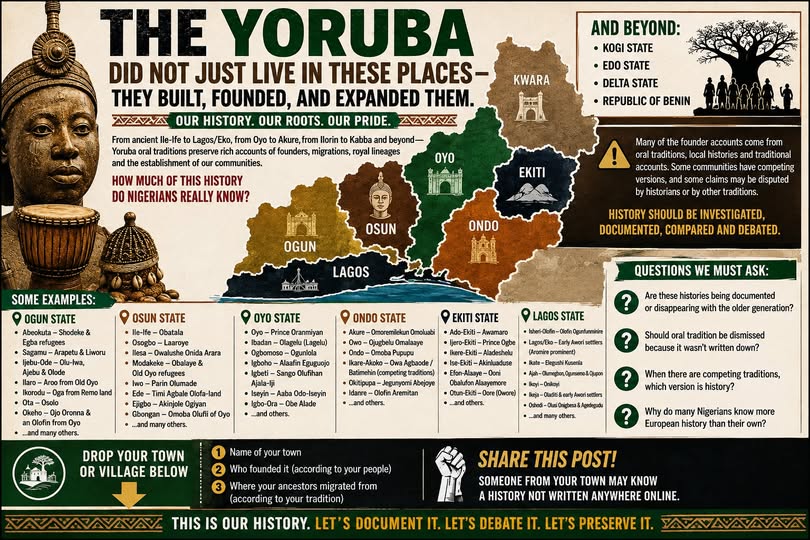
FOUNDERS OF YORUBA CITIES, TOWNS, VILLAGES, AND YORUBA MIGRANT SETTLEMENTS

Published

on

๐Ÿ“ OGUN STATE

  1. ABEOKUTA was founded by Shodeke and the Egba refugee communities.
  2. SAGAMU was founded by Arapetu and Liworu.
  3. SANGO-OTA was founded by Osolo and Eleidi Atalabi.
  4. IGBESA was founded by Akeredun.
  5. IPERU-REMO was founded by Akesan and Ajagbe.
  6. IKORODU was founded by Oga from Remo land.
  7. ISHARA-REMO was founded by Prince Adeyemo.
  8. IJEBU-ODE was founded by Olu-Iwa, Ajebu, and Olode.
  9. IJEBU was founded by Obanta.
  10. IJEBU-IGBO was founded by Ademakin Orimolusi.
  11. ITELE-IJEBU was founded by Ojigi Amoyegeso.
  12. ODOGBOLU was founded by Eleshi Ekun Ogoji.
  13. OGERE-REMO was founded by Loowa-Lida and Olipakala.
  14. IROLU-REMO was founded by Aganun.
  15. IPARA-REMO was founded by Prince Oguola and his wife, Iroye.
  16. ILISAN-REMO was founded by Isanbi.
  17. IKENNE was founded by Ogbodo and Obara.
  18. OMU was founded by Okukumadesi.
  19. OTA was founded by Osolo.
  20. ILARO was founded by Aroo from Old Oyo.
  21. OKEHO was founded by Ojo Oronna from Ilaro and an Olofin from Oyo.
  22. ADO-ODO was founded by Onitako.
  23. ITORI was established as an Egba outpost by displaced Egba refugees.
  24. AYETORO was established by communities that came together for protection during the wars with Dahomey.
  25. MAGBON was founded by Oga and Semade.
  26. MAGBON-ILADO was founded by Onafula and Ogundeko.
  27. OFFIN was founded by Liyangu from Ile-Ife.
  28. EMUREN was founded by two sons of the Ajalorun of Ijebu-Ife.
  29. IBONWON was founded by Soginna from Ijebu-Ode.
  30. IPOJI was founded by Aikemaku.
  31. IWOYE-KETU was founded by Olomu from Ile-Ife.

๐Ÿ“ OSUN STATE

  1. ILE-IFE was founded by Obatala.
  2. OSOGBO was founded by Laaroye.
  3. ILESA was founded by Owalushe Onida Arara.
  4. MODAKEKE was founded by Obalaye and later greatly expanded by refugees from Old Oyo.
  5. IWO was founded by Parin Olumade.
  6. IKIRE was founded by Akinere.
  7. ESA-OKE was founded by Omiran Adebolu.
  8. IREE was founded by Arolu, Larooye, and Oyekun.
  9. ILA-ORANGUN was founded by Fagbamila Ajagunla.
  10. EDE was founded by Timi Agbale Olofa-Ina.
  11. INISA was founded by Prince Ooku Eesun.
  12. EJIGBO was founded by Akinjole Ogiyan (Ogiriniyan).
  13. OKUKU was founded by Oladile.
  14. ILOBU was founded by Laarosin.
  15. GBONGAN was founded by Omoba Olufi of Oyo.
  16. ODE-OMU was established by people displaced by the conflict between Ife and Modakeke.
  17. IPETUMODU was founded by Akalako, son of Obatala.
  18. IMESI-ILE was founded by Oloja, Odunmorun, and Eiye.
  19. ORILE-OWU was founded by Pawu.
  20. KUTA was founded by Akindele Anlugbua.
  21. IPETU was founded by Owa Olabidanre.
  22. ERINMO-IJESA was founded by Ooni Obalufon Alaayemore.
  23. AWO was founded by Alaafin Okeosun.
  24. IFE-ODAN was founded by Ooni Ogboru.
  25. IRESI was founded by Ifadumila Olatimirin from Ile-Ife.
  26. IRESI was established around the first house founded by Ifadumila Olatimirin, whose descendants are traditionally known as the Alanas.
See also  PHOTOS: Mid-Century African Wooden Antelope Sculpture and Its Global Appeal

๐Ÿ“ OYO STATE

  1. OYO was founded by Prince Oranmiyan.
  2. IBADAN was founded by Olagelu (Lagelu).
  3. ADO-AWAYE was founded by Prince Koyi of Oyo.
  4. SHAKI was founded by Ogun.
  5. ERUWA was founded by Obaseeku.
  6. IRAYE was founded by Odudu-Orunku.
  7. OGBOMOSO was founded by Ogunlola.
  8. IGBOHO was founded by Alaafin Eguguojo.
  9. IGBETI was founded by Sango Olufihan Ajala-Iji.
  10. ISEYIN was founded by Aaba Odo-Iseyin and was later joined by other early settlers.
  11. IGBO-ASAKO/IGBO-ORA was founded by Obe Alade.
  12. IGBO-IFA was founded by Kilisi Yeruma.
  13. IJIO was founded by Olukan, Shabiowusu, and Abogunrin.
  14. OKEHO was founded by Ojo Oronna from Ilaro and an Olofin from Oyo.

๐Ÿ“ ONDO STATE

  1. AKURE was founded by Omoremilekun Omoluabi.
  2. OWO was founded by Ojugbelu Omalaaye.
  3. ONDO was founded by Omoba Pupupu.
  4. OKE-IGBO was founded by Derin Ologbenla.
  5. ODE-UGBO was founded by Oronmaken Obamakin Osangangan.
  6. ODE-MAHIN was founded by Omoranpetu.
  7. IKARE-AKOKO was founded by Owa Agbaode or Batimehin, according to competing traditions.
  8. OKA-AKOKO was founded by Asin and Okikon.
  9. ODE-IRELE was founded by Olumisokun.
  10. ODE-IDEPE/OKITIPUPA was founded by Jegunyomi Abejoye.
  11. ILARA-MOKIN was founded by Obalufon Modulua Olutipin.
  12. IGBARA-OKE was founded by Olowa Arajaka.
  13. EPE was founded by Huraka.
  14. IDANRE was founded by Olofin Aremitan.
  15. ODE-AYE was founded by Adanikin.
  16. ILE-OLUJI was founded by Olori Olu-ulode.
  17. ODE-ERINJE was founded by Ogeyinbo.
  18. ARAROMI-OBU was founded by Agboligi Adetosoye, also known as Obu Alakika.

๐Ÿ“ EKITI STATE

  1. ADO-EKITI was founded by Awamaro.
  2. IGEDE-EKITI was founded by Ake.
  3. IJERO-EKITI was founded by Prince Ogbe.
  4. IKERE-EKITI was founded by Aladeshelu.
  5. IKOLE-EKITI was founded by Akinsale.
  6. ISE-EKITI was founded by Akinluaduse (Akinluse).
  7. EFON-ALAAYE was founded by Ooni Obalufon Alaayemore.
  8. IKORO-EKITI/ESO-OBE was founded by Olushe and Olugona.
  9. OTUN-EKITI was founded by Oore (Owore).
  10. IRE-EKITI was founded by Ogun (Lakaaye).
  11. EMURE-EKITI was founded by Fagbamila Obadudu.
  12. ILAWE-EKITI was founded by Oniwe Oriade.
  13. IMESI-EKITI was founded by Ojugbaye.
  14. IGBARA-ODO was founded by Asare and Olowa Arajaka.
See also  Experts reveals why Nigerians should stop boiling eggs, rice together

๐Ÿ“ LAGOS STATE

  1. ISHERI-OLOFIN was founded by Olofin Ogunfunminire.
  2. IDDO was founded by Olofin Ogunfunminire.
  3. LAGOS/EKO was established by early Awori settlers, with Aromire prominent in the traditional foundation history.
  4. IRU/VICTORIA ISLAND was founded by Oniru Origefon.
  5. IKATE was founded by Elegushi Kusenla.
  6. OTO was founded by Pawu Ogboja.
  7. OTO-AWORI was founded by Aregi Ope, Iworu Oloja, and Odofin.
  8. IJORA was founded by Ojora.
  9. AJAH was founded by Olumegbon, Ogunsemo, and Ojupon.
  10. IKOYI was founded by Onikoyi.
  11. EBUTE-ILEKI/LEKKI was founded by Lootu.
  12. IBEJU was founded by Abeju.
  13. ORIMEDU was founded by Ladejobi.
  14. AKODO was founded by Oyemade Ogidigan.
  15. IBA was founded by Ayoka Oniba Ekun.
  16. ISOLO was founded by Osolo.
  17. EJIGBO was founded by Fadu Onimewon and Olojan.
  18. IKOTUN was founded by Ategbo Olukotun.
  19. EGBE was founded by Kudaki and Akeja.
  20. OSHODI was founded by Olusi Onigbesa and Agedegudu.
  21. IJEGUN was founded by Ajibade Agbojojoye.
  22. IGANDO was founded by early Awori settlers.
  23. ELEKO was founded by Sobokunren.
  24. AKESAN was founded by Ominuye and Aina Odofin.
  25. OGBA was founded by Owoeni and Ashade.
  26. IKEJA was founded by Oladiti and early Awori settlers.
  27. ITIRE was founded by Ota Onitire.
  28. EPUTU was founded by Ogunfayo.
  29. EJINRIN was founded by Loofi.
  30. IWORO-AWORI was founded by Oba Ademiluyi Ajagun.

๐Ÿ“ KWARA STATE

  1. ILORIN was founded by Ojo Isekuse.
  2. OFFA was founded by Olalomi Olofa-Gangan.
  3. ESIE was founded by Prince Baragbon.
  4. OMU-ARAN was founded by Prince Olomu-Aperan.
  5. IWOYE-AYEDUN was founded by Atabata.
  6. IRAA was founded by Laage.
  7. AJASE-IPO was founded by Olupefon.
  8. SHARE was founded by Osoja Jogi, Oyi Andi, Adifasola, Majapo Ajibodede, and Awodo.
  9. IGBAJA was founded by Elese.
  10. ORA was founded by Olora.
  11. IKOSIN was founded by Olukosun.
See also  Yoruba Traditional Medicine: History, Practices, and Modernization

๐Ÿ“ KOGI STATE

  1. KABBA was founded by Aro, Balaja, and Areka from Ile-Ife.
  2. IFE-OLUKOTUN/IFE-YAGBA was founded by Ajalorun and Iyewoyo.
  3. EKINRIN-ADDE was founded by Esein and Omoye from Ile-Ife.
  4. OGIDI was founded by descendants of Esein and Omoye.
  5. IYARA was founded by descendants of Esein and Omoye.
  6. IYAH-GBEDDE was founded by Owa from Ile-Ife.
  7. ISANLU was founded by Isanlugbara from Ile-Ife.
  8. IYAMOYE was founded by Oyeniyi.
  9. ODO-ERE was founded by sixteen communities that came together for security.

๐Ÿ“ EDO STATE โ€” YORUBA-LINKED SETTLEMENTS

  1. USEN/ODE-USEN/AWURE/UFE-KEKERE was founded by Olu Awure (Elawure), traditionally associated with the Oranmiyan tradition.
  2. EGBETA was founded by Ajibuwa from the ancient Uso/Owo area.

๐Ÿ“ DELTA STATE โ€” YORUBA MIGRANT AND YORUBA-LINKED SETTLEMENTS

  1. TEBU was founded by Ijebu migrants.
  2. UGBORODO was founded by five Ijebu brothers.
  3. OGIDIGBEN/ESCRAVOS was founded by five Ijebu brothers.
  4. INORIN was founded by Ogunmaja from Ile-Ife.
  5. UREJU was founded by Ilaje fishermen from Itebu Manuwa, Atijere, and Itebu Olero.
  6. OMADINO was founded by Lenuwa.
  7. IRIGBO/OKOTOMU was founded by Yoruba-linked settlers, according to Itsekiri historical tradition.
  8. WARRI was established as the centre of the Itsekiri Kingdom under Prince Ginuwa, while earlier communities in the Warri area preserved Yoruba, Ijebu, and Ilaje migration traditions.

๐Ÿ“ REPUBLIC OF BENIN โ€” YORUBA HISTORICAL SETTLEMENTS

  1. KETU was founded by Soipasan from Ile-Ife.
  2. DASSA-ZOUME/IGBO-IDAASHA was founded by Jagun Olofin.
  3. SHABE/ILE-SHABE was founded by Prince Akiyo from Ile-Ife via Oyo.

FOLLOW US ON:

FACEBOOK

TWITTER

PINTEREST

TIKTOK

YOUTUBE

LINKEDIN

INSTAGRAM

Continue Reading
Click to comment

Leave a Reply

Your email address will not be published. Required fields are marked *

Lifestyle

FAKE IT TILL YOU MAKE IT โ€” BUT AT WHAT COST?

Published

on

In today’s world, looking successful can sometimes seem more important than actually becoming successful. From luxury cars and designer clothes to expensive holidays and flashy social media posts, the pressure to appear wealthy is influencing how many people present themselves to the world.

But behind the glamorous pictures, is everything really as it seems?

The Culture of Pretending to Be Successful

The popular expression โ€œFake it till you make itโ€ is often used to encourage confidence, ambition and the courage to pursue success before you feel fully prepared.

However, there is a difference between believing in your potential and pretending to possess wealth or achievements you have not earned.

Some people borrow money to maintain expensive lifestyles. Others spend beyond their means to impress friends, family members or social media followers. Some even sacrifice their financial security simply to avoid being perceived as unsuccessful.

The result can be a dangerous cycle in which maintaining appearances becomes more important than building a stable future.

The Nigerian Perspective: When Success Becomes a Competition

In Nigeria, visible displays of wealth can attract admiration, respect and social recognition. A person who drives an expensive car, builds a magnificent house or frequently displays luxury purchases may be celebrated as someone who has made it in life.

Meanwhile, someone who works honestly, saves carefully and builds wealth gradually may receive less attention.

This raises an important question: Have we become so obsessed with the appearance of success that we have forgotten how to recognise the real thing?

See also  Brigadier Babafemi Ogundipe, the mostly unseen 'Vice President' to Aguiyi-Ironsi

There is nothing wrong with celebrating genuine achievements or enjoying the rewards of hard work. The problem begins when people measure their worth by public approval rather than financial stability, personal growth and meaningful accomplishments.

Young people, in particular, may feel pressured to imitate lifestyles they see online without understanding the income, financial support, debt or circumstances behind those images.

Social media shows us what people want us to see. It rarely reveals the full story.

The Hidden Cost of Fake Success

The consequences of pretending to be wealthy can extend far beyond an empty bank account.

Financial pressure: Spending money you cannot afford to lose can lead to debt and financial insecurity.

Mental stress: Constantly maintaining a false image can create anxiety and fear of being exposed.

Damaged relationships: Borrowing money to impress others or lying about your circumstances can undermine trust.

Delayed progress: Money spent on appearances is money that could have gone towards education, business, savings, housing or other meaningful goals.

Real success does not always look glamorous. Sometimes, it looks like living within your means, paying your bills on time, supporting your family, learning a valuable skill and steadily improving your circumstances.

These achievements may not attract thousands of likes, but they can make a lasting difference in your life.

Confidence Is Good. Deception Is Different.

The expression โ€œfake it till you make itโ€ does not have to mean lying about your wealth. It can mean developing the confidence to apply for a better job, start a business, speak publicly or pursue an opportunity before you feel completely ready.

See also  Weโ€™ll keep preaching in buses, PFN president vows to defy proposed ban

That kind of confidence can be constructive.

But pretending to own what you do not own, borrowing recklessly to impress people or misrepresenting your financial position is a different matter.

You do not have to look rich to build wealth. You do not have to impress everybody to make progress. And you certainly do not have to prove your success to people who are not contributing to your future.

Build the life first. Let the appearance follow naturally.

The Big Question: Are We Living for Ourselves or for Other People’s Approval?

Ultimately, everyone has a choice. You can spend your life competing with other people’s carefully curated images, or you can concentrate on building a life that genuinely works for you.

The real measure of success is not simply what you wear, the car you drive or the destinations you post online. It is also the security you build, the responsibilities you fulfil, the opportunities you create and the peace of mind you enjoy.

At NewsBreak365, we want to hear your perspective.

Join the conversation:

Is โ€œfake it till you make itโ€ a useful strategy for developing confidence, or does it encourage people to deceive others?

In Nigerian society, do people respect genuine achievement more than visible displays of wealth?

Would you rather live modestly while building real wealth or maintain an expensive lifestyle to impress people?

Has social media made success look more like a competition than a personal journey?

Share your views in the comments. Respectful disagreement is welcome.

NewsBreak365 โ€” News. People. Perspectives.

See also  PHOTOS: Mid-Century African Wooden Antelope Sculpture and Its Global Appeal

Follow NewsBreak365 for more thought-provoking stories and discussions about society, money, culture and everyday life.

#NewsBreak365 #FakeItTillYouMakeIt #RealSuccess #NigerianSociety #FinancialLiteracy #SocialMediaPressure

FOLLOW US ON:

FACEBOOK

TWITTER

PINTEREST

TIKTOK

YOUTUBE

LINKEDIN

INSTAGRAM

Continue Reading

Lifestyle

โ€œI MADE THIS PERSON WHO THEY ARE TODAY!โ€ โ€” REALLY?

Published

on

In Nigeria, you sometimes hear people say, โ€œIf not for me, where would you be today?โ€

It could be a politician reminding constituents of the favours he claims to have done for them. It could be a wealthy businessman telling a former employee that they would still be struggling without him. It could be a family member reminding a younger relative of the school fees they paid, the business they financed, or the connections they provided.

Sometimes, even after the person has become successful, the reminder never stops.

But does helping someone succeed give you permanent ownership of their achievements?

Let’s look at the Nigerian reality.

A young Nigerian gets a job through someone’s connection. Years later, that young person builds a successful career through hard work, experience, sacrifice, and personal determination. Yet the person who introduced them to the employer continues to claim all the credit.

A young entrepreneur receives financial support from a relative and turns a small business into a thriving company. Instead of celebrating the entrepreneur’s growth, the relative repeatedly reminds everyone, โ€œI was the one who made him rich.โ€

In politics, some Nigerian leaders speak as though providing roads, scholarships, appointments, or other public benefits means citizens must remain personally loyal to them. But public service is not a personal favour when it is funded by public resources.

Here is the uncomfortable question: When does gratitude become control?

Let us be fair. Many Nigerians have succeeded because someone believed in them when nobody else did. Parents sacrificed their comfort, relatives paid school fees, mentors opened doors, and friends provided support during difficult times. Those contributions should never be dismissed.

See also  PHOTOS: Mid-Century African Wooden Antelope Sculpture and Its Global Appeal

But opening a door is not the same as walking the entire journey.

The person who helped you deserves appreciation. The person who worked hard to build a future also deserves recognition.

Nigerians must learn to distinguish between being grateful to someone and becoming permanently indebted to their ego.

If you helped someone become successful, celebrate your contribution without trying to control their decisions forever. And if someone helped you, never allow success to erase your memory or turn you into an ungrateful person.

NEWSBREAK365 ASKS:

In Nigerian society, have you noticed how some people use past favours to demand lifelong loyalty?

1๏ธโƒฃ Is it right to keep reminding someone of what you did for them?

2๏ธโƒฃ If you helped someone get a job or start a business, do you deserve credit for their entire success?

3๏ธโƒฃ Should Nigerians remain loyal to politicians simply because those politicians once helped them?

4๏ธโƒฃ Have you ever seen a relationship damaged because someone kept saying, โ€œI made you who you are todayโ€?

๐Ÿ’ฌ Drop your opinion in the comments. Let’s have an honest discussion.

Share this post with someone who believes in gratitudeโ€”but also understands the importance of personal independence.

Follow Newsbreak365 for bold conversations about Nigerian society, politics, relationships, culture, and everyday life.

#Newsbreak365 #Nigeria #NigerianSociety #NigerianPolitics #SuccessAndGratitude #LifeLessons #SocialCommentary

FOLLOW US ON:

FACEBOOK

TWITTER

PINTEREST

TIKTOK

YOUTUBE

LINKEDIN

INSTAGRAM

Continue Reading

Lifestyle

SOME PEOPLE WILL DO ANYTHING โ€” EVEN EVIL โ€” JUST TO MAKE MONEY!

Published

on

In Nigeria today, one question deserves serious attention: Have we reached a point where the amount of money you have matters more than how you made it?

Look around. Someone builds a mansion, buys an expensive SUV, wears designer clothes, or sprays bundles of โ‚ฆ1,000 notes at parties, and suddenly, everybody wants to associate with them. They are celebrated, respected, and treated like championsโ€”even when nobody knows the true story behind their wealth.

But why are we so quick to celebrate money without asking questions?

Millions of Nigerians wake up every morning to work honestly. Traders struggle to keep their businesses alive. Teachers work hard for their salaries. Young graduates search endlessly for jobs. Parents make sacrifices to feed their children and pay school fees. Yet, some people feel that honest work is too slow and that becoming rich by any means necessary is the only way to survive.

That is where the real danger begins.

When society celebrates wealth without integrity, some people may become tempted by internet fraud, scams, corruption, exploitation, and other harmful practices. Others may even turn to alleged ritual practices because they believe wealth must come at any cost.

The problem is not that Nigerians want to become rich. The problem is when the desperation to become rich destroys people’s conscience.

Think about the message we are sending to the younger generation. When a young person sees someone flaunting millions online and receives more admiration than a hardworking professional, what lesson are we teaching?

See also  The Arrival of Nigerian Student Nurses in Britain (1946)

Are we teaching our children to value education, creativity, patience, and honest business? Or are we teaching them that the only thing that matters is having money, regardless of its source?

At parties, we celebrate the person spraying cash. On social media, we admire the person showing off a fleet of cars. In some communities, people who suddenly become wealthy receive praise before anyone considers how that wealth was acquired.

Meanwhile, honest people who are struggling financially can be mocked, ignored, or treated as failures.

WHEN DID POVERTY BECOME A SHAME, AND WHEN DID QUESTIONABLE WEALTH BECOME A BADGE OF HONOUR?

Nigeria needs a change in values. We need to celebrate honest entrepreneurs, hardworking workers, innovative young people, and those who build successful businesses without destroying other people’s lives.

We must also stop confusing expensive possessions with genuine success. A luxury car does not prove good character. A mansion does not guarantee peace of mind. And a fat bank account does not automatically make someone a role model.

There is nothing wrong with dreaming of wealth. Nigerians deserve good jobs, profitable businesses, financial freedom, and a better quality of life. But no amount of money should be worth sacrificing your humanity, integrity, or another person’s future.

LET’S HAVE AN HONEST NIGERIAN CONVERSATION!

๐Ÿ‘‡ QUESTION 1: Do you think Nigerian society celebrates wealthy people too much without asking how they made their money?

๐Ÿ‘‡ QUESTION 2: Has the pressure to become rich made some young Nigerians lose sight of the value of honest work?

๐Ÿ‘‡ QUESTION 3: If someone is rich but acquired their wealth through dishonest or harmful means, do they deserve to be celebrated?

See also  Yoruba Traditional Medicine: History, Practices, and Modernization

Drop your opinion in the comments. Don’t just read and scroll pastโ€”let’s discuss this important issue.

๐Ÿ“ข Share this post. The conversation about money, morality, and success needs to happen.

Newsbreak365 โ€” News โ€ข People โ€ข Perspectives

#Nigeria #NigerianSociety #DirtyMoney #YahooBoys #Corruption #MoneyAndMorality #NigerianYouth #HonestWealth #SocialCommentary #Newsbreak365

FOLLOW US ON:

FACEBOOK

TWITTER

PINTEREST

TIKTOK

YOUTUBE

LINKEDIN

INSTAGRAM
Continue Reading

Trending