Connect with us

Business

Tax reform has reduced burden on low-income earners — Revenue board

Published

on

The Joint Revenue Board has said Nigeria’s tax reform has reduced the burden on low-income earners and eliminated multiple nuisance taxes.

The Executive Secretary of the JRB, Olusegun Adesokan, stated this while giving an overview of the progress recorded one year into the implementation of the tax reform.

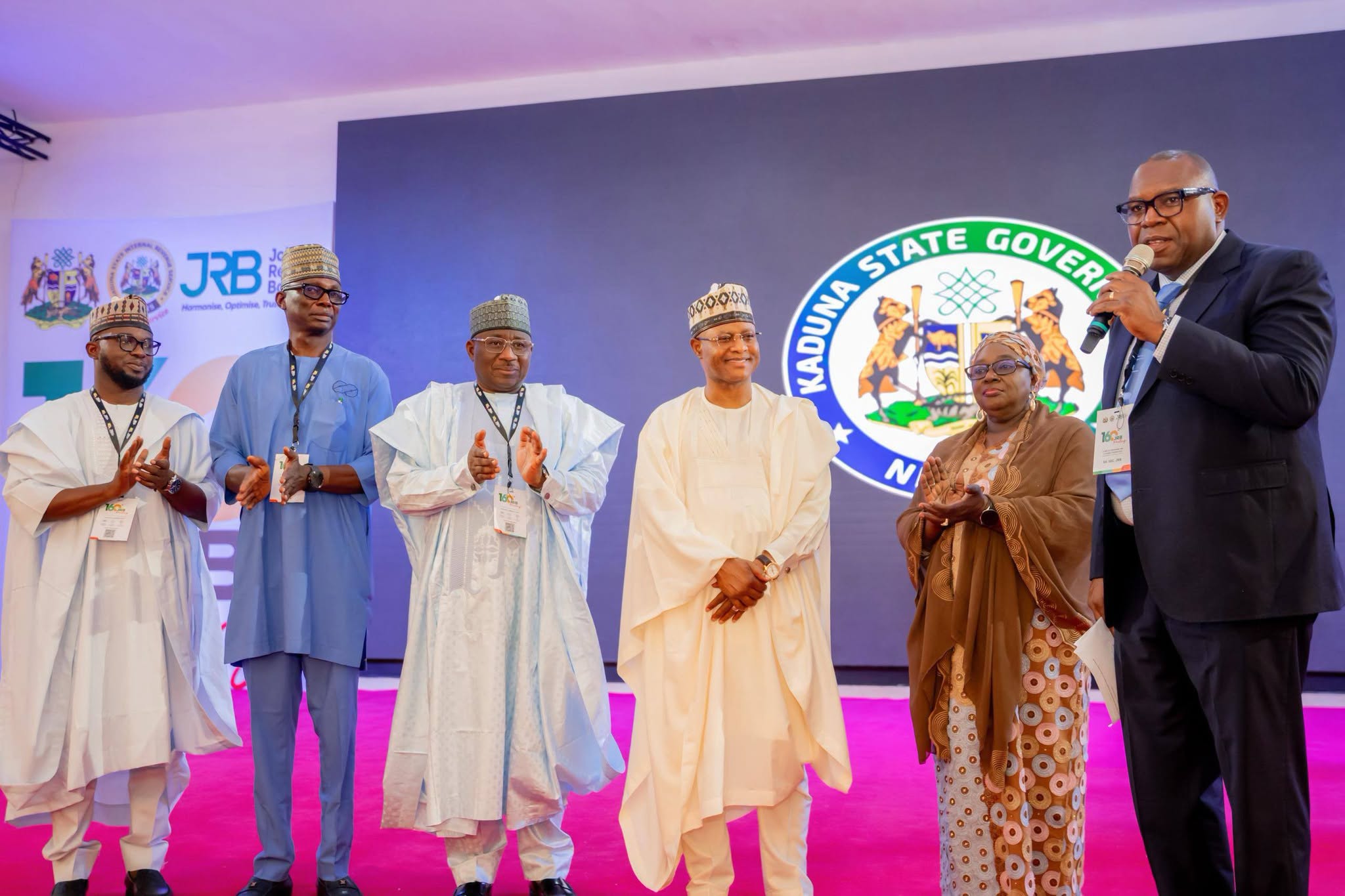
In a post obtained from the board’s X handle on Friday, Adesokan spoke at the 160th meeting of the JRB in Kaduna State, with the theme, “One Year of Reform: Assessing Progress and Addressing Challenges.”

He said the reform had also provided relief for low-income earners and micro-scale businesses, contrary to concerns that it had increased the tax burden.

“Addressing the misconception that the tax reform has increased taxes, the reform has rather reduced the tax burden on low-income earners, eliminated multiple nuisance taxes while providing reliefs for low-income earners and micro-scale businesses,” he said.

Adesokan said 18 state Houses of Assembly had domesticated the model harmonised taxes and levies law, which was designed to address overlapping and multiple taxation across the country.

According to him, the legislation had reduced more than 50 collection items previously administered by states and local government areas to nine sub-heads.

He added that the law had also abolished cash collection and the mounting of roadblocks for revenue collection.

The Executive Secretary said the measures had recorded significant progress in harmonising taxes and levies across the subnational governments.

The JRB, Nigeria’s apex body for revenue administration, convened the meeting to assess progress under the new revenue regime, identify gaps, and address emerging challenges.

The meeting was declared open by the Kaduna State Governor, Senator Uba Sani, who said the reform had expanded opportunities for domestic resource mobilisation and strengthened the country’s capacity to finance development.

See also  INEC RECs risk two-year jail term over rigging

Sani urged the JRB to identify bottlenecks affecting revenue collection, institutional weaknesses creating friction between revenue authorities and taxpayers, and opportunities for technology to improve efficiency in revenue administration.

He said, “The objective of the reform should not be simply to collect revenue; it should be to build a tax system in which compliance becomes easier, enforcement becomes more intelligent and voluntary compliance becomes a norm.”

The Executive Secretary appreciated Governor Uba Sani for hosting the 160th JRB meeting and for his consistent support of the tax reform initiative. He particularly commended the governor for nominating a member of the Board and outgoing Executive Chairman of Kaduna State Internal Revenue Service, Mr Jerry Adams, as his running mate for the 2027 gubernatorial election.

Sani expressed his delight with the tax reform, stressing that apart from eliminating duplication of taxation, it has enhanced revenue generation.

He observed that the national tax revenue has so far risen to N21.6 trillion since President Bola Tinubu introduced tax reform in 2026.

According to him, the nation’s revenue was  approximately ₦10.1 trillion in 2023,  ₦21.6 trillion in 2024, and about ₦36.8 trillion in 2025.

In his opening remarks, JRB Chairman, Dr Zacch Adedeji, represented by the Executive Director, Finance and Corporate Services, Nigeria Revenue Service, Muhammad Abubakar, said the meeting was a call for revenue authorities to take stock of the progress made, address identified gaps and confront emerging challenges.

He said the ultimate measure of the reform’s success must be improved revenue mobilisation, greater compliance, a better taxpayer experience, and stronger contributions to national development.

See also  Tinubu’s executive order blocks N2tn NNPC fees

Source: punchng.com

FOLLOW US ON:

FACEBOOK

TWITTER

PINTEREST

TIKTOK

YOUTUBE

LINKEDIN

INSTAGRAM

Continue Reading
Click to comment

Leave a Reply

Your email address will not be published. Required fields are marked *

Business

Jide Kosoko laments debt following N300m movie cinema loss

Published

on

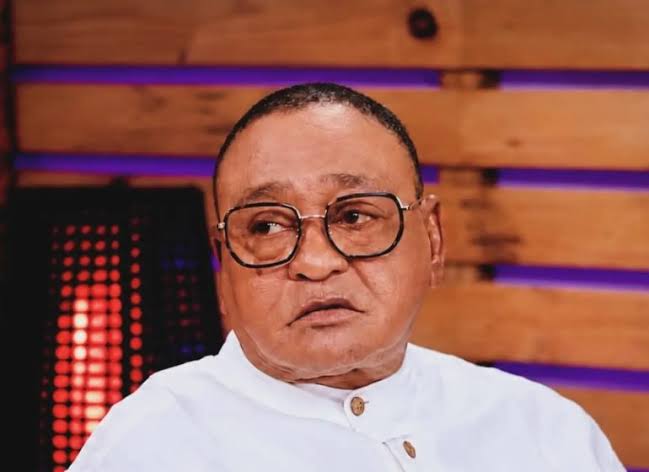
Veteran Nollywood actor and filmmaker Jide Kosoko has said he is in debt after his film, Eleko: Oba Esugbayi, failed to recoup its production cost of over N300m in cinemas.

Kosoko disclosed this in a now trending clip from his interview on African A-List published on October 17, where he explained that the money used to produce the film came from investors who expected returns on their investment.

According to him, the film which premiered in the cinemas in March, failed to generate enough revenue to recover its production cost, while the little money earned was shared among those involved.

“My film ‘Eleko: Oba Esugbayi’ that recently came out and we took to the cinemas, cost us over N300 million. Do I have 300 million? You should know that some people gave it to me and it was not that they dashed me, they invested in it and we took the film to the cinemas,” he said.

He added, “Different things happened and we did not earn our money back. The little that was earned was split. As I am, if you hear someone with debt dancing around their neck, it is me.”

PUNCH Online had earlier reported that Kosoko revealed he had been living with diabetes since 1996, saying his decades-long experience with the condition had given him a better understanding of his health.

The actor made this known in an interview on African A-List, uploaded to YouTube on Saturday.

“I became diabetic in 1996; I understand my health better than some doctors do. Do not misquote me. I am not saying I know how to do everything, I just do not want to die,” Kosoko said.

See also  Tinubu’s executive order blocks N2tn NNPC fees

He also spoke about his personal life, disclosing that he had lost three wives, including the mother of his daughter, Bidemi Kosoko, who died during childbirth.

“I lost my wife during childbirth; that’s Bidemi’s mother. I have lost three wives,” he said.

Continue Reading

Business

Airline extends Saudi flights suspension after Houthi strikes

Published

on

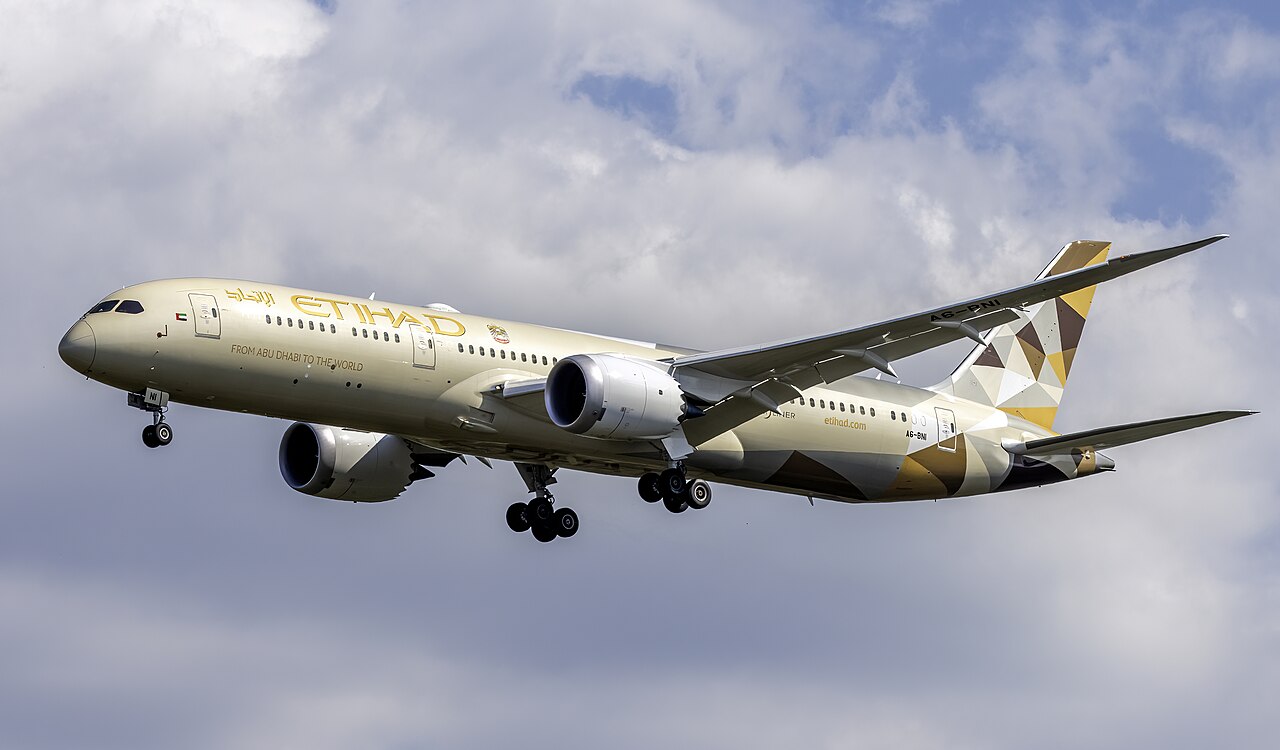
UAE national airline Etihad has extended until November 5 its suspension of flights to Riyadh and Dammam in Saudi Arabia, targeted by strikes from Yemen’s Houthis.

Etihad had suspended its service to Riyadh on October 12, two days after a deadly attack on a passenger terminal killed 13 people.

In a statement on Thursday, Etihad specified that flights to and from Riyadh and Dammam would remain suspended due to “operational disruptions”.

On Wednesday evening, two people were killed and eight others wounded in an attack on Dammam airport.

The airport, however, reopened the following day, while the capital’s airport remains closed.

Etihad added that it would operate only daytime flights to the western city of Jeddah, with night flights cancelled until November 5.

In recent weeks, Houthi attacks on Saudi civilian infrastructure including oil facilities and airports have reached a scale unprecedented since the start of the conflict in Yemen in 2014.

AFP

See also  CBN orders banks to freeze six terror suspects’ accounts
Continue Reading

Business

States push for suspension of Paris Club deductions

Published

on

State governors have rejected deductions from allocations due to the states from the Federation Account in the September 2026 revenue-sharing cycle, arguing that the deductions would further squeeze their finances, The PUNCH reports.

The states also called for the suspension of deductions linked to the Paris Club refund to local government councils, alleging that the payments were resumed without prior communication and reconciliation with affected states.

Their opposition comes after the three tiers of government shared N668.4bn less of August 2026 revenue distributed in September, heightening concerns over the impact of lower revenue receipts on states’ ability to meet their financial obligations.

The governors also demanded the redistribution of the proposed N240bn savings, insisting that the funds should be shared among the federal, state and local governments rather than deducted or retained under the proposed arrangement.

The complaints were raised by several state Accountants-General during the technical session of the Federation Account Allocation Committee meeting, according to a report by the committee’s technical sub-committee, dated 14 October, 2026, obtained by The PUNCH on Thursday.

The meeting, held at the Federal Ministry of Finance headquarters in Abuja, considered revenue accounts for August and the amounts available for distribution in September.

The report showed that the total amount recommended for distribution to the federal, state and local governments stood at N2.339tn, compared with N3.007tn shared in the previous month, representing a decline of N668.4bn.

The statutory revenue available for distribution dropped more sharply, falling from N2.283tn in the previous month to N1.566tn in August, a decrease of N717.08bn.

See also  Dangote to redeploy disengaged workers, says FG

However, revenue from Value Added Tax increased to N773.23bn from N724.46bn, providing some relief amid the decline in statutory revenue.

The Director of the Federation Account Department, Okolie Rita, who presented the accounts, told the committee that the statutory revenue available for distribution was calculated after deducting N85.71bn and N36.83bn as four per cent costs of collection for the Nigeria Revenue Service and the Nigerian Upstream Petroleum Regulatory Commission, respectively.

The revenue decline triggered calls from state representatives for the Federal Government to release additional funds and reconsider deductions that they said were putting pressure on state finances.

The Accountant-General of Akwa Ibom State, Andrew Essien, observed that August revenue had dropped considerably compared with July and appealed for the proposed N240bn savings to be returned to the distributable pool.

The Accountant-General of Jigawa State, Abdullahi Shehu, recalled an earlier proposal to augment the previous month’s revenue with N250bn, which he said had not been implemented. He urged the committee to combine the promised N250bn with the proposed N240bn savings and redistribute the funds to the three tiers of government.

The Accountant-General of Bayelsa State, Tokoni Ifidi, supported the demands and raised concerns about deductions for the Paris Club refund to local government councils.

She said the deductions were introduced without prior communication to the states, despite what she described as an earlier commitment in 2025 concerning the deductions, which began in February that year and were stopped by a court order in April 2026.

The document read, “AG Akwa Ibom observed a considerable drop in the revenue of August, 2026 compared to July, 2026 and appealed for the proposed savings of N240bn to, instead, be redistributed. AG Jigawa recalled that there was a proposal to augment the previous month’s revenue with the sum of N250bn but it had not been done. He suggested that the N250bn promised in the previous month should be added to the proposed savings of N240bn and be redistributed.”

See also  FG defends passport price hike to N100,000, N200,000

The Director of the Federation Account Department explained that the Paris Club deductions were not new, noting that they had previously been suspended following a court order.

The Bayelsa representative, however, maintained that the deductions should continue to be suspended pending reconciliation. She said the Economic and Financial Crimes Commission had held reconciliation sessions with local government councils and was awaiting feedback from the Office of the Accountant-General of the Federation on the commencement and continuation of the deductions.

The Accountant-General of Niger State, Saidu Abdullahi, criticised the handling of the deductions, arguing that the ministry had made a mistake from the beginning by distributing funds without adequate planning and proper communication.

He insisted that previous agreements should be honoured, particularly the proposed N250bn augmentation, while supporting calls for the redistribution of the N240bn savings.

The Accountant-General of Cross River State, Glory Effiong, also backed the demand for the savings to be redistributed, observing that deductions had consumed a substantial portion of the earnings of many states.

She said she had not been invited to any reconciliation meeting on the Paris Club debt since joining the committee and urged the Office of the Accountant-General of the Federation to improve its communication with state representatives.

The Accountant-General of Jigawa State further questioned the amount deducted under security-related expenditure, describing the quantum of deductions as alarming and calling for a review.

The Accountant-General of Nasarawa State, Musa Mohammed, stressed that states should be properly informed and invited to reconciliation meetings before decisions affecting their allocations were implemented.

See also  Akwa Ibom to drive large-scale farming with equipment leasing firm

Source: punchng.com

FOLLOW US ON:

FACEBOOK

WHATSAPP CHANNEL

TWITTER

PINTEREST

TIKTOK

YOUTUBE

LINKEDIN

INSTAGRAM

Continue Reading

Trending