Connect with us

Lifestyle

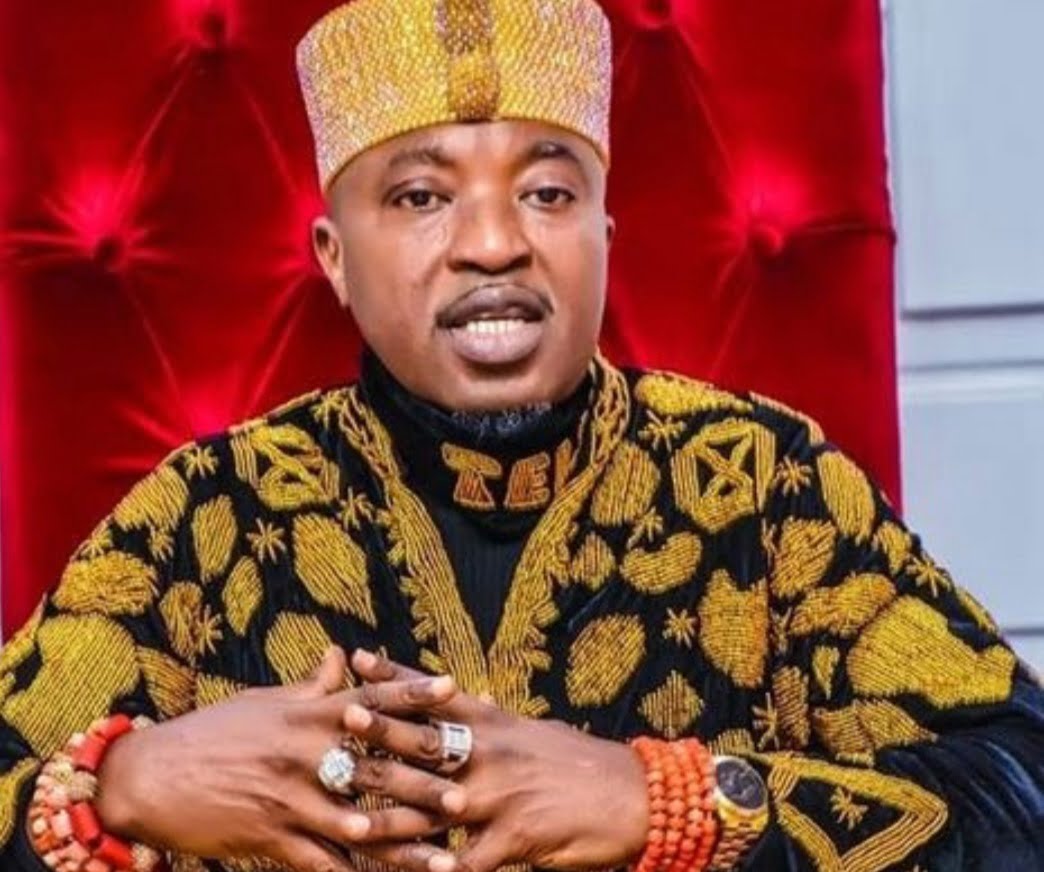
Tunde Kelani reveals why he is still passionate about filmmaking

Published

on

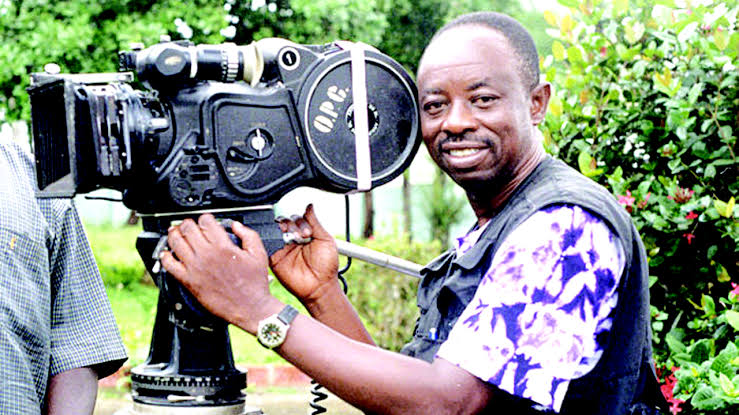
Veteran filmmaker and cinematographer, Tunde Kelani, discusses with VERA ALKALI about his career and current trends in the industry

You have had an extraordinary journey in the film industry. Can you take us through the highest and lowest moments of your career?

You cannot just say the highest moments because that is a jump. I joined the industry at an early age. I had uncles who were already in the industry, but I also grew up in a community in Abeokuta (Ogun State) where I was exposed to different forms of culture and oral traditions.

As soon as I could read and write in Yoruba, I took off from there. Abeokuta is a meeting point of culture, and my experience started from there. I could read to my grandfather, and we learnt English alongside Yoruba. I was able to compare what I learnt from social studies with what I learnt through Yoruba culture.

That was how I started. Later, I went into photography and eventually moved into motion pictures. I was employed by Western United Television, where I was trained primarily as a film cameraman.

I later attended the London Film School for the artistic and technical aspects of filmmaking. When I returned, I worked in television for one or two years before becoming an independent filmmaker.

From that point, I began to see films by people such as Professor Wole Soyinka, Bandesola Oru, Rasheed Onikoyi and Hubert Ogunde. I had known some of these people and had seen their works on the big screen.

Before then, I was already a film enthusiast. I practically saw all the films that came into Lagos and were shown in some of the theatres at the time.

On the high side, I think I chose the medium of cinema particularly to promote, preserve and document the rich Yoruba culture.

I have benefited from global cinema, including Hollywood, Japanese, Indian, Italian and European cinema, but people often ask me, “What is your style?” I tell them my style is unique. Having benefited from global cinema, I am still impressed by the Yoruba acting tradition.

I have seen people such as Kola Ogunmola and Oyin Adejobi. Those were my coaches. I also had many mentors, and that became my take-off point.

You mentioned being influenced by Hollywood, Japanese, Italian and other cinemas. What cultural differences or shocks did you experience in filmmaking and cinematography?

I think global cinema is about identity. You just know it. When you see an Indian film, you know it is Indian. When you see a Japanese film, you know it is Japanese. When you see a South Korean film, you know it is South Korean.

When you see me as a Yoruba man with my abetiaja cap on, you know that is our signature.

You have worked as a cinematographer, director and producer. Which aspect of filmmaking would you say is your favourite?

I trained for two years at the London Film School. The course specialised in the Diploma of Art and Technical Filmmaking.

Primarily, I am a storyteller. I share my experiences, our culture and our history, but I use cinema as my vehicle for dissemination.

See also  Some People Know Very Little, Yet They Behave as Though They Know Everything

You are a Yoruba man and have made films that strongly reflect Yoruba culture. What does it mean to you to convey your messages in Yoruba and preserve the culture through film?

That is my whole being. It is my essence. It is my culture and language.

I am an advocate for indigenous cultural expression, and I believe Nigeria should be united in diversity.

Our films are not displaying enough of that diversity. We have more than 300 languages, but we hardly see movies depicting these different cultures and languages in Nigeria.

As someone who is committed to indigenous storytelling, how do you decide which stories are worth telling?

My works are classified. Most of them are adaptations from literature. ‘Oleku’ and some of my works were written by authors such as Femi Osofisan and others.

Most of the films I make are adapted from texts. So, I work more from text to screen because of my background. I have read works by many of these authors.

Some are classified as ‘conscience drama’ because they are films that explore socio-political themes. ‘Saworoide’, ‘Arugba’ and ‘Campus Queen’ are examples of socio-political films.

What attracted you to bringing literature to the screen?

I was born in Lagos, but my father decided that I should be brought up in Abeokuta. I was taken to the family compound. I missed my mother, but I had a lot of people around me catering for me.

However, I felt lonely. As soon as I could read and write, I found reading to be a comfort, and a form of escape At that point, literature got stuck with me, and I learnt how to use it.

It is difficult for filmmakers to pick a favourite among their works, but if you had to choose one, which would it be?

All my works give me satisfaction and recognition. They also came with equal amounts of ups and downs because making a successful film is very challenging.

But my latest film, ‘Cordelia’, is my favourite.

Can you take us through the making of Cordelia?

‘Cordelia’ is adapted from Femi Osofisan’s novel of the same title, and I had kept the project for years.

In fact, I was going to make it before ‘Maami’ (which was released in 2012). When I got to Femi Osofisan and we discussed it, he wondered why I was interested in it. He went in and brought ‘Maami, but I insisted that I wanted ‘Cordelia’ at the time.

About three or four years ago, I received visitors from the University of Delaware in the United States. The music department wanted a sort of cultural fusion. They said that if we made the soundtrack for the film, they would orchestrate it in the United States.

I was interested. They were asking for an old film from me, but I said, ‘No, we would do a new film.’

I told them about ‘Cordelia’ and explained that it was the new film we wanted to make because the story could inspire a solid musical score. It is so dramatic that it can inspire a strong musical composition.

See also  Why Do Some People Hate Being Corrected?

When you compare filmmaking today with what obtained in your early days, which era do you feel more connected to?

It does not matter because I have worked with all the new technologies of making motion pictures.

Recently, I completed an experiment in a small studio which I call “Studio Lab”, where I combined all the known technologies of making motion pictures, including physical sets, green screen, traditional props and everything else.

I have also added digital cinema cameras and artificial intelligence. So, it combines all of them.

What is your view on artificial intelligence and its growing role in filmmaking?

Artificial intelligence is everything, but just like when computers came and they added sound cards and graphics cards, I knew it was going to come into motion picture production.

I started early. It is the same thing with any technology that comes along. I embrace it.

We should embrace technology, but it should not replace our culture or our language. We should be in control and not let it tell our stories for us.

How do you blend artificial intelligence with Yoruba culture and other indigenous cultures?

Artificial intelligence technology is already a tool. Most of the time, if we are making a movie, our script is written in English. Later, we indicate the dialogue in Yoruba.

Filmmaking is a collaborative medium. You can have 150 people working on a film, and most of them may not be Yoruba.

You document, organise the group and use everything that technology provides. The technology is the tool, but the product becomes whatever you want it to be.

There has been an emergence of more Nigerian movies in cinemas. Do you think contemporary directors and producers are doing enough to preserve Nigerian cultures?

We have gatekeepers; I mean those people who fund movies. They are not necessarily interested in cultural preservation. They want to invest in a business, recoup their money and make a profit.

So, it is business. You can make a movie that they do not think will sell well, and that becomes a challenge.

The world is rapidly changing, and people’s tastes are changing as well.

I consider myself a “techie”. Even with all my experience with technology, I am still surprised by how many things you can do with a smartphone. Today, I lectured with my smartphone.

That is what technology is all about. We have witnessed similar things with the advent of video games and mobile phones, and now we are talking about artificial intelligence. These are all tools.

You recently received an award from the Nigerian Academy of Letters. Did you expect this kind of recognition when you were starting out?

I never really set out with recognition in mind. I was simply passionate about what I was doing. From photography to cinematography, advertising, music and everything else I got involved in, I was driven by the desire to create and communicate.

See also  Rape allegation not true – Mirabel finally opens up

I had stories I wanted to share with people, and that was what occupied my mind. I wanted to use whatever medium was available to me to tell those stories and connect with people. I was more concerned about the work itself and how best I could express what I had in mind than about whether anybody would recognise or reward me for it.

So, awards were never the motivation. They are certainly appreciated, and I am grateful whenever my work is recognised, but when I was starting out, I was not thinking about receiving awards many years later. I was simply following my passion, learning along the way and trying to tell stories that I believed were worth telling.

If you are passionate about what you do and remain committed to it, recognition may come, but it should not be the reason you do the work.

Many young filmmakers and creatives look up to you. What is your advice to them?

Number one, it is about passion.

You have to be passionate about what you are doing. If you are not passionate about it, it becomes very difficult to sustain yourself, especially in a creative field where you will face many challenges, disappointments and moments when things may not go the way you want.

In fact, my case is different. I am not supposed to be known because I am the person behind the camera. I am not a star. My job has always been to help tell the story and make sure that the story gets across to the audience in the best possible way. I have always been comfortable being behind the camera and allowing the work to speak for me.

For young filmmakers, I would say they should not be in a hurry to become famous. They should concentrate on learning their craft, understanding the medium and developing their own voice. You must be willing to learn continuously because filmmaking is changing all the time. The technology changes, the platforms change and the way people consume stories changes, but the fundamental need to tell good stories remains.

They should also understand that there are many different roles in filmmaking. You do not necessarily have to be the person in front of the camera. You can be a cinematographer, editor, writer, sound designer, production designer, director or work in any of the other areas that make filmmaking possible. What matters is that you find the area where your passion lies and develop yourself in it.

For me, the most important thing is to remain committed to the work. Fame and recognition may come, but they should be secondary. If you have passion, discipline and a story to tell, keep working at it. Eventually, the quality of your work will speak for you.

Source: punchng.com

FOLLOW US ON:

FACEBOOK

TWITTER

PINTEREST

TIKTOK

YOUTUBE

LINKEDIN

INSTAGRAM

Continue Reading
Click to comment

Leave a Reply

Your email address will not be published. Required fields are marked *

Lifestyle

Osun puts Oluwo under watch over inflammatory remarks

Published

on

The Osun State Government has placed the Oluwo of Iwo, Oba Abdulrasheed Akanbi, under watch over what it described as inflammatory remarks capable of triggering religious and inter-town conflicts.

It directed the monarch to stop attacking people of other faiths and fellow traditional rulers.

The cautions were contained in a letter from the Ministry of Local Government and Chieftaincy Affairs, Office of the Permanent Secretary, with reference number CD.17/1/VOL.VIII/377, dated November 2026, and signed by Wale Alliyu on behalf of the Permanent Secretary.

A copy of the letter, obtained by The PUNCH in Osogbo on Wednesday, was also sent to the Ooni of Ife, Oba Adeyeye Ogunwusi, in his capacity as Chairman, Osun State Council of Obas.

The government cautioned the Oluwo, saying his activities were raising communal tension, sowing seeds of communal and religious discord, and increasingly discrediting the traditional values of his people and the Yoruba race.

In the letter addressed to the Oluwo and received by the secretary to the monarch on Tuesday, the government stated that it had observed recent well-publicised statements and pronouncements from Oba Akanbi that could ignite religious confrontation, inter-town conflicts and disruption of communal peace.

It said the persistence of such crisis-inciting activities and disruptive conduct capable of breaching public peace had reached a level the administration could no longer ignore.

It also told the monarch that, within the context of the Constitution, every citizen has a right to freedom of religious association, adding that as a traditional ruler, the Oluwo is bound by law to respect the rights of his people to hold religious beliefs as guaranteed by the Constitution.

See also  FULL LIST: 68th Grammy Award Nominations

It further stated that the Oluwo’s role as a traditional ruler is essentially the preservation of the cultural values and traditions of the people, warning that pursuing any reform with the potential to create community violence and conflict would not be tolerated by the administration.

The letter read, “You cannot, and you must not, conduct yourself in any way that can foment religious crisis through serial attacks on people of other faiths. Your Royal Majesty is also invited to note that just as the traditional stool should not be used to incite religious war, its occupants should also be mindful not to erode the traditional values, culture and tradition of the society over which they preside.

“The government notes with shock and disbelief several statements and public utterances credited to Your Royal Majesty without denial.

“Your activities are raising communal tension, sowing seeds of communal and religious discord and increasingly discrediting the traditional values of your people and Yoruba society, of which your domain is a major part.

“These developments constitute serious threats to the peace, unity and stability of Osun State and your immediate domain.

“It is in view of the above observations that the state government issues the following cautionary notes to nip in the bud any likely outbreak of religious and inter-town conflict: (i) That Your Royal Majesty should stop any further attacks on the people of other faiths forthwith. All citizens have the right to religious freedom of their choice; (ii) That Your Royal Majesty should refrain from further attacks on fellow traditional rulers to forestall likely inter-town confrontation; (iii) That Your Royal Majesty should work to preserve the culture and tradition of the people which the traditional stool you occupy symbolises;

See also  Why Do Some People Hate Being Corrected?

“(iv) That Your Royal Majesty should be guided by the norms and regulations of behaviour as spelt out in the Chieftaincy Laws and resolutions of the State Council of Obas; (v) That the Ministry of Local Government and Chieftaincy Affairs will be monitoring compliance by Your Royal Majesty with the above notes of caution; and (vi) That the State Council of Obas is equally directed to watch and act on recent developments within Iwo land.”

Although the letter did not specify the Oluwo’s utterances or activities to which the government referred, the royal father has, through his social media pages, often accused other Yoruba monarchs of engaging in idolatry.

On July 1, Oba Akanbi, in a video shared on his Facebook page, said that traditional rites and seclusion for new royal fathers were not a good practice, declaring it an avenue to enslave and lure them into idolatry.

Also on October 10, the monarch, in another video on the page, said the idea of an ancient crown was a ruse, stating that crowns are made by monarchs wearing them.

When contacted for a reaction, the Press Secretary to the Oluwo, Alli Ibraheem, said in a telephone interview that the monarch did not receive any letter from the state government.

Source: punchng.com

FOLLOW US ON:

FACEBOOK

WHATSAPP CHANNEL

TWITTER

PINTEREST

TIKTOK

YOUTUBE

LINKEDIN

INSTAGRAM

Continue Reading

Lifestyle

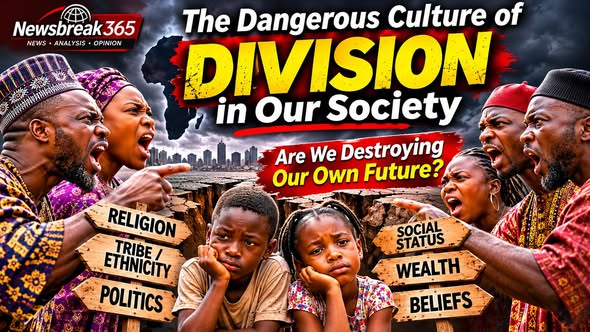
THE DANGEROUS CULTURE OF DIVISION IN OUR SOCIETY: ARE WE DESTROYING OUR OWN FUTURE?

Published

on

A society that allows religion, ethnicity, politics, wealth and social differences to turn its people against one another is slowly destroying itself. But who really benefits from our division?**

There is something deeply disturbing about the direction in which our society is heading. People who should be working together for a better future are increasingly becoming enemies because of differences they should have learned to respect.

Religion has become a battlefield. Ethnicity has become a weapon. Politics has become an excuse for hatred. Wealth has become a measure of human worth. Social status has become a reason to look down on others.

We are gradually creating a society where people are judged not by their character, honesty, intelligence or contribution to humanity, but by where they come from, what they believe, who they support and how much money they possess.

The question we must ask ourselves is this: **When did our differences become more important than our shared humanity?**

## THE DIVISION THAT IS TEARING OUR SOCIETY APART

Division does not always begin with violence. Sometimes, it begins with words, prejudice, stereotypes, manipulation and the refusal to accept that other people have the right to think differently.

It grows when people are taught to hate those who belong to different communities. It becomes dangerous when disagreements turn into hostility and when loyalty to a particular group becomes more important than justice and truth.

Consider some of the most damaging forms of division in our society.

### 1. Religious Division: When Faith Becomes a Weapon

Religion should encourage compassion, humility, kindness and peaceful coexistence. Yet, in many communities, religious differences have become reasons for discrimination, hostility and even violence.

Some people have become so attached to defending their religious identity that they forget the basic principles of humanity.

They condemn people who worship differently, insult those who question their beliefs and sometimes celebrate the suffering of people outside their religious communities.

But what is the value of religious devotion if it cannot teach people to respect one another?

Must someone follow your religion before you recognise their humanity?

### 2. Ethnic and Tribal Division: The Enemy Within

One of the most destructive attitudes in society is the belief that people from one ethnic group are naturally superior to others.

People are stereotyped, marginalised and discriminated against because of their ancestry, language, culture or geographical origin.

In Africa, where cultural diversity should be a source of strength, ethnic suspicion and tribal loyalty have repeatedly undermined social cooperation and national development.

See also  Another Nigerian found dead in UK apartment

We celebrate our ethnic identities, which is perfectly reasonable. But celebrating your culture should never require insulting another person’s culture.

**Your tribe is part of your identity, not proof that you are better than another human being.**

### 3. Political Division: Fighting for Politicians Who Do Not Fight for Us

Perhaps one of the most embarrassing spectacles in modern society is watching ordinary citizens fight bitterly over politicians.

People destroy friendships, insult family members and spread hatred because they support different political parties.

Meanwhile, the politicians they defend may be enjoying privileges, travelling comfortably and pursuing their personal interests.

When election campaigns end, political opponents can sometimes sit together, negotiate and share political interests. Yet ordinary supporters remain enemies long after the elections.

Why should citizens fight one another over political personalities who may not even remember their sacrifices?

Political loyalty should never be stronger than loyalty to truth, accountability and the welfare of society.

### 4. Wealth and Social Status: When Money Determines Human Worth

Another dangerous form of division is the growing obsession with wealth and social status.

People are increasingly judged by the cars they drive, the houses they own, their professional positions, their clothing and their financial influence.

The wealthy are celebrated regardless of how they acquired their money, while the poor are sometimes treated as though they have failed as human beings.

This culture encourages arrogance, envy, exploitation and unhealthy competition.

But when did money become the measurement of human dignity?

A person’s financial situation does not determine their intelligence, character or value to society.

### 5. Division Through Personal Beliefs and Ideologies

A healthy society should allow people to express different opinions without fear of intimidation or persecution.

Unfortunately, disagreement is increasingly interpreted as betrayal.

Question someone’s argument, and you become an enemy. Challenge a popular opinion, and you are labelled. Refuse to follow the crowd, and suddenly you become a problem.

A society that punishes independent thinking cannot expect to make meaningful progress.

We must learn that disagreement is not hatred, criticism is not necessarily disrespect, and asking questions is not a crime.

## WHO REALLY BENEFITS FROM OUR DIVISION?

This is perhaps the most important question of all.

Who benefits when neighbours become enemies?

Who benefits when citizens are too busy fighting over religion and ethnicity to demand good leadership?

Who benefits when poor people attack one another while powerful individuals continue exploiting their differences?

Who benefits when communities refuse to cooperate because of historical grievances and political manipulation?

See also  Some People Know Very Little, Yet They Behave as Though They Know Everything

Division creates opportunities for manipulation.

When people are emotionally consumed by hatred, they become less willing to question those who exploit their loyalty.

They defend individuals and institutions even when their actions contradict the values they claim to represent.

They spend more energy attacking one another than confronting the problems affecting their communities.

**A divided society is easier to manipulate, easier to exploit and much harder to develop.**

This does not mean every disagreement is deliberately manufactured. Genuine differences exist, and some divisions have deep historical, political and economic roots. However, those who exploit these differences for personal advantage must be held accountable.

## THE NEXT GENERATION WILL INHERIT THE CONSEQUENCES

Perhaps the most painful part of this culture of division is the future we are creating for our children.

Children observe how adults behave. They listen to the insults, witness the hostility and absorb the prejudices around them.

When parents teach children to hate people from other ethnic groups, they are passing hatred from one generation to another.

When communities teach young people that members of another religion are enemies, they are creating barriers that may take decades to dismantle.

When political differences become family conflicts, children grow up believing that disagreement must end in hostility.

What kind of future are we preparing for them?

Do we want a generation that values intelligence, innovation, education, cooperation and human dignity, or one that inherits the bitterness and prejudices of previous generations?

Our children deserve better than a society where their opportunities are determined by their surname, religion, ethnicity or political connections.

## UNITY DOES NOT MEAN WE MUST THINK ALIKE

It is important to understand that unity does not require everyone to share the same religion, ethnicity, political ideology, culture or personal beliefs.

Real unity means recognising that people can be different and still coexist peacefully.

You can disagree with someone’s religious beliefs without insulting them.

You can belong to a different ethnic group without becoming an enemy.

You can support a different political party without destroying a friendship.

You can be wealthy without looking down on the poor.

You can be successful without celebrating another person’s failure.

A mature society does not demand uniformity. It demands mutual respect, fairness, accountability and equal human dignity.

## IT IS TIME TO BREAK THE CYCLE OF DIVISION

We cannot continue planting the seeds of hatred and expect to harvest peace.

We cannot continue encouraging tribalism and expect national unity.

See also  FULL LIST: 68th Grammy Award Nominations

We cannot continue defending corruption because of political loyalty and expect good governance.

We cannot continue treating people as inferior because of their religion, background or financial circumstances and expect a fair society.

Every individual has a responsibility to challenge prejudice, reject manipulation, encourage critical thinking and treat others with dignity.

Our leaders must also recognise that governing a diverse society requires fairness, inclusion and accountability, not the exploitation of differences for political advantage.

The future of society depends not on how successfully we defeat one another, but on how effectively we learn to live and work together.

## THE BIG QUESTION: ARE WE BUILDING A SOCIETY OR DESTROYING ONE?

Imagine a society where people are judged by their character rather than their ethnicity.

Imagine communities where religious differences do not produce hatred.

Imagine political debates where people challenge ideas without threatening one another.

Imagine a society where wealth does not give someone the right to humiliate the poor.

Is that kind of society impossible, or have we simply become too comfortable with division?

We must ask ourselves whether we are genuinely interested in progress or whether we have become addicted to fighting over differences while ignoring the problems that unite us.

The uncomfortable truth is that nobody wins when hatred becomes the foundation of society.

**A divided people may win arguments, defend their tribes, protect their political heroes and celebrate their differences, but they risk losing something far more valuable: their collective future.**

The time to rethink our priorities is now.

—

## LET’S DEBATE: YOUR OPINION MATTERS!

1. Who benefits most from the growing division in our society: ordinary citizens or the powerful?
2. Has religion become a source of division in some communities rather than a force for compassion?
3. Why do people fight and destroy relationships over politicians who may not even care about their personal struggles?
4. Is tribalism one of the biggest obstacles to African unity and development?
5. Are parents and society unconsciously raising a generation that will inherit hatred and prejudice?
6. Can genuine development happen when people cannot respect one another’s differences?

**DROP YOUR HONEST OPINION IN THE COMMENT SECTION. DON’T JUST READ AND SCROLL PAST. LET US HAVE THIS IMPORTANT CONVERSATION!**

*Newsbreak365 — Challenging Perspectives, Questioning Narratives and Encouraging Conversations That Matter.*

#Newsbreak365 #Society #Division #Unity #AfricanSociety #Tribalism #ReligiousTolerance #PoliticalDivision #Humanity #SocialAwareness

FOLLOW US ON:

FACEBOOK

WHATSAPP CHANNEL

TWITTER

PINTEREST

TIKTOK

YOUTUBE

LINKEDIN

INSTAGRAM

Continue Reading

Lifestyle

They Don’t Need Guns or Knives to Destroy You: The Deadly Power of a Wicked Tongue

Published

on

Gossip, lies, rumours, jealousy and character assassination are weapons that can destroy reputations, poison relationships, divide families and leave emotional scars that may last a lifetime.**

There are people who do not need guns, knives or any physical weapons to inflict serious damage on another person’s life. They have something they consider far more convenient: their tongues.

They use words as weapons, gossip as ammunition and lies as bullets. Their targets are not always strangers. Sometimes, they are their own family members, friends, neighbours, colleagues and people who once trusted them.

Welcome to the dangerous world of malicious gossip, where a single rumour can destroy years of friendship, a false accusation can damage an innocent person’s reputation, and a carefully manipulated story can turn an entire community against someone.

## The silent assassins of human dignity

One of the most disturbing things about malicious gossip is that its perpetrators often operate behind the scenes.

They may smile with you, celebrate with you and pretend to care about your happiness. But behind closed doors, they are busy discussing your weaknesses, exaggerating your mistakes, questioning your character and spreading stories they cannot prove.

They rarely consider the consequences of their actions.

They do not see the sleepless nights of their victims. They do not witness the tears, embarrassment, family conflicts or emotional suffering their words may cause.

For them, it is entertainment. For their victims, it can become a painful experience that affects their confidence, relationships and peace of mind.

## How gossip destroys lives

Gossip is not always harmless conversation. When it is deliberately used to humiliate, manipulate, intimidate or damage another person, it becomes a serious form of social cruelty.

Consider the damage it can cause:

**1. It destroys reputations.**

See also  Why Do Some People Hate Being Corrected?

An innocent person can become the subject of public suspicion because someone decided to spread an unverified story. Before the truth has an opportunity to emerge, people’s opinions may already have changed.

**2. It poisons family relationships.**

Some families have become battlefields because of rumours, jealousy, accusations and unnecessary interference. Brothers stop speaking to sisters, relatives become enemies, and people who should protect one another begin treating one another with suspicion.

**3. It destroys friendships.**

A friendship built over many years can collapse because someone carries a distorted story from one friend to another. Instead of encouraging direct communication, gossip creates suspicion and mistrust.

**4. It damages emotional well-being.**

Being constantly talked about, falsely accused or publicly humiliated can cause serious emotional distress. Some people silently struggle with the consequences long after the gossip has moved on to another target.

**5. It creates division in society.**

Communities cannot develop meaningful unity when people spend more time spreading rumours, fighting over personal differences and destroying one another’s reputations than working together.

## The dangerous people who hide behind friendship

Perhaps the most painful form of gossip comes from people who are supposed to love and protect you.

It is one thing to be criticised by an enemy. It is another thing to discover that someone you trusted has been secretly working to damage your reputation.

Some people are uncomfortable when others succeed. They struggle to celebrate another person’s progress and may use rumours, insults and character assassination to undermine those they envy.

They cannot always compete with your achievements, so they attempt to destroy your image.

But here is an important question: What kind of satisfaction does anyone gain from watching another person’s reputation collapse?

Why should someone’s happiness depend on another person’s humiliation?

See also  Another Nigerian found dead in UK apartment

## Why do people believe rumours so easily?

Another dangerous aspect of gossip is the audience that encourages it.

People who spread malicious stories would have less influence if others refused to entertain them.

Unfortunately, some people are quick to believe the worst about others without asking questions, checking facts or hearing the other side.

They forward messages, repeat allegations and pass information from one person to another without considering whether it is true.

In this way, gossip becomes a chain reaction. One person starts the rumour, another person adds a new version, and several others spread it until an unverified story begins to look like the truth.

The person being discussed may not even know that their reputation is being destroyed.

**Not everything you hear deserves to be repeated, and not everything you are told deserves to be believed.**

## Words have consequences

Freedom of speech should never become an excuse for cruelty, dishonesty or deliberate character assassination.

There is a difference between offering constructive criticism and deliberately destroying someone with malicious words.

There is a difference between discussing a genuine concern and spreading rumours to create hatred.

There is also a difference between exposing wrongdoing with credible evidence and inventing stories to settle personal scores.

Society must learn to recognise these differences.

Parents must teach their children the importance of responsible communication. Religious leaders must discourage destructive gossip and promote honesty. Political leaders must understand that inflammatory language can deepen divisions. Ordinary citizens must also accept responsibility for the stories they spread.

Unity cannot survive where malicious gossip is celebrated.

## A wicked tongue can be more destructive than a loaded gun

A gun can cause physical injury, but malicious words can leave invisible wounds that are difficult to heal.

A person may recover from public humiliation, rebuild a damaged reputation and restore broken relationships, but the experience can leave lasting scars.

See also  Fans mourn late Nollywood actor Alex Ekubo

Before spreading a rumour, ask yourself: Would I be comfortable if someone spread the same story about me?

Before repeating an accusation, ask whether you know it to be true.

Before joining a conversation designed to destroy someone’s reputation, ask yourself whether you are contributing to a solution or becoming part of the problem.

Sometimes, the most powerful thing you can do is refuse to participate.

**You do not need to destroy another person’s name to make your own name shine. You do not need to spread hatred to gain attention, and you do not need to pull someone down to prove that you are better than them.**

A society that celebrates gossip will eventually become a society where nobody feels safe trusting anybody.

The question is not whether people will talk. People will always talk.

The real question is whether we will continue to give malicious gossip the power to destroy our families, friendships and communities.

—

## THE BIG DEBATE: LET’S HEAR YOUR OPINION!

1. Is malicious gossip as destructive as physical violence?
2. Why do some people take pleasure in destroying the reputations of their friends and family members?
3. Who is more responsible for spreading gossip: the person who starts it or the people who keep repeating it?
4. Can a family or community truly experience unity when its members constantly engage in backbiting, jealousy and character assassination?

**What is your experience? Have you ever been a victim of malicious gossip, or witnessed it destroy a relationship?**

Share your thoughts in the comment section.

*Newsbreak365 — Raising conversations that matter.*

FOLLOW US ON:

FACEBOOK

WHATSAPP CHANNEL

TWITTER

PINTEREST

TIKTOK

YOUTUBE

LINKEDIN

INSTAGRAM

Continue Reading

Trending