Connect with us

Business

CBN tightens monitoring of banks due to terror funds

Published

on

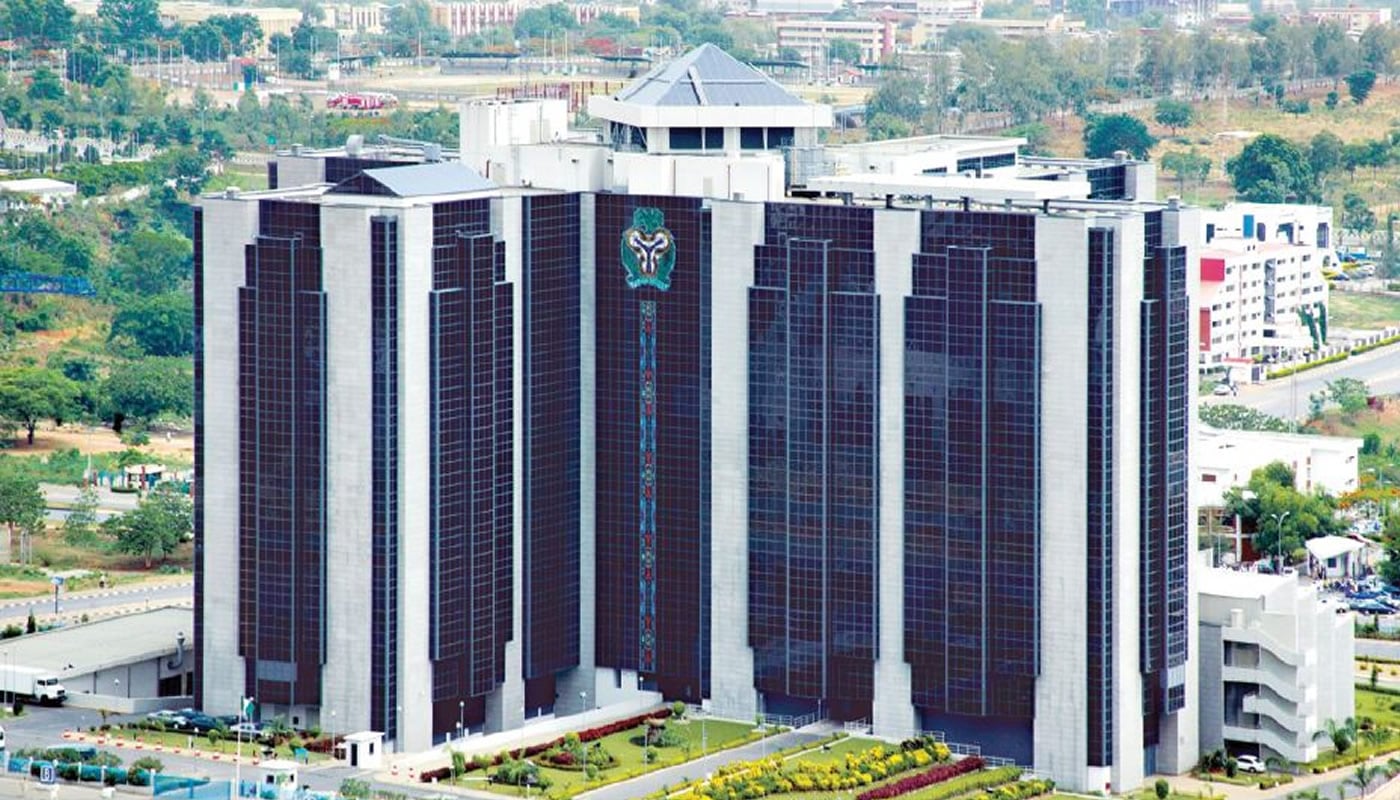
The Central Bank of Nigeria has intensified surveillance of banks and other financial institutions over terrorism financing risks as part of efforts to prevent the country’s financial system from being exploited by illicit actors.

The apex bank said terrorism financing supervision had been elevated to a current supervisory priority, with greater attention to transaction monitoring, suspicious transaction reporting and compliance with targeted financial sanctions.

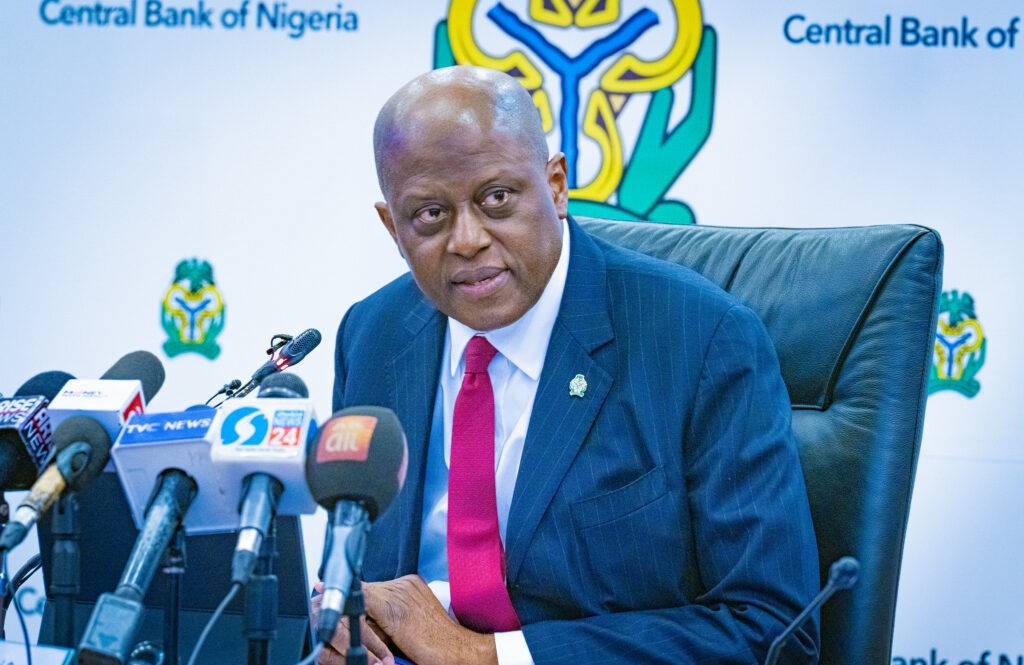
The CBN disclosed this in a press statement issued on Tuesday and signed by the Acting Director, Corporate Communications and Investor Relations Department, Hakama Sidi-Ali.

“The Central Bank of Nigeria has elevated terrorism financing supervision to a current supervisory priority, as part of its ongoing commitment to protecting the Nigerian financial system from abuse by illicit actors,” the bank said.

The move signals increased regulatory scrutiny of financial institutions’ systems for identifying and managing transactions that could be linked to the financing of terrorism.

According to the CBN, its supervisory attention will cover four major areas, including terrorism financing risk management, transaction monitoring, implementation of targeted financial sanctions and the reporting of suspicious transactions linked to terrorism financing.

The development means banks and other regulated financial institutions are expected to maintain systems capable of identifying unusual transactions and complying with existing anti-money laundering and counter-terrorism financing requirements.

The CBN said it would continue to deploy a risk-based approach to supervision, combining physical examinations of financial institutions with off-site monitoring.

“The bank will continue to apply a risk-based supervisory approach, including on-site and off-site engagement, to support effective AML/CFT/CPF controls across the financial sector in line with existing legal and regulatory obligations,” the statement read.

See also  FG defers 70% of 2025 capital projects to 2026

AML/CFT/CPF refers to measures against money laundering, terrorism financing and proliferation financing.

Under a risk-based supervisory framework, regulatory attention is typically concentrated on institutions, customers, transactions or activities considered to pose greater financial crime risks rather than applying the same level of scrutiny across the financial system.

The latest directive also puts attention on the implementation of targeted financial sanctions, which form part of measures designed to prevent designated individuals and entities from accessing or moving funds through the formal financial system.

Suspicious transaction reporting is another major component of the CBN’s latest supervisory focus. Financial institutions are required under existing regulatory frameworks to monitor customer activities and report transactions that raise concerns about potential financial crimes.

The CBN added that the heightened focus was part of Nigeria’s broader domestic and international efforts to combat terrorism financing and other threats to the integrity of the financial system.

“This supervisory focus also supports Nigeria’s ongoing domestic and international cooperation on counter-terrorism financing, counter-proliferation financing, financial integrity, and the protection of the financial system,” the bank stated.

The regulator added that further supervisory engagements would be undertaken where necessary.

The PUNCH recently reported that the CBN directed banks and other financial institutions to immediately freeze the accounts and assets of individuals and companies designated for terrorism and terrorism financing, following fresh sanctions issued by Nigerian and United States authorities.

The directive was contained in a circular dated June 24, 2026, issued by the CBN’s Compliance Department and addressed to all banks, Payment Service Banks and other financial institutions regulated under the Banks and Other Financial Institutions Act 2020.

See also  FG defers 70% of 2025 capital budget to 2026

According to the circular, the action followed earlier sanctions designations by the Nigeria Sanctions Committee and the United States Department of the Treasury’s Office of Foreign Assets Control under Executive Order 13224, as amended, on terrorism and terrorism financing.

Source: punchng.com

FOLLOW US ON:

FACEBOOK

TWITTER

PINTEREST

TIKTOK

YOUTUBE

LINKEDIN

INSTAGRAM

Continue Reading
Click to comment

Leave a Reply

Your email address will not be published. Required fields are marked *

Business

Paraguay president resigns after digital bank collapse leaves millions without access to savings

Published

on

Paraguayan President Santiago Peña has resigned following the intervention of digital lender Ueno Bank, which left nearly three million customers unable to access their accounts and triggered widespread protests and calls for his removal.

Peña announced his resignation on Thursday, November 5, saying he was stepping down to protect national stability, social peace and the country’s democratic institutions.

“I do so with the stability of our country, social peace and the need to preserve our democratic institutions in mind,” he said in a recorded address.

The resignation came as pressure mounted on the president, with opposition lawmakers pushing for impeachment proceedings and members of his own conservative Colorado Party withdrawing their support.

The crisis erupted after Paraguay’s central bank intervened in Ueno Bank, initiating a resolution process after discovering that the digital lender’s solvency ratio had fallen below half the legally required minimum.

The intervention left approximately three million customers, representing a significant portion of Paraguay’s 6.5 million population, unable to access their savings and other funds.

Ueno had rapidly expanded into one of the country’s major financial institutions, reportedly holding between $800 million and $850 million in public-sector funds, including money linked to state pension and healthcare institutions.

The bank’s crisis also raised questions about Peña’s previous business connections to its parent company, Grupo Vázquez. The president had been a shareholder in the group until March 2025, prompting lawmakers to accuse his administration of conflicts of interest, misuse of pension funds and attempts to cover up irregularities.

See also  Nigeria’s exports fall 5.3% in Q4 2025, imports rise – NBS

Peña denied wrongdoing, while promising that those responsible for financial irregularities would face justice. He also called for the recovery of depositors’ funds and the protection of public money.

The crisis has resulted in the detention of several Ueno executives as prosecutors investigate suspected financial misconduct. The central bank chief had also resigned earlier in the week following the controversy.

In a further political development, Paraguay’s lower house voted 78–0 to approve impeachment proceedings against Peña shortly after he announced his resignation. The matter was subsequently referred to the Senate.

Vice President Pedro Alliana is expected to succeed him, although the formal transition remains subject to the constitutional process surrounding Peña’s resignation and impeachment.

The banking crisis has shaken confidence in Paraguay’s financial system, with protesters demanding the return of their savings and accountability from officials connected to the bank’s intervention.

Source: tribuneonlineng.com

FOLLOW US ON:

FACEBOOK

WHATSAPP CHANNEL

TWITTER

PINTEREST

TIKTOK

YOUTUBE

LINKEDIN

INSTAGRAM

Continue Reading

Business

Business activity strengthens as PMI rises to 53.2 points, read details

Published

on

BUSINESS activities in Nigeria strengthened in October as the Purchasing Managers’ Index (PMI) rose to 53.2 points from 53.0 points in September, extending the private sector’s expansion for the fifth consecutive month.

The latest PMI report by the Central Bank of Nigeria (CBN), released on Thursday, showed that 24 of the 32 subsectors surveyed recorded expansion, indicating that the improvement in economic activities was spread across major segments of the economy.

A PMI reading above the 50-point threshold indicates expansion, while a reading below 50 points signals contraction.

The improvement was driven largely by stronger performances in agriculture and industry, where business activities gained momentum, supported by increased production, new orders and employment.

The industrial PMI rose to 52.6 points in October from 52.0 points in September, while agriculture recorded a stronger increase to 54.7 points from 53.1 points.

However, the services sector recorded a moderation, with its PMI declining to 52.7 points from 53.2 points in the preceding month, although it remained in expansion territory for the fourth consecutive month.

Within the industrial sector, manufacturing activity improved as the Manufacturing PMI increased to 52.4 points from 51.7 points, reflecting stronger performances in cement, motor vehicles and assembly, and oil refining.

The report showed that manufacturing production rose to 53.5 points from 53.2 points, while the new orders index increased to 52.1 points from 51.7 points.

Employment also improved significantly, with the index rising to 52.7 points from 51.1 points, suggesting increased demand for labour among businesses.

Raw materials inventory increased to 51.8 points from 51.1 points, while suppliers’ delivery time stood at 52.6 points, slightly below the 52.7 points recorded in September.

See also  FAAC nine-month revenue surpasses four years’ full collections

Of the 16 industrial subsectors monitored, 12 recorded expansion, while four contracted.

Cement manufacturing emerged as the best-performing industrial subsector, with a PMI of 60.2 points, while chemical and pharmaceutical products recorded the weakest performance at 43.4 points.

Agriculture maintained its position as one of the strongest drivers of business expansion, supported by improved farming activities and new orders.

The general farming activities index rose to 56.8 points, while new orders increased to 55.6 points. Livestock also recorded strong performance, with a PMI of 56.4 points.

In the services sector, business activity stood at 54.2 points, while employment improved to 53.5 points. New orders and inventories recorded 51.7 points and 51.1 points, respectively.

Seven of the 11 services subsectors expanded during the month, while four contracted. Educational services recorded the strongest performance at 60.2 points, while arts, entertainment and recreation posted the weakest reading at 47.1 points.

Despite the improvement in business activity, the report highlighted persistent cost pressures confronting companies, with both input and output prices increasing during the review period.

The composite input price index rose to 64.0 points in October from 63.3 points in September, while the output price index increased to 58.9 points from 58.4 points.

The increases suggest that businesses continued to face higher costs of raw materials and other production inputs, with some transferring the additional costs to consumers through higher selling prices.

Agriculture recorded particularly strong increases in both measures, as its input price index climbed to 68.3 points from 65.8 points, while its output price index rose to 61.1 points from 58.5 points.

See also  FG defers 70% of 2025 capital projects to 2026

In the services sector, the input price index increased to 62.8 points from 62.0 points, although the output price index declined to 58.4 points from 59.3 points.

Commenting on the outlook, CSL Research said the gradual recovery in economic activities was expected to continue in the near term, supported by sustained agricultural production and improving industrial conditions.

It noted that the recovery in manufacturing output and new orders was particularly encouraging, as sustained improvements could support domestic production, capacity utilisation and employment.

However, the research firm cautioned that elevated input costs could undermine operating margins and limit the extent to which increased demand translates into higher output and profitability.

It also warned that the moderation in services activity suggested that the recovery remained uneven across sectors.

The CBN survey, which covered 1,851 responses from purchasing and supply executives across the agriculture, industry and services sectors, provides an indication of prevailing business conditions in the Nigerian economy.

Overall, the October PMI suggests that private sector activity is sustaining its recovery, although rising production costs remain a major risk to the durability of the expansion.

Source: tribuneonlineng.com

FOLLOW US ON:

FACEBOOK

WHATSAPP CHANNEL

TWITTER

PINTEREST

TIKTOK

YOUTUBE

LINKEDIN

INSTAGRAM

Continue Reading

Business

Trump blames Democrats’ midterm victories for stock market plunge, read details

Published

on

US President Donald Trump attributed Thursday’s stock market freefall to the electoral victory of his rival Democratic Party in midterm elections earlier this week.

“The Stock Market crashed today because the Dumocrats had a big Tuesday — So sad to see, you only have yourselves to blame!” Trump posted on his Truth Social platform after US markets closed for the day.

Analysts attributed Thursday’s stock selloff to fears of Democrats threatening the AI data center investment boom, with the tech-focused Nasdaq suffering its worst session percentage-wise since April 2025.

Data centers have faced broad opposition from US voters regardless of political affiliation, and many midterm winners have pledged to put the brakes on such projects.

Democrats flipped seats that had long been held by Republicans, scoring breakthroughs in South Carolina, North Carolina, Iowa, Kansas, Ohio, Texas and Maine.

In Maine, former logger Troy Jackson defeated longtime Republican Senator Susan Collins, the party’s seventh Senate seat captured from Republicans.

In Kansas, Methodist minister Adam Hamilton became the first Democrat elected to the Senate from the reliably conservative state since 1932. Iowa had not elected a Democratic senator since 2008.

Talarico, the Texas Democrat, declared he had defeated “Goliath” in winning a Senate seat, while Gina Hinojosa unseated the state’s Republican governor, Greg Abbott, ending decades of Republican rule.

Democrats also protected key Senate seats of their own, including Jon Ossoff in Georgia and an open seat in New Hampshire.

The scale of the victory grew further when Abdul El-Sayed defeated former Republican lawmaker Mike Rogers in Michigan, making him the first Muslim elected to the upper chamber of Congress.

See also  Read how FG selects beneficiaries for N50,000 relief

The party’s House victory saw gains across Pennsylvania, Kentucky, Arizona, North Carolina, Wisconsin and New Jersey, including districts Trump had carried comfortably in 2024.

In one closely watched bellwether, Democrat J.D. Ford ousted Republican congresswoman Victoria Spartz in Indiana, capturing a district Trump won by 17 points two years earlier.

Democrats also won Georgia’s governorship, electing former Atlanta mayor Keisha Lance Bottoms as the first Black woman governor in US history.

Republicans had some consolation in Florida, where Trump-backed Byron Donalds became the state’s first Black governor and Ashley Moody retained a Senate seat — but only after seeing off surprisingly strong Democratic challenges.

Source: punchng.com

FOLLOW US ON:

FACEBOOK

WHATSAPP CHANNEL

TWITTER

PINTEREST

TIKTOK

YOUTUBE

LINKEDIN

INSTAGRAM

Continue Reading

Trending