Connect with us

Politics

Governorship campaigns kick off, promises flood states ahead of 2027 elections

Published

on

Governorship candidates and political parties across the country have begun intensifying campaigns for the 2027 elections, unveiling policy agendas centred on security, agriculture, education, healthcare, workers’ welfare and economic development.

From the North-West to the South-East and South-West, the candidates are seeking to frame the contests around competing programmes, while parties and political actors are also making early appeals for peaceful, issue-based campaigns.

The development follows the formal commencement of the governorship campaign period on Wednesday, September 9, setting the stage for a contest in which security, the economy, social services and the welfare of citizens are expected to feature prominently.

N’West ADC promises

The seven African Democratic Congress governorship candidates in the North-West have signed a regional compact pledging a N110,000 minimum wage, 21 specialist hospitals and coordinated measures to tackle insecurity, education and economic challenges.

The Northwest ADC Governorship Candidates’ Compact 2027–2031, signed on Wednesday at the Yar’Adua Centre, Abuja, outlines a joint agenda covering security, agriculture, healthcare, education, infrastructure and regional economic cooperation.

Former Attorney-General of the Federation and Minister of Justice and Kebbi ADC governorship candidate, Abubakar Malami, SAN, who read the communiqué, said the candidates would retain responsibility for their individual states while collaborating on challenges that cross state boundaries.

“Where our people’s problems cross our borders, we commit to govern together to resolve them,” the communiqué stated.

Under the pact, the candidates pledged to introduce a N110,000 minimum wage across the seven states, coordinate security operations, share data, promote cross-border trade and pursue joint infrastructure projects.

They also promised technology-driven surveillance and rapid-response networks across the region’s 21 senatorial districts, including drone deployment and a Northwest Regional Security Coordination Centre.

On agriculture, they proposed protected farming corridors, formalised livestock production, agro-processing, a regional grain reserve and irrigation rehabilitation.

The candidates also pledged to declare an emergency on education, expand access to Universal Basic Education Commission funding, integrate Almajiri and Tsangaya children into formal education, improve girls’ school attendance and strengthen teacher recruitment and training.

In healthcare, they promised to revitalise primary healthcare centres, expand midwifery, telemedicine and community health insurance, and establish one specialist hospital in each of the region’s 21 senatorial districts.


Regional infrastructure, including roads, rail, power, water, digital connectivity and border and logistics facilities, was also listed as a priority.

Malami said the compact was intended to ensure that public resources produced measurable improvements in citizens’ lives.

“We commit to reform with responsibility, relief with accountability, and growth our citizens can feel,” he said.

Malami, Manir Mohammad Dan’iya of Sokoto, Sabo Mohammed Nakudu of Jigawa and Bilyaminu Yusuf Shinkafi of Zamfara were among those who signed the compact. The Katsina, Kaduna and Kano candidates were represented by their deputies.


Adamawa APC

In Adamawa, APC governorship candidate Tijani Galadima unveiled an agenda built around agriculture and security, promising to establish processing factories to help farmers earn more from their produce.

Speaking at a press conference in Yola, Galadima said investment in agriculture would generate revenue, create jobs and support an industrial transformation of the state.

“Our farmers are getting far less for what they are producing. It is those that are processing their farm products that are benefiting from our farmers’ sweat,” he said.

He also identified insecurity as a major obstacle to agricultural production and promised to address it to enable farmers to return to their farms.

Galadima said he would build on what he described as the foundation laid by the administration of Governor Ahmadu Fintiri and urged candidates to avoid personal attacks.

“We should focus on what we can do for the state, instead of name-calling of other contestants,” he said.


Kaduna APC


The APC in Kaduna State has also commenced its governorship and State House of Assembly campaign, promising an issue-based contest focused largely on the record of Governor Uba Sani’s administration.

See also  Coalition demands Atiku and Obi’s full membership on 2027 Presidency

The party’s State Publicity Secretary, Mohamed Sani Haruna, said the APC would campaign across the state’s 23 local government areas without insults or personal attacks and would also support President Bola Tinubu’s re-election bid.

“We intend to conduct our campaign without acrimony, without insult,” Haruna said.

He cited education, healthcare, sports and skills acquisition among areas where he said the Sani administration had recorded progress, including a reported 50 per cent reduction in tuition fees at state-owned tertiary institutions and the reintroduction of scholarships.

He also cited the upgrading of general hospitals and investments in sports infrastructure.

On insecurity, however, Haruna acknowledged that the challenge had not been completely eliminated.

“We do not claim that the insecurity issue has been totally eradicated. But we have a government that is committed to eradicating it,” he said.

Abia PDP

In Abia, PDP governorship candidate Kelechi Anosike formally launched his campaign with a 10-point manifesto tagged “People First, Abia Always”, anchored on what he described as a welfarist approach to governance.

Speaking during a live programme hosted by FLO FM, Umuahia, Anosike said his priorities included agriculture, economic development, healthcare, education, workers’ welfare, rural development, youth and women empowerment, housing, justice, security and infrastructure.

Under his proposed “Operation Feed Abia”, he promised mechanised farming, revived extension services and greater support for farmers, including tractors through local governments.

He also proposed a Traders Microfinance Bank, headquartered in Aba, to provide interest-free revolving loans of between N500,000 and N2 million to traders and artisans through registered cooperatives. He promised to establish three industries annually and provide entrepreneurship grants.

In healthcare, Anosike proposed a state health insurance scheme under which government would cover 60 per cent of medical costs, alongside upgraded primary healthcare centres, functional laboratories across the 17 local government areas and free maternal healthcare.


He promised a “No Abia Student Left Behind” policy, scholarships, entrepreneurship grants for graduates and improved teachers’ welfare.

“Never again will anyone graduate with only a degree. You come out with a degree and with a skill,” he said.

For workers, he pledged a N90,000 minimum wage and payment of outstanding allowances, gratuities and pension arrears within 100 days of assuming office. He also promised to recall 15,000 workers he said were prematurely sacked.

His other proposals included an Abia Rural Development Agency, a labour and global opportunities agency to prepare young people for remote employment, new housing layouts in Aba and Umuahia, judicial autonomy and four major infrastructure projects in his first year.

“We will build roads, but we will build lives first,” he said.

Anosike also criticised the current administration’s performance in several sectors, while crediting it with progress in road infrastructure.

Adebutu promises security


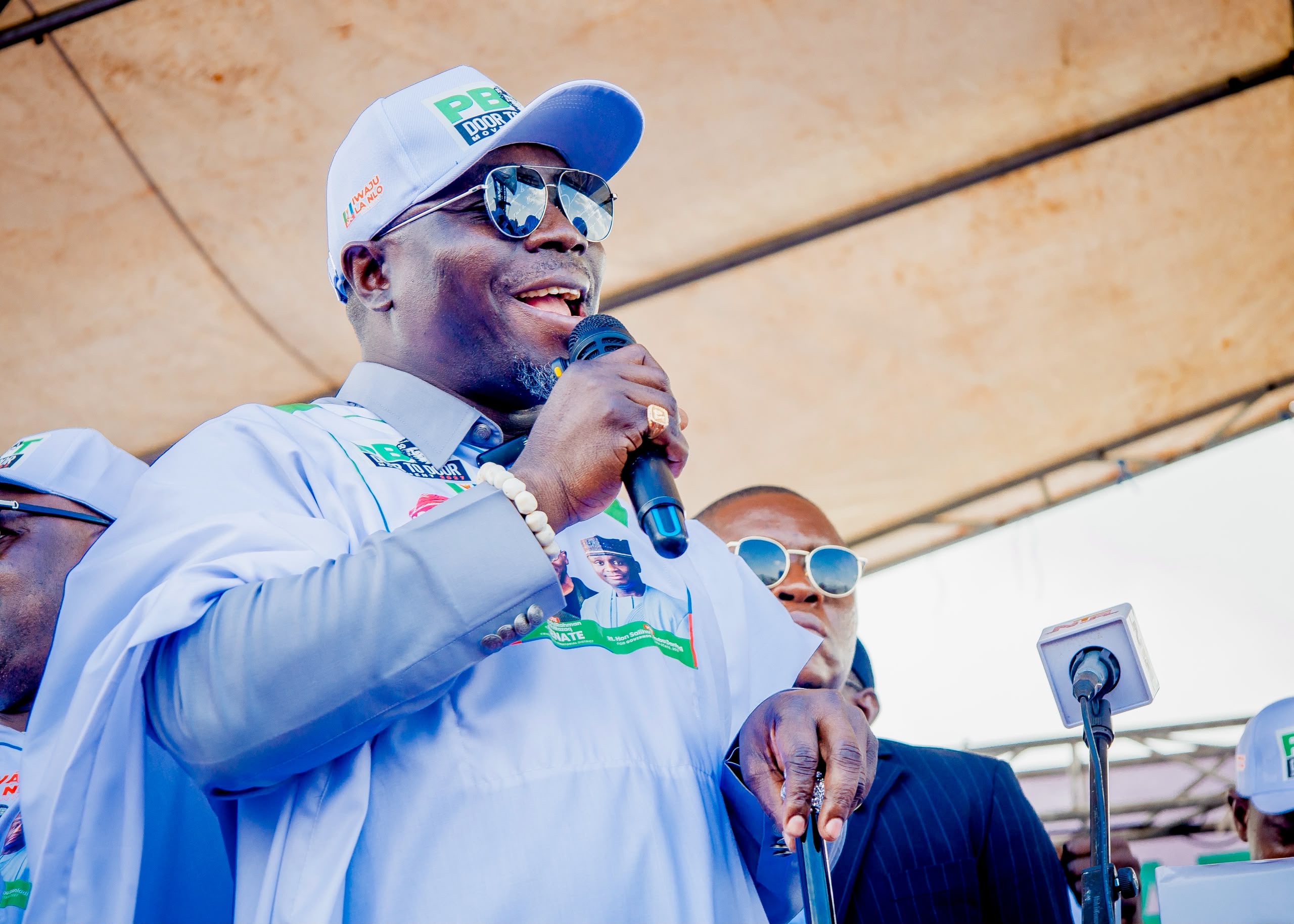
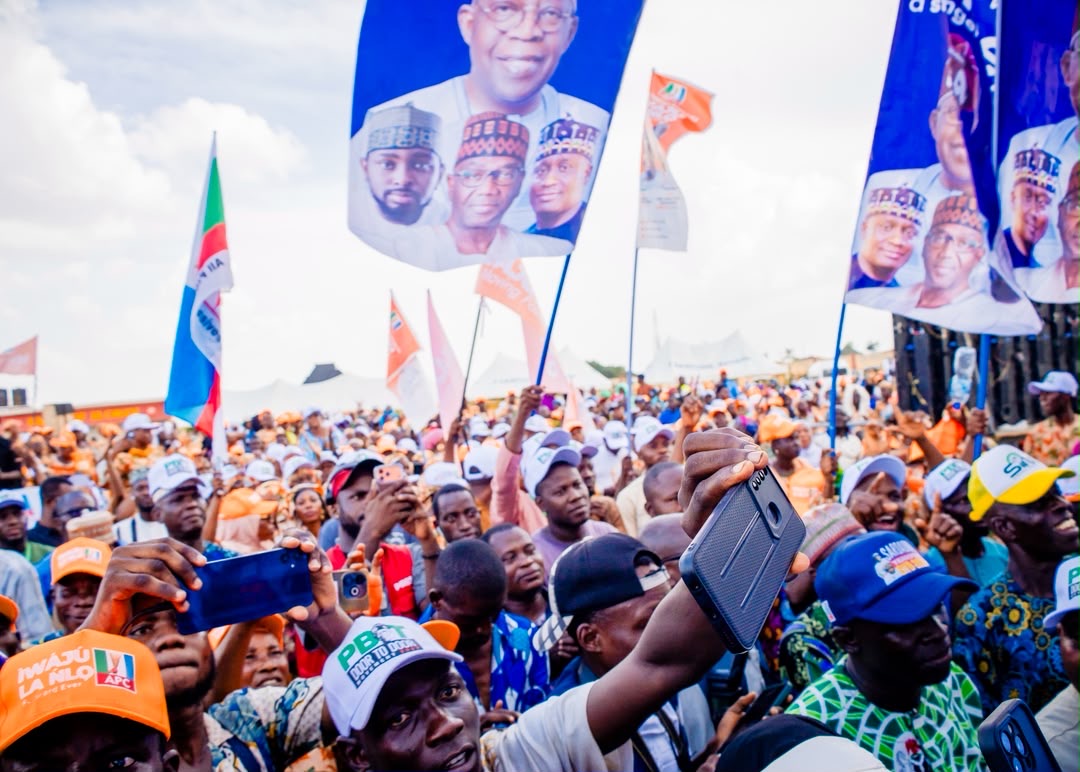
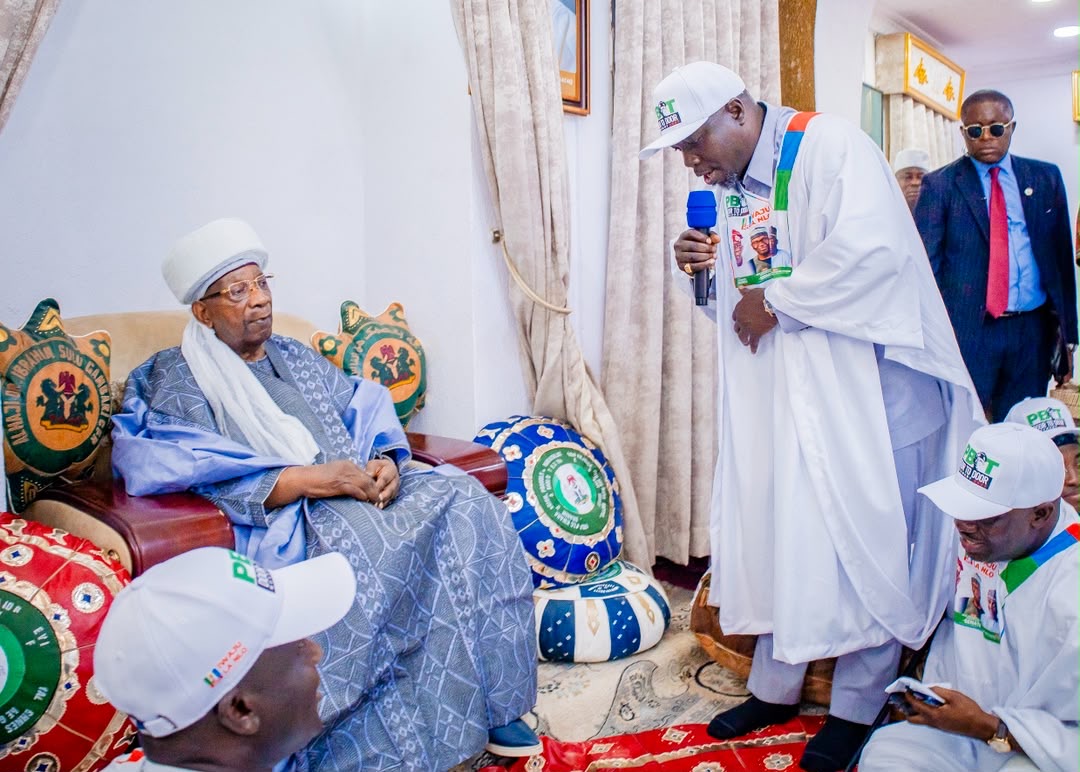
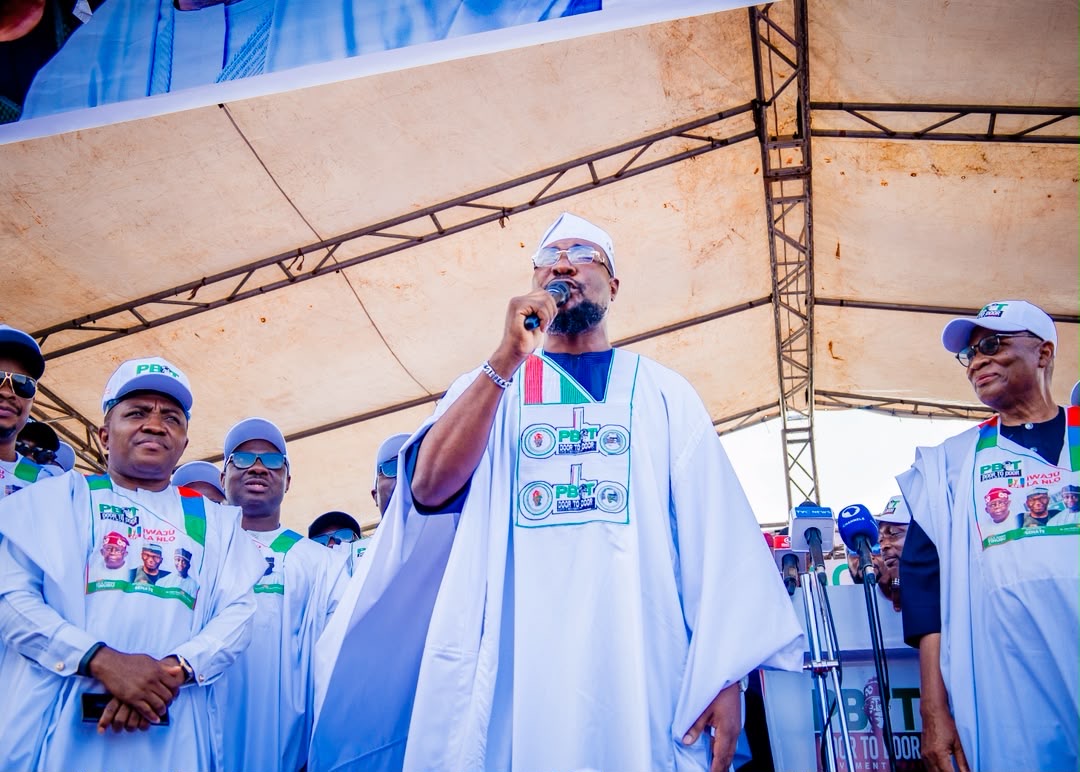
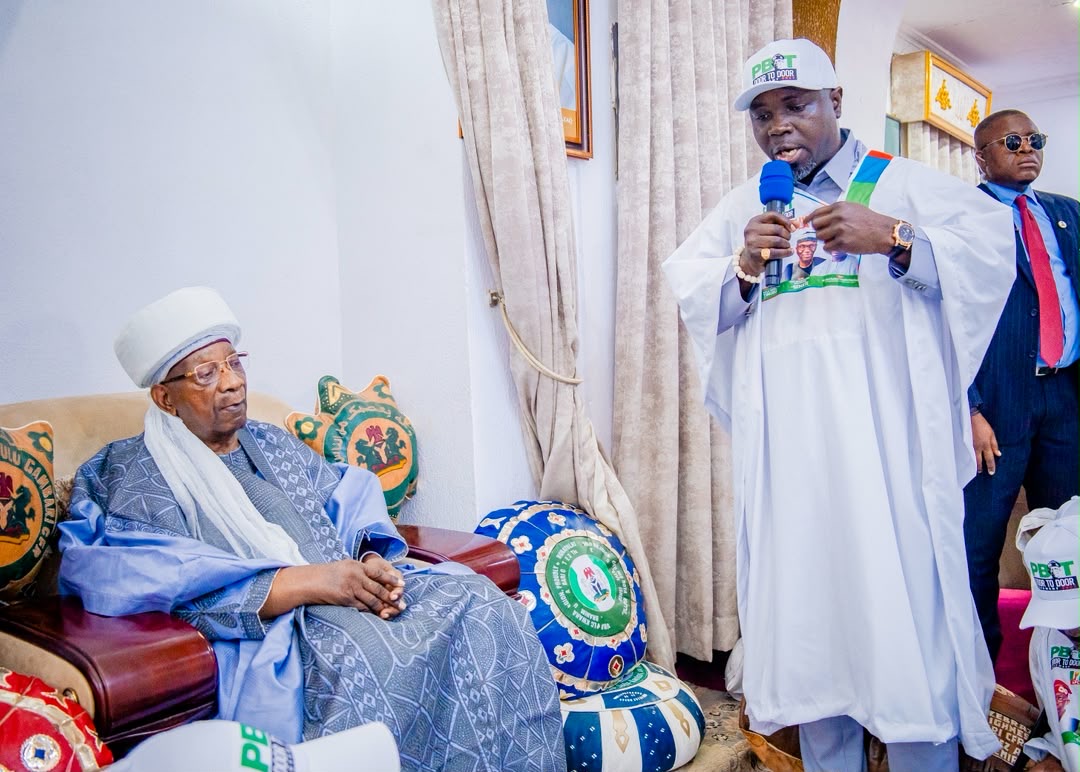
In Ogun, PDP governorship candidate Oladipupo Adebutu launched his campaign on the ITURA DE agenda, promising local government autonomy, improved security, workers’ welfare and economic reforms.

Adebutu unveiled the blueprint at the Ake Palace, Abeokuta, on Wednesday, describing it as a response to poverty, unemployment, insecurity and what he termed poor governance.

The agenda has seven priority areas: security and law and order; local government financial autonomy and workers’ welfare; urban development and transportation; rural and border communities; agriculture and industrial development; women, youth and sports; and education, healthcare and other social services.

Adebutu promised to secure farms, highways and communities and protect citizens’ freedom to participate in politics without intimidation.

“We shall dismantle the architecture of fear, aggressively securing every farm, highway, and neighbourhood from lawlessness,” he said.

He also pledged to restore financial and administrative autonomy to local governments, pay withheld pensions and gratuities, review the Contributory Pension Scheme and use public-private partnerships to finance major infrastructure.

See also  Power rotation debate heats up as North reviews Tinubu’s scorecard

On agriculture and the economy, he promised zero-interest loans and single-digit financing for farmers, vocational training for youths and a review of what he described as multiple taxation affecting traders and small businesses.


The campaign was also addressed by deputy governorship candidate ’Yemi Showunmi-Kolapo and PDP state chairman Abayomi Tella, who urged voters to support the ticket.

Enugu bans posters

As political campaigns intensify, the Enugu State Structures for Signage and Advertisement Agency has reiterated its ban on the pasting and display of campaign posters, warning violators of fines of up to N50 million.

In a statement, the agency’s General Manager, Francis Aninwike, said the ban covered posters bearing the names, photographs, logos, slogans and messages of political parties, candidates and aspirants.

The restriction, which the agency said was backed by the Enugu State Structures for Signage and Advertisement Agency Law No. 12 of 2016, applies to buildings, walls, fences, bridges, electricity poles, roads, public facilities and other surfaces.

ENSSAA said the measure was intended to prevent defacement of public and private property and urged political parties and candidates to use broadcast, print and digital platforms as well as approved billboards.

It also warned printers against facilitating the unauthorised production or display of campaign posters.


“The ban remains in force. All are hereby advised to comply accordingly,” the agency said.

The warning comes ahead of the September 26, 2026 local government elections and the 2027 general elections.

Kwara blame game

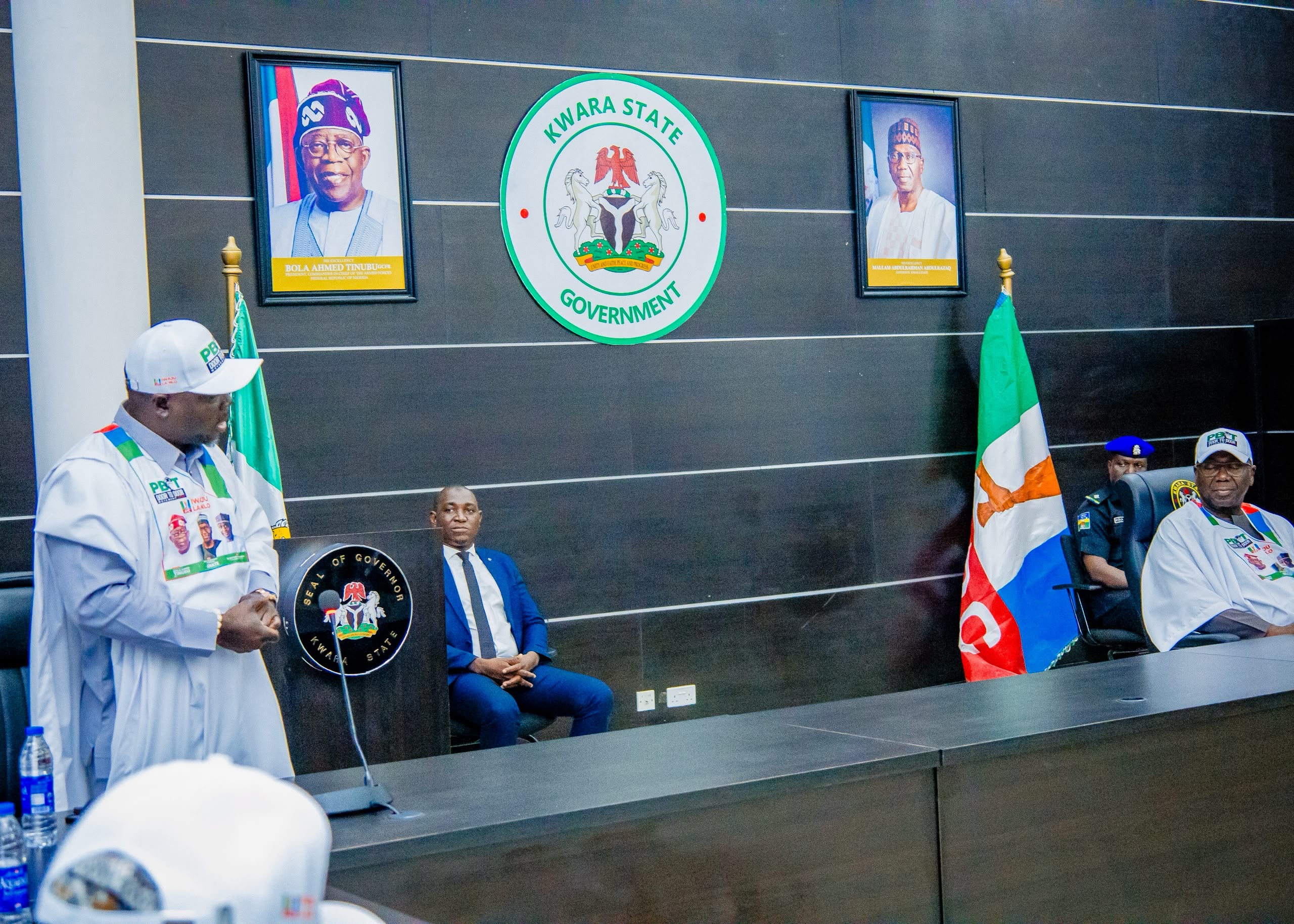
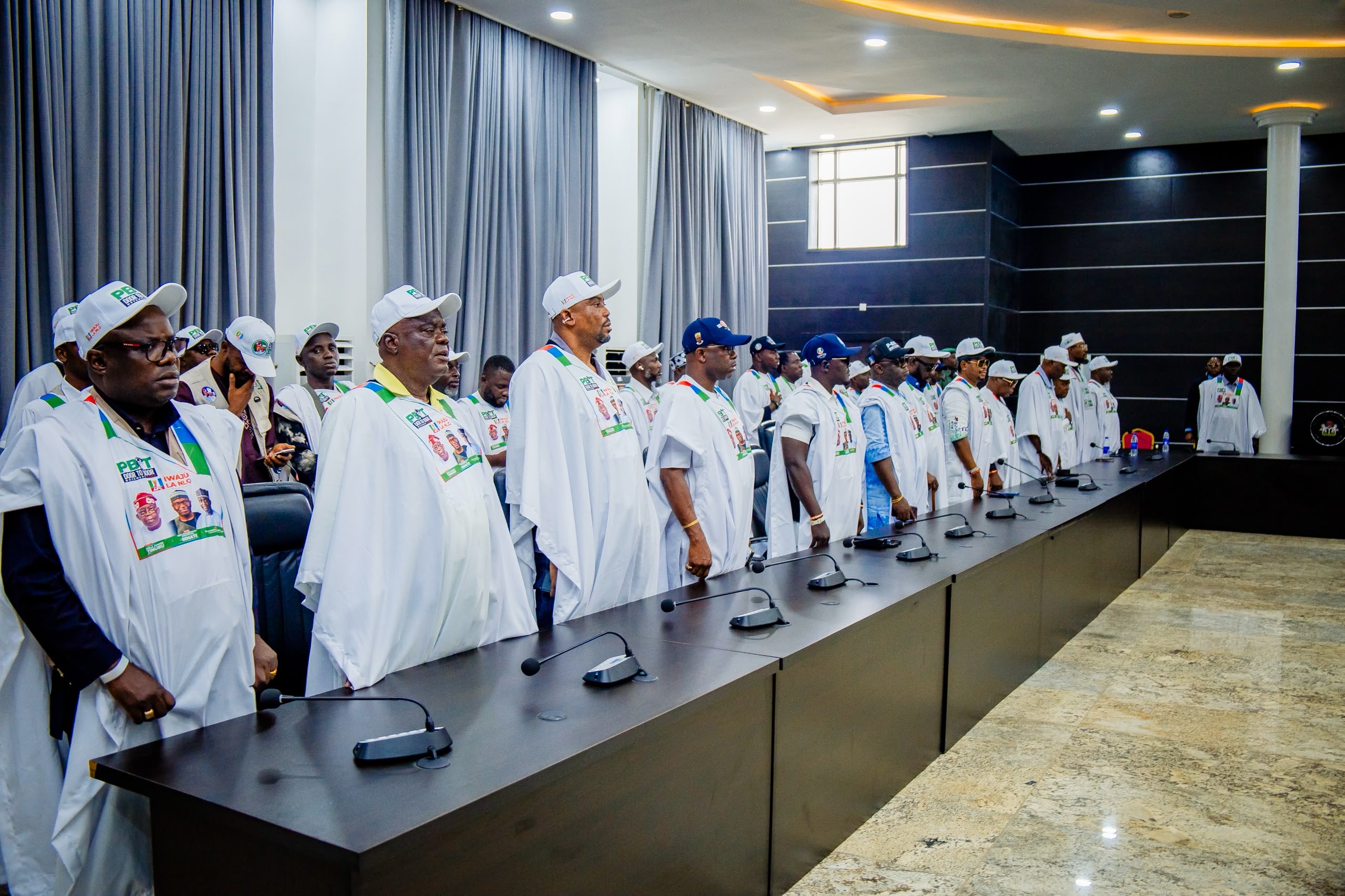
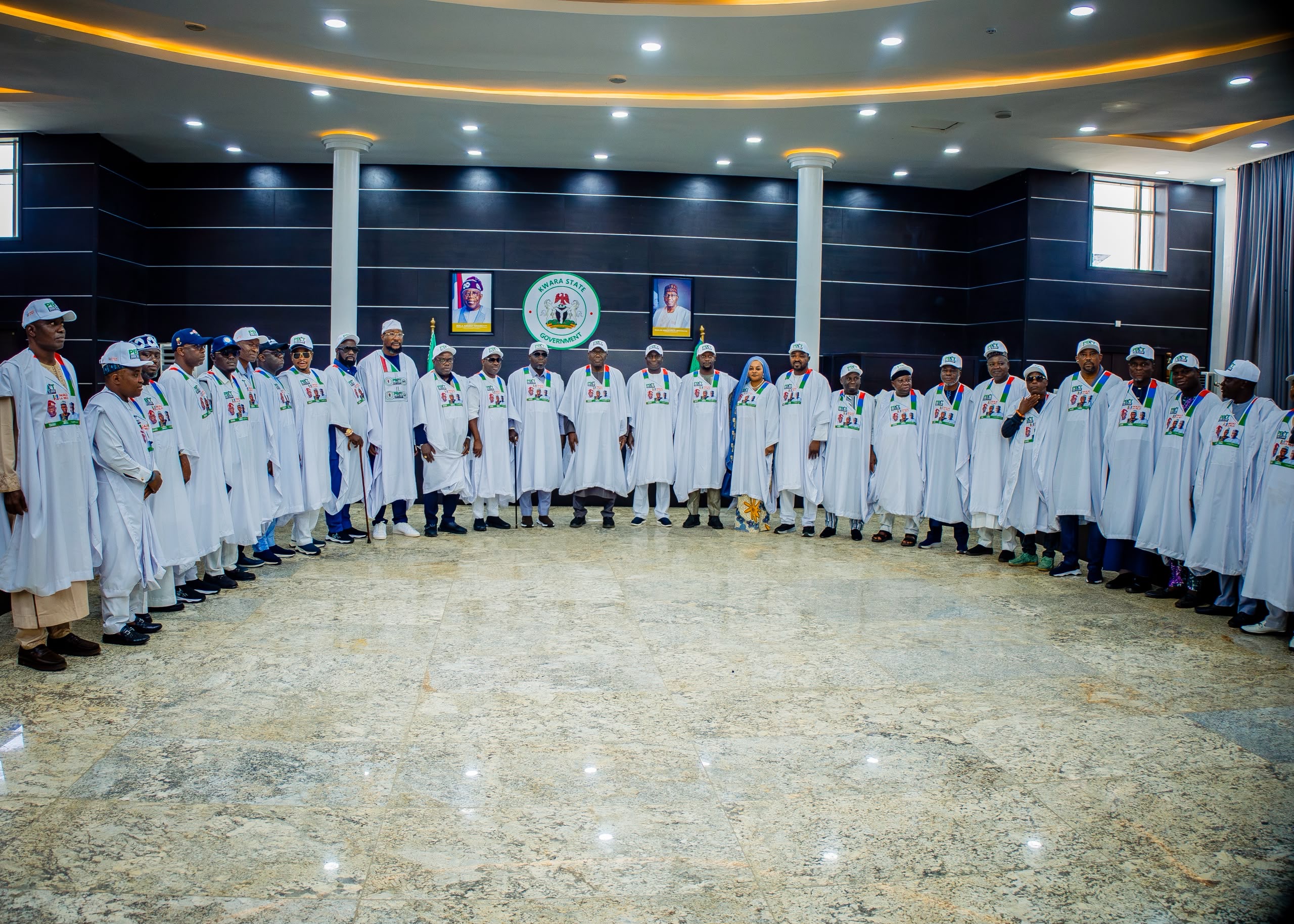
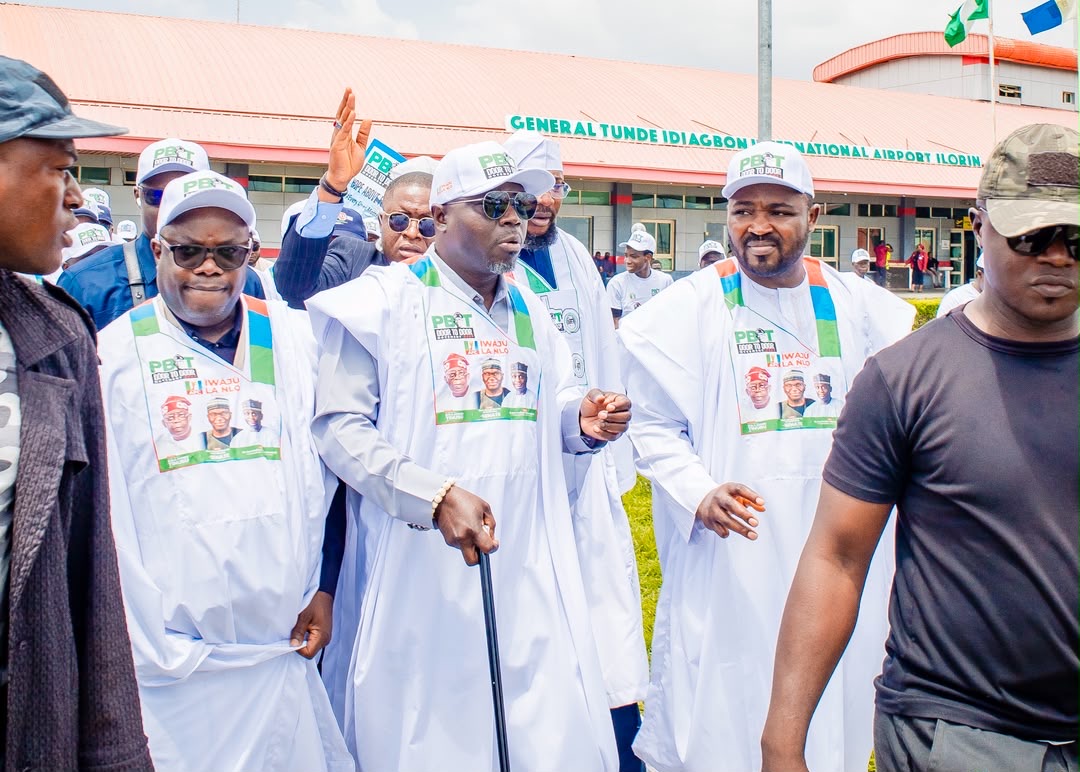
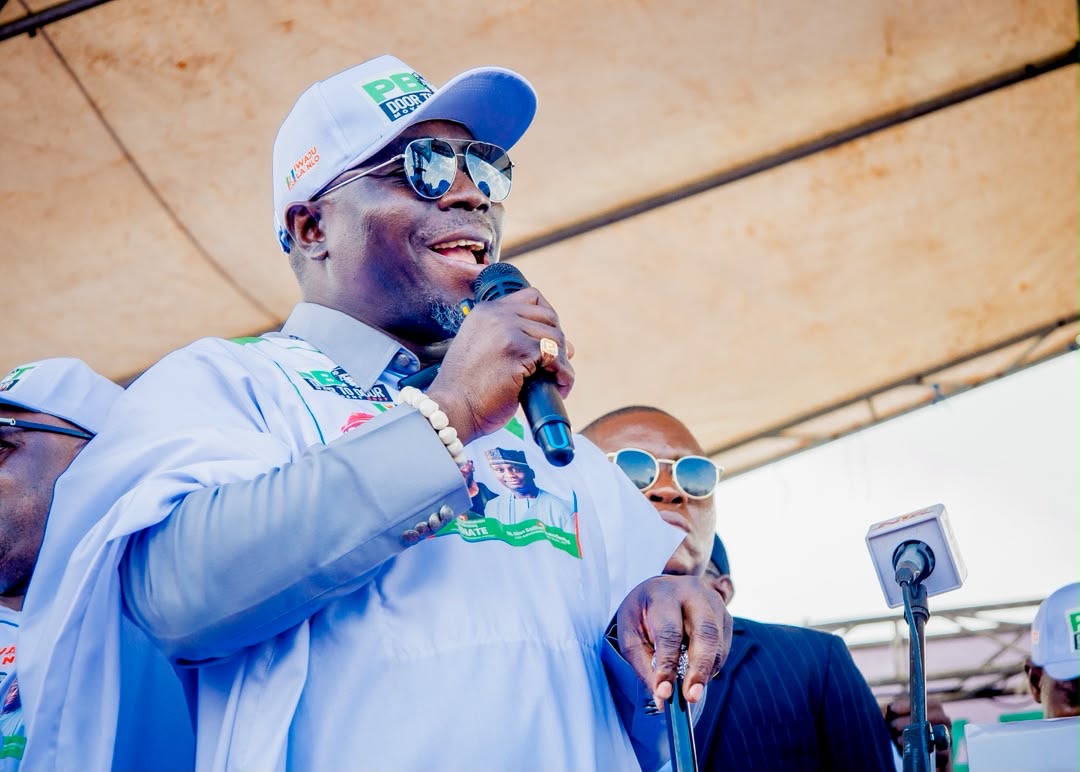
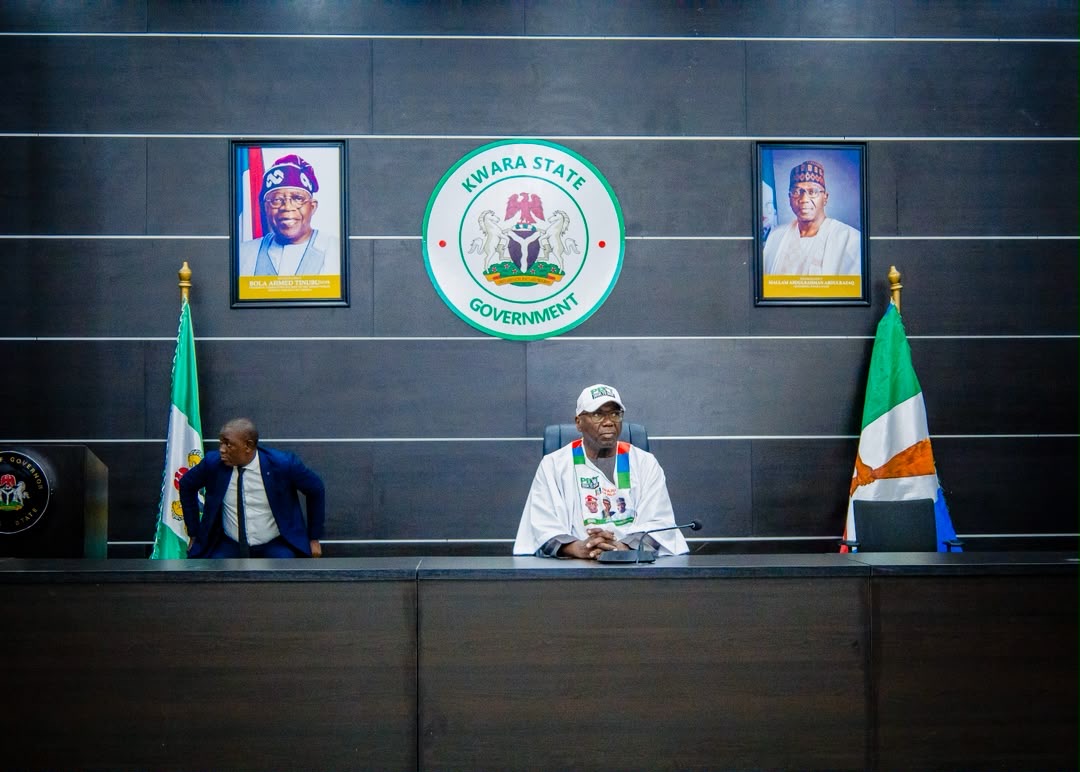
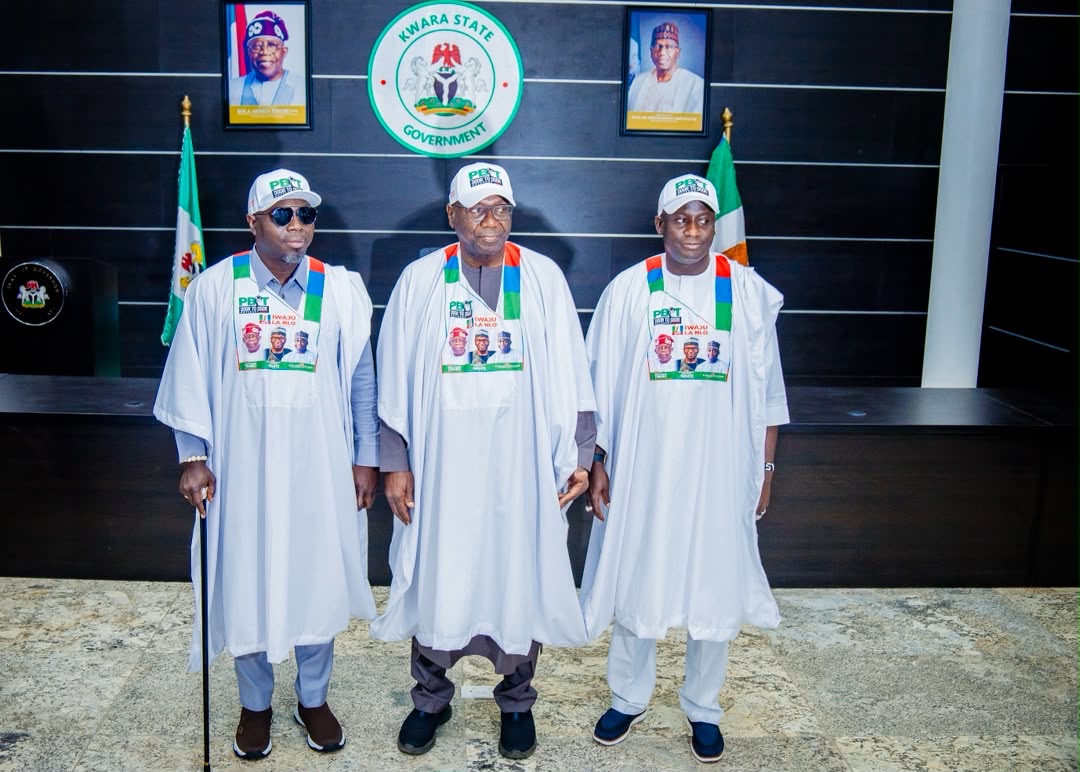
In Kwara, the PDP and the state government have exchanged accusations over the removal of campaign billboards belonging to the party’s governorship candidate, Suleiman Bolakale Kawu, in Ilorin.

The latest dispute followed the removal of a billboard at Adabata Junction, with the Kwara State Signage and Advertisement Agency saying the structure lacked regulatory approval and posed safety risks.

In a statement by its Press Secretary, Ajiboye Rachael, KWASAA alleged that part of the public road had been excavated during the installation and that residents had complained about the obstruction.

The agency also raised concerns about another campaign billboard allegedly mounted on a government-owned water tank, insisting that its enforcement action was not politically motivated.


“Outdoor advertising regulation is not about political parties, candidates or personalities. The same standards apply to everyone,” KWASAA said.

The governor’s Senior Special Assistant on Communications, Ibraheem Abdullateef, similarly said the Adabata billboard was removed following complaints from residents and because it allegedly obstructed motorists’ visibility.

Kawu, however, accused the state administration of suppressing opposition activities and urged Governor AbdulRahman AbdulRazaq to compete through policies and performance.

“If politically motivated, this is an abuse of administrative power and a disturbing display of intolerance towards legitimate political competition,” Kawu said.

The Kwara PDP also alleged that another billboard belonging to Kawu had been removed at Agaka, Ilorin, but did not provide evidence that the governor personally ordered the action.

The dispute is the latest in a series of disagreements over Kawu’s campaign materials, with the government and KWASAA maintaining that previous removals were regulatory rather than political.

‘Shun violence’


In Sokoto, the Commissioner of Police, Hayatu Shafa, warned political parties and supporters against violence, hate speech, fake news and other conduct capable of undermining the 2027 elections.

Speaking at a meeting with political party leaders and representatives, Shafa urged politicians to treat the election as a contest of ideas and cooperate with security agencies.

“We must move from the politics of insult to politics of issues. There is no room for hate speech, fake news or character assassination,” he said.

The commissioner warned party leaders that they could be held responsible for the conduct of their supporters, including youth groups and social media influencers.

See also  PDP, APC fight for control of Osun LG secretariats

He also cautioned against the destruction of campaign materials, display of weapons and the use of private security outfits at rallies, saying the police would enforce the Electoral Act.

“The Nigerian Police Force will enforce the Electoral Act 2022 without fear or favour. If you break the law, you will face the consequences,” he said.

Shafa specifically urged politicians to avoid exposing voters to danger in areas affected by banditry, including Sabon Birni, Rabah, Kebbe, Tureta and Isa.


“Protect the voters, do not endanger them,” he said.

The APC said it would comply with electoral laws and sensitise its supporters on peaceful conduct, while other parties called for greater involvement of security agencies in election planning and fairness in the enforcement of campaign regulations.

The Kano State Government has similarly called on political parties and candidates to embrace peaceful and issue-based campaigns, warning against hate speech, provocation, character assassination and violence.

The Director-General, Media and Publicity, Government House, Sunusi Bature Dawakin Tofa, who spoke on behalf of Governor Abba Kabir Yusuf, said candidates should compete on the basis of policies, programmes and records.

“The people of Kano deserve a campaign where candidates explain what they intend to do differently and how they will improve the lives of citizens,” he said.

Bature also urged media organisations, bloggers and social media users to verify information and avoid spreading fake news and inflammatory content.

He called on security agencies to remain professional and impartial and urged political parties to cooperate with them throughout the campaign period.


“Kano is bigger than any political party or individual. Political competition will come and go, but we will continue to live together as one people after the election,” he said.

Against the backdrop of the early campaign rhetoric, human rights lawyer and Senior Advocate of Nigeria, Monday Ubani, has warned political actors against allowing competition for power to degenerate into intimidation and violence.

In a statement titled “There Are Minimum Requirements: Nigeria Must Not Descend,” Ubani said the country’s political temperature was rising and cited recent developments in Ebonyi State and an alleged incident involving the denial of entry into a state to a presidential contender as concerns that should not be normalised.

He recalled Nigeria’s history of political violence, including Operation Wetie during the First Republic and violence associated with the 2011, 2015, 2019 and 2023 elections.

Ubani said political opponents should be able to challenge one another’s records and policies but warned against crossing basic democratic boundaries.

“An election is not a war, and a political opponent is not an enemy of the State,” he said.

He urged parties and candidates to make the 2027 campaigns about policies, programmes and performance and cautioned supporters against using intimidation as a mobilisation tool.


“Your political mobilisation is to persuade, and not to terrorise,” he said.

Ubani called on INEC, security agencies, political parties, civil society groups, religious and traditional leaders and citizens to work towards peaceful and credible elections.

He warned that political violence could ultimately consume those who create it and urged political actors not to sacrifice the country’s stability in the pursuit of office.

“Please let us not destroy the country in our desperate quest to govern it,” he said.

With campaigns now formally underway, the emerging contest is increasingly being framed around competing promises on security, jobs, agriculture, education, healthcare, infrastructure and welfare, even as early disputes over campaign materials and repeated warnings against violence underscore the challenges ahead of the 2027 elections.

Source: punchng.com

FOLLOW US ON:

FACEBOOK

TWITTER

PINTEREST

TIKTOK

YOUTUBE

LINKEDIN

INSTAGRAM

Continue Reading
Click to comment

Leave a Reply

Your email address will not be published. Required fields are marked *

Politics

NDC denies diverting aspirants’ donations ahead of 2027 elections

Published

on

The Nigeria Democratic Congress has denied allegations that donations and levies raised from aspirants ahead of the 2027 general elections were diverted, insisting that all funds contributed to the party were paid into its designated account and managed by the appropriate party organs.

The party, in a statement issued on Tuesday by its National Publicity Secretary, Osa Director, described reports and allegations surrounding its candidate selection and financing process as a deliberate campaign of misinformation and propaganda allegedly being promoted by disgruntled elements.

The denial comes amid growing political activities and preparations by political parties and aspirants ahead of the 2027 general elections, with emerging political platforms seeking to strengthen their structures, recruit members and raise funds for electioneering activities.

The NDC, which has been positioning itself as an opposition platform ahead of the polls, said its status as a party without elected officeholders had made it necessary to seek financial support from members, stakeholders, aspirants and other supporters.

Director said, “As a new party without a president, governors, ministers, or other holders of public office, the task of building and sustaining the party posed an existential challenge.

“The NDC therefore took a proactive decision to solicit financial support from aspirants, stakeholders, and members of the public to fund party operations. This is provided for in the party’s constitution.

“All such contributions, levies, and donations were paid directly into the designated party account and received and managed by the appropriate organs of the party.

“It is standard practice worldwide for political parties to receive donations, levies, and contributions from members, supporters, and stakeholders.”

See also  Electronic transmission needs legal backing – Analyst, Arogundade

The spokesman also defended the NDC National Leader, Seriake Dickson, against allegations that he personally demanded or received money from aspirants, insisting that all contributions were properly documented.

He stated, “The national leader of our party neither demanded nor received any money from any aspirant for personal use. All funds were duly received, receipted, and accounted for in line with global best practices.

“The financing of political parties through membership subscriptions and contributions is a universally accepted practice. The party will render a full account of all its finances as required by the Electoral Act and INEC guidelines, as and when due.”

The NDC also highlighted that raising funds through voluntary contributions and levies was necessary for a political party seeking to build a nationwide structure and field candidates across the country without access to the resources available to incumbent administrations.

“Any serious political leader starting a campaign or building a national party understands what it takes: commitment, selflessness, strategic planning, and the resources required to build an opposition party in the current circumstances of our country — within months of a general election — while fielding candidates for all positions and in almost every constituency.

“This is a political miracle, and only a few politicians can accomplish it, especially without the backing of moneybags and the establishment,” the party said.

According to the NDC, its decision to raise funds from members and supporters was both strategic and legitimate.

“The decision to seek donations and levies from members is not only appropriate but strategic. Our party is funded not by stolen funds from government treasuries at any level, but by donations, levies, and contributions from members, stakeholders, and well-wishers.

See also  NNPC subsidiaries’ debt balloons 70% to N30tn

“Those peddling this misinformation are sponsored elements and opposition figures who are unsettled by the growing popularity and acceptability of our party nationwide. The general public is hereby enjoined to disregard such falsehoods,” the statement read.

Director challenged anyone who allegedly paid money to an individual rather than into the party’s designated account to provide evidence, warning that it would not protect any official found culpable.

“Anyone who claims to have paid money to any individual other than the designated party account should come forward with proof. The NDC will not shield anyone. The party and its national leadership are considering appropriate legal action against the purveyors of such falsehoods.

“Of the several thousands who have interacted with our national leader since the formation of the party to date, there is no record of him asking for or receiving money from anyone. The national leader is not paid by the NDC,” he said.

While acknowledging that funding remained a critical component of election planning, particularly for opposition parties challenging incumbent governments, the NDC maintained that its candidate selection process was not based on the sale of party tickets.

He said, “As experienced politicians, the national leader and the party leadership are fully aware that the capacity to fund elections in opposition to an incumbent government at all levels is a critical factor in election planning. That does not mean that party tickets were sold in the NDC.

“The presidential and vice-presidential tickets were offered free of charge because we believed in the quality of the candidates. The same applied to several other candidates.”

See also  US boosts Nigeria’s fight against terrorism with new military supplies

The NDC further defended the personal integrity of its national leader, describing attempts to link him with alleged financial impropriety as an orchestrated campaign to damage both his reputation and the party’s growing political profile.

“Given the public service background of our National Leader, it is incongruous to link him with any unwholesome practice. His entire lifestyle is anchored on the values of integrity, honesty, and simplicity, as attested to by all who have interacted with him.

“The orchestrated campaign of calumny is designed to dent and destroy the image of our party and blur the massive traction the NDC is gaining nationwide,” it said.

The party, however, insisted that it would remain focused on its political objectives and would not be distracted by the allegations.

Source: punchng.com

FOLLOW US ON:
FACEBOOK

TWITTER

PINTEREST

TIKTOK

YOUTUBE

LINKEDIN

INSTAGRAM

Continue Reading

Politics

Obi, Alia lock horns over blocked Benue visit

Published

on

The presidential candidate of the Nigeria Democratic Congress, Peter Obi, and the Benue State Government on Tuesday traded blame over the disruption of his planned visit to Yelwata, Benue State, as some youths barricaded a major road in Makurdi and prevented his convoy from proceeding to the community.

Obi, who said he travelled to Benue to condole with families of victims of the Yelwata massacre, accused suspected hired thugs, allegedly acting on the orders of a government aide, of blocking his movement.

But the state government denied involvement in the incident, insisting that Obi failed to follow the necessary protocol by formally notifying the government of his visit and accusing him of attempting to create a political controversy.

The Yelwata attack occurred between June 13 and June 14, 2025.

The conflicting claims came even as the Benue State Police Command confirmed that it was aware of Obi’s visit and had deployed officers to provide security for his movement.

The police, however, said it was investigating why some youths stopped the presidential candidate’s convoy.

The incident occurred on Gboko Road, near the Nigerian Air Force Base and Makurdi Airport, where protesters reportedly barricaded the road and chanted, “We don’t want Peter Obi.”

The development caused traffic disruption in the area for several hours and eventually forced Obi’s convoy to turn back to the airport before he returned to Jos, Plateau State.

Obi had arrived in the state as part of a planned visit to Yelwata, where more than 200 people were reportedly killed in an attack on the community in June 2025.

Speaking at the scene in a video posted by News Central Television via its X page on Tuesday, Obi said he was informed that youths had been mobilised to prevent him from proceeding to the community.

“I was told that youths, led by an SA (Special Assistant) to the government, have decided to block the road and make sure I don’t go there,” he said.

The former Anambra State governor described the development as unacceptable, arguing that the youths involved were themselves victims of poverty and insecurity and should not be deployed for political purposes.

“The rascality they are bringing into this country is totally unacceptable. People are being killed every day in Benue. People want to show that they are with them, and I came here all the way this morning, a long distance, only to be told what you are seeing here,” he said.

Obi maintained that his planned visit was humanitarian and that his itinerary had not been concealed from the relevant authorities.

The NDC presidential candidate was expected to travel to Yelwata to meet families of victims of the June 2025 attack, which drew widespread condemnation and renewed national attention to the worsening security situation in Benue.

The attack, which lasted for several hours, reportedly claimed the lives of more than 200 residents, with homes and other properties also destroyed.

The killings attracted condemnation from within and outside Nigeria, with President Bola Tinubu and other political leaders visiting the state or expressing solidarity with the victims and affected communities.

Obi’s visit was therefore expected to focus on the families of those killed and the wider security challenges confronting communities in the state.

The presidential candidate of the Labour Party in the 2023 general election and a leading opposition figure ahead of the 2027 presidential election, Peter Obi.

The presidential candidate of the Nigeria Democratic Congress, Photo: X | Peter Obi.

However, his planned journey was cut short when the youths blocked his convoy around Gyado Villa along the Gboko Road.

Despite the presence of police officers, the youths reportedly insisted that Obi would not be allowed to proceed.

The governorship candidate of the NDC in Benue State, Prof Terhemba Shija, who spoke to our correspondent on Tuesday, said the party had duly informed security agencies about Obi’s visit.

He said the visit was not intended as a campaign rally but to enable Obi to identify with families of victims of the Yelwata attack.

“Is Obi not a presidential candidate? INEC has lifted the ban on campaign and we duly informed the police and DSS about his visit to the state. They deployed police and DSS to be with us,” he said.

When asked if the state government was informed of the visit, Prof Shija dismissed the question, stating that the state government should be aware that the Independent National Electoral Commission had lifted the ban on campaigning.

“But the government is aware that INEC has lifted the ban on campaigning; do we need to take permission from the candidate? Prof Shija asked.

The governorship candidate described the incident as “a demonstration of fear, a clear show that Obi is the man to watch,” arguing that there was no justification for preventing the presidential candidate from visiting bereaved families.

“he has come just to see families of victims of Yelwata; why should somebody stop a legitimate candidate after he has officially given notice to CP and DSS?” he asked.

But the Benue State Government rejected allegations that it sponsored or organised the youths who blocked Obi’s convoy.

Benue State Governor Hyacinth Alia
File: Benue State Governor, Hyacinth Alia

The Commissioner for Information and Orientation, Solomon Iorpev, said Obi had failed to officially inform the state government about his visit, arguing that, given his status as a former governor and presidential candidate, adequate security coordination was required.

See also  Police hunt kidnappers in Lagos, Ogun forests during Operation Kasoye

According to Iorpev, the state government had a responsibility to ensure the safety of high-profile visitors but could not effectively discharge that responsibility if it was not formally informed of their movements.

He said, “A high-profile person who has been a former governor of a state is coming into the state; he should have written a letter to the state government.

“We are supposed to guarantee his safety and protection, but in an instance where no letter was written, we could not guarantee his safety. This is not the first time he is doing this. He is just looking for our trouble. We are peace-loving and hospitable people.”

The commissioner said he did not know the identity of the youths who blocked the road, but suggested that the incident might have coincided with a gathering of youths from the state’s 23 local government areas.

He said, “So, if they were coming from either Tarka, Gboko, Buruku, Ushongo, Konshisha or Vandeikya at the same time of his visit and blocked the road, it is unfortunate. I do not know the youths who did that,” the commissioner said.

The Chief Press Secretary to Governor Hyacinth Alia, Kula Tersoo, also denied that the governor or the state government had anything to do with the incident.

In a statement issued on Tuesday, Tersoo described Obi’s allegations as unfounded and an attempt to drag the governor and the people of the state into what he characterised as an internal political dispute within the NDC.

“We wish to emphatically deny that the government of Rev. Fr. Hyacinth Alia has an idea of what Mr Obi is talking about.

“Based on his antecedents of making untrue statements against the state, we have every reason to doubt whether he visited Makurdi, the state capital, today,” he said.

Tersoo said Obi did not pose any threat to the governor and argued that if there had been any genuine security concern surrounding the presidential candidate, recognised security agencies would have been responsible for handling it.

He stated that the governor was opposed to thuggery and that his administration did not use political thugs as instruments of governance or security.

Tersoo said the state government was committed to the rule of law and relied on recognised security agencies to maintain peace.

“It is, therefore, curious that an individual presenting himself as a presidential candidate could arrive in a state without the relevant security authorities being formally informed of his movement.

“Ordinarily, such a visit would attract the attention and necessary security coordination involving the Commissioner of Police and other relevant security agencies.

“We really find it difficult to understand the basis for Mr Obi’s attempt to connect every fabrication with the Benue State Government, and Governor Hyacinth Alia in the first instance.

“If Mr Obi is confronted with disagreements or internal political challenges within his party structure in Benue State, those issues should be resolved within the party rather than being conveniently transferred to the State Government,” he said.

Tersoo said the Alia administration would not be distracted by the controversy, insisting that its focus remained on governance, security and the welfare of Benue residents.

He urged the public to disregard claims linking the state government to the incident and said Benue remained open to political actors and other Nigerians who visited the state peacefully.

However, the police account appeared to contradict a key aspect of the state government’s claim that relevant authorities were not informed of Obi’s movement.

The Commissioner of Police, Cletus Nwadiogbu, confirmed that the police command had been notified of the visit.

The CP said he had directed the Assistant Commissioner of Police, Operations, to personally lead officers assigned to provide security for Obi.

“I also asked the AC Operations to personally lead the men, but unfortunately, on his arrival, we heard that the youth blocked the road because they didn’t want to see him. That is the reason we are going in to find out why such conduct, why the youth behave that way.

“We have tactically managed the situation for now, but we are not letting it go. We must get to the bottom of it to know why the youths said somebody can not move.”

Nwadiogbu described Obi as “a very responsible man” and confirmed that the presidential candidate eventually returned after the blockade.

“I heard that the youth blocked the road and I learned he went back and left.”

The police command’s spokesperson, DSP Peter Aondongu, had earlier confirmed that officers were deployed for Obi’s movement to Yelwata.

He said the reason the youths blocked the convoy remained unknown and that the command was investigating the circumstances surrounding the incident.

“We can confirm that the police are aware of the incident involving Peter Obi’s movement to Yelwata. Police operatives provided security for the movement.

See also  PDP, APC fight for control of Osun LG secretariats

“The reason the convoy was blocked by some youths is still unknown. We are monitoring the situation and investigating the circumstances surrounding the incident.

“Further updates will be provided accordingly,” PPRO said.

Obi decries attacks, displacements

Speaking in Jos, Plateau State, after departing Benue State, Obi expressed concern over the prolonged killings and mass displacement of residents in Plateau State, describing the continued existence of internally displaced persons camps as evidence of the state’s failure to guarantee citizens’ safety.

Speaking during a sympathy visit to a community in Mangu Local Government Area of the state, which was recently affected by attacks, Obi said his visit was not politically motivated, but was aimed at identifying with Nigerians who had been forced from their ancestral homes by insecurity.

“As long as you are in an IDP camp, Nigeria is in an IDP camp. It is when you go home that Nigeria is at home. You are not supposed to be here,” Obi told displaced persons at the camp.

He called on the Federal Government to take decisive steps to end the killings, kidnappings and displacement of communities, particularly in Plateau and Benue states.

While acknowledging the role of prayers in addressing the nation’s challenges, Obi stressed that government has the primary responsibility of protecting lives and prosecuting perpetrators of violence.

“I hear people say we need prayers. Yes, we need prayers. But government must act. The people coming to kill are not from the moon. We know them. The Nigerian government should be able to deal with it,” he said.

Obi expressed worry over the humanitarian impact of the crisis, noting that about 45,000 persons from more than 20 communities in Plateau have been displaced.

“You can imagine 45,000 people displaced from over 20 communities. That is unacceptable. It is something we must not allow to continue,” he added.

The NDC candidate also decried the effect of the attacks on education, saying the destruction of communities had forced many children out of school.

He noted that this was his third visit to affected communities in the state, during which interventions such as the construction of a school and provision of water had been carried out.

“I came here today not to campaign. I came to assure you that you are in our thoughts. We are hoping that one day we will come here and none of you will be here because you have all returned to your homes,” Obi said.

He commended the resilience of the displaced persons and urged government to create an enabling environment for them to return and rebuild their lives.

Reactions trail Benue incident

The Peoples Democratic Party governorship candidate in Benue State, Chief Michael Aondoakaa (SAN), condemned the incident, describing it as an assault on democracy and the constitutional rights of Nigerians.

In a statement issued by his Media Assistant, James Ian, Aondoakaa argued that citizens had the constitutional right to move freely, associate and participate in political activities.

“As such, no individual, group, or government has the authority to deny any Nigerian access to any part of the country on account of political affiliation,” he said.

The former Minister of Justice and Attorney General of the Federation said political leaders and presidential candidates should be allowed to travel across the country and engage with citizens ahead of the 2027 elections.

He said, “Any attempt to obstruct, intimidate, or attack a political leader exercising that right runs contrary to the spirit of democratic competition and undermines the President’s call for a peaceful and inclusive political process.”

Aondoakaa also argued that the incident violated the recently signed political peace accord under which political parties and candidates committed themselves to issue-based campaigns, non-violence and respect for the rights of political opponents.

He said democracy should be based on the free exchange of ideas rather than intimidation and political intolerance.

The PDP candidate said the incident had the potential to portray Benue negatively, but cautioned against interpreting the actions of a few individuals as representative of the entire state.

“Benue people are renowned for their hospitality, civility, and respect for visitors. Our state has always welcomed people from different political, ethnic, and religious backgrounds.

“The attack on Mr Peter Obi is therefore inconsistent with the true identity of our people and should be condemned by all lovers of democracy irrespective of political affiliation,” he said.

Aondoakaa called for an impartial investigation and prosecution of anyone found responsible for obstructing Obi’s movement.

He also urged security agencies to protect all political actors and citizens exercising their constitutional rights.

The NDC, for its part, demanded an immediate investigation into the incident and the arrest and prosecution of those responsible.

The party’s National Publicity Secretary, Osa Director, described the blockade as disturbing and condemnable, insisting that Obi’s visit was motivated by a desire to identify with victims of the Yelwata massacre.

“Although access to the community was denied today, the hearts and prayers of the NDC and our presidential candidate remain with the victims, their families, and the entire Yelwata community.

See also  Presidency, Atiku in fresh war of words over killings

“We will not be deterred. The NDC will persist until we restore the fundamental responsibility of government: the protection of every Nigerian’s life,” the party said.

It subsequently called on the state government and security agencies to investigate the incident.

“We call on the Benue State Government and relevant security agencies to immediately investigate this incident, bring the perpetrators to justice, and guarantee the safety of all citizens and leaders who seek to show solidarity in times of grief,” Director added.

The NDC also argued that Obi’s visit should be viewed against the background of the party’s broader political and humanitarian engagements ahead of the 2027 election.

Former governor of Sokoto State, Aminu Tambuwal, in a post on X, condemned the treatment meted out to Obi in Benue State.

According to the statement, Tambuwal said, “The reported obstruction of his movement by a group of youths is unacceptable, undemocratic and completely inconsistent with the kind of politics we should be practising in Nigeria.

“Mr Peter Obi is a Nigerian citizen, a former governor and the presidential candidate of a duly recognised political party.

“Like every Nigerian, he has the constitutional right to move freely throughout the country and undertake lawful activities without intimidation, harassment or obstruction.

“More importantly, with political campaigns now underway, every candidate must be allowed to travel freely across Nigeria, meet with citizens, canvass for support and conduct legitimate political activities without fear.”

He added, “Our democracy cannot descend into a situation where political actors or their supporters determine who may enter a state, community or any part of the country. No individual, group or political interest has the authority to deny another Nigerian access to any part of our country.

“Political differences must never become an excuse for intimidation, violence or brigandage. We must compete on the strength of our ideas, programmes and policies and, ultimately, allow Nigerians to make their choices freely at the ballot box.

“I, therefore, call on the Inspector-General of Police and all relevant security and law-enforcement authorities to investigate the circumstances surrounding this incident and ensure that those responsible are identified and held accountable in accordance with the law.

“This kind of rascality must not be tolerated, irrespective of who is involved or which political party is affected. Today, it may be Peter Obi; tomorrow, it could be another candidate.

“Nigeria belongs to all of us, and every Nigerian must be free to move and participate in our democratic process without fear or intimidation.”

Also, the National Electoral Accountability Consortium and Tap Initiative for Citizens’ Development called for an investigation into the obstruction of the convoy of Obi in Benue State.

The groups condemned the incident, saying no Nigerian should be prevented through intimidation, threats or violence from exercising a lawful political or civic right.

In a statement issued on Tuesday, NEAC and Tap Initiative said videos and reports from the scene showed individuals blocking the road and moving towards vehicles in Obi’s convoy.

The organisations, however, said the identities and motives of those responsible had yet to be established and urged that the circumstances surrounding the incident be independently investigated.

They said the incident was troubling regardless of the political affiliation of those involved, warning that political competition must not become a licence for violence.

“NEAC and Tap Initiative consider this incident deeply troubling, irrespective of the political identity of those involved.

“No Nigerian should be prevented through intimidation, threats or violence from exercising a lawful political or civic right. Political disagreement is legitimate; political violence is not,” the organisations said.

They also warned political parties, candidates and their supporters against inflammatory rhetoric, threats and the mobilisation of supporters against political opponents as the country approaches another electoral cycle.

The groups called on the Nigeria Police Force and other security agencies to conduct a “prompt, impartial and transparent investigation” and ensure that anyone found culpable was prosecuted in accordance with the law.

They further urged security agencies to ensure that political actors could move freely and conduct lawful political and civic activities without intimidation or obstruction.

The controversy is not the first between Obi and the Benue State Government over his proposed visits to the state.

In April 2025, Obi alleged that he was prevented from visiting Benue on humanitarian grounds.

The renewed dispute therefore comes at a time when political parties are increasingly stepping up activities ahead of the 2027 general election.

The Independent National Electoral Commission has lifted restrictions on political activities, paving the way for parties and candidates to intensify mobilisation, consultations and public engagements.

The political temperature is consequently rising, with opposition parties seeking to expand their reach across states traditionally regarded as strongholds of rival political parties.

Source: punchng.com

FOLLOW US ON:

FACEBOOK

TWITTER

PINTEREST

TIKTOK

YOUTUBE

LINKEDIN

INSTAGRAM

Continue Reading

Politics

Atiku, Obi, Makinde resist step-down pressure ahead of 2027 polls

Published

on

Efforts by the G-100 to produce a consensus presidential candidate ahead of the 2027 election may be facing fresh hurdles as the presidential candidates of the African Democratic Congress, former Vice-President Atiku Abubakar; the Nigeria Democratic Congress, former Anambra State Governor Peter Obi; and the Allied Peoples’ Movement, Oyo State Governor Seyi Makinde, have maintained their presidential ambitions.

A member of the G-100, a coalition of political groups and stakeholders advocating a united opposition front, Ambassador Umanu Elijah, however, expressed confidence that consultations would be concluded and an agreement reached on a consensus candidate by September 30.

The push appears to have met resistance from the camps of Atiku, Obi and Makinde, with none of the three indicating that he is prepared to withdraw from the race in favour of another aspirant. Rather, they have continued to project themselves as viable candidates, fuelling uncertainty over the possibility of a single-ticket arrangement.

Meanwhile, the African Action Congress, DLA, Allied Peoples’ Movement and Action Democratic Party, among others, have rejected suggestions that their presidential candidates would step down for another aspirant.

The development has further complicated efforts to achieve a broad opposition consensus, with the parties insisting on retaining their candidates ahead of the 2027 presidential election.

The opposition leaders, in their bid to foster unity among stakeholders ahead of the 2027 elections, recently convened at the Shehu Musa Yar’Adua Centre in Abuja for the G-100 Alliance Summit.

The meeting brought together representatives of six opposition political parties to discuss possible areas of cooperation ahead of the general elections.

The summit was part of broader efforts by opposition parties to forge a common platform for collaboration and build a formidable political force capable of mounting a strong challenge to the ruling All Progressives Congress and its candidate, President Bola Tinubu.

Elijah, in an exclusive interview with The PUNCH, said the G-100 was working towards selecting a consensus presidential candidate from among the opposition parties ahead of the 2027 election.

He said consultations were ongoing behind the scenes, expressing confidence that the group would reach an agreement before the end of September and subsequently seek the support of other candidates and political parties.

Elijah stated, “We had our first summit recently in Abuja with the opposition political parties and their presidential candidates. It is important to note that this is a gradual process. We have not adopted a single candidate yet, but that is the goal.

“Recall that yesterday (Monday), Mr Peter Obi visited the Allied Peoples’ Movement presidential candidate, Seyi Makinde. This is the conversation the G-100 is driving. Meetings are going on behind the scenes, and I am sure that before the end of this month, we would have settled on a consensus candidate that we will ask other candidates and parties to support. This is the situation for now.”

See also  Troops pound terror bases in key states due to Trump's threats

The media aide to the former Vice-President, Paul Ibe, declined to comment on the matter.

However, a trusted ally of Atiku said the former Vice-President was not opposed to an alliance, arguing that the opposition coalition had given birth to the ADC.

The source stated, “Those who are now talking about coalition and alliance are only beginning to realise that Atiku is ahead of them. He thought about this quite a long time ago and came up with the idea. He did not just stop there; political stakeholders from across the country and different political parties were consulted, and that is why we have the ADC today.

“That is why leaders from different political parties came together and adopted the ADC as the platform for the opposition leaders’ coalition ahead of the 2027 election. Atiku Abubakar is now the candidate, while others are still talking about coalition, alliance and the G-100.

“Of course, as a statesman, he is open to discussions. Atiku has been engaging with any leaders who meet with him, so he remains open to dialogue. But Alhaji Atiku Abubakar is going to contest the 2027 election. Those who understand the situation in the country and believe that only Atiku has the capacity to do it will rally around him from the other political parties.”

When contacted, the APM National Publicity Secretary, Abubakar Yusuf, told The PUNCH in an exclusive interview that the party’s presidential candidate, Seyi Makinde, remained firmly in the 2027 race and was contesting to win, rather than merely to participate.

Yusuf said although discussions on a possible opposition consensus were ongoing, Makinde had not stepped down for any candidate and could still emerge as the consensus choice.

He stated, “Well, you have heard from the candidate during the commissioning of the APC presidential campaign headquarters. You heard from the candidate, the national leader of the party, the chairman of the party, and even the vice-presidential candidate.

“The Governor of Oyo State, who is the flag bearer of our party, is not in the race to take Nigerians for a ride, or for a joke, comedy or fun. He is in the race to win. He is contesting to win the 2027 election.

“Yes, we know we have stakeholders in the G-100, but of course, discussions are ongoing. What makes you think Makinde will not be adopted as the consensus candidate? For now, all I can tell you is that His Excellency, the Oyo State Governor and candidate of our party, is in the contest to win. He has not stepped down for anybody.”

See also  Electronic transmission needs legal backing – Analyst, Arogundade

The NDC National Publicity Secretary, Osa Director, said the party was open to discussions on a consensus presidential candidate for the opposition, stressing that its candidate remained one of the strongest contenders and had a strong chance of emerging as the preferred choice.

He stated, “Our party, in line with the Nigerian Constitution, has the right to associate with any individual member, group or association in the country. It is in exercising this right that you see our candidate associating with other candidates across party lines.

“As a party, it is part of our principle that there is a need for us to come together. However, coming together does not mean that we do not have what it takes to win the election. Our presidential candidate is a popular and credible candidate.

“NDC is ready to participate in discussions about a single candidate for the opposition parties. We are ready and are already participating in discussions about the need to have a consensus candidate or a single candidate, especially because we believe that our candidate is one of the best among all the other aspirants and has a strong chance of emerging as the consensus candidate.”

On his part, the African Action Congress presidential candidate, Omoyele Sowore, rejected calls for opposition politicians to unite behind a single presidential candidate ahead of the 2027 general elections.

Sowore said a single candidate without a shared ideology, clear programme and commitment to fundamental reforms would amount to another elite arrangement that would not address Nigeria’s challenges.

He stated this while responding to questions on whether he would step down if opposition politicians reached an agreement on a consensus presidential candidate.

Sowore said, “I do not subscribe to the idea that Nigeria’s problem can be solved simply by gathering opposition politicians together and producing a so-called ‘single candidate.’ The real question is: united around what?”

He argued that political cooperation should be anchored on a common ideology and a clear development agenda, rather than merely seeking to dislodge the ruling All Progressives Congress.

“A single candidate without a common ideology, a clear programme and a commitment to fundamentally change Nigeria is merely another elite arrangement designed to change the occupants of power while preserving the system that has failed our people,” he said.

According to him, the AAC and its supporters were seeking a fundamental transformation of the country rather than simply replacing one set of politicians with another.

See also  2027: ‘Stay In Labour Party, Don’t Chase Two Rabbits’ – Shehu Sani Advises Peter Obi

“The African Action Congress and our movement are not in this struggle merely to remove the APC and replace it with another collection of politicians who have participated in creating the same problems,” Sowore added.

He said his movement was campaigning for economic justice, decent wages, free and quality education, universal healthcare, uninterrupted electricity, affordable housing, improved security and accountable governance.

On whether he would withdraw from the presidential race to support a consensus opposition candidate, Sowore said he would not surrender what he described as the aspirations of millions of Nigerians to an elite political arrangement.

“So, would I step down simply because some opposition politicians approached me and said they had agreed on a single candidate? No. I would not surrender the aspirations of millions of Nigerians for an elite political arrangement,” he said.

Similarly, the presidential campaign spokesperson for the Democratic Leadership Alliance, Tosin Odeyemi, said the party did not support the single-candidate arrangement.

“No. We don’t subscribe to a single presidential candidate and our candidate won’t be stepping down,” Odeyemi said.

The Young Progressives Party presidential candidate, Peter Agada, however, said he could consider such an arrangement if it was based on a clear ideology and development framework.

Agada said a consensus candidate would only be acceptable if the arrangement was designed to transfer political power to the grassroots and strengthen the economy.

“Available only if driven by ideology, a development framework and architecture that takes power to the wards, plus ramp up the micro-economy the way the macro economy is right now,” he said.

The Action Democratic Party National Chairman, Yabbagi Sani, said the party would not withdraw its presidential candidate for any other contender, arguing that reconciling the interests, policies and programmes of multiple opposition parties within a short period would be difficult.

He said the ADP would instead welcome candidates willing to step down and support its flag bearer.

Sani stated, “The ADP has its own presidential candidate. Elections are about interests, so how do you align the interests of multiple individuals and political parties within the shortest possible time? We have our policies, programmes and manifesto.

“Our candidate is not stepping down for anybody. Rather, we will appreciate and welcome those who are ready to step down and work for our candidate.”

Source: punchng.com

FOLLOW US ON:

FACEBOOK

TWITTER

PINTEREST

TIKTOK

YOUTUBE

LINKEDIN

INSTAGRAM

Continue Reading

Trending