Connect with us

Business

Refinery IPO: Dangote woos Nigerians as investors flood NGX

Published

on

Investors flooded the Nigerian Exchange on Monday as the Initial Public Offering of Dangote Petroleum Refinery and Petrochemicals recorded an unprecedented rush, attracting billions of naira in subscriptions within minutes of its official opening.

The milestone was announced during the opening gong ceremony at the NGX trading floor in Marina, Lagos, where top government officials, traditional leaders and key capital market operators gathered to mark the commencement of the public offer.

President and Chief Executive Officer of Dangote Industries Limited, Aliko Dangote, sounded the gong to formally open the N2.15tn IPO, making Dangote refinery the first petroleum refinery to be offered to investors on the stock market in the Exchange’s 66-year history.

The IPO comprises 4.1 billion ordinary shares offered at N525 per share, with a minimum subscription of 10 shares valued at N5,250. The subscription window opened on Monday, September 14, 2026, and is scheduled to close on October 13, 2026, subject to the terms contained in the prospectus.

The offer is open to retail, institutional, and eligible African investors.

Dangote urged Nigerians, including teachers, artisans, civil servants and students, to invest in the refinery, describing the offer as an opportunity for ordinary Nigerians and Africans to become part owners of the strategic asset.

“The Dangote refinery IPO is more than an investment opportunity; it is an opportunity for millions of Nigerians and Africans to build lasting wealth through ownership of a world-class industrial asset. We have built a refinery that is already delivering strong revenues, solid profitability, and significant value to the economy.

“By investing today, shareholders are not only positioning themselves to enjoy attractive returns and dividend prospects, but they are also laying the foundation for generational wealth that can benefit their children and grandchildren. This offer is designed to allow ordinary people to participate in an extraordinary success story and share in the long-term value that Dangote refinery will continue to create for decades to come,” he stated.

See also  Nigeria needs 25m tonnes of maize annually – FG

Dangote said the refinery IPO was also the beginning of a broader plan to list more companies within the group. “We fully share all our prosperity with the people. That’s why we call this a ‘People’s IPO.’ We know the journey has actually just started. It’s not only about the refinery,” Dangote said.

He added that the group intended to list all its operating entities in the future. “We, as a group, will list every single company that will operate. I don’t know about the others, but I know our own market cap, even at a 10 times P/E ratio by 2030, should not be less than $350bn,” he stated.

Dangote said the Nigerian Exchange would serve as the primary platform from which the group could pursue dual listings on other global exchanges. “From this exchange, then we can go to any other place. Nigeria and Africa are our base. We want to make sure that we join our continent,” he noted.

He said the IPO reflected the group’s philosophy of creating prosperity through broad ownership and enabling ordinary citizens to share in the success of transformational businesses.

“We are not merely offering shares; we are offering Nigerians an opportunity to participate in a transformational chapter of our economic history. This is a strategic investment in an asset that is creating jobs, conserving foreign exchange, enhancing energy security and strengthening Africa’s industrial capacity,” he stated.

Dangote disclosed that the refinery generated approximately N19.47tn in revenue in the first half of 2026, while profit after tax stood at N2.55tn. At the offer price of N525 per share, the refinery is expected to have an implied market capitalisation of about N65.22tn.

See also  DSS to arraign El-Rufai Feb 25 over alleged cybercrime, security breach

When combined with the market capitalisations of Dangote Cement Plc and Dangote Sugar Refinery Plc, the listing is projected to create an equity cluster valued at about N83.5tn on the Nigerian Exchange.

Dangote’s net worth

A report by Bloomberg said Aliko Dangote’s net worth may rise to as much as $58.2bn following the IPO. The projection represents an increase of about $22.9bn from his current estimated wealth of $35.3bn, according to the Bloomberg Billionaires Index.

The IPO is expected to raise about $1.6bn and value the refinery at almost $50bn, according to the report.

Bloomberg said the increase in Dangote’s wealth could push the Nigerian billionaire past US hedge fund manager Ken Griffin and technology billionaire Eric Schmidt on the global wealth ranking.

Dangote said the IPO was designed to give Nigerians and other investors an opportunity to participate in the business.

“We, as Nigerians and Africans, must be bold and lead the change to develop our economies; only then will the others take us very seriously, only then we’ll be in a position to negotiate and walk away with terms we deserve, not those terms that are given to us,” Dangote said at an IPO signing ceremony in Lagos.

The Chairman of NGX Group, Umaru Kwairanga, described the transaction as a defining milestone for Africa’s capital markets and evidence of the capacity of African capital to finance large-scale projects.

Lagos State Governor, Babajide Sanwo-Olu, said the IPO would create investment opportunities for a broad range of Nigerians.

“This transaction is changing perceptions about what is possible in Africa. It is creating opportunities for a broad spectrum of investors, from small business owners and market traders to institutional investors and technology entrepreneurs,” he said.

The Ooni of Ife, Oba Adeyeye Enitan Ogunwusi Ojaja II, commended the democratisation of the offer, stating that making shares accessible at an entry point of N5,250 allows everyday retail investors across the country to participate directly in national wealth creation.

See also  Airlines struggle as losses hit N150bn in two months

Similarly, a former NGX President, Aigboje Aig-Imoukhuede, highlighted the swift capital inflow observed in the data room, noting that the overwhelming early response underscored strong investor confidence in the company’s long-term governance and financial prospects.

The Chief Executive Officer of the Botswana Stock Exchange, Kesegofetse Molatlhegi, also commended Dangote for demonstrating that African ambition could deliver globally significant industrial projects.

Meanwhile, the Chief Executive Officer of Dangote Petroleum Refinery, David Bird, said the refinery had become the largest single supplier of refined petroleum products into Europe while maintaining safe, reliable and efficient operations.

Bird added that the company remained focused on achieving its Vision 2030 objective of becoming the world’s largest integrated refinery and petrochemical complex.

Dangote said the refinery had fulfilled its core vision of transforming Nigeria from a major importer of refined petroleum products into a significant refining and export hub.

“This is a defining investment opportunity. We want millions of Nigerians and Africans to become owners of a business that has been built to create value for generations. Those who invest today are positioning themselves to benefit from the growth, resilience and enduring legacy of a truly transformational enterprise,” he stated.

He said the group’s expansion across Africa was aimed at supporting industrialisation on the continent.

“Our vision 2030 and mantra at the Dangote Group is accelerating Africa’s industrialization. As we continue to invest in Nigeria as the powerhouse in Africa, we must also preach and take this gospel to other parts of the continent,” he stated.

Source: punchng.com

FOLLOW US ON:

FACEBOOK

TWITTER

PINTEREST

TIKTOK

YOUTUBE

LINKEDIN

INSTAGRAM

Business

DisCos earn N603bn as power offtake drops

Published

on

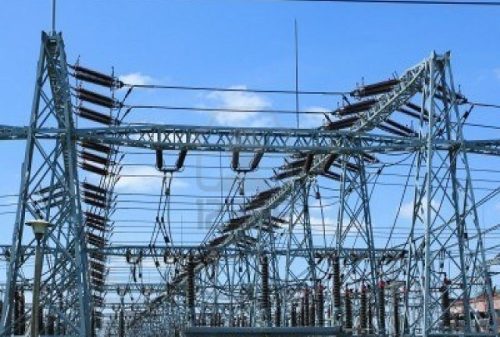
Electricity distribution companies collected N603.64bn from customers in the second quarter of 2026, despite a decline in the volume of electricity they received from the power market.

The figure was contained in the Nigerian Electricity Regulatory Commission’s second-quarter 2026 report, which showed that the average energy offtake by the DisCos at their trading points fell to 3,197.03 megawatt-hours per hour in the quarter.

The Q2 figure represented a 112.45MWh/h, or 3.40 per cent, decline from the 3,309.48MWh/h average recorded in the first quarter. Despite the decline in offtake, the DisCos recorded an overall offtake performance of 94.07 per cent during the quarter, against available partially contracted capacity of 3,398.41MWh/h.

According to the report, the DisCos received a total of 6,982.32 gigawatt-hours of electricity during the quarter but billed customers for only 5,812.31GWh. It stated, “This translates to an overall energy accounting efficiency of 83.24 per cent and represents a 0.24pp decrease compared to 2026/Q1 (83.48 per cent).”

The report further revealed that the naira value of electricity off-taken by the DisCos stood at N946.57bn, while the total value of energy billed to customers was N744.67bn.

This translated to a billing efficiency of 78.67 per cent, representing a decline of 0.57 percentage points from the 79.24 per cent recorded in the first quarter. At the collection stage, the DisCos recovered N603.64bn from the N744.67bn billed to customers, translating to a collection efficiency of 81.06 per cent.

The report said this represented an improvement of 2.11 percentage points from the 78.95 per cent recorded in Q1. However, the difference between the amount billed and the amount collected stood at N141.03bn during the quarter.

See also  Crude earnings fall by N3.18tn amid output surge

The report also disclosed that the weighted average Aggregate Technical, Commercial and Collection losses across the 11 DisCos stood at 36.23 per cent in Q2.

It stated, “The ATC&C loss of 36.23 per cent is 19.31pp higher than the 2026 MYTO target (16.92 per cent) and translates to a cumulative revenue loss of N129.07 billion across all DisCos.”

The 36.23 per cent loss, however, represented a 1.21 percentage-point improvement from the 37.44 per cent recorded in Q1.

The report noted that all the DisCos failed to meet their ATC&C targets during the quarter, with “Kaduna DisCo recording the worst underperformance relative to the target (Actual – 67.70 per cent vs target – 18.18 per cent),” it stated.

On market obligations, the report said the cumulative upstream invoice payable by the DisCos stood at N410.38bn in Q2.

The amount comprised N326.46bn for generation costs from the Nigerian Bulk Electricity Trading Company and N83.92bn for transmission and administrative services provided by the market operator.

The DisCos collectively remitted N385.44bn, comprising N306.62bn to NBET and N78.82bn to the market operator, leaving an outstanding balance of N24.94bn. This represented a market remittance performance of 93.92 per cent, slightly lower than the 94.08 per cent recorded in Q1.

The report added that the Federal Government had taken responsibility for about 50 per cent, or N321.26bn, of the total generation costs through subsidies arising from the freezing of end-use customer tariffs at the rates applicable in July 2024.

Meanwhile, three international bilateral customers purchasing electricity from grid-connected generating companies paid $8.67m against an $18.84m invoice issued by the market operator during the quarter.

See also  Reps probes tax deductions, multiple charges by banks

This represented a remittance rate of 46.02 per cent. Domestic bilateral customers, on the other hand, paid N6.91bn against an invoice of N7.55bn, representing a remittance rate of 91.54 per cent.

Source: punchng.com

FOLLOW US ON:

FACEBOOK

TWITTER

PINTEREST

TIKTOK

YOUTUBE

LINKEDIN

INSTAGRAM

Continue Reading

Business

Personal loans rise to N2tn as Nigerians borrow more

Published

on

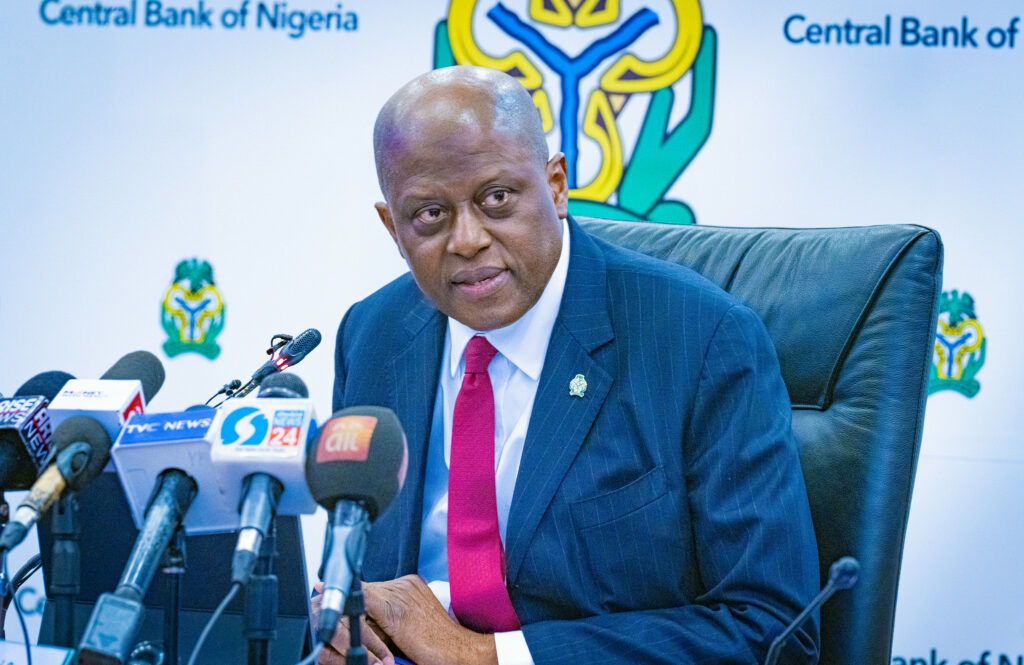
Personal loans obtained by Nigerians rose to an estimated N2.06tn in May 2026, as consumer credit continued to expand amid persistent cost pressures and weak consumer spending, according to the latest Economic Report of the Central Bank of Nigeria.

The figure, calculated from data contained in the CBN’s May 2026 Economic Report, represents about 64.78 per cent of the N3.18tn total consumer credit outstanding during the month. The report covers developments in the real, fiscal, financial and external sectors of the economy.

The apex bank said consumer credit increased by 1.60 per cent from N3.13tn in April to N3.18tn in May, indicating that Nigerians borrowed an additional N50bn within one month.

It said, “Consumer credit outstanding increased by 1.60 per cent to N3.18tn from N3.13tn in the preceding month, driven by growth in personal and retail loans, which rose by 1.98 and 0.90 per cent, respectively.”

The CBN added, “Personal loans remained the dominant component of consumer credit, accounting for 64.78 per cent, while retail loans constituted 35.22 per cent.”

Based on the proportions reported by the apex bank, personal loans stood at approximately N2.06tn at the end of May, while retail loans amounted to about N1.12tn.

The 1.98 per cent month-on-month increase in personal loans suggests that the balance rose by roughly N40bn during the period. Retail loans, which include credit tied more directly to the purchase of goods and services, recorded a slower increase of 0.90 per cent.

The figures show that personal borrowing remained the main driver of Nigeria’s consumer-credit market, accounting for nearly two-thirds of outstanding credit.

See also  Kwara Governor reveal why 75 people were killed in their communities

The increase came against a challenging operating environment for households and businesses. The CBN reported that economic activity remained weak in May, with its composite Purchasing Managers’ Index at 49.60 points, slightly higher than 49.40 points in April but still below the 50-point threshold separating expansion from contraction.

According to the bank, the contraction reflected subdued demand, declining new orders and elevated production costs. It also identified weak consumer spending and higher energy-related costs as pressures on the industry and services sectors.

Inflation also remained elevated during the period. Headline inflation increased to 15.93 per cent in May from 15.69 per cent in April, which the CBN attributed to persistent cost pressures and higher energy prices. However, month-on-month inflation slowed to 1.75 per cent from 2.13 per cent.

The combination of rising consumer credit and weak consumer spending suggests that households were increasingly accessing credit at a time when living and operating costs remained under pressure.

A recent report Enhancing Financial Inclusion & Advancement noted that four in every 10 Nigerians borrowing from formal financial institutions now take loans mainly for consumption and coping needs, as rising financial pressures increasingly push credit away from productive activities.

The 2026 Access to Financial Services in Nigeria Survey revealed that 40.8 per cent of formal borrowers used loans for coping and consumption, up sharply from 31.7 per cent in 2023.

The 9.1 percentage-point increase made coping and consumption the largest purpose of formal credit, overtaking productive enterprise borrowing, which fell from 40.2 per cent to 34.3 per cent during the same period.

See also  Patience Jonathan revealed she mentored Azikel refinery boss Eruani from ‘small boy’ to big businessman

Borrowing for household assets also declined from 25.2 per cent to 23.4 per cent. The report warned, “Coping/consumption purposes rose from 31.7 per cent to 40.8 per cent; productive purpose fell from 40.2 per cent to 34.3 per cent. We need to ensure that credit builds productive capacity and does not produce distress.”

Formal credit use increased from six per cent of adults in 2023 to 10 per cent in 2026, with about 11.9 million Nigerians borrowing from regulated providers. When informal sources were included, 36 per cent of adults had access to some form of credit.

Credit use among informally employed Nigerians tripled from five per cent to 15 per cent, while borrowing among people aged 18 to 35 rose from four per cent to 10 per cent. Business owners recorded an increase from four per cent to 10 per cent, while farmers rose from two per cent to six per cent.

However, the report found significant distress among borrowers. About 45.8 per cent of formal-credit users reported some or serious repayment stress, while 83.8 per cent experienced ongoing financial stress.

Source: punchng.com

FOLLOW US ON:

FACEBOOK

TWITTER

PINTEREST

TIKTOK

YOUTUBE

LINKEDIN

INSTAGRAM

Continue Reading

Business

NAFDAC seizes N300m banned drinks in Lagos

Published

on

The National Agency for Food and Drug Administration and Control has seized alcoholic beverages worth an estimated N300m packaged in sachets and PET bottles below 200ml during enforcement operations in Lagos State.

NAFDAC disclosed this in a statement shared on its Facebook page on Sunday, adding that some distributors and retailers involved in the sale of the prohibited products were arrested.

The agency said the enforcement operations were carried out at Ile-Epo Market, Ojuwoye Market in Mushin and Oke-Arin Market on Lagos Island.

“Officials evacuated several cartons of alcoholic beverages packaged in sachets and PET bottles below 200ml from these locations.

“Distributors and retailers were arrested during operations at Ile-Epo Market, while raids were also conducted at Ojuwoye Market, Mushin, and Oke-Arin Market, Lagos Island,” the statement said.

NAFDAC said investigations revealed that some distributors and retailers were hoarding the prohibited products amid increased demand and rising prices.

The agency said the enforcement was part of efforts to ensure compliance with the ban on the sale and distribution of alcoholic beverages packaged in sachets and PET bottles below 200ml.

It warned distributors, retailers and other operators against selling, distributing or hoarding the prohibited products.

“NAFDAC emphasises that the ban remains in force and warns distributors, retailers and other operators against the sale, distribution or hoarding of the prohibited products.

“The value of the seized products is estimated at N300m,” it stated.

PUNCH Metro reported on August 25 that NAFDAC ordered manufacturers of banned alcoholic beverages packaged in sachets and polyethylene terephthalate bottles below 200ml to recall the products nationwide or risk closure of their facilities.

See also  Iran walks out after Trump’s ‘annihilation’ threat at UNGA, read details

NAFDAC had also vowed to fully enforce the Federal Government-approved prohibition of alcoholic beverages packaged in sachets and PET or plastic bottles below 200ml, warning that the ban was irrevocable.

The agency had stated that the years of grace given to manufacturers by the Federal Government to stop producing the products had expired.

Source: punchng.com

FOLLOW US ON:

FACEBOOK

TWITTER

PINTEREST

TIKTOK

YOUTUBE

LINKEDIN

INSTAGRAM

Continue Reading

Trending