Connect with us

Business

NMDPRA cracks down on filling stations for petrol under-dispensing

Published

on

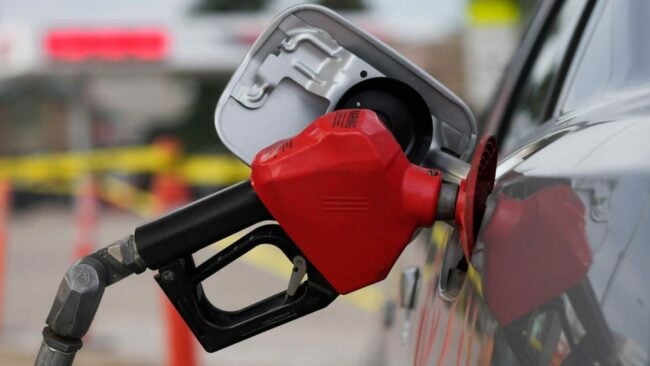
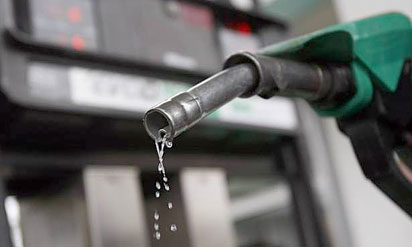
Filling station operators across the country are under pressure to check and recalibrate their dispensing equipment as the Nigerian Midstream and Downstream Petroleum Regulatory Authority intensifies its crackdown on outlets accused of under-dispensing petrol to motorists.

The regulator’s latest directive followed a series of enforcement operations carried out in the past, in which several filling stations were sealed for short-measuring customers, with the authority warning that persistent offenders risk losing their operating licences.

About 20 filling stations were reportedly sealed by the regulator between 2025 and 2026 for under-dispensing.

Following the NMDPRA warning, petroleum marketers said they had risen to ensure fuel retailers give customers the right value for their money. While some of them said pump attendants might be responsible for such sharp practices, others said faulty fuel pumps could be responsible for under-dispensing.

The NMDPRA, in an industry notice issued on Tuesday, directed all retail outlet operators to immediately calibrate and verify their dispensers and totalisers to ensure that consumers receive the full quantity of petroleum products for which they pay.

The authority said it had observed incidents of under-dispensing at retail outlets nationwide, describing the practice as a serious breach of consumer trust.

The regulator warned that outlets found under-dispensing, operating improperly calibrated equipment or otherwise compromising dispensing accuracy would be required to take immediate corrective action.

It added that persistent or serious violations would attract sanctions, “up to and including revocation of the outlet’s licence”.

IPMAN alerts members

Reacting to the directive, the Publicity Secretary of the Independent Petroleum Marketers Association of Nigeria, Chinedu Ukadike, said the association had circulated the NMDPRA notice to its members nationwide.

Ukadike said marketers were operating in a competitive environment where product quality, price and quantity were important factors in attracting and retaining customers.

He explained that the deregulated nature of the downstream sector made it important for independent marketers to protect their reputation and retain customers.

“I’m aware of the NMDPRA notice. We have also distributed the information to our members nationwide, drawing their attention to the NMDPRA notice. But I still want to let you know that we are in a very competitive environment. What drives the market is: one, quality of the product; two, price of the product; three, quantity of the product.

“These are the things that drive this kind of market now. We are in a deregulated economy. And what drives your market is your ability to convince your customers and sustain your customers. You have seen the innovations that we have done in all our businesses nationwide. We are ready for this deregulation and this competition. So nobody will indulge in underselling or cheating customers,” Ukadike said.

See also  NNPC serviced $3bn loan with N991bn crude – Report

However, he acknowledged that sharp practices by individual pump attendants could not be completely ruled out, saying IPMAN was working to reorient its members and their employees.

“But sometimes you cannot rule out some sharp practices from some of our pump attendants, which is why we are trying to go nationwide now, to see how we can reorientate them, to be steadfast and truthful to customers,” he noted.

Ukadike disclosed that the association would not allow customers to be cheated at the pump, stressing that marketers had a responsibility to ensure that their dispensing equipment remained accurate.

“I don’t know if there is any reason that could prompt a manager to adjust the pump below the normal value. But this is an announcement by NMDPRA. We have set out our eyes to ensure that such a thing does not happen. And if there are sharp practices, we are ready to curtail them. So, some pump attendants adjusting prices and engaging in sharp practices may not be ruled out. But we are ready to ensure no customer is cheated at the pumps,” he said.

He added, “Don’t quote me incorrectly. I say you cannot rule out sharp practices from a few individuals like some attendants. For us, the independent marketers, we want to build our brand, and the three cardinal points of building our brand are low pricing, quality, and service.”

Another IPMAN major dealer, who spoke in confidence due to the lack of authorisation to speak on the matter, stated that the association had identified some lapses among pump attendants and would intensify its orientation programme to address the problem.

“No independent marketer will like to indulge in any sharp practices, but because we employ people who are working for us, we have identified some of the lapses, and the executive council will move into this orientation policy to ensure that some of these sharp practices by some pump attendants will be cut out,” he said.

PETROAN intensifies checks

The Petroleum Products Retail Outlets Association of Nigeria also directed its members to inspect their dispensing meters following the NMDPRA warning.

Speaking on Channels Television’s The Morning Brief on Wednesday, the National President of PETROAN, Billy Gillis-Harry, said the association had convened an emergency meeting of its National Executive Council on Tuesday after receiving the regulator’s warning.

He said the meeting lasted until about 10 pm, after which members were instructed to check their dispensing equipment. “PETRON circulated a message around the country, calling our members to check their meters as quickly as possible,” Gillis-Harry said.

He explained that prolonged use could cause dispensing equipment to develop faults, resulting in either under-dispensing or over-dispensing. “Equipment can be faulty over time because of usage,” he said.

See also  Nigerians spend N50bn on US visa applications

Gillis-Harry assured motorists that PETROAN members would ensure that customers received the quantity of fuel they paid for. “But I can tell you that PETRON members will, at all times, insist on making sure that they sell their products one litre for one litre,” he said.

He advised motorists to monitor the quantity displayed on the dispenser whenever they buy fuel and request receipts after transactions.

The PETROAN president also urged consumers to familiarise themselves with their vehicles’ fuel capacities and compare them with the quantity shown on the dispensing meter.

“Oftentimes, we educate our staff to call the attention of the customer to check the meter while it is being dispensed. And also to get the customer to check after the product has been dispensed,” he said.

Gillis-Harry said PETROAN worked with the Weights and Measures Division of the Ministry of Industry, Trade and Investment and the NMDPRA on the maintenance and accuracy of dispensing meters.

“PETRON consistently works with the Weights and Measures Division of the Ministry of Trade and Investment, and also the NMDPRA. These are the two regulatory authorities that ensure that our meters are functional. And they are up to date and accurate,” he said.

He stressed that the association had commenced engagement with its members following the regulator’s warning. “We took what the NMDPRA called our attention to yesterday very seriously. And we already started working on that,” he said.

NMDPRA seals stations

The NMDPRA’s latest directive comes after the regulator had stepped up enforcement against filling stations found to be short-measuring customers.

In February, the authority sealed 11 petrol stations in Rivers State for alleged under-dispensing, failed pumps and other regulatory infractions.

The exercise, conducted in Obio-Akpor and Port Harcourt City Local Government Areas, was part of the NMDPRA’s “Operation One Litre for One Litre” surveillance initiative. The authority said the affected stations would remain shut until the integrity of their pumps was confirmed.

The NMDPRA’s South-South Coordinator, Victor Owodiasa, warned at the time that persistent offenders could have their licences revoked.

He also said under-dispensing could sometimes result from mechanical faults, but insisted that operators had a responsibility to regularly check their meters rather than wait for regulators to detect the problem.

In July, the NMDPRA Abeokuta Field Office also sealed two filling stations in the Akute/Ajuwon area of Ifo Local Government Area of Ogun State for under-dispensing and other sharp practices.

The authority said one of the stations had repeatedly violated regulatory requirements, including allegedly removing official seals placed on the facility and resuming operations without authorisation. It disclosed that the station had been sealed at least six times since 2025.

See also  FirstHoldCo Seeks Shareholders Approval on N1 Trillion Capital Base in Bold Balance Sheet Fortification

The regulator warned that further violations could lead to penalties, suspension of operating licences and criminal prosecution where applicable.

Earlier, in October 2025, the NMDPRA Eket Field Office sealed five petrol stations in Akwa Ibom State over various infractions, including alleged under-dispensing, diversion and operating without a licence.

The issue has also affected major oil marketers. In August 2025, NNPC Retail sanctioned employees at its Ikorodu, Lagos, station after an investigation confirmed an incident involving a pump attendant who allegedly attempted to short-change a customer.

The company said the attendant was disengaged, the station manager was suspended, and a formal warning was issued to the dealer.

With the latest directive, the NMDPRA has now directed industry associations, including IPMAN, PETROAN, the Major Energy Marketers Association of Nigeria and the Depot and Petroleum Products Marketers Association of Nigeria, to notify their members and support compliance.

The regulator said its intensified inspections were aimed at protecting consumers, promoting transparency and ensuring that motorists receive the quantity of petroleum products for which they pay.

The directive comes against the backdrop of the Federal Government’s broader efforts to strengthen regulatory oversight of the downstream petroleum sector following the removal of the petrol subsidy and the transition to a market-based pricing regime.

With petrol now sold at prices determined largely by market conditions, accurate dispensing has become an important part of consumer protection, particularly as motorists and other users pay varying pump prices across locations.

Under-dispensing occurs when a retail outlet’s dispensing equipment delivers less product than the quantity displayed or paid for by the consumer. Faulty or improperly calibrated pumps can therefore result in consumers paying for a volume of petrol that they do not receive.

The NMDPRA said its latest enforcement action was aimed at preventing such practices and improving confidence in petroleum product transactions. The Authority also directed major industry associations to ensure that their members comply with the directive.

“MEMAN, DAPPMAN, IPMAN and PETROAN are kindly requested to promptly notify their members of this directive and to support full compliance across the industry,” the regulator stated.

The NMDPRA stressed that consumer protection remained a key part of its regulatory responsibility, particularly in ensuring that petroleum transactions were transparent and accurately measured.

It said, “NMDPRA remains committed to protecting consumers, promoting transparency, and upholding the integrity of petroleum product transactions nationwide.”

The directive means filling stations now face closer scrutiny of their dispensing equipment, while operators will be expected to correct any identified defects promptly or risk regulatory sanctions.

Source: punchng.com

FOLLOW US ON:

FACEBOOK

TWITTER

PINTEREST

TIKTOK

YOUTUBE

LINKEDIN

INSTAGRAM

Continue Reading
Click to comment

Leave a Reply

Your email address will not be published. Required fields are marked *

Business

Electricity subsidy may hit N2tn amid tariff freeze

Published

on

The Federal Government may spend about N2 trillion to subsidise electricity this year as it maintains its position against an immediate increase in electricity tariffs.

The Minister of Power, Joseph Tegbe, disclosed the government’s position on electricity tariffs at a media parley in Abuja on Monday while marking his first 100 days in office.

“There are no immediate plans to increase electricity tariffs. Our goal is to build a commercially viable power sector while protecting vulnerable consumers,” Tegbe said.

The minister’s position comes against the backdrop of the N1.93tn electricity subsidy incurred by the Federal Government in 2025, according to the Nigerian Electricity Regulatory Commission’s 2025 Annual Report.

NERC said the subsidy obligation represented 57.44 per cent of the total Nigerian Bulk Electricity Trading invoice during the year and averaged N160.69bn monthly.

The commission said the government incurred the subsidy because allowed electricity tariffs remained below cost-reflective levels, with the Federal Government covering the resulting gap.

“In the absence of cost-reflective tariffs, the government undertakes to cover the resultant gap (between the cost-reflective and allowed tariff) in the form of tariff subsidies.

“It is important to note that due to the absence of cost-reflective tariffs across all DisCos, the government incurred a subsidy obligation of N1.93tn (57.44 per cent of total NBET invoice) during the year,” the commission said.

With the government maintaining that there are no immediate plans to increase tariffs, the subsidy burden could remain around the N2tn level this year. The subsidy burden neared N2tn in 2024 and 2025 despite the Band A to E tariff categorisation introduced in 2024.

See also  TCN declares force majeure as rainstorm collapses Lagos-Osun power line

Aside from Band A customers who pay the real cost of electricity, customers on other bands still enjoy government subsidies, which are now close to N2tn.

Earlier, electricity generation companies questioned the effectiveness of the Federal Government’s N4tn Presidential Power Sector Debt Reduction Programme, warning that fresh liabilities estimated at over N7tn could accumulate before the programme is fully implemented.

The power producers, under the aegis of the Association of Power Generation Companies, said that while they were not opposed to the Federal Government’s plan to raise bonds to settle outstanding obligations, the initiative would not provide a lasting solution to the liquidity crisis in the Nigerian Electricity Supply Industry because debts continue to accumulate monthly.

“Every month, the DisCos are not paying 100 per cent. NBET is not paying 100 per cent. The N4tn legacy debt is until December 2024. So, how about the accumulation for 2025? And what is already accumulated for 2026? So by the time you finish issuing this N4tn bond over seven years, by 2033, two times what you’re going to pay would have accumulated. So what is your plan?” the APGC Chief Executive, Joy Ogaji, asked the question.

Ogaji also called on the Federal Government to adopt a more sustainable approach to electricity subsidies, arguing that the current subsidy arrangement exists largely on paper because there is no corresponding budgetary provision.

“One of the sustainable ways is for the Federal Government to acknowledge the fact that they cannot subsidise the power market. Because you can see it’s only on paper that the government is subsidising power. It’s not in the budget.

“There is no monetary provision anywhere for subsidies, not even in the supplementary budget; it’s nowhere. It’s just being. You said you would pay. We have not seen it,” she stressed.

See also  ASUU suspends two-week warning strike

The CEO proposed that the government should clearly define the level of subsidy it could afford and make budgetary provisions for it instead of maintaining a blanket subsidy policy that has contributed to mounting debts across the electricity value chain.

Speaking on Monday, the minister said the administration was working to address the sector’s long-standing debt, revenue leakages, metering gaps and infrastructure constraints.

He said his first 100 days, covering June 8 to September 16, had largely focused on diagnosing the problems across the electricity value chain, stabilising existing infrastructure and restoring market discipline.

According to him, gas supply to power plants was constrained by damaged pipelines and commercial conditions that discouraged investment, while ageing equipment, deferred maintenance and stalled projects prevented available capacity from reaching consumers.

He said the sector was also weakened by poor payment discipline, with generation companies receiving only 27 per cent of their bills.

“When President Bola Tinubu entrusted me with the responsibility of serving as Minister of Power, I made four promises to Nigerians. I promised a disciplined approach to solving the sector’s problems. I promised to pursue grid stability through structured, strategic reforms. I promised visible incremental improvements.

“Upon assuming office, the diagnosis we undertook at the onset revealed constraints at every segment of the electricity value chain. Gas supply to power stations was limited by damaged pipelines and commercial terms that discouraged investment.

“Our generation fleet was heavily dependent on thermal plants, with ageing equipment, deferred maintenance, stalled projects, and capacity unable to reach consumers. The sector diagnosis revealed payment of only 27 per cent of generation companies’ bills, undermining their ability to maintain plants and pay gas suppliers,” Tegbe stated.

See also  NNPC serviced $3bn loan with N991bn crude – Report

The minister said transmission infrastructure was similarly under pressure from vandalised towers and lines, overstretched equipment and frequent system tripping.

NERC explained in its 2025 report that, under the subsidy regime, the government covers the gap between the cost-reflective and allowed tariffs through tariff subsidies.

The regulator said the subsidy is applied to the generation cost payable by DisCos to NBET, while the portion of generation costs not covered by the DisCos is invoiced to the Federal Ministry of Finance for settlement.

It said the framework was introduced partly to prevent unpaid subsidy debts from accumulating on the balance sheets of DisCos and limiting their ability to raise finance for critical investments in their networks.

The N1.93tn subsidy obligation recorded in 2025 highlights the financial cost of keeping electricity tariffs below the cost of supplying power.

For 2026, the government’s decision not to immediately raise tariffs means it will continue to bear a significant portion of the cost of electricity while efforts are made to improve collections, infrastructure, gas supply and service delivery.

Source: punchng.com

FOLLOW US ON:

FACEBOOK

TWITTER

PINTEREST

TIKTOK

YOUTUBE

LINKEDIN

INSTAGRAM

Continue Reading

Business

Dangote, marketers cut petrol prices as crude falls

Published

on

The Dangote Petroleum Refinery and other petroleum marketers have reduced the prices of Premium Motor Spirit (petrol) across major depots in Lagos, Port Harcourt, Calabar and Warri, following a decline in international crude oil prices.

The reductions were recorded in the latest depot price report published by Petroleumprice.ng, with the biggest adjustments seen in Lagos, where several operators cut their petrol prices by between N20 and N24 per litre.

The reductions came as Brent crude traded below $100 per barrel, while the United States benchmark, West Texas Intermediate, also declined to $91.17 per barrel.

In Lagos, the Dangote Refinery reduced its PMS price from N1,350 to N1,325 per litre, representing a N25 reduction. Ascon, Integrated, Pinnacle and Sahara also cut their prices by N24, with their products now selling between N1,326 and N1,327 per litre.

MRS reduced its petrol price by N20 to N1,332 per litre, while Wosbab recorded a current price of N1,330.

The latest reductions followed a mixed movement in the international crude market.

According to Oilprice.com, Brent crude fell to $99.77 per barrel, while WTI dropped by $1.20, or 1.30 per cent, to $91.17 per barrel. Recall that Brent hit $109 last week.

However, Murban crude moved in the opposite direction, gaining $4.18, or 3.80 per cent, to $114.20 per barrel.

The movement in crude prices is significant for Nigeria’s downstream petroleum market because international oil prices influence the cost of imported refined products and the pricing of locally refined petroleum products.

The softer Brent and WTI prices provided room for downward adjustments in depot prices.

See also  TCN declares force majeure as rainstorm collapses Lagos-Osun power line

The decline in petrol prices was also recorded outside Lagos. In Port Harcourt, Masters reduced its PMS price by N2 to N1,328 per litre, while Stockgap recorded a N7 reduction to N1,323. Bulk Strategic and Sigmund listed petrol at N1,328, while Matrix retained its price at N1,330.

In Calabar, Mainland recorded the lowest petrol price among the locations covered, reducing its rate by N7 to N1,320 per litre.

Alkanes cut its price by N2 to N1,325, while Matrix maintained N1,330. Sobaz, however, increased its price marginally by N1 to N1,328. In Warri, mixed movements were also recorded, although most of the changes were downward.

Keonamex reduced its PMS price by N3 to N1,327, while Nepal and Prudent cut their prices by N1 and N2, respectively, to N1,329 and N1,328. Matrix and Optima, however, increased their petrol prices by N3 and N1, respectively, taking them to N1,330 and N1,328.

On the automotive gas oil market, commonly known as diesel, prices also declined in some locations. In Lagos, Chipet reduced its AGO price by N15 to N1,815 per litre, while Ascon, Duport and Integrated each cut their prices by N5 to the same level.

Ibachem, Ibeto, Dangote, Obat and Pinnacle offered diesel prices at between N1,815 and N1,860 per litre. Port Harcourt recorded a sharper movement in diesel prices, with Masters reducing its AGO price by N35 to N1,900 per litre.

In Warri, Matrix cut its AGO price by N50 to N2,000 per litre, while Prudent and Rain Oil reduced theirs by N10 to N1,940.

See also  Tinubu approved lifetime salary for retiring senior officers – Interior minister

The latest depot price movements come amid continued volatility in the international oil market, with crude benchmarks responding differently to developments affecting global supply and demand.

Natural gas prices also moved higher, gaining 2.96 per cent to $2.92, according to the market data.

The latest PMS adjustments suggest that the recent decline in crude prices is beginning to filter into the domestic wholesale market, although the extent of further reductions will depend on movements in crude prices, foreign exchange and the cost of refined petroleum products.

The lower depot prices could also influence retail petrol prices as marketers replenish their stocks at the reduced rates, although pump prices vary according to location, transportation costs and individual marketers’ margins. Petrol now trades between N1,370 and N1,450, depending on the location.

Source: punchng.com

FOLLOW US ON:

FACEBOOK

TWITTER

PINTEREST

TIKTOK

YOUTUBE

LINKEDIN

INSTAGRAM

Continue Reading

Business

Read facts about ending Nigeria’s endless electricity challenges

Published

on

Nigeria’s electricity crisis is no longer merely an infrastructure problem. It is a national emergency that constrains economic growth, destroys jobs, deepens poverty and weakens public confidence in government. For Africa’s most populous country, generating roughly 3,500 to 4,500 megawatts for more than 200 million people is indefensible — especially when installed generation capacity exceeds 13,000MW.

The power sector was privatised in 2013 with the expectation that private capital and commercial discipline would improve electricity supply. More than a decade later, that promise remains largely unfulfilled. Households still endure prolonged outages, businesses spend heavily on diesel and petrol generators, and “national grid collapse” has become a familiar phrase. Privatisation may have changed ownership structures, but it has not delivered the reliable electricity Nigerians were promised.

The consequences are severe. Manufacturers struggle with high production costs, small businesses lose revenue, hospitals cannot depend on uninterrupted supply, and students often study in darkness. Nigeria cannot industrialise, compete internationally or create enough jobs while electricity remains unreliable and expensive. Every failed megawatt translates into lost productivity and diminished opportunity.

The crisis persists because every part of the electricity value chain is impaired. Gas-fired power plants face inadequate fuel supplies, pipeline vandalism and weak commercial terms that discourage investment. Generation companies contend with ageing plants, stranded capacity and unpaid bills. A thermal-heavy generation mix also leaves the system dangerously dependent on gas.

Transmission remains another critical weakness. Ageing and overstretched infrastructure, vandalised towers, inadequate spinning reserves and poor regional balance make the grid vulnerable to repeated disturbances. Without modern control systems, functioning relays and full implementation of Supervisory Control and Data Acquisition (SCADA) technology, operators cannot manage the network efficiently.

See also  FG securities deliver positive real returns to investors

Distribution companies are equally troubled. Aggregate technical, commercial and collection losses reportedly range between 30 and 40 per cent. Millions of customers remain without meters and are subjected to estimated bills that undermine trust and payment discipline. Electricity theft, vandalism, inaccurate customer records and inadequate investment further weaken the market.

The government must now treat electricity reform as a measurable national mission, not an endless policy conversation. It should establish clear deadlines, publish performance data and hold public and private operators accountable.

First, gas supply to power plants must be secured. The domestic supply obligation for gas-to-power should be strengthened, while credible payment guarantees must protect suppliers. Security agencies must also act decisively against pipeline, tower and cable vandalism. Such attacks should be investigated and prosecuted as economic sabotage.

Second, idle and gas-constrained plants should be restored. Nigeria must diversify its energy mix through gas, hydro and solar power, reducing dependence on one source.

Sector debts also require transparent resolution. Payment assurance mechanisms and relevant power-sector recovery bonds should clear verified obligations. Debt net-offs involving company income tax and customs liabilities could provide relief, while responsible asset consolidation and balance-sheet financing may unlock new investment.

Third, transmission upgrades must target the grid’s weakest points. Nigeria urgently needs spinning reserves, automated operations, modern relays and expedited implementation of SCADA. Expansion must also correct regional imbalances and accommodate renewable generation.

Finally, distribution reform must focus on customers. Metering should be accelerated, customer databases cleaned and feeder-level commercial maps completed. Specialised or mobile courts could speed up prosecution of electricity theft, provided consumer rights are protected. Rural access must expand through grid extensions and decentralised renewable systems.

See also  FirstHoldCo Seeks Shareholders Approval on N1 Trillion Capital Base in Bold Balance Sheet Fortification

Nigeria does not lack diagnoses, policies or committees. It lacks disciplined implementation and accountability. The government must set public milestones for gas supply, generation recovery, transmission upgrades, metering and loss reduction — and sanction operators that repeatedly fail.

Reliable electricity is the foundation of a productive economy. Nigeria’s leaders must act with the urgency the crisis demands. The country cannot power its future with excuses.

Source: punchng.com

FOLLOW US ON:

FACEBOOK

TWITTER

PINTEREST

TIKTOK

YOUTUBE

LINKEDIN

INSTAGRAM

Continue Reading

Trending