Connect with us

News

‘Moles sabotaging military war against banditry’

Published

on

Retired senior military officers have stated that internal compromises, infiltration, and weak enforcement of security laws are sabotaging the country’s war against banditry and terrorism.

The former military personnel said some officers in the armed forces were working against the system.

They spoke amid growing public concern that breaches within the security services may be driving a resurgence of terror attacks across the country in recent months.

On Wednesday, former Deputy Speaker of the House of Representatives, Idris Wase, revealed that suspected Boko Haram members and other criminal elements were once found on the recruitment lists of the Nigerian Army and the police.

In Kebbi State, bandits who abducted dozens of schoolgirls struck less than 30 minutes after troops were withdrawn from the school, a development that has prompted public outrage and demands to identify the officer who ordered the withdrawal.

Speaking with Saturday PUNCH, former Troop Commander in the Nigerian Army and immediate past Director of ICT at the Army Signals Headquarters, Gen Peter Aro (retd.), said recent revelations showed that infiltration of the security forces had become an inevitable consequence of a weakened system.

“These developments strongly suggest that Nigeria’s security architecture is grappling with internal compromises that can no longer be dismissed as coincidence,” he said.

Aro added that recruitment should be governed by merit, profiling, and deep vetting, lamenting that political godfathers routinely push candidates forward, bypassing security checks and weakening the integrity of the forces.

Aro said the disclosure that Boko Haram suspects appeared on Army and police recruitment lists showed how deeply “Nigeria’s security gateways have been compromised.”

See also  Cross River LG workers protest 11-month unpaid salaries

He also criticised the moral contradictions in the country’s handling of public figures, who downplay the crimes of armed groups, warning that such mixed messaging damages national cohesion.

Aro linked operational lapses to possible insider collusion, citing the Kebbi school abduction.

He said, “Nigerians understand timing, and they understand patterns. Such precision is rarely accidental. It raises legitimate questions about whether insiders leaked information or deliberately created a security vacuum.”

The ex-general added that troop withdrawals in conflict zones couldn’t be dismissed as routine mistakes, saying, “In a conflict zone, unexplained troop movement is never a clerical oversight; it is often a marker of internal compromise.”

While noting that moles thrive because the country has failed to treat national security as sacred, Aro said, “The deeper tragedy is that these moles are not appearing by chance; they are the result of a permissive political culture.

“Until Nigeria draws firm moral lines and seals the cracks inside its own institutions, the enemy outside will continue to find willing accomplices within.”

He also faulted the Federal Government’s increasing reliance on negotiations to secure the release of abducted victims.

“These things have become a business in Nigeria. Until we address the internal compromises and strengthen our security institutions, we will keep creating incentives for more abductions,” he added.

Similarly, former commander of the Osun State Amotekun Corps, Brig. Gen. Bashir Adewinbi (retd.), said recent arrests of security operatives collaborating with gunmen confirmed that saboteurs are undermining the country’s internal security efforts.

He said, “In any organisation, there are moles. You can’t rule out the possibility. I read that a Deputy Commissioner of Police was recently arrested along with some bandits when their enclaves were stormed.

See also  Tinubu approves ₦3.3trn payment plan to restore reliable power

“That shows we need to do more in separating the wheat from the chaff in all the security agencies, not only in the military.”

Adewinbi described the trend as dangerous, recalling the 1980s case of armed robber Lawrence Anini, whose operations were aided by a senior police officer.

He added, “In the days of Anini, DSP Yamu was arrested and he confessed that he was the one backing the criminal. Let’s call a spade a spade. It was confirmed, and the man was eventually executed. How are we sure that many like him are still not in the service till today?”

Adewinbi said such internal sabotage was weakening Nigeria’s anti-terror fight.

“We need to face reality and do the needful to make sure we don’t deceive ourselves in this country. People should be held responsible and accountable,” he said.

The former general also faulted the government for failing to enforce laws meant to reform the security system.

He argued that even though there are laws in the country, not all of them are efficiently enforced in a way that can deter criminality.

During the plenary on Wednesday, members of the House of Representatives had faulted the Federal Government for negotiating with bandits to secure the release of 24 students abducted from Government Girls Comprehensive Secondary School, Maga, in Kebbi State.

The lawmakers, under the coalition “House to the Rescue,” said the government’s engagement with kidnappers, disclosed by President Bola Tinubu’s aide, Mr Bayo Onanuga, amounted to a betrayal of Nigerians and undermined national security.

Backing the Federal Government’s non-kinetic strategy, Adewinbi said ransom-driven negotiations have turned kidnapping into a lucrative criminal business.

See also  PHOTOS: We’re repositioning Ogun as Nigeria’s leading destination for culture, tourism – Gov Abiodun

“These things would have stopped in Nigeria, but people see it as a way of making money. It is now a business,” he said.

While acknowledging the emotional pressure on families of abducted victims, he insisted that prevention remains the only sustainable solution.

“The only thing is to prevent kidnapping. Once a kidnap occurs, we have no choice but to dance to their tune,” he added.

punch.ng

FOLLOW US ON:

FACEBOOK

TWITTER

PINTEREST

TIKTOK

YOUTUBE

LINKEDIN

TUMBLR

INSTAGRAM

Continue Reading
Click to comment

Leave a Reply

Your email address will not be published. Required fields are marked *

News

Customs deploy AI to combat fake news, scams

Published

on

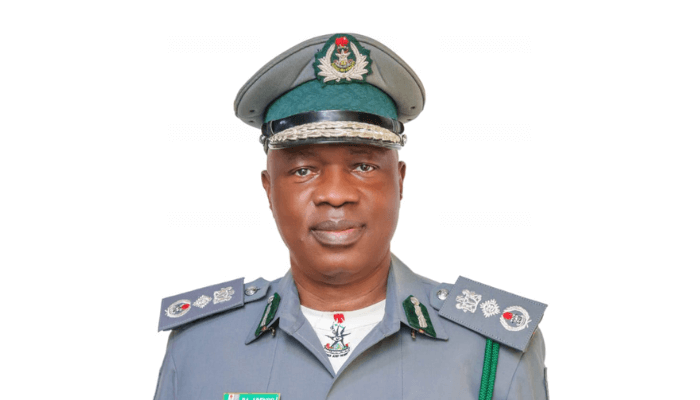
The Nigeria Customs Service is deploying Artificial Intelligence and digital intelligence tools to combat fake news and online scams that threaten its reputation.

Comptroller-General of Customs, Bashir Adeniyi, disclosed the move in a statement issued on Sunday in Abuja by the service’s spokesperson, Deputy Comptroller Abdullahi Maiwada.

Adeniyi spoke at the 2026 Nigerian Council of the Institute of Public Relations Roundtable, themed “Algorithm Influence and Public Relations.”

The initiative is designed to monitor online information, establish facts, and counter misleading narratives.

It also supports collaboration with relevant agencies to identify and apprehend those responsible for spreading false or fraudulent content.

Adeniyi stressed the importance of effective communication so the public understands the reasons behind Customs officers’ actions and operations.

He noted that AI has become increasingly important in both operational duties and strategic communication.

“The role of AI cannot be overemphasised, especially within our operations. Over the years, AI has been deployed in our core operational duties as well as strategic communication,” he said.

AI-assisted risk management already enables the service to assess imported goods and classify them according to risk levels, helping determine appropriate interventions.

The technology can also analyse public sentiment and provide insights into how Nigerians perceive Customs activities.

The NCS is leveraging digital platforms to verify information and work with other agencies against those spreading misleading claims.

The roundtable examined the growing impact of digital technologies and artificial intelligence on public communication.

Source: punchng.com

FOLLOW US ON:

FACEBOOK

WHATSAPP CHANNEL

TWITTER

PINTEREST

TIKTOK

YOUTUBE

LINKEDIN

INSTAGRAM

See also  LASTMA warns against using rolling skate shoes on Lagos highways
Continue Reading

News

Ebola contacts tracing ends Nov 13 – NCDC reveals

Published

on

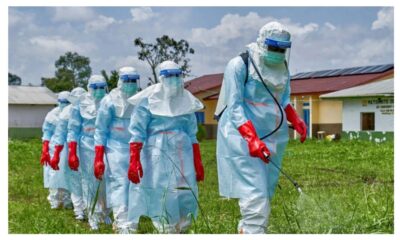
The Nigeria Centre for Disease Control and Prevention has said the 62 contacts identified following the confirmation of an imported Ebola case in the country are expected to complete monitoring by November 13, 2026.

The agency disclosed this in its latest Ebola Disease Situation Report, stating that the contacts were scheduled to complete follow-up at different times between October 31 and November 13.

The development indicates that November 13 is the latest projected date for completing the monitoring of all contacts currently identified in connection with the confirmed case, although surveillance and contact-tracing activities remain ongoing.

According to the report, “Sixty-Two (62) contacts” had been identified, adding that “Contacts are expected to complete follow-up by November. Expected completion dates range from 31 Oct to 13 Nov 2026.”

The NCDC, however, did not provide a breakdown of the contacts according to their individual monitoring completion dates.

It said contact tracing and monitoring were continuing, while additional contact tracers had been mapped and trained to strengthen surveillance.

The agency also disclosed plans to “engage and assess additional contacts for possible evacuation to the quarantine facility” and “continue follow-up of contacts in quarantine.”

It said the scope and strategy for identifying contacts had been reviewed and expanded, while the case definitions for Ebola disease had also been reviewed to improve the identification and management of suspected infections.

The report further listed plans to review guidelines on contact tracing, self-quarantine, self-care kits and the Ebola call protocol, as well as develop an Ebola disease dashboard on the Surveillance Outbreak Response Management and Analysis System, SORMAS, to improve contact management.

On coordination, the NCDC said the National Incident Management System had been activated under the leadership of the Coordinating Minister of Health and Social Welfare, Professor Muhammad Ali Pate.

It said the implementation of prioritised response activities had continued across thematic areas, while the Incident Action Plan had been finalised.

The agency added that a high-level stakeholder meeting had been held with partner agencies to strengthen coordination, resource mobilisation and accountability in the response.

Among its next steps, the NCDC listed the continuation of coordination across One Health sectors and partners, implementation of the Incident Action Plan and strengthened preparedness in states considered at high risk.

On laboratory investigations, the agency disclosed that 18 samples had been tested since the outbreak was confirmed, with one positive result and 17 negative results.

It stated that the positive sample was from the index case, while the 17 negative samples comprised 15 collected from contacts of the confirmed patient and two from suspected cases.

The report said, “Laboratory confirmation reported on 20th October 2026,” adding that “Phylogenetic sequencing concluded by NCDC NRL & The African Centre of Excellence for Genomics of Infectious Diseases (ACEGID).”

It also disclosed that standard operating procedures and job aids had been validated for sample reception, molecular detection and genomic sequencing.

The agency said it would maintain uninterrupted Ebola testing and confirmation at the National Reference Laboratory, with plans to expand testing capacity to Lagos.

See also  Cross River LG workers protest 11-month unpaid salaries

It also listed the need to maintain diagnostic testing and laboratory records, share reports of genomic sequencing conducted on the confirmed case sample and pre-position additional laboratory reagents and commodities across the national network of laboratories.

On case management, the NCDC said it had further engaged the University of Abuja Teaching Hospital on its readiness to serve as an isolation and treatment centre.

It disclosed that a needs assessment and optimisation of the hospital had been concluded, while the FCT team had been engaged on clinical care and psychosocial support for contacts in quarantine facilities.

The agency added that it had secured a dedicated ambulance and placed it on standby for safe patient referral.

It also reported that an inspection and assessment of the isolation centre had been conducted and that the medical evacuation of the index case had been supervised, with measures taken to protect healthcare workers.

Among its next steps, the NCDC said it would review and disseminate approved procedures and guidelines covering triage, isolation, supportive care, psychosocial support and discharge.

It also planned to establish referral mechanisms for suspected cases, from the point of detection to designated treatment centres, while identifying and optimising treatment facilities in states with designated points of entry.

On infection prevention and control, the report disclosed that needs assessments had been conducted across states and health facilities, while healthcare workers were being sensitised on appropriate infection prevention measures.

It said engagement had also been held with the facility managing the index case on compliance with infection prevention and control guidelines, including standard and transmission-based precautions.

The agency listed refresher training for environmental health officers and terminal cleaning at the residence of the index case as part of its response activities.

It further planned to implement an infection prevention and control ring strategy across concentric perimeters to strengthen screening and isolation measures, as well as assess surge capacity for isolation at Karu General Hospital in the FCT.

Nigeria confirmed its first case of Ebola disease in the current outbreak on October 20, 2026, after laboratory tests detected the Bundibugyo virus in a woman who had travelled to the country from Uganda.

According to the World Health Organisation, the patient developed symptoms on October 7, four days after arriving in Nigeria, and sought medical attention at a private health facility in Abuja on October 11.

The laboratory confirmation on October 20 made Nigeria the fifth country to detect the virus since the outbreak was declared in the Democratic Republic of the Congo on May 15, 2026.

The index patient was subsequently evacuated to Switzerland on October 26 for further medical care, alongside her husband, who was identified as a close contact.

Meanwhile, two additional suspected Ebola cases identified in Yola, Adamawa State, were ruled out following two rounds of laboratory testing, easing concerns about a possible spread of the infection to the North-East.

The NCDC Director-General, Dr Jide Idris, said the Adamawa State Public Health Emergency Operations Centre received a report in the early hours of October 30 following the identification of two individuals presenting symptoms suggestive of Ebola.

See also  Invasion threat: Why Trump is after Tinubu — Afenifere

He said the individuals were immediately isolated, while samples were collected for laboratory investigations to establish the cause of their illnesses.

“Fortunately, the samples turned out negative for EBV after two rounds of testing,” Idris said.

Although the NCDC did not disclose the identities of the individuals, Premium Times reported on November 1 that they were a 34-year-old pilot and his wife, a medical doctor.

The newspaper, citing an internal memo from the Adamawa State Ministry of Health and Human Services, reported that the couple were admitted to the isolation centre of the Modibbo Adama University Teaching Hospital in Yola on October 29.

According to the report, the pilot developed symptoms on October 13, while his wife began experiencing similar symptoms on October 25.

The symptoms reportedly included fever, vomiting, fatigue, headache, cough, bleeding gums and nosebleeds.

Premium Times further reported that the pilot travelled to Kenya on October 14 for personal reasons and returned to Nigeria on October 25. A preliminary report from Yola North Local Government Area indicated that he had developed a fever before travelling and had received treatment for malaria.

The newspaper said the couple’s identities were withheld to protect their privacy.

Following the laboratory results, Idris clarified that there was no laboratory-confirmed Ebola case in Adamawa State, adding that the previously confirmed infection in the Federal Capital Territory remained the only confirmed case in Nigeria.

He commended the Adamawa State Commissioner for Health and his team for their response, assuring that the NCDC would continue providing technical support to strengthen surveillance and response operations.

The development came as Nigeria continued to strengthen contact tracing and surveillance following the confirmation of the imported case in Abuja.

The NCDC had earlier explained that contacts were being monitored for 21 days from their last possible exposure, covering healthcare workers, patients, caregivers, household members and other individuals who might have had relevant contact with the infected person.

In an update on October 25, Idris said the number of contacts could change as investigations progressed, urging anyone contacted by public health officials to cooperate with surveillance teams.

Isolation centre, border surveillance

The Kaduna State Government has activated its infectious disease hospital and intensified surveillance across health facilities as part of measures to prevent and respond to a possible Ebola outbreak.

The Director of Public Health in the state Ministry of Health, Dr Sadique Abubakar, disclosed this in an interview with our correspondent on Sunday, saying the government had also strengthened community sensitisation and equipped selected hospitals with essential medical supplies.

Abubakar said the state had completed a readiness assessment for the Ebola Viral Disease response to identify gaps, improve coordination and strengthen its capacity to contain any possible outbreak.

“We have been doing a lot to ensure that we are ready. One of the things we have been intensifying is public sensitisation through various media, including radio and television programmes.

“We have also been engaging communities through our community engagement office. Our rapid response teams are active, and our public health emergency response structures are in place,” he said.

See also  Insecurity: Cleric faults call for civilian firearms

The public health director said the readiness assessment was aimed at evaluating the state’s preparedness and identifying areas requiring improvement.

“In fact, we have just completed a readiness assessment for the Ebola Viral Disease response in Kaduna State. The assessment was conducted to evaluate our preparedness, identify gaps and improve coordination so that we can respond effectively if the need arises,” he added.

He said the state had activated its infectious disease hospital in Mando, where isolation facilities had been prepared, while drugs, medical commodities and personal protective equipment had been provided.

According to him, the supplies had also been made available to some selected secondary healthcare facilities to ensure that the state could respond promptly to any suspected case.

On contact tracing, Abubakar said the index case had been moved out of the country, while identified contacts were being closely monitored by the relevant authorities.

He, however, said there were no identified contacts in Kaduna State, adding that the government was strengthening preparedness at all levels of the healthcare system.

Also, the Kano State Centre for Disease Control has strengthened surveillance at border points and motor parks to prevent possible spread of the disease.

In an advisory signed by the Director General of the KNCDC, Prof. Muhammad Abbas and issued by its Public Health Emergency Operations Centre on Saturday, 31st October 2026, the centre said it had activated its emergency operations centre and directed surveillance personnel to intensify screening of travellers at border points and motor parks.

“The KNCDC has instructed health personnel to screen travellers for symptoms including fever, fatigue, vomiting, diarrhoea and unexplained bleeding, while asking about their travel history and whether they had experienced any of the symptoms within the previous 21 days,” it said.

The centre directed that anyone suspected of having the disease should be isolated in a designated area without being handled directly, while the Local Government Disease Surveillance and Notification Officer and State PHEOC should be notified immediately.

The agency also mandated surveillance teams to provide handwashing facilities, soap and 0.05 per cent chlorine solution at border and motor park locations, while ensuring the use of appropriate personal protective equipment.

It further instructed local government surveillance officers to submit daily reports, including zero reporting when no suspected cases are identified.

The KNCDC called for collaboration with traditional rulers, motor park leaders, as well as the National Union of Road Transport Workers to support surveillance and prompt reporting of suspected cases.

It also warned against stigmatising travellers from the North-East or any other part of the country, urging health personnel to remain professional and respectful during screening.

The state agency said it would deploy supervision teams to border points and motor parks to monitor compliance and provide support.

Source: punchng.com

FOLLOW US ON:

FACEBOOK

WHATSAPP CHANNEL

TWITTER

PINTEREST

TIKTOK

YOUTUBE

LINKEDIN

INSTAGRAM

Continue Reading

News

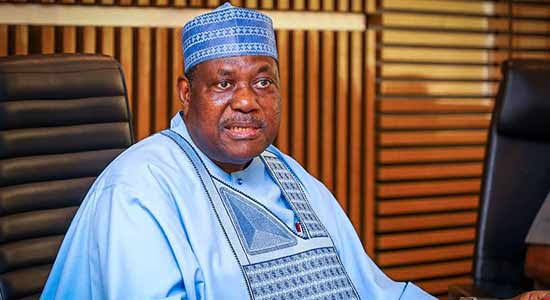
FG vows crackdown on inflated public contracts, read details

Published

on

The Federal Government has vowed to crack down on inflated public contracts and procurement violations, warning heads of government-owned agencies, corporations, councils, authorities and commissions that they risk sanctions for breaching procurement regulations.

The government raised the alarm over contract awards that exceed approved price benchmarks, restricted competition through exclusive arrangements for contractors and undermine regulatory oversight.

The Secretary to the Government of the Federation, George Akume, issued the warning in a circular directing accounting officers of Federal Government-owned enterprises and other public institutions to comply strictly with the Public Procurement Act, 2007, or face penalties.

The circular, obtained by our correspondent in Abuja, was addressed to ministers, permanent secretaries, heads of government agencies and parastatals, among other senior public officials.

Akume expressed concern that several government-owned enterprises and corporations continued to award contracts in violation of the procurement law, despite its amendment by the Finance Act, 2020.

He said the practice had resulted in inflated contract sums, restricted competition and inadequate regulatory oversight, warning that the government would no longer tolerate such breaches.

The SGF consequently directed all government-owned enterprises, corporations, councils, authorities and commissions that utilise public funds to ensure that their procurement activities comply with the Act.

He also instructed heads of the affected institutions, who serve as accounting officers, to liaise with the Bureau of Public Procurement for guidance, stressing that those who continued to award contracts in violation of the law would be sanctioned.

The directive places responsibility for procurement compliance on accounting officers and requires immediate circulation of the circular among them for strict implementation.

The circular stated, “It has come to the attention of the Federal Government that despite the provisions of Section 15 of the Public Procurement Act, 2007, as amended by the Finance Act, 2020, several Federal Government Owned Enterprises and Corporations continue to procure and award contracts without recourse to the provisions of the Public Procurement Act, 2007.”

According to the SGF, the practice had contributed to inflated contract prices, restricted competition and inadequate regulatory oversight in public procurement.

“This practice has resulted in contract sums that are above established pricing benchmarks, captive markets for exclusive contractors, significant departure from approved guidelines and absence of critical regulatory oversight, amongst other lapses,” the circular added.

Akume declared that the government would no longer tolerate such violations, warning that institutions that continued to disregard procurement regulations would face consequences.

“This non-compliance is unacceptable and will no longer be tolerated,” he said.

Consequently, the SGF directed all federal government-owned enterprises, corporations, councils, authorities and commissions that utilise public funds to ensure that their procurement activities comply with the Public Procurement Act.

The circular stated, “Therefore, to ensure that the core principles of transparency, accountability and value for money are achieved, all Federal Government Owned Enterprises, Corporations, Councils, Authorities and Commissions are accordingly directed to ensure that their procurements are implemented in line with the Public Procurement Act, 2007, provided they utilise public funds.”

See also  Tinubu approves ₦3.3trn payment plan to restore reliable power

The directive places particular responsibility on the heads of the affected institutions, who also serve as accounting officers, warning that they would be held accountable for continuing to award contracts outside the provisions of the law.

Akume specifically instructed the accounting officers to engage the Bureau of Public Procurement for guidance on the implementation of the procurement regulations.

The circular stated, “The Heads of Enterprises, Corporations, Councils, Authorities and Commissions, who are also the Accounting Officers, are hereby directed to liaise with the Bureau of Public Procurement for further guidance, as any Accounting Officer who contravenes this directive and continues to award contracts without recourse to the provisions of the Public Procurement Act, 2007, shall be sanctioned accordingly.”

The SGF further directed that the circular be circulated among all accounting officers for immediate implementation.

“The content of this Circular should be brought to the attention of all Accounting Officers for immediate and strict compliance,” he said.

Among the officials and institutions copied on the circular were the Chief of Staff to the President, Deputy Chief of Staff to the President, Principal Secretary to the President, Secretary to the Government of the Federation, Head of the Civil Service of the Federation and all ministers and ministers of state.

Others included the National Security Adviser, Economic Adviser to the President, special advisers and senior special assistants, Chief of Defence Staff, service chiefs, Inspector-General of Police and Governor of the Central Bank of Nigeria.

The directive was also addressed to the chairmen of the Federal Civil Service Commission, Police Service Commission, Code of Conduct Bureau, Code of Conduct Tribunal, Federal Character Commission, Revenue Mobilisation, Allocation and Fiscal Commission, Federal Inland Revenue Service and Independent National Electoral Commission.

Also copied were the chairmen of the National Population Commission, Independent Corrupt Practices and Other Related Offences Commission, Economic and Financial Crimes Commission and National Drug Law Enforcement Agency.

The circular further listed all permanent secretaries and heads of extra-ministerial departments, the Clerk of the National Assembly, Chief Registrar of the Supreme Court, Accountant-General of the Federation, Auditor-General for the Federation and directors-general and chief executives of parastatals, agencies and government-owned companies among its recipients.

Procurement law

The Public Procurement Act, 2007, established the Bureau of Public Procurement as the regulatory authority responsible for monitoring and overseeing public procurement activities, setting standards and ensuring that public procurement is conducted transparently and competitively.

Section 15 of the Act, as amended by the Finance Act, 2020, expanded its application to include federal government-owned enterprises, corporations, councils, authorities and commissions, provided they utilise public funds.

The amendment reinforced the requirement for institutions outside conventional ministries and departments to comply with procurement regulations when spending public funds.

Section 20 of the Public Procurement Act also places responsibility for procurement compliance on accounting officers, including permanent secretaries and heads of government agencies and corporations.

See also  Manpower shortfall may delay NSCDC’s VIP protection rollout

The provision makes accounting officers responsible for supervising procurement processes and ensuring that their institutions comply with the Act.

The latest warning comes amid growing concerns over procurement irregularities and the management of public funds across federal institutions.

In October 2025, the Federal Executive Council directed the strict application of the Public Procurement Act across federal institutions following its meeting of August 13, 2025.

The decision was conveyed in a circular issued by Akume, directing government institutions, including government-owned companies and enterprises, the National Assembly, the Judiciary, national defence and security agencies and the Central Bank of Nigeria, to comply with procurement requirements when utilising public funds.

In another measure to strengthen accountability, the Federal Government in October 2026 directed the implementation of a mandatory 14-calendar-day standstill period between the announcement of an intended contract award and the conclusion of procurement contracts.

The measure was designed to give unsuccessful bidders an opportunity to seek clarification, request debriefing or lodge complaints before contracts are finalised.

The government has also introduced tougher measures against contractors involved in fraud, corruption, falsification of documents and persistent failure to execute public contracts.

Under the National Guideline on Debarment of Contractors, Consultants and Service Providers, contractors found culpable may be barred from participating in federal procurement for between three and five years.

The latest directive reinforces the government’s position that public procurement must be conducted within the established legal framework, with accounting officers bearing responsibility for ensuring that public funds are spent transparently and in accordance with approved procedures.

The latest directive comes amid a series of measures by the Federal Government to curb inflated contract costs, tighten procurement controls and prevent variations in contract sums from being used to inflate public spending.

In May 2026, The PUNCH reported that the BPP barred Ministries, Departments and Agencies from processing upward revisions of contract sums without first obtaining certification from the bureau.

It also introduced guidelines centralising the review and approval process for contract variations and modifications to project scopes, irrespective of the value involved.

The bureau, in a statement signed by its Head of Press and Public Relations, Zira Nagga, said the reforms were designed to block what it described as one of the persistent channels through which contract costs were inflated and corruption perpetrated in Nigeria’s public procurement system.

The guidelines, issued pursuant to Sections 5(a) and (o) of the Public Procurement Act, 2007, implemented a Federal Executive Council-approved policy communicated through a circular from the Secretary to the Government of the Federation in December 2025.

They replaced the 2013 framework, which required presidential approval only for contract variations exceeding 15 per cent of the initial contract sum or N1bn.

Under the revised framework, all requests for variation orders, fluctuation claims and modifications to project scopes must be submitted to the BPP for review and certification before being forwarded to the relevant approving authority, regardless of the amount involved.

See also  PHOTOS: We’re repositioning Ogun as Nigeria’s leading destination for culture, tourism – Gov Abiodun

The bureau warned that contract variations processed without its certification would attract sanctions under the Public Procurement Act, including the suspension of responsible officers and possible debarment of contractors.

The Director-General of the BPP, Dr Adebowale Adedokun, said the guidelines were intended to prevent contractors and public institutions from exploiting contract variations to increase project costs beyond approved amounts.

“Variations must not become a backdoor for cost inflation and scope creep,” he said, adding that the measures would ensure that every adjustment to a public contract was necessary, justified and delivered value for money.

Adedokun also said the bureau would enforce the guidelines fairly across all MDAs.

In a separate disclosure in August 2026, the BPP boss said the Federal Government had saved about N1.4tn in 18 months through the bureau’s price intelligence and benchmarking initiatives, which were introduced to check inflated contract estimates.

He made the disclosure during a media interview on the sidelines of a public procurement capacity-building workshop for senior management and executive staff of the Nigeria Deposit Insurance Corporation in Lagos.

According to him, the introduction of price intelligence had enabled the bureau to scrutinise project costs submitted by government institutions and compare them with established pricing standards before granting procurement approvals.

He said the reforms had also forced contractors to moderate their bids after realising that the bureau would reject quotations considered excessive.

Adedokun said, “At the advent of the procurement reforms that we embarked on about two years ago, one of the things that we introduced was price intelligence and benchmarking. That had not been there before.

“What that department does is to ensure that the cost of projects is verified and checked against fair pricing standards all over the world. We have professionals trained in how to cost projects.

“So, if a government agency prices a project and it comes to the BPP, we benchmark it. Through benchmarking, we can arrive at what we consider a fair price for that project.”

He added that contractors had increasingly sought guidance on acceptable price ranges rather than risk having their bids rejected for exceeding the bureau’s benchmarks.

The BPP had also disclosed that its procurement reviews saved the Federal Government more than N303bn, $304.9m and €1.74m from inflated contract costs between January and September 2025.

The figures highlight the potential financial impact of procurement reviews and price controls, although the bureau’s reported savings are based on its own assessment of the contracts reviewed.

The latest warning by Akume therefore reinforces the government’s efforts to make procurement compliance mandatory across publicly funded institutions, with particular emphasis on the responsibility of accounting officers and the role of the BPP in preventing contract inflation.

Source: punchng.com

FOLLOW US ON:

FACEBOOK

WHATSAPP CHANNEL

TWITTER

PINTEREST

TIKTOK

YOUTUBE

LINKEDIN

INSTAGRAM

Continue Reading

Trending