Connect with us

News

Obasanjo reveals reason for Nigerians deadly migration, read details

Published

on

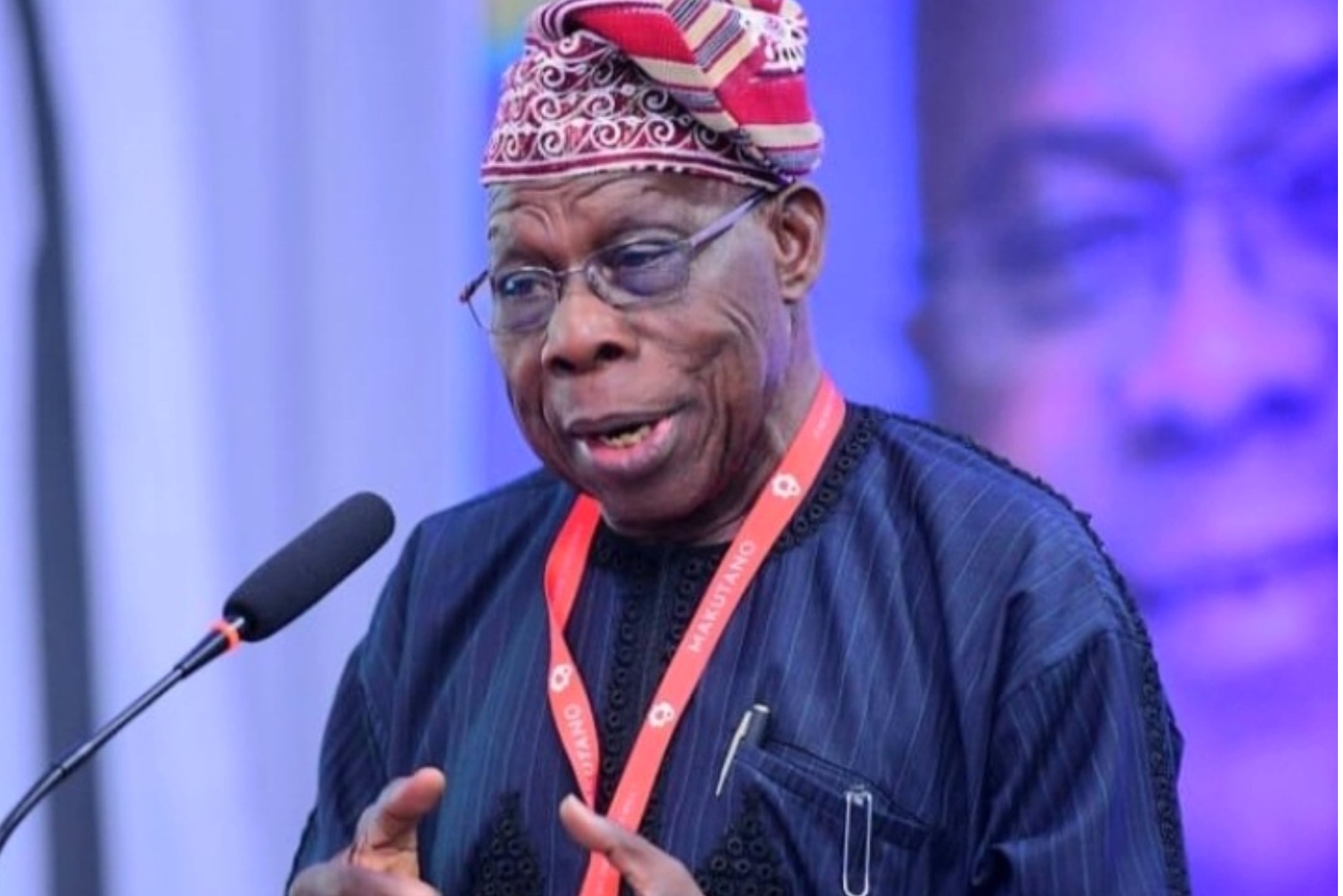
Former President Olusegun Obasanjo has called for urgent action to address worsening insecurity, unemployment and poverty in Nigeria, warning that leadership failures are forcing citizens to seek better opportunities abroad, often through dangerous migration routes.

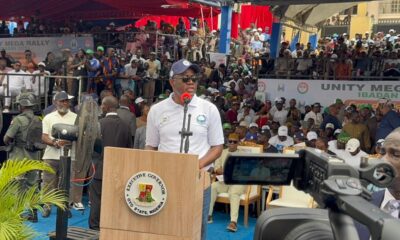
Obasanjo spoke on Saturday during a panel session themed “Lest We Forget” at the Creative Africa Nexus Weekend 2026, organised by the African Export-Import Bank in Lagos State.

The former president, who reflected on Nigeria’s security situation since independence, said the country must confront the governance failures responsible for declining safety and economic opportunities.

“We just have to do what we should do to provide job opportunities, to stem the tide of impunity, to stem the tide of poverty, to stem the tide of kidnapping and insecurity,” he said.

Obasanjo recalled returning to Nigeria in 1959 after completing his military training in Britain, noting that he could travel freely across the country without fear of attacks or kidnapping.

“I came back to this country after my commission as an officer in Britain in 1959. And I could go anywhere; I was posted to the North; I could go anywhere in the North, by myself alone, by day, by night,” he said.

Contrasting that experience with the current security situation, he questioned how Nigeria had deteriorated to the point where citizens could no longer travel safely across several parts of the country.

“Now, if you can’t do that, what has gone wrong? We have to correct what has gone wrong,” he stated.

He argued that unemployment, particularly among university graduates, had become a major source of economic desperation, making it difficult to discourage young Africans from leaving their countries in search of opportunities.

See also  US boosts Nigeria’s fight against terrorism with new military supplies

According to him, governments cannot continue producing graduates without creating sufficient employment opportunities and expect them to remain economically productive.

Obasanjo recalled an encounter with Nigerians arrested for drug-related offences, explaining that one of the suspects had attributed his involvement in the illegal trade to the loss of legitimate employment.

He said the encounter demonstrated how economic hardship could push otherwise productive individuals towards desperate decisions, although he stopped short of justifying criminal activities.

Addressing irregular migration, Obasanjo said he had interacted with Africans who attempted to reach Europe through the Sahara Desert and the Mediterranean Sea, describing their experiences as distressing.

“I have got those people who have attempted to cross, and the story they told me is pathetic. Some die in the Sahara, some die in the Mediterranean,” he said.

The former president maintained that improving governance and creating economic opportunities would reduce the pressure on Africans to undertake life-threatening journeys abroad.

“We have to improve our leadership to deliver, and once our leadership delivers, what does any man want in the world?

“But if they have nothing here, they will look for whatever they can get anywhere else, and you can’t blame them,” he said.

Responding to concerns about corruption, poor governance and Africa’s development challenges, Obasanjo placed substantial responsibility for the continent’s underdevelopment on its political leadership.

“Africa is not where it should be, and that Africa is not where it should be is substantially the responsibility of our leaders. It’s as simple as that,” he declared.

See also  Oriire abduction: Inside operation that freed pupils, teachers after 56 days in captivity

The former president also advocated greater freedom of movement across Africa, disclosing discussions with Ghanaian President John Mahama on a proposal to eliminate visa requirements among approximately 25 African countries.

He explained that the initiative would initially involve countries already operating visa-on-arrival arrangements, with the possibility of expanding the framework across the continent.

“These countries should eliminate visas among themselves, about 25 of them, and if they can do it successfully, then maybe in a matter of a few years, the whole of Africa will be able to move,” he said.

Obasanjo further criticised the limited recognition of the African passport and urged African governments to grant automatic citizenship to people of African descent seeking to return to the continent.

“I believe that all African states should have such a policy. That anybody from the diaspora who wants to be a national of any African country should automatically be given,” he said.

Obasanjo also called for greater unity among Africans and people of African descent worldwide, stressing that historical divisions must not prevent cooperation towards shared prosperity.

He maintained that African countries must strengthen their leadership, expand economic opportunities and deepen continental integration to overcome the challenges confronting their citizens.

The session, which also featured former Prime Minister of St Vincent and the Grenadines, Dr Ralph Gonsalves, and Jamaican scholar, Prof. Paulette Ramsay, examined African identity, slavery, colonialism, reparations and the need for stronger connections between Africa and its diaspora.

The three speakers called for reparatory justice over the trans-Atlantic slave trade and colonialism, arguing that the historical exploitation of Africans continued to affect the continent’s development, among other things.

Ramsay, author of “Lest We Forget: Slavery, Slave Trade, Colonisation, Emancipation and Reparation,” commended Obasanjo for supporting the publication, which brought together scholars, policymakers and cultural experts to examine Africa’s historical experiences.

She argued that reparations should extend beyond monetary compensation to include the return of stolen artefacts, stronger protection of African cultural heritage and an end to the continuing exploitation of the continent’s natural resources.

“We must not remember with bitterness. We must teach younger generations that we remember the horrible things that were done, but we survived, and that’s the best part of the African story, that we survived,” she said.

Source: punchng.com

FOLLOW US ON:

FACEBOOK

WHATSAPP CHANNEL

TWITTER

PINTEREST

TIKTOK

YOUTUBE

LINKEDIN

INSTAGRAM

Continue Reading
Click to comment

Leave a Reply

Your email address will not be published. Required fields are marked *

News

Osun workers begin strike over withheld LG funds, read details

Published

on

The Nigeria Labour Congress has directed workers in Osun State to embark on a three-day sympathy strike beginning at midnight on Sunday to press for the release of statutory allocations due to local government areas in the state.

In a statement signed by the Osun NLC Chairman and Secretary, Christopher Arapasopo and Victor Amusan, respectively, and obtained in Osogbo on Sunday, the congress said the industrial action was in solidarity with the Nigeria Union of Local Government Employees in the state.

The NLC leaders said the congress had earlier issued a seven-day ultimatum to the Federal Government and the Osun State Government over the continued withholding of local government statutory allocations.

They, however, said the issues raised in the ultimatum remained unresolved.

The statement read, “Consequently, having exhausted all reasonable avenues and in accordance with the resolutions reached at the emergency meeting of the State Executive Council (SEC) held on Wednesday, 28th October, 2026, all affiliate unions of the Nigeria Labour Congress (NLC), Osun State Council, are hereby directed to proceed on the three-day sympathy strike in solidarity with the Nigeria Union of Local Government Employees (NULGE), Osun State Council.

“The strike shall commence at midnight on Sunday, 8th November, 2026, last for three (3) days, and conclude at midnight on Wednesday, 11th November, 2026.

“Accordingly, all affiliate unions are directed to immediately communicate this directive in writing to their members and ensure total and full compliance across all workplaces.”

The congress warned that any union found deliberately working against or undermining the directive would face disciplinary measures in accordance with its provisions.

See also  Jonathan, AGF oppose 2027 eligibility suit

It added, “All unions are enjoined to demonstrate maximum solidarity, unity and commitment to the collective struggle for the protection of workers’ rights and welfare. We must emphasise that an injury to one is an injury to all.

“The continued hardship confronting our comrades in NULGE is a collective concern of the entire labour movement, and our response must reflect our shared commitment to workers’ rights, dignity, welfare and economic security.”

The PUNCH had earlier reported that the Osun State Government and the All Progressives Congress had been locked in a bitter feud over control of local government areas in the state since February 2025.

During the violence that engulfed several council secretariats in the struggle for control of local government administration, the police confirmed six deaths, including that of the then APC-elected chairman of Irewole Local Government Area, Remi Abbas.

Source: punchng.com

FOLLOW US ON:

FACEBOOK

WHATSAPP CHANNEL

TWITTER

PINTEREST

TIKTOK

YOUTUBE

LINKEDIN

INSTAGRAM

Continue Reading

News

Experts back AI checks on voters’ register ahead of 2027 elections

Published

on

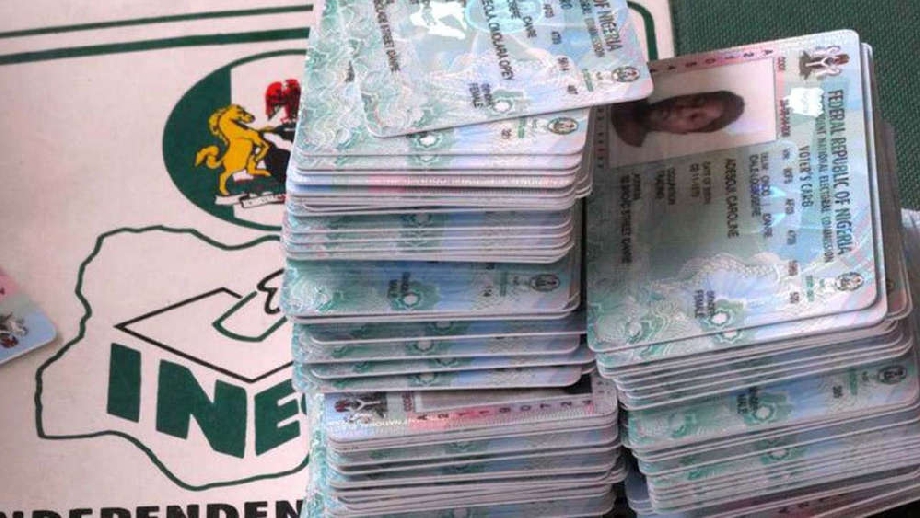
Ahead of the 2027 general elections, experts say Artificial Intelligence could help the Independent National Electoral Commission detect duplicate voter registrations and strengthen the integrity of the voters’ register.

Speaking to The PUNCH ahead of the forthcoming PUNCH Media Foundation webinar on AI, the experts also warned that a fake notice announcing the postponement of voting could keep people away from the polls.

The warning follows the Ekiti State incident where an AI-generated image of voters circulated on social media.

Recall that during the June 20, 2026 governorship election in the state, an image purporting to show voters queuing to sell their votes went viral.

But fact-checkers at the Centre for Democracy and Development concluded it was AI-generated.

Another image circulated as evidence of massive voter turnout in Ado-Ekiti, but an analysis by the Nigerian Fact-checkers’ Coalition showed it was AI-generated.

Last week, the INEC said its biometric system flagged 268,000 records over suspected AI-generated photographs and other irregularities.

The commission further admitted that internal and field registration officers used their authorised login credentials to introduce the AI images and other irregularities into the voters’ register.

INEC also acknowledged that some genuine photographs submitted by voters had been digitally enhanced using AI-powered phone applications.

Providing further details on the figures, INEC’s Director of Information and Communication Technology, Dr Lawrence Bayode, told The PUNCH that the system had flagged 268,000 records but declined to disclose how many had been reviewed.

Bayode stated that the Automated Biometric Identification System will flag multiple and underage registrations, among others, adding that, “Human Adjudication exercise will remove them. Those that we have seen, we are cleaning up.”

He, however, clarified that photographs enhanced with artificial intelligence would not automatically lead to the exclusion of affected voters, distinguishing between genuine photographs improved with AI applications and images generated entirely by artificial intelligence.

See also  APC unveils 25 governorship candidates as Kwara, Bauchi suffer delay

“Those we know it is the AI on the phone that helped enhance their pictures; we can’t exclude such people because it was the AI on the phone that did that.

“Such people will still be on the register, but those AI-generated photographs, all of these will be removed. We are already looking at them,” he said.

INEC’s ICT Director assured voters of the use of ABIS to detect underage voters and multiple voting, and urged Nigerians to verify information on the commission’s media platforms.

“The platform where you can confirm if an election is postponed or cancelled is on INEC media platforms,” Bayode said.

Bayode explained that some individuals allegedly exploited a special registration option designed for persons with disabilities who have incomplete fingers or no fingers to create questionable voter profiles.

He said the option, known as special registration, was among the loopholes allegedly exploited by those responsible for the irregularities detected by the system.

The ICT director said the commission had commenced the process of removing the affected records from the preliminary register.

Reacting to INEC’s discovery of suspected AI-generated photographs in its voters’ register, a Facebook user, Edos Osayande, wrote, “But they told Nigerians they are going to use AI for elections na. This is part of the AI.”

Amupitan defends AI

However, INEC’s Chairman, Prof Joash Amupitan (SAN), defended the commission’s use of AI in election management, warning against misinformation and insisting that the technology should not be regarded as a threat to democracy.

“AI is not an enemy of democracy,” he said at the Beyond the Ballot Summit in Abuja on November 2.

See also  Alaafin, Soun absent as Makinde kicks off Oyo 50th anniversary

Amupitan said the technology was not a threat to democracy despite its potential misuse by malicious actors, adding that it could improve electoral administration through efficient voter registration, logistics planning, data analysis and the management of large voter databases.

“Artificial Intelligence is not an enemy of democracy,” Amupitan added, though he expressed concern over the growing accessibility of generative AI tools, which he said could be exploited to manipulate voters and spread disinformation during elections.

“However, the rapid democratisation of generative AI models has dramatically lowered the barrier to entry for malicious actors; capacities and capabilities that require state-level intelligence resources, such as high voice cloning of public figures and hyper-realistic synthesis of election officials making false announcements, are now accessible at negligible cost. These tools target specific vulnerabilities with distinct timelines,” he said.

Experts back AI

AI experts who spoke to The PUNCH said the technology could help INEC identify anomalies in the voters’ register, improve voter education, detect electoral irregularities and monitor election-related threats.

They further noted that AI tools could improve the administrative side of elections by automating biometric identification and tracking electoral materials.

They added that it could help voters understand electoral procedures and access reliable information in local languages.

AI tools such as natural language processing, the experts noted, could help monitor public feedback, conversations, voter complaints, security threats and queries from different parts of the country.

A Professor of Computer Science and Artificial Intelligence at Babcock University, Remo, Ogun State, Oludele Awodele, warned that AI could also be used to create deepfakes, fabricate audio and videos, impersonate public figures and circulate false election information.

He recommended the use of watermarking and deepfake detection tools, as well as collaboration between INEC and social media platforms to identify and remove misleading content.

See also  US boosts Nigeria’s fight against terrorism with new military supplies

“There should be a mechanism in place, like some of these detection tools that INEC should be able to use to ensure that they pull down that kind of AI-generated disinformation or misinformation,” he said.

Awodele also called for sanctions for people who create, sponsor and circulate misleading AI-generated content.

The Acting Director of the Safeguarding Centre, University of Lagos, Dr Abiola Akiyode-Afolabi, said AI could help identify sexually explicit deepfake videos targeting women candidates and also protect women and persons with disabilities.

The women’s rights advocate further identified the Violence Against Persons (Prohibition) Act 2015 as an existing legal framework that could be used to protect women from AI-facilitated violence, especially when manipulated content targets them.

She noted, however, that although the law did not specifically address technology-facilitated violence or artificial intelligence, its provisions on violence in different forms could offer some protection.

Akiyode-Afolabi said safeguards would be necessary before, during and after the elections to prevent such abuses.

Also speaking, a certified information security professional, Precious Olives, said natural language processing could be deployed to monitor public feedback, speeches, social media conversations, voters’ complaints, threats and security concerns.

He called on INEC, civil society organisations and security agencies to establish coordinated early-warning and rapid-response systems to identify and debunk false information before it spreads widely.

Olives urged technology companies and social media platforms to strengthen content moderation, identify AI-generated material and introduce measures to limit the spread of misleading content.

Source: punchng.com

FOLLOW US ON:
FACEBOOK

WHATSAPP CHANNEL

TWITTER

PINTEREST

TIKTOK

YOUTUBE

LINKEDIN

INSTAGRAM

Continue Reading

News

PHOTOS: Lagos seals Surulere church over noise pollution

Published

on

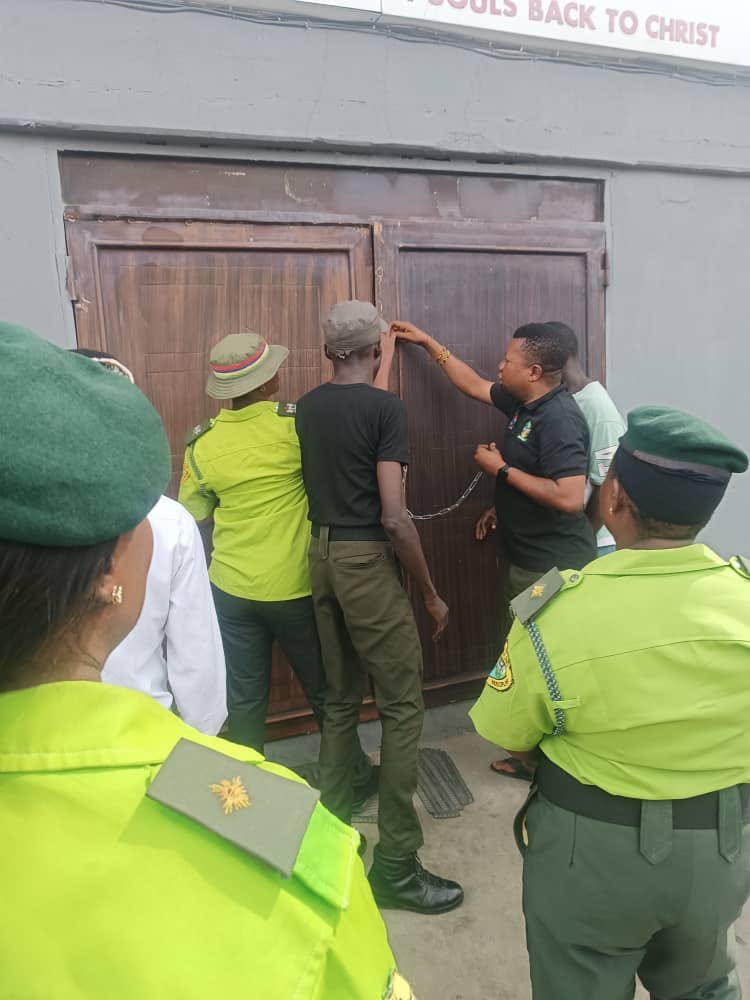
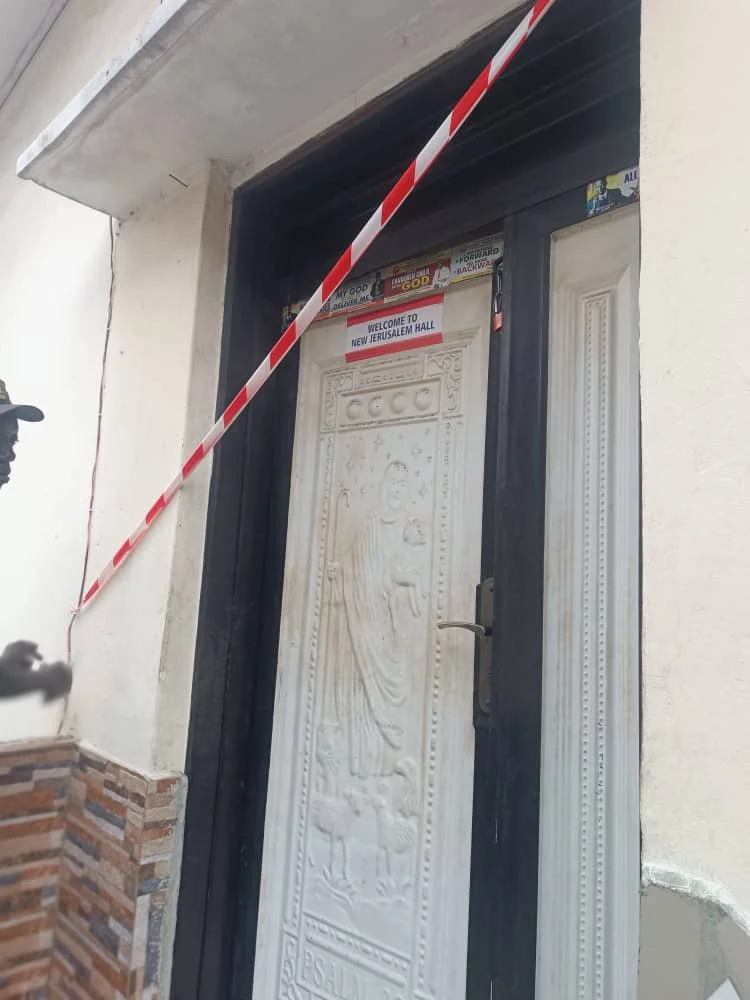
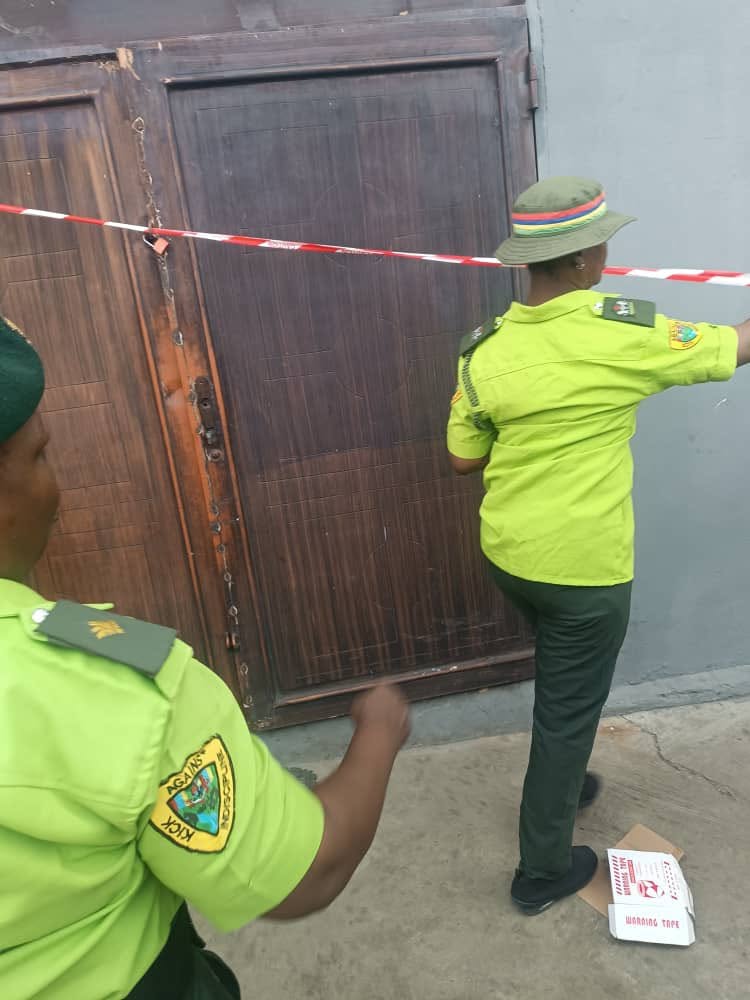
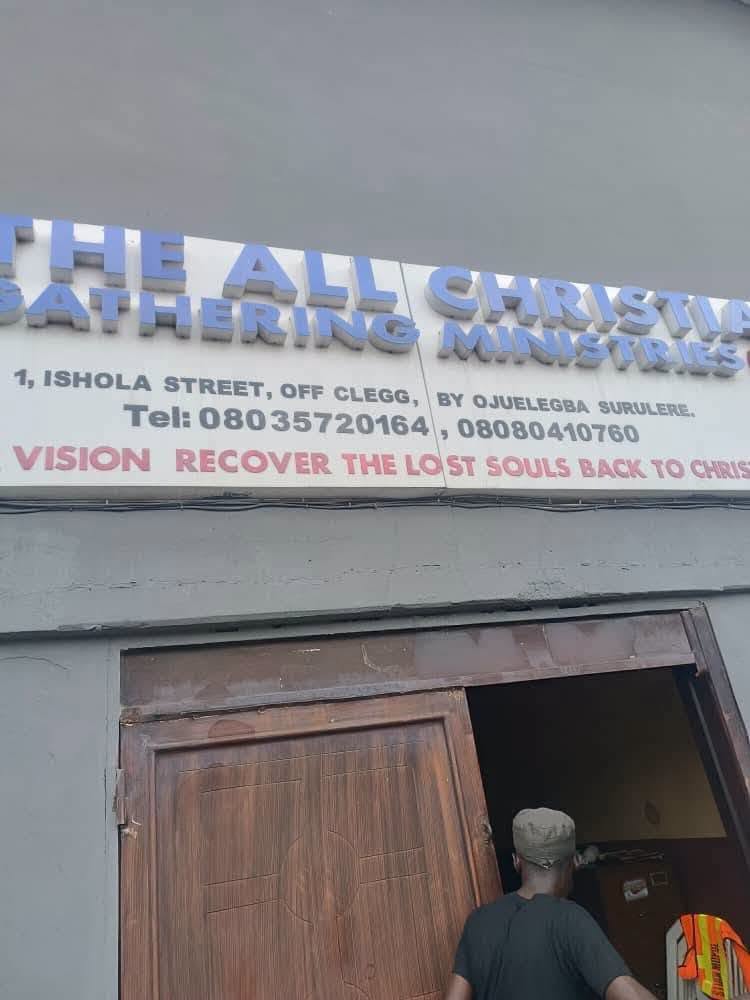
Lagos State environmental officials on Sunday sealed a church, The All Christians Gathering Ministry in Surulere, following repeated complaints of late-night noise pollution that disrupted residents’ sleep.

The church, located at No. 1, Ishola Street, off Clegg, Surulere, was shut down after an investigation confirmed it violated environmental regulations and constituted a nuisance,

The state Commissioner for the Environment and Water Resources, Tokunbo Wahab, announced the action.

“Following a complaint by @BigDavery regarding noise pollution from a church, our officials conducted an investigation and confirmed that the church was in violation of environmental regulations and constituted a nuisance to residents in the area,” Wahab said in a statement on X.

“Consequently, the church… was sealed this morning and will remain shut until further notice.”

He added: “We will not tolerate environmental violations or any form of nuisance that disrupts the peace and well-being of residents. All religious institutions, businesses and other establishments are required to comply strictly with environmental regulations. Our enforcement actions will remain firm and decisive. No individual or institution is above the law.”

The sealing followed a public appeal by an X user, DAVERY (@BigDavery), in the early hours of Saturday.

In an X post tagged to the commissioner and accompanied by videos of the noise, he wrote, “Dear @tokunbo_wahab, It’s 1:31 a.m., and I can’t sleep. They’ve started again. I’m trying not to put the address out for Security reasons but I can provide necessary details in a chat, call or email when you give me a go ahead. It’s getting louder and I think it’s deliberate.”

See also  See what shut House of Reps plenary down amid tension

In earlier posts, the resident described previous incidents, including confronting a church member who allegedly threatened that “God was going to take my life,” and noted the impact on neighbours, including a household with a child under one year old.

He also complained of having to shut windows in the heat without power for a fan.

The action forms part of Lagos State’s ongoing crackdown on noise pollution, enforced by the Lagos State Environmental Protection Agency.

Permissible noise levels in residential areas are set at 55 decibels during the day and 45 decibels at night under state environmental laws.

In recent months, LASEPA has sealed several churches, hotels, lounges and other businesses across the state for similar breaches, often after failed compliance notices or memoranda of understanding requiring soundproofing and restricted night-time activities.

FOLLOW US ON:

FACEBOOK

WHATSAPP CHANNEL

TWITTER

PINTEREST

TIKTOK

YOUTUBE

LINKEDIN

INSTAGRAM

Continue Reading

Trending