Connect with us

Lifestyle

FAKE KINDNESS: THE DANGEROUS PEOPLE HIDING BEHIND A MASK OF GOODNESS

Published

on

Not everyone who smiles at you wishes you well. Not everyone who offers you help genuinely cares about you. Sometimes, the people pretending to be your greatest supporters are secretly waiting for an opportunity to manipulate, exploit or control you.**

One of the most dangerous forms of deception in human relationships is fake kindness disguised as genuine goodness.

While we are often warned to be careful of people who openly hate us, we rarely pay enough attention to those who pretend to love us. The truth is that open hostility is sometimes easier to recognise than calculated kindness.

Some people have mastered the art of appearing generous, caring, supportive and compassionate. They know exactly what to say, when to offer help, how to make you feel special and how to earn your trust.

But behind that beautiful presentation may be selfishness, manipulation, jealousy and hidden intentions.

## 1. They Help You Today So They Can Control You Tomorrow

Have you ever encountered someone who constantly reminds you of everything they have done for you?

They offer assistance, provide financial support, solve your problems and present themselves as your greatest benefactors.

But the moment you disagree with them, establish boundaries or refuse to obey their wishes, they suddenly bring out the records of their generosity.

Suddenly, every favour becomes a debt. Every sacrifice becomes a weapon. Every act of kindness becomes an excuse to control your decisions.

That is not genuine kindness. That is generosity being used as an instrument of control.

See also  This is "The Door Of No Return", Cape Coast, Ghana

## 2. Their Kindness Disappears When You Stop Being Useful

Some people are only interested in maintaining relationships as long as they benefit from them.

When they need something, they become affectionate, understanding and remarkably generous.

But when you need their support, their attitude changes.

Their availability disappears. Their excuses multiply. Their previously unlimited generosity suddenly develops conditions.

This raises an uncomfortable question: Were they genuinely interested in your well-being, or were they simply interested in what they could gain from you?

## 3. They Use Goodness to Hide Their Hidden Agendas

Not every generous person is genuinely generous.

Some people perform acts of kindness because they want public recognition, admiration, influence or personal advantage.

They want everyone to see how wonderful they are, but they are not necessarily interested in the suffering of the people they claim to support.

They may help you in public while humiliating you in private. They may defend you in front of others while secretly undermining your progress.

Their kindness is a performance, and their audience is more important to them than the person receiving their generosity.

## 4. They Make You Feel Guilty for Having Boundaries

One of the most manipulative tactics associated with conditional kindness is emotional blackmail.

The moment you refuse a request, they accuse you of being ungrateful.

The moment you question their behaviour, they remind you of their sacrifices.

The moment you demand respect, they portray themselves as victims.

They want you to believe that accepting their kindness means surrendering your right to disagree with them.

See also  Adebiyi Adegboye Adesida Afunbiowo II: The 46th Deji of Akure Kingdom

But genuine kindness does not require you to sacrifice your dignity, freedom or peace of mind.

Nobody should have to surrender their independence simply because someone once helped them.

## 5. They Are Kind in Public but Cruel in Private

Some people are extremely concerned about their public image.

They want society to see them as compassionate, generous and morally upright.

But behind closed doors, they behave differently.

They insult, manipulate, intimidate and emotionally exploit the very people they publicly claim to love.

Their greatest fear is not necessarily hurting someone. It is being exposed as someone whose public image does not reflect their private behaviour.

**A beautiful public reputation does not automatically mean a beautiful private character.**

## 6. Genuine Kindness Does Not Come With Invisible Chains

There is an important difference between genuine kindness and calculated generosity.

Genuine kindness does not demand worship. It does not constantly remind people of past favours. It does not use assistance as an excuse to dominate others.

A genuinely kind person can help you without expecting ownership of your decisions.

They can disagree with you without humiliating you.

They can support you without making you feel permanently indebted to them.

Most importantly, they can accept that you have the right to say NO.

## THE BIG QUESTION: IS FAKE KINDNESS MORE DANGEROUS THAN OPEN HATRED?

Perhaps the most disturbing thing about fake kindness is that it can make people lower their guard.

You may protect yourself against someone who openly dislikes you, but what happens when the person you trust is the one manipulating you?

See also  Ayra Starr visa denial: S’Africa demands proof as Tyla cancels Lagos show

An enemy does not necessarily need to pretend to be your friend. But a manipulative person may need your trust before revealing their real intentions.

This does not mean every generous person has a hidden agenda or that kindness should be viewed with suspicion.

Rather, it means we should learn to distinguish genuine compassion from calculated behaviour.

Do not judge people only by their smiles, gifts, promises or public displays of generosity. Pay attention to consistency, respect, accountability and how they treat you when they have nothing to gain.

**FINAL THOUGHT**

The world does not only need more generous people. It needs more people whose generosity is accompanied by honesty, integrity and genuine compassion.

Because sometimes, the person pretending to be your greatest blessing may be using that very appearance to manipulate your life.

**Never confuse someone’s ability to perform kindness with their willingness to practise it genuinely.**

### LET’S DEBATE!

1. Is fake kindness more dangerous than openly expressed hatred?
2. Have you ever encountered someone whose generosity came with hidden conditions?
3. Should people continue helping those who refuse to be controlled by their past favours?
4. Can someone be generous in public but wicked in private?

Share your thoughts. Let’s have an honest conversation about the difference between genuine kindness and calculated goodness.

—

**Newsbreak365 — Real News | Real People | Real Impact**

FOLLOW US ON:

FACEBOOK

WHATSAPP CHANNEL

TWITTER

PINTEREST

TIKTOK

YOUTUBE

LINKEDIN

INSTAGRAM

Continue Reading
Click to comment

Leave a Reply

Your email address will not be published. Required fields are marked *

Lifestyle

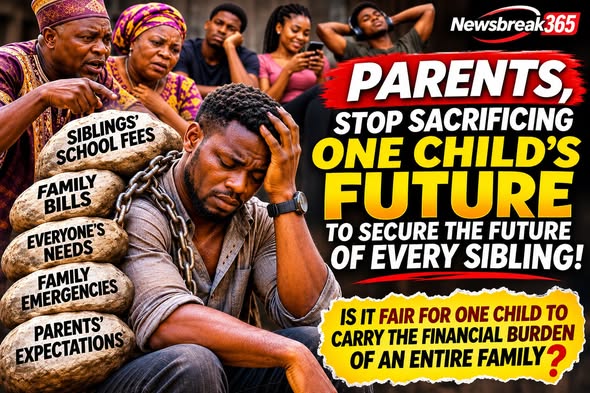
PARENTS, STOP SACRIFICING ONE CHILD’S FUTURE TO SECURE THE FUTURE OF EVERY SIBLING

Published

on

Being the responsible child should not become a lifelong punishment. Why should one son or daughter carry the financial burden of an entire family while everyone else is allowed to live their lives?**

There is a disturbing family tradition that many people have normalised, particularly in African households: the moment one child becomes financially stable, that child’s personal life suddenly becomes everybody’s responsibility.

It does not matter whether that child is struggling to establish a career, save money, build a family, buy a house or pursue personal dreams. Once the family identifies that child as the responsible one, the expectations become endless.

Suddenly, school fees for younger siblings become their responsibility. Parents’ financial difficulties become their problem. Family emergencies become their burden. Even siblings who are old enough to work, earn money and take responsibility for themselves are sometimes allowed to depend indefinitely on one person.

But when does family responsibility become exploitation?

## The Child Who Works for Everybody but Lives for Nobody

Imagine spending years working hard to build a better life, only to discover that your financial success has become a prison.

You cannot save because somebody needs money. You cannot invest because another sibling needs school fees. You cannot plan your future because another family emergency is waiting around the corner.

Every month brings a new financial obligation.

And the most painful part? When you finally say you cannot afford to help, you are suddenly labelled selfish, arrogant, ungrateful or wicked.

Nobody asks whether you are tired. Nobody asks whether you have personal financial commitments. Nobody considers the sacrifices you have already made.

See also  This is "The Door Of No Return", Cape Coast, Ghana

Your only crime is that you have reached a point where people believe you should be able to solve everybody’s problems.

**Is this love, or is it emotional exploitation disguised as family responsibility?**

## Why Must the Firstborn or Most Successful Child Pay for Everyone?

One of the most dangerous beliefs in some families is that the firstborn must automatically become the financial parent of every younger sibling.

Being the firstborn is not a lifetime financial contract.

Likewise, being the most successful child does not mean you must surrender your entire future to finance everybody else’s ambitions.

Parents have a responsibility to raise their children to become independent, responsible adults. They should not deliberately or unconsciously create a system where one child becomes the permanent provider while the others remain financially dependent.

Helping siblings is a beautiful thing. But there is a difference between supporting family members and carrying people who refuse to learn how to stand on their own feet.

Family support should be built on cooperation, not entitlement.

## Parents Must Stop Using Guilt to Control Their Successful Children

Some parents do not directly demand money. Instead, they use emotional pressure.

They remind their children how much they sacrificed during childhood. They compare them with other successful family members. They suggest that refusing financial assistance means forgetting where they came from.

Of course, parents deserve appreciation and respect. Children should recognise the sacrifices their parents made.

However, raising children should not become an endless emotional debt that one child must repay by sacrificing their entire adult life.

See also  Ayra Starr visa denial: S’Africa demands proof as Tyla cancels Lagos show

A child can love their parents and siblings without accepting unlimited financial responsibility.

**Gratitude should never become a weapon used to destroy someone’s financial freedom.**

## What Happens to the Responsible Child’s Own Dreams?

This is the question many families conveniently ignore.

Does the responsible child not deserve to get married, raise children, own property, travel, enjoy life, save for retirement and prepare for old age?

Does that child not deserve to experience financial peace?

What happens when the person who has spent years rescuing everybody eventually loses their job, becomes sick or encounters a financial crisis?

Will all the siblings they supported suddenly become responsible for rescuing them?

Or will everybody disappear because the family ATM has stopped dispensing money?

The irony is heartbreaking: the person who spends their productive years securing everybody else’s future may eventually discover that nobody was securing theirs.

## Family Unity Should Not Depend on One Person’s Suffering

There is nothing wrong with helping younger siblings through education, supporting struggling parents or contributing to family emergencies.

But responsibility must be shared according to people’s abilities and circumstances.

Parents should encourage every child to become financially independent rather than teaching them to wait for one successful sibling.

Older siblings should be appreciated, not exploited. Younger siblings should learn accountability, not entitlement.

And successful children should understand that setting financial boundaries does not mean abandoning their families.

A healthy family should produce several responsible adults, not one exhausted adult surrounded by permanent dependants.

## FINAL THOUGHT: YOUR CHILDREN ARE NOT YOUR RETIREMENT PLAN, AND ONE CHILD IS NOT THE FINANCIAL FATHER OR MOTHER OF EVERYBODY!

See also  Vintage Enamelware Pots: A Glimpse into Nigeria’s Culinary and Cultural Heritage (PHOTOS)

Parents, you brought all your children into this world. Do not turn one child’s success into an excuse for the others to avoid responsibility.

Do not celebrate one child’s achievements while quietly sacrificing that child’s happiness, financial security and personal ambitions.

Teach your children to support one another, but also teach them to stand independently.

Because one day, the child you have placed the entire family on may finally become exhausted.

And when that happens, everybody may discover just how much they depended on the person they never allowed to live their own life.

**NEWSBREAK365 ASKS:**

Is it fair for African parents to expect one financially successful child to pay the bills, school fees and expenses of every sibling?

Should the firstborn automatically carry the financial responsibility of the entire family?

Or should every adult sibling learn to become financially independent instead of depending on one person’s success?

**Where should family responsibility end and personal freedom begin?**

Share your thoughts. This conversation needs to happen!

—

**Newsbreak365 — Bringing Important Conversations to the Public.**

FOLLOW US ON:

FACEBOOK

WHATSAPP CHANNEL

TWITTER

PINTEREST

TIKTOK

YOUTUBE

LINKEDIN

INSTAGRAM

Continue Reading

Lifestyle

BETTER TO BE POOR WITH INTEGRITY THAN TO BE RICH WITH BLOOD ON YOUR HANDS

Published

on

Some people are so desperate to become wealthy that they no longer care whose lives they destroy, whose tears they cause or how many innocent people suffer along the way. But what exactly is the achievement in becoming rich at the expense of human lives?**

In today’s society, wealth is increasingly treated as the ultimate evidence of success. Expensive cars, luxurious mansions, private jets, designer clothes and overflowing bank accounts have become symbols of greatness. Unfortunately, very few people stop to ask the uncomfortable questions: How was the money made? Who suffered for it? How many people were exploited, betrayed, cheated or even killed for someone else’s financial comfort?

The disturbing reality is that society sometimes celebrates wealth without examining its source.

A man arrives at an expensive event in a convoy of luxury vehicles, and people rush to celebrate him. A wealthy individual makes an extravagant donation, and suddenly everyone calls him generous and successful. Yet nobody wants to investigate whether the fortune behind the expensive lifestyle was built through honesty or human suffering.

**Have we reached a point where the size of someone’s bank account matters more than the value of their conscience?**

## When society celebrates wealth and ignores morality

One of the greatest problems in modern society is the dangerous glorification of questionable wealth.

People who acquire money through corruption, exploitation, fraud, violence and other criminal activities are sometimes celebrated as role models. Young people watch these individuals receive public recognition and begin to believe that becoming rich is more important than becoming responsible.

Some parents pressure their children to become wealthy without teaching them the importance of honesty. Some religious leaders celebrate extravagant lifestyles without questioning the morality behind them. Some communities honour individuals simply because they have money, regardless of how that money was acquired.

See also  Vintage Enamelware Pots: A Glimpse into Nigeria’s Culinary and Cultural Heritage (PHOTOS)

This is how greed becomes normalised.

When society gives criminals the same admiration it gives honest entrepreneurs, it sends a dangerous message: that the destination matters more than the journey.

But wealth without integrity is not an achievement worth celebrating.

## What is the value of wealth acquired through innocent blood?

Imagine having millions in your bank account but knowing that innocent people lost their lives because of your greed.

Imagine sleeping in a luxurious mansion while families are mourning loved ones whose lives were destroyed by your actions.

Imagine eating expensive meals while the people you exploited struggle to feed their children.

What exactly should such a person be proud of?

A luxury car cannot erase somebody’s suffering. A private jet cannot silence a guilty conscience. Expensive jewellery cannot restore a life taken through violence.

Money can purchase comfort, but it cannot purchase the right to escape responsibility for wrongdoing.

And no amount of public admiration can transform evil into goodness.

## Poverty is not shameful; dishonesty is

There is absolutely nothing disgraceful about being poor and working honestly to improve your circumstances.

An honest person who earns a modest salary deserves respect just as much as a wealthy entrepreneur who built a legitimate business.

A man who struggles financially but refuses to steal, exploit or destroy others to make money has something that money alone cannot provide: integrity.

We must stop making honest people feel inferior because they cannot afford the luxurious lifestyles displayed on social media.

Not everyone driving an expensive vehicle is successful. Not everyone living in a mansion is happy. And not everyone displaying bundles of money has acquired it through legitimate means.

See also  The 1961 Ife Bronze Stamp: A Symbol of Nigeria’s Cultural Rebirth and Independence

**It is better to have an empty bank account and a clean conscience than a full bank account and innocent blood on your hands.**

## The dangerous message we are sending to the younger generation

What happens when children grow up believing that money is more important than character?

What happens when young people admire individuals with questionable fortunes more than hardworking people who earn their living honestly?

What happens when society teaches the next generation to ask, ‘How rich is he?’ instead of ‘How did he become rich?’

We risk raising a generation that values financial success but has little regard for human life, compassion, honesty and responsibility.

We must teach our children that success is not measured exclusively by what someone owns. It is also measured by how they treat people, how they earn their living and what they are willing to sacrifice to achieve their ambitions.

A society that celebrates wealth without integrity is gradually destroying its own moral foundation.

## Your wealth should not become another person’s tragedy

There is nothing wrong with wanting to become wealthy. There is nothing wrong with building businesses, acquiring properties, enjoying luxury and giving your family a comfortable life.

But there must be boundaries.

Make money through hard work. Build businesses through legitimate opportunities. Invest wisely. Become successful without turning other people’s suffering into the foundation of your prosperity.

Do not destroy lives to build your lifestyle.

Do not exploit the vulnerable to finance your luxury.

Do not celebrate criminality simply because it produces money.

See also  This is "The Door Of No Return", Cape Coast, Ghana

And never allow the desperation to become wealthy to destroy the very humanity that makes you worthy of respect.

## Final thoughts: What will your wealth say about you?

One day, the expensive cars will become old, the mansions will change owners, the designer clothes will fade and the applause will disappear.

What will remain is your character, your legacy and the consequences of your actions.

You may fool society with expensive possessions, but you cannot permanently hide the truth about how you acquired your wealth.

**I would rather be a poor man remembered for his honesty than a billionaire remembered for destroying innocent lives.**

Because being poor is not a crime. Being financially unsuccessful is not a moral failure. But deliberately destroying innocent lives for personal enrichment is a disgrace that no amount of money should ever excuse.

**The world does not need more wealthy people at any cost. It needs more wealthy people with integrity and more societies courageous enough to question the source of wealth.**

—

### THE BIG QUESTION FOR SOCIETY

If you had to choose between living a modest life with a clean conscience and enjoying unlimited wealth acquired through the suffering or deaths of innocent people, which would you choose?

And why do some societies celebrate questionable wealth while looking down on honest people struggling financially?

**Let’s have an honest conversation. Is being rich really worth it if innocent blood is the price?**

*NewsBreak365 – Challenging narratives. Questioning society. Speaking uncomfortable truths.*

FOLLOW US ON:

FACEBOOK

WHATSAPP CHANNEL

TWITTER

PINTEREST

TIKTOK

YOUTUBE

LINKEDIN

INSTAGRAM

Continue Reading

Lifestyle

POVERTY IS NOT A LICENCE TO COMMIT CRIME: BEING BROKE DOES NOT GIVE YOU THE RIGHT TO DESTROY OTHER PEOPLE’S LIVES

Published

on

Poverty is painful, hunger is humiliating, and financial struggles can push people to the edge. But when did being poor become an acceptable excuse for stealing, scamming, kidnapping, armed robbery and destroying innocent people’s lives?**

Let’s address an uncomfortable truth: Not everyone who is poor is a criminal, and not everyone who is desperate is willing to sacrifice their conscience for money.

Yet, society increasingly finds itself confronted with people who appear to believe that financial hardship gives them permission to commit atrocities in the name of survival.

That mentality deserves to be challenged!

## BEING POOR DOES NOT GIVE YOU THE RIGHT TO STEAL FROM OTHERS

There is something fundamentally wrong with a society where people begin to justify criminal behaviour simply because the perpetrators are financially disadvantaged.

Yes, unemployment is real. Hunger is real. Economic hardship is real. The rising cost of living can make ordinary survival feel like a daily battle.

But answer this question: What makes your suffering more important than the suffering of the innocent person you decide to rob, defraud or exploit?

Someone worked hard to earn that money. Someone sacrificed years to build that business. Someone’s family depends on that income.

Why should another person’s life become miserable because you desperately want to become wealthy?

**Your poverty is not another person’s debt to pay!**

## STOP ROMANTICISING CRIMINALS BECAUSE THEY COME FROM POOR BACKGROUNDS

One disturbing attitude in society is the tendency to sympathise with criminals simply because of their backgrounds.

See also  Chief Bola Ige on Awolowo's integrity and desire to work with Igbo & the betrayal by Igbo leaders

People sometimes defend fraudsters, robbers and other criminals by arguing that poverty pushed them into crime.

But what about their victims?

What about the families whose savings disappear through fraud? What about innocent people kidnapped for ransom? What about hardworking business owners whose investments are destroyed by criminals?

Do their struggles suddenly become irrelevant because somebody else needs money?

We must stop confusing sympathy with justification.

Understanding why somebody commits a crime does not mean approving of the crime.

## MILLIONS ARE POOR, BUT NOT EVERYBODY CHOOSES CRIMINALITY

Millions of people wake up every morning without knowing where their next meal will come from.

Some work under extremely difficult conditions. Some struggle to pay rent. Some have families depending on them. Others spend years searching for employment without success.

Yet, they continue to struggle without deliberately making innocent people victims of their circumstances.

Some sell food by the roadside. Some work as cleaners, security guards, drivers, labourers and market traders. Others accept small opportunities and gradually build their lives.

They may not be rich, but they understand that financial success without integrity is nothing to celebrate.

**Being poor is not shameful. Making innocent people suffer because you want money is shameful.**

## MONEY WITHOUT CONSCIENCE IS NOT SUCCESS

What exactly is success if your wealth is built on another person’s tears?

What is the achievement in driving expensive cars when innocent families are mourning because of your criminal activities?

What is the point of displaying wealth on social media when the money comes from fraud, exploitation, robbery or kidnapping?

See also  This is "The Door Of No Return", Cape Coast, Ghana

We have to stop celebrating unexplained wealth without asking questions about its source.

A society that celebrates money without questioning how it was acquired is gradually teaching its younger generation that financial success matters more than character.

That is a dangerous lesson.

## GOVERNMENT FAILURE DOES NOT CANCEL PERSONAL RESPONSIBILITY

Governments must be held accountable for unemployment, corruption, poor education, economic mismanagement and the absence of opportunities.

A government that fails to create an environment where citizens can earn an honest living deserves serious criticism.

But personal responsibility must also remain part of the conversation.

Government failure does not give individuals unlimited permission to destroy other people’s lives.

We can demand better leadership while also demanding better behaviour from citizens.

Both conversations are necessary.

## WHAT KIND OF SOCIETY ARE WE BUILDING FOR THE NEXT GENERATION?

If children grow up believing that becoming wealthy is more important than becoming responsible, what future are we preparing for them?

If young people are encouraged to admire criminals because of their expensive lifestyles, designer clothes, flashy cars and bundles of cash, what values are we passing down?

We cannot complain about insecurity while celebrating the very attitudes that encourage criminality.

We cannot demand justice for victims while making excuses for perpetrators.

And we cannot build a decent society by treating criminal wealth as an achievement.

## THE BOTTOM LINE: POVERTY IS A CHALLENGE, NOT A CRIMINAL LICENCE!

Nobody should be humiliated for being poor. Nobody should be denied dignity because of their financial circumstances.

But nobody should also be allowed to use poverty as a moral excuse for harming innocent people.

See also  Alleged rape: Nigerian Tiktoker admitted in Ogun health facility

Work hard. Start small. Learn a skill. Accept honest opportunities. Demand accountability from political leaders. Challenge economic injustice.

But do not turn another person’s suffering into your financial opportunity.

**BETTER TO BE POOR WITH INTEGRITY THAN RICH WITH BLOOD ON YOUR HANDS!**

A society needs compassion for the poor, accountability for criminals and responsible leadership from those in power.

One question remains:

**If poverty is an excuse for crime, where does the suffering of the innocent victim fit into that argument?**

What is your opinion? Is poverty ever a justification for criminal behaviour, or should personal responsibility remain non-negotiable regardless of economic circumstances?

Share your thoughts.

—

**NEWSBREAK365 | Society, Accountability and the Truth.**

FOLLOW US ON:

FACEBOOK

WHATSAPP CHANNEL

TWITTER

PINTEREST

TIKTOK

YOUTUBE

LINKEDIN

INSTAGRAM

Continue Reading

Trending