Connect with us

Business

42% of SMEs can’t last a month without income — Moniepoint

Published

on

Moniepoint Microfinance Bank has revealed that 42 per cent of Nigeria’s small businesses cannot survive for a month without income, according to findings from the second edition of its Informal Economy Report.

In a statement on Thursday, the bank said the report highlighted the fragile financial position of small businesses that employ a large share of Nigerians.

The report, scheduled for release on Friday, received support from the Ministry of Industry, Trade and Investment and the Small and Medium Enterprises Development Agency of Nigeria.

“The Informal Economy Report is a robust and important study that examines the informal market and provides fresh insights into its realities.”

“We believe its key outputs will serve ecosystem players and government well in policy direction and execution,” said Managing Director of Moniepoint Microfinance Bank, Mr. Babatunde Olofin.

Nigeria’s informal economy accounts for over 80 per cent of employment and drives most economic activity. For millions excluded from formal job structures, it remains vital for survival and poverty alleviation.

Moniepoint said the report aims to provide evidence-based insights to guide policymakers, regulators, and financial institutions in designing interventions that strengthen and formalise informal enterprises.

The Informal Economy Report 2025 follows the success of the inaugural edition, which earned commendation from the Federal Ministry of Industry, Trade and Investment, the Corporate Affairs Commission, SMEDAN, and leading business associations for providing credible data and actionable recommendations.

punch.ng

FOLLOW US ON:

FACEBOOK

TWITTER

PINTEREST

TIKTOK

YOUTUBE

LINKEDIN

TUMBLR

INSTAGRAM

See also  Tinubu unveils tax calculator to show impact on incomes
Continue Reading
Click to comment

Leave a Reply

Your email address will not be published. Required fields are marked *

Business

FG seeks 30-day credit window for airlines due to Jet fuel crisis

Published

on

To tackle Nigeria’s worsening jet fuel shortage and price surge, the Federal Government has asked marketers to grant airline operators a 30-day credit window and sell aviation fuel directly to them.

The development is sequel to a series of high-level engagements convened by the Nigerian Midstream and Downstream Petroleum Regulatory Authority, following an earlier meeting called by the Minister of Aviation and Airspace Management on April 22-23, 2026.

The session brought together representatives from the Ministries of Aviation and Petroleum Resources, as well as major aviation agencies, including the Federal Airports Authority of Nigeria, Nigerian Airspace Management Agency, Nigerian Civil Aviation Authority, airline operators, and aviation fuel marketers.

According to a copy of the executive summary of the meeting obtained by one of our correspondents in Abuja on Monday, the stakeholders called for urgent regulatory intervention to stabilise prices, urging the authority to engage relevant bodies to review pricing components linked to international benchmarks.

“To ensure price stability, NMDPRA should engage DPRP to adjust the premium on Platts and the cost variation element that was recently increased by the refinery,” the document stated.

At the end of the deliberations, the stakeholders agreed on a new indicative pricing band based on prevailing global oil market dynamics and domestic cost considerations. “The indicative end-user price should range between N1,760 – N1,988 per litre in Lagos and N1,809 – N2,037 per litre in Abuja,” the document stated.

It added that the pricing benchmarks were derived from Platts average prices recorded between April 17 and 23, 2026, warning that prices could climb even higher outside that window.

“Products purchased outside this window may be higher due to high volatility in current prices precipitated by the U.S.-Iran war and varying operational costs by operators,” the summary noted.

In addition, the committee advised regulatory agencies to streamline airport operations by reducing the number of airside fuel distributors to only those with verifiable infrastructure and capacity.

“NMDPRA is to work with FAAN and NCAA to validate airside distributors with infrastructure to trim the number of operators based on agreed criteria,” it added.

The issue of mounting debt between airline operators and fuel marketers also featured prominently during the discussions. To resolve this, the Ministry of Aviation was tasked with facilitating a consultative meeting between both parties.

“The Ministry of Aviation should facilitate a consultative meeting between oil marketers and airline operators to resolve outstanding debts,” the communiqué said.

As part of measures to ease financial pressure on airlines, marketers were encouraged to introduce more flexible payment terms. “Marketers should consider a 30-day credit window for airlines to pay up for supplies made,” it stated.

The committee further recommended the inclusion of Aviation Turbine Kerosene under the Federal Government’s naira-for-crude initiative, which was designed to reduce dependence on foreign exchange and stabilise the cost of petroleum products.

Industry crisis

Nigeria’s aviation industry continues to struggle with high and inconsistent Jet A1 fuel costs, significantly impacting airlines’ operating expenses. Over the past two years, domestic airlines have repeatedly raised concerns over surging fuel prices, which at different periods exceeded N1,000 per litre, forcing operators to increase ticket fares and, in some cases, scale down operations.

The latest price projections underscore the continued vulnerability of the sector to global oil market fluctuations, particularly amid geopolitical tensions such as the ongoing U.S.-Iran conflict, which has contributed to rising crude oil prices.

Industry stakeholders say the success of the newly proposed measures—especially direct sales, pricing adjustments, and inclusion in the naira-for-crude policy—will be critical to stabilising aviation fuel supply, controlling costs, and sustaining airline operations across the country.

See also  Nigeria targets 7% GDP growth, $14bn infrastructure — Edun

The aviation fuel crisis adds to the challenge facing the sector, including a mounting debt of more than N9bn owed by domestic airlines to ground handling companies, which have threatened to withdraw their services from Tuesday (today), raising fears of widespread flight disruptions.

The looming standoff, triggered by a seven-day ultimatum issued by the Aviation Ground Handlers Association of Nigeria, could cripple both domestic and international operations if unresolved.

The affected companies include Skyway Handling Company of Nigeria Plc, Nigerian Aviation Handling Company Plc, Butake Handling Company, Precision Handling Company Limited, and Swissport Handling Company.

N7m fuel cost

Meanwhile, Nigerian airlines said they are now spending over N7m to fuel a single domestic flight, as the sharp increase in aviation fuel prices raises fresh concerns over the viability of their operations.

Airlines in separate interviews with The PUNCH held that they are increasingly strained by the spike in costs, with fears mounting that the situation could soon force capacity cuts or broader disruptions if no urgent intervention is made.

Ibom Air, one of the country’s domestic carriers, stated the scale of the crisis, disclosing that it now spends about N7.6m to fuel a single flight, more than triple what it paid just months ago.

The airline, in a statement, described the development as unprecedented and warned that the financial burden is becoming unsustainable for domestic operators.

“The fuel price situation is an unprecedented crisis for Nigeria’s domestic airlines. At Ibom Air, the cost of fueling our aircraft has more than tripled between January and today. From an average of N2.1m per flight in January, as of today, the 27th of April, we are paying approximately N7.6m to fuel every flight.”

The airline noted that the spike represents a sharp escalation in operating costs in just a matter of weeks, placing additional strain on already stretched airline finances.

“This is a more than 350 per cent increase since the beginning of March, a space of just seven weeks! And our aircraft are some of the most fuel-efficient in the domestic market.

“At this point, domestic airlines are baffled at why the price of aviation fuel in Nigeria has ballooned to this level, way above the rest of the world, while the fuel marketers obtain 95 per cent or more of their aviation fuel from Dangote Refinery.”

Ibom Air further explained that despite the rising costs, airlines have been unable to significantly increase fares due to stiff competition and broader economic realities.

“The situation is exacerbated by the fact that a combination of competitive pressures and patriotism has prevented a commensurate increase in our fares, meaning that we and our fellow domestic airlines have had to absorb the immense operating losses resulting from this situation,” it stated.

The airline said it had initially hoped the surge in fuel prices would be temporary, but the situation has persisted longer than anticipated.

“We chose to do this believing that the crisis would pass in a week or two, but it has persisted now for nearly two months, continuously increasing, with no reprieve in sight as of today. ‘’While we continue to do everything we can to maintain normal operations, it is clear to us that the current conditions are unsustainable.

“We note that, worldwide, where fuel price increases are nowhere near what we are facing in Nigeria, airlines are reducing flights to manage the situation. We, too, will have to take whatever ameliorating actions we can in the days ahead, including reducing our capacity if necessary, to be able to continue to provide services to our customers and our country.”

See also  CNG investments hit $980m, says Presidency

The Akwa Ibom-based airline warned that if the current trend continued, it could threaten the operation of airlines across the country.

“We also note that, if this situation persists much longer, airlines will not be able to continue operating just to pay for fuel and nothing else. We call on the fuel marketers to seriously reconsider the pricing of aviation fuel to make the airline business model continue to work in Nigeria,” the statement added.

Corroborating the development, the spokesperson for United Nigeria Airlines, Chibuike Uloka, said operators across the industry are facing similar cost pressures, as all airlines source fuel from the same market.

“We all purchase from the same market and source. It’s not cheaper for operator A or B; most airlines spend more than even because the Airbus A320 aircraft consumes more fuel due to its size and capacity, with a minimum of 5,000 litres per uplift.

“ So, some operators who operate Airbus or Boeing with more fuel consumption spend double the figure.”

Refinery’s profit surges

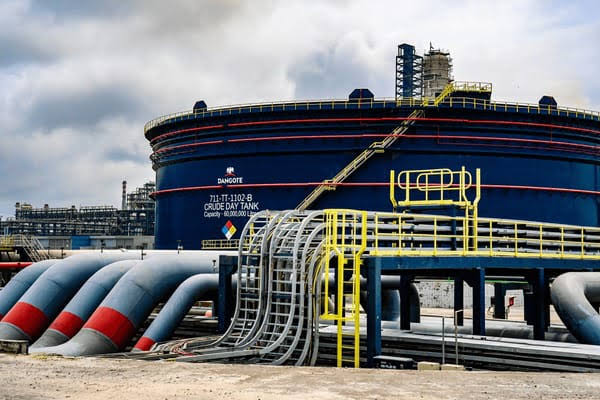
The $20bn Dangote Petroleum Refinery is currently enjoying a surge in profit margins from jet fuel production, even as Nigerian airlines warn they may be forced to halt operations over rising aviation fuel costs, a new report by Reuters revealed on Monday.

Findings showed that the refinery, regarded as Africa’s largest with a capacity of 650,000 barrels per day, is capitalising on strong international demand and premium pricing in Europe to rake in record returns on jet fuel exports.

However, this windfall comes at a time when domestic carriers are grappling with soaring fuel prices, raising concerns about the sustainability of flight operations in Nigeria.

The report read, “The Dangote refinery is benefiting from record margins for producing jet fuel that it is mostly selling abroad, while the domestic airlines it also supplies have threatened to stop flying because of the surge in fuel prices.

‘’The refinery, the largest on the continent, was built to turn Africa’s biggest oil-producing ‌country into a net exporter of refined products, end Nigeria’s reliance on fuel imports, and shield its economy from global energy shocks.”

The Airline Operators of Nigeria said the cost of aviation fuel, also known as Jet A1, has climbed to about N3,300 per litre when logistics and storage are factored in, almost three times the levels recorded in February.

The development has pushed airlines to the brink, with operators warning that continued increases could trigger widespread disruption in the aviation sector.

A statement by AON noted, “The current price regime for Jet A1 is unsustainable. At over N3,000 per litre, airlines are operating under extreme financial pressure, and there is a real risk of service disruptions if urgent interventions are not implemented.”

Data from Nigeria’s downstream regulator showed that the refinery’s ex-depot price stood at about N1,879 per litre, broadly in line with imported fuel landing at roughly N1,900 per litre in Lagos.

Despite this parity, industry players said additional costs across the supply chain significantly inflate the final price paid by airlines.

The pricing dynamics have been further complicated by Nigeria’s fully deregulated fuel market, where prices are determined by global trends without government subsidies, unlike in many other African countries.

The structure allows the Dangote refinery to align its pricing with international markets, particularly at a time when global jet fuel demand has surged due to geopolitical tensions in the Middle East.

See also  PHOTOS: Gov. Abiodun meets investors in China, seeks expansion of Ogun economic frontiers

The ongoing crisis has disrupted energy supplies worldwide, forcing airlines across continents to increase ticket prices, introduce fuel surcharges, and, in some cases, ground aircraft.

But for Dangote, the situation has translated into a lucrative opportunity.

According to industry expert Alan Gelder of Wood Mackenzie, refining margins for jet fuel in Europe are around $15 per barrel. He estimated that Dangote’s margins are more than double that figure, driven by the refinery’s scale, efficiency, and strategic positioning.

“European refiners are making about $15 per barrel, but Dangote is likely earning significantly higher margins, more than double, because of its configuration and access advantages,” Gelder said.

The refinery is said to be producing about 24 million litres of jet fuel daily, with the bulk exported to Europe, where buyers are willing to pay a premium ahead of the peak summer travel season.

Shipping data indicated that European imports of Nigerian jet fuel rose to between 78,000 and 96,000 barrels per day in April, the highest levels on record.

Dangote Group Vice President, Devakumar Edwin, confirmed the export trend, noting that a significant portion of the refinery’s output is directed to international markets.

He said, “We are producing about 24 million litres of jet fuel daily, and a large share of that is exported to Europe. However, we are also meeting the bulk of domestic demand, which is estimated at about 2.1 million litres per day.”

Despite the strong earnings, Edwin disclosed that the refinery relies heavily on imported crude oil, sourcing supplies from the United States, Brazil, and other African countries.

This, analysts said, limits the refinery’s profit potential, as reliance on imported feedstock introduces additional freight costs.

The situation is linked to the Nigerian National Petroleum Company Limited’s existing crude-for-loan arrangements, which tie up a substantial portion of the country’s daily oil production.

Estimates suggest that about 400,000 barrels per day of Nigeria’s crude output is committed to servicing these obligations, leaving limited volumes available for domestic refining.

Experts noted that if the refinery had consistent access to local crude, its margins could be even higher due to reduced logistics costs.

Though the Federal Government has stepped in to avert a looming aviation crisis, approving measures to ease the burden on airlines, including debt relief and negotiations aimed at lowering fuel prices, stakeholders insist that a more sustainable solution lies in improving crude supply to local refineries and addressing inefficiencies in the downstream distribution chain.

They also warned that the benefits of having a mega refinery in Nigeria may not automatically translate to lower fuel prices.

“Building a large refinery does not automatically mean cheaper fuel,” Gelder added. “Prices will still reflect global market realities, especially in a deregulated environment.”

Dangote refinery was conceived as a game-changer for Nigeria’s energy sector, aimed at ending fuel imports, boosting exports, and insulating the economy from external shocks.

The company is now planning a public listing and an expansion of its refining capacity to 1.4 million barrels per day, a move that could position it as the largest refinery globally by the end of the decade.

Its growing profit margins from jet fuel exports highlight a stark contrast between global opportunity and domestic strain in Nigeria’s aviation sector.

Continue Reading

Business

Dangote refinery expansion to create 95,000 jobs

Published

on

The President of the Dangote Group, Aliko Dangote, has announced that the expansion of the Dangote Petroleum Refinery to a production capacity of 1.4 million barrels per day will generate employment for no fewer than 95,000 skilled workers at peak construction.

According to a statement by the firm, Dangote disclosed this on Saturday in Lagos during his induction as an honorary fellow of the Nigerian Academy of Engineering, describing the project as a major milestone in Nigeria’s industrial transformation.

According to him, the expansion underscores the group’s continued commitment to engineering excellence, job creation, and sustainable economic growth.

“This award is particularly meaningful because it recognises what we are doing in the industry, especially our commitment to employing engineers and skilled professionals. At the peak of construction for this expansion, we expect to have about 95,000 skilled workers on site, and we will continue to grow,” Dangote said.

Upon completion, Dangote said the expanded refinery will surpass the Jamnagar refinery in India to become the largest refinery in the world, significantly strengthening Nigeria’s refining capacity.

Dangote noted that the project would rely heavily on Nigerian expertise, creating substantial opportunities for engineers, technicians, artisans, and other skilled professionals. He added that the expansion reflects the group’s long-term vision for industrialisation in Nigeria and across Africa.

Beyond employment generation, the refinery said the expansion is expected to stimulate local manufacturing, enhance technology transfer, and deepen Nigeria’s oil and gas value chain.

It will also improve fuel security, reduce dependence on imported petroleum products, and deliver significant foreign exchange savings for the Nigerian economy.

See also  Blackouts: N300bn electricity power lifeline for hospitals, varsities hits snag

“The scale of this expansion reflects our confidence in Nigerian capacity and our belief that Africa has the ability to build world-class infrastructure that meets global standards,” Dangote stated.

In his remarks, the President of the Nigerian Academy of Engineering, Prof Rahamon Bello, described the honour as well-deserved, noting that Dangote’s impact transcends physical infrastructure.

“What makes this recognition fitting is not only what has been built but also what has been inspired. Alhaji Aliko Dangote’s journey continues to motivate a new generation of engineers, entrepreneurs, and innovators to think boldly, act decisively, and believe in the immense possibilities within our continent,” Bello said.

From the current 650,000 bpd, Dangote plans to scale up the refinery in three years.

Continue Reading

Business

Airlines plan Thursday shut down; see why

Published

on

There are strong indications that domestic airlines in Nigeria may halt operations from Thursday, April 30, 2026, over what operators described as unbearable and unsustainable aviation fuel prices, raising fresh fears of widespread travel disruption across the country.

Industry insiders say the airlines, having engaged both the Federal Government and oil marketers without a breakthrough, may be left with no option but to ground flights by Thursday.

The looming shutdown comes after several complaints by operators, who have watched the price of Jet A1 surge by over 300 per cent compared to February levels, pushing operating costs to the brink.

Passengers, many of whom rely on domestic flights for business and urgent travel, now face uncertainty.

In a bid to avert the crisis, the Minister of Aviation and Aerospace Development, Festus Keyamo, convened a meeting with airline operators and fuel marketers in Abuja last week. However, findings indicate that the tripartite talks ended in a deadlock, with operators unwilling to shift their stance unless decisive action is taken.

At the end of the two-day meeting, the minister announced a 30 per cent reduction in aviation-related taxes as part of efforts to ease the burden on airlines. While the gesture was acknowledged, operators insist it falls short of addressing the root problem.

Speaking on the first day of the meeting, Vice President of the Airline Operators of Nigeria, Allen Onyema, welcomed the government’s intervention but maintained that fuel marketers must account for the sharp rise in prices.

Onyema said, “This government has helped the industry more than anyone since 1999, and the President is even willing to waive 30 per cent of the debts airlines are owing.

See also  CNG price hits N450/SCM as FG withdraws subsidies

“But the truth is that the marketers must be brought to book to explain how they came about the 300 per cent increase when even Dangote is surprised because what he is selling to us is still the cheapest.”

At the end of the second day, Onyema issued a stark warning, giving a seven-day ultimatum from midnight last Thursday for action to be taken. “Since the advent of the US-Iran war, there has been a spike in aviation fuel in Nigeria, which we, the Airline Operators of Nigeria, feel is not proportionate to the hike internationally.

“We expect that in the next 48 hours something drastic should be done because no airline will fly in this country in the next seven days if nothing is done, not because they don’t want to fly, but because fuel may not be available to us at sustainable pricing.”

Providing further insight into the financial strain, Onyema disclosed that fuel prices have skyrocketed from about N900 per litre before the crisis to between N2,700 and N2,900, with some marketers selling as high as N3,500.

“Before the crisis, we were buying fuel at about N900 per litre. Now it has risen to between N2,700 and N2,900, with some selling as high as N3,300 to N3,500,” he said.

According to him, airlines are now operating primarily to service fuel costs. “All the airlines in Nigeria have been flying to pay fuel marketers only, and you don’t want to compromise safety,” he added.

Despite speculations about indebtedness, senior airline officials who spoke to our correspondent in confidence on Sunday, due to the sensitive nature of the matter, insisted that operators are up to date with payments to key aviation agencies, including the Federal Airports Authority of Nigeria and the Nigerian Airspace Management Agency.

See also  NNPCL boss links crude oil theft to international syndicates

The PUNCH further gathered that in a document, the Airline Operators of Nigeria have formally requested additional relief measures from the government. In the letter dated April 21 and signed by AON President Abdulmunaf Sarina, the group called for the immediate suspension of aviation taxes, fees, and charges for at least six months.

The operators argued that the unprecedented rise in fuel costs threatens not only airline operations but also jobs and the stability of the aviation sector. Among other demands, the AON proposed the introduction of a non-taxable fuel surcharge, a standard practice in international aviation to help airlines manage rising costs.

They also urged the government to direct oil marketers to issue credit notes to airlines affected by what they described as excessive and arbitrary price hikes. In addition, the group called for the establishment of an industry tax reform committee to review existing charges, assess their relevance, and align them with global standards.

As the deadline approaches, uncertainty hangs over Nigeria’s aviation sector. Another airline executive, who spoke anonymously on Sunday because he was not authorised to comment publicly, warned that the shutdown threat remains real. “If nothing is done, no airline will be flying by Thursday,” he said.

punch.ng

FOLLOW US ON:

FACEBOOK

TWITTER

PINTEREST

TIKTOK

YOUTUBE

LINKEDIN

INSTAGRAM

Continue Reading

Trending