Connect with us

Business

Yuletide: Local flights break N300,000 mark

Published

on

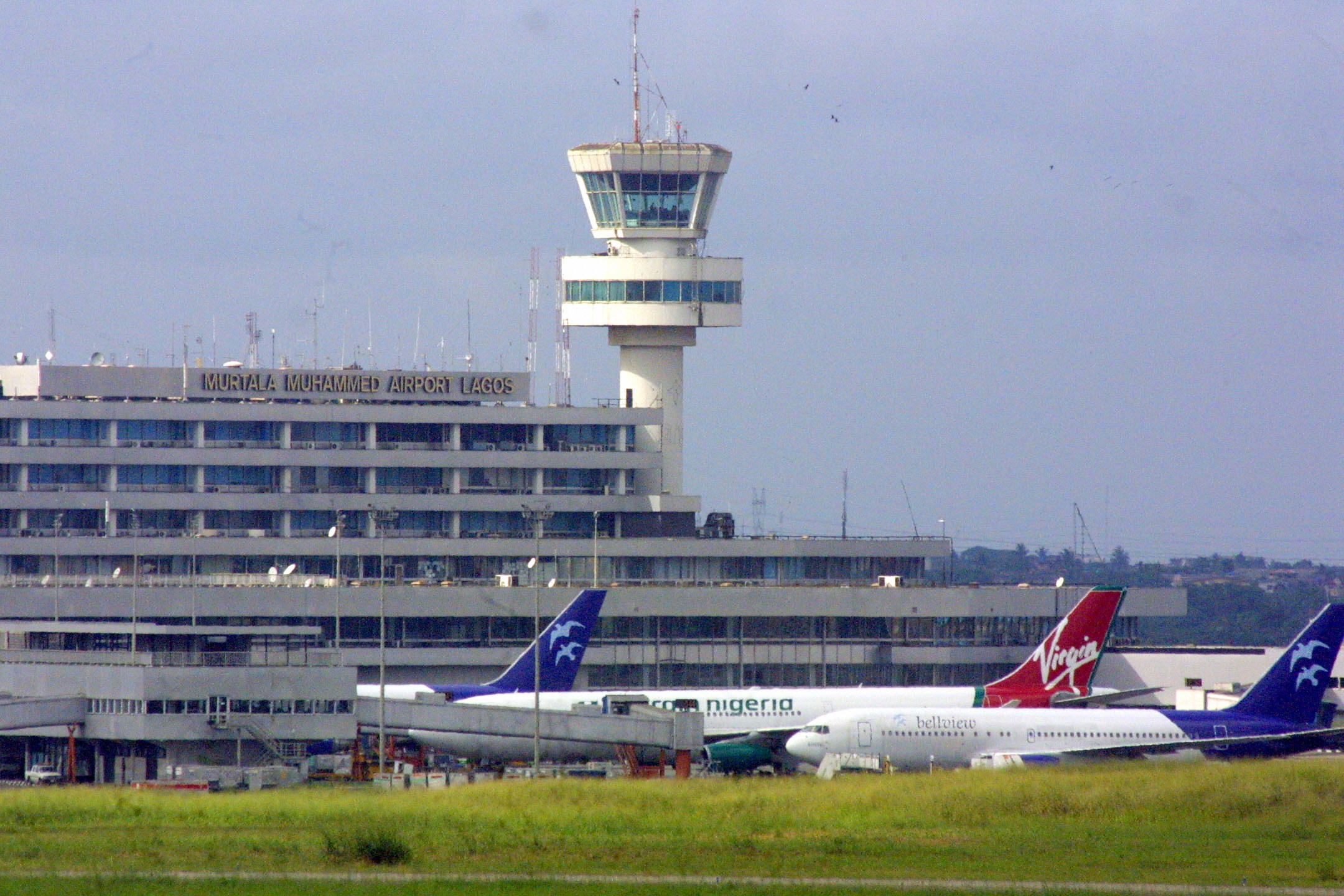
The cost of airfares on some domestic routes has jumped by about 150 per cent, crossing N300,000, as travellers now experience an astronomical rise in air ticket rates due to the high passenger volume associated with the Yuletide, among others.

Checks by The PUNCH showed that the hike in airfares was particularly on the South-South and South-East routes. These routes have high patronage, as most domestic air movements during the festive period are to these areas.

Usually, during the Yuletide rush, airfares are raised due to the high demand for tickets. But this season, passengers say prices of air tickets are out of reach following various economic challenges. Operators told our correspondent that the shortage of aircraft further compounded the airfare hike.

Before the festive period, air tickets on domestic routes hovered around N120,000. But an analysis of domestic airfares on the websites of airlines on Tuesday showed that ticket costs, particularly to the South-South and South-East regions, have increased by about 150 per cent compared to what the prices were before the Yuletide.

A flight search on the booking platform of Air Peace showed that a one-way economy ticket from Lagos to Asaba in Delta State moved from about N120,000 to over N300,000. The airline, between December 24 – 29, put the same ticket at N337,500.

Also, Delta State–bound passengers from Abuja will buy tickets from the airline for N335,500 between 23 – 28  December of this year. But the price may drop to N240,000 between 29 – 31 of the same month.

However, Aero Contractors offered a seat for N238,452 to Asaba on December 24, 2025. United Nigeria Airlines will also fly Lagos to Asaba at N399,999 and fly Abuja to Asaba between December 22 – 26 at prices ranging from  N335,499 and N360,499.

Findings further showed that Air Peace may only fly between Lagos and Enugu from December 28 – 29  for prices ranging between N335,500 and N430,700. The airline will also sell its ticket for N335,500 from December 24 – 28, and sell for N240,200 on the 29th of the same month for domestic passengers flying from Abuja to Enugu.

See also  Out-of-school children, fertile ground for B’Haram recruitment – Obasanjo

Lagos to Calabar on Aero Contractors will cost between N187,976 and N151,786 between December 22 – 24, while United Nigeria will sell a seat on its Lagos–Benin flight for N335,499 between December 22 – 30, but it increased the price by N10,000 on December 31.

Air Peace will sell its Lagos–Port Harcourt ticket for N335,500 between the 23rd–29th of the month.

Most dramatic flights are within a one-hour range. For instance, Asaba and Benin are about 40 minutes by air and about four hours by road.

Many Nigerians prefer air travel not only because it is faster but also because it helps them avoid security challenges across the country.

Lagos–Anambra on December 17, on United Nigeria Airlines will cost N399,999. From December 18 – 21 have been sold out. For Owerri-bound passengers from Lagos on the UNA flight, prices fluctuate between N335,499 and N499,998 from December 16, 2025.

Following the new price surge, some passengers are now considering travelling by road to their destinations as an alternative amidst the insecurity currently ravaging the country. Meanwhile, aside from the lack of adequate aircraft to operate, operators also lament multiple taxation as another reason for the hike in airfares.

Experts in the industry ascribed one of the reasons for the aircraft shortage to maintenance hiccups. Many of the airlines’ planes are parked in different Maintenance, Repair, and Overhaul hangars scattered abroad.

In a recent paper, Charles Grant, Chief Financial Officer, Aero Contractors, said Nigerian airlines use only 38 serviceable aircraft—one of the clearest signs that the aviation system requires intervention.

He blamed the low number of aircraft on multiple charges and unfriendly government policies, appealing to the government to stop seeing aviation as a revenue-generating sector and instead reinvest funds amassed from aviation back into the sector.

See also  PDP dead, buried, controlled by APC – Dino Melaye

“Today, most Nigerian airlines operate with just four to six active aircraft, despite national demand. That’s not a choice; it’s the result of punitive economics,” Grant stated.

Also, in a dramatic turn of events, Nigeria’s largest carrier, Air Peace, disclosed that in the past weeks it has experienced several operational disruptions, resulting in flight delays and cancellations after its lessor, SmartLynx Airlines, withdrew three aircraft from its fleet unannounced after receiving payment in advance.

Chief Commercial Officer at Air Peace, Nowel Ngala, explained that the airline entered a wet-lease agreement with SmartLynx because 13 of its aircraft are currently undergoing scheduled maintenance abroad. Ngala stated that to avoid service gaps, Air Peace leased aircraft from SmartLynx in a bid to support Nigerian passengers during peak travel periods.

But he lamented that the “abrupt and unjustified withdrawal of four aircraft we wet-leased from SmartLynx Airlines caused disruptions. This withdrawal was done without prior notice, a clear violation of industry standards and of the agreement between both parties.”

He, however, assured that despite these setbacks, some of its aircraft have completed maintenance and are returning to service.

Experts speak

Speaking with our correspondent over the phone, President of the Aircraft Owners and Pilots Association of Nigeria, Dr Alex Nwuba, confirmed that airlines are currently faced with capacity shortfalls but stressed that airlines are striving to bridge the gap.

He said, “You are correct that airline capacity shortfalls often contribute to higher fares during festive periods. In the case of Nigeria this season, we have seen some disruptions. For example, Air Peace lost a number of aircraft, which reduced their daily capacity by roughly 300 seats. At the same time, however, the airline has announced the return of several aircraft, which should help to fill those gaps and at least maintain current capacity levels.

“In addition, two more airlines are expected to commence operations during this period, which will further expand available seats and improve overall industry capacity. If external challenges such as security do not interfere, the industry should fare reasonably well this year.”

See also  Tinubu unveils tax calculator to show impact on incomes

Nwuba further said passengers should expect higher fares, describing the pattern as seasonal.

“That said, consumers should still expect higher fares, as this is traditionally the seasonal pattern. Demand always rises during festive periods, and prices reflect that. Nigeria, however, stands to benefit from this increased travel activity, as it supports tourism and boosts confidence in the aviation sector. All things being equal, the outlook remains positive,” he stressed.

Former Director-General of the Nigeria Civil Aviation Authority, Harold Demuren, appealed to the Federal Government to do whatever is possible to support Nigerian operators to achieve more capacity. Demuren added that if it would entail renegotiation of some Bilateral Air Service Agreements that are one-sided against Nigerian operators, the government should not hesitate.

He said, “In BASA, both parties must benefit; it should not be one-sided. The Nigerian government needs to protect the local carriers. You can’t be wrong supporting your own. You can renegotiate your BASAs. It may be difficult, but you can renegotiate.”

Industry expert, Olumide Ohunayo, described the situation as seasonal but appealed to the airlines to pay attention to airline staff so as to get the best from them in handling the passenger volume that the season brings professionally.

“This is seasonal, but I can only greet airline operators who are working at this time. However, the season comes with its attendant challenges, and airlines must pay attention to passengers and airline staff members, too. Because it is when they are well taken care of that they will also handle passengers professionally as expected,” he said.

punch.ng

FOLLOW US ON:

FACEBOOK

TWITTER

PINTEREST

TIKTOK

YOUTUBE

LINKEDIN

TUMBLR

INSTAGRAM

Continue Reading
Click to comment

Leave a Reply

Your email address will not be published. Required fields are marked *

Business

VIDEO: Stop Buying Rolls-Royce, Use The Money To Build Industries Instead – Dangote Tells Wealthy Nigerians

Published

on

Olarenwaju disclosed that Jonathan betrayed a gentleman’s agreement with Atiku, hence the former Vice President moved against him in 2015.

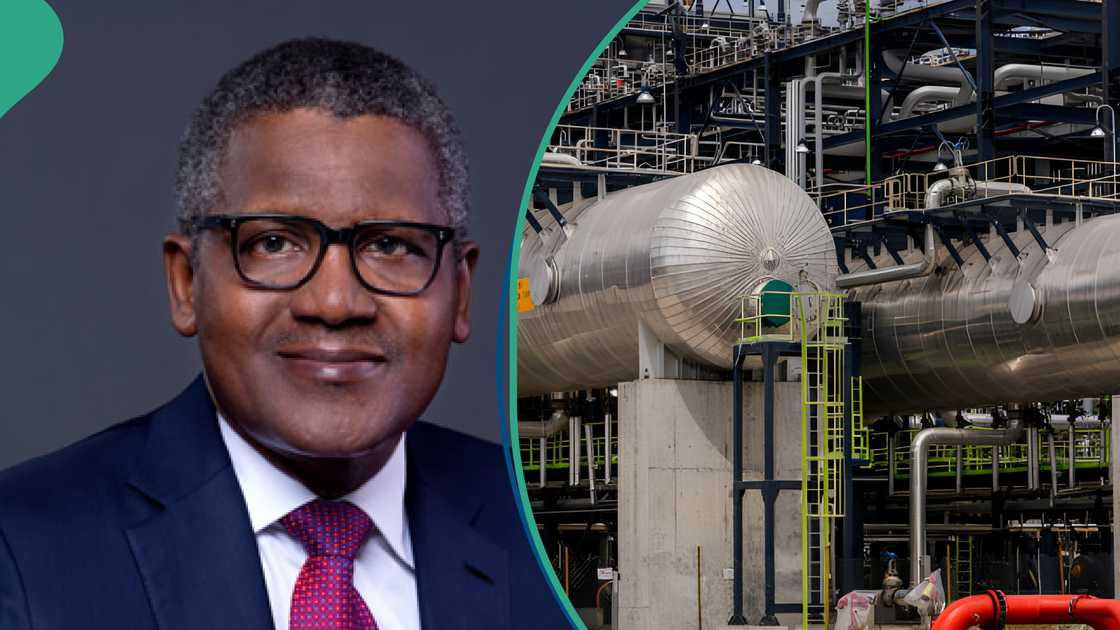
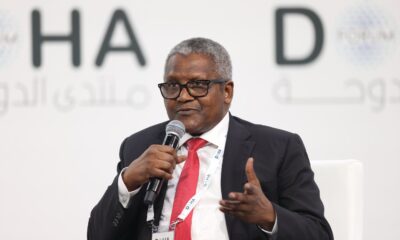
Aliko Dangote, Chairman of Dangote Group, has urged Nigeria’s elite to channel the money spent on luxury items like Rolls-Royce cars and private jets into building industries that boost economic growth and generate jobs.

Speaking with The PUNCH after a meeting with President Bola Tinubu at Aso Rock Villa on Saturday, Dangote lamented the culture of extravagant consumption, stressing that the nation’s development depends heavily on the responsibility of local investors.

“If you look at the Nigerian policy before, during the military, everybody from the president downwards used Peugeot 504. That was the highest. So, when a president is using 504, you cannot come as a commoner, as a businessman, or whoever you are, to be using Rolls-Royce,” he said.

Dangote criticised the proliferation of private jets at Nigerian airports, arguing that such wealth would be better invested in productive ventures.

“If you have money for a Rolls-Royce, you should go and put up an industry in your locality or anywhere in Nigeria where there is a need.

“It pains me when I go to the local airport, whether here or in Lagos, and even finding a parking space for your plane is impossible because everybody has a private jet. Those private jets could be in industries creating jobs,” he added.

Dangote emphasised that national development requires a strong focus on manufacturing and agriculture, supported by robust banking systems.

He also highlighted the urgent need for job creation, noting Nigeria’s population grows by 8.7 million babies every year, which demands significant investments in infrastructure and power.

See also  IMF raises Nigeria’s growth to 3.9%

“Some people may not know the position of the country as we speak. Population growth is 8.7 million babies every year. So we need to deliver power, infrastructure, and other essentials,” he said.

The billionaire also framed tax compliance as both a civic duty and a partnership with the government.

“When you have a company, the number one shareholder is the government. We need an enabling environment from the government, and as corporate citizens, we must pay our taxes. I cannot cheat my partner. If I pay tax, children can go to school and hospitals can function. The government has huge demands, and we must do our part,” he added.

The businessman dismissed what he described as over-reliance on foreign investors, insisting that no external investor would commit to Nigeria without strong domestic participation.

He said, “We should stop calling for foreign investors. No foreign investor will come here unless domestic investors are active. Good policies, governance, and rule of law attract local investors, and foreign investors follow to partner or establish their own operations.

Dangote reiterated that industrialisation must be led by Nigerians, saying “We must industrialise our country. Nobody will do it but us. Once we industrialise, foreigners will partner with us or invest in Nigeria. We must remove both real and perceived risks to investment.”

The businessman also revealed that the Dangote Refinery would soon produce surplus volumes, with projections indicating that by February, it will supply 15–20 million litres more than Nigeria needs.

This will allow exports to neighbouring countries, reducing fuel scarcity across West Africa.

See also  Out-of-school children, fertile ground for B’Haram recruitment – Obasanjo

“We are working to make Nigeria the refining hub of Africa. African countries import products, and we want to ensure that whatever we consume is produced locally,” he said.

Earlier in October, Dangote had also encouraged Nigerians to embrace homegrown products as a way to strengthen the economy and create jobs.

FOLLOW US ON:

FACEBOOK

TWITTER

PINTEREST

TIKTOK

YOUTUBE

LINKEDIN

TUMBLR

INSTAGRAM

Continue Reading

Business

NNPC serviced $3bn loan with N991bn crude – Report

Published

on

The Nigerian National Petroleum Company Limited has serviced part of its $3bn forward-sale loan from the African Export-Import Bank with crude oil worth N991bn in 2024, according to its 2024 financial statement report. The repayment was tied to Project Gazelle, a forward crude oil supply agreement signed in 2023.

On August 17, 2023, The PUNCH reported that the NNPC announced it had secured a $3.3bn emergency loan to repay crude oil obligations from Afreximbank. It explained that the loan would be used by the oil company to support the Federal Government in stabilising Nigeria’s exchange rate.

“The NNPC Ltd. and AFREXIM bank have jointly signed a commitment letter and Termsheet for an emergency $3bn crude oil repayment loan,” NNPC said in a statement.

“The signing, which took place today at the bank’s headquarters in Cairo, Egypt, will provide some immediate disbursement that will enable the NNPC Ltd. to support the Federal Government in its ongoing fiscal and monetary policy reforms aimed at stabilising the exchange rate market,” it added.

Under the deal, NNPC committed to deliver 90,000 barrels of crude oil per day from Production Sharing Contract assets to back a funding facility. According to the 2023 financial statement, a drawdown of $2.25bn had already been achieved by 31st December 2023, with principal repayment scheduled to begin in June 2024.

The funding carried an interest rate of 3-month LIBOR plus 6.5 per cent, with a 6 per cent margin and 0.5 per cent liquidity premium.

According to the 2024 financial statement, the drawdown on the facility had reached N4.9tn out of a total available N5.1tn, while N991bn worth of crude oil had been lifted in repayment, leaving an outstanding balance of N3.8tn at the end of 2024.

See also  PDP dead, buried, controlled by APC – Dino Melaye

The report read, “In December 2023, NNPC Limited entered into a forward sale agreement with Project Gazelle Funding Limited to supply 90,000 bbl. of crude oil per day from Production Sharing Contract Assets for the settlement of a 5-year N2.7tn funding.

“The funding was utilised by the company to finance an advance payment of future taxes and royalty obligations due to the federation on PSC assets managed by the Company on behalf of the Federation.

“As at 31st December 2024, a drawdown of N4.9tn has been achieved from the initial facility of N5.1tn. The interest rate for the facility is 3-month SOFA plus 6.5 per cent while the margin and Liquidity Premium of 0.5 per cent respectively. A total value of Crude Oil worth N991bn has been lifted with a balance of N3.8tn as at 31st December 2024.”

The repayment was made between June and December 2024. However, NNPC did not disclose the identity of the offtakers or exact delivery volumes fulfilled in 2024.

The Project Gazelle arrangement has become one of NNPC’s most significant forward-sale financing vehicles, following a trend of oil-backed loans designed to shore up government revenues, refinance legacy debts, and meet budgetary obligations amid limited fiscal buffers.

The PUNCH earlier reported that the NNPC Ltd is burdened with crude-backed loan obligations estimated at N8.07tn.

The liabilities stretch across multiple forward-sale and project-financing arrangements that are expected to be serviced through substantial crude oil and gas deliveries. The commitments have become a major pillar of NNPCL’s funding structure following years of fiscal pressure, volatile crude production, and declining upstream investment.

See also  FIRS, judiciary strengthen collaboration on emerging tax laws

Several of the facilities were used to refinance older debts, fund refinery rehabilitation, support cash flow, and meet government revenue obligations.

When assessed together, the company’s major crude-for-loan facilities—Eagle Export Funding (21,000 bpd), Project Yield (67,000 bpd), Project Leopard (35,000 bpd), and Project Gazelle (90,000 bpd)—represent a combined commitment of 213,000 barrels per day, in addition to separate gas-delivery obligations under the NLNG arrangement.

The volume equates to a sizeable share of Nigeria’s daily crude output, underscoring the long-term implications of these arrangements for government revenue, export allocation, and operational flexibility.

The PUNCH also reported that Nigeria’s gross profit from crude oil and gas sales plunged by N824.66bn in 2024 despite a rebound in oil production, according to figures from the Budget Implementation Report for the fourth quarter of 2024 released by the Budget Office of the Federation.

Data from the report revealed that gross profit from crude and gas sales fell to N1.08tn during the year, from N1.90tn in 2023, representing a 43.32 per cent decline.

The Chief Executive Officer of AHA Strategies and oil and gas expert, Mr Ademola Adigun, earlier linked Nigeria’s declining oil earnings to opaque crude-for-cash agreements and undisclosed loan repayments that have tied up part of the country’s crude output.

He said some of the government’s oil barrels were already committed to debt settlements and forward-sale contracts, reducing the actual volume that brought fresh revenue into the Federation Account.

Adigun said, “Some of our crude is already tied up in loan agreements. The problem is that Nigeria doesn’t know the full details of these transactions because there’s little transparency around them.”

See also  GenCos say no deal yet with FG on N4tn debt

He explained that several crude-backed projects, such as Project Gazelle, were carried out without proper public disclosure or parliamentary scrutiny.

He added that the Nigeria Extractive Industries Transparency Initiative should strengthen its audits to determine how much of the country’s crude is being used for debt repayment or swap transactions.

punch.ng

FOLLOW US ON:
FACEBOOK

TWITTER

PINTEREST

TIKTOK

YOUTUBE

LINKEDIN

TUMBLR

INSTAGRAM

Continue Reading

Business

Yuletide: Dangote assures Nigerians of stable fuel supply

Published

on

Chairman of Dangote Group, Aliko Dangote, on Friday said Nigerians will no longer experience fuel queues during the Christmas and New Year seasons.

Briefing State House correspondents after meeting with President Bola Tinubu at the Aso Rock Villa, Abuja, Dangote said his refinery has formally notified the Nigerian Midstream and Downstream Petroleum Regulatory Authority of its readiness to deliver 50 million litres of Premium Motor Spirit daily, far above national consumption.

He said, “Historically, Nigeria has battled fuel queues since 1972. For the first time, we are eliminating those queues, not through imports but by producing locally.

“Even when we were servicing the refinery, there were no queues. I can assure you that queues are now history.”

Dangote stated that the refinery will soon produce surplus volumes, adding that by February, it will supply 15–20 million litres more than Nigeria needs.

This, he argued, will allow exports to neighbouring countries, reducing the incidence of fuel scarcity across West Africa.

The industrialist also disclosed that domestic manufacturers, especially in the plastics industry, will now enjoy reliable access to locally produced feedstock, ending years of reliance on imports estimated at $400m annually.

Dangote also announced an expansion programme that will raise refinery capacity to 1.4 million barrels per day by 2028, surpassing India’s Reliance refinery, the world’s largest, at 1.25 million barrels per day.

“We have already signed the necessary agreements.

“Construction piling begins before the end of January, and we will deliver on schedule,” he announced.

See also  Fuel scarcity looms as NUPENG begins nationwide strike Monday

He revealed plans to scale up the company’s urea production to 12 million tonnes annually, positioning Nigeria to overtake Russia and Qatar as the world’s leading producer.

“Our goal is to use our fertilizer company to supply the entire African continent,” Dangote said.

Dangote attributed the recent drop in petrol and diesel prices to increased competition and reduced smuggling.

“Prices are going down because we must compete with imports.

“Luckily, smuggling has dropped significantly, though not completely,” he explained.

He noted that the refinery business is a long-term national investment, saying, “We’re not here to recover $20 billion overnight.

“The legacy I want to leave is that whatever Nigerians need, fuel, fertiliser, power, we will be part of delivering it.”

Dangote further highlighted logistics constraints affecting Nigeria’s solid minerals sector, particularly the congestion of major ports.

“Apapa is full. Tin Can is full. Lekki is mainly for containers.

“You cannot export coal or copper if you have nowhere to ship from,” he noted.

To curb this, he explained that the Group is developing what would become West Africa’s largest deep-sea port at Olokola, expected to be completed in two to two-and-a-half years.

The Kano-born businessman expressed support for the Tinubu administration’s naira-for-crude initiative, describing it as a patriotic move to strengthen the economy, although he acknowledged pushback from international oil companies.

According to him, “It’s a teething problem, but it will be resolved, either through legislation or administrative action.”

On concerns about global competition, Dangote maintained that the refinery will thrive.

He said, “What we want is to make Nigeria the refining hub of Africa. All African countries import fuel. We want what we consume to be produced here.”

See also  FG unveils agric reforms, moves to create 21m jobs

He also endorsed the government’s Nigeria-first industrial policy and urged wealthy Nigerians to channel resources into productive investment rather than luxury spending.

“If you have money for a private jet, invest in industries and create jobs,” he stated, adding that domestic investors must drive industrialisation to attract foreign capital.

Dangote acknowledged past hurdles, policy instability, smuggling, and factory closures, but expressed optimism that the country is now on a stable path toward sustainable industrial growth.

“Domestic investors must lead the way. Once they do, foreign investors will follow.

“Nobody advertises a good restaurant; when the food is good, word spreads,” he explained.

He described his meeting with President Tinubu as a routine consultation on the economy and business environment, noting that it was “a very fruitful meeting.”

punch.ng

FOLLOW US ON:

FACEBOOK

TWITTER

PINTEREST

TIKTOK

YOUTUBE

LINKEDIN

TUMBLR

INSTAGRAM

Continue Reading

Trending