Connect with us

Business

PoS takeover: FG ends cash payments in MDAs

Published

on

The Federal Government has outlawed the use of physical cash for the payment of revenue and directed Ministries, Departments, and Agencies to install Point of Sale terminals within 45 days.

The directive formed part of four Treasury circulars issued by the Office of the Accountant-General of the Federation and obtained by The PUNCH on Monday. In the documents, the Accountant-General, Shamseldeen Ogunjimi, said all payments to the Federal Government must now be made electronically and routed through channels approved by the Treasury.

“All payments to government must be made through electronic channels approved by the Office of the Accountant-General of the Federation and integrated into the appropriate Treasury Single Account,” the circular read, warning that the continued acceptance of physical cash was prohibited.

“In view of the above, it is hereby directed that collections and/or acceptance of physical cash (in Naira or other currencies) for all revenues due to the Federal Government is strictly prohibited. All revenue collections, for and on behalf of the Federal Government, must be made via electronic processing,” the circular stated.

The first circular, titled ‘Enforcement of No Physical Cash Receipt Policy for All Federal Government Revenue Transactions’, dated November 24, 2025, said the government was alarmed at the “continued physical cash collection” at MDA revenue points despite existing rules on e-payment and the Treasury Single Account.

It said physical cash collection violated extant policies and “weakens the integrity of Federal Government e-collection and e-payment systems.” The circular directed all MDAs and Federal Government Owned Enterprises to immediately sensitise staff and the public on the ban and to display notices reading “NO PHYSICAL CASH RECEIPT” and “NO CASH PAYMENT” at all revenue collection points.

See also  House faces pressure to summon Gbajabiamila for fake PFIPC agency probe

It added that any MDA currently collecting cash must, within 45 days, deploy functional POS terminals or other approved electronic devices at all locations. To enforce compliance, it warned that accounting officers would be held responsible for any breach.

A second circular, dated November 25, 2025, and titled ‘Immediate Cessation of Direct Deductions on MDAs’ Dedicated Collection Systems’, focused on unauthorised deductions made by MDAs through customised payment platforms.

According to the document, the Treasury observed that MDAs were using front-end applications linked to various Payment Solution Service Providers through which charges, fees, and commissions were deducted before the net amount was remitted to the Treasury Single Account.

It said the practice violated existing regulations and had resulted in “significant revenue leakages, which undermine the Federal Government’s efforts to achieve fiscal transparency.” The circular ordered an immediate halt, saying all revenues must be remitted to designated TSA or Sub-TSA accounts “without any deduction(s).”

It stressed that any fees arising from service provision must now be paid directly from Treasury accounts rather than being deducted at source. All existing portals and PSSPs used for revenue collection must also be regularised with the OAGF on or before December 31, 2025.

MDAs involved in public-private partnerships were advised to seek further guidance from the Treasury. The document warned that non-compliant MDAs would have their access to the Government Integrated Financial Management Information System and TSA accounts disabled.

A third circular, titled ‘Adoption of the Federal Treasury e-Receipt (FTe-R)’ and dated November 26, 2025, introduced a mandatory national e-receipt system. The circular said the Federal Treasury would, from January 1, 2026, begin issuing a unified electronic receipt for all Government payments.

See also  Meter costs spark DisCos–FG showdown on tariffs

It added that only the centrally-issued FTe-R would be recognised as valid proof of federal transactions. “With effect from 1st January 2026, the Treasury will commence the issuance of FTe-R,” the circular stated.

The receipts will be issued through the Revenue Optimisation platform and delivered electronically via channels selected by each MDA. The FTe-R will serve both as a receipt for the payer and as official proof of revenue collection for the government entity.

The fourth circular, dated November 27, 2025, was titled ‘Rollout and Implementation Guidelines on the Adoption of the Revenue Optimisation (RevOP) Platform’. It said the government was now deploying a digital platform to improve visibility of revenue collections, streamline billing, and allow real-time monitoring of accounts held by MDAs.

RevOP has been adopted as the approved service-wide platform for end-to-end revenue optimisation. According to the document, it would provide unified automation of billing, reconciliation, and treasury visibility, and integrate with TSA, GIFMIS, CBN, NIBSS, FIRS, and revenue-collecting banks.

Each MDA is required to nominate three officers to serve as RevOP focal personnel within seven working days and ensure integration of existing financial systems with the platform.

The circular added that only Payment Solution Service Providers licensed by the Central Bank and recommended by NITDA and approved by the OAGF would be allowed to operate. All PSSPs currently used by MDAs must connect to the platform for “instant harmonisation of Government collections.”

The Treasury also ordered MDAs to submit full details of all local and foreign currency accounts and ensure compliance within 60 days. All four circulars were signed by Ogunjimi, who directed accounting officers, finance directors, and internal auditors to give the documents the widest circulation and ensure strict compliance.

See also  FG reaffirms partnership with Taraba to unlock economic potential

The measures represent some of the most far-reaching changes to federal revenue administration since the introduction of the Treasury Single Account a decade ago.

Earlier in March 2025, The PUNCH reported that the Federal Government unveiled a new payment platform named Treasury Management & Revenue Assurance System, which is designed to streamline and manage federal revenue collections and payments across ministries, departments, and agencies, including those benefiting from donor funds, trust funds, social security funds, and special funds.

According to a memo seen by The PUNCH, the first phase would cover payments and collections for the naira component only. It would also enable the OAGF and MDAs to generate bank statements, track balances, and activate automatic deduction and remittance of taxes associated with vendor and contractor payments, including VAT, Withholding Tax, and Stamp Duty.

The second phase, expected to commence on June 1, 2025, would cover collections and payments involving foreign exchange and integration with MDA Enterprise Resource Planning systems.

punch.ng

FOLLOW US ON:

FACEBOOK

TWITTER

PINTEREST

TIKTOK

YOUTUBE

LINKEDIN

TUMBLR

INSTAGRAM

Continue Reading
Click to comment

Leave a Reply

Your email address will not be published. Required fields are marked *

Business

Alakija, Okoli urge women to create value, make impact

Published

on

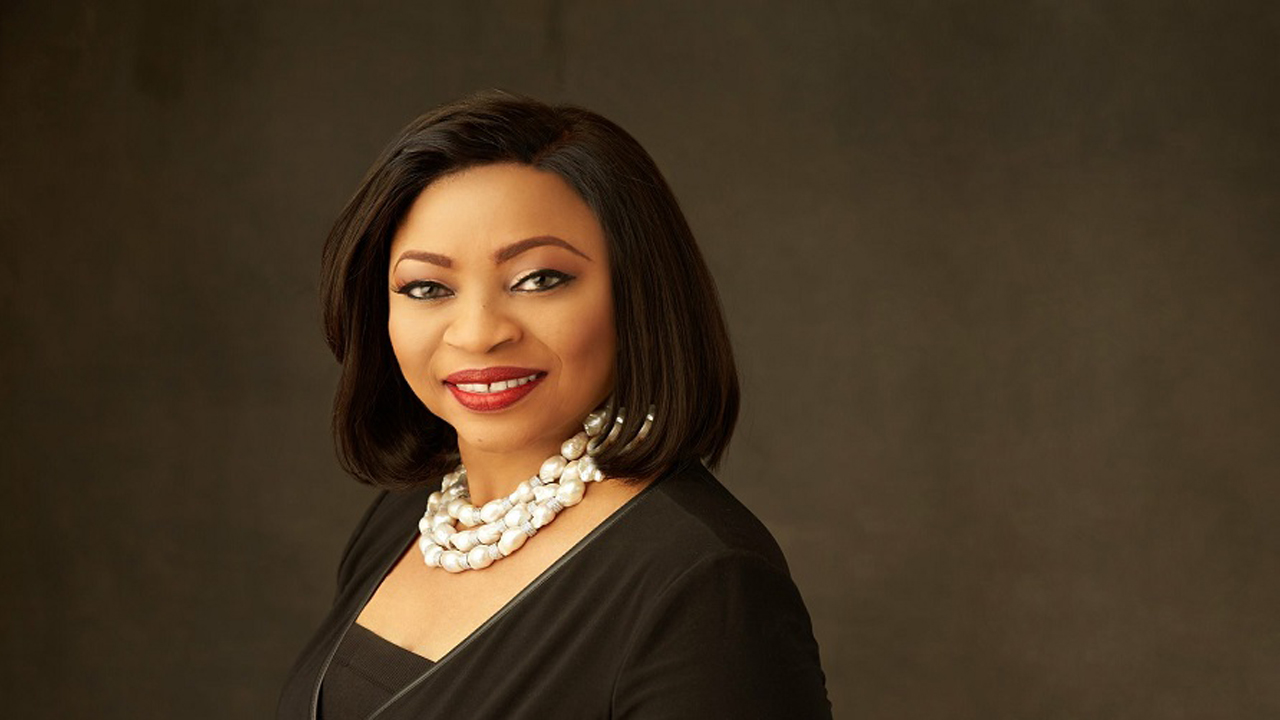
Businesswoman and philanthropist, Apostle Folorunso Alakija, has urged Nigerian women to move beyond having a voice to leading the transformation of society.

Alakija, who spoke as the keynote speaker at the 10th Voice of Women Conference and Awards in Lagos on Tuesday, said women must ensure that their voices translate into solutions and engender lasting change.

Alakija said, “A voice by itself is only potential. A voice may carry an idea; your voice may carry a solution; your voice may carry a business; your voice may carry wisdom that can change a young woman’s life. But if that voice remains inside you, the impact remains trapped.”

She argued that finding one’s voice was only the beginning, adding that women needed capacity to make meaningful use of opportunities.

“God can open a door, but we must develop the capacity to walk through it and be effective once we enter,” she said.

Alakija, who recalled her journey from office administration and banking into fashion, oil and gas, philanthropy and leadership, said women must progress from capacity to influence and ultimately to impact.

“Visibility is not the same as influence. You can be seen and still be insignificant. You can be popular and still not add value. You can have a title and still not be a leader. True influence comes when your presence makes a difference,” she said.

She urged women to use their success to address social problems, mentor younger women and provide solutions to communities, stressing that Nigeria needed women who would accept responsibility for the impact of their leadership.

“Nigeria doesn’t need successful women alone. It needs women who will use their success to solve problems,” Alakija said.

See also  FG offers land to investors for mass housing projects

She added, “The question is no longer ‘What have we achieved?’ The question is, ‘What will remain because we were here?’”

Also speaking at the event, founder of Emzor Pharmaceutical Industries, Dr Stella Okoli, said women could use their voices to build businesses and industries that would contribute to national development.

Okoli, who spoke on “Voice to Value: Building Enterprise Industrial Enterprise that Empowers and Includes Nigeria,” said her life had been a journey “from vision to enterprise, from enterprise to value, from value to nation-building.”

She said, “If there is one message I want to leave with you today, it is that a voice becomes truly powerful when it creates value.”

According to her, a voice that builds a business, employs people, creates industries, solves national problems and leaves something for the next generation becomes “a force of transformation.”

Okoli, who founded Emzor in 1985 after starting a retail pharmacy business, recalled that she obtained a N6,000 loan from FirstBank to begin local production of Emzor Paracetamol.

She urged young women not to wait until they had everything before starting their businesses.

“You do not need to begin with everything, but you need to begin with something,” she said.

“Your first office may be a room, your first employee may be one person, and your first product may only be one product. But do not allow yourself to remain there.”

The pharmacist also urged the government to support local pharmaceutical manufacturers and young entrepreneurs, saying Nigeria should develop the capacity to produce the raw materials needed for medicines.

Earlier, founder of the Voice of Women Empowerment Foundation and Executive Director of Women Radio WFM 91.7, Toun Okewale-Sonaiya, in her welcome address, said the platform had moved from providing women with a space to speak to creating opportunities for their voices to produce tangible results.

Sonaiya said, “We have learned that voice is only the beginning, and real change happens when the voice becomes influence, when ideas become action, and when our action transforms lives.”

See also  States kick as Senate moves to amend Electricity Act; read details

She said women now needed more than a platform, noting that they required “opportunity, real access, resources, representation, and the power to turn their own voice into impact.”

The founder said the conference had, over the past decade, evolved from discussions around economic empowerment, finance, agriculture and technology to issues including gender-based violence, governance and inclusion.

She also called for grassroots women living with disabilities to be represented in decision-making spaces.

“Women do not need to be spoken for. Women need to be heard and be empowered to shape solutions,” she said.

Sonaiya also used the occasion to draw attention to the story of Oluwatobi Raji, a survivor of trauma, rape, drug abuse, homelessness and teenage marriage who now educates more than 150 out-of-school children in Mowo, Ogun State.

She appealed for support to enable Raji to secure a permanent facility for the children.

“I am hoping that someone in this room has the resources, the connections, and the heart to say, ‘I will help Oluwatobi Raji build a permanent school for these children,’” she said.

Former First Lady of Ekiti State, Erelu Bisi Adeleye-Fayemi, urged women to raise daughters who would dream and aspire while raising sons who would respect women and understand responsibility.

Fayemi said women should not continue to participate in systems that undermine them, declaring, “Women have suffered enough. Girls are going through too much already. Women, we should stop investing in our own oppression.”

She also urged women to demand dignity, mutual respect, confidence and responsibility in relationships and to support other women rather than undermine them.

See also  FG reaffirms partnership with Taraba to unlock economic potential

The Deputy Governor of Ogun State, Noimot Salako-Oyedele, called on women to support and mentor one another, saying their progress should create opportunities for others.

“As we rise, lift as you rise. It is very important so that as one goes, we do not go alone,” she said.

Salako-Oyedele, who recalled her relationship with Sonaiya since she became deputy governor in 2019, said Women Radio had created a platform for women to bring their experiences and aspirations into public conversations.

She said more still needed to be done in areas including economic opportunity, healthcare, education and women’s participation in governance.

Veteran broadcaster, Bimbo Oloyede, who recalled Sonaiya’s early efforts to establish a radio platform for women, urged the organisers to take the Voice of Women Conference beyond Nigeria.

Speaking, FirstBank Chief Executive Officer, Segun Alebiosu, represented by Helen Willie, said women’s voices needed to be backed by access to finance, business knowledge, technology, markets and networks.

He noted that women-owned businesses required support at different stages of growth, including assistance with record-keeping, cash flow, pricing, governance and access to larger markets.

“Voice is not enough. For women’s voices to create sustainable impact, they must be supported with access to finance, business knowledge, technology, markets, and strong networks,” he said.

Source: punchng.com

FOLLOW US ON:

FACEBOOK

TWITTER

PINTEREST

TIKTOK

YOUTUBE

LINKEDIN

INSTAGRAM

Continue Reading

Business

Consolidated Hallmark, CHI Life Assurance seek deeper broker partnerships

Published

on

Consolidated Hallmark Insurance Limited and CHI Life Assurance Limited have called for stronger collaboration among insurers, brokers and other industry stakeholders to accelerate the growth of Nigeria’s insurance sector.

The companies, both subsidiaries of Consolidated Hallmark Holdings Plc, made the call at the Ibadan Professional Brokers Forum, where they engaged insurance brokers on the need to build a more customer-focused industry.

The companies said closer cooperation across the insurance value chain would be critical to understanding customers’ changing needs, developing relevant products and rebuilding public confidence in insurance.

They emphasised the role of brokers as an important link between insurers and policyholders, particularly in identifying emerging risks and ensuring that insurance solutions are properly matched with customers’ need

Leading the charge were Managing Director/Chief Executive Officer of CHI Limited, Mrs. Mary Adeyanju, and Managing Director/Chief Executive Officer of CHI Life Assurance Limited, Mr. Tope Ilesanmi. Both called for deeper cooperation, bolder innovation and a sharper focus on the customer.

Speaking on business continuity, Adeyanju explained that insurance helps companies stay operational and recover after disaster strikes. “Business continuity is about ensuring that a company continues in business even after experiencing a catastrophe,” she said.

She placed brokers at the heart of the value chain due to their closeness to policyholders. “Brokers are the first respondents when a claim occurs. You are the first point of contact, and you know the reality of insurance,” she noted.

Adeyanju urged brokers to partner with underwriters to spot market gaps and shape products that solve real problems. “We need to develop products that speak to the needs of people, not just products created to sell insurance,” she said.

She also challenged the industry to reshape its image. “The insurance industry needs to get out of its shell. Underwriters and brokers must work together towards changing the history and narrative of the insurance industry,” she said. Brokers, she added, should help policyholders understand their coverage, their responsibilities and the true value of insurance.

See also  Refinery IPO: Dangote woos Nigerians as investors flood NGX

On financial strength, she reassured participants that CHI Limited stands on solid ground after recapitalisation, with N52bn in capital and a readiness to work flexibly with brokers.

Ilesanmi traced CHI Life’s evolution from a micro life insurance company into a full life assurance business. He noted that its capital rose from N10bn to N11.2bn after recapitalisation, and that the company paid out about N1bn in claims over the past six months. “This reflects our commitment to meeting our obligations to our customers,” he said.

He pointed to Rent Secure as proof that gap driven innovation works. “We need to look for the gaps in the market and build products around those gaps. Rent Secure is an example of a product created to meet a specific need,” he explained.

His closing thought captured the spirit of the forum: “The future of insurance will not be built by insurance alone. It will be built through stronger partnerships between insurers and the insured, better products, stronger service, deeper customer understanding and, above all, trust.”

Both leaders highlighted the wider capabilities of the Consolidated Hallmark Holdings Plc Group, whose companies also offer financial services and health insurance solutions.

The forum underscored a shared conviction: stronger collaboration between brokers and underwriters improves customer experience and drives growth across Nigeria’s insurance industry. CHI and CHI Life reaffirmed their commitment to working with brokers and other stakeholders to raise service standards, deliver customer focused solutions and deepen trust in insurance.

Source: punchng.com

FOLLOW US ON:

FACEBOOK

TWITTER

PINTEREST

TIKTOK

YOUTUBE

LINKEDIN

INSTAGRAM

Continue Reading

Business

World Bank raises Nigeria growth forecast

Published

on

The World Bank has raised its 2026 growth forecast for Nigeria to 4.3 per cent, citing improving macroeconomic stability, recovering investor confidence and a gradual revival in private investment, but warned that rising government spending ahead of the 2027 elections could weaken the momentum of recent economic reforms.

The projection was contained in the bank’s October 2026 Africa Economic Update, titled Building AI Readiness, released on Tuesday. The report also raised Nigeria’s growth forecast for 2027 and 2028 to 4.4 per cent annually, compared with an estimated 4.0 per cent expansion in 2025.

“Economic activity in Nigeria is projected to strengthen from 4.0 percent in 2025 to 4.3 percent in 2026, before edging up to 4.4 percent annually in 2027–28,” the bank said.

The global lender attributed the expected improvement to greater macroeconomic stability, strengthening investor confidence and a gradual recovery in private investment.

The upgraded forecast follows stronger-than-expected economic performance in the second quarter of 2026, when Nigeria’s real Gross Domestic Product expanded by 4.43 per cent year-on-year, compared with 4.23 per cent in the corresponding period of 2025.

Agriculture expanded by 4.39 per cent, up from 2.82 per cent a year earlier, while services grew by 4.6 per cent. Real oil GDP rose by 7.3 per cent, although the sector contributed only 0.2 percentage points to overall growth.

Industrial growth, however, slowed sharply to 4.0 per cent from 7.5 per cent in the second quarter of 2025, highlighting uneven growth across sectors.

The World Bank identified financial services, information and communications technology and real estate as major growth drivers, supported by digitalisation and resilient domestic demand. Agricultural activity is also expected to recover in 2026, although the bank projected weaker momentum in the industrial sector because of softer growth in oil production and manufacturing.

Despite the improved outlook, the World Bank warned that rising government spending ahead of Nigeria’s 2027 general elections could undermine efforts to stabilise the economy and weaken the momentum of reforms.

See also  Meter costs spark DisCos–FG showdown on tariffs

Highlighting risks to Nigeria’s outlook, the Washington-based institution said, “Nevertheless, the outlook remains subject to significant downside risks, including tighter global financial conditions, a prolonged conflict in the Middle East, insecurity, climate-related shocks, disruptions to oil production, and rising pre-election spending ahead of the 2027 elections.”

It added, “These factors could weaken reform momentum and erode the social consensus needed to sustain ongoing macroeconomic adjustment efforts.”

The warning comes as Nigeria approaches the 2027 election cycle following a series of major economic reforms implemented by the Federal Government since 2023, including the removal of petrol subsidies, foreign exchange market reforms and efforts to raise government revenue.

The World Bank noted that sustaining politically difficult reforms could become harder as elections approach, particularly when households are still struggling with high living costs.

It said several governments across sub-Saharan Africa had recently undertaken difficult measures, including “fuel subsidy removal, exchange rate liberalisation, fiscal consolidation, and efforts to strengthen domestic revenue mobilization.”

According to the bank, reform momentum could become harder to sustain ahead of elections or during periods of intense political competition. It warned that the danger went beyond a temporary slowdown in reforms, noting that public backing could weaken if painful measures failed to produce visible improvements in living standards within a reasonable period.

The bank said this could reduce the willingness of both governments and citizens to support similar reforms in the future and potentially increase pressure for populist economic policies.

The World Bank also expects Nigeria’s inflation rate to maintain a downward trajectory following monetary tightening, exchange-rate stabilisation and improving supply conditions.

It projected inflation to fall from 23.0 per cent in 2025 to 15.7 per cent in 2026 and further to 12.2 per cent by 2028. “Lower inflation is expected to support household purchasing power and contribute to a gradual reduction in poverty,” the report said.

However, the bank cautioned that faster economic growth alone may not be enough to significantly improve living standards, as the pace at which poverty is declining remains weak because growth in income per person continues to trail overall economic expansion.

See also  Dangote resumes naira petrol sales, hikes price by N140

It said poverty reduction could remain constrained by elevated fuel prices associated with the conflict in the Middle East, which have placed a bigger burden on low-income households.

This means that even as headline economic indicators improve, households continue to feel pressure from high living costs, particularly where wage growth and employment opportunities fail to keep pace with inflation and other expenses.

The bank also warned governments against fiscal slippages as political pressures increase, saying elevated debt-service obligations continued to restrict fiscal space while inflation remained vulnerable to exchange-rate depreciation, food-price shocks and loose fiscal policy.

It stressed that preserving central bank independence and avoiding monetary financing of government deficits would remain critical to keeping inflation expectations anchored as African economies navigate approaching election cycles and renewed global economic uncertainty.

The Governor of the Central Bank of Nigeria, Olayemi Cardoso, earlier said the CBN was prepared to contain excess liquidity as Nigeria approaches another election cycle.

“We are ready,” he said during a press briefing at the end of the 307th meeting of the CBN’s Monetary Policy Committee in Abuja, explaining that the bank had analysed previous election cycles and developed different scenarios.

He said the CBN would monitor currency in circulation, banking system liquidity, monetary aggregates and foreign exchange demand. “We will proactively deploy any tools and instruments to mop up any excess liquidity,” Cardoso said. “We will not allow ourselves to be caught unaware in any form.”

Meanwhile, the World Bank said Nigeria was among the African economies whose growth outlook had been revised upwards, reflecting the effects of economic reforms and improvements in macroeconomic management.

See also  Troops kill 274 insurgents as Nigeria records 882 attacks

More broadly, the World Bank raised its growth projection for sub-Saharan Africa to 4.3 per cent in 2026, up from 4.1 per cent in 2025 and 0.3 percentage points higher than its April projection.

Nigeria was among nearly three-quarters of countries in the region whose 2026 growth forecasts were upgraded. World Bank Chief Economist for Africa, Andrew Dabalen, said the region had demonstrated resilience despite a challenging global environment, including higher energy prices linked to disruptions arising from the Iran conflict.

However, the bank cautioned that the region must do more to convert economic expansion into broad-based improvements in living standards.

The World Bank said sustained reforms, increased private investment, improved infrastructure, stronger human capital and higher productivity would be critical to turning macroeconomic stability into meaningful gains for households.

It also urged African economies to accelerate the adoption of artificial intelligence and other digital technologies as a way of raising productivity and creating new employment opportunities.

It said the continent would need to exploit emerging technologies while simultaneously addressing persistent gaps in infrastructure, skills and access to digital services.

The bank projected Nigeria’s current-account surplus to widen from 4.8 per cent of GDP in 2025 to 6.0 per cent in 2026 before narrowing to 3.4 per cent by 2028 as crude prices normalise and import demand recovers.

It also noted that Nigeria, as an oil exporter, was less directly exposed to the global energy shock than many African economies, although its capacity to withstand wider economic effects would depend on the strength of its policy buffers and institutions.

Higher crude oil prices could provide some relief by strengthening Nigeria’s fiscal and external accounts, although the benefits could be partly eroded by volatile capital flows.

Source: punchng.com

FOLLOW US ON:
FACEBOOK

TWITTER

PINTEREST

TIKTOK

YOUTUBE

LINKEDIN

INSTAGRAM

Continue Reading

Trending