Connect with us

Education

Tinubu renames Federal University of Medical Sciences Azare after Late Sheikh Dahiru Bauchi

Published

on

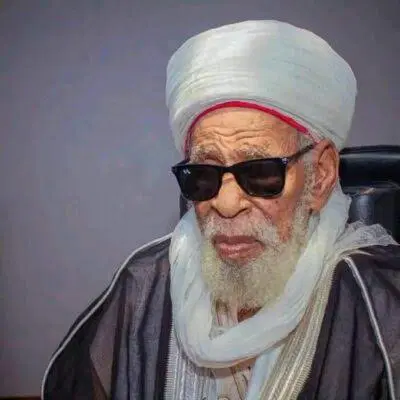
President Bola Ahmed Tinubu has approved the renaming of the Federal University of Medical Science (FUMS), Azare, after the late renowned Islamic scholar, Sheikh Dahiru Usman Bauchi, as part of efforts to preserve and immortalise his legacy.

The President made this known on Saturday during a condolence visit to the family of the late cleric in Bauchi State, describing his death as a “great national loss.”

It was reports that President Bola Ahmed Tinubu arrived in Bauchi on Saturday to condole with the state government and the family of the late renowned Islamic scholar, Sheikh Dahiru Usman Bauchi.

Sheikh Dahiru, the spiritual leader of the Tijjaniyya Brotherhood in Nigeria, died on November 27 at the age of 98.

The President arrived at the Sir Abubakar Tafawa Balewa International Airport at about 4:10 p.m., where he was received with a Guard of Honour by the Nigerian Air Force.

Tinubu was accompanied by the Governor of Yobe State, Mai Mala Buni; the Speaker of the House of Representatives, Tajudeen Abbas; his son, Seyi Tinubu; and other top government officials.

He was received at the airport by the Bauchi State Governor, Senator Bala Mohammed; Plateau State Governor, Caleb Mutfwang; the Coordinating Minister of Health and Social Welfare, Prof. Muhammad Ali Pate; the Minister of Foreign Affairs, Yusuf Tuggar; and Senator Shehu Buba (APC, Bauchi South).

The President is expected to proceed to Lagos after the condolence visit to spend the end-of-year holidays.

Speaking at the late Sheikh Dahiru mosque, Tinubu said the decision to rename the university after the Sheikh Dahiru Bauchi was in recognition of the cleric’s lifelong contributions to education, religious scholarship, humility, and service to humanity.

See also  My administration’s education investments already yielding positive results — Aiyedatiwa

He prayed for Allah’s mercy upon the soul of the late scholar asking that he be granted Jannatul Firdaus, while also seeking strength for the family, the Bauchi State Government, and the people of the state to bear the loss.

The President urged Nigerians to continue praying for peace and unity in the country, stressing the importance of collective resilience during challenging times.

Bauchi State Governor, Bala Mohammed, who received the presidential delegation, appreciated President Tinubu for honouring the late cleric and Bauchi State through the retention and renaming of the institution.

Responding on behalf of the family, the eldest son of the late cleric, Sheikh Ibrahim Dahiru Usman Bauchi, expressed gratitude to President Tinubu for the visit, prayers, and the decision to immortalise their father through the university.

He also thanked Governor Mohammed for his continued support to the family.

Recall Sheikh Dahiru Bauchi died at the Abubakar Tafawa Balewa University Teaching Hospital (ATBUTH), Bauchi, and was buried on Friday, November 28, in accordance with Islamic rites.

Born in 1927 in Gombe State, Sheikh Dahiru Bauchi devoted his life to the advancement of Islamic education, promotion of peaceful coexistence and fostering of unity across the country.

His teachings, which emphasised moral discipline, tolerance and adherence to Islamic principles, earned him a large following and deep respect within and beyond Nigeria.

He also played a significant role in community development, mentorship of young scholars and the strengthening of religious understanding.

FOLLOW US ON:

FACEBOOK

TWITTER

PINTEREST

TIKTOK

YOUTUBE

LINKEDIN

TUMBLR

INSTAGRAM

Continue Reading
Click to comment

Leave a Reply

Your email address will not be published. Required fields are marked *

Education

FG halts foreign scholarships, redirects funds home

Published

on

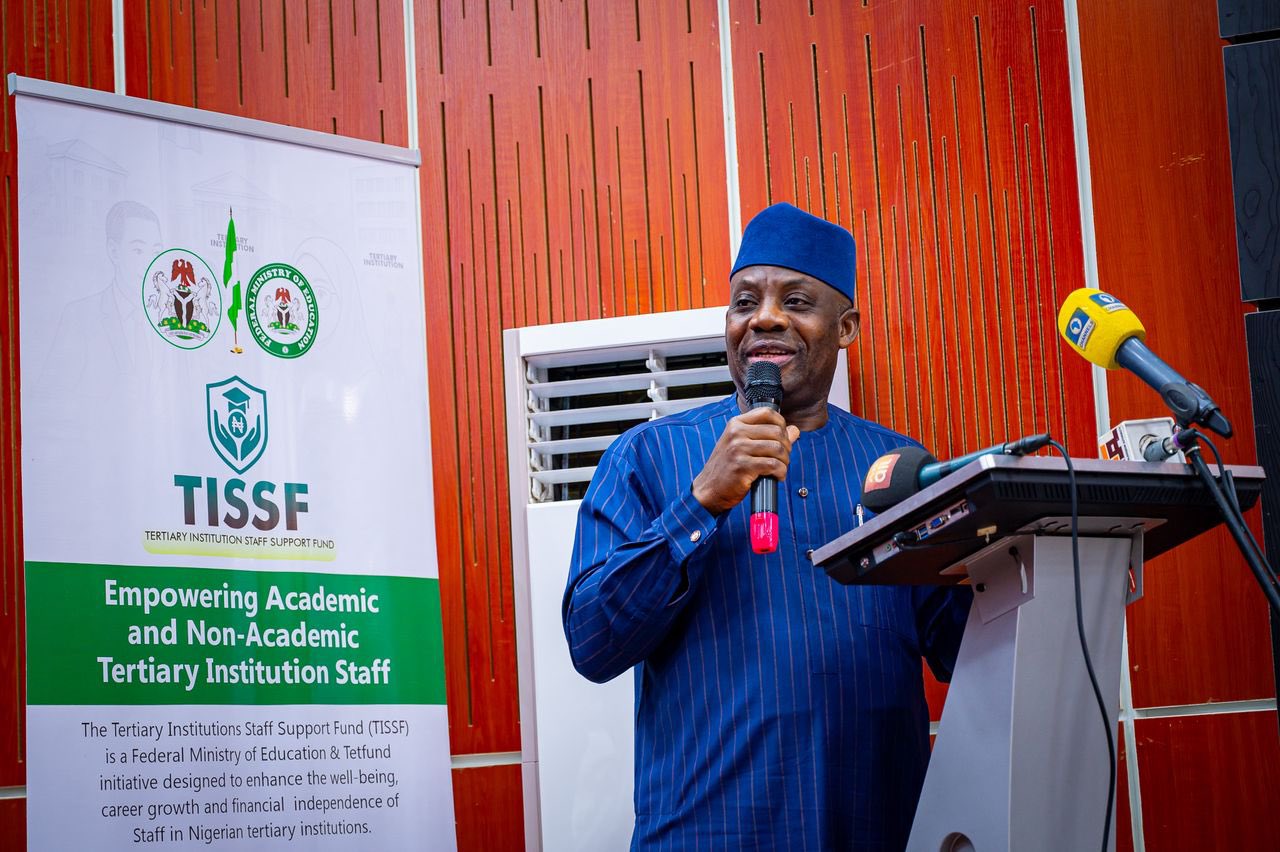
The Federal Government is reviewing its foreign scholarship and bilateral education arrangements as part of efforts to eliminate unnecessary expenditure and redirect public resources towards strengthening Nigerian tertiary institutions, the Minister of Education, Dr Tunji Alausa, has said.

Alausa said the government could no longer justify spending scarce public funds to send students abroad to study programmes that are already available in Nigerian universities, polytechnics and colleges of education.

The minister disclosed this while explaining the rationale behind the Federal Government’s decision to review its overseas scholarship arrangements, stressing that the policy was driven by the need to build domestic capacity and ensure better value for public expenditure.

He recalled that shortly after assuming office, he was presented with a proposal involving about 100,000 Nigerian students travelling to Morocco to study courses taught in English, including mass communication and journalism.

According to him, the proposal raised serious concerns because the courses were already available in Nigeria, while the students would have had to spend their first year learning French before commencing their programmes.

Alausa said, “Number one, we have all those courses in Nigeria. And yet, number two, they were going to spend the first year learning French before they started the programme.”

He added that the cost of supporting such students abroad could not be justified when Nigeria had developed considerable capacity in its tertiary institutions over the years.

“And number three, in the position of a few million to support this in Nigeria, we support thousands of them,” he said.

See also  FG makes fresh clarification on English, Mathematics requirement

The minister said the government therefore concluded that continuing the arrangement in its previous form would amount to an inefficient use of public resources.

“So the Bilateral Education Agreement was not making sense, again, to us in government. It was a way to waste government funds,” Alausa said.

He added, “And this President will not waste any public funds.”

The latest position builds on the Federal Government’s earlier decision to discontinue government-funded BEA scholarships while retaining support for students already enrolled under the previous arrangements.

The Federal Government has clarified that existing beneficiaries of the bilateral scholarship programme would not be abandoned and would continue to receive support until the completion of their studies, while new government-funded awards under the arrangement were discontinued following a review of the programme.

The policy does not amount to a blanket ban on Nigerians receiving scholarships from foreign governments.


Foreign governments willing to sponsor Nigerian students can continue to offer such opportunities, but the Federal Government intends to be more selective about committing Nigerian public funds to overseas education.

Alausa similarly explained that foreign countries willing to continue sponsoring Nigerian students could do so without necessarily requiring financial support from the Nigerian government.

The minister said the circumstances that justified sending large numbers of Nigerian students abroad decades ago had changed considerably.

“When those programmes were set up 20 years ago, they were meant to get students to go to the government colleges where we did not have capacity.

“But in the last 20 years, we’ve built a number of capacities in the tertiary institutions — universities, polytechnics and colleges,” he added.

See also  International Day of Education: First Lady Advocates Investment In Inclusive Learning

The scholarship review comes amid broader reforms by the Federal Ministry of Education aimed at repositioning Nigeria’s education system under President Bola Ahmed Tinubu’s Renewed Hope Agenda.

The reforms have focused increasingly on strengthening domestic tertiary institutions, expanding technical and vocational education and training, improving digital education, promoting research and innovation, and making education more responsive to the needs of the economy.

The Federal Government has also intensified efforts to strengthen technical and vocational education and training, with emphasis on modernising curricula, developing industry-relevant skills and improving the capacity of institutions to produce graduates who can contribute directly to economic development.

Alausa has repeatedly argued that education spending must produce measurable outcomes, particularly given the country’s competing development needs and limited public resources.

The push to retain more education spending within Nigeria also reflects the government’s broader objective of strengthening local institutions rather than relying excessively on overseas opportunities.

Alausa said the government’s approach was not simply about withdrawing foreign scholarships but ensuring that public resources were deployed where they would have the greatest impact.

He cited an instance involving scholarship beneficiaries who were expected to study abroad but were instead studying in Nigerian universities, saying such situations further demonstrated the need to review the system.

“So we have to start with Nigerians,” the minister said.

The Federal Government has simultaneously been strengthening domestic student support mechanisms, including scholarships and bursaries for Nigerian students and the Nigerian Education Loan Fund, which provides financial support to students in tertiary institutions.

Alausa said the government’s broader objective was to create a tertiary education system capable of producing the skills, research and innovations required for national development.

He recently inaugurated the Tertiary Institution National Gallery Prize Committee to recognise outstanding academic research and innovation, particularly research with potential for commercialisation and industrial application.

“We want undergraduate researchers to see a clear pathway from academic research to industrial application, enterprise, innovation, and national development,” he said.

The minister said Nigeria could no longer afford to measure the success of its education system simply by the number of certificates awarded.

“The most successful nations of the 21st century will not necessarily be those endowed with greater natural resources. They will be those that can systematically transform knowledge into solutions, research and intellectual capital into economic and industrial value,” Alausa said.

Source: punchng.com

FOLLOW US ON:

FACEBOOK

TWITTER

PINTEREST

TIKTOK

YOUTUBE

LINKEDIN

INSTAGRAM

Continue Reading

Education

Tinubu moves EFCC recoveries, N242bn unclaimed dividends to NELFUND

Published

on

President Bola Tinubu on Wednesday directed that all liquid funds recovered by the Economic and Financial Crimes Commission, along with unclaimed dividends from the Capital Market Trust Fund and the Dormant Account Trust Fund, be diverted to the Nigerian Education Loan Fund to guarantee its long-term financial sustainability.

Minister of Education, Dr Tunji Alausa, disclosed this while briefing State House correspondents after the Federal Executive Council meeting presided over by Tinubu at the Presidential Villa, Abuja, on Wednesday.

The meeting is the council’s first sitting since June 29.

Alausa said, “The President has now directed that all funds recovered by the Economic and Financial Crimes Commission be diverted to NELFUND to continue to support its funding.

“This was also approved by FEC: that all unclaimed dividends from the Capital Market Trust Fund and the Dormant Account Trust Fund should also be directed to NELFUND, so that NELFUND will be financially buoyant to meet its growing obligations today.

“Note, and the President was very clear, not seized properties, or recovered looted funds, but liquid funds, from the EFCC will now be transferred to NELFUND.”

Unclaimed dividends in Nigeria currently stand at approximately N242bn, according to the Securities and Exchange Commission, having grown steadily from about N158.4bn in 2019 to N190bn in 2023 due to outdated shareholder records, unresolved estate matters for deceased investors, and missing bank account linkages, among other factors.

The EFCC has separately recovered over N566bn and $411m in monetary assets over the years, though Alausa clarified that Wednesday’s directive applies strictly to cash recoveries and excludes seized properties or other non-liquid assets.

See also  I channelled pain of my father’s death into academic success – UNIZIK first-class graduate

Alausa argued that Tinubu had fulfilled his campaign commitment with the establishment of the fund as he disclosed that the Fund has benefitted over 1.2 million Nigerian students.

He said, “Today, we have over 1.2 million Nigerian students benefiting from NELFUND, and NELFUND has disbursed over N93bn as stipends to students all across public institutions in the country, both federal and state.

“NELFUND has also disbursed over N250bn as institutional fees to all public institutions across the country, both federal and state.

“This has been a phenomenal blessing to Nigeria and to every Nigerian child. We thank the President for that.”

Alausa noted that the President had directed the Attorney-General of the Federation, Lateef Fagbemi (SAN), to work with the Ministry of Finance, the Ministry of Education and the Debt Management Office to operationalise the movement of the unclaimed dividend funds.

“That will work, and look at the existing Act that set up these two trust funds on how we can move the money legally to NELFUND, and also work with the chairman of the EFCC to look at the entire basket of recovered funds.

“The President was very clear: not seized properties, or recovered looted properties, but liquid funds recovered by the EFCC will now be transferred to NELFUND,” he said.

He added that any funds still subject to ongoing legal challenges would be excluded from the transfer.

“Every single fund that is still subject to a legal challenge will not be part of the money that will be transferred to NELFUND.

“The funds that will be transferred will be all cleared funds, unencumbered funds, looted funds that legally belong to Nigerians,” Alausa said.

See also  FG mandates drug tests for secondary school students

The minister also announced that the council approved the deployment of an Entrepreneurship, Innovation and Business Incubation Certification Programme across 14 federal universities, describing it as a technology-driven initiative designed to equip students with entrepreneurship, innovation, business incubation and enterprise development skills, alongside digital learning certification, mentorship and incubation support.

“This programme will kick off in 14 federal universities this year, and we hope to expand it to all other tertiary institutions.

“It’s a programme that has been tested at the University of Lagos.

“It’s shown to improve students’ ability to be job creators and not job seekers, to make them innovators, to make them entrepreneurs,” Alausa said.

The 14 universities approved for the programme are Ahmadu Bello University, Bayero University Kano, Nnamdi Azikiwe University, Obafemi Awolowo University, University of Abuja, University of Benin, University of Ibadan, University of Ilorin, University of Jos, University of Lagos, University of Maiduguri, University of Nigeria Nsukka, University of Port Harcourt and Usmanu Danfodiyo University.

Council also approved the augmentation of an existing contract for the completion of the National Library of Nigeria headquarters complex in Abuja.

The project was first initiated on April 29, 2006, with an original two-year completion timeline set for February 28, 2008, but construction work stopped in October 2008.

Alausa explained, “President Bola Tinubu, when he came in, mandated that we look for real funds to complete this national library.

“He directed that we source funds from the Tertiary Education Trust Fund. Also, Her Excellency Senator Oluremi Tinubu indicated that all gifts for her last birthday should be directed towards the completion of the National Library. She was able to help us raise about N25bn.”

See also  Tinubu deserves praise for education reforms, says Dogara

He revealed that, combined with TETFund resources, the total augmentation approved for the project stands at approximately N155bn, comprising N118.309bn for construction works and about N37bn for furnishing the complex.

“We’re hoping that construction will flag off in the next few months.

“Abandoned for 18 years, President Bola Tinubu has now been able to mobilise funds together for work to start again at the National Library,” Alausa said.

The council also approved a memo for the establishment of the Academy for Gifted and Talented Children.

The approval transmutes the existing Suleja Academy, originally set up to nurture gifted Nigerian children but which had, over time, been operating merely as a federal government college, into an autonomous institution with its own governing board.

“The academy will now function as an autonomous academy that will have its own board and council. We’ve also diversified how funds will come to the academy from appropriation, from endowment, and from gifts.

“We need to do this because we have to look for every single genius in this country, bring them in, nurture them, and let them help create the Nigeria of tomorrow,” Alausa said, adding that the AGF had been tasked with drafting the executive bill for onward transmission to the National Assembly.

Source: punchng.com

FOLLOW US ON:

FACEBOOK

TWITTER

PINTEREST

TIKTOK

YOUTUBE

LINKEDIN

INSTAGRAM

Continue Reading

Education

WAEC under fire over 2026 results, alleged grading anomalies

Published

on

The West African Examinations Council is facing growing scrutiny over the integrity of its newly released 2026 West African Senior School Certificate Examination results for school candidates, as school administrators and education advocates allege grading anomalies and technical glitches linked to the expanded Computer-Based Testing rollout.

The concerns follow complaints from school administrators and education advocates who claim that some high-performing students received lower grades than expected, based on their academic records and performance in other standardised assessments.

Speaking in an interview with our correspondent on Monday, the Director of Impact House Model Schools, Mowe, Ogun State, Sam Abdulazeez, said the school had observed a decline in its students’ performance in the 2025 and 2026 WASSCE despite retaining its teaching staff, improving its facilities and intensifying examination preparations.

He said the school had been presenting candidates for WASSCE since 2017 and had recorded strong performances, particularly in Mathematics and English Language.

Abdulazeez recalled that in 2024, all 45 candidates presented by the school for Mathematics obtained A1.

However, he said the situation changed in subsequent years following the introduction of serialisation and CBT.

“This year, out of the 69 children we presented for JAMB, over 30 of them had more than 300 in JAMB. And you know that JAMB is completely CBT,” Abdulazeez said.

He added that none of the school’s candidates scored below 200 in the Unified Tertiary Matriculation Examination, attributing the performance to extensive preparations.

According to him, the school conducted 22 mock-UTME examinations before the actual examination, with students regularly using computers to simulate the examination environment.

He said the disparity became more noticeable when the WASSCE results were released.

Abdulazeez said the school recorded only about three or four A1 grades in Mathematics among its 69 candidates, despite previously recording significantly stronger results.

“In Mathematics, we had children who had up to 98 in Mathematics during UTME. Now, the As we had in Mathematics, maybe about three or four out of 69. This is a school that we usually have almost everybody having A1 in Math.”

He also expressed concern over the English Language results, noting that some candidates who performed strongly in the UTME did not obtain the grades the school expected in WASSCE.

“We only had B and maybe a few Cs. Out of the 69, I think we have three credits, and all others are B2, B3,” he said.

The school director said the institution had maintained a strong teaching workforce, noting that it did not employ teachers with qualifications below a second-class upper degree.

He also disclosed that the school invested heavily in infrastructure after WAEC announced plans to introduce computer-based examinations.

However, Abdulazeez said the school encountered technical difficulties during a mock examination conducted by WAEC officials shortly before the examination.

“They did it the first day; the systems could not connect to their own server. They came the second day; they did it, but it was not successful,” he said.

He said the school subsequently contacted WAEC officials in Ogun State and Lagos, explaining that it could not risk allowing its candidates to sit the examination through a system it considered unreliable.

See also  International Day of Education: First Lady Advocates Investment In Inclusive Learning

According to him, WAEC eventually approved the school to conduct a paper examination, despite the school having already been listed on the CBT platform.

Abdulazeez said a similar issue had occurred with the school’s 2025 WASSCE results.

“Last year, we had this same problem with WAEC. Some of my children who were expecting A1, they dropped to B. Those who were expecting B dropped to C,” he said.

He claimed that the school later noticed changes in the grades displayed on the result portal.

“When last year’s result was released, I had already gone to publish the result, only for some people to call me that it’s like they have made some changes.

“When we checked the result back again, we saw that those who they gave B had moved to A1. Those who they gave C moved to B last year.”

Abdulazeez said the experience made him initially wait before publishing the 2026 results, hoping that similar adjustments might occur.

He eventually published the results after no adjustment was observed.

He also raised concerns over the possible impact of different versions of examination papers, commonly referred to as serialisation.

“For me, because I did not do CBT in our school, I don’t know how they go about their serialisation. I think it has to be, because we saw it in the subjects that have serialisation, like Mathematics, like English, Economics, and Biology,” he said.

He said the school did not experience similar concerns in subjects where serialisation was not a major factor, adding that students performed better in those subjects.

Abdulazeez consequently joined stakeholders calling for an independent review of the 2026 WASSCE results.

“If the schools and the examining bodies cannot conduct the exam properly, it should not affect these children and their future,” he said.

He also rejected suggestions that declining performance could simply be attributed to students’ lack of preparation following the introduction of CBT.

“Some people were saying that children don’t read again; it’s because WAEC has gone to CBT, that’s why children are failing. Sir, JAMB had been doing CBT for a long time now,” he said.

He added, “When you do all that, and you now discover that the result does not justify the effort, then it calls for concern.”

Another school administrator, who asked not to be named, said several students who recorded high scores in the recent UTME and had previously passed the General Certificate Examination were awarded D7, E8 and F9 grades in core subjects in the 2026 WASSCE.

“Students with top scores in JAMB and verified track records are suddenly receiving D7s, E8s, and F9s in WAEC,” the administrator said.

He added that two affected students who had already secured admission to the University of Ibadan were recorded as failing Mathematics and English Language in the newly released WAEC results.

An educationist, Fola Adekeye, urged WAEC to ensure that its examination processes and results passed the test of integrity.

He said examination bodies should not wait for public outcry before investigating complaints about their results, warning that such a practice could undermine public confidence in the examination system.

See also  FG mandates drug tests for secondary school students

“Those who are managing destinies — exams, exams are destiny issues. Children want to make their results; they want to be doctors, they want to be lawyers, they want to be astronauts. Those managing those checkpoints should do better.

“The public outcry shouldn’t become the determinant of most of these things. They should do the right thing.”

Adekeye said the controversy that followed the release of the 2025 UTME results by JAMB showed the need for examination bodies to proactively identify and resolve technical or procedural problems.

He disclosed that some of the students in his school who had previously performed strongly were among those whose WAEC results generated concerns.

“Our head boy had 369, was the third in the federation. Our head girl and another student did so well in JAMB, but suddenly WAEC came out, and only the head boy is having five As and Bs.”

Adekeye, however, cautioned against making unsubstantiated allegations against WAEC, stressing that his concern was the integrity and credibility of the examination process.

“I don’t question exam bodies. I always plead that they should please ensure that what they do will pass the test of integrity,” he said.

He called on WAEC to upgrade its facilities where necessary and properly communicate technological and methodological changes in examination administration.

“If their facilities are outdated and they need to upgrade them, please let them upgrade them,” he said.

He also urged the examination council to adequately explain any changes to its curriculum or assessment methods before implementation.

“If they are coming out with a new curriculum, let them do it. If they are shifting from one particular method of questioning to a particular method of questioning, let them make it clear so that students will be on the same page with all other stakeholders,” he added.

Meanwhile, the Initiative for School Excellence and Education Foundation, through its solicitors, Zuriel Law Practice, has threatened to institute legal proceedings against WAEC over alleged irregularities in the conduct and processing of the 2026 Computer-Based WASSCE.

The organisation said it had received complaints from candidates alleging discrepancies in the recording and processing of their responses.

In a formal demand addressed to WAEC, the lawyers requested the immediate preservation of original electronic records, including candidate response databases, system audit trails, server logs and scoring records.

The organisation also demanded disclosure of the technical standards, regulations and manuals governing the 2026 CBE and called for a mechanism through which affected candidates could inspect their examination records, including the questions presented, recorded responses and scoring method.

It further proposed an independent audit of the CBE platform by educational and information technology experts.

The lawyers gave WAEC 14 days from receipt of the letter to confirm preservation of the records and establish the requested review procedures.

See also  Tinubu deserves praise for education reforms, says Dogara

Failure to engage within the stipulated period, the lawyers warned, would lead to court proceedings seeking orders for disclosure, verification and human review of affected results.

The founder of the ISEE, Alex Onyia, also called for greater transparency in WAEC’s grading process, particularly amid allegations of question leakage in some paper-based examination centres.

He questioned whether candidates who sat examinations under different conditions were standardised as one population.

“When WAEC carried out its standardisation, were candidates from fundamentally different examination conditions treated as one population?” he asked.

Onyia argued that if leaked questions had significantly inflated the scores of some candidates, the resulting distribution could potentially affect the thresholds used to award grades.

He called on WAEC to disclose raw-score distributions, grade thresholds for major subjects and details of how candidates from different examination modes were standardised.

“Show us the data,” Onyia demanded, asking WAEC to disclose the thresholds that produced A1, B2, B3, C4, C5 and C6 in major subjects.

He also called for clarification of the review mechanism for candidates who challenge their results and urged the authorities to investigate allegations of internal management problems within WAEC Nigeria.

“This is not an attack on WAEC. It is a demand for accountability,” he said.

Onyia urged the Federal Ministry of Education and the National Assembly to invite the leadership of WAEC Nigeria to explain the methodology used in processing the 2026 results.

However, The PUNCH reported on Thursday that WAEC defended the integrity of the 2026 WASSCE results amid the criticisms.

The examination body said it had observed comments, particularly from content creators and social media commentators, questioning the accuracy and credibility of the results.

WAEC’s Head of Public Affairs, Moyosola Adesina, said the results were produced through rigorous and quality-assured processes that had guided the council’s examinations over the years.

The council said the 2026 WASSCE for School Candidates was conducted in line with its established standard operating procedures and relevant educational policies, in collaboration with the Federal Ministry of Education.

The examination body also urged candidates, parents, schools and members of the public to exercise caution over unverified claims concerning the results.

WAEC explained that every candidate’s script passed through a multi-tiered system of marking, moderation and auditing based on standardised marking schemes and supervised by vetted subject experts.

The council advised members of the public with concerns about their results to contact it directly through its offices and verified communication platforms rather than relying on social media speculation.

The Nigerian examination bodies have come under scrutiny in recent years over issues of glitches in released results.

In 2025, the former JAMB Registrar, Prof Ishaq Oloyede, broke down in tears as he apologised for the errors in the 2025 UTME.

Oloyede, at the start of a press briefing in Abuja, had acknowledged “one or two errors” made during the exam.

Source: punchng.com

FOLLOW US ON:

FACEBOOK

TWITTER

PINTEREST

TIKTOK

YOUTUBE

LINKEDIN

INSTAGRAM

Continue Reading

Trending