Connect with us

Lifestyle

Makoko demolition: When economic interest overrides humanity

Published

on

When American missionary and science teacher, Jack Kyle, arrived in the mega slum of Makoko, Lagos in August 2023, I doubt if he ever thought that one day, his love for slum dwellers and the underserved would never find expression in the area, at least not among the tough-skinned ones living on the dirty lagoon at the backyard of the Ebute Meta area of the mega city. Sixty-year-old Kyle, who left his family of five children and lovely wife in Manhattan, Kansas, United States, didn’t settle in Makoko because of his love for the ghetto, but to be able to add positive values to the lives of these strange fellows in their ‘natural habitat’.

Apart from building a ‘house’ that cost about $4,000 in the community for himself and other volunteers, the American missionary, who defied the opposition of family members back home to embark on this treacherous journey, ensured that, from rainwater, he was able to provide clean water for some residents using solar power. He equally had plans for aquaculture and sewage-to-menthane gas, among other utilities, ignored by the relevant authorities.

At a time in the past, I wondered if the throng of willing donors never had any other locations, orphanages and struggling public schools, apart from this waterfront ghetto, where their supports are much needed both in Lagos and beyond. The little contributions of Kyle and several other Nigerians – individuals and organisations – in helping the slum dwellers in Makoko have sadly gone down the lagoon, where the residents and landlords once had their log houses.

Some years back, a few heads of a few organisations truly took the support of their organisations outside Lagos in order to reach out, no matter how little. A financial institution with its headquarters in Lagos ‘adopted’ a private school in Abuja where the organisation pumped in money like water from a big tap. It wasn’t until the school was involved in a big crisis that the undiscerning minds among us knew that the school actually belonged to the Oga Patapata of the organisation which had adopted the school. A few years later, the chairman of the board took a loan of N120bn to buy a Disco that the Goodluck Jonathan government put on sale, and of course, refused to pay back. And you think such an organisation wouldn’t go under?

See also  Christianity Without Loving Others Is Questionable, Says Cleric

Do you equally want me to tell you about the ‘adoption’ of the private school of the late wife of a living former military president, where the Niger State Government paid the salaries and other expenses of the private institution for years before such brazen impunity was discovered? Could it be because the founder of the school had died? Nigerians love to help in wonderful ways, you know! Let’s go back to Makoko for now, please.

Ever since I noticed this curious settlement from the vantage view of the Third Mainland Bridge, I never ceased to wonder if real humans actually lived in those shanties until it became clear that all manners of fishermen – Ijaws, Beninese, Ghanaians, and their families – had their abode in the Makoko floating slum. You will be dead wrong if you believe the massive ghetto housed fishermen alone. There were schools, a big orphanage, churches, and others, mostly established by private individuals, charitable groups, corporate entities and organisations.

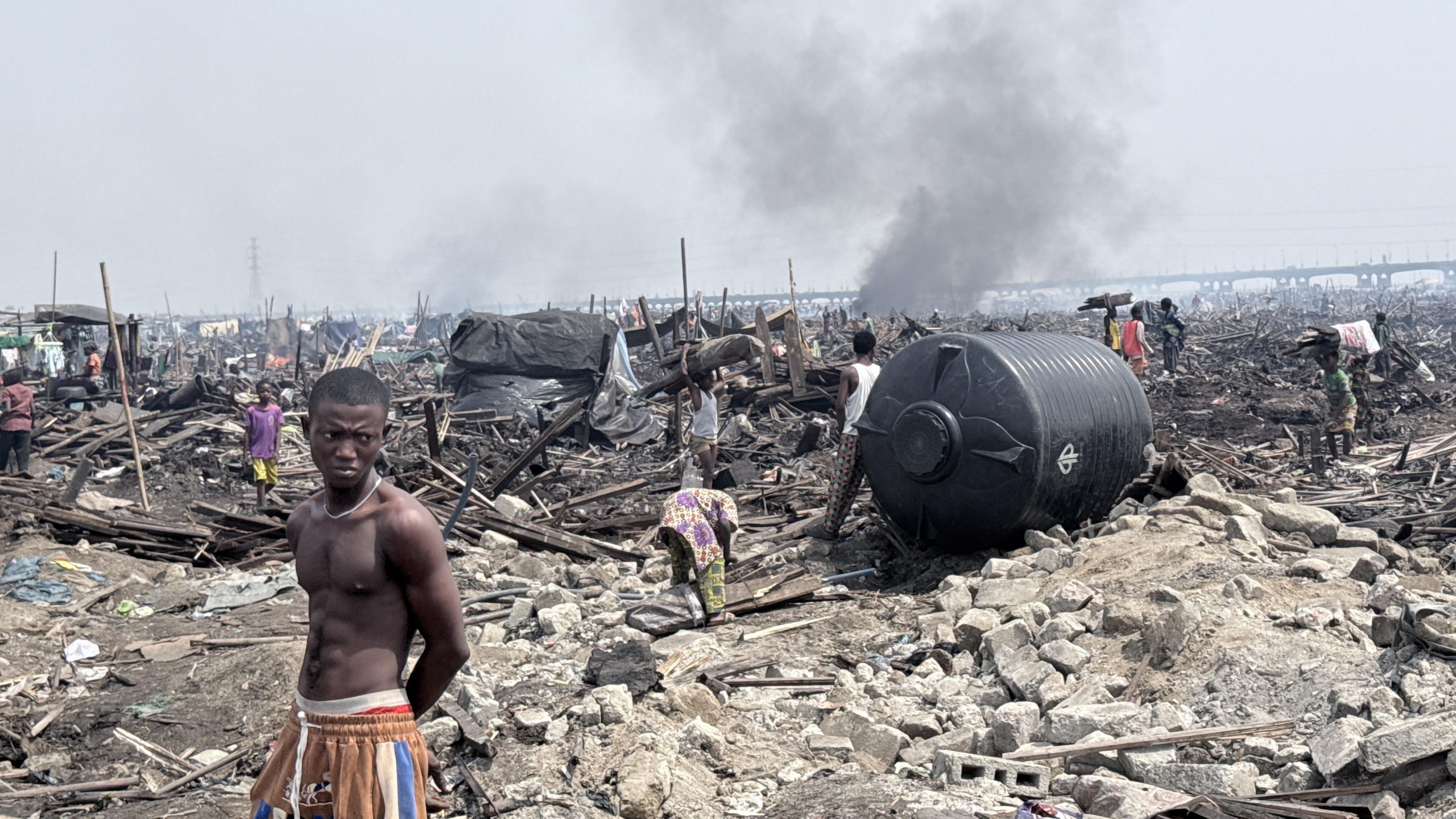
While the location was conducive for the occupation of the residents and providing contents for local and visiting bloggers, it had long been an eyesore. So, the end of this kingdom, if it hadn’t been foretold by some of our self-styled prophets, had been long in coming. The inevitable end came in January courtesy of its demolition by the Lagos State Government, which is not in any way new to demolitions and land reclamation by the way.

In some other parts of the world, pets (and other animals) almost have the same right to life and decent living as their human owners. Imagine driving on a highway (not Nigerian highway o), and you are warned of ‘deer crossing, apply caution’! God helps you if you are unfortunate enough to run into any deer. Imprisonment or deportation beckons or both, depending on your immigration status. In broad daylight, some squirrels deliberately torment your imagination as they playfully jump from one tree branch to another and sometimes take over a small field by your residence. May God deliver you from those deadly thoughts you are entertaining at the moment – in case you are thinking of breaching their ‘animal’ rights.

In our dear country, however, the case is different for a simple reason. We tend to act before we think about the consequences, no matter how fatal the outcome may be. Some of the reactions the Makoko demolition has attracted may sound political, especially from those who seek to reap political capital from this and other sad episodes. The underbelly of this demolition is that we have collectively lost our sense of humanity, not that we have ever prioritised our lives and our living at any time before now.

See also  Onyeka Onwenu (1952–2024): The Elegant Stallion of Nigerian Arts and Advocacy

It may interest you to know that Makoko isn’t the first slum to be demolished with the same sense of insensitive logic. During the military era, the Maroko slum (now Lekki) was levelled on the orders of then-Col. Raji Rasaki, the military administrator, who acted with ruthless alacrity in 1990. In July 2012, thousands of residents were displaced when a part of the Makoko ghetto was turned upside down. In March 2016, no fewer than 3,000 were sacked in Mosafejo, Ajegunle, allegedly on short notice.

Otodo Gbame, a Lekki waterfront ghetto, suffered the same fate between November 2016 and April 2017, where 30,000 were said to have been evicted, and the shanties housing them were demolished. There were claims that no fewer than 11 lives were lost. Ilubinrin, a neighbourhood of Obalende/Osborne, Ikoyi, wasn’t spared the same year from the reclamation of more land. Ilaje Otumara fell in March 2025, while the Itesiwaju Ajumoni in Oworonshoki followed suit in October, drawing a massive outcry and protests.

Uncle, are you saying the government should have left those squalid settlements to thrive side-by-side with our much-desired megacity, especially when the Makoko slum, which is the focus here, is expectedly illegal in every sense? Not at all! I was taught as far back as my secondary school days that the government holds power in trust for the people, and the same government has a responsibility to protect and provide social services for the people who put them in power.

It then presupposes that the government of the day must ensure that, apart from ensuring that it protects its citizens from any harm under whatever circumstances, adds value to their living standards and must equally incorporate their interests into governance. With the manner in which the Lagos State Government has dispatched these illegal slum residents of Makoko, I bet my social studies teachers might need to revisit their notes or question their own teachers if they are still alive to take their angry questions.

See also  Police - Peller safe, investigation over alleged kidnap ongoing

I happen to be one of the apolitical Nigerians who have a lot of good words for the Lagos State Government in terms of its forward-looking development strides, no-delay project execution and its consistent security arrangements that have ensured that the state can live in relative peace, especially when compared to other states. But may I ask when it becomes a fashion for a supposedly progressive and responsive government to throw out people and their families into the lagoon, demolish their shelters and their minimal facilities provided by private individuals and groups without any safety valve?

I’m sure you may like to ask why the government should help these distressed families to settle down, even in temporary camps, till they find their feet again. They are human beings created in the image of God as those in power. They are citizens of this great nation (I know some of them are from Ghana, Togo and the Benin Republic) who deserve to be protected and have a right to decent living so that they can put the pieces of their lives together. There are children in ghetto schools and orphanages who also aspire to rise in life and deliver their families from the slum and the stranglehold of poverty. In what ways are their interests protected or considered in these mindless demolitions?

You may equally like to find out how the few lucky ones displaced by previous demolitions have fared in their much-trumpeted new settlements in Jakande (Ajah) and Ikorodu, which are pitiably drops in the ocean? It is no longer news that the state government is pressed for land in all areas, having to contend with the lagoon, the ocean and Ogun State on all sides. These boundaries should not be an excuse to allow economic and political banditry to override our sense of humanity, as if blood does not flow in the veins of our leaders. So, happy land reclamation in pursuit of our megacity!

Continue Reading
Click to comment

Leave a Reply

Your email address will not be published. Required fields are marked *

Lifestyle

Governor Amuneke reveals party officials offered him dollars to alter anti-govt skits

Published

on

Comedian Kevin Chinedu, popularly known as Kevinblak, has revealed that officials of a political party offered him dollars to change his satirical skits criticising politicians and governance.

He made the disclosure on Monday in an interview on ARISEtv’s Arise 360 programme, where he spoke about the pressures facing content creators who hold public officials accountable through humour.

Chinedu, known for his character Governor Amuneke, said the approach came at a particularly vulnerable moment, shortly after his wife had a Caesarean section and he was under financial strain.

“They said they were going to change my life, that I’m earning crumbs, you know, give me dollars. They mentioned that my colleagues are in the game and all of that,” he said.

He declined to name the party, saying only that it was “Amuneke’s party”, a reference to the fictional political figure in his skits, and cautioned against any attempt to identify it publicly.

“Don’t mention names, trust me, don’t mention names,” he said.

Despite the financial pressure, the comedian said he turned down the offer, recalling how the officials had tried to lure him to Abuja with the promise of a life-changing sum.

“I had a lot of bills on my head and I just heard come, come to Abuja, let’s change your life. Dollars upon dollars,” he said.

He said he ultimately held firm, guided by a personal code he had maintained throughout his career.

“I looked at it, I said, no, I am who I am. I’ve been here for a long time, and I’ve never been in any illegal thing, and I’ve never been somewhere, you know, I’m doing something because I’m being influenced, because of money.

See also  PHOTOS: Meet Grace Atinuke Oyelude — Nigeria’s First Miss Nigeria, Still Radiant at 93!

“If I want to do it, it should be something I’m doing because I want to do it. So, you know, it is what it is,” he said.

When asked whether friends had urged him to accept the money, Chinedu said his inner circle was equally principled, and had themselves been approached and refused.

“I don’t have friends that are easily overwhelmed with money. I have people who have principles because they have, you know, approached them, they themselves. So, we always have that conversation,” he said.

punch.ng

FOLLOW US ON:

FACEBOOK

TWITTER

PINTEREST

TIKTOK

YOUTUBE

LINKEDIN

INSTAGRAM

Continue Reading

Lifestyle

Over 4,600 Nigerian doctors relocate to UK in three years – Report

Published

on

Nigeria’s already fragile healthcare system is facing renewed strain as no fewer than 4,691 doctors have relocated to the United Kingdom since President Bola Tinubu assumed office on May 29, 2023, fresh data from the General Medical Council shows.

The UK GMC is a public official register detailing the number of practising doctors in the UK alongside other details such as their areas of speciality, country of training, among others.

The mass migration represents not just a human resource crisis but a significant economic loss.

With the Federal Government estimating that it costs about $21,000 to train a single doctor, Nigeria has effectively lost at least $98.5m in training investments within less than two years.

The figure put the total number of Nigeria-trained doctors currently practising in the UK to about 15,692, making Nigeria one of the largest sources of foreign-trained doctors in Britain, second only to India.

As of May 28, 2025, official records showed that the number of Nigerian-trained doctors in the UK was a little over 11,000. The figure has grown significantly since then.

The exodus of doctors comes as Nigeria’s doctor-to-population ratio hovers around 3.9 per 10,000 people, far below the minimum threshold recommended by the World Health Organisation.

For many health experts, the numbers confirm what has long been visible: a system gradually losing its most critical workforce.

The Nigerian Medical Association has repeatedly warned that poor remuneration, unsafe working conditions, and inadequate infrastructure are pushing doctors out of the country.

“Our members are overworked, underpaid and exposed to unsafe environments daily. Many are simply burnt out,” the NMA said in one of its recent statements addressing workforce migration.

See also  Nollywood veteran, Chiwetalu Agu, debunks death rumours

Similarly, the National Association of Resident Doctors has consistently highlighted the toll on younger doctors, who form the backbone of Nigeria’s tertiary healthcare system.

“Doctors are leaving because the system is failing them—irregular salaries, excessive workload, and lack of training opportunities,” NARD noted during one of its nationwide engagements.

Ironically, the doctor exodus persists even as Nigeria continues to spend heavily on healthcare abroad.

While official foreign exchange data shows only modest spending on medical tourism in recent years, broader estimates suggest Nigerians still spend hundreds of millions of dollars annually seeking treatment overseas.

For instance, a recent report by The PUNCH revealed that foreign exchange outflow for health-related travel by Nigerians surged to $549.29m in the first nine months of 2025, a 17.96 per cent increase from $465.67m in the same period of 2024, according to official data by Nigeria’s apex bank.

A public health expert, Dr David Adewole, noted that the Federal Government’s national policy on health workforce migration, aimed at curbing the growing trend of health professionals leaving the country—commonly referred to as ‘Japa’—is a good initiative, but may not do much to address the fundamental problems of the shortage of skilled healthcare professionals in Nigeria, particularly in rural and underserved areas.

According to him, many of the push factors for health professionals emigrating to greener pastures, like insecurity, emolument and lack of basic amenities like potable water, health facilities, cost of living and constant electricity, persisted.

He stated: “To make healthcare workers stay here, let the salaries be enough so that what you earn will be much more than the multiples of what you need for basic needs, like food, power supply, housing, and so forth.

See also  Jim Iyke - Divorce doesn’t stop me from being a good father

“People still look at life after retirement. You might have a good policy, but its implementation is the issue. For example, you are retired, and for your retirement package, you don’t need to know anyone for it to be processed promptly.

“Then subsequently, your monthly pension, without pressing anybody, should be paid. Those things are not here.

“And when you go to the hospital abroad, if you tell them that you are in a hurry, you go to your home; they’ll bring the medicines to your doorstep.”

Continue Reading

Lifestyle

Another Nigerian found dead in UK apartment

Published

on

Barely one week after a Nigerian mother of three died of cancer in the United Kingdom, another Nigerian father of three, identified simply as Herbert, has been found dead in his apartment.

This is just as the deceased was said to have left behind a wife and three young children, as his family appeals for financial support to cover funeral and repatriation costs.

PUNCH Metro learnt on Sunday from a post by an X user identified as ‘The Stress Manager’ that Herbert, who lived in Thornaby, died suddenly in his sleep last week, in what relatives described as a shocking and heartbreaking incident.

According to the post, the deceased had been battling emotional and financial strain following the death of his father in Nigeria just days before his own passing.

The post read, “Herbert, a calm and devoted Nigerian husband and father of three young children, the youngest just eight years old, passed away suddenly in his sleep in Thornaby.

“Only a few days before his death, he was already dealing with the pain of losing his father in Nigeria. He could not travel for the burial, but he gave everything he had financially to ensure his father had a dignified farewell. That alone drained him mentally and financially.

“Then the unimaginable happened. Herbert passed away on the very day his father was laid to rest.”

The X user added that the incident was particularly traumatic for the family, as Herbert’s children were the ones who discovered his lifeless body.

He noted that Herbert was a devoted husband and father, survived by three children, the youngest aged eight.

See also  Police - Peller safe, investigation over alleged kidnap ongoing

He added that following his death, the family has been left with the burden of caring for the children and raising funds to repatriate his remains to Nigeria for burial.

“To make it even more heartbreaking, his children were the ones who found him that morning because his wife was away at the time. No child should ever experience that.

“Now his wife is left alone to care for three young children while also facing the heavy financial burden of funeral and repatriation costs,” he added.

A former president of Nigerians in the UK, Benjamin Kuti, also confirmed Herbert’s death in a post on his X page on Friday.

Kuti also appealed to the Nigerian community in the UK to support Herbert’s family.

Meanwhile, a fundraising campaign has been launched to support the family, with an appeal to Nigerians in the UK and the wider public to assist.

As of the time of filing this report, a sum of £2,633 had been raised out of the £7,000 target.

PUNCH Metro reported on April 13 that a UK-based Nigerian mother of three, Omotayo Abioye, died after a battle with breast cancer.

Kuti had stated that Omotayo died on April 5 at the age of 40.

She was described by her family as a devoted mother, loving wife, and compassionate individual whose life impacted many.

punch.ng

FOLLOW US ON:

FACEBOOK

TWITTER

PINTEREST

TIKTOK

YOUTUBE

LINKEDIN

INSTAGRAM

Continue Reading

Trending