Connect with us

Business

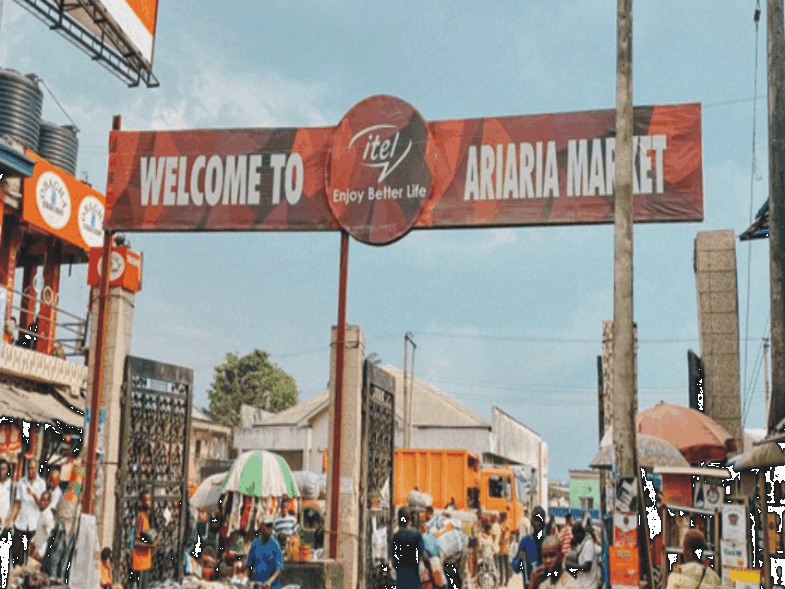
Schools, markets open as IPOB ends Monday sit-at-home

Published

on

The Indigenous People of Biafra (IPOB) has announced the permanent cancellation of the Monday sit-at-home across the South-East, following a directive from its leader, Nnamdi Kanu, with effect from February 9, 2026.

The announcement was made by the group’s spokesman, Emma Powerful, in a statement issued on Sunday, which said the order came directly from Kanu.

The pro-Biafran group had declared the weekly sit-at-home in August 2021 to protest Kanu’s rendition to Nigeria and subsequent incarceration, a move that often resulted in the shutdown of markets, schools, banks and offices.

Powerful said the new directive left “no need, excuse, or justification” for residents to remain indoors on Mondays, stressing that economic and social activities must resume fully.

“The IPOB, under the supreme leadership of Onyendu Mazi Nnamdi Kanu, hereby announces to the entire world that the Monday sit-at-home across the South-East is officially and permanently cancelled with effect from tomorrow, Monday, February 9, 2026.

“This directive comes directly from Onyendu Mazi Nnamdi Kanu himself, who has once again staked everything on the line to ensure that our children return to school every Monday and that our people go about their lawful businesses without fear, intimidation, or molestation,” the statement said.

The group warned that any individual or group attempting to enforce sit-at-home would be acting against Kanu’s direct order.

“Kanu has made it abundantly clear that any person or group attempting to enforce sit-at-home from this moment forward is acting against his direct command,” the statement said.

See also  Again, US to deport 18 Nigerians on criminal list

Powerful also cautioned against what he described as “false-flag operations” aimed at creating fear and discouraging residents from resuming normal activities, urging people to remain calm and law-abiding.

The group further warned state governments against threatening or shutting down businesses, saying any renovation or reconstruction of markets must be carried out with the consent of stakeholders and with adequate alternative trading arrangements.

“We therefore call on all our people across the South-East to come out tomorrow, open their shops, go to work, and send their children to school without fear. The era of Monday sit-at-home is over,” the statement read.

According to an SBM Intelligence report, the sit‑at‑home directives enforced in the South‑East from 2021 to 2025 were associated with at least 776 violent incidents and 776 deaths across the region.

The orders were enforced through intimidation, arson, kidnappings and targeted attacks on civilians who defied them.

The report documented 332 violent incidents and 776 fatalities over the four‑year period, with Imo and Anambra states bearing the highest toll.

In addition to fatalities, the crisis crippled economic activity, with losses estimated at about N7.6tn due to repeated market closures and disruptions to transport and trade.

Last week, Anambra State Governor, Prof Chukwuma Soludo, ordered the forced reopening of the Onitsha Main Market on Monday, in a move defying the sit-at-home directive issued by IPOB.

During an earlier visit on Monday, January 26, 2025, the governor had ordered the market to be shut after traders failed to open that day.

Following a one-week closure, the market was reopened on Monday, February 2, with many traders operating for the first time since 2021, when the enforcement of the sit-at-home order began.

See also  Petrol imports crash by N2tn to N87bn; see why

Addressing the visibly elated traders, Soludo declared an end to Monday sit-at-home directives and warned that any trader complying with IPOB’s order would risk forfeiting their business premises.

He added that those who refused to open their shops would face the loss of their businesses.

punch.ng

FOLLOW US ON:

FACEBOOK

TWITTER

PINTEREST

TIKTOK

YOUTUBE

LINKEDIN

TUMBLR

INSTAGRAM

Continue Reading
Click to comment

Leave a Reply

Your email address will not be published. Required fields are marked *

Business

FG granted N34tn import duty waivers in 2025 – Customs

Published

on

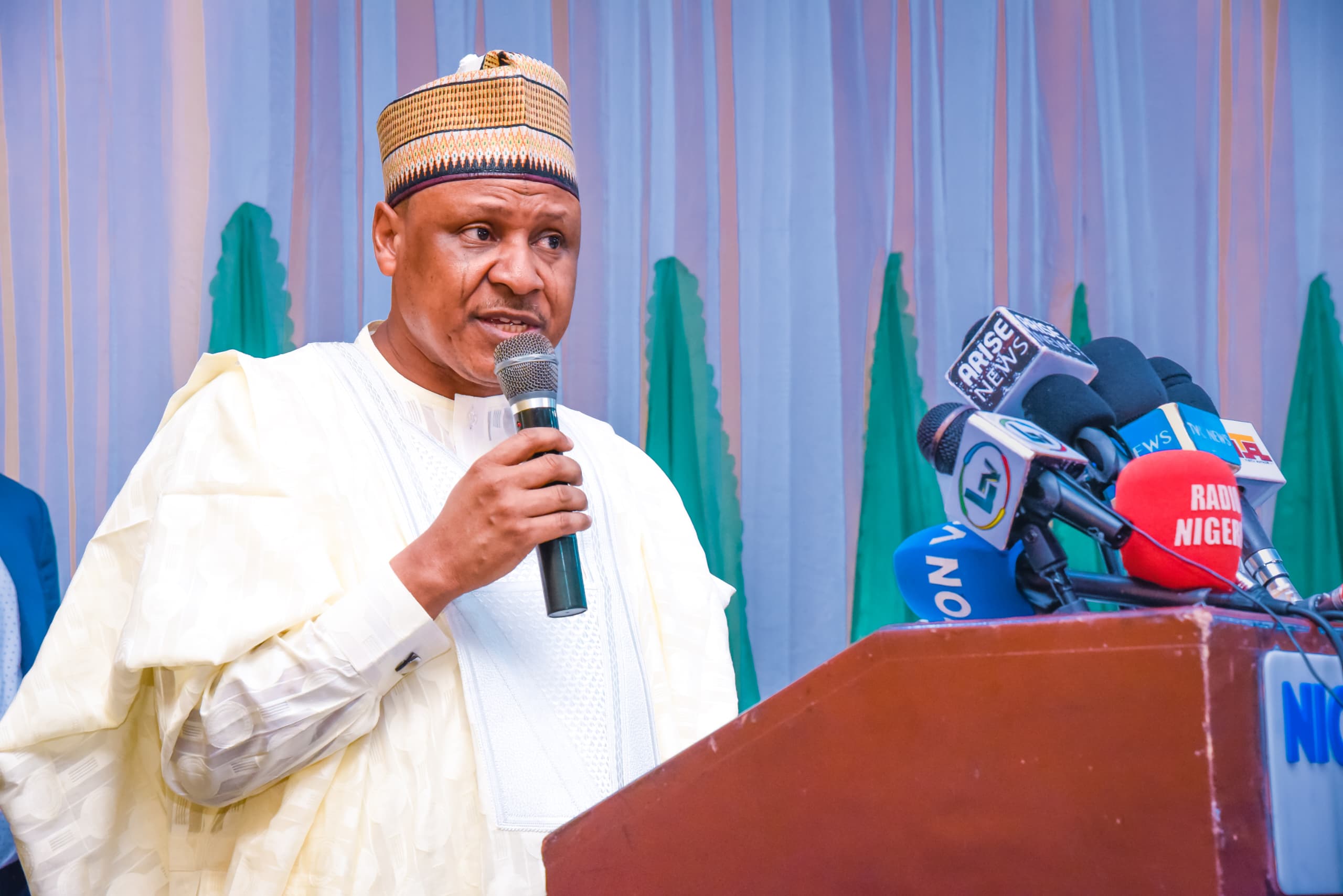
The Comptroller-General of the Nigeria Customs Service, Bashir Adeniyi, on Monday disclosed that the value of Import Duty Exemption Certificate approvals granted by the Federal Government on selected imported goods and equipment rose to N34tn in 2025, warning that such fiscal incentives have significantly reduced the service’s revenue-generating capacity.

Adeniyi made the disclosure during an investigative hearing of the Senate Committee on Finance with revenue-generating agencies in Abuja.

At the same session, the committee threatened to invoke sanctions against the heads of the Nigerian Civil Aviation Authority, the Small and Medium Enterprises Development Agency of Nigeria, the Industrial Training Fund, the Federal Medical Centre, Jabi, and other agencies for failing to honour its invitation.

Addressing lawmakers, the Customs boss said government fiscal policies often directly affect the agency’s revenue performance, either positively or negatively.

He said although the Nigeria Customs Service remained one of the country’s leading revenue-generating agencies, it could have recorded higher collections over the years if not for government-approved duty waivers and other policy interventions.

According to him, one of the major factors affecting Customs revenue is the Import Duty Exemption Certificate policy introduced in March 2020.

He said, “IDEC approvals reached about N34tn in 2025, 60 per cent of which was rightly granted by the government for military hardware procurement, which attracted duty exemptions because of Nigeria’s prevailing security challenges.

“Other government-backed waivers included the importation of Compressed Natural Gas (CNG), electric and hybrid vehicles, healthcare equipment and medical supplies, industrial machinery and manufacturing inputs, and food import intervention programmes.”

See also  Nigeria’s exports fall 5.3% in Q4 2025, imports rise – NBS

The Customs boss, however, argued that fiscal policy should not be assessed solely on revenue generation, saying that duty waivers also serve broader economic and social objectives.

He, nevertheless, urged the Federal Government to strengthen monitoring mechanisms to ensure beneficiaries of the waivers deliver the expected outcomes, including lower prices, increased industrial production, and improved access to healthcare.

Earlier in his presentation, Adeniyi told the committee that the Customs Service had generated N4.5tn as of June 30 from its N11.04tn revenue target for 2026, leaving about N7tn to be realised before the end of the fiscal year.

The hearing also exposed disagreements over the alleged non-remittance of operating surpluses by some government agencies.

Representing the Fiscal Responsibility Commission, the Deputy Director of Monitoring and Evaluation, Bello Gulmare, alleged that the Nigeria Customs Service had an outstanding liability of N8.9bn arising from the non-remittance of its operating surplus into the Consolidated Revenue Fund as of 2019.

The claim was, however, rejected by Customs officials.

Similarly, the commission alleged that the Corporate Affairs Commission owed N13.9bn in unremitted operating surplus covering the period from 2023 to 2025.

Reacting, the Registrar-General of the Corporate Affairs Commission, Hussaini Ishaq Magaji, said the agency had been settling the outstanding obligations gradually.

Following the submissions, the Senate Committee on Finance directed the CAC, the Fiscal Responsibility Commission and the committee’s secretariat to reconcile their records and determine the exact outstanding balance.

Chairman of the committee, Senator Sani Musa (Niger East), said the reconciliation exercise should be concluded within two weeks ahead of another interface with the commission.

See also  Nigeria exports N707bn petrol in three months

He said, “A detailed report on the outcome of the planned meeting should be ready within the next two weeks for another interface with CAC.

“Heads of agencies like NCAA, ITF, SMEDAN, FMC Jabi and others who failed to physically attend today’s session should unfailingly make themselves available at the next sitting or risk severe sanction through invocation of the relevant section of our rules against them.”

The Senate has in recent months intensified oversight of revenue-generating agencies as part of efforts to improve government earnings, enforce compliance with the Fiscal Responsibility Act, and ensure proper remittance of operating surpluses into the Consolidated Revenue Fund.

The Finance Committee has also been scrutinising the impact of tax waivers and import duty exemptions on the country’s revenue profile amid growing pressure to expand non-oil revenue.

punch.ng

FOLLOW US ON:

FACEBOOK

TWITTER

PINTEREST

TIKTOK

YOUTUBE

LINKEDIN

Continue Reading

Business

Dangote dumps naira, begins petrol sales in dollars

Published

on

Dangote Petroleum Refinery has fixed the ex-depot price of Premium Motor Spirit (petrol) at $0.779 per litre, unveiling a new pricing template that also raised the benchmark prices for diesel and aviation fuel following its transition to dollar-denominated transactions.

This marks an end to naira payments for the purchase of refined products, which started after the October 1, 2024, commencement of the naira-for-crude deal.

The development also marks a major shift in the refinery’s commercial operations and could reshape pricing dynamics in Nigeria’s deregulated downstream petroleum sector, where Dangote has emerged as the country’s largest supplier of refined petroleum products.

The revised prices, which took effect on Monday, place Automotive Gas Oil (diesel) at $1.087 per litre, Aviation Turbine Kerosene at $0.942 per litre, while coastal deliveries of petrol were fixed at $1,044.62 per metric tonne.

The refinery disclosed the new rates in a notice issued to petroleum marketers and customers, stating that all previously issued naira-denominated Proforma Invoices and Deal Recaps for gantry and coastal transactions had become invalid.

The notice, signed by the refinery’s Group Commercial Operations, read, “Following our email on the 9th of July, 2026, regarding the transition from Naira to United States Dollars, please note that all issued Naira Coastal and Gantry PFIs/Deal Recaps are now invalid, and no payments should be made against them.

The applicable USD prices for each product, effective today, July 13, 2026, are provided below.”

Under the new pricing schedule, petrol sold through the gantry will cost $0.779 per litre, diesel $1.087 per litre, aviation fuel $0.942 per litre, while coastal PMS supplies will sell for $1,044.62 per metric tonne.

See also  Cross-border trading unethical, suppresses Nigerian market — NANTA boss

The company, however, clarified that the new pricing arrangement does not affect Liquefied Petroleum Gas. “Also note that this transition to USD does not apply to LPG transactions,” the refinery said.

Findings by our correspondent indicate that the new dollar-denominated pricing reflects the refinery’s latest commercial pricing structure and is intended to align petroleum product sales with the currency used in procuring a significant proportion of its crude oil feedstock.

Sources familiar with the development said the refinery considered it necessary to adopt a uniform pricing framework after a growing imbalance between the currency used to procure crude oil and the currency in which refined products were being sold.

One official noted that Dangote refinery now receives a significantly larger share of its crude oil supplies from the Nigerian National Petroleum Company Limited under dollar-denominated supply arrangements, while a substantial volume of its refined products has continued to be sold domestically in naira.

The source explained that the mismatch had increased the refinery’s exposure to foreign exchange risks.

Explaining the rationale behind the move, another source added, “Dangote refinery is receiving fewer naira-denominated crude cargoes from NNPCL compared with dollar-denominated cargoes, while a larger volume of its petroleum products has been sold in naira. The resulting currency mismatch, combined with volatility in international crude oil prices and continued exchange-rate uncertainty, made it necessary to migrate product sales to dollars.”

The decision is expected to have significant implications for petroleum marketers, many of whom source products directly from the refinery for nationwide distribution. It could also influence fuel pricing in the downstream market, depending on movements in the foreign exchange market and international crude oil prices.

See also  FX reserves to hit $51bn by 2026 — CBN

The refinery had previously embraced naira-denominated transactions following the Federal Government’s domestic crude supply initiative, under which local refiners were supplied crude oil in naira to strengthen domestic refining, reduce pressure on foreign exchange demand and stabilise fuel prices. However, the arrangement has faced implementation challenges in recent months, with industry stakeholders reporting that a growing proportion of crude supplies has reverted to dollar-based transactions.

The latest shift underscores the lingering foreign exchange pressures confronting Nigeria’s downstream petroleum sector despite ongoing efforts to deepen local refining and reduce dependence on imported fuels. It also raises fresh questions about the future of the government’s naira-for-crude policy and its impact on domestic fuel pricing.

The new dollar benchmark will now serve as the reference price for marketers purchasing products directly from the refinery, although the eventual retail pump price of petrol will depend on the prevailing naira-to-dollar exchange rate, logistics costs, transportation margins, regulatory charges, and marketers’ operating expenses.

In recent months, pump prices have fluctuated in response to movements in crude oil prices, foreign exchange rates and competition among suppliers, with industry stakeholders closely monitoring pricing decisions by Dangote Refinery because of its growing influence on the domestic fuel market.

punch.ng

FOLLOW US ON:

FACEBOOK

TWITTER

PINTEREST

TIKTOK

YOUTUBE

LINKEDIN

Continue Reading

Business

Banks deposit N4.15trn with CBN as excess liquidity persists

Published

on

NIGERIA’S banking sector deposited a total of N4.15 trillion with the Central Bank of Nigeria (CBN) through the Standing Deposit Facility (SDF) during the week, highlighting persistent excess liquidity in the financial system, despite ongoing monetary tightening measures.

Market data showed that deposits at the SDF surged by nearly 60 percent from N2.60 trillion recorded in the previous week. In contrast, borrowing through the CBN’s Standing Lending Facility (SLF) remained marginal at N36.10 billion, indicating that banks faced little pressure in meeting short-term funding needs.

The liquidity glut was largely driven by substantial inflows from maturing Open Market Operation (OMO) bills valued at N2.21 trillion and Treasury bills maturities amounting to N269.36 billion. Although the settlement of N1.06 trillion from the Debt Management Office’s Treasury bills auction moderated system liquidity towards the end of the week, banking system balances remained firmly positive, closing at N4.32 trillion.

The improved liquidity environment pushed down interbank funding rates across key tenors. Overnight Nigerian Interbank Offered Rate (NIBOR) declined by 10 basis points to 22.19 percent while the one-month, three-month and six-month rates fell by 24 basis points, 38 basis points and 39 basis points to 22.35 percent, 22.56 percent and 22.83 percent, respectively.

Analysts said the decline in interbank rates reflected reduced demand for short-term funds among banks amid ample liquidity conditions.

In the fixed-income market, the Nigerian Treasury Bills True Yield (NITTY) curve recorded mixed movements. While yields on the one-month and 12-month instruments rose slightly to 16.46 percent and 21.05 percent, respectively, yields on the three-month and six-month tenors declined to 16.78 percent and 18.01 percent, reflecting stronger investor demand for medium-term government securities.

See also  Mr President, don’t punish Nigerians again with 15% fuel import tariff

The secondary Treasury bills market also maintained a bullish tone as investors continued to seek attractive sovereign instruments. Demand across short-, medium- and long-dated maturities drove the average Treasury bill yield down by 22 basis points to 18.51 percent from 18.73 percent in the previous week.

The latest figures extend a trend seen in recent weeks. In the third week of June, excess liquidity in the banking system surged by 37 percent, with banks’ placements at the CBN’s deposit window rising above N5 trillion as lenders parked surplus funds amid limited lending opportunities and the absence of aggressive liquidity mop-up operations by the apex bank.

tribuneonlineng.com

FOLLOW US ON:

FACEBOOK

TWITTER

PINTEREST

TIKTOK

YOUTUBE

LINKEDIN

Continue Reading

Trending