

Connect with us

Business

Trump signs order threatening tariffs on countries trading with Iran

Published

on

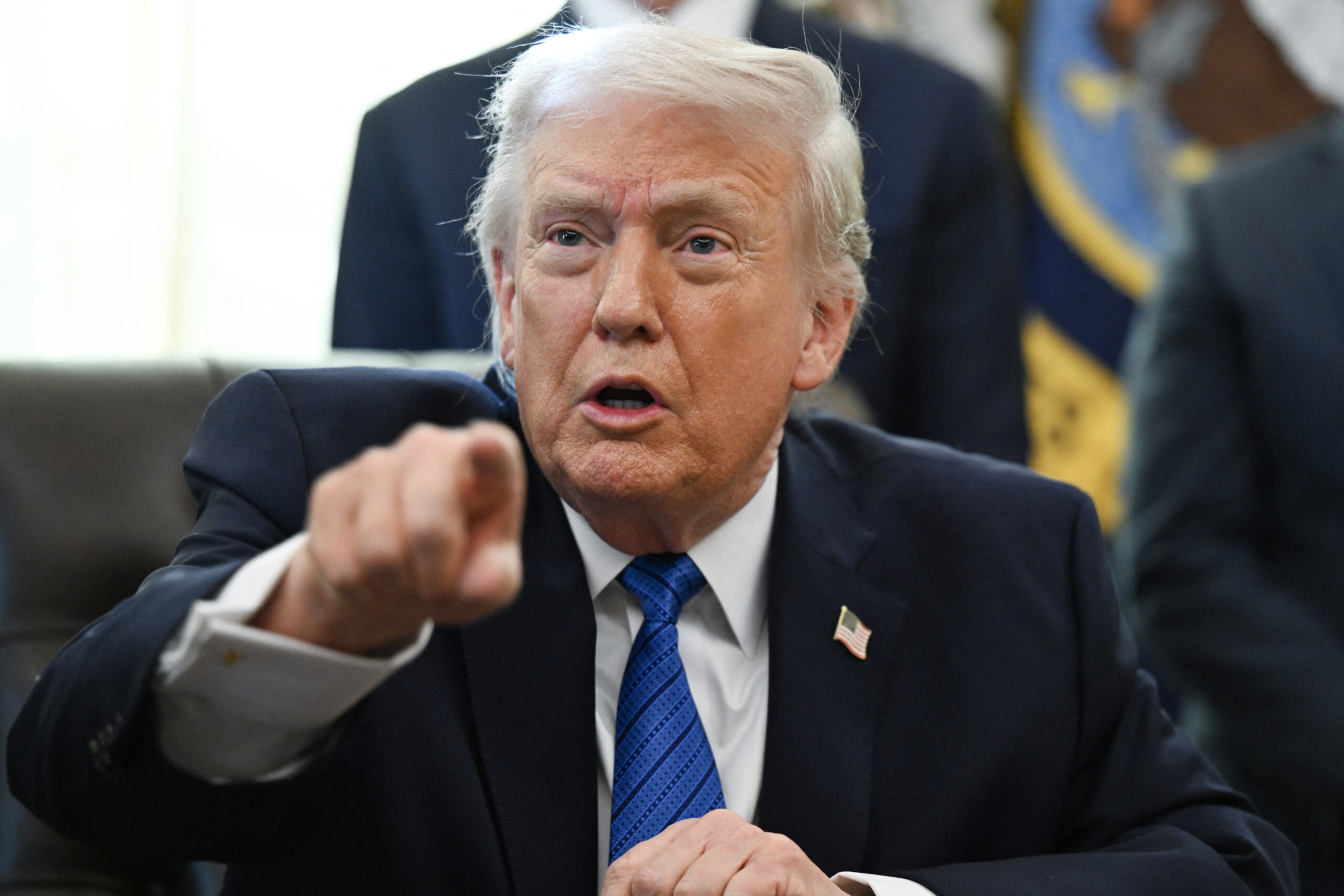
US President Donald Trump signed an executive order on Friday, February 6, authorizing new tariffs on countries that continue to trade with Iran, escalating economic pressure on Tehran ahead of a planned new round of talks next week.

The order, effective from Saturday, February 7, calls for “the imposition of tariffs” on goods imported into the United States from any nation that “directly or indirectly purchases, imports, or otherwise acquires any goods or services from Iran.” The move formalizes a threat Trump made in January to levy a 25 percent tariff on Iran’s trading partners.

According to the order, Secretary of State Marco Rubio will determine the specific tariff rates, though the document cites 25 percent as an example. The policy is expected to impact a range of countries, including China, Russia, Germany, Turkey, and the United Arab Emirates. China is Iran’s largest trading partner, with bilateral trade exceeding $32 billion in 2024.

The announcement follows indirect talks between US and Iranian officials mediated by Oman in Muscat on Friday, the first such engagement since the US joined Israel’s war with Iran with strikes on nuclear sites in June. “We likewise had very good talks on Iran,” Trump told reporters aboard Air Force One. “We’re going to meet again early next week.”

Tensions remain high, with a US aircraft carrier group operating in Middle Eastern waters and Iran under an ongoing internet blackout amid a government crackdown on widespread economic protests. A US-based human rights group reported on Friday that it has confirmed the deaths of 6,505 protesters, 214 security force members, and 61 bystanders since the unrest began in December.

See also  Nigeria crude output misses OPEC quota eighth straight month

FOLLOW US ON:

FACEBOOK

TWITTER

PINTEREST

TIKTOK

YOUTUBE

LINKEDIN

TUMBLR

INSTAGRAM

Continue Reading
Click to comment

Leave a Reply

Your email address will not be published. Required fields are marked *

Business

Nigeria pledges to strengthen bilateral cooperation with India

Published

on

The Permanent Secretary of the Ministry of Foreign Affairs, Ambassador Dunoma Ahmed, has reaffirmed Nigeria’s commitment to strengthening bilateral cooperation with India.

Ahmed stated this during a meeting with the High Commissioner of India to Nigeria, Abhishek Singh, at the Ministry’s Headquarters on Thursday in Abuja.

A statement issued by Kimiebi Ebienfa, the ministry’s spokesman, said Ahmed expressed appreciation to Singh for the cordial relations between Nigeria and India.

He said that cooperation between both countries would focus on deepening ties ahead of the India-Africa Forum Summit scheduled to be held in New Delhi in May, 2026.

According to him, both countries are strategic partners united by shared democratic values and common aspirations for sustainable development and South-South cooperation.

He underscored the importance of the forthcoming BRICS and India-Africa Forum engagements in advancing multilateral cooperation among developing countries amid evolving global political and economic realities.

Ahmed reiterated Nigeria’s interest in increased Indian investments in key sectors of the economy, particularly manufacturing, agriculture, mining, renewable energy, and local value addition.

He further stressed the need for strengthened collaboration in security and counter-terrorism, especially through technological cooperation and defence capacity building.

Earlier, Singh briefed Ahmed about preparations for the BRICS Foreign Ministers’ Meeting slated for May 14 to 15, at the Bharat Mandapam in New Delhi.

Meanwhile, the India-Africa Forum Summit is expected to convene African leaders and senior officials later in the month.

Singh said, “ Nigeria, as a BRICS partner country and a major stakeholder in Africa, occupies a strategic place in India’s foreign policy engagement with the continent.

See also  Petrol war: Importers outpace domestic refineries with 62% supply in 2025

“The Government of India looks forward to Nigeria’s active participation at the meetings and in deepening cooperation between both countries in areas of trade, renewable energy, defence, industrialisation, agriculture, and technology.”

He further highlighted ongoing initiatives under the International Solar Alliance and Africa Solar Facility, including proposed renewable energy investments and enhanced developmental partnerships with Nigeria.

NAN

punch.ng

FOLLOW US ON:

FACEBOOK

TWITTER

PINTEREST

TIKTOK

YOUTUBE

LINKEDIN

INSTAGRAM

Continue Reading

Business

National Assembly okays N2.29tn FCT budget, sets 76% for capital projects

Published

on

The National Assembly on Thursday passed the 2026 Statutory Appropriation Bill for the Federal Capital Territory, approving a total expenditure of N2.285tn for the development and administration of the nation’s capital.

The approval followed the presentation and consideration of the harmonised report of the Senate and House of Representatives Committees on the FCT during plenary.

The report was presented by the Vice Chairman of the Senate Committee on the FCT, Austin Akobundu (Abia Central), on behalf of the committee chairman, Ibrahim Bomai (Yobe South).

Presenting the report, Akobundu said the joint committees recommended the sum of N2.285tn as the FCT statutory budget for 2026 from a projected revenue of N2.385tn.

He explained that the budget proposal contained N165.7bn for personnel costs, N378.2bn for overhead costs, while N1.741tn was allocated to capital expenditure.

According to him, the structure of the budget indicated a strong focus on infrastructure development and public service delivery, with 76.19 per cent of the total allocation devoted to capital projects, while recurrent expenditure accounted for 23.8 per cent.

Akobundu said the appropriation process complied with constitutional provisions and emerged after extensive deliberations between the National Assembly committees and officials of the Federal Capital Territory Administration.

He said, “The committees met with the minister and other relevant officials of the FCTA and deliberated extensively on the subject matter.”

Lawmakers who contributed to the debate commended the fiscal framework of the budget, describing it as balanced and development-oriented.

Deputy President of the Senate, Jibrin Barau, praised the spending plan, saying it demonstrated a strong commitment to infrastructural renewal in the FCT.

See also  Tinubu Orders Probe Of Recurring Kano Market Fires

He said, “Mr President, the budget is top-notch. You know, I am the only one in the history of the legislature in this country that has had the opportunity to serve as chairman appropriation committee in the House and in the Senate.

“So when I see a good budget, I know it’s a good budget. It is a budget that’s top-notch. We have to commend the FCT minister for doing a very good job.

“A budget that you have a total of N2.2tn, and out of this, N1.7tn is going for capital. It shows his willingness and determination to continue to show FCT to the admiration of all.”

Abdul Ningi (Bauchi Central) described the appropriation as well-structured and responsive to concerns previously raised by lawmakers during oversight engagements with the FCTA.

Ningi said the budget was well-packaged and well-balanced, considering the observations made by the Senate Committee on the FCT last year.

The Senate thereafter passed the bill through third reading, paving the way for its transmission for presidential assent.

At the House of Representatives, the lawmakers also passed the 2026 statutory budget proposals of the FCT.

They also passed N1.75tn respectively for the Niger Delta Development Commission.

The approvals followed the consideration and adoption of reports presented to the House during plenary by the relevant committees.

Presenting the report on the FCT budget, Chairman of the House Committee on the Federal Capital Territory, Muktar Betara, said the N2.29tn proposal was structured to address personnel obligations, overhead costs and critical infrastructure projects across the nation’s capital.

See also  Petrol war: Importers outpace domestic refineries with 62% supply in 2025

According to him, “Out of the N2.29tn, the sum of N165.78bn is for personnel costs while N378.23bn is for overhead costs.

“The balance of N1.74tn is for capital projects, for the service of the Federal Capital Territory, Abuja, for the financial year commencing January 1 and ending December 31, 2026.”

A breakdown of the recurrent expenditure showed that the Federal Capital Territory Administration secured N151.44bn for its operations.

In what lawmakers described as part of ongoing efforts to strengthen security architecture in Abuja and surrounding satellite communities, the House approved N6.79bn for the security services department of the FCTA.

The lawmakers also approved N1.51bn and N910.20m for the FCT Muslim Pilgrims Welfare Board and the Christian Pilgrims Welfare Board, respectively.

For capital projects, the education sector received N162bn, while engineering services got the largest allocation of N758.15bn.

The resettlement and compensation department was allocated N143.18bn, public buildings received N2.38bn, while the satellite towns development department secured N212.74bn.

Meanwhile, details of the N1.75tn NDDC appropriation obtained by The PUNCH showed that N47.57bn was earmarked for personnel costs, while overhead expenditure stood at N49.93bn.

The commission also secured N22.36bn for internal capital expenditure, with the bulk of the budget — N1.63tn — dedicated to development projects across the oil-producing Niger Delta region.

The approval followed the consideration of a report presented by the Chairman of the House Committee on NDDC, Erhiatake Ibori-Suenu.

For the NDDC, the passage of the N1.75tn budget is expected to strengthen intervention projects in the oil-rich region, where concerns over underdevelopment, environmental degradation and youth unemployment have persisted for decades despite the area’s contribution to national revenue.

See also  Nigeria crude output misses OPEC quota eighth straight month

Continue Reading

Business

Otti seeks partnership with NAADI to grow Abia’s agriculture, economy

Published

on

Governor Alex Otti has said the Abia State Government is ready to leverage the Nigeria Agribusiness and Agro-Industrial Development Initiative to grow the state’s economy and strengthen value addition across key agricultural sectors.

Otti stated this on Wednesday while receiving a delegation of the Nigeria Agribusiness and Agro-Industrial Development Initiative, led by its Director, Felix Charles, at the Government House in Umuahia.

The governor said the initiative aligns with his administration’s economic agenda and pledged the readiness of his team to work closely with NAADI.

“We are already looking forward to taking advantage of this,” Otti said.

“I believe that as you sit down with my team, we will begin to unveil the details and know how to work with you to take full advantage of this initiative that you brought.

“One thing I can assure you is that my team is very ready,” he added.

Otti noted that many of the objectives of NAADI were already reflected in his campaign promises and development plans for the state.

“If you have a look at our manifesto and my promise to our people here, you will find that a lot of the things that NAADI targets to achieve have been documented in the manifesto.

“So, I want to thank you very much for your visit and thank you for considering us as a beneficiary,” the governor stated.

He further stressed that countries and states cannot achieve meaningful economic growth by relying solely on the production of raw materials without processing and industrialisation.

See also  Nigeria’s World Bank debt to hit $9.65bn

According to him, Abia is richly endowed in palm oil, cassava, cocoa, cashew nuts, rubber, leather works, and fabrics, but said the products would add little economic value if they were not processed beyond subsistence production.

Earlier, Charles described NAADI as a Federal Government initiative aimed at promoting agricultural participation, strengthening agro-processing value chains, and improving access to international markets.

He disclosed that the programme had already been established in eight states, adding that Abia would become the ninth state to domesticate and launch the initiative.

Charles also commended Otti’s developmental projects and assured the state government of NAADI’s commitment to partnership.

According to him, Abia would benefit from key pillars of the initiative, including bridging capacity gaps, promoting agribusiness, improving market access, and addressing funding constraints.

The meeting was attended by Deputy Governor Ikechukwu Emetu, Chief of Staff Caleb Ajagba, Commissioner for Trade and Commerce Salome Obiukwu, Special Adviser on Trade and Commerce Nwaka Inem, and other senior government officials.

punch.ng

FOLLOW US ON:

FACEBOOK

TWITTER

PINTEREST

TIKTOK

YOUTUBE

LINKEDIN

INSTAGRAM

Continue Reading

Trending