Connect with us

News

Lawmakers hail EFCC, NFIU for boosting Nigeria’s financial credibility

Published

on

The House of Representatives has described the Economic and Financial Crimes Commission and the Nigerian Financial Intelligence Unit as pivotal institutions in Nigeria’s economic recovery drive and the stabilisation of the country’s financial system.

The lawmakers made the assessment against the backdrop of sustained recoveries of stolen public assets by the EFCC and Nigeria’s recent exit from the Financial Action Task Force grey list, a development widely regarded as a major boost to the country’s financial credibility.

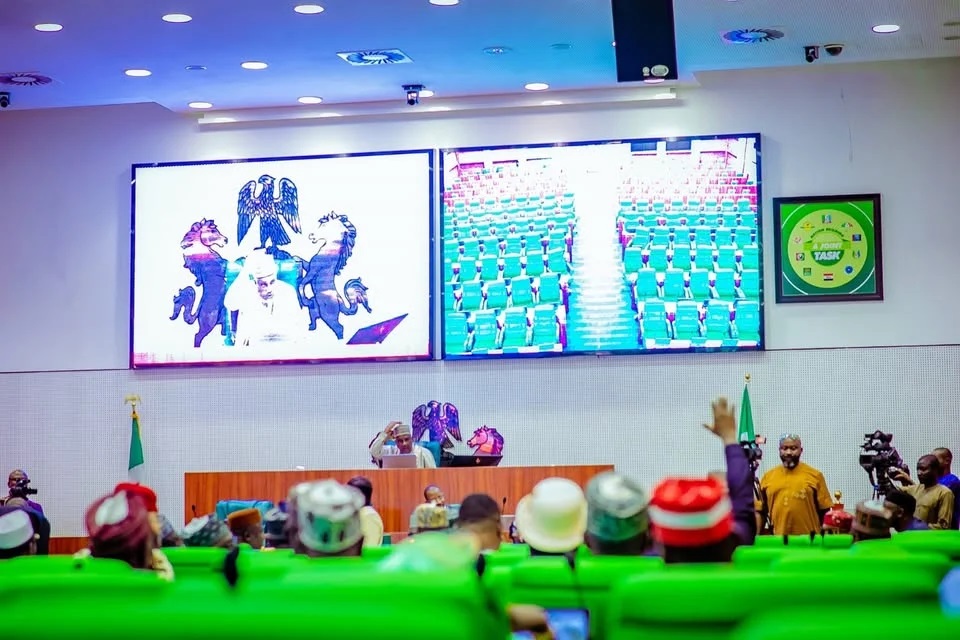
The Chairman of the House Committee on Financial Crimes, Mr Ginger Onwusibe, stated this on Monday while commending the two agencies during their 2025 budget performance review and 2026 budget defence at the National Assembly Complex, Abuja.

Onwusibe said the growing synergy between the EFCC and the NFIU has significantly strengthened Nigeria’s anti-money laundering and counter-terrorism financing framework, restored international confidence in the financial system, and contributed to overall economic stability.

He said, “Permit me to commend the EFCC and NFIU for their tireless efforts, particularly Nigeria’s recent delisting from the FATF grey list.

“This achievement underscores the government’s commitment to combating financial crimes and strengthening our AML/CFT framework.”

According to him, the milestone will enhance Nigeria’s international reputation, improve access to global financing and credit, attract foreign direct investment, and reinforce the country’s financial security architecture.

The Abia lawmaker also disclosed that as of October 2025, the EFCC had recovered over ₦566bn, $411m, and 1,502 properties, while securing 3,175 convictions nationwide. He also noted that the NFIU played a critical role by providing financial intelligence that supported successful investigations and prosecutions.

See also  Doctors dispute FG’s N11.9bn payout, strike continues

“These achievements clearly demonstrate the agencies’ capabilities and dedication,” he said, attributing the successes to the leadership of EFCC Chairman, Mr Ola Olukoyede, and NFIU Director, Hajia Hafsat Bakari.

Over the past few years, the EFCC has intensified its asset recovery drive, recording consistent increases in both convictions and recovered proceeds of crime.

Between 2021 and 2023, the commission recovered hundreds of billions of naira in cash and assets, including luxury properties, vehicles, and funds linked to cybercrime, public sector fraud, oil theft, and money laundering.

The establishment of specialised units within the EFCC, improved collaboration with foreign law enforcement agencies, and enhanced use of financial intelligence have strengthened its capacity to trace and confiscate illicit assets.

The NFIU, which became operationally independent in 2018 following Nigeria’s suspension from the Egmont Group, has since emerged as a central hub for financial intelligence, supporting domestic agencies and international partners in tracking illicit financial flows.

Analysts have linked Nigeria’s removal from the FATF grey list to reforms driven largely by intelligence-led investigations, stronger regulatory compliance, and closer coordination between the EFCC, NFIU, the Central Bank of Nigeria, and other stakeholders.

While praising their performance, Onwusibe stressed that the operations of both agencies must continue to be guided by professionalism, transparency, and accountability, particularly amid growing public demand for visible and lasting results in the anti-corruption fight.

On the broader economic outlook, he said the 2026 budget places strong emphasis on infrastructure development and food security, with key objectives including macroeconomic stability, job creation, an improved business environment, and human capital development.

See also  Blackout looms as gas shortfall hits power stations

He cautioned, however, that effective execution, timely implementation, increased oil production, and growth in non-oil revenue would be critical to achieving these targets.

While acknowledging that many Nigerians are still grappling with economic hardship, Onwusibe said the economy is beginning to show signs of revival, transitioning from post-reform stabilisation to modest recovery.

He cited projections by the International Monetary Fund, which forecast a 4.4 per cent growth rate for Nigeria in 2026, driven by improved macroeconomic stability, structural reforms, and rising domestic demand.

He added that financial crimes continue to pose a significant drain on the economy, underscoring the indispensable role of the EFCC and NFIU in asset recovery, corruption deterrence, and safeguarding financial stability.

The Committee Chairman assured that the 10th House of Representatives remains committed to strengthening Nigeria’s legal framework for combating financial crimes.

He disclosed that four critical bills aimed at promoting transparency, protecting public resources, and aligning Nigeria with global best practices have recently been considered by the House.

These include bills to amend the Money Laundering (Prevention and Prohibition) Act 2022, amend the EFCC Act 2004, and amend the Proceeds of Crime Act.

“These bills are designed to modernise our laws, bridge operational gaps, enhance enforcement mechanisms, and ensure that crime does not pay,” he said, expressing optimism that the legislation would receive accelerated assent from President Bola Tinubu.

On the 2026 budget proposal, Onwusibe assured that the committee would rigorously scrutinise submissions from both agencies to ensure optimal use of public funds and alignment with legislative priorities.

See also  Motorists stranded as Oyo residents protest road extension

Key focus areas, he said, include strengthening investigative and prosecutorial capacity, improving asset recovery and management, enhancing international cooperation, building institutional capacity, and addressing emerging threats such as cybercrime and virtual assets.

“The work of the EFCC and NFIU is critical to Nigeria’s economic stability and security. We must ensure they are adequately resourced, while upholding the highest standards of professionalism and accountability, to build a stronger, more transparent, and resilient financial system,” he added.

punch.ng

FOLLOW US ON:

FACEBOOK

TWITTER

PINTEREST

TIKTOK

YOUTUBE

LINKEDIN

TUMBLR

INSTAGRAM

Continue Reading
Click to comment

Leave a Reply

Your email address will not be published. Required fields are marked *

News

South Korean judge who hiked ex-first lady’s jail sentence found dead

Published

on

A South Korean judge who more than doubled the former first lady’s prison sentence last month was found dead on Wednesday, police said.

Shin Jong-o was “found unconscious around 1:00 am (1600 GMT on Tuesday)… at the Seoul High Court building”, an investigator at Seocho district police station told AFP.

Shin was taken to the hospital and pronounced dead, he said, adding: “There is no sign of foul play in the death.”

Local media reported that Shin had left a suicide note, but the investigator said there was none.

Last month, Shin presided over 53-year-old Kim Keon Hee’s appeal trial, finding her guilty of stock manipulation and bribery, and increasing her sentence to four years from 20 months.

The heavier sentence came after her acquittal by a lower court on the stock manipulation charge was overturned.

Shin said at the time that Kim had “failed to acknowledge her culpability and has instead consistently resorted to excuses”.

The police investigator said on Wednesday that the judge’s “bereaved family is stricken by the incident” and requests privacy.

AFP

See also  Motorists stranded as Oyo residents protest road extension
Continue Reading

News

Court frees ex-HOS Oyo-Ita in N570m money laundering case

Published

on

The Federal High Court in Abuja on Tuesday discharged and acquitted former Head of Service of the Federation, Winifred Oyo-Ita, of alleged N570m money laundering charges filed against her by the Economic and Financial Crimes Commission.

The trial judge, Justice James Omotosho, upheld the no-case submissions filed by Oyo-Ita and eight co-defendants, holding that the EFCC failed to establish a prima facie case against them after about six years of trial.

“The case presented by the prosecution has no weight whatsoever,” the judge ruled.

Justice Omotosho described the anti-graft agency’s case as one “built on the quicksand of speculations, suspicions and shoddy investigation.”

He added that the prosecution failed to establish the predicate offences required to prove money laundering allegations.

“Crucial elements of money laundering offences, which are the establishment of a predicate offence, were glaringly absent in this case presented by the prosecution,” he said.

The judge held that the prosecution failed to prove that funds allegedly traced to Oyo-Ita were proceeds of unlawful activities.

According to him, evidence before the court showed that contracts linked to the allegations were duly approved and executed.

He also held that estacodes, duty tour allowances and air tickets allegedly received by Oyo-Ita were properly approved.

“There is no proof before the court that estacodes or duty allowances were approved and subsequently collected without the corresponding trips being undertaken,” the judge said.

He faulted the prosecution for failing to tender travel approvals, official memos, audit queries or other documentary evidence to support its allegations.

“The prosecution has, in effect, invited the court to engage in speculation,” he added.

See also  Motorists stranded as Oyo residents protest road extension

Justice Omotosho further held that Oyo-Ita was neither a director nor shareholder in the companies allegedly linked to the transactions under investigation.

“The prosecution did not provide any shred of evidence to show that the monies are tainted with illegality,” the judge ruled.

He subsequently upheld the no-case submissions filed by all the defendants and discharged and acquitted them on the 18-count charge.

The EFCC had arraigned Oyo-Ita and others in March 2020 over allegations bordering on fraud involving duty tour allowances, estacodes and contract kickbacks amounting to about N570m.

During the trial, the commission called eight witnesses and tendered documentary exhibits.

However, the defendants argued that the prosecution failed to establish any ingredient of the offences to warrant them entering a defence.

Justice Omotosho also rejected confessional statements allegedly obtained from Oyo-Ita and some co-defendants, ruling that they were not obtained in compliance with provisions of the Administration of Criminal Justice Act.

He held that the prosecution failed to produce video recordings of the statement-taking sessions as required by law and consequently expunged the statements from evidence.

Oyo-Ita was removed from office by the administration of the late President Muhammadu Buhari in September 2019, amid corruption allegations.

Continue Reading

News

Missing Ebonyi engineers’ families demand fresh probe

Published

on

Wives of five engineers linked to NELAN Consulting have rejected recent comments by the Minister of Works, David Umahi, accusing him of attempting to “sweep the truth under the carpet” over the disappearance and presumed killing of their husbands in 2021.

In a strongly worded rejoinder signed by the wives of the engineers, namely Mrs Patricia Onyemeh, Mrs Lovette Edeani, Mrs Ifeoma Ejiofor, Mrs Esther Aneke, and Mrs Nwazulum, the women said Umahi’s response failed to address “grave factual and moral concerns that have persisted for nearly five years.”

The statement follows Umahi’s March 16, 2026, response in which he reportedly linked the engineers’ disappearance to communal unrest.

But the families disputed this, insisting that “the characterisation of the disappearance of the five engineers… as a general consequence of communal crisis is completely outrageous, misconceived, misrepresented, and flawed.”

The engineers, who were supervising an African Development Bank-backed ring road project in Ebonyi State, went missing on November 3, 2021, during Umahi’s tenure as governor.

According to the families, their husbands had travelled for an official meeting arranged by the state government, and were last seen in connection with the project.

“Credible accounts indicate that the victims were last seen in connection with official engagements linked to the Ebonyi Ring Road project,” the statement read, raising “legitimate questions” about attempts to attribute the incident to communal violence.

The wives alleged irregularities in the handling of the case by security agencies, particularly the Department of State Services and the Nigeria Police Force.

See also  Doctors dispute FG’s N11.9bn payout, strike continues

They questioned why a DSS investigator, identified as Victor Chijioke Onyesom, was “suddenly sacked at the peak of his investigation,” alleging that he had been tracking communications linked to the case.

“Who influenced the conspiracy to terminate the investigation at DSS?” they asked.

The families also faulted the police for presenting skeletal remains without conducting DNA verification.

“The police presented them to the family as remains of the victims, but refused to do a DNA test.

“The test further showed that one of the five skeletal remains belonged to a female, whereas the five missing engineers are all men,” the statement said.

It further accused authorities of rushing to file charges against six suspects without concluding investigations or producing bodies.

“Without a doubt, the conspiracy in hurriedly filing the purported charge… was to tactically close the investigation… and shield the real culprits,” the wives said.

They added: “Where are the bodies of our husbands? You arrested their killers.”

The families also alleged intimidation after petitioning top government officials, including President Bola Tinubu, Senate President Godswill Akpabio, and House Speaker Tajudeen Abbas.

According to them, “an undisclosed person… threatened us not to push further for the reinvestigation of the case.”

Rejecting Umahi’s position outright, the wives said: “We totally reject David Umahi’s responses as misconceived and unfounded,” citing “interference in the investigative process, the sudden termination of the investigation, the removal of key investigators, and the suppression of critical evidence.”

They described the case as a “whitewash, cover-up, mischief, conspiracy, and plot to use the court to foreclose investigation.”

See also  Ogun urges residents to relocate over flood threat

The families called on the President, National Assembly leadership, and civil society groups to compel security agencies to reopen the case.

“We will have no option but to embark on another protest if the investigation is not reopened.

“The blood of our dear husbands will never go in vain,” the wives said.

punch.ng

FOLLOW US ON:

FACEBOOK

TWITTER

PINTEREST

TIKTOK

YOUTUBE

LINKEDIN

INSTAGRAM

Continue Reading

Trending