Connect with us

News

Electoral Act 2026: Tinubu defends assent, opposition raises hell

Published

on

Opposition parties and civil society organisations have condemned President Bola Tinubu’s assent to the Electoral Act 2026 (Amendment), describing the move as a setback to Nigeria’s democratic progress and a legalisation of electoral manipulation ahead of the 2027 general elections.

The Peoples Democratic Party, on Wednesday, alleged that the ruling All Progressives Congress’s fear of losing the upcoming elections drove what is called the rushed approval of the contentious legislation, which the party described as a threat to the country’s democratic process.

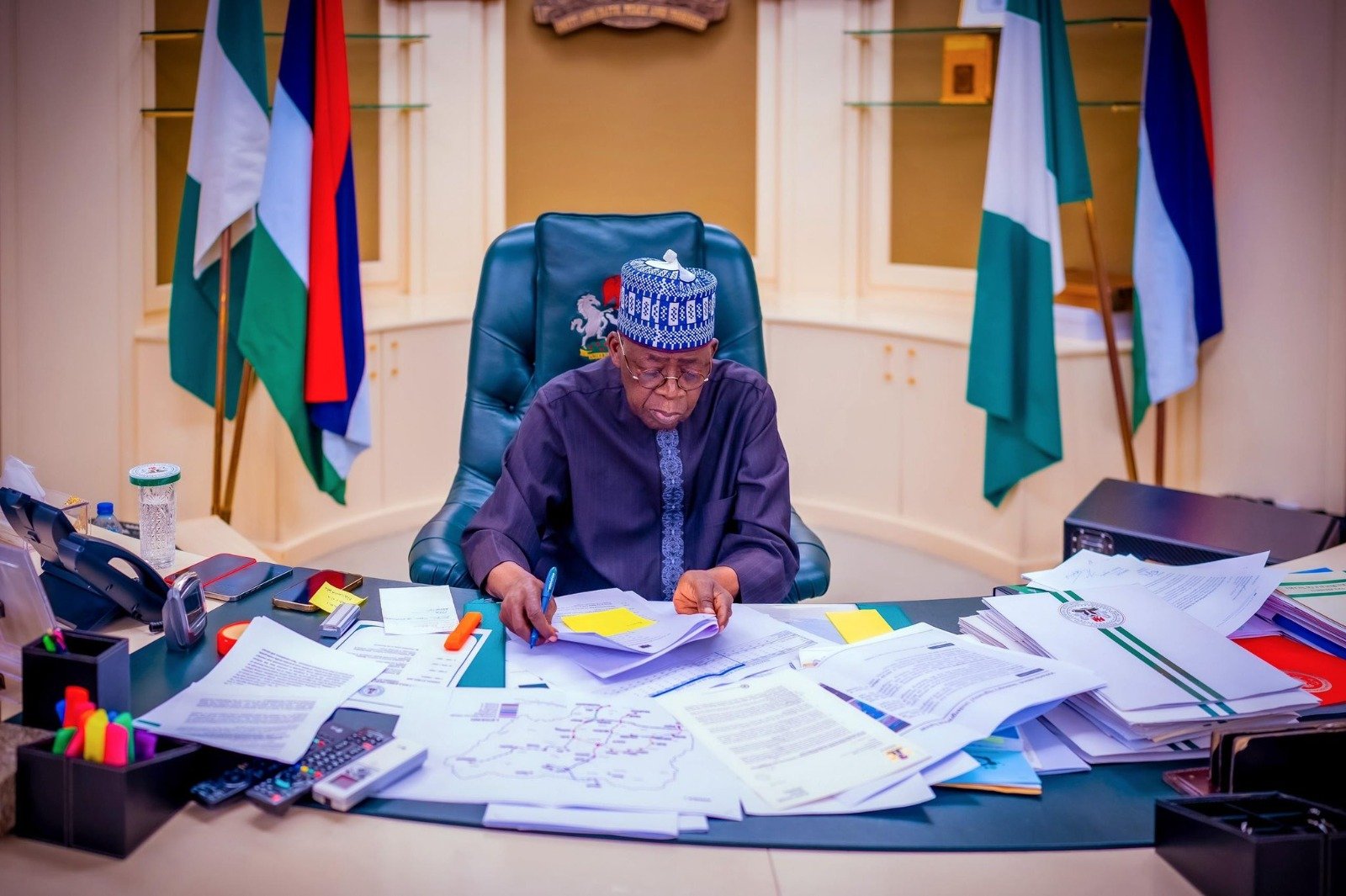
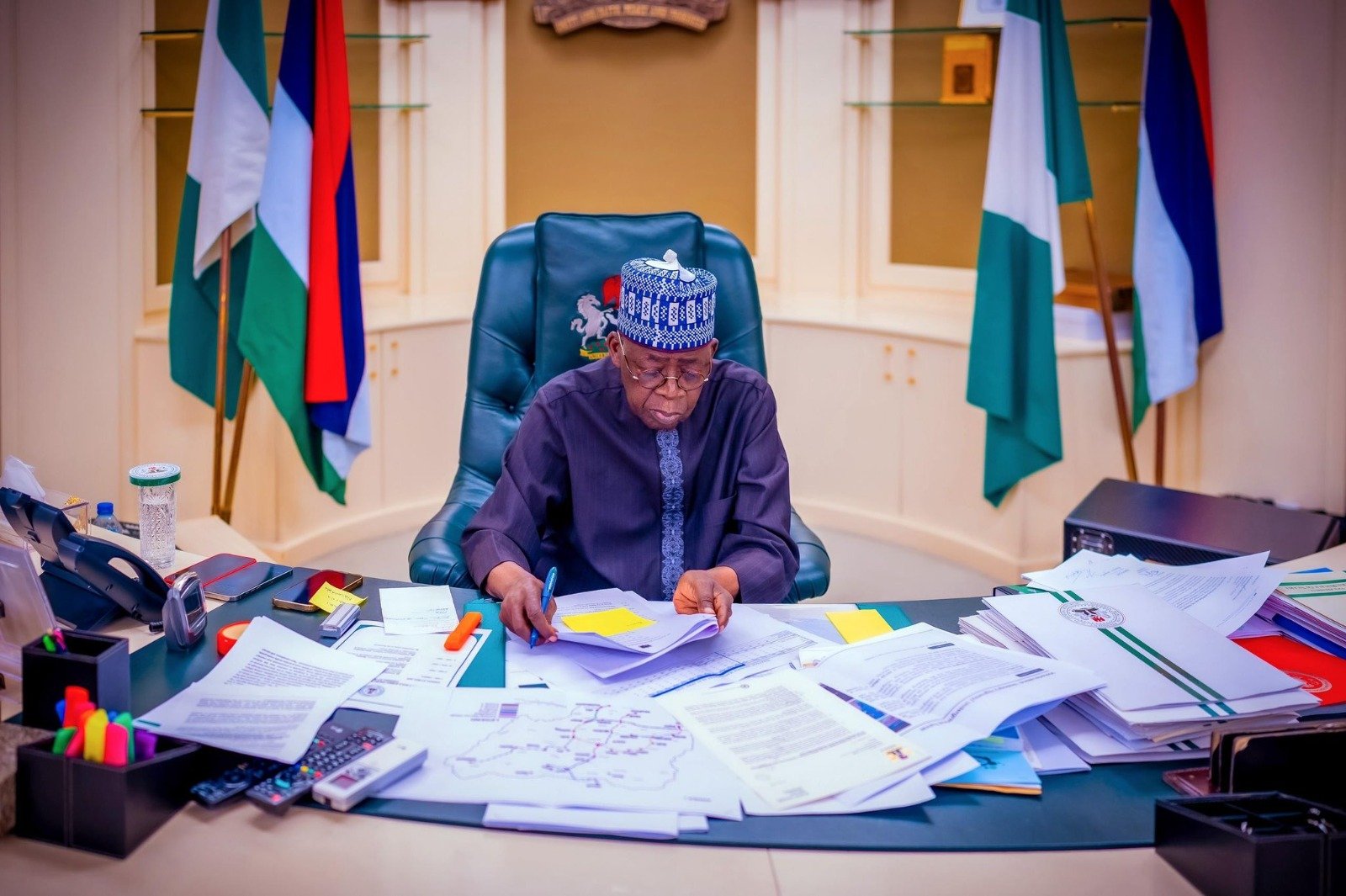
President Tinubu signed the Electoral Act 2026 (Amendment) into law around 5pm on Wednesday at the Aso Rock Presidential Villa, Abuja, with senior National Assembly officials in attendance.

It came barely 24 hours after the bill was passed by both chambers of the National Assembly.

During the ceremony, Tinubu raised concerns about Nigeria’s current broadband infrastructure and technical capacity to handle real-time electronic transmission of election results, even as he signed the Electoral Act 2026 (Amendment) into law.

But in a statement by its National Publicity Secretary, Ini Ememobong, the PDP called the development “a dark day for democracy.”

He stated, “The hurried grant of presidential assent to the contentious bill, as passed by both chambers of the National Assembly, despite widespread opposition from Nigerians, confirms that this was a well-choreographed drama by the APC.

“The party’s fear of inevitable defeat in a free and fair election is palpable, and they can no longer conceal it. This is indeed a sad day for democracy.

“The Nigerian people have been dealt a bad hand, one that existentially threatens democratic governance. The President has demonstrated an inability to rise above partisanship in the art of governance.”

The bill, which was approved by the National Assembly on Tuesday, has generated significant debate, especially over provisions for real-time electronic transmission of election results, a key demand by opposition parties, civil society groups, and election observers following widespread allegations of result manipulation during the 2023 general elections.

The signing occurred days after the Independent National Electoral Commission released the timetable for the 2027 general elections, intensifying concerns among opposition stakeholders that the amendment was designed to favour the ruling party.

The Executive Director of YIAGA Africa, Samson Itodo, described the bill as “a step backward rather than a reform.”

He said, “First, this bill that was passed, it is an absolute missed opportunity for transformative electoral reforms because it fails to address critical gaps. It signals a regression.

“So, it is a reform in name and a regression in substance. I wish that the President had rejected the bill and asked the legislators to go and fix some aspects of the bill.”


He also criticised provisions related to INEC’s independence and electronic transmission of results, saying, “When you look at electronic transmission of results, the provision adopted by the National Assembly is completely against what citizens demanded because what they have done is they have made the process more vulnerable to manipulation.

“So, I say that this particular bill signals a regression in substance. And we cannot call these reforms.”

Meanwhile, the Country Director of Accountability Lab, Friday Odeh, described the amendments as a potential threat to election integrity.

Odeh stated, “There is a huge danger of rigging. We know there has been progress made, but again, for me, it looks like a huge reversal of the progress that has been made. And this is legalising rigging in a very formal way.”

However, the Executive Director of the Civil Society Legislative Advocacy Centre, Auwal Musa, offered a more measured perspective, acknowledging that while the law was not perfect, it provided a framework for future improvement.

“Well, as it is now, since the National Assembly and the President did not yield to the call by Nigerians to ensure that we have electoral law that is acceptable by us, improve the electoral transparency and boost confidence of Nigerians to even participate in the election, I think whatever it is, we just have to manage with what we have now.

“We just have to accept this law and continue to advocate for an improved electoral law in Nigeria,” Musa explained.

Opposition kicks

The Labour Party caucus in the House of Representatives also condemned what it called the hurried assent granted to the Electoral Act Amendment Bill 2026 by President Tinubu.

The plenary of the House was on Tuesday turned into a rowdy session over the bill as opposition lawmakers teamed up against their All Progressives Congress counterparts in demanding, among others, the electronic transmission of election results without a proviso.

The controversy had intensified following the release of the timetable for the 2027 general elections by the Independent National Electoral Commission.

Last week protests rocked the National Assembly complex, with civil society organisations and opposition figures demanding that the law mandate live electronic transmission of results from polling units directly to the commission’s central server.

See also  Defence headquarters warns former soldiers against protests

They argued that such a provision would reduce manipulation and enhance transparency.

However, members of the ruling All Progressives Congress and other stakeholders expressed reservations about the technical feasibility of real-time transmission in areas with limited telecommunications infrastructure, advocating a phased or hybrid approach that would allow manual collation where electronic systems fail.


Despite an overwhelming rejection of the altered version, which recognised both electronic transmission and manual transmission in the event of the failure of technology, the APC lawmakers voted in the majority, forcing the opposition to stage a walkout.

Reacting to President Tinubu’s assent to the legislation, leader of the caucus, Mr Afam Ogene, said he wondered why the development took place at the speed of light.

In a statement issued on Wednesday, the Anambra lawmaker said, “It is quite interesting that, even before the ink with which the parliament crossed the t’s and dotted the i’s on the clean copies of the bill dried up, the President has gleefully put his imprimatur on the bill, leaving Nigerians to wonder if, indeed, the executive had ample time to look through the document.”

He added, “Gone with the signing are the genuine concerns of apprehensive Nigerians regarding what the new Act portends to the integrity of the country’s future elections.

“In fact, Nigerians and indeed the world must now begin to see the clear difference between campaign promises and actual motives of political players.

“While it is convenient outside the confines of power to oppose incremental increase in the price of petroleum products, it is convenient to pronounce ‘subsidy gone’ when they have the opportunity.”

The lawmaker said while it is right to advocate electronic voting in 2013, it has become obtuse, 13 years after, to canvass a fragment of it: electronic transmission of results.

He explained, “While it was convenient to ask a sitting administration to quit, on account of an alleged inability to halt the spread of insecurity, today, under their watch and allure of office, insecurity of multivarious form have become an insistent by-word.

“For emphasis, on January 13, 2013, the National Publicity Secretary of the defunct Action Congress of Nigeria, Lai Mohammed, had in a statement said, ‘We assure INEC of our full support towards using electronic voting in 2015. We also appeal to all other political parties, civil society organisations and indeed all Nigerians to join us in pushing for a system that will eliminate the role of thugs and sideline vote thieves during our elections, in addition to making our elections free, fair and credible.’

“Today, 13 years afterward, neither Mohammed, who moved on to become Nigeria’s Minister of Information and Culture for eight years, and his principal, who is now our country’s current leader, see anything worthy in electronic transmission of results, much more electronic voting.

“Now that they have had their way, we call upon Nigerians not to despair. On the contrary, the battle for our country’s redemption has only just begun.”

He pledged the readiness of the LP House of Representatives caucus to mobilise Nigerians to reject any compromise of the electoral system.

“As an opposition bloc, we certainly have our job cut out: the mobilisation of fellow Nigerians to reject, at the polls, those who specialise in asking them to do only as they say, instead of living by their own creed,” he added.

CUPP slams Tinubu


The Coalition of United Political Parties also criticised the President and the National Assembly for undermining the will of Nigerians by amending the Electoral Act to allow manual transmission of election results, despite Nigerians demand for mandatory electronic transmission.

CUPP National Secretary, Peter Ameh in an exclusive interview with The PUNCH described the move as a blatant disregard for the aspirations of citizens who hope to vote out the current leadership in 2027.

He stated, “President has been collaborating with the National Assembly all along to undermine the wishes and aspirations of our citizens.

“The effort for a mandatory electronic transmission of election results had already been approved, but they were attempting, using their majority, to brazenly act in disregard of the people.

“Democracy is not built around elective officials; it is built around the citizens.”

Ameh said after prior consultation with all zones, it was agreed that electronic transmission should be mandatory.

Yet, resources were spent on charades, traveling from one zone to another, pretending to act transparently and truthfully for the benefit of the election, only to reverse provisions that would have strengthened the electoral process, he stated.

“The President quickly signed the Electoral Act into law after working with the National Assembly to include manual transmission, against the demand of many Nigerians, instead of mandating only electronic transmission of results,” he asserted.

See also  How Bandits Negotiator Spent Ransom Share On Luxury Cars, Trips – DSS

According to Ameh, the new mandate for electronic and real-time transmission of results will empower more Nigerians and strengthen the electoral process against rigging, and they will be voted out in 2027.

“However, they colluded against the Nigerian people by adding a manual transmission clause for their convenience and hurriedly signing it into law, because they fear credible elections.

“This is totally disheartening and disappointing. I am also disappointed with the opposition,” he lamented, adding that they should not rely solely on breakthroughs or isolated issues but must collaborate and develop a stronger, more coherent strateg.

“Leadership requires putting pressure on the National Assembly, which has surrounded itself with the executive and consistently underperformed.

“They are clearly afraid of elections, which makes the times ahead very challenging,” he argued.

Tinubu questions broadband

At the signing ceremony, President Tinubu raised concerns about Nigeria’s current broadband infrastructure and technical capacity to handle real-time electronic transmission of election results.

“Maybe Nigeria should question our broadband capability. How technically are we today? How technically will we be tomorrow to answer the call of either real-time or not,” the President said, addressing principal officers of the National Assembly who had transmitted the bill to him for assent.

The President emphasised that the credibility of elections depends more on proper human management and oversight than on electronic systems, noting that voters still cast their ballots manually, and results are still counted and sorted manually at polling units.

“No matter how good a system is, it’s managed by the people, promoted by the people, and result is finalised by the people.

“In fact, for final results, you are not going to be talking to the computer.

“You are going to be talking to human beings who announce the results,” he said.

‘Every vote counts’

Senate President Godswill Akpabio, speaking earlier to journalists, said the amended Act addressed core concerns raised by Nigerians and introduces provisions that will make future elections more transparent.

He said the new piece of legislation eliminates the perennial problem of result manipulation between polling units and collation centres.

Speaking to journalists shortly after the signing ceremony, Akpabio said the new law addresses the core concerns raised by Nigerians over the integrity of the electoral process and introduces provisions that will make future elections more transparent and secure.

“At the end, Nigerians will benefit a lot from future elections. Every vote will now count,” the Senate President said.

He noted that the amendment represents the first time since independence in 1960 that Nigeria’s electoral laws will recognise electronic transmission of results.

Akpabio explained that the amended Act mandates the electronic transmission of polling unit results to the INEC Result Viewing Portal, a key demand by civil society organisations, opposition parties, and election observers following widespread allegations of result manipulation during the 2023 general elections.

However, he said the law also took into account areas with poor telecommunications infrastructure, ensuring that the primary source of results remains the EC8A forms signed by presiding officers, party agents, and security personnel at polling units.

“We took cognisance of areas where there may not be any network, where they may not be communication capacities and availability.

“We said, since the polling unit result comes in from EC8A, which is signed by the presiding officer, signed by the agents, and signed in the presence of security agents, copies are given to all.

“Then we can use that as the primary source of collation at that unit,” he said.

Akpabio added, “And then, of course, we transmit it. Even if there is no network at that time, once we step out of there, maybe towards the ward centre or the local government centre, it will drop into the iREV and people will still be able to view.”

The Senate President said the implication is that Nigerians will now be able to compare results uploaded to the portal with what is eventually collated at ward, local government, and state levels, making it impossible for results to be tampered with after leaving polling units.

“The implication of that is that if what is eventually collated at the next centre is different from what is in the iREV, Nigerians will be able to compare whether the election result had been tampered with.

“And for us, that had always been the problem in the country, that once election results leave a polling unit, they will be tampered with or mutilated. That has been eliminated today,” he said.

The Senate President dismissed suggestions that the National Assembly had bowed to political pressure, insisting that the final provisions of the amendment were the product of thorough consultations and deliberations in plenary sessions of both chambers.

See also  Lagos Assembly backs state police, advances anti-begging bill

“We are satisfied that we have met the aspiration of Nigerians, not those who are politically motivated,” he said, adding that the Senate had even sacrificed its holiday break to conclude work on the amendment.

Akpabio also highlighted other provisions in the new law, including the introduction of direct primaries for political parties, which will allow party members to vote directly for candidates of their choice rather than relying on delegate selection.

“Participatory democracy, more inclusiveness. Members of different political parties are now allowed to do direct primaries.

“That means you can choose the person you want. Delegate selection, of course, one person can write the list and then just submit, but this time around, the members who are in the political party will stand up and vote for their candidates and the candidates of their choices,” he said.

The Senate President said the amendment also addresses scenarios where election winners are disqualified by courts, noting that instead of declaring the runner-up as winner, the law now mandates fresh elections to ensure that Nigerians truly elect their leaders.

“We don’t want a situation where in an election, you have five people contesting, one person scores out of 300,000 votes, one person scores 290,000, and then, for one reason or the other, he’s disqualified by the court, and then the person who scored 1,000, who is not popularly elected, will now be declared a winner.

“All those things are eliminated. We have now recommended that where such a case happens, then they should call for another election,” he said.

He noted that the same principle now applies to governorship elections, where candidates who fail to meet the constitutional requirement of scoring 25 per cent of votes in at least two-thirds of local government areas cannot be declared winners even if they scored the second-highest votes.

Speaker of the House of Representatives, Abbas Tajudeen, who also addressed journalists, drew attention to the reduction of the election notice period from 360 days to 300 days.

“This will inadvertently translate to holding the presidential and National Assembly elections in January 2027, and that will technically avoid conducting elections during the month of Ramadan of 2027.

“I think this is another piece of ingenuity that the National Assembly has introduced to avoid voter apathy in the next general election,” the Speaker said.

The Electoral Act 2026 (Amendment) comes days after INEC released the timetable for the 2027 general elections.

The 2022 Electoral Act had been criticised following the failure of INEC’s Result Viewing Portal on the day of the 2023 elections, an incident that triggered allegations of rigging.​​​​​​​​​​​​​​​​


Tinubu gave ascent to the Electoral Act 2026 (Amendment) at a signing ceremony at the Presidential Villa, Abuja, around 05:00pm, with principal officers of the National Assembly in attendance, our correspondent observed.

The 2027 general elections are scheduled to hold on February 20 for Presidential and National Assembly elections and March 6 for Governorship and State Houses of Assembly elections.

Wike commends Tinubu

Meanwhile, the Minister of the Federal Capital Territory, Nyesom Wike, commended President Bola Tinubu for promptly signing the Electoral Act Amendment Bill 2026 into law, describing the move as a strong commitment to strengthening Nigeria’s democratic process.

In a statement issued on Wednesday by his Senior Special Assistant on Public Communications and Social Media, Lere Olayinka, the minister praised the President’s swift assent to the bill, noting that it demonstrates a resolve to make elections more credible.

Wike said the passage of the amended Electoral Act by the National Assembly and the President’s immediate approval had effectively put an end to what he described as “unnecessary protests” by individuals preparing excuses for electoral defeat.

“Democracy has always been a work-in-progress, as it has continuously evolved,” Wike said, adding that “by always looking into the Electoral Act with a view to strengthening our democratic process, it is sure that we will keep getting it better.”


The minister congratulated both the President and members of the National Assembly for their roles in the legislative process.

“I therefore congratulate Mr President and the National Assembly members for playing their roles in this dispensation to make democracy stronger,” he said.

Wike applauded President Tinubu for the speed with which he signed the bill into law.

“Particularly, I commend the President for not keeping Nigerians waiting for more than 24 hours before signing the Electoral Act Amendment Bill 2026 into law,” he said.

Continue Reading
Click to comment

Leave a Reply

Your email address will not be published. Required fields are marked *

News

Germany deports 137 Nigerians in five chartered flights

Published

on

Germany deported at least 137 Nigerian citizens in five documented chartered operations between February and June 2026, according to reports sighted by The PUNCH.

The documented arrivals comprised 27 Nigerians deported in February, 37 deported directly by Germany as part of a 50-person joint European Union operation in March, and 24, 23 and 26 Nigerians deported in April, May and June, respectively, according to figures contained in reports monitored by the DERS Team and Refugees4refugees.org.

The figures indicate an increase in the use of chartered flights to return Nigerians from Germany and other European countries, with several of the operations involving cooperation among European states.

On February 18, 2026, a batch of 27 Nigerians arrived at the Lagos Cargo Airport following a deportation operation from Germany.

According to Refugees4refugees.org, the flight was operated by World2fly and departed Stuttgart before arriving in Lagos shortly before 2 pm.

The report said the operation was primarily enforced by Germany, although one person, described as severely ill and mentally unfit, was transferred from Slovakia to join the 26 people deported from Germany.

It also identified Baden-Württemberg as a major participant in the operation and said Stuttgart had hosted both the December 2025 and February 2026 deportation operations to Nigeria.

The report further alleged that while some of those deported had serious health conditions, others had lived and worked in Germany for several years.

It cited the case of a single mother and her three children who were deported from the Sindelfingen district in Stuttgart despite reportedly having documentation relating to their residence status.

See also  Defence headquarters warns former soldiers against protests

According to the report, the family subsequently returned to Germany after intervention by a volunteer and confirmation from local foreign authorities that the deportation had been made in error.

Furthermore, the February deportation also coincided with Nigeria’s participation in preparations for the Voluntary National Review of the Global Compact for Migration ahead of the 2026 International Migration Review Forum in New York.

The DERS Team said that Nigerian government agencies did not send representatives to receive the deportees at the airport, adding that the returning Nigerians were subsequently transported away from the airport without adequate assistance.

On March 10, another 50 people were deported to Nigeria in a joint EU operation hosted by Germany in cooperation with Spain, Austria and Belgium.

Germany accounted directly for 37 of the deportations, according to the figures provided.

The operation was described as the largest single deportation involving Nigerians in the three years referenced in the report.

A further 24 Nigerians, including women and a minor, were deported on April 9 on a chartered flight from Frankfurt organised through Frontex and German authorities, according to the supplied data.

In May 2026, another batch of 23 deportees was returned to Nigeria, while 26 Nigerians arrived in Lagos on June 17 following another routine chartered deportation flight.

Taken together, the five documented batches amounted to 137 Nigerians returned to the country between February and June 2026.

The figures highlight the continued use of organised charter flights in the enforcement of migration decisions involving Nigerians in Europe.

Migration rights advocates have, however, continued to argue that deportation policies should be accompanied by adequate safeguards for vulnerable people and proper procedures to prevent wrongful removal.

See also  How Bandits Negotiator Spent Ransom Share On Luxury Cars, Trips – DSS

While migration is as old as time itself, identified underlying factors driving irregular migration include conflict, exploitation, climate-related pressures and economic inequality.

Migration is the permanent or temporary movement of people from one place to another, changing their home. It can happen within a country or across borders, shaping populations, cultures, and job markets.

Source: punchng.com

FOLLOW US ON:

FACEBOOK

TWITTER

PINTEREST

TIKTOK

YOUTUBE

LINKEDIN

INSTAGRAM

Continue Reading

News

Adeyemi demands media, lawyers’ presence before Reps probe on PFIPC scandal

Published

on

The House of Representatives Ad Hoc Committee investigating the controversy surrounding the Presidential Foreign Investment Promotion Council is yet to decide where it will question the council’s self-appointed Director-General, Adeniyi Adeyemi, a source familiar with the committee’s proceedings has disclosed.

The development comes as Adeyemi insisted that his lawyers and journalists must be present before he submits to questioning by the House committee.

The committee, chaired by the lawmaker representing Kanke/Kanam/Pankshin Federal Constituency of Plateau State, Yusuf Gagdi, is probing how the PFIPC secured official office accommodation within the Federal Secretariat Complex in Abuja and received a budgetary allocation of more than N1.32bn in the 2026 Appropriation Act despite allegedly having no legal existence.

The investigation has attracted significant public attention following allegations that the council operated within government structures despite lacking legal recognition, raising concerns about possible lapses in public financial management and institutional oversight.

Adeyemi, who has been in police custody over the controversy surrounding the council, is expected to appear before the committee this week, following testimonies from several senior government officials.

However, as of Sunday, the venue for the much-anticipated session remained unsettled.

The source, who spoke on condition of anonymity because he was not authorised to discuss the committee’s proceedings with the media, confirmed the development in response to an inquiry by The PUNCH.

Asked whether the committee had chosen a venue for Adeyemi’s appearance, the source simply replied, “No decision yet.”

The development followed the committee’s hearings with key government officials, including the Head of the Civil Service of the Federation, Didi Walson-Jack; the Director-General of the Budget Office of the Federation, Tanimu Yakubu; the Director of Banking Services at the Central Bank of Nigeria, Hamisu Abdullahi; and representatives of the Inspector-General of Police.

The officials’ testimonies reportedly raised questions about how Adeyemi allegedly presented himself as the head of the PFIPC and secured recognition and access within government circles.

Adeyemi had, through his lawyers, indicated his willingness to appear before the committee publicly and respond to questions concerning the allegations.

However, Gagdi said the committee would determine the venue for the session at a later date.

Meanwhile, the Coalition of United Political Parties has rejected the findings of the Independent Corrupt Practices and Other Related Offences Commission on the PFIPC controversy, describing the investigation as inadequate and calling for a broader and transparent inquiry.

In an interview with our correspondent, CUPP spokesperson, Agu Bryan, said the ICPC’s report, which reportedly cleared the Presidency of wrongdoing while indicting Adeniyi Adeyemi, failed to answer critical questions about how an allegedly non-existent government agency was able to operate at such a high level.

“The ICPC probe of the Presidential Foreign Investment Promotion Council which exonerated the Presidency and indicted Adeniyi Adeyemi is nothing short of a charade,” Bryan said.

He argued that the report appeared to portray Adeyemi as having operated almost entirely alone, despite the scale of activities attributed to him.

See also  PHOTOS: Five ECWA female members d!e in road accident while traveling to Kaduna for burial

According to Bryan, such an operation could not have continued without assistance or enabling actions by officials within government institutions.

“As Nigerians, we know that someone could not have operated an alleged high-profile agency of such magnitude without enablers, either within the Presidency or across the government agencies involved,” he said.

Bryan called for a broader examination of the roles allegedly played by government institutions referenced in Adeyemi’s correspondence, including the Office of the Secretary to the Government of the Federation, the Central Bank of Nigeria and the Office of the Head of the Civil Service of the Federation.

He particularly cited the testimony of the Head of the Civil Service of the Federation, Didi Walson-Jack, that her office failed to conduct due diligence on some of the documents associated with the controversial council.

The coalition also questioned how the PFIPC allegedly found its way into the national budget if, as reported by the ICPC, it had no legal foundation.

CUPP said the National Assembly and relevant government ministries owed Nigerians an explanation over how funds were appropriated to an organisation whose legal status had allegedly not been established.

“The National Assembly, particularly the House of Representatives, which appropriated funds to an agency that, according to the investigation, never existed as a creation of law, also owes Nigerians an explanation,” Bryan said.

He asked who within the Ministry of Budget and National Planning processed the budget line attributed to the PFIPC and what verification mechanisms were applied before public funds were appropriated.

CUPP also raised questions about the alleged recruitment of hundreds of staff and the extent to which Adeyemi was granted access to official government activities.

Bryan said the issues went beyond determining whether Adeyemi forged documents, arguing that investigators should establish how he allegedly gained access to government processes and institutions.

The controversy escalated after investigators reportedly established that a signature attributed to the Chief of Staff to the President, Femi Gbajabiamila, was forged.

CUPP said the finding should prompt investigators to examine other official documents and correspondence allegedly used by Adeyemi.

“It is commendable that the House and the Police have established that the signature of the Chief of Staff to the President was allegedly forged. But that raises another critical question: how many other documents, official correspondences and signatures allegedly used by Adeyemi were also forged?” Bryan asked.

He said Nigerians deserved to know the full extent of the alleged deception and whether officials responsible for verifying the credentials of individuals dealing with public institutions failed in their duties.

The coalition further questioned how the PFIPC allegedly acquired sufficient official recognition to participate in government processes and appear in the national budget.

“How did a supposedly non-existent agency attain such a level of official recognition and attention that it found its way into the national budget?” he asked.

CUPP also called for Adeyemi to be given a fair opportunity to defend himself before the House committee, arguing that a transparent confrontation with the evidence could help determine whether other individuals or institutions were involved.

See also  How Bandits Negotiator Spent Ransom Share On Luxury Cars, Trips – DSS

“Was Adeyemi given fair hearing thus far? Has he been given the privilege to appear before the Yusuf Gagdi-led Ad hoc Committee of the House of Representatives probing the matter to be interrogated and directly answer questions?” Bryan said.

He invoked the legal principle nemo judex in causa sua—that no person should be a judge in his own cause—in arguing that the investigation should be conducted independently and transparently.

Bryan said anything short of an open and impartial investigation would fail to satisfy public expectations.

He also criticised the ICPC’s handling of the matter and called for independent professional bodies to be considered if the Federal Government was genuinely interested in establishing the facts.

“If President Tinubu is determined to unravel the truth, independent organisations or bodies like the NBA, West African Bar Association or international or private investigators should be allowed to come in and take over the investigation,” Bryan said.

He accused federal security and anti-corruption agencies of lacking sufficient independence to investigate the controversy objectively, a claim the agencies have not accepted.

The House committee’s inquiry follows mounting concerns over how Adeyemi allegedly operated the PFIPC, secured government recognition and participated in official engagements despite questions over the organisation’s legal status.

The controversy has also drawn attention to the roles of several government institutions whose officials allegedly interacted with Adeyemi or processed documents connected to the council.

The committee is expected to hear directly from Adeyemi as it seeks to establish how the PFIPC was created, how it operated, who recognised it and whether public funds were allocated or expended in connection with its activities.


His appearance before the committee could therefore prove significant in determining whether the alleged scheme was the work of an individual or involved officials and institutions within government.

Adeyemi demands media

Adeyemi, through his lawyer, Ademola Oyedokun, had on Wednesday rejected the House committee’s decision to question him at an undisclosed location while he remains in police custody.

The committee subsequently attempted to question him on Thursday, but Adeyemi declined to respond to its questions, prompting the lawmakers to reschedule the interrogation for Monday.

However, a family source said Adeyemi had informed the committee that he would only submit to questioning if journalists and his legal representatives were allowed to be present.

“They eventually rescheduled to Monday and my brother told them that when they are coming, they should come with the media, otherwise he will not grant them audience.

“Initially, they agreed to come with the media, but later they said they would not be coming with any media. They said if he refuses to grant them audience, they will go ahead and conclude their investigation and it will be said that he was the one who failed to grant them audience,” the source said.

The development came a day after Adeyemi’s family raised concerns over an attempt by members of the House committee to question him in police custody without his lawyers present.

Adeyemi’s brother, Peter, alleged that the detained promoter declined to answer questions because his legal representatives were absent.

“The Reps committee came and wanted to interrogate him, but he refused. They are still there trying to make him talk without any of his lawyers being present. We are crying out loud so that the right thing would be done.

“He has stated that he wants to be quizzed the same way others who have accused him have spoken. It’s not that he is not willing to state his side of the story,” he said.

When contacted on whether the police were aware of the committee’s proposed visit and whether the lawmakers would be granted access to Adeyemi, the police spokesperson, Ani Ineidu, said visitors would be allowed provided they met the necessary requirements.

“Yes, if they have necessary documents. I’m not aware if they have relevant documents or authorisation, but if they fulfil the conditions, everybody who is under police custody has a right to visitors.

“So, in a case like this, if they have that right, they will be granted access,” Ineidu said.

In a statement issued on Wednesday, Oyedokun said his client welcomed the House investigation into the alleged establishment and operations of the PFIPC but opposed what he described as a closed-door interrogation.

“We have read that the committee intends to interview our client at an undisclosed date and place. We ask it, respectfully, to think again.

“Everyone else in this matter has been heard in public, and what has been said about our client was said in public. He should be allowed to answer in the same place it was said,” the lawyer stated.

The committee had on Tuesday announced that it would question Adeyemi at an undisclosed location while he remains in police custody.

The Chairman of the committee, Yusuf Gagdi, said the arrangement was necessary to avoid interfering with ongoing investigations by the Nigeria Police Force, the Economic and Financial Crimes Commission and the Independent Corrupt Practices and Other Related Offences Commission.

Gagdi said the committee had invited Adeyemi but was informed by the police that he remained in custody pursuant to a court order.

He added that the National Assembly would not act in a manner that undermined the judiciary or violated the principle of separation of powers, stressing that lawmakers lacked the authority to override an existing court order directing Adeyemi’s detention.


The committee is investigating allegations surrounding the creation and operations of the PFIPC, including claims of impersonation, forgery, financial impropriety and the unlawful use of government facilities and official insignia.

Source: punchng.com

FOLLOW US ON:

FACEBOOK

TWITTER

PINTEREST

TIKTOK

YOUTUBE

LINKEDIN

INSTAGRAM

Continue Reading

News

PHOTOS: Osun-Osogbo: Priestess defends 10-year-old Arugba, dismisses child abuse claims

Published

on

The Araba of Osogbo, Ifáyemí Elébuibón, has defended the tradition of selecting a young maiden as the Arugba of the Osun-Osogbo Festival, describing the role as a privilege rather than child abuse.

This is as a priestess and custodian of Osun Osogbo also defended the practice, saying the Arugba was selected through Ifa divination from the royal lineage.


Osun-Osogbo: Priestess

Elébuibón spoke in a video interview posted on Sunday by Yoruba cultural content creator, Wàá Ṣeré, amid discussions surrounding the age and responsibilities of the 10-year-old Arugba, Princess Alimot Osunbunmi.

Arugba is the young maiden chosen to carry the sacred calabash during the annual Osun-Osogbo Festival procession to the Osun Sacred Grove.

Alimot, a member of the royal family of the Ataoja of Osogbo, was selected through traditional Ifa divination in March 2025.

She carried the sacred calabash for the first time during this year’s procession to the Osun Sacred Grove on Friday, after she was unable to do so during the 2025 festival because of her young age.


10-year-old Arugba of the Osun-Osogbo Festival, Princess Alimot Osunbunmi carries the sacred calabash at Osun Osogbo festival…Photo Credit: Dewunmi Lagos

Explaining the role and its benefit, Elébuibón said the Arugba served as a spiritual intermediary between the Osun deity and the people.

He added that the responsibility was not determined by biological age.

“You see those people saying all that? They lack understanding. They don’t know. Whoever says the Arugba is too young—this one is ten years old, but some started at five!

See also  You’re too big for REA chairmanship, Fayose ’s brother tells ex-governor

“The role the Arugba plays is a role of spiritual maturity, not about physical age. What the Arugba does for the town and the community is what the white man calls a ‘medium’—an intermediary between the Orisa and the people,” he said.

Elébuibón said the young maiden could communicate the wishes of the deity to the people because of the spiritual significance attached to the position.

“As young as she is, provided she remains pure and undefiled by any man, she can wake up one morning and say, ‘Mother Osun said this and that, do this, do that, don’t do this.’”

He added that the Arugba’s spiritual development was not necessarily tied to her physical age.

“Very soon, she will mature spiritually far beyond her biological age because the Orisa themselves nourish and care for them. Her role is not about age; what she does is not about age.”


FILE: Ifayemi Elebuibon

A female priestess and culture custodian, in another video posted by culture content creator Olamide Oseyifunmii, also defended the practice, saying the Arugba was selected through Ifa divination from the royal lineage.

According to her, the chosen maiden must be a virgin and is expected to observe certain taboos associated with the role.

“Whomever Ifa chooses becomes the Arugba. The Arugba must be a girl who remains untouched, pure, and a virgin. That is strictly what the Arugba must be,” she said.

She rejected the description of the practice as child abuse, saying the young girls selected for the role were traditionally protected and treated with care.

See also  How Bandits Negotiator Spent Ransom Share On Luxury Cars, Trips – DSS

“Being selected as the Arugba carries taboos and honours; it is not what Westerners label as ‘child abuse’.”

The priestess said the Arugba was not expected to carry heavy loads apart from the sacred calabash during the annual procession.

She also explained the spiritual significance attached to the young maiden, saying devotees who bow before the Arugba were not worshipping the child but honouring the Osun deity believed to be represented through her.

“They were bowing to the divine spirit of Osun Ewuji inside her and upon her head,” she said.

The 2026 Osun-Osogbo Festival, which began on August 7, is being held at the Osun Sacred Grove in Osogbo, Osun State, and will run until August 19.

The annual festival, centred on the Osun deity, is one of Nigeria’s major traditional and cultural festivals and attracts worshippers, tourists and cultural enthusiasts from Nigeria and beyond.

Source: punchng.com

FOLLOW US ON:

FACEBOOK

TWITTER

PINTEREST

TIKTOK

YOUTUBE

LINKEDIN

INSTAGRAM

Continue Reading

Trending