State governments across Nigeria have left N264.12bn in Universal Basic Education Commission (UBEC) matching grants unspent, even as public schools grapple with dilapidated classrooms, overcrowding and shortages of learning materials, raising concerns about the utilisation of funds meant to improve basic education.
The 2025 UBEC Annual Report, exclusively obtained by The PUNCH, showed that the funds had been disbursed to State Universal Basic Education Boards but remained unexpended in state government accounts as of July 21, 2025, when the commission conducted financial monitoring visits across the states and the Federal Capital Territory.
Benue State recorded the highest unspent balance of N19.18bn, followed by Imo with N14.12bn, Osun with N14.02bn, Kwara with N13.99bn and Delta with N13.40bn. The five states accounted for N74.72bn, representing about 28.3 per cent of the total.
The findings come amid persistent challenges in the public education system, with pupils in some communities learning in dilapidated buildings, overcrowded classrooms and makeshift structures. In Benue and Kwara, for instance, residents and education stakeholders described deteriorating school facilities and stalled or inadequate interventions, highlighting the gap between funds reported as unspent and the urgent needs of public schools.
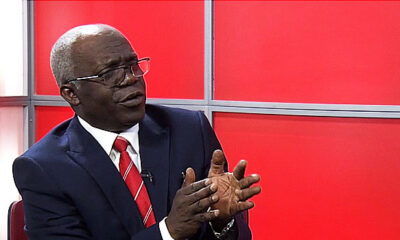
Human rights lawyer, Femi Falana, SAN, criticised the failure to utilise funds intended for basic education, accusing governors of neglecting poor children. He also urged state governments to deploy released intervention funds and fulfil the requirements for accessing counterpart grants.
Falana, who cited a Federal High Court judgment on the obligation of governments to provide free, compulsory and universal basic education, called for greater accountability in the management of education funds and measures to ensure that children have access to schooling.
The unspent balances span different administrations, including outgoing and incumbent governors. However, the report does not break down how much each administration received, inherited or failed to utilise.
According to the report, the funds had been disbursed to State Universal Basic Education Boards but remained unspent in state accounts at the time of UBEC’s financial monitoring visits.
Benue tops list
Benue recorded the highest unutilised balance, at N19.18bn, followed by Imo with N14.12bn and Osun with N14.02bn.
Kwara had N13.99bn, while Delta recorded N13.40bn. Other states with substantial unspent balances were Borno, with N13.20bn; Anambra, N12.67bn; and Kano, N12.15bn.
Adamawa recorded N11.38bn, while Gombe had N11.09bn. In all, 10 states had more than N11bn each in unutilised matching grants.
In the North-Central, apart from Benue and Kwara, Kogi recorded N7.60bn, Plateau N6.98bn, Nasarawa N6.75bn and Niger N3.62bn. The Federal Capital Territory had N5.67bn.
In the South-East, Imo and Anambra recorded N14.12bn and N12.67bn, respectively. Abia had N8.64bn, Enugu N5.03bn and Ebonyi N2.81bn.
In the South-West, Osun led with N14.02bn, followed by Ekiti with N8.40bn. Ogun recorded N5.26bn, Oyo N5.09bn, Ondo N3.48bn and Lagos N1.85bn.
In the South-South, Delta recorded N13.40bn, followed by Akwa Ibom with N8.09bn. Edo had N2.48bn, Cross River N2.47bn, Bayelsa N1.60bn and Rivers N329.28m.
In the North-East, Borno recorded N13.20bn, Adamawa N11.38bn and Gombe N11.09bn. Yobe had N4.37bn, while Taraba recorded N168.48m.
In the North-West, Kano had N12.15bn, Jigawa N7.92bn, Kebbi N7.21bn, Kaduna N7.09bn and Zamfara N7.03bn. Katsina recorded N6.15bn, while Sokoto had N1.96bn.
Bauchi recorded N825.99m, making it one of only three states with unutilised balances below N1bn, alongside Rivers and Taraba.
The state-by-state figures underscore the scale of unspent education funding across the federation. However, the report does not establish why the individual states failed to utilise the funds or whether the balances have changed since the monitoring visits.
Funds remain unspent
The unutilised grants come amid persistent challenges in Nigeria’s basic education sector, including dilapidated classrooms, overcrowding, shortages of learning materials and unequal access to quality schooling.
The Federal Ministry of Education’s Nigeria Education Statistics 2024 portal put the national learner-to-classroom ratio at 60.1, above the benchmark of 35 learners per classroom. Some states recorded significantly higher ratios, although the dataset has limitations because not all schools submitted information.
The figures highlight the need for greater investment in school infrastructure and learning facilities. However, the unspent balances alone do not establish how many classrooms could have been built or rehabilitated with the funds.
Depending on approved action plans and state-specific needs, the grants can support classroom construction and renovation, the provision of desks and instructional materials, sanitation facilities and teacher development.
Determining the number of projects that could have been delivered would, however, require details of approved budgets, procurement costs, project specifications and expenditure categories.
The central concern is that funds intended to improve basic education had been disbursed but remained unspent at the time of UBEC’s monitoring visits.
How grants work
The Universal Basic Education Commission administers federal intervention funds to support the delivery of basic education across Nigeria.
Under the matching grant arrangement, state governments are generally required to provide counterpart funding equivalent to 50 per cent of the relevant project cost and submit approved action plans before accessing the federal contribution.
The scheme is designed to ensure that states share responsibility for financing basic education rather than relying solely on federal intervention.
The grants support approved projects aimed at improving access to and the quality of primary and junior secondary education, including school infrastructure, learning facilities and other basic education interventions.
However, the balances in the UBEC report relate to funds that had already been disbursed but remained unspent. They are distinct from grants that states could not access because they failed to provide the required counterpart funding.
The distinction raises questions about project planning, procurement, contract execution, financial oversight and the capacity of state education agencies to implement approved programmes within reasonable timelines.
Administrations face accountability
The unspent balances also raise questions about continuity and accountability in the management of public education funds during changes in political leadership.
Because the figures span different periods, responsibility cannot automatically be assigned solely to the governors in office when UBEC conducted its monitoring visits.
Outgoing administrations may have left unspent balances for their successors, while incumbent governments may have inherited funds without completing the projects for which they were earmarked.
Establishing responsibility would require details of when each tranche was released, which administration received or inherited it, the projects approved, expenditure incurred, implementation deadlines and outstanding balances at the end of each administration.
State governments and SUBEBs should also explain whether contracts were awarded, contractors mobilised to project sites, projects completed but not fully accounted for, or funds subsequently returned or reallocated under the applicable rules.
The figures do not, on their own, establish that the money was stolen or diverted. They show that the funds had not been expended and remained in state accounts at the time of UBEC’s monitoring visits.
Nevertheless, prolonged non-utilisation of earmarked funds warrants scrutiny, given that children’s access to adequate schooling depends partly on the timely implementation of public education programmes.
UBEC raises concerns
UBEC has previously expressed concern about the management of intervention funds at the state level.
In July 2025, the commission’s Executive Secretary, Dr Aisha Garba, reportedly identified several challenges, including slow utilisation of matching grants, non-compliance with fund utilisation guidelines, alleged diversion of funds, failure to deduct and remit taxes, breaches of due process in contract awards and failure to adhere to approved action plans.
The concerns were raised during a financial management training programme for SUBEB directors of finance and accounts, internal auditors and matching grant desk officers from the states and the Federal Capital Territory.
The commission’s concerns underscore the difference between releasing funds and ensuring that they deliver the intended benefits.
While training officials in financial management and procurement procedures may help address capacity gaps, it cannot, on its own, guarantee timely project delivery or measurable improvements in schools.
The N264.12bn in unspent grants therefore raises questions about whether stronger monitoring, clear implementation deadlines and more effective accountability measures are needed to ensure that the funds are used for their intended purpose.
Dilapidated Benue schools
Despite the N19.18bn in unutilised Universal Basic Education Commission matching grants reported in Benue State, stakeholders have expressed concern over the deteriorating condition of public primary schools across the state.
A political office holder, who spoke on condition of anonymity, questioned why the state government had not deployed the funds to rehabilitate schools, particularly those damaged by years of attacks by suspected herders.
“Benue State has suffered a lot from Fulani herdsmen attacks, and several schools were destroyed in the process. My concern is, if the state government has this amount of money, why is it difficult to channel it towards renovating or rebuilding our schools?” he said.
However, a local government chairman from the Benue North-East Senatorial District, who also requested anonymity, disputed the suggestion that the reported balance indicated wrongdoing. He claimed that the funds were part of a World Bank-assisted education programme and said their utilisation was awaiting the provision of templates for approved projects.
“It’s not an issue of corruption. The fund is a World Bank-assisted programme, and it is not peculiar to Benue alone. The World Bank is yet to release the funds because it is waiting for templates upon which the money is going to be spent,” he said.
The council chairman added that he had heard that the Economic and Financial Crimes Commission was investigating the matter.
“Though, we heard that the EFCC is investigating the issue,” he told our correspondent in a telephone interview on Wednesday.
Other local government chairmen, who spoke on condition of anonymity, also attributed the poor state of some public schools to years of attacks on communities, saying several school buildings had been destroyed and required reconstruction or renovation.
“You know that the state has been under the grip of Fulani herdsmen attacks for years. Most of the schools in the affected communities were destroyed and needed either total reconstruction or renovation,” one of them said.
The poor condition of some schools has also drawn attention from civic groups. An online media organisation recently cited a report by civic technology organisation MonITNG, which accused relevant authorities in Benue of failing to address the dilapidated state of a public school in Ushongo Local Government Area.
According to the report, RCM Primary School in Adikpo, Mayange Mbayan, Ushongo LGA, had been abandoned since 2023. Residents were said to have written several letters to relevant authorities seeking its renovation, but their appeals had yet to yield results.
“Behind these broken walls are innocent children with dreams, ambitions and a future worth fighting for,” MonITNG was quoted as saying.
Pupils of LGA Primary School, Nbegha, in Buruku LGA, have also continued to receive lessons in difficult conditions more than eight years after a windstorm damaged parts of the school building.
Efforts to obtain comments from the state Commissioner for Education, Dr Margaret Adamu, were unsuccessful, as she did not respond to calls. The Executive Secretary of the State Universal Basic Education Board, Dr Grace Adagba, who had earlier asked our correspondent to contact her via WhatsApp, also did not respond to enquiries.
Adeleke unable to access UBEC funds
Osun State Commissioner for Education, Dipo Eluwole, attributed the state’s inability to access fresh UBEC matching grants to its financial difficulties, saying the government could not afford the required counterpart funding.
Speaking with one of our correspondents on Wednesday, Eluwole said monthly allocations due to local government areas in the state had been withheld since February 2025, leaving Governor Ademola Adeleke’s administration to run the government largely on state allocations.
The commissioner said Adeleke had cleared outstanding counterpart-funding obligations covering five years after assuming office in 2022, enabling the state to access grants for those years.
“When Governor Ademola Adeleke assumed office, the last time counterpart funds were paid for Osun State to access UBEC funds was in 2018. On assumption of office, he went to the Universal Basic Education Commission, collected the data and offset the funds for 2019, 2020, 2021, 2022 and 2023. He paid them off,” Eluwole said.
He said the state was now struggling to raise the required counterpart funding, which he put at N3.5bn in the previous year and about N2.7bn in the current year.
“It is when the state pays the counterpart funds that UBEC releases its own matching grant. Since February last year, Osun local government allocations have not been paid,” he said.
Eluwole said the alleged withholding of local government allocations had placed additional financial pressure on the state government, which he said had taken over responsibilities previously funded from local government resources. These include the salaries of primary and junior secondary school teachers, local government workers, pensions and gratuities, health workers’ salaries, medical supplies for government hospitals and the five per cent allocation to traditional rulers.
Explaining the difficulty in raising the counterpart funding, he said the state’s available revenue was being used to meet competing obligations, including debts inherited from the previous administration.
“Counterpart fund for UBEC is supposed to be paid from the local government funds, and the funds have not come. Right from source, from the allocation coming to the state, they will deduct the debt of the previous administration. It is from the balance that the government is using to run its business.
“So, where do you think the governor can get money to pay the counterpart fund? In Osun State, I don’t know of any other state; that is what we are facing here. I am telling you that what we met on ground when we were sworn in, the governor cleared everything,” he said.
The commissioner also cited the financial strain on the state’s School for Persons Living with Disabilities, saying its reopening had been delayed because suppliers were owed for three terms of food and upkeep.
“Do you believe that the School for Persons Living with Disabilities just resumed last week? The money for their feeding and upkeep per term is N46m, and we owe the suppliers for three terms. They refused to supply unless we pay. That is why their resumption was delayed. We can’t put them in the hostel without feeding them. We have just managed to pay for one term now. We begged them to supply the food,” Eluwole said.
Dilapidated Kwara schools
Dilapidated classrooms, overcrowded learning spaces and stalled renovation projects persist in some public schools across Kwara State, raising questions about the state’s reported N13.99bn in unutilised Universal Basic Education Commission matching grants.
Although the UBEC report does not link the funds to specific schools or projects, the condition of public schools across the state highlights the infrastructure needs facing pupils and raises questions about the extent to which education funding has translated into improved learning facilities.
A March report by The PUNCH documented the deplorable condition of Warah Community Junior Secondary School in Ilorin West Local Government Area, where some classroom ceilings had collapsed, windows were broken, and sections of buildings had peeling paint and deteriorating wooden supports.
Pupils learnt in overcrowded classrooms and makeshift shelters built by community members, with some sitting on bare floors because of inadequate classrooms and furniture.
The school is one example of the wider infrastructure challenges facing public schools in the state.
At Government Day Secondary School, Lafiagi, in Kwara North, photographs obtained by The PUNCH on Wednesday showed dilapidated classrooms in the Universal Basic Education section and a staff room without a ceiling, fan or windows.
Renovation work on the SS2 and SS3 classroom blocks and the examination hall at the school has reportedly remained incomplete since it began in 2025.
The situation has left some senior students without dedicated classrooms, forcing different groups to share available spaces, including science laboratories, for lessons.
A resident of Warah and member of the school’s education committee, Alhaji Isiaka Warah, said the community had repeatedly written to relevant authorities about the school’s condition without receiving the needed intervention.
“I am part of the school’s management committee that meets regularly with the principal. We have written several letters to the appropriate authorities, but there has been no response so far,” he said.
The infrastructure challenges come as the UBEC report ranked Kwara fourth among states with the highest reported unutilised matching grant balances, behind Benue with N19.18bn, Imo with N14.12bn and Osun with N14.02bn. Delta ranked fifth with N13.40bn.
However, the Chairman of the Kwara State Universal Basic Education Board, Raheem Adaramaja, disputed the reported figure when contacted by The PUNCH on Wednesday.
“I don’t know the source. However, it is not true,” he said.
Asked to provide the state’s current balance or records detailing the amount available and its utilisation, Adaramaja said, “We don’t have delay utilisation of funds,” but did not provide an alternative figure or supporting documents.
His response leaves unresolved the discrepancy between the UBEC report and the state board’s position, including how much in grants Kwara has accessed, spent or retained.
In 2022, while responding to a media report, Adaramaja said the state government had inherited more than 2,000 dilapidated school structures and paid N7.1bn in counterpart funding for the 2014–2019 period to access UBEC matching grants.
“The new administration paid a whopping N7.1bn counterpart funds for years 2014, 2015, 2016, 2017, 2018, and 2019 to access the UBEC matching grants for those years,” he said in a statement at the time.
However, the historical account did not explain the N13.99bn balance subsequently reported by UBEC or establish how much of the grants accessed under the earlier arrangement had been spent on completed projects.
Meanwhile, Governor AbdulRahman AbdulRazaq recently announced donations totalling N180m for Islamic education, research and academic development as Az-Zumratul Adabiyyah School of Arabic and Islamic Studies, Ilorin, marked its centenary.
The donations, announced at the institution’s 100th anniversary celebration on October 12, included N50m to Ansarul Islam Society from the governor in his capacity as Sardauna of Ilorin, another N50m on behalf of the AbdulRazaq family, and N50m from the Kwara State Government to Muhammed Kamaldeen University, Ilorin, to support research and educational advancement.
The remaining N30m was earmarked for scholarships for 30 students. The Senior Special Assistant to the Governor on Communications, Ibraheem Abdullateef, provided the breakdown in a Facebook post, quoting the governor as saying the university donation was intended to strengthen research and academic development.
The donations were for Islamic education, university support and scholarships and do not establish the availability or allocation of funds for public basic school infrastructure. However, they come amid questions about the resources available to address the needs of public schools across the state.
The Commissioner for Education and Human Capital Development, Lawal Olohungbebe, promised to respond to enquiries from The PUNCH but had yet to do so as of the time of filing this report. Attempts to reach the governor were also unsuccessful.
Source: punchng.com
FOLLOW US ON:
FACEBOOK
WHATSAPP CHANNEL
TWITTER
PINTEREST
TIKTOK
YOUTUBE
LINKEDIN
INSTAGRAM