
Connect with us

Business

Apple to invest additional $100 bn in US – White House official

Published

on

Apple will invest an additional $100 billion in the United States, taking its total pledge to $600 billion over the next four years, a senior White House official said Wednesday.

The announcement, which was first reported by US media, will be officially made later Wednesday at 4:30 pm (2030 GMT) at a White House event with President Donald Trump.

In February, Apple said it would spend more than $500 billion in the United States and hire 20,000 people, with Trump quickly taking credit for the decision.

The Silicon Valley-based giant said it was its “largest-ever spend commitment,” which came as tech companies battle for dominance in developing artificial intelligence technology.

It builds on plans announced in 2021, when the company founded by Steve Jobs said that it would invest $430 billion in the US and add 20,000 jobs over the next five years.

Trump, who has pushed US companies to shift manufacturing home by slapping tariffs on trading partners, claimed that his administration was to thank for the investment.

Apple reported a quarterly profit of $23.4 billion in late July, topping forecasts despite facing higher costs due to Trump’s sweeping levies.

Tariffs are essentially a tax paid by companies importing goods to the United States. This means Apple is on the hook for tariffs on iPhones and other products or components it brings into the country from abroad.

FOLLOW US ON:

FACEBOOK

TWITTER

PINTEREST

TIKTOK

YOUTUBE

LINKEDIN

TUMBLR

INSTAGRAM

See also  Ex-UK PM Johnson in Nigeria, reassures foreign investors
Continue Reading
Click to comment

Leave a Reply

Your email address will not be published. Required fields are marked *

Business

World Bank raises Nigeria growth forecast

Published

on

The World Bank has raised its 2026 growth forecast for Nigeria to 4.3 per cent, citing improving macroeconomic stability, recovering investor confidence and a gradual revival in private investment, but warned that rising government spending ahead of the 2027 elections could weaken the momentum of recent economic reforms.

The projection was contained in the bank’s October 2026 Africa Economic Update, titled Building AI Readiness, released on Tuesday. The report also raised Nigeria’s growth forecast for 2027 and 2028 to 4.4 per cent annually, compared with an estimated 4.0 per cent expansion in 2025.

“Economic activity in Nigeria is projected to strengthen from 4.0 percent in 2025 to 4.3 percent in 2026, before edging up to 4.4 percent annually in 2027–28,” the bank said.

The global lender attributed the expected improvement to greater macroeconomic stability, strengthening investor confidence and a gradual recovery in private investment.

The upgraded forecast follows stronger-than-expected economic performance in the second quarter of 2026, when Nigeria’s real Gross Domestic Product expanded by 4.43 per cent year-on-year, compared with 4.23 per cent in the corresponding period of 2025.

Agriculture expanded by 4.39 per cent, up from 2.82 per cent a year earlier, while services grew by 4.6 per cent. Real oil GDP rose by 7.3 per cent, although the sector contributed only 0.2 percentage points to overall growth.

Industrial growth, however, slowed sharply to 4.0 per cent from 7.5 per cent in the second quarter of 2025, highlighting uneven growth across sectors.

The World Bank identified financial services, information and communications technology and real estate as major growth drivers, supported by digitalisation and resilient domestic demand. Agricultural activity is also expected to recover in 2026, although the bank projected weaker momentum in the industrial sector because of softer growth in oil production and manufacturing.

Despite the improved outlook, the World Bank warned that rising government spending ahead of Nigeria’s 2027 general elections could undermine efforts to stabilise the economy and weaken the momentum of reforms.

See also  Ex-UK PM Johnson in Nigeria, reassures foreign investors

Highlighting risks to Nigeria’s outlook, the Washington-based institution said, “Nevertheless, the outlook remains subject to significant downside risks, including tighter global financial conditions, a prolonged conflict in the Middle East, insecurity, climate-related shocks, disruptions to oil production, and rising pre-election spending ahead of the 2027 elections.”

It added, “These factors could weaken reform momentum and erode the social consensus needed to sustain ongoing macroeconomic adjustment efforts.”

The warning comes as Nigeria approaches the 2027 election cycle following a series of major economic reforms implemented by the Federal Government since 2023, including the removal of petrol subsidies, foreign exchange market reforms and efforts to raise government revenue.

The World Bank noted that sustaining politically difficult reforms could become harder as elections approach, particularly when households are still struggling with high living costs.

It said several governments across sub-Saharan Africa had recently undertaken difficult measures, including “fuel subsidy removal, exchange rate liberalisation, fiscal consolidation, and efforts to strengthen domestic revenue mobilization.”

According to the bank, reform momentum could become harder to sustain ahead of elections or during periods of intense political competition. It warned that the danger went beyond a temporary slowdown in reforms, noting that public backing could weaken if painful measures failed to produce visible improvements in living standards within a reasonable period.

The bank said this could reduce the willingness of both governments and citizens to support similar reforms in the future and potentially increase pressure for populist economic policies.

The World Bank also expects Nigeria’s inflation rate to maintain a downward trajectory following monetary tightening, exchange-rate stabilisation and improving supply conditions.

It projected inflation to fall from 23.0 per cent in 2025 to 15.7 per cent in 2026 and further to 12.2 per cent by 2028. “Lower inflation is expected to support household purchasing power and contribute to a gradual reduction in poverty,” the report said.

However, the bank cautioned that faster economic growth alone may not be enough to significantly improve living standards, as the pace at which poverty is declining remains weak because growth in income per person continues to trail overall economic expansion.

See also  Vietnam seeks stronger trade, agricultural ties with Nigeria

It said poverty reduction could remain constrained by elevated fuel prices associated with the conflict in the Middle East, which have placed a bigger burden on low-income households.

This means that even as headline economic indicators improve, households continue to feel pressure from high living costs, particularly where wage growth and employment opportunities fail to keep pace with inflation and other expenses.

The bank also warned governments against fiscal slippages as political pressures increase, saying elevated debt-service obligations continued to restrict fiscal space while inflation remained vulnerable to exchange-rate depreciation, food-price shocks and loose fiscal policy.

It stressed that preserving central bank independence and avoiding monetary financing of government deficits would remain critical to keeping inflation expectations anchored as African economies navigate approaching election cycles and renewed global economic uncertainty.

The Governor of the Central Bank of Nigeria, Olayemi Cardoso, earlier said the CBN was prepared to contain excess liquidity as Nigeria approaches another election cycle.

“We are ready,” he said during a press briefing at the end of the 307th meeting of the CBN’s Monetary Policy Committee in Abuja, explaining that the bank had analysed previous election cycles and developed different scenarios.

He said the CBN would monitor currency in circulation, banking system liquidity, monetary aggregates and foreign exchange demand. “We will proactively deploy any tools and instruments to mop up any excess liquidity,” Cardoso said. “We will not allow ourselves to be caught unaware in any form.”

Meanwhile, the World Bank said Nigeria was among the African economies whose growth outlook had been revised upwards, reflecting the effects of economic reforms and improvements in macroeconomic management.

See also  FG moves to share electricity subsidy costs with states

More broadly, the World Bank raised its growth projection for sub-Saharan Africa to 4.3 per cent in 2026, up from 4.1 per cent in 2025 and 0.3 percentage points higher than its April projection.

Nigeria was among nearly three-quarters of countries in the region whose 2026 growth forecasts were upgraded. World Bank Chief Economist for Africa, Andrew Dabalen, said the region had demonstrated resilience despite a challenging global environment, including higher energy prices linked to disruptions arising from the Iran conflict.

However, the bank cautioned that the region must do more to convert economic expansion into broad-based improvements in living standards.

The World Bank said sustained reforms, increased private investment, improved infrastructure, stronger human capital and higher productivity would be critical to turning macroeconomic stability into meaningful gains for households.

It also urged African economies to accelerate the adoption of artificial intelligence and other digital technologies as a way of raising productivity and creating new employment opportunities.

It said the continent would need to exploit emerging technologies while simultaneously addressing persistent gaps in infrastructure, skills and access to digital services.

The bank projected Nigeria’s current-account surplus to widen from 4.8 per cent of GDP in 2025 to 6.0 per cent in 2026 before narrowing to 3.4 per cent by 2028 as crude prices normalise and import demand recovers.

It also noted that Nigeria, as an oil exporter, was less directly exposed to the global energy shock than many African economies, although its capacity to withstand wider economic effects would depend on the strength of its policy buffers and institutions.

Higher crude oil prices could provide some relief by strengthening Nigeria’s fiscal and external accounts, although the benefits could be partly eroded by volatile capital flows.

Source: punchng.com

FOLLOW US ON:
FACEBOOK

TWITTER

PINTEREST

TIKTOK

YOUTUBE

LINKEDIN

INSTAGRAM

Continue Reading

Business

FG offers 40 oil blocks in licensing round

Published

on

The Federal Government, through the Nigerian Upstream Petroleum Regulatory Commission, has announced the 2026 oil licensing round, offering 40 blocks across land, shallow water and deepwater terrains as the Federal Government intensifies efforts to attract fresh investment into the upstream sector.

This came as the Minister of State for Petroleum Resources (Oil), Heineken Lokpobiri, announced that Nigeria’s crude oil and condensate production has risen to 1.82 million barrels per day, representing an increase of more than 80 per cent from the level recorded when the President Bola Tinubu-led administration assumed office in 2023.

The minister disclosed this on Tuesday in Abuja, quoting data submitted to his office on Monday, adding that the increase was being supported by a sharp rise in drilling activity, with more than 73 rigs now active in the country.

The production growth came as the NUPRC revealed that it had approved 120 oil and gas Field Development Plans since 2024, representing about $47.6bn in capital commitments.

The projects, according to the Commission’s Chief Executive, Oritsemeyiwa Eyesan, are expected to add 1.74 million barrels of oil and 13.9 billion standard cubic feet of gas per day to Nigeria’s production capacity when fully developed.

On oil blocks, the commission also said the new bidding guidelines would require the disclosure of the beneficial owners of every bidder, while the evaluation methodology and results of the exercise would be published more fully.

Eyesan announced the licensing round during her closing remarks at the fifth anniversary celebration of the NUPRC in Abuja on Tuesday.

She said the announcement followed the approval of President Bola Tinubu and the Minister of Petroleum Resources, adding that the blocks would be open to investors with the required technical competence, financial capacity and commitment to develop Nigeria’s petroleum resources.

“Ladies and gentlemen, the wait is over. It is with great joy that I announce that pursuant to the approval of His Excellency, President Bola Tinubu, and the Minister of Petroleum Resources, the Nigerian 2026 Licensing Round is hereby announced.

See also  Dangote to redeploy disengaged workers, says FG

“This round offers 40 blocks across land, shallow water and deepwater terrains. I can see my IOC is already permuting. They are open to investors with the technical competence, financial capability and, above all, the commitment to develop Nigeria’s petroleum resources.

“We will not rest on our laurels. Competition for upstream capital is fierce, and it grows fiercer by the day. Investors have choices. They go where the rules are clear, where the process is predictable and where data can be trusted.”

The announcement comes after the NUPRC concluded the 2025 licensing round, which attracted significant interest from local and international oil companies.

According to the NUPRC boss, 143 companies submitted 200 bids in the 2025 round, with 31 companies emerging as winners of 37 blocks. He said the exercise also marked a significant shift in investor interest beyond the traditional Niger Delta producing areas, as frontier basins including the Anambra Basin, Benue Trough, Chad Basin and Benin Basin attracted investors.

Since the Petroleum Industry Act came into force in 2021, the commission said it had conducted three licensing exercises: the 2022 Deep Offshore Mini Bid Round, the 2024 Nigerian Licensing Round and the 2025 Nigerian Licensing Round, resulting in the award of 57 Petroleum Prospecting Licences.

Eyesan said the commission was determined to make the 2026 exercise more transparent and predictable, stressing that the award of petroleum acreage should no longer be discretionary.

“Five years ago, the Petroleum Industry Act 2021 gave birth to the Nigerian Upstream Regulatory Commission and placed in our hands a sacred trust to administer Nigeria’s petroleum resources for the benefit of all Nigerians.

“Of all the reforms the PIA brought, none speaks more to who we are than this: in Nigeria, petroleum acreage is won, not given. It is no longer discretionary. The PIA made transparent and competitive bidding the rules for the award of Petroleum Prospecting Licences and Petroleum Mining Leases. Clear rules have taken the place of discretion. We have honoured that reform.”

The NUPRC boss said the lessons from previous licensing rounds, including recommendations from the Nigeria Extractive Industries Transparency Initiative, would be incorporated into the 2026 process.

See also  The Bank of British West Africa: Pioneering Modern Banking in Nigeria

She said NEITI’s review of the 2022–2024 licensing rounds found the process to be generally professional, transparent and inclusive, while also identifying areas for improvement in evaluation methodology, disclosure of results, public access to bidding information and beneficial ownership disclosure.

Eyesan said the commission had accepted those recommendations and would implement them in the new round. “The guidelines will also set out our evaluation methodology in full, provide for fuller publication of results and require disclosure of beneficial owners of every bidder, in keeping with NEITI’s counsel.

“In keeping with our tradition, we will publish the timetable at the outset and we will keep to it. In 2025, when we published, there was a lot of scepticism about whether we would meet the timeline. And we proved all our sceptics wrong. We were right on time, not one day late.”

She said certainty over the bidding timetable was important because potential investors needed sufficient time to secure board approvals, mobilise funds and prepare their bids. “Investors must plan. Boards must approve. Funds must be mobilised. Every one of these decisions depends on dates that hold. We will certainly hold,” she stated.

The commission also plans to strengthen communication with prospective bidders through its licensing website and portal, virtual data room, webinars and a dedicated help desk.

Eyesan said all material clarifications would be communicated to all participants to ensure that no bidder received an advantage over others. “And every material clarification will be shared with all participants. No bidder will know what others do not,” she said.

The regulator said the 2026 round would also support Nigeria’s efforts to raise crude oil and condensate production and expand gas reserves. Eyesan said assets offered in the previous licensing exercises, subject to successful development, were expected to contribute significantly to the country’s production target.

She said the assets could add about 500 million barrels of reserves and at least 300,000 barrels per day of crude oil and condensate production within five years, describing the expected additions as an important step towards the national target of three million barrels per day by 2030.

See also  World Bank loans drive Tinubu’s social spending agenda

She added that the assets were expected to contribute about 20 trillion cubic feet of gas reserves and 50 million standard cubic feet of gas per day of production in support of the Federal Government’s “Decade of Gas” initiative.

However, the NUPRC boss warned successful bidders that winning a licence would come with an obligation to develop the assets. “To those who will win, my message remains the same: Drill or Drop. A licence is a commitment to Nigeria, not a trophy on the wall,” she said.

Eyesan said full details of the blocks, qualification requirements and participation procedures would be published on the commission’s website and dedicated licensing portal in the coming days.

She urged Nigerian and international investors to participate in the exercise, saying the commission wanted Nigeria to remain a competitive destination for upstream investment.

“I want Nigeria to win that contest. I want Nigeria to remain the destination of choice for hydrocarbon investments. So, we will make our award processes more consistent and more predictable and we will put comprehensive, current and investment-ready technical data in the hands of bidders so that they can evaluate with confidence and bid competitively.

“The Nigeria 2026 Licensing Round guidelines will clearly set out the eligibility criteria, bid parameters, evaluation criteria and conditions of award. They will be applied consistently so that every eligible investor, large or small, Nigerian or international, competes on a level playing field.”

The licensing round is therefore coming at a time when the Federal Government and the NUPRC are seeking to position Nigeria as a more predictable investment destination, while also ensuring that newly awarded acreage translates into actual exploration, development and production.

Source: punchng.com

FOLLOW US ON:

FACEBOOK

TWITTER

PINTEREST

TIKTOK

YOUTUBE

LINKEDIN

INSTAGRAM

Continue Reading

Business

Dangote stops petrol sales to fuel importers

Published

on

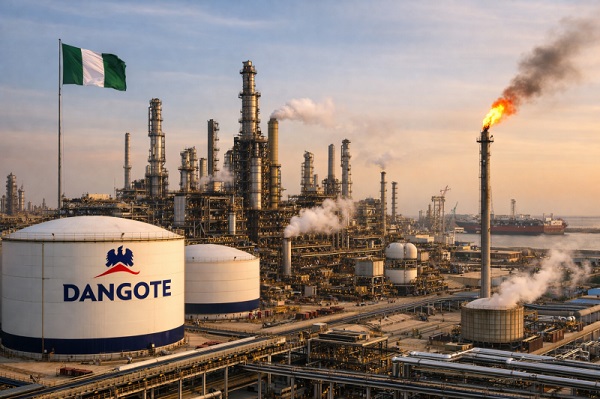
The Dangote Petroleum Refinery has finally stopped the sale of Premium Motor Spirit (petrol) to major marketers importing petroleum products into Nigeria.

An official of the refinery confirmed this to our correspondent, saying the refinery would no longer sell petrol to those blending Dangote fuel with imported grades.

“We are not selling petrol to those who are importing, since they are trying to blend our high-quality products with their ultra-low-quality imported products,” the source said, pleading for anonymity because he was not permitted to speak with the press.

Another source told our correspondent that the refinery now prefers to sell its petrol to members of the Independent Petroleum Marketers Association of Nigeria and others not known for importing. “We are selling to independent marketers and others who are not importing,” he stated.

It was learnt that the development informed why some marketers went to court to get an order that the Nigerian Midstream and Downstream Petroleum Regulatory Authority should continue to grant them import licences.

The marketers feared that they might be left stranded if they could not import fuel at a time when the Dangote refinery had halted petrol sales to them. Dangote had earlier threatened to stop transacting business with fuel importers, whom it accused of blending its Euro-5 petrol grade with imported grades.

It is concerned that such practices could make it difficult to distinguish between products supplied directly by the refinery and products subsequently blended or handled by third parties.

“It is difficult to understand why we would invest heavily in producing high-quality petroleum products for Nigerians, only for those products to be mixed with imported products of uncertain quality and the resulting product to be associated with the refinery,” the refinery said last month.

See also  Miners reject governors’ six-month mining ban plan

Reacting, importers and petroleum marketers kicked against the restriction of petrol sales to marketers who import petrol, describing the move as an attempt to block imports. The marketers also challenged the refinery to provide evidence that imported petrol entering the Nigerian market is below the required quality standard.

The marketers, who preferred not to be mentioned, accused Dangote of trying to prevent the importation of petrol. “We know what Dangote is trying to do. He is just trying to block imports,” one of the marketers said. The marketer argued that a company that sells petrol could not dictate whether a consumer should combine its product with fuel purchased from another supplier.

Using the example of motorists buying petrol from different filling stations, the marketer said Dangote could not prevent consumers from combining products sourced from different suppliers.

“For example, when you buy petrol from a TotalEnergies station, and you go down the road, and your petrol is almost finished, you then buy from MRS. Can TotalEnergies say you should not mix its petrol with MRS petrol? No, it can’t. I don’t understand the game that the Dangote refinery is playing,” he stated.

Another marketer also argued that the Federal Government had a responsibility to ensure an adequate petrol supply and protect consumers, insisting that imports remain necessary when domestic production drops.

Speaking, the National Vice Chairman of the IPMAN, Hamed Fashola, stated that the Dangote refinery is selective about who it sells petrol to because not all major marketers import.

“I don’t know how far that is correct; Dangote now sells to only IPMAN. I think somehow the information I have is that Dangote is selective about it, say those that are involved in importing. I think it’s not everybody that is importing,” he said.

See also  World Bank loans drive Tinubu’s social spending agenda

Clarifying IPMAN’s purchasing position amid market competition, Fashola noted that independent marketers operate flexibly to secure the most competitive pricing, sourcing supply indiscriminately from both local refineries and importers.

“We buy our product anywhere we feel it is cheap. Anywhere we see the product, we go for it, both Dangote and the importers. We always go for the best price,” Fashola stated.

Meanwhile, the National Publicity Secretary of the IPMAN, Chinedu Ukadike, expressed the belief that the Dangote refinery is open to doing business with anyone.

Ukadike noted that independent marketers are ready to buy and sell petrol from all suppliers, stressing that they were not currently involved in importing the product.

While saying he would not know if importers truly blend Dangote’s petrol with imported petrol, he concluded that Dangote is in the best position to determine whatever it can do to discourage blending.

“I believe that the Dangote refinery is open for business and that it will continue to sell to marketers. The issue of blending, I cannot say yes or no, because I’m not part of those who are importing. Independent marketers are not importing yet; we are just marketers who buy and sell.

“So, if there is any measure to discourage adulteration of petroleum products by Dangote, I think the refinery and its experts know best. They know the best way to deal with that. But our own is to continue to buy and sell to marketers. If there is a way to discourage adulteration of petroleum products, I won’t stop Dangote from doing so,” Ukadike added.

See also  CBN ends cash deposit limit for bank customers

Source: punchng.com

FOLLOW US ON:

FACEBOOK

TWITTER

PINTEREST

TIKTOK

YOUTUBE

LINKEDIN

INSTAGRAM

Continue Reading

Trending