Connect with us

News

Amupitan’s security concern: Opposition kicks against troop deployment for 2027 elections

Published

on

New worries about the credibility of the 2027 general elections came up on Wednesday, with the Independent National Electoral Commission warning that growing insecurity across Nigeria could make it hard to hold free, fair, and credible polls.

But the opposition parties firmly rejected the idea of sending soldiers to polling stations, arguing that civil authorities should handle election security. The military plays a supporting, last-resort role in Nigeria’s elections, used mainly in high-risk scenarios, but controversial due to legal and political concerns.

The concerns arise amid heightened political activity, early alignments, and growing anxiety over the security environment ahead of the next election cycle.

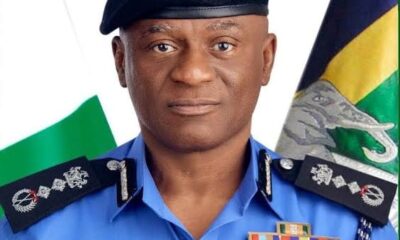
INEC chairman, Prof. Joash Amupitan (SAN), raised the alarm during a visit to the Inspector-General of Police, Tunji Disu, in Abuja, where he emphasised that persistent violence and threats to electoral processes pose a significant risk to democratic stability.

He said, “In Nigeria, our electoral system has faced numerous challenges over the years, ranging from malpractices to threats of violence and vote trading that undermine the confidence of the electorate.

“These challenges not only affect the outcome of our elections, but also pose significant risks to our national security. Thus, it is imperative that we address these concerns with utmost seriousness and resolve. In this regard, I would like to emphasise the importance of proactive security measures.

“The scale of insecurity across the various parts of Nigeria presents a threat to the conduct of the fair election. We must carry out total security risk analysis ahead of the election, and this will enable us to identify potential flashpoints and deploy appropriate strategies to mitigate risks, thereby safeguarding voters, electoral officials and the integrity of the electoral process.”

Amupitan noted that with the presidential election slated for January 16, 2027, and governorship and state assembly polls fixed for February 6, strong collaboration between INEC and security agencies, particularly the police, which lead election security, was crucial.

He also pointed to ongoing party congresses, upcoming primaries under the Electoral Act 2026, and off-cycle governorship elections in Ekiti and Osun states as additional pressure points requiring proactive planning.

The INEC boss further drew attention to Internally Displaced Persons camps, insisting that displaced citizens must not be excluded from the electoral process.

“I also want to draw attention to several IDP camps that are scattered all over Nigeria. Let me say that it is their right to also vote, and they must not be disenfranchised.

“As the electoral body, we are doing everything to ensure that all those in IDP camps are given the conducive environment to exercise their franchise, and also the people with disabilities. So therefore, we commend all these people, categories of persons, persons in IDP camps, as well as persons with disabilities to the IG for special attention and care,” he said.

See also  Taraba, Plateau, Adamawa govs face defection dilemma as Tinubu's Hurricane strikes

Responding, the IG assured Nigerians of a comprehensive, intelligence-driven approach to election security. He disclosed that nationwide threat assessments and intelligence mapping had already commenced.

Disu said the Nigeria Police Force would prioritise preventive policing, inter-agency collaboration and the protection of electoral personnel and infrastructure.

“I assure you that the police will enforce electoral laws firmly and professionally. I want to repeat that we will ensure that we enforce electoral laws firmly and we will do it professionally.

“I want to emphasise that individuals involved in ballot snatching, vote buying, voter intimidation, destruction of electoral materials, violent destruction of polls or attack on electoral officials will be arrested and prosecuted in accordance with the laws.”

On IDPs and vulnerable groups, he added, “You mentioned the issue of people in the IDP camp. We have noted that they are in our plans. People with disabilities have been taken into cognisance, and special plans have been put in place for them.”

Despite these assurances, opposition parties expressed deep reservations over any plan to deploy the military for electoral duties, warning that such a move could heighten tensions and undermine public confidence.

The National Coordinator of the Obidient Movement, Dr Yunusa Tanko, argued that election security should remain within the purview of the police and other civil agencies.

He said, “The police have not been well equipped. It’s an internal matter, and the police should have been well equipped to take care of internal insecurity, while the soldiers would take care of the border and ensure people do not infiltrate the country.

“But the thing is, how well did we even equip our security apparatus to be able to challenge this particular insecurity in the country? Remember, again, we had a similar situation during the (Goodluck) Jonathan era when they raised the issue of insecurity, an action that made the then National Security Adviser, Sambo Dasuki, force the extension of the election because of certain things.

“This is very important for us to look at if the government of the day is not trying to use insecurity as an issue to ensure that this election does not hold. We know this government is seriously worried that Peter Obi is very much likely to be on the ballot. So, we have to be very careful of possible land mines and traps they may be laying down for the opposition.”

Similarly, the National Publicity Secretary of the Labour Party, Ken Asogwa, described the possible deployment of soldiers as misplaced, insisting that elections are civic exercises best handled by civil security institutions.

See also  FG reopens fuel imports, Dangote reels from FX losses due to US-Iran war

He said, “It is quite unfortunate the situation we found ourselves in, so much that we could be thinking of inviting soldiers to guard a civic exercise like our elections. This is an exercise that, in other jurisdictions like Ghana, I don’t even want to talk about the Western world, conducted on weekdays where people will go to work and proceed to wherever they are going.’’

He added, “What happens to the civil defence who are trained to handle tasks like electoral activities? We shouldn’t even go in the direction of soldiers at all. Soldiers are trained to fight war and protect the territorial integrity of countries. They are not trained to man polling booths or pacify people.

“We are only coming out to elect our leaders. It is unfortunate where our politicians have taken us to. Again, the police are also there to handle civic engagements like this.”

In a similar vein, the Tanimu Turaki (SAN)-led Peoples Democratic Party Interim National Working Committee argued that internal issues within INEC posed a greater threat to credible elections than insecurity.

The committee’s National Publicity Secretary, Ini Ememobong, argued, “The INEC Chairman may have a point. But insincerity and partisanship within INEC pose a greater threat to elections than insecurity. He should focus on matters within his direct responsibility, particularly ensuring impartiality, transparency, and credibility, while allowing the President to handle security issues.

“Although insecurity can disrupt elections, attention should be directed toward strengthening INEC’s neutrality as an electoral umpire. The priority for the Commission should be building public trust, demonstrating integrity, and addressing concerns about fairness in the electoral process.

“Calls for the deployment of military personnel ahead of elections should not be considered, given the sensitive role of security in electoral environments and past experiences where it has sometimes been misused or has contributed to tension. Other security agencies should be allowed to handle election-related matters rather than soldiers.

“Ultimately, INEC must concentrate on delivering credible elections anchored on trust, fairness, and institutional integrity.”

Also weighing in, the National Publicity Secretary of the New Nigeria People’s Party, Ladipo Johnson, urged the Federal Government to urgently tackle insecurity ahead of the polls.

“If this government is serious about holding elections in January 2027, then insecurity must be properly tackled. How many months is it again? Eight months, isn’t it? So we have enough time to have a positive effect on the security situation in the country.

“The eight months that they have are more than enough time to begin to turn around the lack of security in the country, especially in these areas that we know. But I do not know if they have the competence to do it, because they’ve had several years to try to get a grip on the problem but failed.

See also  South West commission pushes revival of old rail corridors

“Knowing what we know and the past experiences that we have all had, I would not encourage a situation whereby these governments will be licensed to deploy military men to polling units.”

The All Progressives Congress spokesman, Felix Morka, could not be reached for comments.

Meanwhile, the security crisis is already reshaping political activities. The Social Democratic Party announced the relocation of its May 9 national convention from Abuja to Bauchi State, citing both logistical and security concerns.

The party’s National Chairman, Prof. Sadiq Gombe, said, “Given difficulties in securing a venue, we decided to move it to Bauchi, since constitutionally, the convention can take place anywhere in the country.

“We sincerely appreciate the Governor of Bauchi State who, despite not being a member of the SDP, graciously provided us with a venue for our convention.”

The relocation underscores the widening impact of insecurity on Nigeria’s democratic processes, as parties, electoral authorities and security agencies grapple with the challenge of conducting credible elections in an increasingly volatile environment.

Speaking further, Gombe disclosed that extensive preparations had been made to ensure a hitch-free convention, including arrangements for the safety of delegates and party members travelling to Bauchi.

As part of efforts to guarantee credibility, the party has constituted four key committees to oversee the exercise: the Screening Committee, Electoral Committee, Convention Committee, and a range of sub-committees assigned to specific operational duties.

“Each of the four committees has clearly defined responsibilities to ensure a credible exercise. They were constituted to ensure a smooth and credible exercise.

“We have confidence in the committee members’ competence and integrity to carry out their responsibilities with diligence, fairness and transparency. We assure all that the process will be conducted strictly in line with established guidelines.

“Our screening exercise will cover all aspirants contesting for elective positions, including the office of the President, governorship seats across the 36 states, National Assembly, and State Houses of Assembly,” he assured.

The screening exercise, which commenced in Abuja, is expected to determine the eligibility of aspirants vying for positions at various levels, ahead of the convention where candidates will emerge.

Chairman of the Screening Committee, Air Vice Marshal Sadiq Lima (retd.), stressed the need for integrity and strict compliance with party rules in the vetting process. “Despite our different levels of familiarity, we must approach this assignment with diligence and integrity,” Lima said.

News

El-Rufai backtracks on Ribadu phone-tapping claim, read details

Published

on

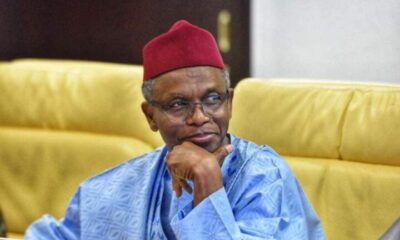
Detained former Kaduna State Governor, Nasir El-Rufai, on Wednesday told the Federal High Court in Abuja that his claim that the telephone of the National Security Adviser, Nuhu Ribadu, was tapped was false, saying he made the statement to scare the government and make its officials uncomfortable.

El-Rufai, who made the admission before the trial judge, Justice Joyce Abdulmalik, described the claim as political rhetoric rather than a factual statement, insisting that neither he nor other opposition figures intercepted Ribadu’s telephone conversations.

The former governor spoke while testifying as the first defence witness in his ongoing prosecution by the Department of State Services over allegations that he intercepted the NSA’s telephone conversations, among other offences.

El-Rufai, who governed Kaduna State between 2015 and 2023, is facing trial over comments he made during an appearance on Arise Television’s Prime Time programme on February 13.

According to court documents, El-Rufai allegedly admitted during the interview that he knew and was associated with an individual who had illegally intercepted the NSA’s telephone communications.

The former Minister of the Federal Capital Territory, who served under former President Olusegun Obasanjo, is accused of breaching national security and public safety through his actions, an offence punishable under Section 12(1) of the Cybercrimes (Prohibition, Prevention, etc.) (Amendment) Act, 2024. He was also charged with failing to report the alleged crime to the relevant security agencies.

During the television interview, El-Rufai had alleged that DSS operatives attempted to abduct him at the Nnamdi Azikiwe International Airport, Abuja, on February 12, 2026, upon his return from Cairo.

He further alleged that the security agency was acting on the instigation of the Independent Corrupt Practices and Other Related Offences Commission, which he claimed had received a directive from Ribadu to detain him.

See also  Mr President, don’t punish Nigerians again with 15% fuel import tariff

The court had, on October 26, ordered the former governor to open his defence to the allegations after dismissing his no-case submission seeking to be discharged and acquitted of the charges.

Justice Abdulmalik held that the application lacked merit and declined to terminate the trial.

At the continuation of proceedings on Wednesday, El-Rufai’s lawyer, Paul Erokoro (SAN), played a recording of the interview his client granted Arise TV on February 13, in which he claimed that someone tapped Ribadu’s phone and relayed his conversations to him and other opposition figures.

After listening to the recording, Erokoro asked his client to clarify what he meant by the statement.

Responding, El-Rufai acknowledged making the claim but said it was not intended to be understood literally.

He explained that his intention was to draw attention to what he described as the government’s surveillance of opposition figures and other prominent Nigerians, including former presidents and senior judges.

El-Rufai said, “What I wanted to say was that the government was monitoring opposition figures and that we knew what they were doing.

“I used the word ‘tap’ as political rhetoric to make them uncomfortable. It was rhetorical, not literal. It was linguistic flourish, just to make the government uncomfortable.”

When reminded by Erokoro that the interviewer had told him that tapping someone’s phone was illegal, the former governor said he intended to expose what he described as the government’s secret monitoring of opposition figures without lawful court orders.

He said, “I was referring to the government violating the law and not someone else doing it.”

Asked who he meant by “we” when he claimed that “we are listening to their conversations…”, El-Rufai said he was referring to himself and other prominent opposition figures.

He, however, denied that they tapped Ribadu’s phone, explaining that he learnt of an alleged plan to abduct and detain him through a mutual friend.

See also  Veteran actor Olu Jacobs dies at 84

The former governor declined to disclose the identity of the person, saying he did not want to jeopardise the interest of his source.

He told the court that after returning home from the television interview, the said friend visited him and clarified that he had not tapped the NSA’s phone.

According to El-Rufai, he told the person that he already knew but had deliberately made the claim to make government officials uncomfortable.

Earlier in his testimony, the former governor said he had known Ribadu since 2003, when he, as head of the Bureau of Public Enterprises, assisted him in establishing the Economic and Financial Crimes Commission by providing office accommodation and funding.

He attributed the breakdown in their relationship to the 2011 presidential election, when Ribadu contested for the presidency, and he supported the late former President Muhammadu Buhari, whom he considered a better candidate.

El-Rufai further alleged that the NSA was opposed to him because of his opposition to President Bola Tinubu’s re-election bid.

He denied involvement in telephone interception, insisting that he neither possessed the knowledge nor the equipment required to tap phone conversations.

However, during cross-examination by the prosecuting counsel, Oluwole Aladedoye (SAN), El-Rufai, who said he obtained a law degree from the University of London, maintained that he would not disclose the identities of those he referred to as “we” in the television interview.

He also refused to name the person who allegedly informed him that Ribadu, Kaduna State Governor, Uba Sani, and the ICPC chairman had met and agreed to ensure his arrest.

See also  South West commission pushes revival of old rail corridors

The former governor said he learnt of the alleged plan before returning from Cairo on February 12. He explained that he resisted attempts by DSS operatives to arrest him at the airport upon his arrival because they failed to produce a valid arrest warrant.

El-Rufai also maintained that his claims during the Arise TV interview that he had never stolen public funds and knew nothing about the disappearance of activist Dadiyata while he was governor of Kaduna State were factual.

He insisted that all other statements he made during the interview were true, except the claim relating to the tapping of Ribadu’s phone.

The former governor, who said he instituted fundamental rights suits over the alleged search of his residence with a defective warrant, admitted that the cases had been dismissed by both the High Court of the Federal Capital Territory and the Federal High Court.

Towards the end of the cross-examination, Aladedoye informed the court that Erokoro had approached him before the commencement of proceedings to seek his assistance in the defence’s plan to invite Ribadu and the ICPC chairman as witnesses.

The prosecuting counsel said he declined the request, explaining that the matter was beyond his control.

Erokoro, however, said he would file the necessary applications to secure their attendance.

Justice Abdulmalik subsequently adjourned the case until February 15 and 16 for the continuation of El-Rufai’s defence.

Source: punchng.com

FOLLOW US ON:

FACEBOOK

WHATSAPP CHANNEL

TWITTER

PINTEREST

TIKTOK

YOUTUBE

LINKEDIN

INSTAGRAM

Continue Reading

News

Buni presents N532bn 2027 budget to Yobe assembly

Published

on

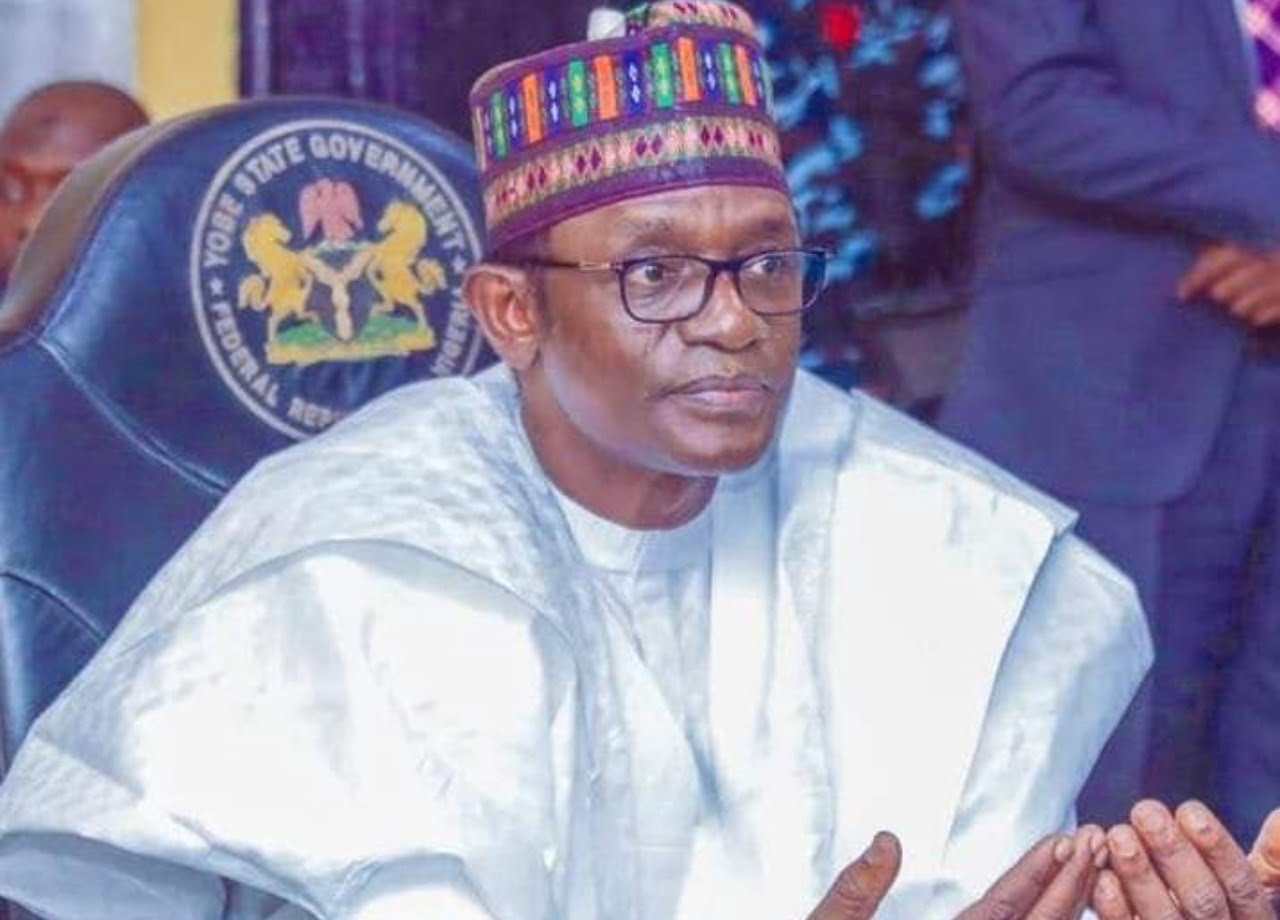
Yobe State Governor, Mai Mala Buni, has presented a proposed budget of N532.27bn for the 2027 fiscal year, with recurrent expenditure taking the largest share of the estimates.

Buni presented the 2027 Appropriation and Finance Bills before the Yobe State House of Assembly in Damaturu on Tuesday, describing the proposal as the final budget of his administration.

Tagged the Budget of Consolidation, Sustainability and Inclusive Growth, the proposed budget represents an increase of N16.739bn, or 3.2 per cent, over the N515.532bn approved for the 2026 fiscal year.

A breakdown of the estimates shows that N288.426bn, representing 54.2 per cent, is allocated to recurrent expenditure, while N243.845bn, representing 45.8 per cent, is earmarked for capital projects.

Presenting the budget, Buni said it was designed to consolidate the achievements of his administration, complete ongoing projects and ensure the sustainability of existing investments.

He said, “Today, with a sense of humility and fulfilment, and in accordance with Section 121(1) of the 1999 Constitution of the Federal Republic of Nigeria (as amended), I once again stand before this Honourable House of Assembly to present the Eighth and last Finance and Appropriation Bills by this administration for your kind consideration and approval for the 2027 fiscal year.”

The governor said the administration would prioritise project completion, improved service delivery and prudent management of public resources.

“The 2027 budget is therefore designed to balance immediate service delivery with the long-term development interest of the state,” he said.

Buni disclosed that the education sector would receive N99.792bn, while N80.543bn was allocated to healthcare.

See also  You impoverished Nigerians, Obasanjo attacks Tinubu’s reforms

He said the education allocation would support the completion of ongoing school construction and rehabilitation projects, the provision of teaching materials, assistance to tertiary institutions and scholarship programmes.

On healthcare, the governor said the government would sustain investments in hospital upgrades, maternity and emergency services, medical equipment and healthcare training institutions.

He also identified the establishment of a modern kidney centre in Gashua as one of the administration’s priority projects.

“We are equally committed to advancing the ongoing establishment of a modern Kidney Centre in Gashua, with emphasis on a safe, accessible, patient-centred treatment environment, appropriate dialysis equipment and the clinical and operational arrangements required for sustainable service delivery,” Buni said.

The governor said infrastructure development would remain a major priority, with emphasis on completing ongoing road, drainage, electricity and commercial infrastructure projects.

He specifically mentioned the Gashua-Masaba, Balanguwa-Kumagannam and Dumbulwa-Lailai roads among the projects requiring attention.

Other priority areas include agricultural development, livestock production, water supply, environmental protection, peacebuilding and the rehabilitation of communities affected by insurgency.

Reviewing the performance of the 2026 budget as of September 30, Buni said the state recorded revenue receipts of N347.078bn, representing 67.3 per cent of the annual projection.

He said the approved 2026 budget stood at N515.532bn, comprising N291.904bn for capital expenditure and N223.628bn for recurrent expenditure.

According to him, recurrent expenditure during the first nine months amounted to N139.346bn, while capital expenditure stood at N94.280bn.

The governor said the administration remained committed to the payment of salaries, pensions and gratuities despite prevailing economic challenges and the demands of post-insurgency recovery.

See also  Kogi shuts markets, motor parks to flush out terrorists

Buni, who described the 2027 proposal as the final budget of his administration, said the government would ensure an orderly transition and preserve ongoing development projects.

“Development must not depend entirely on the presence of any individual in public office. It must be supported by strong institutions, competent public servants, credible planning frameworks and effective systems of accountability,” he said.
The governor assured residents that his administration would continue to discharge its responsibilities until the final day of its tenure.

“We shall continue to work, supervise, deliver and remain accountable until the final day of our mandate. There will be no abandonment of our responsibilities and projects,” he said.

He urged the House of Assembly to give the proposed budget timely consideration and passage.

In a political appeal towards the end of his address, Buni urged the people of Yobe to support President Bola Tinubu’s second-term ambition, arguing that the state’s membership of the ruling All Progressives Congress had created opportunities for it to benefit from the Federal Government.

He also commended Tinubu for approving the Federal Government’s takeover and reimbursement of the Muhammadu Buhari International Cargo Airport project in Damaturu, saying the intervention would free up resources for other development projects.

Source: punchng.com

FOLLOW US ON:

FACEBOOK

WHATSAPP CHANNEL

TWITTER

PINTEREST

TIKTOK

YOUTUBE

LINKEDIN

INSTAGRAM

Continue Reading

News

US military base shooter seeks halt to firing squad execution

Published

on

Nidal Hasan, who is set to be executed by firing squad next month for his 2009 massacre at a US military base, asked a court on Tuesday to halt his execution, according to documents obtained by AFP.

The former US Army major and military psychiatrist asked a federal court to delay his execution, which is set for December 3, while he prepares a case to challenge it on constitutional grounds.

If the execution goes ahead, Hasan will be the first person killed by a US military firing squad since 1945.

A furore over plans to livestream the killing erupted in early October.

US Defence Secretary Pete Hegseth initially said the execution would be “public” before a Pentagon spokesperson added it would be available online.

Concerns mounted far and wide about making the execution into a spectacle and turning Hasan into a martyr.

After days of debate and condemnation, US President Donald Trump cancelled the plans to broadcast the killing, while allowing some witnesses to observe it in person.

Hasan killed 13 people, including 12 soldiers, and wounded 30 others in his November 2009 rampage.

He was shot by a civilian police officer and is paralysed from the waist down.

During his trial, Hasan chose to conduct his own defence, and court-appointed attorneys raised concerns that he was seeking to be executed.

Ultimately, he was sentenced to death by a military jury in 2013.

AFP

Source: punchng.com

FOLLOW US ON:

FACEBOOK

WHATSAPP CHANNEL

TWITTER

PINTEREST

TIKTOK

YOUTUBE

LINKEDIN

INSTAGRAM

See also  PHOTOS & VIDEOS: National strike by Belgium's big unions hits public transport, airports and ships
Continue Reading

Trending