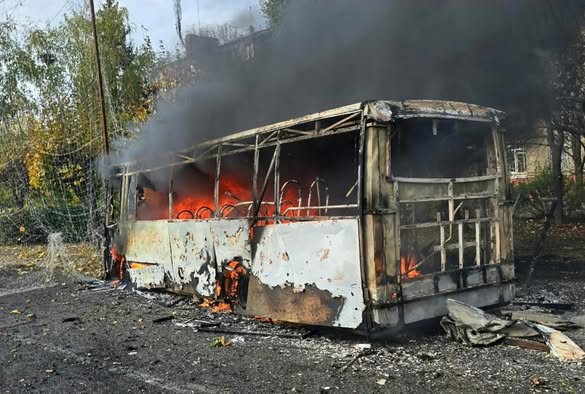
New worries about the credibility of the 2027 general elections came up on Wednesday, with the Independent National Electoral Commission warning that growing insecurity across Nigeria could make it hard to hold free, fair, and credible polls.
But the opposition parties firmly rejected the idea of sending soldiers to polling stations, arguing that civil authorities should handle election security. The military plays a supporting, last-resort role in Nigeria’s elections, used mainly in high-risk scenarios, but controversial due to legal and political concerns.
The concerns arise amid heightened political activity, early alignments, and growing anxiety over the security environment ahead of the next election cycle.
INEC chairman, Prof. Joash Amupitan (SAN), raised the alarm during a visit to the Inspector-General of Police, Tunji Disu, in Abuja, where he emphasised that persistent violence and threats to electoral processes pose a significant risk to democratic stability.
He said, “In Nigeria, our electoral system has faced numerous challenges over the years, ranging from malpractices to threats of violence and vote trading that undermine the confidence of the electorate.
“These challenges not only affect the outcome of our elections, but also pose significant risks to our national security. Thus, it is imperative that we address these concerns with utmost seriousness and resolve. In this regard, I would like to emphasise the importance of proactive security measures.
“The scale of insecurity across the various parts of Nigeria presents a threat to the conduct of the fair election. We must carry out total security risk analysis ahead of the election, and this will enable us to identify potential flashpoints and deploy appropriate strategies to mitigate risks, thereby safeguarding voters, electoral officials and the integrity of the electoral process.”
Amupitan noted that with the presidential election slated for January 16, 2027, and governorship and state assembly polls fixed for February 6, strong collaboration between INEC and security agencies, particularly the police, which lead election security, was crucial.
He also pointed to ongoing party congresses, upcoming primaries under the Electoral Act 2026, and off-cycle governorship elections in Ekiti and Osun states as additional pressure points requiring proactive planning.
The INEC boss further drew attention to Internally Displaced Persons camps, insisting that displaced citizens must not be excluded from the electoral process.
“I also want to draw attention to several IDP camps that are scattered all over Nigeria. Let me say that it is their right to also vote, and they must not be disenfranchised.
“As the electoral body, we are doing everything to ensure that all those in IDP camps are given the conducive environment to exercise their franchise, and also the people with disabilities. So therefore, we commend all these people, categories of persons, persons in IDP camps, as well as persons with disabilities to the IG for special attention and care,” he said.
Responding, the IG assured Nigerians of a comprehensive, intelligence-driven approach to election security. He disclosed that nationwide threat assessments and intelligence mapping had already commenced.
Disu said the Nigeria Police Force would prioritise preventive policing, inter-agency collaboration and the protection of electoral personnel and infrastructure.
“I assure you that the police will enforce electoral laws firmly and professionally. I want to repeat that we will ensure that we enforce electoral laws firmly and we will do it professionally.
“I want to emphasise that individuals involved in ballot snatching, vote buying, voter intimidation, destruction of electoral materials, violent destruction of polls or attack on electoral officials will be arrested and prosecuted in accordance with the laws.”
On IDPs and vulnerable groups, he added, “You mentioned the issue of people in the IDP camp. We have noted that they are in our plans. People with disabilities have been taken into cognisance, and special plans have been put in place for them.”
Despite these assurances, opposition parties expressed deep reservations over any plan to deploy the military for electoral duties, warning that such a move could heighten tensions and undermine public confidence.
The National Coordinator of the Obidient Movement, Dr Yunusa Tanko, argued that election security should remain within the purview of the police and other civil agencies.
He said, “The police have not been well equipped. It’s an internal matter, and the police should have been well equipped to take care of internal insecurity, while the soldiers would take care of the border and ensure people do not infiltrate the country.
“But the thing is, how well did we even equip our security apparatus to be able to challenge this particular insecurity in the country? Remember, again, we had a similar situation during the (Goodluck) Jonathan era when they raised the issue of insecurity, an action that made the then National Security Adviser, Sambo Dasuki, force the extension of the election because of certain things.
“This is very important for us to look at if the government of the day is not trying to use insecurity as an issue to ensure that this election does not hold. We know this government is seriously worried that Peter Obi is very much likely to be on the ballot. So, we have to be very careful of possible land mines and traps they may be laying down for the opposition.”
Similarly, the National Publicity Secretary of the Labour Party, Ken Asogwa, described the possible deployment of soldiers as misplaced, insisting that elections are civic exercises best handled by civil security institutions.
He said, “It is quite unfortunate the situation we found ourselves in, so much that we could be thinking of inviting soldiers to guard a civic exercise like our elections. This is an exercise that, in other jurisdictions like Ghana, I don’t even want to talk about the Western world, conducted on weekdays where people will go to work and proceed to wherever they are going.’’
He added, “What happens to the civil defence who are trained to handle tasks like electoral activities? We shouldn’t even go in the direction of soldiers at all. Soldiers are trained to fight war and protect the territorial integrity of countries. They are not trained to man polling booths or pacify people.
“We are only coming out to elect our leaders. It is unfortunate where our politicians have taken us to. Again, the police are also there to handle civic engagements like this.”
In a similar vein, the Tanimu Turaki (SAN)-led Peoples Democratic Party Interim National Working Committee argued that internal issues within INEC posed a greater threat to credible elections than insecurity.
The committee’s National Publicity Secretary, Ini Ememobong, argued, “The INEC Chairman may have a point. But insincerity and partisanship within INEC pose a greater threat to elections than insecurity. He should focus on matters within his direct responsibility, particularly ensuring impartiality, transparency, and credibility, while allowing the President to handle security issues.
“Although insecurity can disrupt elections, attention should be directed toward strengthening INEC’s neutrality as an electoral umpire. The priority for the Commission should be building public trust, demonstrating integrity, and addressing concerns about fairness in the electoral process.
“Calls for the deployment of military personnel ahead of elections should not be considered, given the sensitive role of security in electoral environments and past experiences where it has sometimes been misused or has contributed to tension. Other security agencies should be allowed to handle election-related matters rather than soldiers.
“Ultimately, INEC must concentrate on delivering credible elections anchored on trust, fairness, and institutional integrity.”
Also weighing in, the National Publicity Secretary of the New Nigeria People’s Party, Ladipo Johnson, urged the Federal Government to urgently tackle insecurity ahead of the polls.
“If this government is serious about holding elections in January 2027, then insecurity must be properly tackled. How many months is it again? Eight months, isn’t it? So we have enough time to have a positive effect on the security situation in the country.
“The eight months that they have are more than enough time to begin to turn around the lack of security in the country, especially in these areas that we know. But I do not know if they have the competence to do it, because they’ve had several years to try to get a grip on the problem but failed.
“Knowing what we know and the past experiences that we have all had, I would not encourage a situation whereby these governments will be licensed to deploy military men to polling units.”
The All Progressives Congress spokesman, Felix Morka, could not be reached for comments.
Meanwhile, the security crisis is already reshaping political activities. The Social Democratic Party announced the relocation of its May 9 national convention from Abuja to Bauchi State, citing both logistical and security concerns.
The party’s National Chairman, Prof. Sadiq Gombe, said, “Given difficulties in securing a venue, we decided to move it to Bauchi, since constitutionally, the convention can take place anywhere in the country.
“We sincerely appreciate the Governor of Bauchi State who, despite not being a member of the SDP, graciously provided us with a venue for our convention.”
The relocation underscores the widening impact of insecurity on Nigeria’s democratic processes, as parties, electoral authorities and security agencies grapple with the challenge of conducting credible elections in an increasingly volatile environment.
Speaking further, Gombe disclosed that extensive preparations had been made to ensure a hitch-free convention, including arrangements for the safety of delegates and party members travelling to Bauchi.
As part of efforts to guarantee credibility, the party has constituted four key committees to oversee the exercise: the Screening Committee, Electoral Committee, Convention Committee, and a range of sub-committees assigned to specific operational duties.
“Each of the four committees has clearly defined responsibilities to ensure a credible exercise. They were constituted to ensure a smooth and credible exercise.
“We have confidence in the committee members’ competence and integrity to carry out their responsibilities with diligence, fairness and transparency. We assure all that the process will be conducted strictly in line with established guidelines.
“Our screening exercise will cover all aspirants contesting for elective positions, including the office of the President, governorship seats across the 36 states, National Assembly, and State Houses of Assembly,” he assured.
The screening exercise, which commenced in Abuja, is expected to determine the eligibility of aspirants vying for positions at various levels, ahead of the convention where candidates will emerge.
Chairman of the Screening Committee, Air Vice Marshal Sadiq Lima (retd.), stressed the need for integrity and strict compliance with party rules in the vetting process. “Despite our different levels of familiarity, we must approach this assignment with diligence and integrity,” Lima said.