Connect with us

Business

Chinese investors may acquire 51% stake in PH, Warri refineries; read details

Published

on

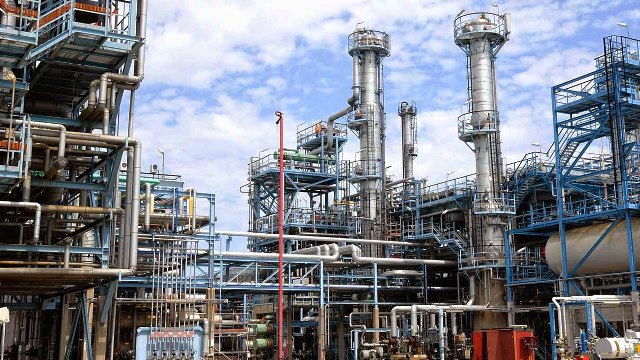
The Nigerian National Petroleum Company Limited is considering an NLNG-style equity partnership that could hand Chinese investors a majority stake of about 51 per cent in the Port Harcourt and Warri refineries as part of a broader plan to rehabilitate and commercially reposition the facilities.

Details of the arrangement emerged after NNPC signed a Memorandum of Understanding with Chinese firms Sanjiang Chemical Company Limited and Xinganchen (Fuzhou) Industrial Park Operation and Management Co., Ltd. for what the national oil company described as a “potential technical equity partnership”.

The MoU was signed in Jiaxing City, China, on April 30, 2026, by the Group Chief Executive Officer of NNPC Ltd, Bayo Ojulari; Chairman of Sanjiang Chemical Company, Guan Jianzhong; and Chairman of Xinganchen Industrial Park Operation and Management Co. Ltd, Bill Bi.

Findings by The PUNCH on Thursday showed that the proposed framework goes beyond conventional refinery rehabilitation contracts and may involve long-term equity participation by the Chinese partners in both refining assets.

Sources at the national oil firm privy to the MoU told our correspondent that the proposed partnership is being structured around an “NLNG-type model” featuring equity participation, joint governance arrangements, and long-term operational involvement.

They disclosed that the structure may be similar to NLNG’s, where investors own 51 per cent equity, participate in governance, and share operational responsibilities over the long term. Under the proposed collaboration, the Chinese firms are expected to support the completion of outstanding work at the Port Harcourt and Warri refineries.

The agreement also covers operations and maintenance services aimed at achieving what NNPC described as “best-in-class, sustainable performance”. According to findings, the planned upgrades would also expand refinery capacity, improve profitability, and raise fuel production standards to cleaner specifications.

See also  Petrol war: Importers outpace domestic refineries with 62% supply in 2025

The parties are equally exploring expansion into petrochemicals and gas-based industrial projects through the development of co-located industrial hubs around the refinery complexes.

“The scope includes capacity expansion, yield optimisation, petrochemical integration, and compliance with clean fuel standards and exploration of gas-based industrial projects in Nigeria,” an NNPC official said, pleading anonymity because he was not authorised to speak to the press.

Speaking after the signing ceremony, Ojulari described the agreement as a major milestone after more than six months of engagement between NNPC and the Chinese firms. “All parties recognise mutually beneficial opportunities for the development and long-term sustainable profitability of NNPC’s refining assets in Nigeria and the collective weight required for success,” he said.

Ojulari added that the agreement marked an important stage in identifying technical equity partners capable of restarting and expanding the refineries. “The MoU is a significant step on the journey towards identifying potential technical equity partner(s) to restart and expand NNPC’s refineries and to explore opportunities in co-located petrochemical and gas-based industries,” he stated.

Our correspondent gathered that the MoU reflects only the parties’ intention to continue discussions in good faith, with definitive agreements still subject to regulatory and customary approvals.

Further findings showed that the implementation process would begin with technical, operational, financial, commercial, and legal due diligence before binding agreements are executed.

“The agreement is a non-binding framework, meaning it is not yet a final commercial contract. Instead, it establishes a basis for cooperation and creates a pathway toward future definitive agreements. The partnership is expected to cover four major operational areas: Sanjiang/Xinqianchen would participate in completing outstanding engineering, procurement, and construction work at the two facilities. The focus is on improving refinery reliability, safety, and efficiency to ‘best-in-class’ standards.

See also  DSS to arraign El-Rufai Feb 25 over alleged cybercrime, security breach

“Instead of a conventional contractor arrangement, the MoU suggests possible equity participation using an NLNG-type model of joint governance arrangements and a long-term partnership framework. This implies Sanjiang/Xinqianchen may take ownership or operational participation rather than acting solely as an EPC contractor. However, everything is subject to agreement.

“Also, there is a possible transformation of the refineries into commercially driven industrial assets like petrochemical and gas,” the source said.

Analysts said the shift towards an equity partnership structure may signal growing concerns within NNPC over the sustainability of previous refinery rehabilitation arrangements.

Speaking in an interview with our correspondent about the MoU, the Executive Secretary of the Major Energies Marketers Association of Nigeria, Clement Isong, said bringing in technically competent partners with equity stakes would ensure efficiency and sustainability.

On the structure of the deal, Isong stressed that the key difference is that the Chinese partners are taking equity in the assets as part owners and would want the refinery to work so they get returns on their investments.

“This is an innovative way of getting the assets to work in an efficient and sustainable way. The challenge we knew was that NNPC did not have the internal competence or capacity to run those refineries efficiently. Now, they have brought a third party, and the key difference is that the third party they have brought is taking equity. He’s a part-owner of the refinery and so would want the refinery to work so he can get returns on his investment,” Isong said.

He described the model as innovative, adding that every Nigerian would be happy if the facilities worked again. He said the NNPC did not have the internal competence and capacity to run the refineries without a technical partner.

See also  Nigeria spends N9tn importing petrol

The Port Harcourt refinery rehabilitation project was earlier awarded to Italian engineering firm Maire Tecnimont, while separate rehabilitation efforts had also commenced at the Warri refinery.

The proposed arrangement could also deepen Chinese participation in Nigeria’s downstream petroleum and gas industries if discussions progress into binding commercial agreements.

punch.ng

FOLLOW US ON:

FACEBOOK

TWITTER

PINTEREST

TIKTOK

YOUTUBE

LINKEDIN

INSTAGRAM

Continue Reading
Click to comment

Leave a Reply

Your email address will not be published. Required fields are marked *

Business

Jigawa butchers plan hike in slaughter fees ahead of Eid-el-Kabir celebration

Published

on

Some butchers in Dutse, Jigawa State, have expressed concern over rising transportation fares, saying the development may affect the cost of slaughter and meat processing services during the Eid-el-Kabir celebration.

They said the trend would negatively affect the operations of slaughter slabs and mobile services.

A cross-section of the butchers stated this in separate interviews with the News Agency of Nigeria on Thursday in Dutse.

A NAN check at the Dutse abattoir showed that the cost of animal slaughter and meat processing had increased by about 200 per cent compared to the previous festive season.

The slaughter fee for a ram ranges from N5,000 and above per head, while a bull costs N20,000 and above, depending on its size.

Meat processing, including packaging and roasting, previously cost about N5,000 for goats and N10,000 for rams per head, respectively.

The Head Butcher, Ado Sakin-Fawa, said they anticipated a significant rise in fees this season due to the increasing cost of transportation.

He said the situation was more favourable during the previous Eid-el-Kabir season, as more families had the financial capacity to afford their services.

Sakin-Fawa said the anticipated increase was largely driven by rising transportation costs across neighbouring communities and markets.

“Transport fares to places such as Sabuwar Kasuwa, Shuwarin and Wudil have increased significantly in recent months.

“As a result, butchers and meat processors now spend more on movement and other operational expenses,” he said.

Sakin-Fawa added that butchers providing home slaughter services might demand higher charges to offset the rising transport costs.

See also  Petrol war: Importers outpace domestic refineries with 62% supply in 2025

Another butcher, Ahmad Mai-Nama, described the situation as uncertain and economically challenging.

He said that although there were no fixed charges for slaughter and other services, prevailing economic realities would push costs higher.

“This year, charges may largely depend on the prevailing economic situation and the cost of transportation,” he said.

He lamented that business activities had remained low ahead of the festive period.

Also, Babannan Abdullahi, a dried meat processor, projected an increase in processing charges due to the soaring price of petrol and other ingredients.

Abdullahi Awaisu, a suya spot operator, said charges for the services had increased due to the inflationary trend in the country.

He, however, expressed optimism that the economic situation would improve and enable them to enjoy better patronage.

(NAN)

Continue Reading

Business

CBN holds rates as OPS flags manufacturing risks

Published

on

The Monetary Policy Committee of the Central Bank of Nigeria (CBN) on Wednesday retained the benchmark interest rate at 26.5 per cent, citing rising external risks, renewed inflationary pressure, and the need to sustain exchange rate stability.

The CBN Governor, Olayemi Cardoso, announced the decision at the end of the committee’s 305th meeting held in Abuja. He said, “The committee’s decision is as follows: retain the monetary policy rate at 26.5 per cent.”

The decision also elicited mixed reactions from members of the Organised Private Sector. They acknowledged the justification for retaining interest rates and, on the other hand, cautioned that high rates hamper private sector investment in SMEs and manufacturing, leading to lower output and hampering job creation.

The committee also retained the standing facilities corridor around the MPR at +50/-450 basis points, the Cash Reserve Requirement of Deposit Money Banks at 45 per cent, Merchant Banks at 16 per cent, and non-TSA public sector deposits at 75 per cent.

The decision came after Nigeria’s headline inflation rose for the second consecutive month to 15.69 per cent in April 2026 from 15.38 per cent in March, according to the latest Consumer Price Index report released by the National Bureau of Statistics.

Food inflation also increased to 16.06 per cent in April from 14.31 per cent in March, reflecting higher transportation and logistics costs as well as seasonal pressures, while core inflation moderated to 15.86 per cent from 16.21 per cent.

The MPC said the renewed inflationary pressure was largely caused by external shocks, particularly spillovers from the Middle East crisis, which had pushed up global energy prices and logistics costs.

However, the committee said the impact on Nigeria had been muted by earlier reforms, including exchange rate stability, improved external reserves, stronger monetary policy transmission, a better-capitalised banking system, and ongoing fiscal consolidation.

It said, “Although inflation has risen marginally for two consecutive months, largely induced by external shocks, the MPC recognised its transitory nature and remained confident that the current macroeconomic environment is sufficiently robust to support a return to disinflation.”

Speaking during the post-meeting press briefing, Cardoso said the CBN would sustain its current policy direction, noting that the country had recorded 11 straight months of disinflation before the recent uptick.

“We’ve got to remember that we’ve been coming from 11 straight months of disinflation. And we believe that what we have now is something that has resulted from external shocks,” he said.

He added that the apex bank had built buffers to protect the economy, saying Nigeria’s recent sovereign rating upgrade by Standard & Poor’s showed that current policies were moving the economy in the right direction.

According to him, exchange rate stability remains central to the CBN’s inflation-control strategy. “It is key that the centrepiece of our toolkit is ensuring that our foreign exchange rate remains stable,” Cardoso said, adding that the bank would continue to work with fiscal authorities to reduce inflation pass-through.

See also  133-year old photography company Kodak says it might have to cease operations

On the foreign exchange market, the governor dismissed claims that the CBN was aggressively intervening to defend the naira. “The answer is that it’s not true,” he said. “The foreign exchange system has changed considerably.”

Cardoso said daily foreign exchange turnover had risen from about $100m when the current administration took office to roughly $550m, with occasional spikes to $1bn. He said the CBN’s intervention in 2025 was only about 1.2 to 1.3 per cent of total market turnover, adding that the market was increasingly being driven by willing buyers and willing sellers.

The governor also said Nigeria’s external reserves remained dynamic and resilient, despite recent concerns over declines in reserve levels. The MPC communiqué showed that gross external reserves stood at $49.49bn as of May 15, 2026, compared with $48.35bn at the end of March, providing 9.04 months of import cover.

Cardoso said some reserve movements reflected normal payments for government obligations and loans, but added that new inflows were also coming in.

Addressing the new foreign exchange manual, the apex bank chief said the document, which became effective on June 1, was part of ongoing reforms to deepen transparency and improve market confidence.

He said the last major revision was done in 2017, adding that the new manual would make it easier for exporters to repatriate foreign exchange earnings and access their funds without unnecessary restrictions.

OPS reacts

In separate phone interviews with The PUNCH, business leaders expressed more cautiousness. They backed the retention as a necessary move to shield the economy from instability linked to tensions in the Middle East and election-related inflation risks. In the same vein, they argued that the high borrowing cost would further weaken small businesses and deepen poverty.

President of the Lagos Chamber of Commerce and Industry, Leye Kupoluyi, explained that while the Chamber acknowledges market expectations for a rate cut to ease credit conditions and stimulate growth, it recognises that persistent inflationary pressures justify policy prudence at this stage.

He warned that “an elevated interest rate continues to constrain private sector investment, especially SMEs and manufacturing, thereby weighing on output and job creation.”

The LCCI described the 26.5 per cent rate as “A necessary stance to anchor inflation expectations, given the rise in headline inflation to 15.69 per cent in April 2026 from 15.38 per cent in March.”

Kupoluyi concluded that LCCI would continue to constructively support the apex bank as it “firmly calls for a clear, data-driven path toward gradual monetary easing once disinflation becomes sustained and exchange rate stability is reinforced.”

On his part, the Deputy President of the National Association of Small-Scale Industrialists, Segun Kuti-George, described the decision as appropriate given prevailing uncertainties.

“It is the sensible thing to do in this unstable atmosphere. Both at the local and world stages, there are serious instabilities, so it’s difficult to respond to them. The best thing is to retain the rates so you don’t get yourself into unnecessary problems due to the general instability,” Kuti-George said.

Also supporting the decision, the Director of the Centre for the Promotion of Private Enterprise, Dr Muda Yusuf, said the committee acted in line with expectations by resisting further tightening.

See also  Fuel distribution controversy: Dangote restores marketers amid mounting pressure

“The MPC decision to retain the rate is in line with the CPPE’s expectation. We were trying to caution that we don’t want to see further tightening of monetary policy,” Yusuf said.

The CPPE chief observed that businesses were already grappling with harsh operating conditions and could not absorb additional increases in borrowing costs. “The situation is bad enough for many businesses. We don’t want an additional hike in interest rates,” Yusuf said.

He explained that although inflation edged higher in March and April, month-on-month indicators for headline, core, and food inflation had declined, giving the apex bank room to maintain rates rather than tighten policy further.

Yusuf added that the prevailing geopolitical tensions involving Iran, Israel and the United States, rising crude oil prices, and increasing election-related spending posed major inflationary threats that made a rate cut unrealistic at this stage.

“Those inflation risks are a lot. So you can’t expect the CBN to be relaxing when you are facing so much inflation risk. Our own position is that even despite that, they should not tighten monetary policy. And they didn’t tighten,” Yusuf said.

However, the President of the Association of Small Business Owners of Nigeria, Dr Femi Egbesola, faulted the decision and called for a reduction in rates at the next MPC meeting.

“Many of us were very hopeful that the interest rate would come down. We believe that lowering the interest rate will go a long way to support more access to funding for SMEs and will also make it more affordable,” Egbesola said.

He said the retention would worsen the challenges facing businesses and households already struggling with rising energy costs and inflation.

“I’m not too sure that this is going to be good for SMEs and the business community. I’m not too sure that it is also going to be good for the citizens because this will continue to mean that poverty will remain or become deeper,” Egbesola said.

He added, “Our prayer is for it to be lowered. We hope that in the next MPR session, something more reasonable will be done to lower it.”

Earlier predictions from CPPE chief, Muda Yusuf and analysts at United Capital Plc Research held that the MPC would likely retain the current monetary policy stance despite rising inflationary pressures, citing inflationary pressures and rising liquidity ahead of the 2027 elections.

Recapitalisation, SMEs credit

The CBN governor also addressed the recent banking recapitalisation exercise, saying 33 banks had met the new capital requirements. He said the outcome showed investor confidence in the Nigerian economy, with domestic investors accounting for about 74 per cent of the capital raised and foreign investors contributing about 26 per cent.

See also  Nigeria spends N9tn importing petrol

Cardoso said banks yet to meet the threshold were dealing with legal, regulatory, and judicial issues, but remained under close supervision by the apex bank. “We are fully on top of all of the banks that are still on that road of travel. And there is business continuing as usual,” he said.

On credit to small and medium enterprises, Cardoso said the CBN was working with other government institutions to improve lending to the sector, noting that SME financing was not the exclusive responsibility of the apex bank.

He disclosed that new credit to the SME sector rose to about N199bn in April 2026 from N153bn in March, driven largely by retail, SME, and short-term facilities.

He said the CBN had also signed a memorandum of understanding with the Nigerian Communications Commission to tackle fraud and improve digital connectivity, while the Global Standing Instruction framework was helping lenders manage credit risks.

Cardoso said development finance institutions had also been given higher single obligor limits to enable them to extend more credit to SMEs.

On bank charges and customer complaints, the governor clarified that the N50 stamp duty did not originate from banks but from tax authorities, with banks only serving as collection channels.

He said the CBN had set up a committee led by its Consumer Protection Department, involving deposit money banks and the top 10 microfinance banks, to review customer complaints and improve service delivery.

Cardoso said one issue under review was the multiplicity of debit alerts and transaction notifications sent by banks, which often created confusion for customers.

He added that the CBN’s compliance department was also reviewing market conduct and how banks handle complaints, including their ability to compensate customers where necessary.

The MPC also noted that real GDP grew by 4.07 per cent in the fourth quarter of 2025 from 3.98 per cent in the previous quarter, supported by growth in industry, agriculture, services, and the oil sector.

The committee projected that output growth would remain resilient in 2026 despite risks from the Middle East conflict, while inflation was expected to moderate as the previous tightening, exchange rate stability, and improved food supply began to take effect.

The next MPC meeting is scheduled for July 20 and 21, 2026. The PUNCH earlier reported that the Central Bank of Nigeria noted that 63.3 per cent of Nigerians want interest rates reduced.

The apex bank disclosed this in its April 2026 Inflation Expectations Survey Report, released by its Statistics Department under the Economic Policy Directorate, and obtained by The PUNCH. The report found that most respondents preferred lower borrowing costs despite persistent inflationary pressures across the economy.

Continue Reading

Business

Dangote unveils plan for multi-billion-dollar Olokola seaport

Published

on

Dangote Industries Limited has commenced preliminary processes for the construction of a deep-sea port spanning over 10,000 hectares at the Olokola Free Trade Zone in Ogun State, as part of plans to expand into logistics, maritime infrastructure, and export-led industrialisation.

In a statement, the company said the multi-billion-dollar project is aimed at transforming the group into a globally recognised industrial and manufacturing leader, as a core component of its Vision 2030 agenda.

The proposed deep seaport, located in Ogun Waterside Local Government Area of Ogun State and extending toward Ilaje Local Government Area of Ondo State along the Atlantic coastline, is expected to serve as a logistics and industrial hub for exports, imports, and regional trade.

A delegation from the company, led by the Managing Director, Infrastructure and Logistics, Dangote Industries Limited, Capt Jamil Abubakar, visited host communities in Ogun and Ondo states to commence stakeholder engagements ahead of project execution.

Speaking during the visit, Abubakar said the project would transform host communities and strengthen Africa’s maritime trade capacity.

He said, “The Olokola Port project is a major step in opening up Nigeria’s economic potential, strengthening trade, reducing pressure on existing ports, and supporting industrial growth. It will create real opportunities for host communities through jobs, business activities, and long-term development across both Ogun and Ondo states.

“With its strategic location, Olokola would serve as a key gateway for exports and imports, boosting Nigeria’s competitiveness in regional and global trade. This project reflects our commitment to building infrastructure that benefits both the people and the economy at large.”

See also  133-year old photography company Kodak says it might have to cease operations

He added that the deep seaport had been designed as a logistics gateway for an integrated industrial ecosystem that would enhance Africa’s regional commerce and logistics network.

He noted that the facility would support the export of fertilisers, petrochemicals, and refined petroleum products, while also facilitating future liquefied natural gas exports and the importation of heavy industrial equipment. Abubakar added that the company would maintain continuous engagement with host communities throughout the implementation process.

During the visit, the Dangote team, accompanied by land surveyors and environmental consultants, visited the Ode-Omi community in Ogun State, as well as the Araromi Seaside Kingdom and Igbokoda in Ondo State.

The Lenuwa of Ode-Omi, Oba Folailu Adekunle Hassan (Oshotekun II), welcomed the project and pledged the community’s support. “We have been expecting you for a long time. It is good that you are here today. Do your best, and we will all benefit from this process,” the monarch said.

The traditional ruler also approved the commencement of surveys and other preliminary activities, including the enumeration of households, economic trees, and compensation arrangements for affected communities.

Similarly, the Alara of Araromi Seaside Kingdom, Oba Adeoloye Olawole, expressed support for the project during an engagement with the Dangote delegation.

“We can’t wait for this project to commence. We are going to give you physical and spiritual support. If this project can begin tomorrow, you are welcome,” the monarch said.

The delegation also visited the Nigerian Navy Forward Operating Base in Igbokoda, Ondo State, where the Acting Commanding Officer, Lt. Commander A.A. Makinwa, pledged the Navy’s cooperation with the company in support of national economic development.

See also  See full list of AFCON 2025 award winners

Dangote Industries stated that the proposed seaport would drive job creation, attract foreign direct investment, and stimulate sectors such as manufacturing, logistics, and services.

The company added that the project would strengthen Nigeria’s export diversification drive and improve participation in intra-African trade under the African Continental Free Trade Area.

punch.ng

FOLLOW US ON:
FACEBOOK

TWITTER

PINTEREST

TIKTOK

YOUTUBE

LINKEDIN

INSTAGRAM

Continue Reading

Trending