Connect with us

Business

Dangote dumps naira, begins petrol sales in dollars

Published

on

Dangote Petroleum Refinery has fixed the ex-depot price of Premium Motor Spirit (petrol) at $0.779 per litre, unveiling a new pricing template that also raised the benchmark prices for diesel and aviation fuel following its transition to dollar-denominated transactions.

This marks an end to naira payments for the purchase of refined products, which started after the October 1, 2024, commencement of the naira-for-crude deal.

The development also marks a major shift in the refinery’s commercial operations and could reshape pricing dynamics in Nigeria’s deregulated downstream petroleum sector, where Dangote has emerged as the country’s largest supplier of refined petroleum products.

The revised prices, which took effect on Monday, place Automotive Gas Oil (diesel) at $1.087 per litre, Aviation Turbine Kerosene at $0.942 per litre, while coastal deliveries of petrol were fixed at $1,044.62 per metric tonne.

The refinery disclosed the new rates in a notice issued to petroleum marketers and customers, stating that all previously issued naira-denominated Proforma Invoices and Deal Recaps for gantry and coastal transactions had become invalid.

The notice, signed by the refinery’s Group Commercial Operations, read, “Following our email on the 9th of July, 2026, regarding the transition from Naira to United States Dollars, please note that all issued Naira Coastal and Gantry PFIs/Deal Recaps are now invalid, and no payments should be made against them.

The applicable USD prices for each product, effective today, July 13, 2026, are provided below.”

Under the new pricing schedule, petrol sold through the gantry will cost $0.779 per litre, diesel $1.087 per litre, aviation fuel $0.942 per litre, while coastal PMS supplies will sell for $1,044.62 per metric tonne.

See also  Is Trump correct on Nigeria?

The company, however, clarified that the new pricing arrangement does not affect Liquefied Petroleum Gas. “Also note that this transition to USD does not apply to LPG transactions,” the refinery said.

Findings by our correspondent indicate that the new dollar-denominated pricing reflects the refinery’s latest commercial pricing structure and is intended to align petroleum product sales with the currency used in procuring a significant proportion of its crude oil feedstock.

Sources familiar with the development said the refinery considered it necessary to adopt a uniform pricing framework after a growing imbalance between the currency used to procure crude oil and the currency in which refined products were being sold.

One official noted that Dangote refinery now receives a significantly larger share of its crude oil supplies from the Nigerian National Petroleum Company Limited under dollar-denominated supply arrangements, while a substantial volume of its refined products has continued to be sold domestically in naira.

The source explained that the mismatch had increased the refinery’s exposure to foreign exchange risks.

Explaining the rationale behind the move, another source added, “Dangote refinery is receiving fewer naira-denominated crude cargoes from NNPCL compared with dollar-denominated cargoes, while a larger volume of its petroleum products has been sold in naira. The resulting currency mismatch, combined with volatility in international crude oil prices and continued exchange-rate uncertainty, made it necessary to migrate product sales to dollars.”

The decision is expected to have significant implications for petroleum marketers, many of whom source products directly from the refinery for nationwide distribution. It could also influence fuel pricing in the downstream market, depending on movements in the foreign exchange market and international crude oil prices.

See also  When celebration becomes a luxury: Inside Nigerians’ costly Christmas struggle

The refinery had previously embraced naira-denominated transactions following the Federal Government’s domestic crude supply initiative, under which local refiners were supplied crude oil in naira to strengthen domestic refining, reduce pressure on foreign exchange demand and stabilise fuel prices. However, the arrangement has faced implementation challenges in recent months, with industry stakeholders reporting that a growing proportion of crude supplies has reverted to dollar-based transactions.

The latest shift underscores the lingering foreign exchange pressures confronting Nigeria’s downstream petroleum sector despite ongoing efforts to deepen local refining and reduce dependence on imported fuels. It also raises fresh questions about the future of the government’s naira-for-crude policy and its impact on domestic fuel pricing.

The new dollar benchmark will now serve as the reference price for marketers purchasing products directly from the refinery, although the eventual retail pump price of petrol will depend on the prevailing naira-to-dollar exchange rate, logistics costs, transportation margins, regulatory charges, and marketers’ operating expenses.

In recent months, pump prices have fluctuated in response to movements in crude oil prices, foreign exchange rates and competition among suppliers, with industry stakeholders closely monitoring pricing decisions by Dangote Refinery because of its growing influence on the domestic fuel market.

punch.ng

FOLLOW US ON:

FACEBOOK

TWITTER

PINTEREST

TIKTOK

YOUTUBE

LINKEDIN

Continue Reading
Click to comment

Leave a Reply

Your email address will not be published. Required fields are marked *

Business

Jide Kosoko laments debt following N300m movie cinema loss

Published

on

Veteran Nollywood actor and filmmaker Jide Kosoko has said he is in debt after his film, Eleko: Oba Esugbayi, failed to recoup its production cost of over N300m in cinemas.

Kosoko disclosed this in a now trending clip from his interview on African A-List published on October 17, where he explained that the money used to produce the film came from investors who expected returns on their investment.

According to him, the film which premiered in the cinemas in March, failed to generate enough revenue to recover its production cost, while the little money earned was shared among those involved.

“My film ‘Eleko: Oba Esugbayi’ that recently came out and we took to the cinemas, cost us over N300 million. Do I have 300 million? You should know that some people gave it to me and it was not that they dashed me, they invested in it and we took the film to the cinemas,” he said.

He added, “Different things happened and we did not earn our money back. The little that was earned was split. As I am, if you hear someone with debt dancing around their neck, it is me.”

PUNCH Online had earlier reported that Kosoko revealed he had been living with diabetes since 1996, saying his decades-long experience with the condition had given him a better understanding of his health.

The actor made this known in an interview on African A-List, uploaded to YouTube on Saturday.

“I became diabetic in 1996; I understand my health better than some doctors do. Do not misquote me. I am not saying I know how to do everything, I just do not want to die,” Kosoko said.

See also  Lagos hotel room rates hit N205,534 as supply lags

He also spoke about his personal life, disclosing that he had lost three wives, including the mother of his daughter, Bidemi Kosoko, who died during childbirth.

“I lost my wife during childbirth; that’s Bidemi’s mother. I have lost three wives,” he said.

Continue Reading

Business

Airline extends Saudi flights suspension after Houthi strikes

Published

on

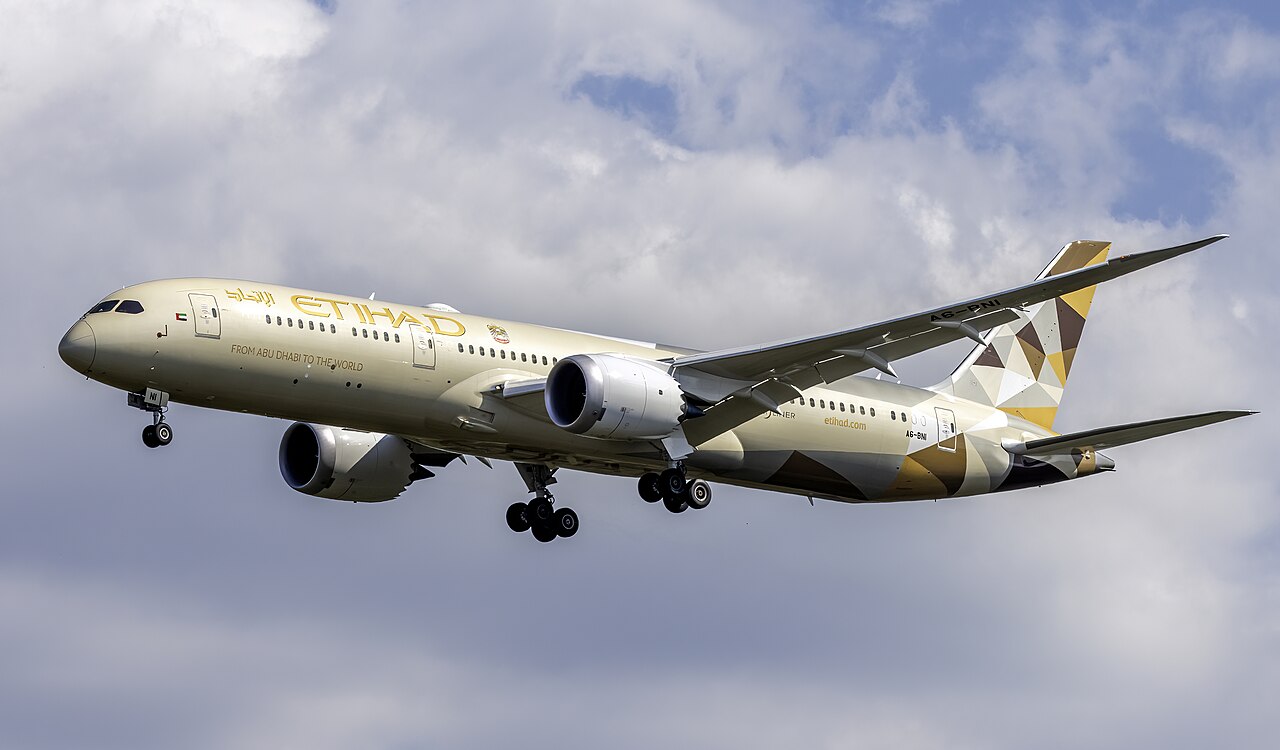
UAE national airline Etihad has extended until November 5 its suspension of flights to Riyadh and Dammam in Saudi Arabia, targeted by strikes from Yemen’s Houthis.

Etihad had suspended its service to Riyadh on October 12, two days after a deadly attack on a passenger terminal killed 13 people.

In a statement on Thursday, Etihad specified that flights to and from Riyadh and Dammam would remain suspended due to “operational disruptions”.

On Wednesday evening, two people were killed and eight others wounded in an attack on Dammam airport.

The airport, however, reopened the following day, while the capital’s airport remains closed.

Etihad added that it would operate only daytime flights to the western city of Jeddah, with night flights cancelled until November 5.

In recent weeks, Houthi attacks on Saudi civilian infrastructure including oil facilities and airports have reached a scale unprecedented since the start of the conflict in Yemen in 2014.

AFP

See also  PHOTOS: Blue Band Margarine Advertisement in Nigeria, circa 1966
Continue Reading

Business

States push for suspension of Paris Club deductions

Published

on

State governors have rejected deductions from allocations due to the states from the Federation Account in the September 2026 revenue-sharing cycle, arguing that the deductions would further squeeze their finances, The PUNCH reports.

The states also called for the suspension of deductions linked to the Paris Club refund to local government councils, alleging that the payments were resumed without prior communication and reconciliation with affected states.

Their opposition comes after the three tiers of government shared N668.4bn less of August 2026 revenue distributed in September, heightening concerns over the impact of lower revenue receipts on states’ ability to meet their financial obligations.

The governors also demanded the redistribution of the proposed N240bn savings, insisting that the funds should be shared among the federal, state and local governments rather than deducted or retained under the proposed arrangement.

The complaints were raised by several state Accountants-General during the technical session of the Federation Account Allocation Committee meeting, according to a report by the committee’s technical sub-committee, dated 14 October, 2026, obtained by The PUNCH on Thursday.

The meeting, held at the Federal Ministry of Finance headquarters in Abuja, considered revenue accounts for August and the amounts available for distribution in September.

The report showed that the total amount recommended for distribution to the federal, state and local governments stood at N2.339tn, compared with N3.007tn shared in the previous month, representing a decline of N668.4bn.

The statutory revenue available for distribution dropped more sharply, falling from N2.283tn in the previous month to N1.566tn in August, a decrease of N717.08bn.

See also  Oyo, Borno abductions: Tough terrain, casualty fears stall rescue mission

However, revenue from Value Added Tax increased to N773.23bn from N724.46bn, providing some relief amid the decline in statutory revenue.

The Director of the Federation Account Department, Okolie Rita, who presented the accounts, told the committee that the statutory revenue available for distribution was calculated after deducting N85.71bn and N36.83bn as four per cent costs of collection for the Nigeria Revenue Service and the Nigerian Upstream Petroleum Regulatory Commission, respectively.

The revenue decline triggered calls from state representatives for the Federal Government to release additional funds and reconsider deductions that they said were putting pressure on state finances.

The Accountant-General of Akwa Ibom State, Andrew Essien, observed that August revenue had dropped considerably compared with July and appealed for the proposed N240bn savings to be returned to the distributable pool.

The Accountant-General of Jigawa State, Abdullahi Shehu, recalled an earlier proposal to augment the previous month’s revenue with N250bn, which he said had not been implemented. He urged the committee to combine the promised N250bn with the proposed N240bn savings and redistribute the funds to the three tiers of government.

The Accountant-General of Bayelsa State, Tokoni Ifidi, supported the demands and raised concerns about deductions for the Paris Club refund to local government councils.

She said the deductions were introduced without prior communication to the states, despite what she described as an earlier commitment in 2025 concerning the deductions, which began in February that year and were stopped by a court order in April 2026.

The document read, “AG Akwa Ibom observed a considerable drop in the revenue of August, 2026 compared to July, 2026 and appealed for the proposed savings of N240bn to, instead, be redistributed. AG Jigawa recalled that there was a proposal to augment the previous month’s revenue with the sum of N250bn but it had not been done. He suggested that the N250bn promised in the previous month should be added to the proposed savings of N240bn and be redistributed.”

See also  UK to replace paper documents with eVisas from February 25

The Director of the Federation Account Department explained that the Paris Club deductions were not new, noting that they had previously been suspended following a court order.

The Bayelsa representative, however, maintained that the deductions should continue to be suspended pending reconciliation. She said the Economic and Financial Crimes Commission had held reconciliation sessions with local government councils and was awaiting feedback from the Office of the Accountant-General of the Federation on the commencement and continuation of the deductions.

The Accountant-General of Niger State, Saidu Abdullahi, criticised the handling of the deductions, arguing that the ministry had made a mistake from the beginning by distributing funds without adequate planning and proper communication.

He insisted that previous agreements should be honoured, particularly the proposed N250bn augmentation, while supporting calls for the redistribution of the N240bn savings.

The Accountant-General of Cross River State, Glory Effiong, also backed the demand for the savings to be redistributed, observing that deductions had consumed a substantial portion of the earnings of many states.

She said she had not been invited to any reconciliation meeting on the Paris Club debt since joining the committee and urged the Office of the Accountant-General of the Federation to improve its communication with state representatives.

The Accountant-General of Jigawa State further questioned the amount deducted under security-related expenditure, describing the quantum of deductions as alarming and calling for a review.

The Accountant-General of Nasarawa State, Musa Mohammed, stressed that states should be properly informed and invited to reconciliation meetings before decisions affecting their allocations were implemented.

See also  Peter Obi is already planning to leave ADC  —  Kachikwu

Source: punchng.com

FOLLOW US ON:

FACEBOOK

WHATSAPP CHANNEL

TWITTER

PINTEREST

TIKTOK

YOUTUBE

LINKEDIN

INSTAGRAM

Continue Reading

Trending