Difficult terrain, fears over the safety of dozens of kidnapped pupils and teachers, and demands by the abductors for the release of detained terrorist commanders have emerged as major obstacles to ongoing efforts to rescue victims of the recent school attacks in Oyo and Borno states, The PUNCH has learnt.
This comes as the United Nations Resident and Humanitarian Coordinator in Nigeria, Mohamed Malick Fall, on Thursday called for the immediate and safe release of the schoolchildren and teachers abducted in the attacks, describing the incidents as a grave threat to education and child protection.
Multiple Presidency and security sources familiar with the situation told our correspondent that the abductors are demanding the release of high-profile terrorist leaders in exchange for the captives, a condition the Federal Government is unwilling to accept despite mounting public pressure for the victims’ freedom.
The sources, who spoke on condition of anonymity because they were not authorised to discuss the matter, said the deadlock largely stems from demands for the release of suspected Ansaru commanders, Mahmud Muhammad Usman and his deputy, Mahmud al-Nigeri, both of whom are currently in government custody.
A Presidency source further revealed that the Oyo and Borno school abductions were coordinated and deliberately timed to maximise pressure on the government and strengthen the terrorists’ bargaining position.
The official explained, “In the Oyo kidnapping, the terrorists did a coordinated attack with that of Borno because they want to use it as a negotiation.
“They are pressing for a swap with some high-profile terrorists who are in government custody. These are some of their leaders who were arrested.
“Why this is taking time is due to this issue. The security chiefs and the Federal Government are in a difficult position, and this is unfamiliar terrain for them, as there has not been an extensive operation in the forested area of Oyo, where the children and teachers are being held.”
“The terrorists actually came from the Kainji area in Niger State. They came from there to do this operation, and they have been desperately trying to press for the release of some of their high-profile colleagues who were arrested.
“If you remember, there was a press conference by the NSA (National Security Adviser) several months ago about the Ansaru leaders who were arrested.
“So, they are the ones the terrorists are pushing for their release. That is why the whole thing has been at a standstill now,” the official further revealed.
On August 16, 2025, the National Security Adviser, Nuhu Ribadu, announced the capture of the two terror commanders during a series of high-risk, intelligence-led operations conducted by the security and intelligence services between May and July 2025.
The arrested men had been on both national and international terror watch lists, Ribadu said.
“Today, I am glad to inform you that we have successfully concluded a high-risk, intelligence-led, counterterrorism operation which led to the capture of the top leadership of Jama’atu Ansarul Muslimina fi-Biladis Sudan, commonly known as ANSARU, Nigeria’s Al-Qaeda affiliate,” the NSA announced.
He noted that the capture of the men also known as Abu Bara’a and Mallam Mahmuda, the group’s leader and deputy commander, respectively, marked the most decisive blow against Ansaru since its inception.
Ansaru, a splinter faction of Boko Haram with links to al-Qaeda in the Islamic Maghreb, has historically operated in the North-West and North-Central, including the forests of Kaduna, Niger and Kogi States.
It operates in urban sleeper cells and remote forest bases, with major enclaves around the Kainji National Park, which straddles Niger and Kwara States and extends to the Republic of Benin.
At the time, the NSA said the captured leader, Usman, who styles himself as the “Emir of Ansaru,” served as the overall coordinator of the group’s nationwide network of terrorist sleeper cells.
He is also believed to have masterminded numerous high-profile kidnappings and armed robberies, which were used to finance Ansaru’s operations over the past decade.
His deputy, al-Nigeri, whom Ribadu described as Ansaru’s “Chief of Staff,” leads the Mahmudawa cell operating in and around the dense forest cover of Kainji National Park.
Al-Nigeri was trained in Libya between 2013 and 2015 under foreign jihadist instructors from Egypt, Tunisia, and Algeria, specialising in weapons handling and improvised explosive device fabrication.
“These two men have jointly spearheaded multiple attacks on civilians, security forces and critical national infrastructure. They are currently in custody and will face due legal process,” the NSA had said.
The source who spoke to our correspondent said the government was caught between its determination to secure the victims’ freedom and its reluctance to release captured commanders back into circulation, where they could regroup and resume attacks.
“Yes, the lives of the children must be secured. But they don’t want to release these people because they will become a problem again to the larger society,” the source said, adding, “These are high-level targets who were successfully captured. So, imagine releasing them again.”
Armed men stormed the Esiele community in Oriire Local Government Area of Oyo State on Friday, May 15, abducting staff, students and pupils from Community Grammar School, Baptist Nursery and Primary School, and L.A. Primary School.
By the weekend, the abductors had beheaded one of the kidnapped teachers, Mr Michael Oyedokun.
On the same day, suspected Boko Haram terrorists attacked three schools, including Mussa Central Primary School, Government Day Junior Secondary School, and a SUBEB school, abducting between 42 and 50 schoolchildren from Mussa town in the Askira-Uba Local Government Area of Borno State.
In a statement signed May 18 by his Special Adviser on Information and Strategy, Bayon Onanuga, President Bola Tinubu condemned the attacks and killing as “barbaric.”
He also sympathised with Governor Seyi Makinde and assured that the victims would be rescued.
“The bandits and all their local collaborators will be fished out and made to face the full wrath of the law,” Tinubu stated while renewing his call for the National Assembly to accelerate the establishment of state police.
Meanwhile, a second source in the security community confirmed the development, stating that the government had explored multiple options to free the victims, even as public outcry grows.
“Yes, it is true. The government has been trying all manner of ways to get them released. And the uproar and protests, too, are adding pressure to the whole thing.
“One other thing again is that the terrorists want the outcry that is happening now to pressure the government to do their demands, to do anything to release the children,” said the highly-ranking official.
The source said the terrain and the delicate nature of mass-hostage situations had made a military rescue difficult.
“You know, the area is highly forested and unfamiliar. The issue is the sensitivity of any hostage situation. It is a major problem because a successful hostage rescue where you have all the hostages alive is very difficult. You don’t want to risk the lives of the children and the teachers in the process,” the officials added.
A third source in the Presidency said the dilemma had left the government in a holding pattern where it is unwilling to negotiate yet equally hesitant to mount an assault that could lead to casualties.
According to the source, “I know that the government doesn’t want to negotiate with them. It also doesn’t want to use force that may risk the lives of the people in the forest.
“The President must have been briefed about it, both Oyo and Borno. It is a coordinated kidnapping.”
At the time of filing this report, the Special Adviser to the President on Information and Strategy, Bayo Onanuga, could not be reached for a reaction as calls and a text message sent to his mobile line went unanswered.
UN demands release
United Nations Resident and Humanitarian Coordinator in Nigeria, Mohamed Malick Fall, called for the safe release of the schoolchildren following a meeting with a delegation from the National Safe Schools Response Coordination Centre in Abuja, led by Commandant Dr Samuel Umanah, amid growing concern over the abduction of pupils and teachers and the killing of two educators in separate incidents.
In a statement issued on Thursday in Abuja, after the meeting, the UN official expressed concern over the worsening security situation affecting schools and learning communities across the country.
“The UN Resident Coordinator is deeply saddened that these school children and their teachers are still being held by armed groups. Schools must remain safe havens for learning and not places of fear. Children should never be a target,” he said.
Fall noted that the recent attacks underscore the urgent need for stronger measures to protect children, teachers and educational facilities from violence and insecurity.
While acknowledging ongoing efforts by the government and security agencies to address the situation, he urged authorities to intensify actions aimed at securing the swift and safe return of all abducted victims.
He also called for those responsible for the attacks and abductions to be brought to justice.
According to him, protecting children’s right to education remains critical, particularly in conflict-affected and vulnerable communities where schools have increasingly become targets of attacks.
Fall further advocated the full implementation of the Minimum Standards for Safe Schools, stronger emergency response mechanisms and a more efficient data-driven approach to safeguarding schools and at-risk children across the country.
“The UN’s collective commitment to promoting safe, inclusive and violence-free learning environments remains unwavering,” he said, stressing the need to uphold children’s right to education “in safety and dignity.”
Victims’ freedom priority
Meanwhile, the Federal Government has assured Nigerians that efforts are underway to secure the release of pupils and teachers abducted in Oyo and Borno states, describing their safe return as a top national priority.
The government also reaffirmed its determination to defeat terrorism, stating that security agencies are deploying all lawful measures to rescue those in captivity and bring the perpetrators to justice.
Speaking at a special national security media briefing themed “Unite Against Terror” at Radio House, Abuja, on Thursday, the Minister of Information and National Orientation, Mohammed Idris, said recent attacks on schools represented an assault on the future of the country.
“This press briefing comes at a sobering moment in our nation’s history. Recent events in Oyo and Borno states have once again tested our collective resolve as a people.
“The abduction of innocent schoolchildren and their teachers is not merely an attack on families or communities; it is an attack on the future of our nation, on education, and on the values that bind us together as Nigerians,” Idris stated.
Speaking on behalf of President Bola Tinubu and the Federal Government, the minister assured citizens that every effort was being made to rescue the victims.
“On behalf of President Bola Ahmed Tinubu, and the Federal Government of Nigeria, I wish to assure all Nigerians that the safe return of every child and every teacher currently in captivity remains a top national priority,” he said.
According to Idris, the President had directed security agencies to deploy all lawful means to secure the release of those in captivity.
“The President has made it clear that no child belongs in captivity and that no effort will be spared in ensuring that those responsible for these heinous crimes are brought to justice.
“He has directed that every lawful instrument available to the Nigerian state be deployed towards achieving this objective, including the deployment of a specialised rescue team.
“He has also authorised the recruitment of 1,000 forest guards to strengthen security presence across vulnerable communities and forests within the state,” the minister highlighted.
While declining to disclose operational details, the Minister of Information and National Orientation, Mohammed Idris, said security and intelligence agencies were working in concert to rescue the abducted pupils and teachers and track their abductors.
He said multiple agencies, including the Armed Forces, Department of State Services, Nigeria Police Force, National Intelligence Agency, Office of the National Security Adviser and the National Counter Terrorism Centre, were jointly engaged in ongoing operations involving intelligence gathering, aerial surveillance, community engagement and search-and-rescue missions.
Idris said the Tinubu administration had adopted a broader, intelligence-led approach to tackling insecurity, alongside what he described as a long-overdue overhaul of the country’s security architecture.
He identified state policing as a key pillar of the reform agenda, saying President Bola Tinubu was committed to delivering a more flexible and community-responsive policing system as part of his legacy.
According to him, the administration had combined military operations, intelligence coordination, technology, regional collaboration and socio-economic interventions in its response to security challenges since May 2023.
He said hundreds of terrorists and criminal elements had been neutralised, arrested or forced to surrender within the period, while several kidnapped victims had been rescued across the country.
Providing updates from operational theatres, Idris said troops of Operation Hadin Kai had recorded recent gains in the North-East, including the repulsion of attempted infiltrations along the Kirawa–Pulka and Ngoshe axes in Borno State, with over 50 terrorists neutralised in follow-up operations.
He added that several high-value targets had been eliminated, while about 1,000 terrorists, including commanders, were killed in the first quarter of 2026, according to theatre reports.
He also cited a joint Nigeria–United States-supported operation that disrupted terrorist logistics networks and eliminated key ISWAP commanders, alongside the rescue of 92 civilians near Buratai.
In the North-West and North-Central, Idris said sustained military and police operations had dismantled criminal camps, arrested suspects and restricted the movement of bandit groups across several states, including Zamfara, Katsina, Kaduna, Niger and Kwara.
He further noted ongoing operations in the South-East and South-South targeting criminal networks, oil thieves and economic saboteurs, adding that maritime security gains had contributed to increased oil production.
On prosecutions, the minister said terrorism cases were being pursued in court, including the conviction of four terrorists over the 2022 attack on St. Francis Catholic Church, Owo, while over 500 suspects were currently facing trial.
He said Nigeria had also strengthened security cooperation with the United States and neighbouring countries in intelligence sharing, counterterrorism operations and border security.
Idris commended coordination between federal and state authorities in the Oyo abductions, noting that intelligence sharing and joint operations were ongoing to secure the victims’ release.
He urged national unity and public support for security agencies, warning that terrorism thrives on fear, division and misinformation.
“To the families whose loved ones remain in captivity, your pain is our pain. Your government has not forgotten you,” he said.
CSOs slam Tinubu
Dozens of civil society organisations across Nigeria have accused the Federal Government of failing in its constitutional duty to protect citizens, declaring that “Nigerian lives matter” amid worsening killings, kidnappings and violent attacks nationwide.
In a joint statement marking the 9th National Day of Mourning, over 90 groups condemned what they described as the government’s inability to curb “endemic violence” despite rising deaths and mass abductions.
Signatories include Amnesty International Nigeria, BudgIT, SERAP, Yiaga Africa, CISLAC, SBM Intelligence, Enough Is Enough, Global Rights, Gatefield, The Kukah Centre, CAPPA, HEDA and Media Rights Agenda, among others.
The coalition said the continued bloodshed under President Bola Tinubu’s administration reflects “deep governance failures” and an erosion of the value placed on human life, insisting that “Nigerian lives matter” and demanding justice.
Citing data from massatrocities.org, the groups said at least 19,980 people have been killed and 12,362 abducted since May 2023, while about 1,486 security personnel have died in active duty.
They warned that the figures were alarming for a country not formally at war.
The organisations accused political leaders of focusing on 2027 election politics rather than addressing insecurity, warning that “corpses do not vote” as communities continue to suffer attacks.
They also raised concern over extrajudicial killings, alleged abuses by security agencies and repeated accidental airstrikes on civilian areas, saying the lack of accountability was deepening a culture of impunity.
The coalition linked rising insecurity to worsening poverty and hunger, noting that farmers are increasingly unable to access farmlands while schools operate under fear of attacks and abductions. It added that at least 865 students have been kidnapped from schools since 2023.
As part of the memorial, the groups expressed solidarity with victims, bereaved families, abductees, internally displaced persons and security personnel killed in the line of duty.
They urged the government to strengthen intelligence gathering, dismantle kidnapping networks, ensure accountability for abuses and provide support for victims of violence.
“Nigeria cannot continue to gather annually to mourn the dead while failing daily to protect the living,” the statement said.
NANS backs NUT
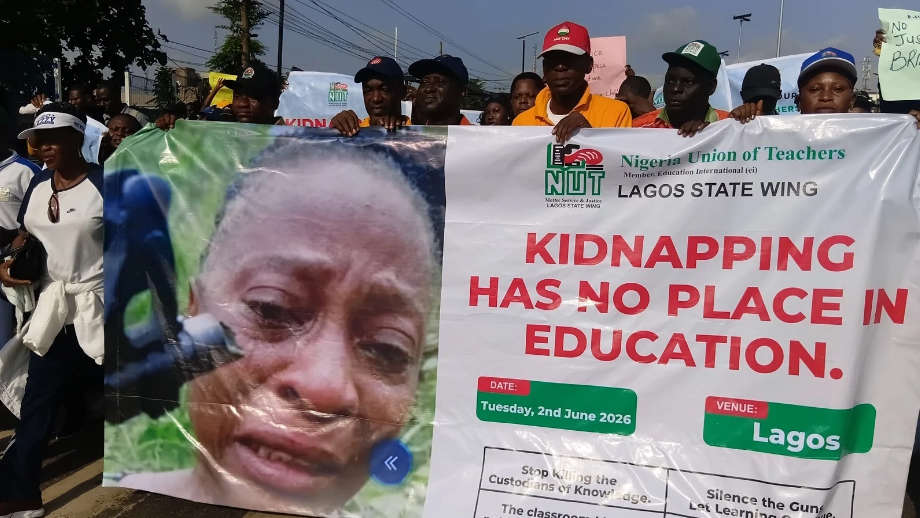
The National Association of Nigerian Students has reaffirmed its commitment to the rescue of abducted students and teachers across the country, declaring support for ongoing advocacy by the Nigeria Labour Congress and the Nigeria Union of Teachers for their safe return.
NANS President, Akinteye Babatunde, said in a statement on Thursday in Abuja that the student body remains focused on ensuring the release of all those in captivity, adding that it would continue to engage stakeholders and mobilise support for rescue efforts.
He said NANS aligns with concerns raised by organised labour over repeated attacks on schools and education workers, stressing that the safety of students and teachers must be a national priority.
“The safety of students and teachers must remain a national priority. NANS will continue to support every legitimate effort aimed at securing the release of those in captivity and preventing future occurrences,” he said.
Akinteye warned that rising insecurity in schools was already creating fear among students and parents, adding that education could not thrive in an atmosphere of fear.
He said the association would continue to work with labour unions, community leaders and security agencies to sustain pressure on authorities until the abducted victims are rescued.
While welcoming nationwide advocacy efforts, he stressed that the campaign must remain focused on the victims and not be politicised.
“We are calling on the Federal Government, security agencies and relevant authorities to act swiftly and decisively,” he said, warning that prolonged captivity was deepening trauma for victims and families.
The NANS president also urged media organisations to verify information before publication, amid concerns over misinformation.
The statement comes amid heightened tensions following recent school abductions in parts of the country, which triggered protests and renewed calls for stronger protection of educational institutions, including strike action by the NUT backed by the NLC.
‘Resign, Tinubu’
The Peoples Redemption Party on Thursday called on President Tinubu to resign, accusing his administration of failing to protect lives and property amid worsening insecurity across the country.
In a statement, PRP National Chairman, Dr Hakeem Baba-Ahmed, said the security situation had deteriorated to alarming levels, with violent attacks now affecting all regions of the country.
He said no Nigerian was safe under the current administration, alleging that insecurity had spread beyond previously troubled areas.
“From Generals to toddlers; from Bama to Badagry, no Nigerian is safe under this leadership,” he said, adding that schoolchildren had become easy targets of criminal groups.
Baba-Ahmed accused the President of failing to translate centralised authority into improved security outcomes, insisting that the situation reflected “ineptitude and indifference.”
“Our President has failed the nation, and there is no evidence that he can improve on his pathetic record,” he stated, calling for his immediate resignation.
He argued that Nigerians should not wait until the 2027 elections to express their dissatisfaction, saying leadership failure should not be allowed to run its full term.
“There is nothing democratic in insisting that incompetent and uncaring leadership must complete terms,” he said.
The PRP said the country’s worsening insecurity had made schoolchildren, farmers and civilians across communities increasingly vulnerable to kidnappings and violent attacks.
Also, the National Private Security Conference has said tackling Nigeria’s worsening insecurity requires a technology-driven strategy, stronger collaboration among security stakeholders and sustained economic empowerment, arguing that conventional approaches are no longer sufficient.
Reacting to the recent abduction of schoolchildren and killing of a teacher in Yawota, Oriire Local Government Area of Oyo State, NPSC convener, Charles Awuzie, announced a conference themed “Building a Modern Security Ecosystem: Integrating Private Sector Capacity into Nigeria’s National Security Architecture.”
The event is scheduled for June 13 at the NAF Conference Centre, Abuja.
Awuzie said insecurity must be addressed through technology, intelligence sharing and community engagement, noting that modern digital tools could aid tracking and prevention of crimes.
He argued that security agencies should leverage data from social media platforms and digital footprints to locate criminal networks, while calling for closer collaboration with tech companies.
“The approach is simple: technology first,” he said, adding that insecurity could be better managed through improved geolocation tracking and digital intelligence.
He also stressed the need for intelligence sharing between communities, traditional rulers and security agencies, warning that shielding known criminals must end.
On economic drivers of crime, Awuzie said poverty remained a major factor fueling insecurity, adding that economic empowerment was essential to reducing crime rates.
He further called for stronger partnerships between government and private security operators, saying such collaboration could enhance intelligence gathering and create jobs.
Co-convener Mohammed Abubakar also called for a collective approach to security challenges, urging government to deepen engagement with stakeholders and consider private sector participation.
He argued that Nigeria’s current security structure, relying heavily on conventional forces, was overstretched and required modernization through technology and private sector involvement.
The conference is expected to focus on policy discussions, stronger public-private security partnerships and security technology innovation.
punch.ng
FOLLOW US ON: