Connect with us

Politics

Subsidy row: APC attacks Atiku’s plan, ADC demands account for N15.8tn

Published

on

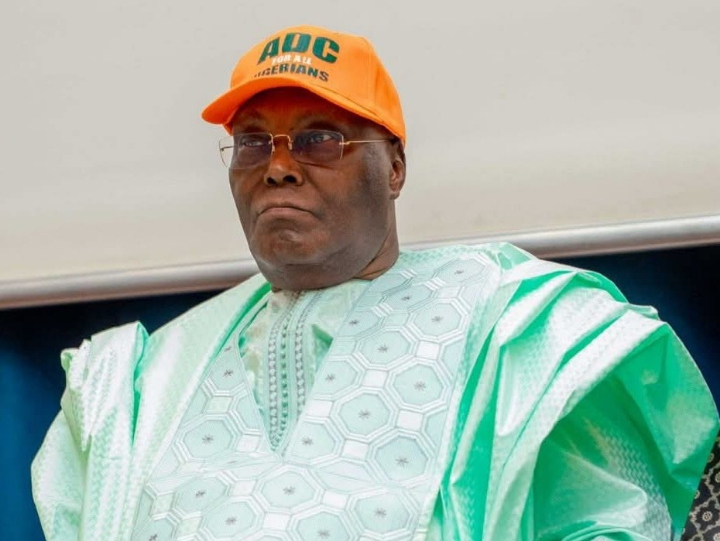
The controversy over petrol subsidy removal has intensified ahead of the 2027 elections, with the All Progressives Congress attacking former Vice-President Atiku Abubakar’s plan to restore the subsidy, while the African Democratic Congress challenged the Federal Government to account for the N15.8tn in additional revenues it said accrued from the reforms.

The National Chairman of the APC, Prof Nentawe Yilwatda, warned that Atiku’s proposal to return Nigeria to the old fuel subsidy regime could reverse the economic gains recorded under the ongoing reforms, with negative consequences for workers’ wages, education, infrastructure and the fiscal stability of states.

The APC national chairman, in a statement issued by his Special Adviser on Media and Information Strategy, Abimbola Tooki, on Sunday, said the former Vice President’s proposal to reinstate fuel subsidy would return Nigerians to fuel queues, threaten the payment of the current minimum wage and lead to the cancellation of education grants for Nigerian students, among other negative consequences for the masses.

On May 29, 2023, President Bola Tinubu, during his inauguration, declared that fuel subsidy was gone, in line with his campaign promise.

Although the removal triggered an increase in the prices of goods and services, the APC-led Federal Government has consistently maintained that the policy has yielded significant economic gains for the country.

Ahead of the 2027 election, the African Democratic Congress presidential candidate, who also promised in 2023 to end fuel subsidy if elected, last week pledged to reinstate the subsidy if elected in the January presidential election to cushion the effect of its removal on Nigerians.

His promise has, however, generated mixed reactions among Nigerians.

Reacting, Yilwatda, while receiving a delegation of economic stakeholders in Abuja, warned that the subsidy debate should go beyond political rhetoric and consider the fiscal burden and wider consequences for states, workers, education and infrastructure.

He stated, “The former Vice President Atiku Abubakar’s proposal to restore fuel subsidy raises fundamental questions about how such a policy would be financed and sustained without returning Nigeria to the cycle of fiscal pressures that characterised the previous arrangement.

“Subsidy may appear attractive because it promises cheaper petrol, but Nigerians must also ask the bigger question: who pays for the subsidy and what happens to the resources that government must divert to finance it?

“A policy cannot be judged only by its immediate benefit at the pump. We must examine its impact on government revenues, salaries, pensions, education, healthcare, infrastructure and the overall capacity of government to meet its obligations to citizens.”

Yilwatda said many states previously struggled to pay workers’ salaries and pensions, with some resorting to partial payments.

He said increased federal allocations following subsidy removal had improved states’ finances, urging caution against reintroducing subsidy and returning to past fiscal pressures.

The statement read, “The APC chairman also drew attention to the education sector, recalling the prolonged disruption of academic activities in Nigerian universities under the previous administration.

See also  2027: Obi’s one-term Presidency gambit sparks political firestorm

“Nigerians should be concerned about policies that could weaken the capacity of governments to finance education and other essential public services.

“A return to a fiscally unsustainable subsidy regime could have consequences far beyond the price of petrol. When government revenue is squeezed, the first victims are often the critical sectors that directly affect the welfare and future of our people.”

On the new minimum wage, Yilwatda said the sustainability of improved workers’ salaries must be considered in the subsidy debate, stressing that governments must have the capacity to meet their recurrent obligations.

He said higher wages should not come at the expense of funding infrastructure, education, healthcare and other essential services.

The APC chairman also said the ongoing reforms were improving Nigeria’s digital payment system, allowing more Nigerians, particularly young people, freelancers and content creators, to make and receive international payments.

He continued, “Our young people are no longer limited by geographical boundaries. A Nigerian content creator, software developer, consultant or freelancer can provide services to clients anywhere in the world.

“But that opportunity requires a financial and payment system capable of supporting the global digital economy.

“We must therefore be careful about policies that could undermine the progress being made in strengthening Nigeria’s financial and digital ecosystem.”

The APC national chairman also highlighted the Nigeria Education Loan Fund, describing it as an important intervention that has expanded access to tertiary education financing and reduced the immediate financial burden on many families.

He said sustainable financing for education was critical to ensuring that young Nigerians are not forced to abandon their studies because their parents cannot afford tuition and other educational expenses.

Prof Yilwatda said the subsidy debate should focus on building a strong and sustainable economy rather than relying on costly government interventions.

He acknowledged the hardship caused by subsidy removal, stressing the need for stronger measures to cushion its impact on vulnerable Nigerians.

The statement read, “The hardship Nigerians have experienced is real, and government must continue to respond to it. But the answer cannot simply be to return to a system whose long-term fiscal implications created serious distortions in our economy.

“What Nigerians deserve is an economy that can sustainably finance good wages, quality education, healthcare, infrastructure and social protection without depending on an opaque and expensive subsidy system.

“Whenever anybody proposes a return to subsidy, Nigerians should ask: how much will it cost? Where will the money come from? What programmes will be sacrificed to finance it? And for how long can the government sustain it?

“These are legitimate questions that must be answered before the country embarks on another expensive policy experiment.”

The ADC has, however, challenged the Director-General of President Tinubu’s 2027 re-election campaign, Abdulaziz Yari, to explain how Nigerians have benefited from the additional revenues generated by the removal of petrol subsidy and other economic reforms.

The opposition party said the Tinubu-led government must account for the trillions of naira that have accrued to the federal, state and local governments since the removal of the petrol subsidy in May 2023.

See also  Marketers push N800/litre petrol, seek import licences

The ADC’s position came in response to recent comments by Yari dismissing promises of relief from the economic hardship confronting Nigerians as unrealistic.

In a statement issued on Sunday by its National Publicity Secretary, Mallam Bolaji Abdullahi, the party said Yari’s position was significant because he was not speaking only as a senator of the All Progressives Congress, but as the official responsible for leading the president’s campaign for another term.

“If the message of the President’s re-election campaign is that Nigerians must accept today’s hardship as permanent and anyone promising relief is a liar, then Nigerians must be seriously concerned,” the party said.

The ADC said figures attributed to the Minister of Finance showed that the removal of petrol subsidy and foreign-exchange reforms generated about N15.8tn in additional resources for the Federation between June 2023 and December 2025.

According to the party, about N5.4tn of the additional resources accrued to the Federal Government, another N5.4tn went to the states, while local governments received about N3.9tn.

It further claimed that states received N47.25tn in allocations from the Federation Account Allocation Committee between 2023 and 2025, with the annual allocation increasing from N10.09tn in 2023 to N15.26tn in 2024 and N21.90tn in 2025.

The party said the increase in government revenue had not translated into a corresponding improvement in the living conditions of Nigerians.

“The contradiction is impossible to ignore. Government is counting trillions while Nigerian families are counting the meals they can afford.

“If governments are receiving substantially more money, why are Nigerians getting substantially less food to eat?” it asked.

Tinubu announced the removal of the petrol subsidy in his inaugural address on May 29, 2023, with the policy immediately triggering a sharp increase in petrol prices and a broader rise in the cost of transportation and goods.

The government has maintained that the reform was necessary to eliminate the huge fiscal burden associated with the subsidy regime and redirect public resources towards infrastructure, social investment and other development priorities.

The ADC, however, argued that the burden of the reform had fallen disproportionately on ordinary Nigerians.

It said petrol prices, which stood at about N185 per litre before the subsidy removal, had risen to more than N1,300 per litre in many parts of the country by August 2025, while food prices and transport costs also surged.

The party also questioned the pace of the Federal Government’s Compressed Natural Gas initiative, which was introduced as part of efforts to reduce transportation costs following the removal of the subsidy.

“Before asking Nigerians for four more years, Senator Yari and the APC must answer one question: after N15.8tn in additional resources, record FAAC allocations and three years of unprecedented sacrifice, are Nigerians better off?” the party asked.

See also  Court acquits Abba Kyari of asset non-declaration charge

The ADC also raised concerns about borrowing by state governments despite increased FAAC receipts.

It claimed that about 20 states borrowed a combined N458bn in 2025, and challenged the Federal Government and the states to account for the additional revenues received since the reforms.

“After N47.25tn to states in three years, Nigerians have a right to ask: where are the results?

“Let the government publish the projects. Show Nigerians the schools, hospitals, roads, and mass-transit systems that their sacrifice paid for,” it added.

The party said it was particularly concerned that increased government revenue had not, in its view, produced sufficient improvements in public services or household welfare.

It further accused the APC government of relying on the payment of workers’ salaries as evidence of economic progress, arguing that salaries had lost purchasing power because of the rising cost of food, transportation and other necessities.

“Meanwhile, budgets remain unimplemented, local contractors remain unpaid, major public roads remain terrible, and Nigeria became one of the most dangerous places to live in,” the statement read.

The opposition party also questioned why the administration had taken more than three years after the subsidy removal to intensify efforts aimed at reducing transportation costs.

The Federal Government and state governors recently announced plans to expand the use of CNG-powered and electric vehicles under the National Affordable CNG Transit Programme, with the aim of reducing transport fares.

However, the ADC said the initiative should have been implemented earlier and at a scale capable of providing immediate relief to Nigerians.

“If Senator Yari says subsidy can never return, then he must tell Nigerians what the President’s campaign is offering instead.

“What is the plan to dramatically reduce petrol prices and bring down food and transportation costs before 2027? ‘Endure’ is not an economic policy,” it said.

The ADC stressed that its criticism of the subsidy removal should not be interpreted as a call for a return to the old subsidy regime, which it accused of being characterised by corruption and lack of transparency.

Instead, the party said its alternative would focus on increasing domestic refining capacity and providing targeted, transparent support to reduce fuel prices and ease the cost of living.

The subsidy debate is expected to remain a major issue ahead of the 2027 general election, with opposition parties increasingly making the cost of living, petrol prices, food inflation, unemployment and insecurity central to their campaigns.

According to the opposition party, the election would ultimately be determined by Nigerians’ assessment of their economic circumstances rather than political rhetoric.

“The 2027 election will not be about who shouted ‘liar’ the loudest. It will be about who can put food on Nigerians’ tables, create jobs, provide security, and reduce the cost of living.

“Nigerians have sacrificed enough. They need a break,” the party argued.

Source: punchng.com

FOLLOW US ON:

FACEBOOK

TWITTER

PINTEREST

TIKTOK

YOUTUBE

LINKEDIN

INSTAGRAM

Continue Reading
Click to comment

Leave a Reply

Your email address will not be published. Required fields are marked *

Politics

870 killed in election violence in 11 years despite Peace Accord

Published

on

Nigeria’s struggle with electoral violence has continued despite repeated peace accords signed by political parties and candidates, with no fewer than 870 people reportedly killed in election-related violence since the National Peace Committee began its intervention in 2015.

The figure has renewed concerns over the effectiveness of the peace agreements, particularly with political parties and presidential candidates preparing for the 2027 general elections.

Politics in Nigeria appears to have strayed far from political scientist David Easton’s description of politics as the “authoritative allocation of values”, with contests for political power frequently degenerating into violence, intimidation and destruction of lives and property.

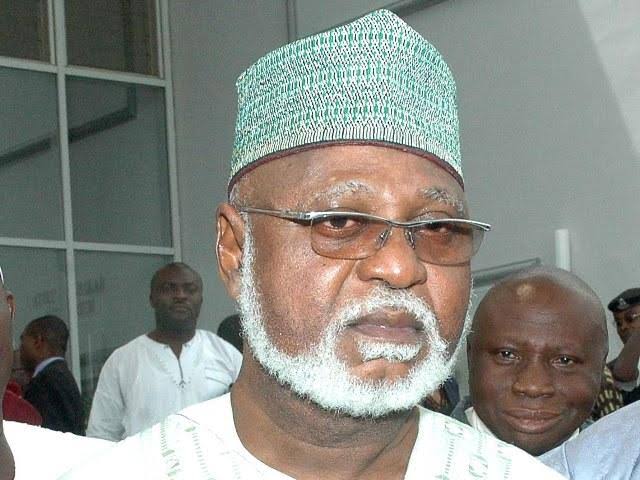
The National Peace Committee, chaired by former Head of State, Gen Abdulsalami Abubakar and co-chaired by the Catholic Bishop of Sokoto Diocese, Matthew Kukah, introduced the peace accord ahead of the 2015 general election as an attempt to prevent violence before, during and after elections.

Ahead of the 2015 presidential election, the then presidential candidates of the All Progressives Congress, Muhammadu Buhari, and Peoples Democratic Party, Goodluck Jonathan, signed the agreement in Abuja, pledging to accept the outcome of the election and refrain from acts capable of undermining the democratic process.

Despite the optimism generated by the initiative, election-related violence persisted.

A 2016 report by the Council on Foreign Relations put the number of deaths recorded during the 2015 elections at 106.

The situation was considerably worse in 2019. The Nigeria Civil Society Situation Room, in its General Election Final Report, estimated that 626 people were killed in the six months between the commencement of electioneering activities and the start of the elections.

For the 2023 general elections, the Centre for Democracy and Development reported about 109 deaths, despite presidential, governorship and National Assembly candidates signing peace agreements in which they pledged to reject violence.

The trend, according to reports, continued during the recently concluded Osun State governorship election won by Governor Ademola Adeleke, where at least 29 deaths were reported.

The figures have consequently raised questions over whether the peace accords have evolved beyond symbolic ceremonies into effective instruments capable of preventing electoral violence and holding perpetrators accountable.

With the 2027 elections approaching, the National Peace Committee, a fortnight ago, brought political parties and prominent presidential contenders together to sign a fresh peace accord.

See also  Petrol battlefield: Dangote, importers locked in brutal price war

President Bola Tinubu was represented at the ceremony, which was held in Abuja, by the Secretary to the Government of the Federation, George Akume.

Also present were the presidential candidate of the Nigeria Democratic Congress, Peter Obi, the Social Democratic Party candidate, Adewole Adebayo, Omoyele Sowore of the African Action Congress and former Cross River State governor, Donald Duke, who is contesting the presidency on the platform of the People’s Redemption Party, among others.

However, former Vice-President Atiku Abubakar, the presidential candidate of the ADC, was conspicuously absent.

Explaining the ADC’s decision not to participate, the party’s National Publicity Secretary, Bolaji Abdullahi, told The PUNCH that the committee needs to go beyond obtaining signatures from politicians and ensure that breaches of the agreement attract consequences.

“We felt the accord needs to go beyond ceremonial signing. The peace committee should be able to call out whoever violates the peace agreement in words and deeds. We recognise the importance of what they are doing, but we say they need to do more,” Abdullahi said.

The criticism has been echoed by international bodies and civil society organisations, which have questioned the absence of effective sanctions against politicians and their supporters who engage in inflammatory rhetoric or acts of violence.

The Country Director of Amnesty International, Isa Sanusi, said although the objective of the peace accord was commendable, previous agreements had done little to prevent electoral violence.

“The peace accord is on the surface good, but in reality, it never prevents or discourages anything. There must be sanctions, and there must be a mechanism for monitoring and documenting breaches of the peace accord,” Sanusi told our correspondent.

According to him, a peace agreement “is not supposed to be a mere public event,” warning that “early signs show the peace accord is weak and is not helping matters.

“Already, some politicians have started hateful rhetoric,” he said, adding that “politicians who incite hatred or cause violence must be held to account.”

The SDP also called for stronger enforcement of electoral laws, arguing that signing an agreement without consequences for violations would do little to change the behaviour of political actors.

The party’s National Publicity Secretary, Rufus Aiyenigba, said, “Our presidential candidate spoke the mind of the party on the matter on the sidelines of the event. The signing of a peace accord has become mere seasonal political ritual good only for its symbolism.

See also  By-elections: APC sweeps Nasarawa, Enugu, Kano, Ondo, PDP holds Rivers

“We need to enforce strong punitive measures against electoral offenders to sanitise our elections.”

The SDP had made a similar demand in the aftermath of the Osun governorship election.

However, security expert and Managing Director of Beacon Security and Intelligence Limited, Kabir Adamu, disagreed with the argument that the peace accords had become ineffective simply because electoral violence continued after their signing.

According to him, the question should not be whether a signed agreement, by itself, can stop violence, but whether the existence of the accord provides a stronger framework for monitoring political conduct and responding to violations.

“Those questioning the effectiveness of the peace accords and who believe that they are unnecessary given the scale of violence that has greeted elections in the past few years, are asking the wrong question,” Adamu said.

He continued, “The issue was never whether a signed accord, by itself, stops violence, as it doesn’t, and no one on the National Peace Committee has ever claimed it does. The real question is what happens to political conduct in the absence of one, and whether this year’s accord is materially different from the ones that came before it.

“We saw the old peace accord model’s limits play out in Osun, where a state poll with its own peace accord still recorded loss of lives. So I understand why some Nigerians, and even some candidates, ask what the point is.

“Omoyele Sowore called the August 18 signing a ritual. Adewole Adebayo argued past accords were violated without consequences. Peter Obi questioned why office-seekers need to sign a pledge to behave the way public office already demands. Those are fair criticisms.”

Adamu, however, said the 2026 accord introduced mechanisms that could make it more consequential than previous agreements.

In his words, “the 2026 accord is not the same instrument as 2019 or 2023. Two things changed. First, in March 2026 the National Peace Committee, working with the Kukah Centre, presented legal annotations tying the accord’s provisions directly to the Constitution and the Electoral Act and moving it from a moral pledge to an instrument with defined legal consequences for violation, including for the fake news and incitement that spokespersons and supporters, not just candidates, are typically responsible for.”

See also  Ramadan, Lent begin today across the globe

He added that “the involvement of the Nigeria Police Force and the Independent National Electoral Commission,” which he described as “the two organisations with the most responsibility for ensuring compliance,” was another important development.

Adamu also pointed to the Kukah Centre’s Election Security Information Hub, which he said represented a significant departure from the traditional approach to election monitoring.

“Second, and more significant in my view, is the Kukah Centre’s Election Security Information Hub. The ESI Hub is a modern, technology-driven information collation and analysis centre that has logged over 2,500 security incidents and more than 380 electoral offences since mid-2025, mapped to specific hotspots, and that data is meant to feed public compliance scorecards and early-warning responses rather than sit in a drawer until after the vote,” he said.

For Adamu, the significance of the latest accord lies not in the ceremony itself but in whether the new mechanisms for monitoring, verification and sanctions are actually deployed.

“This is the real shift,” he said, arguing that verification and consequences had been built into the accord’s architecture, “making it not just a signing ceremony.”

The debate over the effectiveness of the peace accord comes against the backdrop of Nigeria’s long history of electoral violence, in which political competition has frequently been accompanied by intimidation, hate speech, attacks on political opponents, destruction of campaign materials and killings.

The latest agreement therefore faces a familiar test: whether political actors will merely sign another pledge or whether institutions responsible for electoral security and justice will act decisively when the commitments are breached.

With the 2027 general election drawing closer, the effectiveness of the new mechanisms will ultimately be judged by whether they can deter violations, identify perpetrators and ensure consequences for those who resort to violence.

For now, the central question remains whether the latest peace accord will become another symbolic political ritual or mark a genuine turning point in Nigeria’s efforts to curb electoral violence.

Source: punchng.com

FOLLOW US ON:

FACEBOOK

TWITTER

PINTEREST

TIKTOK

YOUTUBE

LINKEDIN

INSTAGRAM

Continue Reading

Politics

Opposition summit sets agenda to unseat Tinubu ahead of 2027 elections

Published

on

The opposition will today (Monday) converge on Abuja for a summit aimed at forging a common political front and exploring a strategy to defeat President Bola Tinubu and the ruling All Progressives Congress in the 2027 presidential election, amid deep divisions over alliance arrangements and the choice of a consensus candidate.

Two opposition political parties, the Social Democratic Party and the Peoples Redemption Party, have confirmed their participation in the summit, while the Peoples Democratic Party has ruled itself out of the gathering.

The summit, organised by the political pressure group, G-100, is expected to bring together opposition parties and political actors to discuss the possibility of greater cooperation ahead of the 2027 general elections.

The G-100, led by former Director-General of the Progressives Governors Forum, Salihu Lukman, has argued that a fragmented opposition would struggle to dislodge an incumbent with the organisational and financial advantages of a ruling party.

In a statement on Sunday, a day before the summit, the group urged opposition parties to put aside their differences and approach the meeting with a willingness to cooperate.

“Tomorrow’s summit comes at an important moment for Nigeria’s democracy.

“Across the country, millions of Nigerians are looking to the opposition not merely to criticise the government of the day, but to demonstrate the maturity, discipline and sense of national purpose required to offer a credible alternative,” the statement signed by Lukman read.

The G-100 acknowledged that participating parties had different histories, structures and presidential ambitions, but said those differences should not prevent them from working together where their interests converge.

“The G-100 recognises that every political party has its own history, identity, ambitions and legitimate interests. Cooperation does not require any party to surrender these. Nor does it require political leaders to abandon their aspirations.

See also  2027: Atiku Delays ADC Membership Card Collection Amid Rumoured Jonathan Comeback

“It simply requires the wisdom to recognise that there are moments when what unites us must become more important than what separates us,” it argued.

The group said past elections had demonstrated the risks of an opposition divided among several candidates, arguing that fragmentation could enable an incumbent to retain power even when there was significant dissatisfaction with the government.

“The experience of elections in Nigeria and elsewhere has repeatedly demonstrated that a divided opposition often strengthens the incumbent.

“When parties competing for the same broad constituency fragment their energies, resources and votes, they risk turning their differences into an unintended advantage for those they seek to replace.

“Division is a choice. Cooperation must now become a strategy,” the G-100 said.

Confirming the participation of the SDP, its National Publicity Secretary, Rufus Aiyenigba, said the party was prepared to work with other Nigerians and political groups seeking an alternative political direction for the country.

“The SDP is very much part of the G-100 initiative and is occupying a frontline position in the scheme of things of the national rescue movement.

“The party is very much committed to and will continue to work with true democrats and patriots who truly mean well for Nigeria,” he said.

He confirmed that the party’s presidential candidate, Prince Adewole Adebayo, and its national leadership would attend the summit.

“Our national leadership and presidential candidate, Prince Adewole Adebayo, will participate in the Summit of Nigerian Opposition Political Parties under the auspices of the G-100, scheduled to hold in Abuja at the Yar’Adua Centre, on Monday, August 31, 2026,” he said.

According to Aiyenigba, the gathering would provide an opportunity for opposition parties to explore practical areas of cooperation and coordination ahead of the 2027 elections.

See also  Amupitan faces tough test as new INEC chair

The PRP also confirmed its participation.

“We are attending,” its National Publicity Secretary, Bello Ishaq, told The PUNCH in a brief telephone conversation on Sunday.

He did not provide further details.

The PDP, however, said it was neither involved in nor aware of the planned summit and ruled out participating in any opposition alliance discussions outside its own structures.

The party’s position was conveyed by the spokesman of its National Caretaker Committee, Jungudo Mohammed, in a WhatsApp message to The PUNCH.

“The PDP is not aware of any gathering in the name of opposition summit,” Mohammed said.

“We are also not in any planned arrangement with any political party for any possible alliance. Any opposition discussion where the PDP is not party to is dead on arrival.”

The G-100 nevertheless said the summit was not intended to force participating parties to abandon their identities or ambitions.

It said the immediate objective was to establish mechanisms through which opposition parties could engage, coordinate and resolve areas of disagreement.

“Tomorrow’s (Monday) summit provides an opportunity to begin building practical mechanisms for dialogue, coordination and cooperation, while respecting the identities and structures of participating parties,” the group said.

It urged the parties and their leaders to approach the discussions “in good faith, with an open mind and with the larger interests of Nigeria at heart.

“There will be disagreements, competing ambitions and difficult conversations. These are natural in politics. But none should prevent us from recognising the greater danger of allowing our differences to deny Nigerians a credible alternative.”

The group also cautioned against turning the summit into another contest for influence among opposition politicians.

See also  Petrol battlefield: Dangote, importers locked in brutal price war

“Tomorrow (Monday) is not about declaring winners or losers within the opposition. It is about beginning the work of ensuring that Nigerian democracy wins.

“Alone, each opposition party can make its case. Together, the opposition can change the course of the country,” it added.

The push for opposition cooperation comes as several political parties and prominent politicians prepare for the 2027 presidential election, with President Tinubu seeking a second term in office.

The possibility of a single opposition candidate has generated considerable debate within opposition circles, but differences over presidential ambitions, party structures and the terms of any possible alliance remain major obstacles.

The PUNCH reported last week that some presidential candidates within the emerging opposition coalition were likely to resist pressure to withdraw from the race in favour of a consensus candidate.

The G-100’s latest appeal is therefore an attempt to move the discussion beyond calls for unity and towards a framework for practical cooperation among opposition parties.

The group said the opposition had a historic opportunity to respond to Nigerians seeking an alternative to the ruling party.

“As we gather tomorrow (Monday) at the Shehu Musa Yar’Adua Centre in Abuja, the G-100 urges every opposition leader to remember the millions of Nigerians whose hopes extend beyond the fortunes of any single party or politician.

“History has presented the opposition with an opportunity. We must be wise enough not to waste it,” it counselled.

Efforts to get the positions of the African Democratic Congress and the Nigeria Democratic Congress were not fruitful as of the time of filing this report.

Source: punchng.com

FOLLOW US ON:

FACEBOOK

TWITTER

PINTEREST

TIKTOK

YOUTUBE

LINKEDIN

INSTAGRAM

Continue Reading

Politics

INEC list rekindles APC’s post-primary crisis ahead of 2027 elections

Published

on

Ahead of the 2027 general elections, the ruling All Progressives Congress has intensified efforts to contain the grievances and political fallout arising from its recent primary elections and the subsequent announcement of candidates by the Independent National Electoral Commission.

On Saturday, the electoral umpire released the parties’ list of governorship candidates and their running mates along with their particulars.

The publication, contained in Form EC9, was pasted at INEC headquarters across the states, effectively ending uncertainty over candidates that will fly the flags of the major political parties in the country.

The APC governorship primaries were conducted in May, but the outcome, alongside the list of candidates and aspirants uploaded to the INEC portal, has generated reactions among members of the ruling party.

Several aggrieved governorship aspirants and others vying for various positions in the ruling party raised concerns over the processes through which the chosen candidates emerged, with some seeking legal means while others defected from the party.

However, the party’s national leadership says it has begun reconciliation moves at various levels to placate aggrieved aspirants and members, urging those who lost out in the primaries to remain within the APC and work for the success of its candidates.

The move has become increasingly important as post-primary disputes have emerged across several states, ranging from court challenges and allegations of irregularities to defections and the formation of alternative political platforms by dissatisfied party members.

While the intensity of the crises varies from state to state, the developments have raised questions about the APC’s ability to consolidate its structures and present a united front in the 2027 elections.

In some states, including Gombe and Bayelsa, the party has moved quickly to establish reconciliation mechanisms or rely on existing political arrangements to prevent disagreements from escalating. In others, such as Yobe, Kwara, Nasarawa, Benue, Ebonyi, Kebbi, Sokoto, Edo, Imo and Adamawa, disputes over primaries have resulted in litigation, defections, factional disagreements or growing opposition efforts to exploit the situation.

APC Director of Publicity, Bala Ibrahim, told The PUNCH that the National Working Committee had held several meetings on the grievances arising from the primaries, stressing that the party must resolve its differences before going into the electoral contest.

He said reconciliation committees had been established at various levels to engage aggrieved members, adding that the party was extending an olive branch to those who failed to secure tickets.

Ibrahim stated, “The party is taking reconciliation seriously because we have to go to the battlefield united. We already have reconciliation committees at various levels working to assuage the concerns of aggrieved members.

“We are extending an olive branch to those who did not get what they wanted at the first attempt. If you don’t get what you want today, it doesn’t mean you won’t get it tomorrow.”

Gombe reconciliation committee

Gombe State Governor and leader of the party in the state, Muhammadu Yahaya, has inaugurated a 25-member reconciliation committee to resolve internal grievances and strengthen the party ahead of next year’s elections.

Yahaya charged the committee, chaired by Deputy Governor Manassah Jatau, to engage aggrieved members and aspirants and rebuild unity following recent party congresses, primary elections and local government polls.

The governor also appealed to members dissatisfied with the outcomes of the exercises to embrace dialogue and put the party’s interest first.

“We need to sheath our swords and embrace dialogue so that we can put our house in order as the 2027 general elections draw closer. Our strength lies in our unity,” Yahaya said.

The governor said the party’s target was to retain all elective positions in the state and secure at least one million votes for President Bola Tinubu in 2027.

He acknowledged that some party members were unhappy with the outcomes of the recent political exercises, particularly unsuccessful aspirants.

“Some decisions and outcomes arising from these political processes may not have gone down well with some of our members, particularly those who aspired for elective offices but were unsuccessful,” he said.

Yahaya directed the committee to identify and document grievances, mediate among contending groups and recommend the reintegration of aggrieved members.

Maihaja vs Wali

The 2027 APC governorship contest in Yobe State opened on a contentious note, with spirant Mustapha Maihaja challenging the outcome of the party’s May 21, 2026 primary that produced Alhaji Baba Wali as its candidate.

Maihaja is challenging the conduct of the primary at the Federal High Court in Damaturu, alleging that the exercise was not conducted in accordance with the APC’s guidelines and procedures.

Wali was declared winner with 236,711 votes, securing the party’s ticket to succeed Governor Mai Mala Buni.

At the resumed hearing, counsel to Maihaja, Mustapha Ibrahim, SAN, told the court that witnesses had testified to alleged irregularities during the primary.

“Our case is that what took place on May 21 was not in accordance with the guidelines and procedures of the party,” Ibrahim said.

See also  By-elections: APC sweeps Nasarawa, Enugu, Kano, Ondo, PDP holds Rivers

He said nine witnesses had so far testified in support of the petition, while more witnesses were expected to appear.

Counsel to the respondents, Baba Dala, SAN, however, said the case was still at an early stage, noting that only nine of the 62 witnesses listed by the petitioner had testified.

The court subsequently adjourned the matter to September 7, 8 and 9 for continuation of proceedings.

The legal challenge has left the APC with the task of managing the dispute while preparing for the 2027 election. Maihaja has not, however, defected from the party or announced an alternative platform.

Wali has meanwhile appealed to the other aspirants who contested the primary to join hands with him ahead of the election, as the party seeks to prevent the post-primary disagreement from affecting its electoral prospects.

The opposition African Democratic Congress has also declared its readiness to challenge the APC in the state.

The ADC Chairman in Yobe, Umar Kalli Alhaji, said the party was confident of defeating the ruling party in 2027.

“The party is ever ready to challenge the APC and it is going to win the election without a doubt,” Kalli said.

Political analyst Abdulwahab Garba, however, believes the APC remains favoured to retain power, arguing that the opposition is not yet strong enough to dislodge the ruling party.

“The ruling party is likely to retain power in the 2027 election,” Garba said.

With the court case still ongoing, the immediate challenge for the APC is to contain the disagreement and reconcile the competing camps before the 2027 campaign gathers momentum.

Defections hit Nasarawa

The APC in Nasarawa State is facing fresh internal crisis following the defection of former Inspector-General of Police Mohammed Adamu to the Social Democratic Party and the rejection of the party’s governorship primary by another aspirant, Prof. Mohammed Haruna.

Adamu, who contested the primary, resigned from the APC, citing alleged breaches of internal democracy, fairness and transparency in the conduct of the exercise.

He said the outcome had eroded his confidence in the party’s leadership and, after consultations with his supporters and associates, he decided to pursue his political ambition on another platform.

Haruna, a former Executive Vice-Chairman of the National Agency for Science and Engineering Infrastructure, also rejected the primary, alleging that the exercise was manipulated in favour of the APC candidate, Ahmed Aliyu Wadada.

He alleged that partisan electoral officials were deployed in some areas, while materials and officials failed to reach several wards and polling locations. He also cited alleged intimidation and disruption during the exercise.

Haruna said his claims were supported by documentary materials, videos, photographs and testimonies gathered from party members and stakeholders across the state.

However, the APC Chairman in Nasarawa, Aliyu Bello, dismissed concerns over Adamu’s defection, saying it would not affect the party’s chances in the 2027 elections.

Bello urged Adamu’s supporters who remained in the APC to accept the primary outcome, saying the party’s strength was based on its achievements and grassroots support.

“Brooms can be burnt, but the achievements and impacts of our party in the state and the ideology behind the broom cannot be burnt,” he said.

The developments have increased pressure on the Nasarawa APC to contain post-primary grievances and prevent further defections ahead of the 2027 elections.

Akume vs Alia

The internal crisis rocking the APC in Benue State has deepened as some candidates whose names were substituted by the party’s National Working Committee have challenged the decision in court.

A House of Assembly aspirant, Sesugh Kaaba, filed a suit before the Federal High Court in Abuja, asking the court to restrain the Independent National Electoral Commission and the APC from recognising candidates who did not win the party’s primary elections supervised by INEC.

In suit No. FHC/ABJ/CS/1429/2026, Kaaba is also seeking an order compelling the APC to forward to INEC the names of candidates who emerged from the primaries, including Governor Hyacinth Alia, Gabriel Suswam, Benjamin Aber and Francis Ottah Agbo.

The suit, before Justice Inyang Ekwo, has been adjourned to October 12 for judgment.

The dispute followed allegations of electoral irregularities by supporters of Secretary to the Government of the Federation, George Akume, after Governor Alia’s loyalists reportedly won several National Assembly primaries.

Following the petition, the APC national leadership substituted the names of several Alia loyalists with candidates backed by Akume.

Among those affected was former governor Gabriel Suswam, whose name was replaced with that of serving Senator Emmanuel Udende. Aber Terseer, the Secretary to the State Government’s wife, was also replaced by Senator Titus Zam, while six other House of Representatives candidates were reportedly substituted.

The crisis has also triggered further political movement, with former Benue House of Assembly Majority Leader, Terseer Sater, defecting from the APC to the Accord Party.

See also  Bayelsa assembly confirms Peter Akpe as deputy gov

Efforts to obtain reactions from the affected candidates were unsuccessful as of press time.

Alleged imposition

The APC in Adamawa is also facing post-primary crisis, with allegations of candidate imposition and defections to opposition parties ahead of the 2027 elections.

Several candidates were reportedly adopted without primaries, including Laori Kwamoti for Numan/Demsa/Lamurde, James Barka for Gombi/Hong and Zakaria Nyampa for Madagali/Michika Federal Constituencies.

An APC chieftain, Abubakar Gambo, alleged that the party conducted no primaries for the various positions, saying members were presented with candidates whose emergence they could not explain.

The controversy has also triggered defections. Former APC senatorial candidate Peter Fwa and Vrati Zonzo reportedly left the party for the Labour Party, citing what they described as injustice and political robbery.

Similarly, the PDP governorship candidate, Maurice Vunobolki, said fear of candidate imposition influenced his decision to leave the APC for the PDP.

He said that, having been a victim of imposition in the past, he did not want to face another disappointment in the ruling party, noting that the average voter in Adamawa State does not bow to the interests of political godfathers when casting their ballots.

However, APC Publicity Secretary, Dogo Victor, said the party was engaging aggrieved members and expressed optimism that some would return.

“We are talking to the aggrieved members and we are getting positive results,” he said.

Political analyst Gambo Mohammed, however, described the APC as being in disarray and doubted its chances of defeating the PDP in 2027, citing the alleged imposition of unpopular candidates.

Sokoto, Kebbi

The APC chapters in Sokoto and Kebbi states are also facing fresh challenges ahead of the 2027 elections following disputes over candidate selection and the defection of some party members to opposition platforms.

In Kebbi, the crisis became more pronounced after Senator Garba Maidoki, representing Kebbi South Senatorial District, defected from the APC to the African Democratic Congress.

Maidoki, who had previously moved from the Peoples Democratic Party to the APC, reportedly left the ruling party after being screened out of the APC senatorial primary.

He said his decision followed consultations with his supporters and constituents, citing grievances over what he described as injustice within the party.

His defection came after Senator Bala Ibn Na’Allah withdrew from the Kebbi South senatorial primary, alleging that the outcome had been predetermined.

The developments have raised concerns over the APC’s ability to retain the political structures associated with the affected politicians ahead of the 2027 polls.

In Sokoto, Governor Ahmed Aliyu emerged as the APC’s governorship candidate through a consensus arrangement, with the party describing the process as peaceful and the product of consultations among stakeholders.

However, the state has also recorded movements of APC members to opposition parties.

House of Representatives member representing Illela/Gwadabawa Federal Constituency, Isah Ambarura, defected from the APC to the ADC, while reports of hundreds of APC members in Goronyo also joining the ADC have added to concerns over grassroots support for the ruling party.

Although Ambarura’s defection was not explicitly linked to the 2027 primary, the development reflects the fluid political alignments ahead of the elections.

APC in charge

Kwara State APC says it remains in control of the state despite internal disagreements following its recent primaries and the defection of some prominent members to the Peoples Democratic Party.

The party’s Deputy Chairman, Abdullahi Samari, acknowledged that the APC was passing through a difficult period but expressed confidence that it would win the 2027 elections.

“Things will be better than this before election. It is a tough time for our party. But we will win the election because we are still in charge,” he said.

The crisis followed the May 22 governorship primary that produced Speaker of the state House of Assembly, Yakubu Danladi-Salihu, as the APC candidate. A group of aggrieved aspirants and stakeholders, known as the G15, rejected the outcome, alleging irregularities and manipulation.

The dispute has since triggered reconciliation efforts by the APC, but the party suffered a major setback after Senator Saliu Mustapha resigned and joined the PDP, where he secured the Kwara Central senatorial ticket.

The defection has intensified the contest with Governor AbdulRahman AbdulRazaq, who is expected to contest for the same senatorial seat after leaving office in 2027.

The PDP has also authorised former Senate President Bukola Saraki to engage members of the G15 and other groups as it seeks to strengthen its position ahead of the election.

However, not all members of the G15 have defected, leaving room for further reconciliation.

Political analyst Abdulrasaq Olanrewaju warned that continued movement of APC members to the PDP could affect the ruling party’s electoral prospects.

“If this momentum continues, PDP may well have a brighter road to victory in 2027,” he said.

Araraume, Okorocha kick

Down south, the situation isn’t different.

See also  N571bn campaign spending limit for presidential, gov candidates ahead of 2027 poll

In Imo State, the party is facing post-primary litigation, with Senator Ifeanyi Araraume and ex-Governor Rochas Okorocha challenging the party’s senatorial tickets in court.

Araraume sued the APC at the Federal High Court in Abuja over the Imo North senatorial ticket, which the party awarded to incumbent Senator Patrick Ndubueze.

Similarly, Okorocha is challenging the Imo West senatorial ticket of Governor Hope Uzodimma, despite the governor emerging as the party’s candidate in the primary.

The legal disputes come as Imo prepares for the governorship election scheduled for 2028 due to the state’s off-cycle electoral calendar.

Meanwhile, political debate has intensified over whether the Owerri or Okigwe zone should produce Uzodimma’s successor.

Reacting to the lawsuits, the state’s APC spokesman Jones Onwuasoanya dismissed them as “frivolous” and said the two politicians were seeking personal political settlements rather than challenging any genuine electoral irregularity.

He maintained that the APC primary was transparent and credible, adding that more than 98 per cent of the party’s over 200 aspirants had accepted the outcome and joined reconciliation efforts.

According to him, the party has urged Araraume and Okorocha to withdraw their suits and return to the party, insisting that the APC remains united ahead of the 2027 elections.

“There is no dispute. The party is intact,” Onwuasoanya said.

Ebonyi APC divided

Findings by The PUNCH showed that the party is also grappling with internal divisions in Ebonyi State following the fallout from its National Assembly primaries, with the dispute threatening the party’s preparations for the 2027 elections.

The crisis centres on the Afikpo/Edda Federal Constituency, where a court case is challenging the candidacy of Joseph Ekumankama, whose name replaced that of incumbent Idu Igariwey on the APC’s final list of candidates.

Igariwey, who has represented the constituency for 12 years, is challenging Ekumankama’s candidacy, alleging that he did not participate in the party’s primary. The court is expected to rule on the matter on September 9, 2026.

The dispute has also exposed a political divide between Governor Francis Nwifuru and Minister of Works and former governor, David Umahi. Candidates backed by the two camps reportedly conducted separate primaries and announced conflicting results in the constituency.

An APC chieftain, who spoke on condition of anonymity, warned that the lingering disagreement between the governor and the minister could weaken the party’s chances in 2027.

“The situation, which has lingered since the governor declared his support for some candidates and dropped others during the consensus time, will not give the party a soft-landing come 2027,” he said.

Bayelsa, Edo

The Bayelsa chapter of the party said it had, however, recorded relative calm after its National and State House of Assembly primaries, with no major defection or court challenge reported.

The APC adopted direct primaries using the Option A4 voting system, while zoning arrangements also influenced the emergence of candidates.

State APC chairman, Warman Ogoriba, said the party had yet to constitute its campaign council but declined to disclose details of its strategy for managing post-primary issues.

“We adopted a strategy, and that strategy I will not disclose to the media,” he said, noting that no major aspirant had so far defected or challenged the primaries in court.

Public affairs analyst, Clifford Doubara, attributed the relative peace partly to zoning arrangements, which he said helped manage competing interests among communities and political blocs.

He, however, cautioned that zoning should not replace the right of qualified members to participate in the primary process.

In Edo, the APC dismissed concerns over post-primary divisions, despite tensions arising from the Edo South senatorial primary.

Former House of Representatives member Omoregie Ogbeide-Ihama defeated incumbent Senator Neda Imasuen and Pastor Osagie Ize-Iyamu to secure the ticket, which left some supporters dissatisfied.

State APC Publicity Secretary, Peter Uwadiae-Igbinigie, said the defeated aspirants had accepted the outcome and remained committed to the party, attributing the development partly to Governor Monday Okpebholo’s reconciliation efforts.

“Our party has an internal conflict resolution mechanism,” he said, adding that the APC was already preparing its campaign team ahead of the election.

However, ADC spokesperson Chris Ojeikere claimed that some aggrieved APC members were quietly joining the opposition party.

He said several APC members were in discussions with the ADC but were reluctant to openly defect because of fear of political retaliation.

Political analyst Christian Osato, however, said defections alone would not determine the outcome of the 2027 election, stressing that voter mobilisation, campaign strategy, polling-unit organisation and financial strength would remain critical factors.

“Well, it’s good to get more members into a party but that might not determine the party that wins. Each will have to mobilise their members and other voters to come out en mass and vote for their candidates,” he said.

Source: punchng.com

FOLLOW US ON:
FACEBOOK

TWITTER

PINTEREST

TIKTOK

YOUTUBE

LINKEDIN

INSTAGRAM

Continue Reading

Trending