A child may grow older, but painful experiences from childhood can sometimes continue to affect emotional well-being, relationships, learning and health later in life.
Childhood is a critical period of emotional, social and brain development. When children repeatedly experience violence, abuse, neglect, severe family conflict or other frightening events, the effects can extend beyond the moment itself.
The World Health Organization (WHO) and the U.S. Centers for Disease Control and Prevention (CDC) recognize adverse childhood experiences (ACEs) as potentially traumatic experiences that can affect health, well-being and life opportunities.
What Is Childhood Trauma?
Childhood trauma can result from experiences that overwhelm a child’s ability to feel safe and secure.
These experiences can include:
Physical or emotional abuse
Neglect
Sexual abuse
Witnessing violence at home
Serious bullying or community violence
The loss or separation of caregivers
Household instability
Exposure to substance misuse or severe family dysfunction
Not every difficult childhood experience will affect every child in the same way. The impact can depend on factors such as the child’s age, the severity and duration of the experience, and the support available to the child.
How Can Childhood Trauma Affect a Child?
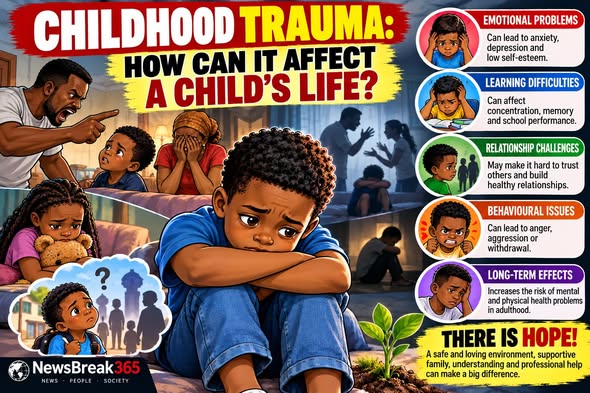
1. Emotional and Mental Health
Some children exposed to traumatic experiences may develop anxiety, depression, fear, emotional distress or problems with self-esteem.
WHO notes that childhood maltreatment and violence are associated with increased risks of mental-health problems, including anxiety, depression and post-traumatic stress.
2. Learning and Concentration
A child experiencing prolonged stress may find it harder to concentrate, learn or perform at school.
The CDC says prolonged stress associated with adverse childhood experiences can affect brain development and systems involved in attention, decision-making and learning.
3. Behavioural Changes
Trauma may sometimes appear through behaviour rather than words.
A child may become unusually angry, withdrawn, fearful, aggressive or emotionally sensitive. However, these behaviours can have many causes, so they should not automatically be assumed to mean that a child has experienced trauma.
WHO reports that childhood violence and maltreatment can have consequences for behavioural and social development.
4. Difficulty Trusting Others
Children need safe and stable relationships to develop emotionally.
When a child’s early environment repeatedly feels unsafe, they may later struggle with trust, communication or forming healthy relationships. The CDC notes that children experiencing toxic stress may have difficulty forming healthy and stable relationships.
5. Possible Long-Term Health Effects
The effects of adverse childhood experiences can extend into adulthood. Research summarized by WHO and CDC links ACEs with increased risks of various mental and physical health problems and challenges affecting education and life opportunities.
This does not mean that every child who experiences trauma will develop long-term problems. Children can respond differently, and supportive environments can make an important difference.
There Is Hope
Childhood trauma does not have to determine a person’s entire future.
Safe, stable and nurturing relationships with parents, caregivers and other supportive adults are important for healthy development. WHO emphasizes prevention, positive parenting, supportive families and safe environments as important parts of reducing child maltreatment and its consequences.
Parents and caregivers should also remember that seeking professional help is not a sign of failure. When a child is struggling emotionally or behaviourally, a qualified healthcare or mental-health professional can help determine what support may be appropriate.
A Message to Parents and Caregivers
Before saying:
“Why is this child behaving badly?”
Sometimes it may be worth asking:
“What might this child be experiencing that they don’t know how to explain?”
Children need boundaries and discipline, but they also need safety, affection, understanding and someone they can trust.
A difficult childhood experience does not have to become a lifelong sentence.
NewsBreak365 | News • People • Society
This article is for public education and does not diagnose any child or replace professional medical or psychological advice.
FOLLOW US ON:
FACEBOOK
TWITTER
PINTEREST
TIKTOK
YOUTUBE
LINKEDIN
INSTAGRAM









 Videos4 hours ago