Connect with us

Business

Dangote refinery IPO attracts fourfold subscriptions, offer extended

Published

on

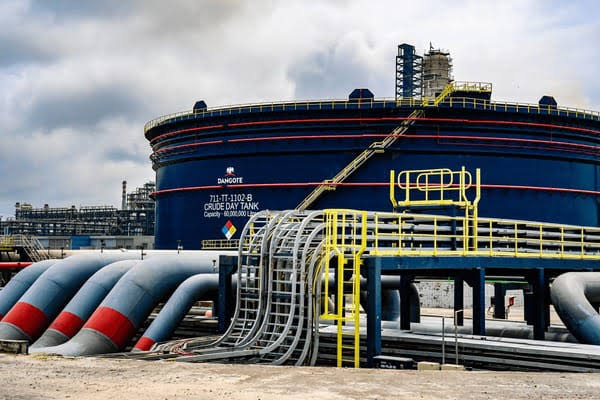
Dangote Petroleum Refinery’s public offer has reportedly attracted subscriptions several times above its original fundraising target, with a fourfold subscription of the N2.15tn offer value translating to about N8.61tn.

President of Dangote Group, Aliko Dangote, disclosed on Monday that subscriptions had exceeded the amount the company originally intended to raise by more than three or four times, as the refinery extended the closing date of its share offer by two weeks to attract more African investors.

The company has not, however, disclosed the exact amount subscribed or confirmed that the fourfold figure applies to the full value of the offer.

The IPO comprises 4.1 billion ordinary shares priced at N525 each, giving the offer a total value of N2.1525tn if all the shares are subscribed.=

A calculation that multiplies the N2.1525tn offer value by four puts potential subscriptions at N8.61tn. This represents an estimate based on the offer value and Dangote’s remarks.

In a statement by the Dangote Group on Monday, Dangote was quoted as saying that the extension was not driven by a need to raise more money but by the company’s desire to give more Africans an opportunity to own shares in the business.

“The IPO is going very well. We will extend the closing date because we want more of our African brothers and sisters to participate. Following our discussions with the Nairobi Stock Exchange, we have identified what we believe is the best way to facilitate participation. We are now trying to replicate that arrangement with other African exchanges to ensure wider participation,” he said.

See also  Nigerian Air Force airstrikes destroy terrorist hideouts in Borno, read details

Explaining the level of subscriptions received, Dangote said, “But when it comes to the amount of money we originally intended to raise, we have already received subscriptions amounting to more than three or four times that figure. So, it is not about the amount of money. It is about the number of people who will have the opportunity to participate in this offer. That means quite a lot to us.”

The offer, which opened on September 14, was initially scheduled to close on October 13 but will now remain open until October 27, following approval from the Securities and Exchange Commission.

The company said the additional two weeks would support efforts to expand access to the offer across African markets, including through wider distribution channels and unsponsored depository receipt programmes designed to facilitate cross-border investment.

It added that the extension would give prospective investors more time to complete account-opening procedures, identity verification and other regulatory requirements necessary to participate in the offer.

The Managing Director and Chief Executive Officer of Dangote Petroleum Refinery and Petrochemicals FZE, David Bird, said the extension would enable more investors across the continent to participate in the company’s future growth.

“We welcome the SEC’s approval of the extension, which will give more investors across Africa the opportunity to participate in the Offer. From the outset, our ambition has been to enable as many people as possible to participate in the IPO and share in DPRP’s future growth. The additional time will help us extend that opportunity to more investors across Africa,” he said.

See also  FG seeks 30-day credit window for airlines due to Jet fuel crisis

The public offer provides investors with an opportunity to acquire shares in the refinery at N525 per share.

Source: punchng.com

FOLLOW US ON:

FACEBOOK

TWITTER

PINTEREST

TIKTOK

YOUTUBE

LINKEDIN

INSTAGRAM

Continue Reading
Click to comment

Leave a Reply

Your email address will not be published. Required fields are marked *

Business

Musk spends $276m backing Republicans in midterms — Report reveals

Published

on

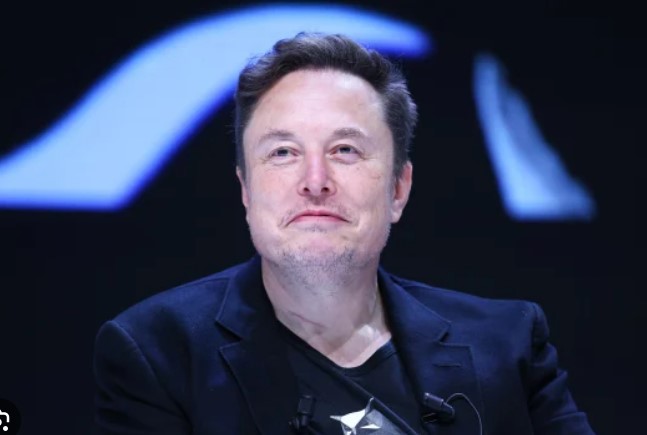
Tech billionaire Elon Musk, the world’s richest man, has contributed $276 million to organisations boosting the campaigns of right-wing American candidates ahead of upcoming midterm elections, US media reported Monday.

The sum, all contributed since July, positions Musk as the largest single donor for the November 3 elections, according to the New York Times. He has spent a total of $366 million this election cycle.

The largest funding recipient was the Republican’s Senate Leadership Fund, receiving $158 million, aimed at maintaining the party’s control of the upper house of Congress despite a slim margin.

The SpaceX and Tesla boss is no stranger to massive US election spending, having contributed $`290 million in 2024 to help US President Donald Trump win reelection.

Trump allowed Musk to work in the White House for several months overseeing his cost-cutting Department of Government Efficiency (DOGE) venture, but exited the role after a public falling out with the president.

They’ve since reconciled, and Trump awarded Musk the National Medal of Science at an event in DC last week.

Though individual campaign donations in the United States are capped at `$3,300 per person, loopholes in the US campaign finance system allow political mega donors to contribute to funds known as political action committees or “PACs,” which support candidates.

Musk donated $76 million this summer to his own America PAC, the New York Times reported.

Other recipients of Musk’s political funding include $20 million to the Republican’s Congressional Leadership Fund, $10 million each to the Republican Governors Association and the Lone Star Liberty PAC, and $2 million to the Republican Attorneys General Association.

See also  Dangote, PENGASSAN face-off: NECA warns of risks to jobs, investments

AFP

Source: punchng.com

FOLLOW US ON:

FACEBOOK

TWITTER

PINTEREST

TIKTOK

YOUTUBE

LINKEDIN

INSTAGRAM

Continue Reading

Business

World Bank plans $5.79bn private financing for Nigeria

Published

on

The World Bank Group has disclosed plans to mobilise up to $5.79bn in private financing for Nigeria in the 2026 fiscal year to support investments in telecommunications, agriculture, small businesses and other critical sectors of the economy.

The initiative is expected to expand broadband access, improve agricultural productivity, increase credit availability for businesses and support the creation of about 850,000 jobs.

The bank disclosed this in a report published on its website on Sunday, titled Unlocking $5.79bn in Private Financing: The World Bank Group Is Leading the Charge for Private Capital Mobilisation in Nigeria.

“In fiscal year 2026, the World Bank Group is helping mobilise up to $5.79bn in private financing to address these barriers,” the report stated.

It explained that the financing initiative would combine policy reforms, commercial investments and risk-sharing arrangements involving the World Bank, International Finance Corporation and Multilateral Investment Guarantee Agency.

The institution linked the investment drive to economic reforms introduced in Nigeria since mid-2023, particularly changes in foreign exchange management, fuel subsidies and public finances.

It noted that the reforms, supported partly through its RESET and NAIJA development policy financing programmes, were improving conditions for private investment.

“Further reforms aim to deepen capital markets, expand digital trade, enable greater private participation in electricity, and improve competitiveness,” the report added.

A major component is the Building Resilient Digital Infrastructure for Growth project, which is expected to attract at least $156m in private equity during its first investor selection round.

Subsequent financing rounds could unlock up to $1.1bn by 2030 to develop a nationwide fibre-optic network. The project is expected to extend broadband access to an additional 58 million Nigerians, increasing coverage from 92 million people in 2025 to 150 million by 2030.

See also  Tinubu’s Executive Order: FG, states, LGs allocation may increase by N15tn

It will also target connectivity for 38,800 public schools, 16,900 health facilities and 3,400 local government offices. In agriculture, the bank plans to mobilise $242m through the Agricultural Value Chains for Growth project, targeting one million smallholder farmers.

The amount comprises $220m expected from agribusiness firms and $22m from certified seed producers. For small businesses, the Fostering Inclusive Finance for MSMEs in Nigeria programme is expected to attract nearly $1.89bn in private financing and support more than 250,000 enterprises.

Backed by a $500m financing package from the World Bank’s lending institutions, the programme could generate approximately 850,000 direct and indirect jobs, with 30 per cent of financing targeted at women-led businesses.

The report also disclosed that the IFC helped mobilise $1.02bn for Dangote Industries Limited and $282.5m for Indorama Fertiliser to expand domestic fertiliser production.

Together, the two projects have an annual production capacity of 6.8 million metric tonnes and are expected to improve access to agricultural inputs for over 10 million farmers.

Similarly, the IFC supported a $1.2bn bond issuance by IHS Towers, helping attract more than $1.1bn from private investors for telecommunications infrastructure.

The bank stressed that the financing arrangements were intended to attract greater private participation in Nigeria’s development. “Together, these reforms, platforms, guarantees, and investments are helping mobilise up to $5.79bn in private financing in fiscal year 2026,” it stated.

The institution added that the impact would ultimately depend on improvements in infrastructure, business financing, agricultural productivity and employment opportunities.

Source: punchng.com

FOLLOW US ON:

FACEBOOK

TWITTER

PINTEREST

TIKTOK

YOUTUBE

LINKEDIN

INSTAGRAM

Continue Reading

Business

13% derivation not enough for oil-producing states – Obasanjo reveals

Published

on

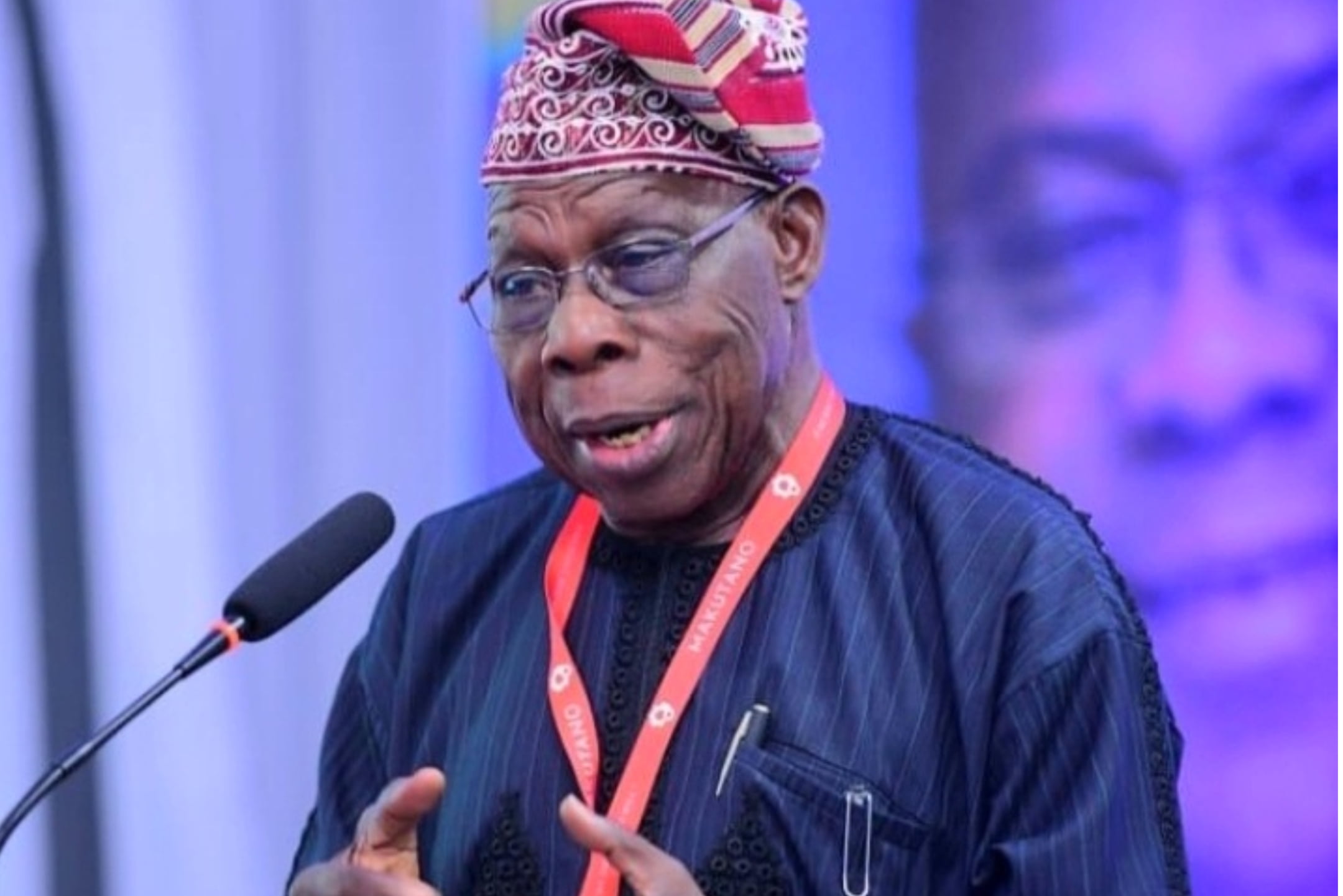
Former President Olusegun Obasanjo has backed calls for an increase in the 13 per cent derivation allocation to oil-producing states, saying the existing share should be treated as a starting point for further negotiations.

Obasanjo spoke on Monday at the flag-off of the Crude Distillation Unit of the $1bn Azikel Refinery in Obunagha, Yenagoa Local Government Area of Bayelsa State, where he also challenged the project’s promoter to complete the facility within 12 months.

Addressing Bayelsa State Governor, Douye Diri, the former President said oil-producing states and communities had not received a fair deal from the exploitation of resources in their territories.

“You are right that the states and oil-producing communities have not got a fair deal so far. Thirteen per cent is the beginning. You can continue to talk,” he said.

The remarks came as Diri renewed his criticism of the derivation formula and the Land Use Act, arguing that communities in the Niger Delta remained excluded from decisions concerning the resources extracted from their land.

The refinery, owned by Azikel Petroleum under the Azikel Group, is designed to process 25,000 barrels of crude oil daily.

Its foundation was laid by Obasanjo about eight years ago, while the installation of the crude distillation unit marks a major stage in the project’s development.

Obasanjo commended the President of Azikel Group, Azibapu Eruani, for sustaining the project and urged him to ensure its completion within the next year.

“I have told Dr Eruani that I will be officially 90 years by next March. It means I will take the boarding pass soon. So, he has to make sure the project is completed before I exit,” he said.

See also  Ajaokuta Steel risks power cut over N5.46bn debt

He also acknowledged the role of the African Finance Corporation and the African Export-Import Bank in supporting the investment, calling for continued assistance to bring it to completion.

“My challenge to you, Dr Eruani, is to ensure that the refinery is completed within the next 12 months. With this done, you can even double the capacity,” Obasanjo said.

The former president also praised Diri for what he described as the effective use of Bayelsa’s revenue, citing projects across the state as evidence that the funds accruing to it had been put to use.

“The most important thing is that even the little you have received, you have used it well,” he said.

In his remarks, Diri said the refinery represented an opportunity for residents of Bayelsa and the Niger Delta to participate more directly in an industry built on resources extracted from their communities.

He argued that the region’s long-standing agitation over resource control stemmed from the perceived imbalance between where crude oil was produced and where the benefits of its exploitation accrued.

“As people of the Ijaw ethnic nationality, we have protested and fought because we feel that God gave us something in our land but we are not benefiting from it. Others are benefiting and see us as second-class citizens,” the governor said.

Diri also faulted the Land Use Act, arguing that the division between state control of surface resources and Federal Government control of resources beneath the ground placed oil-producing communities at a disadvantage.

“The Land Use Act is unfair. Surface resources belong to states but what lies underneath belongs to the Federal Government. That law is obnoxious and not good for any just society,” he said.

See also  Heavy security at Sokoto prison over Nnamdi Kanu’s arrival

He added that the region was not seeking to appropriate all the proceeds from its resources but wanted a greater role in determining how they were managed.

“We do not want to take all to ourselves. We just want to be co-players in determining how it is done. Thirteen per cent is not enough for the states,” he said.

The governor urged young people in Bayelsa to acquire the skills needed to benefit from the refinery and other industrial investments, warning that the presence of such facilities would mean little if residents lacked the capacity to participate in their operations.

He also called on oil companies operating around Gbarain and Obunagha to rehabilitate the road leading to the refinery, saying they should complement the state government’s efforts to support the project.

Diri further stressed the need for African countries to process their natural resources locally, arguing that retaining more processing and industrial activities on the continent was essential to securing greater economic benefits from its resources.

Speaking at the event, Eruani said the refinery was conceived to make Bayelsa and the wider Niger Delta active participants in the petroleum industry rather than remain primarily suppliers of crude oil.

He described the installation of the crude distillation unit as the beginning of the refinery’s completion phase and said the project would help drive industrialisation in the state and the region.

The facility is expected to produce 2.5 million litres of petrol and two million litres of diesel daily, alongside other petroleum products, according to the project’s promoters.

See also  Price war: Retailers drop petrol below Dangote’s N739/litre

Eruani also commended President Bola Tinubu for supporting indigenous refineries, saying their development aligned with the Federal Government’s objective of improving the availability and affordability of petroleum products.

A board member of Azikel Petroleum, Daru Owei, and the Ibenanaowei of Ekpetiama Kingdom and Chairman of the Bayelsa State Council of Traditional Rulers, King Bubaraye Dakolo, also commended Eruani for the project, saying it could improve the economic fortunes of Bayelsa, the Niger Delta and Nigeria.

Source: punchng.com

FOLLOW US ON:

FACEBOOK

TWITTER

PINTEREST

TIKTOK

YOUTUBE

LINKEDIN

INSTAGRAM

Continue Reading

Trending