






Connect with us

Business

NUPENG suspends strike as Dangote accepts union’s demands

Published

on

The Nigeria Union of Petroleum and Natural Gas Workers suspended its two-day strike on Tuesday following a meeting with officials of the Federal Government and the Dangote Group, amid fuel supply disruptions in different locations across the country.

The National President of NUPENG, Williams Akporeha, confirmed this to one of our correspondents. After the failure of the Monday meeting, the Ministry of Labour summoned another meeting on Tuesday with more stakeholders in attendance.

Those in attendance included representatives of the Dangote Group led by Sayyu Dantata, officials of the Nigerian Midstream and Downstream Petroleum Regulatory Authority, and others. An agreement signed after the meeting showed that the Dangote refinery agreed to unionise its members.

“Following the threat to embark on industrial action by the Nigeria Union of Petroleum and Natural Gas Workers over the refusal of the management of the Dangote Refinery and Petrochemical Limited to allow their employees to be unionised by registered labour unions, a conciliation meeting was held at the instance of the Minister of Labour and Employment, and it was revealed in the course of the meeting that:

“The management agreed with this fact and responded that they are not averse to the unionisation of their employees by labour unions in tandem with the provisions of the extant labour laws. After exhaustive deliberations, the following resolutions were reached by both parties: That since workers’ unionisation is a right in line with the provisions of the extant laws, the management of Dangote Refinery and Petrochemicals agreed to the unionisation of employees of Dangote Refinery and the unionisation of employees of Petrochemicals who are willing to unionise.

“That the process of unionisation shall commence immediately and be completed within two weeks (9th-22nd September, 2025), and it was agreed that the employer will not set up any other union.

Arising from the strike notice, no worker or employee of Dangote Refinery and Petrochemical will be victimised,” the agreement read.

Parties are to revert to the Minister of Labour a week after the conclusion of the engagement. Based on the MoU, NUPENG agreed to suspend the industrial action with immediate effect.

The MoU was signed by Dangote’s Sayyu Dantata; NUPENG’s Akporeha and his Secretary, Afolabi Olawale; an official of the NMDPRA, OK Ukoha; a director of the labour ministry, Amos Falonipe; and representatives of the Nigerian Labour Congress and the Trade Union Congress.

However, as the strike entered the second day before its suspension on Tuesday, Nigerians in different parts of the country felt the impact as many filling stations were shut. NUPENG had on Friday declared its intention to stop loading fuel this week over allegations that the Dangote refinery planned to ban the drivers recruited for its 4,000 trucks from joining the union.

See also  Wike-backed PDP fumes over Makinde-ADC alliance plans ahead of 2027 alignment

Recall that the Dangote refinery planned to start direct fuel distribution from August 15 with its 4,000 Compressed Natural Gas-powered trucks. But the scheme was delayed due to a lack of enough ships to bring the trucks to Nigeria. While the refinery is still receiving the trucks as they arrive in Nigeria, the Petroleum Tanker Drivers branch of NUPENG accused the refinery management of anti-labour practices for not allowing its drivers to join the union.

They also accused Alhaji Aliko Dangote of plans to render them useless with his direct fuel distribution scheme. NUPENG President Akporeha on Sunday confirmed that the Federal Government had reached out to the union on the need to avert the strike, but he refused to call off the strike.

Following the inability of the Federal Government to broker peace between NUPENG and the Dangote refinery at the Monday conciliation meeting organised by the Minister of Labour and Employment, Muhammad Dingyadi, the union continued the strike, shutting down depots and some filling stations. The suspension of the strike later in the evening was a relief in areas where its impact was felt.

In states like Cross River and Kaduna, many filling stations were under lock and key on Tuesday, while some adjusted pump prices in Sokoto and Enugu. It was also gathered that vehicle owners engaged in panic buying in parts of Lagos and Ogun States.

The National President of the Petroleum Products Retail Outlet Owners Association of Nigeria, Billy Gillis-Harry, told The PUNCH that “PETROAN members joined the strike on Tuesday, as the Monday meeting with the labour minister yielded no result.” Gillis-Harry, who described the strike as a looming danger, however, appreciated the Federal Government for its prompt intervention.

Fuel supply disruptions

In Calabar, the capital of Cross River, commuters and residents lamented the hike in fares following the fuel scarcity in the state on Tuesday. Commuters said that the fuel scarcity triggered a hike in transport fares, leaving many commuters stranded and frustrated.

Explaining how the fuel scarcity affected transport costs, a resident, Mary Archibong, said, “The fuel scarcity has affected everyone in one way or another. Before now, from Watt to Calabar Roundabout, it used to be N300, but now it’s N500. It is very bad because the drivers are now buying from the black market at N1,500 per litre,” she said.

It was learnt commercial activities in Kaduna were on Tuesday crippled as the now-suspended strike forced major filling stations in the metropolis to shut down their operations. A visit to several parts of the state capital revealed that virtually all major filling stations had locked their gates, leaving motorists and residents stranded.

At the Barnawa area in Kaduna South Local Government Area, Future View Filling Station and the NNPC Mega Filling Station along Aliyu Makama Road were under lock and key. Residents expressed frustration as the strike entered its first day. “I drove around for over an hour looking for fuel. Nowhere is selling,” lamented Musa Lawal, a commercial tricycle operator.

See also  Nigeria spends N9tn importing petrol

The situation was the same across other parts of the city. At the busy Station Roundabout, the AA Rano and Shema filling stations remained shut, while at the Ahmadu Bello Stadium Roundabout, Total, MRS, and the NNPC Mega Station all closed shop. The stations were deserted.

Similarly, the Total and Mobil filling stations along Ahmadu Bello Way and Muhammadu Buhari Way (formerly WAFF Road) were not dispensing fuel when our correspondent visited.

Some motorists who managed to find fuel at smaller independent stations complained of arbitrary price hikes. A motorist, Sani Ibrahim, told The PUNCH that he bought fuel at N950 per litre, up from N860 the previous day.

In Enugu, commuters were stranded on Tuesday due to fuel scarcity. Many petrol stations closed shops at noon. Motorists were unable to access petrol, so they were left idling on major roads, while some resorted to black-market vendors charging up to N1,500 per litre.

It was observed that busy roads such as Ogui Junction, Abakpa Junction, IMT, Emene, and Holy Ghost were unusually scanty on Tuesday, with few vehicles moving around to pick passengers. The strike led to immediate fare hikes . Buses raised fares from N300 to N500 from Garriki to New Market.

The PUNCH reports that there were long queues in many filling stations across Anambra State on Tuesday, resulting in the sharp increase in transportation fares for both interstate and intrastate movement. The queues built up in some parts of Onitsha, Awka and Nnewi, as only a few filling stations were seen dispensing the product.

As a result, commuters had a hectic time going to their various destinations as commercial transport operators hiked transport fares by over 50 per cent. Many motorists hiked their fares as a result of the development. It was observed that a journey of N200 cost as much as N400, while that of N300 became N600.

In Gombe, fuel prices climbed to between N910 and N1,000 per litre. At a filling station along Gombe-Bauchi Road, an attendant, who pleaded anonymity, confirmed the increment, saying marketers were reacting to “uncertain developments in the sector.”

He added, “We are still selling because supply is steady, but once depots are locked, the price will go up further. That is why our managers adjusted the pump price early.”  Meanwhile, there was not much impact felt in states like Jos, Kano, Zamfara and Ilorin. There was a marginal price increase in Sokoto State.

Speaking on national television earlier on Tuesday, the NUPENG boss, Akporeha, said the union had no choice but to press on with industrial action after Dangote’s management rejected recognised oil and gas unions and allegedly claimed to have a separate association for its workers.

See also  Dangote refinery slashes petrol gantry price by N75/litre; read details

Akporeha alleged that the representative of the Dangote refinery, Dantata, walked out of the Monday meeting when the labour minister told him that the Dangote refinery could not have a separate union for its workforce. The labour leader alleged that the Dangote refinery created an alternative drivers’ association to weaken NUPENG, describing the move as illegal.

He insisted that the law only recognised existing unions such as NUPENG, PENGASSAN and others in the oil and gas sector. While clarifying that strike action was a legitimate industrial tool, Akporeha stressed that dialogue remained open.

“Strikes are part of industrial relations. But under my leadership, it has never been the first option, but no employer has the right to enslave workers,” he said. He dismissed allegations that NUPENG was attempting to sabotage the refinery or frustrate local production.

“Everybody wants Dangote to succeed, including NUPENG. But he must play by the rules. Nigeria cannot afford investors who act like dictators or slave drivers,” he said. On Monday, depots and filling stations were also closed by NUPENG members. The Aradel refinery in Obele, Port Harcourt, was shut. The Kwale Hydrocarbon facility in Delta State was shut.

Checks by one of our correspondents confirmed that activities at petroleum depots were paralysed across the country. NUPENG officials visited the depots on Monday and the early hours of Tuesday to enforce compliance. In various states across the country, especially those in Lagos and Warri, Delta State, drivers parked their trucks to wait for the next directive as far as fuel lifting was concerned.

Our correspondent reports that NUPENG officials shut down some depots to prevent the movement of trucks. The National President of NUPENG, Williams Akporeha, told our correspondent that there was “100 per cent compliance across the nation.” Some members of the union accused Dangote and MRS of having plans to take over their jobs with the recruitment of new drivers.

At Aiteo, RainOil, Shell+, First Royal, MAO, Hensmor, One Terminals, Africa Terminals, Integrated Oil and Gas, and other depots in Lagos, the gates were locked as workers stayed away to comply with the strike action. Also, A&E, Matrix, Parker AY Shafa, and other depots in Warri joined the strike on Monday. The PUNCH reports that with the suspension of the industrial action, loading of fuel is expected to resume on Wednesday.

(Additional reports by: Raphael Ede, Ikenna Obianeri, Chima Azubuike, James Abraham, Hussaini Ibrahim, Maiharaji Altine, Animasahun Salman, and Dare Akogun)

FOLLOW US ON:

FACEBOOK

TWITTER

PINTEREST

TIKTOK

YOUTUBE

LINKEDIN

TUMBLR

INSTAGRAM

Continue Reading
Click to comment

Leave a Reply

Your email address will not be published. Required fields are marked *

Business

My customers taught me Yoruba – London trader, ‘Olakunle Oshodi’

Published

on

You are an Iraqi based in London, United Kingdom, how did you learn to speak Yoruba?

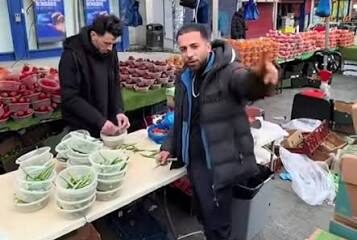
I trade at Woolwich Market. That is where I work and where I started meeting many Nigerian customers, especially Yoruba people.

Many of the Nigerians I met at the market spoke Yoruba when they came to buy things from me. At first, I did not understand what they were saying, so I became curious and started asking them to interpret the words they used. That was how I gradually started learning Yoruba from my customers.

What do you sell?

I used to sell pepper and fruit, but now I sell cosmetics and hair. My business has changed over time, but I have continued interacting with many Yoruba customers at the market. Through those interactions, I have also continued learning the language.

How did you first become interested in the Yoruba language?

About 95 per cent of my customers are Yoruba. Whenever they came to buy things, they would speak Yoruba to me. Instead of just listening to them, I started asking questions whenever I heard words I did not understand. I would ask them what the words meant, and that was how I learnt little by little.

The more I listened to them, the more interested I became. I started enjoying the language because I think Yoruba is a sweet language. That was what encouraged me to keep learning it.

What do you like about the Yoruba language?

I like the way the language sounds. For me, it is an interesting language, and because I hear my customers speak it regularly, it became easier for me to pick it up. I also like the way Yoruba people communicate with me when they come to the market.

How did you get the name “Olakunle Oshodi”?

Oh, one of my customers gave me the name. She is a lovely person, and she is Yoruba. She said the name was good for me, and that was how I got the name “Olakunle Oshodi.”

Do you have any family connection to Nigeria?

See also  FULL LIST: FG lists federal hospitals where dialysis costs ₦12,000

No, I don’t have any family connection to Nigeria. I have never even been there. My connection with Yoruba came through my customers and the people I have met at the market.

How long have you been learning Yoruba?

It has been about three years. I can speak it because I really like the language, so it has not been that hard for me. I have been learning mainly through my customers and through everyday conversations at the market.

What made you decide to speak Yoruba with your customers?

Basically, I just wanted to learn. You know, Yoruba people joke with you and laugh with you. They want happiness, and they are not fake. That is why I love them.

When they come to the market, there is always a lot of interaction. They joke, laugh, and make you feel comfortable. So, for me, learning the language became a way of connecting with them better.

Yoruba people are lovely. Even when wahala comes sometimes, they are still just lovely. I enjoy the way they joke and laugh with you. They want happiness, and that is something I really like about them.

Being around them has also helped me learn more about the language because I speak Yoruba almost every day with my customers. The more I interact with them, the more I learn.

Has speaking Yoruba affected your business?

Yes, it has made the business grow. Speaking Yoruba has helped me connect with my customers better, and I believe that has been good for my business.

When customers realise that I can speak their language, it creates a different kind of relationship. We can joke together, laugh together, and communicate more easily.

How do customers react when they realise that you can speak Yoruba?

They are shocked, and they laugh. I see them happy, and I laugh with them. Sometimes, you can see that they did not expect a white man to speak Yoruba, so their reaction is usually one of surprise. Most of the time, they are not expecting it at all, especially when they first hear me respond to them in Yoruba.

See also  Wike-backed PDP fumes over Makinde-ADC alliance plans ahead of 2027 alignment

I enjoy seeing their reaction because you can immediately see the happiness on their faces. Sometimes, they will look at me again as if they are trying to confirm whether I really understand what they are saying. It is always a funny and enjoyable moment for me.

Speaking Yoruba also makes the interaction more relaxed. Instead of just being a customer-and-trader relationship, we can joke together, laugh together, and have a better conversation. I enjoy that connection with them. I laugh with them because it makes the interaction more enjoyable, and I am happy when I see that they appreciate my effort to speak their language.

What goes through your mind when customers are surprised by your Yoruba?

I just enjoy the moment. They are shocked and laughing, and I see that they are happy. So, I laugh with them. For me, it is a nice experience because it shows that they appreciate the fact that I am trying to speak their language.

Has speaking Yoruba helped you gain your customers’ trust?

Yes, 100 per cent. I’m always with them. I spend a lot of time interacting with my customers at the market, so speaking Yoruba has helped me become closer to them. When I speak their language, they know that I am making an effort to understand them and communicate with them in a way that makes them comfortable.

I am not just there to sell something to them; I enjoy being around them and having conversations with them. That connection is important to me.

Have you ever had a funny experience while speaking Yoruba?

Yes, I have. They say, “Ah-ah!” when I speak. They are usually surprised when they hear me speaking Yoruba, and that reaction can be funny.

Sometimes, they cannot believe what they hear. They will react with “Ah-ah!” because they did not expect me to speak the language.

Even though sometimes wahala can come, it is still just lovely being around them. My experience with them has been positive, and they have also played an important role in helping me learn the language.

See also  2027: Atiku delays ADC membership card collection amid rumoured Jonathan comeback

Do you think your customers have also enjoyed teaching you Yoruba?

Yes, because most of what I know came from interacting with them. When they speak Yoruba and I do not understand a word, I ask them what it means. That is how I learn.

It has been a gradual process. I listen, ask questions, and then try to use the words when I speak to them. I enjoy the learning process.

What are you looking forward to about visiting Nigeria?

As I said earlier, I have never been to Nigeria, but I have plans to go. I have not had the opportunity to visit yet, even though I have developed such a strong interest in the Yoruba language and culture.

I have a plan to go. I have never been there before, so I would like to experience the country and meet more people. I have learnt Yoruba mainly from people in London, so visiting Nigeria would allow me to experience the language and culture differently.

What does Yoruba culture mean to you?

I love the culture. I love Yoruba natives. My connection with Yoruba has grown through the people I meet and the language I have learnt from them. Even though I have never been to Nigeria, I have developed a love for the culture through my customers and the people around me.

What would you like Yoruba people to know about your connection with their language?

I want them to know that I love all of them, and I want to learn more of the language if I can. I speak well, but I only need time. One day, they will see. I want them to know that my interest in Yoruba is genuine. I did not learn it because somebody forced me to; I learnt it because I met Yoruba people, I enjoyed being around them, and I fell in love with the language.

Source: punchng.com

FOLLOW US ON:
FACEBOOK

TWITTER

PINTEREST

TIKTOK

YOUTUBE

LINKEDIN

INSTAGRAM

Continue Reading

Business

Tax reform has reduced burden on low-income earners — Revenue board

Published

on

The Joint Revenue Board has said Nigeria’s tax reform has reduced the burden on low-income earners and eliminated multiple nuisance taxes.

The Executive Secretary of the JRB, Olusegun Adesokan, stated this while giving an overview of the progress recorded one year into the implementation of the tax reform.

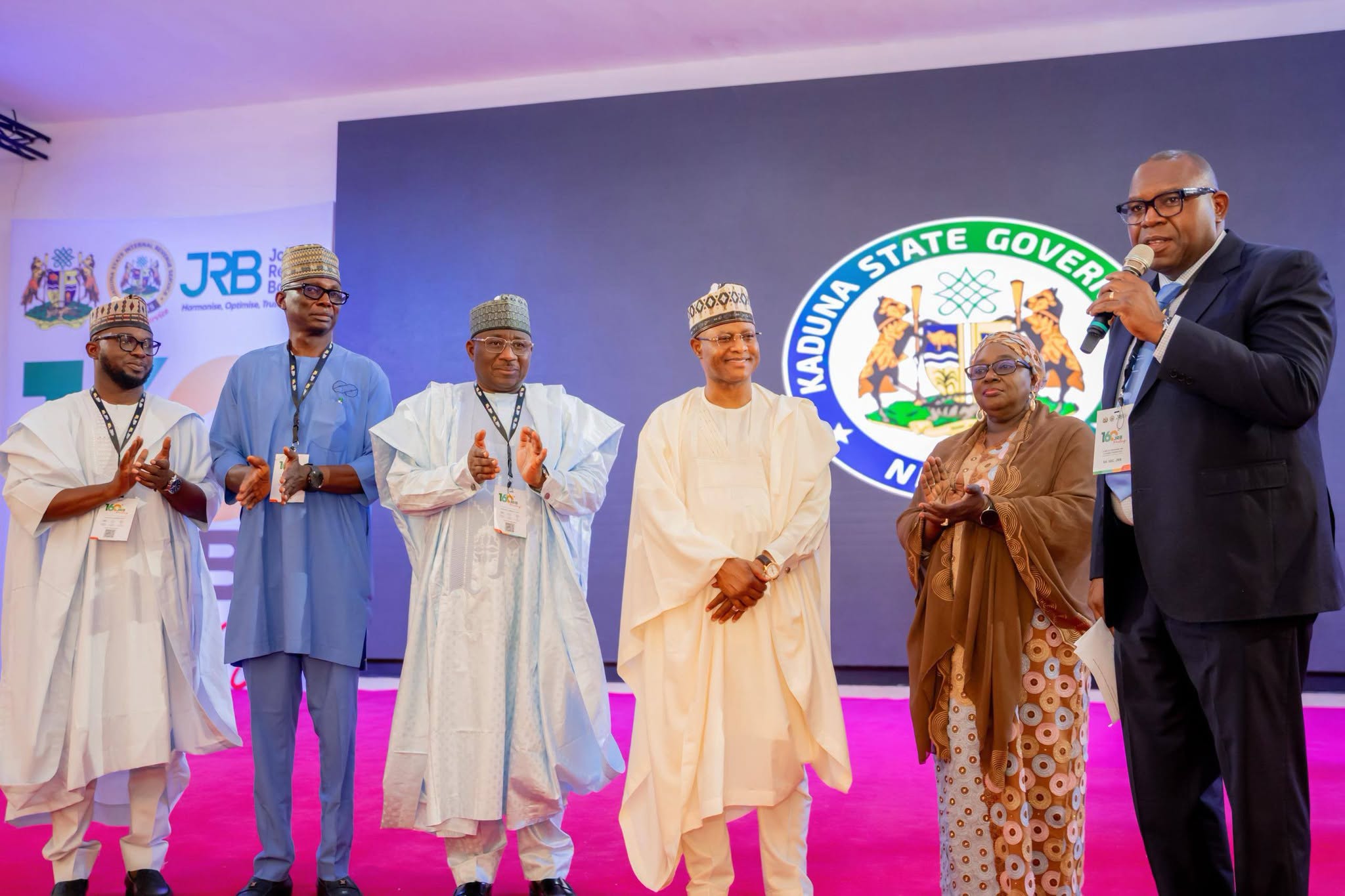
In a post obtained from the board’s X handle on Friday, Adesokan spoke at the 160th meeting of the JRB in Kaduna State, with the theme, “One Year of Reform: Assessing Progress and Addressing Challenges.”

He said the reform had also provided relief for low-income earners and micro-scale businesses, contrary to concerns that it had increased the tax burden.

“Addressing the misconception that the tax reform has increased taxes, the reform has rather reduced the tax burden on low-income earners, eliminated multiple nuisance taxes while providing reliefs for low-income earners and micro-scale businesses,” he said.

Adesokan said 18 state Houses of Assembly had domesticated the model harmonised taxes and levies law, which was designed to address overlapping and multiple taxation across the country.

According to him, the legislation had reduced more than 50 collection items previously administered by states and local government areas to nine sub-heads.

He added that the law had also abolished cash collection and the mounting of roadblocks for revenue collection.

The Executive Secretary said the measures had recorded significant progress in harmonising taxes and levies across the subnational governments.

The JRB, Nigeria’s apex body for revenue administration, convened the meeting to assess progress under the new revenue regime, identify gaps, and address emerging challenges.

The meeting was declared open by the Kaduna State Governor, Senator Uba Sani, who said the reform had expanded opportunities for domestic resource mobilisation and strengthened the country’s capacity to finance development.

See also  No directive to suspend sachet alcohol ban, says NAFDAC

Sani urged the JRB to identify bottlenecks affecting revenue collection, institutional weaknesses creating friction between revenue authorities and taxpayers, and opportunities for technology to improve efficiency in revenue administration.

He said, “The objective of the reform should not be simply to collect revenue; it should be to build a tax system in which compliance becomes easier, enforcement becomes more intelligent and voluntary compliance becomes a norm.”

The Executive Secretary appreciated Governor Uba Sani for hosting the 160th JRB meeting and for his consistent support of the tax reform initiative. He particularly commended the governor for nominating a member of the Board and outgoing Executive Chairman of Kaduna State Internal Revenue Service, Mr Jerry Adams, as his running mate for the 2027 gubernatorial election.

Sani expressed his delight with the tax reform, stressing that apart from eliminating duplication of taxation, it has enhanced revenue generation.

He observed that the national tax revenue has so far risen to N21.6 trillion since President Bola Tinubu introduced tax reform in 2026.

According to him, the nation’s revenue was  approximately ₦10.1 trillion in 2023,  ₦21.6 trillion in 2024, and about ₦36.8 trillion in 2025.

In his opening remarks, JRB Chairman, Dr Zacch Adedeji, represented by the Executive Director, Finance and Corporate Services, Nigeria Revenue Service, Muhammad Abubakar, said the meeting was a call for revenue authorities to take stock of the progress made, address identified gaps and confront emerging challenges.

He said the ultimate measure of the reform’s success must be improved revenue mobilisation, greater compliance, a better taxpayer experience, and stronger contributions to national development.

See also  Dangote Refinery Raises Petrol Price To ₦1,245 Per Litre

Source: punchng.com

FOLLOW US ON:

FACEBOOK

TWITTER

PINTEREST

TIKTOK

YOUTUBE

LINKEDIN

INSTAGRAM

Continue Reading

Business

Rivers oil tragedy: 37 die from toxic fumes

Published

on

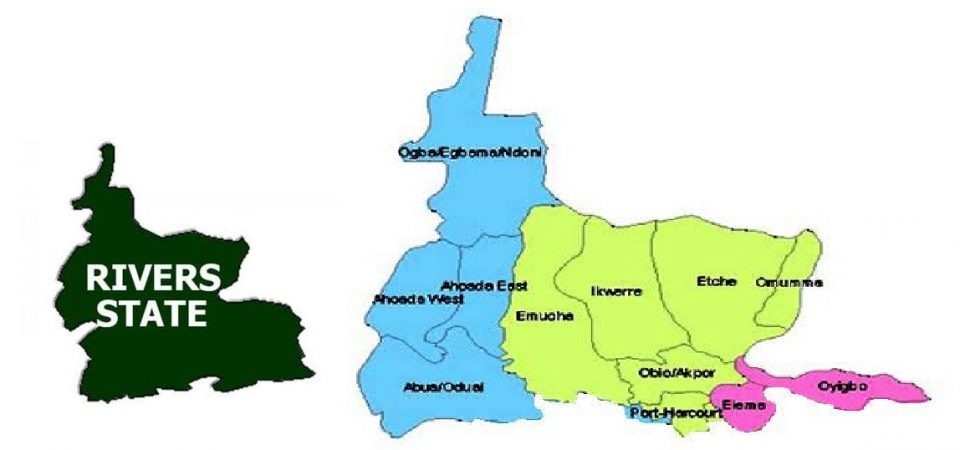
About 37 persons have reportedly died after inhaling fumes from a petroleum product at a jetty in Okrika Local Government Area of Rivers State.

The incident occurred on Thursday at the Okari Jetty in the Okrika Mainland area, where youths from Okrika and neighbouring communities had reportedly gathered to load a petroleum product from an illegal tapping point.

Many others were said to be missing following the incident, which occurred in the mainly coastal community.

A source in the community told our reporter that more than 100 persons had stormed the jetty with locally made boats while a vessel was anchored at the riverside to load petroleum products.

The source said trouble started while the youths were loading the product, as a strong smell suddenly saturated the air, causing several of them to collapse.

“Many of them collapsed into the river, while others who managed to escape the scene had serious respiratory disorders and were being treated at the hospital.

“As I speak to you, over 37 bodies were identified as Okrika people, while six others were yet to be identified and many are still missing,” the source, who pleaded anonymity, said.

The Youths and Environmental Advocacy Centre also confirmed the incident, saying its network of youth volunteers and human rights defenders in the Niger Delta had reported that no fewer than 37 persons suspected of involvement in illegal oil activities died after inhaling what was locally referred to as “Indorama fuel.”

The Executive Director of YEAC-Nigeria, Dr Fyneface Dumnamene, said in a statement that the incident occurred at about midnight on Thursday at the Okari Jetty.

See also  PENGASSAN backs NUPENG, threatens shutdown of Dangote refinery

“According to the report, no fewer than 37 persons suspected to be oil thieves died after inhaling what is locally called ‘Indorama Fuel.’

“Many others are still missing. The incident occurred during the illegal loading of the product into a ship at a tapping point,” he said.

Dumnamene said the victims had connected a pipe to a tapping point on a pipeline that transported petroleum products from the Indorama Eleme Petrochemical through the Port Harcourt Refinery to vessels that reportedly came every two weeks to load products for export.

He added that the youths inhaled the product while a vessel was loading and they were simultaneously loading it into their waiting boats from the illegal tapping point.

“This led to the death of not fewer than 37 persons. Many are still missing, and some corpses have been seen floating on the river but have not yet been recovered,” he stated.

Dumnamene called on the National Oil Spill Detection and Response Agency to immediately conduct a joint investigation visit to the site of the incident.

He also urged the company that owned the vandalised facilities to provide adequate security for its pipelines to prevent a recurrence.

The YEAC-Nigeria boss condemned the alleged sabotage, warning youths to stay away from oil and gas infrastructure because of the dangers associated with high-pressure pipelines.

He also called for alternative livelihood opportunities for youths in the Niger Delta, including the establishment of modular refineries and the legalisation of artisanal refining.

When contacted, the spokesperson for the Rivers State Police Command, Blessing Agabe, confirmed the incident and said the victims were reportedly attempting to steal crude oil.

See also  FULL LIST: FG lists federal hospitals where dialysis costs ₦12,000

Agabe, an Assistant Superintendent of Police, said no official complaint had been lodged with the command but added that an investigation had commenced.

“The suspects reportedly died in the process of attempting to steal crude oil. However, no official complaint has been received in connection with the incident at this time.

“Investigation is ongoing to establish the circumstances surrounding the incident and ascertain the facts,” the police spokesperson stated.

However, the Commander of the Civilian JTF in Okrika LGA, Igwe Godswill, gave a different account of the incident, saying the victims had gone to scoop petroleum products that had spilled into the river when they were allegedly overwhelmed by fumes from a vessel loading products at the jetty.

Godswill described the incident as tragic, saying most of the victims were youths searching for means of livelihood amid a lack of employment opportunities.

“It is so pathetic that this incident is happening in our community. These are young guys who have gone to search for their daily bread, only for the fumes from the fuel that was pumped to kill so many of our youths under the bridge.

“Many of them were choked to death. These are not criminals or anything, but they went out in search of their daily meal. I am advising the community, the leaders and every other person that we need legitimate jobs in the community.

“These things are risky, but when you cannot feed your children, most times, those risky jobs become the only option,” Godswill stated.

He explained that the victims had gone to scoop petroleum products floating on the water when they were overcome by fumes from a vessel loading petroleum products at the jetty.

See also  World Bank reveals that poverty threatens 79% of Nigerians despite reforms

Godswill, however, said about 10 bodies had been recovered, adding that only some of the victims could be identified because of the condition of their remains.

He said, “We saw about 10 of them. Four were still unrecognisable, while four persons were identified. The rest could not be identified because their bodies were badly damaged and their faces were severely affected.”

The Civilian JTF commander called on the Rivers State Government, community leaders and other relevant authorities to create employment opportunities for youths in the area to discourage them from engaging in dangerous activities.

“I am calling on the relevant authorities, community leaders, the chairman and every other person to look into this. It is not enough to stop them because, yes, it is a risky job, but they should create jobs for the youths so that everybody will have something to eat.

“Something that can put food on the tables of these young men, the youths and every other person. I can tell you for free that it will not just stop because when that source is the only livelihood, people will still go there.

“Even as of yesterday, people still went there, despite the fact that we had confirmed that people had died from the same activity. So, we are calling on the leaders to look into it and see how they can create job opportunities, especially for the youths,” Godswill added.

Source: punchng.com

FOLLOW US ON:

FACEBOOK

TWITTER

PINTEREST

TIKTOK

YOUTUBE

LINKEDIN

INSTAGRAM

Continue Reading

Trending