

Connect with us

Business

Trump urges Turkey to stop buying Russian oil as Erdogan chases deal on F-35s

Published

on

US President Donald Trump has urged Turkey to stop buying oil from Russia, part of a wider drive to cut off Moscow’s energy funding as the war in Ukraine rages on.

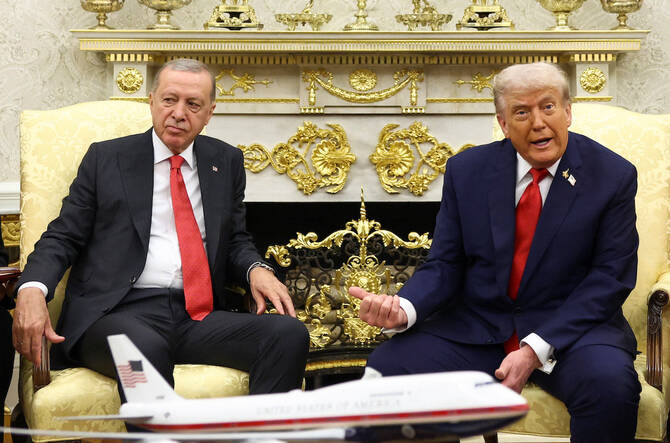
Speaking alongside Turkish President Recep Tayyip Erdogan at the White House, Trump said halting those imports would be “the best thing” his Turkish counterpart could do.

The Oval Office meeting ended without any firm commitments to lift US sanctions on Turkey or to sell advanced F-35 fighter jets, though Trump expressed optimism on both issues.

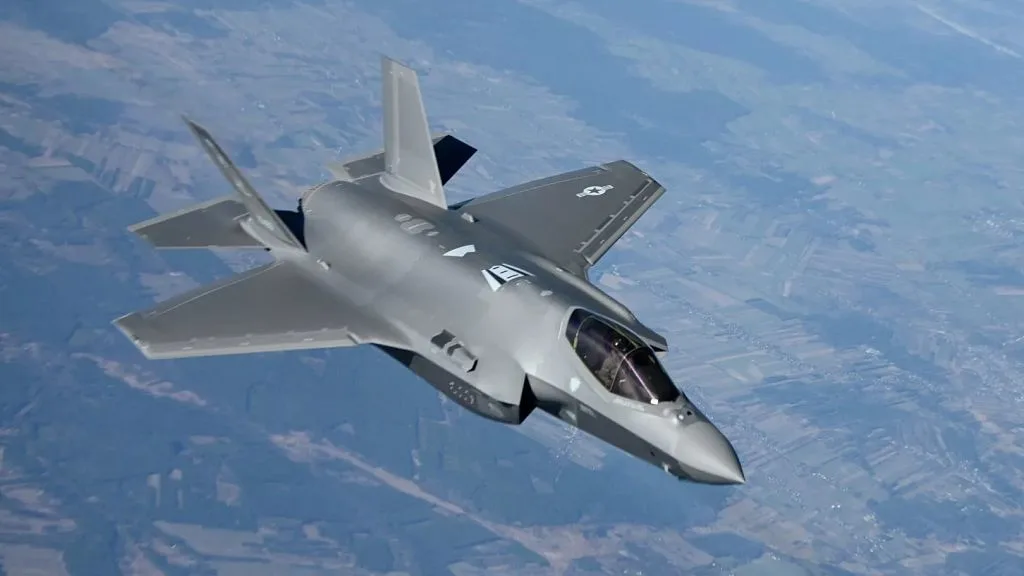
Turkey has for years been prevented from buying US F-35s. In 2019, it was expelled from a programme where it produced parts for the warplane after it acquired air defence systems from Russia.

During a brief question-and-answer session alongside Erdogan in the Oval Office on Thursday, Trump said he would like Turkey to stop “buying any oil from Russia while Russia continues its rampage against Ukraine”.

“The best thing he could do is not buy oil and gas from Russia,” Trump said. “If he did that, that would be the best thing.”

Trump added that he believes Erdogan is respected both by Ukrainian President Volodomyr Zelensky and Russian President Vladimir Putin, meaning that he could “have a big influence” on the war “if he wants to”.

Alongside India and China, Turkey is among Moscow’s biggest customers for oil and gas exports, and data shows that the volume of Russian gas that reached Europe through Turkey rose by more than 26% earlier this year.

See also  Petrol remains N865 per litre amid Dangote’s free delivery

The US president’s comments come just weeks after he said he stood poised to impose tougher sanctions on Russia if Nato countries met conditions that included halting imports of Russian oil.

Earlier this week – during a lengthy speech at the UN General Assembly – Trump also accused Nato allies of “funding the war against themselves” through their purchases of energy from Moscow.

Reuters A US Marine Corps F-35 fighter jet approaches a military base in Ceiba, Puerto RicoReuters

During Trump’s first term in office, the US removed Turkey from the F-35 programme after it purchased S-400 surface-to-air missile systems from Russia.

A US defence bill passed in 2020 included an amendment that prevented Turkey from acquiring F-35s, unless – and only if – the US government was able to certify that it had given up on the Russian S-400.

Some US lawmakers have expressed concerns about the potential sale over Turkish military incursions into Syria and past violations of Greek airspace.

Earlier this week, the bipartisan Hellenic Caucus in the US Congress warned against allowing Turkey to buy F-35s, citing its military co-operation with Russia and a “disregard for international norms and democratic principles”.

In the Oval Office, however, Trump told Erdogan that he would “be successful” with buying the things he would “like to buy”.

“He needs certain things, and we need certain things,” he said. “And we’re going to come to a conclusion. You’ll know by the end of the day.”

Erdogan said of the F-35 ban in an interview with Fox News on Monday: “I don’t think it is very becoming of a strategic partnership.”

See also  Tax law: N5tn VAT windfall for states as new formula begins

Trump also said that sanctions against Turkey – implemented in 2020 following the S-400 purchase – could be lifted “very soon”.

“If we have a good meeting, almost immediately,” he added.

The meeting between Trump and Erdogan is their second this week, following a brief discussion they had about Gaza at the UN General Assembly, alongside leaders from several Arab and Muslim nations.

In his interview with Fox, Erdogan also accused US ally Israel of committing a “complete genocide” in Gaza and blamed Israeli Prime Minister Benjamin Netanyahu – a position starkly different from Trump’s.

In the Oval Office on Thursday, however, the US and Turkish presidents avoided public disagreement on the issue. Israel denies it is committing genocide in Gaza.

Source: BBC News

FOLLOW US ON:

FACEBOOK

TWITTER

PINTEREST

TIKTOK

YOUTUBE

LINKEDIN

TUMBLR

INSTAGRAM

Continue Reading
Click to comment

Leave a Reply

Your email address will not be published. Required fields are marked *

Business

See Full List of Top 10 World’s Largest Economies in 2026

Published

on

The United States is projected to remain the world’s largest economy in 2026 with a gross domestic product estimated at $32.1 trillion, according to new global economic forecasts obtained from Focus Economics on Wednesday.

The U.S. continues to lead global output through dominance in technology, finance, healthcare, and advanced manufacturing. Growth in artificial intelligence, healthcare innovation, and high-value industries has further widened its lead over other major economies in recent years.

The top 10 world economies ranked in numbers

1. United States — $32.1 trillion
The United States remains the world’s largest economy, accounting for over a quarter of global output in nominal terms. Its economy is highly diversified, with Silicon Valley driving global leadership in AI, biotech, and software, while Wall Street anchors the financial sector.

2. China — $20.2 trillion
China is the world’s second-largest economy, driven by manufacturing, exports, and large-scale industrial production. It remains the leading global producer of electronics, machinery, and textiles, though it faces structural challenges, including a shrinking population and high debt levels.

3. Germany — $5.4 trillion
Germany remains Europe’s largest economy, supported by a strong industrial base and the Mittelstand network of medium-sized manufacturing firms that form the backbone of its export strength.

4. India — $4.5 trillion
India continues its rapid economic rise, driven largely by services and information technology. Its economy has more than doubled over the past decade, supported by a young population and expanding domestic demand.

5. Japan — $4.4 trillion
Japan remains a global manufacturing powerhouse in robotics, automobiles, and electronics, although long-term growth is constrained by an aging population and structural economic stagnation.

See also  FG seeks 30-day credit window for airlines due to Jet fuel crisis

6. United Kingdom — $4.2 trillion
The United Kingdom is a major service-based economy, with strengths in finance, insurance, and real estate, anchored by the City of London.

7. France — $3.6 trillion
France has a diversified economy led by luxury goods, aerospace, agriculture, and manufacturing, with global brands such as Airbus and LVMH playing major roles.

8. Italy — $2.7 trillion
Italy combines a strong services sector with manufacturing strengths in fashion, machinery, and automobiles, driven largely by its industrial northern regions.

9. Russia — $2.5 trillion
Russia remains heavily dependent on oil and gas exports, with energy revenues playing a central role in its economy despite ongoing sanctions and geopolitical pressures.

10. Canada — $2.4 trillion
Canada rounds out the top 10, supported by natural resources such as oil, forestry, and mining, alongside a strong services and financial sector.

Economists say the global economy is increasingly being shaped by technology, demographics, energy transitions, and geopolitical tensions, all of which will influence how these rankings evolve in the coming years.

punch.ng

FOLLOW US ON:

FACEBOOK

TWITTER

PINTEREST

TIKTOK

YOUTUBE

LINKEDIN

INSTAGRAM

Continue Reading

Business

Nigeria misses OPEC oil production quota again

Published

on

Again, Nigeria has missed its crude oil production quota set by the Organisation of the Petroleum Exporting Countries after averaging 1.49 million barrels per day in April, below the 1.5 mbpd benchmark.

Figures from the Nigerian Upstream Petroleum Regulatory Commission showed that the country produced an average of 1,488,540 barrels of crude daily in April, representing about 99 per cent of the OPEC quota. When condensates were added, total daily production rose to 1.66mbpd

Last month, the NUPRC said oil production now averaged 1.8mbpd. However, data released on Tuesday was at variance with the report. The latest data mean Nigeria remained below its OPEC allocation for the ninth straight month since July 2025.

The NUPRC document showed that combined crude oil and condensate production peaked at 1.85 mbpd during the month, while the lowest output stood at 1.46 mbpd. The PUNCH reports that the April figures are an appreciable improvement compared to March, when oil output was 1.55mbpd.

Nigeria’s oil production has struggled for years due to crude theft, pipeline vandalism, ageing infrastructure, and underinvestment in the upstream sector. Although output improved marginally in April compared to March, it was still insufficient to meet the country’s OPEC target, underscoring persistent challenges in ramping up production despite government efforts to boost volumes.

The PUNCH reports that Nigeria’s crude production in March was 1.38 mbpd. While there was a 69,000 bpd increase from the 1.31 mbpd recorded in February, the figure is still 117,000 bpd below the OPEC quota.

The figures for February indicated a month-on-month decline of 146,000 barrels per day, widening the country’s shortfall from its OPEC production allocation. This is the eighth consecutive month the country has failed to meet the OPEC quota since July 2025.

See also  CNG investments hit $980m, says Presidency

Recall that although Nigeria recorded a marginal improvement in January, when production rose from 1.422 mbpd in December 2025 to 1.46 mbpd, the rebound was short-lived as output fell significantly in February 2026.

Earlier data from NUPRC had also shown that crude oil production weakened at the end of 2025. Production declined from 1.436 mbpd in November 2025 to 1.422 mbpd in December, before recovering slightly in January.

In 2025, Nigeria’s crude oil production fell below its OPEC quota in nine months of the year, meeting or slightly exceeding the target only in January, June, and July.

Nigeria opened 2025 strongly, producing 1.54 mbpd in January, about 38,700 barrels per day above its OPEC allocation. However, production slipped below the quota in February at 1.47 mbpd and weakened further in March to 1.40 mbpd, marking one of the widest shortfalls during the year.

punch.ng

FOLLOW US ON:

FACEBOOK

TWITTER

PINTEREST

TIKTOK

YOUTUBE

LINKEDIN

INSTAGRAM

Continue Reading

Business

Dangote exports 1.66bn litres fuel amid US-Iran tensions

Published

on

Fresh data from the Nigerian Midstream and Downstream Petroleum Regulatory Authority has shown that the Dangote Petroleum Refinery & Petrochemicals exported an estimated 1.66 billion litres of refined petroleum products in April 2026.

This came amid mounting tensions in the Middle East and fears of possible disruption to global fuel supply routes following the growing conflict involving the United States and Iran.

An analysis of the NMDPRA’s April 2026 fact sheet by our correspondent showed that the country exported about 513 million litres of Premium Motor Spirit, popularly called petrol; 534 million litres of Automotive Gas Oil, also known as diesel; and 615 million litres of aviation fuel within the month under review.

The Dangote refinery is the only major functional refinery in Nigeria that currently produces enough refined petroleum products for both local consumption and export.

This is the first month the refinery has exported such a high volume of petroleum products, especially jet fuel and diesel, indicating the significance of the 650,000-barrel-per-day plant in Lekki, Lagos State.

The combined export volume translates to approximately 55.4 million litres daily. The development comes as the international oil market faces fresh uncertainty over the security of the Strait of Hormuz, a critical global oil shipping route, following the failure of the United States and Iran to agree on a peace deal.

Industry experts said the rising geopolitical uncertainty had significantly boosted demand for refined petroleum products from alternative suppliers such as Nigeria, especially as Europe, Africa, and parts of Asia scramble for more secure fuel sources.

See also  Lagos govt begs medical doctors to suspend three-day warning strike

The NMDPRA document showed that local refineries operated at an average capacity utilisation of 99.12 per cent in April, with the Dangote refinery accounting for the overwhelming share of production.

The regulator stated that the refinery achieved 100 per cent capacity utilisation “for most of the days in April.” The report also indicated that domestic refineries received 18.37 million barrels of crude oil in April, up from 13.11 million barrels recorded in March.

Findings further showed that the refinery maintained strong export momentum despite increased domestic supply obligations. According to the fact sheet, average daily petrol production stood at 53.6 million litres, while 40.7 million litres were supplied locally and 17.1 million litres were exported daily.

Similarly, diesel production averaged 23.6 million litres daily, with exports accounting for 17.8 million litres per day, more than double the domestic supply volume of 8 million litres daily. For aviation fuel, exports stood at 20.5 million litres daily, compared to the domestic supply of 2.6 million litres per day.

The strong aviation fuel export performance comes weeks after reports emerged that domestic airline operators threatened to shut down over the rising cost of the fuel.

There are reports that Nigeria has become a net petrol exporter for the first time in decades due to rising output from the Dangote refinery. The refinery had earlier exported about 434 million litres of petrol in March after domestic production exceeded local consumption levels.

The latest figures underscore Nigeria’s gradual transition from a major importer of refined petroleum products to an export hub within Africa. It was observed that jet fuel exports may rise further if instability in the Middle East continues to disrupt traditional supply chains serving Europe and other regions.

See also  FG defers 70% of 2025 capital budget to 2026

The Middle East accounts for a substantial share of global aviation fuel exports, with the Strait of Hormuz serving as a strategic transit corridor for crude oil and refined petroleum products. The prolonged disruption in the region has tightened global fuel supply and pushed up prices internationally.

The NMDPRA report also revealed that Nigerians consumed an average of 51.1 million litres of petrol daily in April, slightly above the 50 million litres benchmark estimated by the regulator. Diesel consumption stood at 17.3 million litres daily, while aviation fuel consumption averaged 2.5 million litres per day.

Despite increased local refining activity, petrol prices remained elevated across the country. The regulator attributed prevailing prices partly to international crude oil costs, which averaged $120.55 per barrel during the month, while gasoline costs stood at $1,074.97 per metric tonne.

The refinery, with a nameplate capacity of 650,000 barrels per day, is expected to play a central role in Nigeria’s energy security and foreign exchange earnings as global fuel trade patterns shift amid geopolitical tensions.

As the Nigerian refinery exports petrol, the NMDPRA has continued to issue licences for the importation of petrol.

punch.ng

FOLLOW US ON:

FACEBOOK

TWITTER

PINTEREST

TIKTOK

YOUTUBE

LINKEDIN

INSTAGRAM

Continue Reading

Trending