Connect with us

News

Under pressure: Tinubu may drop controversial names from pardon list

Published

on

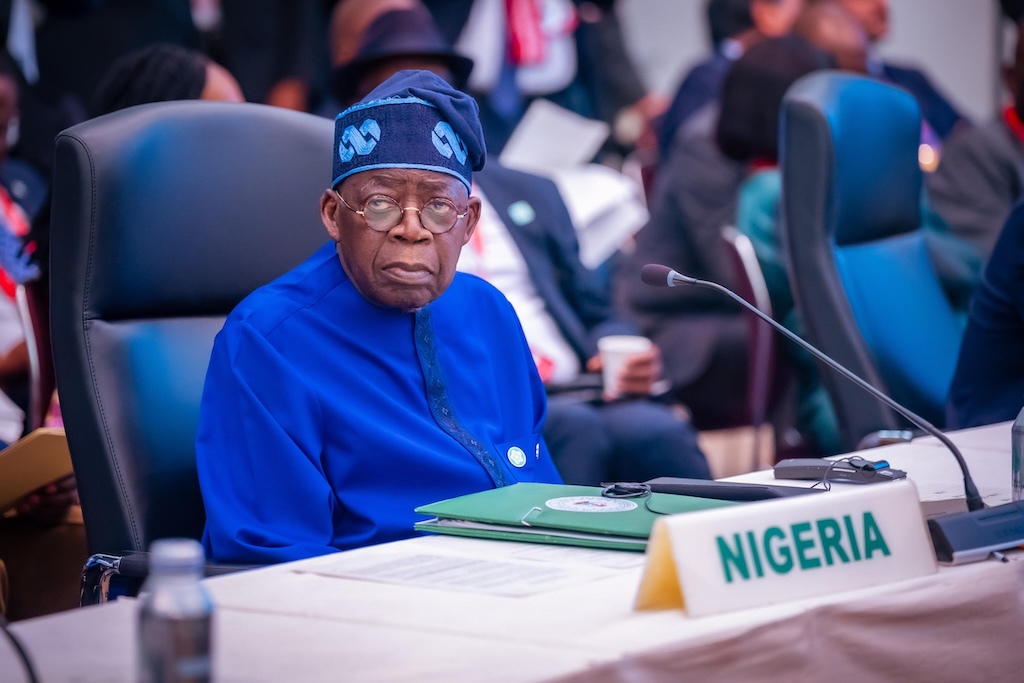
There were indications on Thursday that some names on the presidential pardon list approved by the Council of State, as presented by the Attorney-General of the Federation, Prince Lateef Fagbemi (SAN), may be dropped.

The development comes amid growing public outcry over the inclusion of certain high-profile and violent offenders among those pardoned by President Bola Tinubu.

The presidential pardon, usually granted to mark national occasions, was also meant to decongest prisons and promote reconciliation.

The presidential statement noted that the decision followed recommendations by the Presidential Advisory Committee on the Prerogative of Mercy, chaired by the Attorney-General.

It added that the list of beneficiaries was divided into six categories: Those granted pardon, posthumous pardon (including the Ogoni Nine), victims of the Ogoni Nine honoured, presidential clemency (clemency beneficiaries), inmates recommended for reduced terms of imprisonment, and inmates on death row whose sentences were commuted to life imprisonment.

However, the latest episode has reignited debate over the transparency and integrity of Nigeria’s pardon process.

On Thursday, Fagbemi (SAN), however, clarified that the Presidential Prerogative of Mercy recently announced by the President was still under review and had not been finalised.

Controversy has continued to trail the inclusion of some names, with anti-graft and security agencies, including the Economic and Financial Crimes Commission and the National Drug Law Enforcement Agency, reportedly moving to halt the release of some individuals on the list.

Fagbemi, at the Council of State meeting convened on October 9, 2025, had listed illegal miners, white-collar convicts, drug offenders, foreigners, Maj Gen Mamman Vatsa, Prof Magaji Garba, Ken Saro-Wiwa and the Ogoni Eight, as well as capital offenders such as Maryam Sanda, among the 175 convicts and former convicts who received presidential pardon.

See also  Retired Generals back calls for state of emergency on Terrorism

The full list was released in a statement from the Presidency on Saturday, October 11, 2025.

While some names of Politically-Exposed Persons on the list, like Herbert Macaulay, Farouk Lawan, among others, did not raise dust, the inclusion of certain individuals linked to violent crimes and security breaches sparked outrage.

One of the names was Maryam Sanda, who was convicted in 2017 for stabbing her husband, Bilyaminu Bello, to death.

While some members of Bello’s family rejected the pardon for Maryam, the father, Alhaji Bello Isa, alongside Maryam’s father,  Alhaji Garba Sanda, addressed a press conference to accept the presidential pardon.

The President also pardoned Major S. Alabi Akubo, who was sentenced to life imprisonment for illegal possession of prohibited firearms, among others and one Kelvin Prosper Oniarah, whose kidnapping terror spanned Delta, Edo, Rivers, Abia, Benue, and Oyo states, with detention camps in Warri and Kokori (Delta), Ugbokolo (Benue), Benin City (Edo), and Aba (Abia).

The names of those convicted for killing security agents, illicit drug couriers, and others tried for money laundering, among other offences, were queried on the list.

The uproar has reportedly prompted a review of the clemency process, with the Presidency considering dropping controversial names that generated public criticisms.

Security agencies kick

A presidential aide with knowledge of the matter, who spoke on condition of anonymity because he was not authorised to comment on the matter, said the EFCC, Independent Corrupt Practices and Other Related Offences Commission, NDLEA and lead security agencies had raised strong objections to the list, insisting that some of the names were “smuggled in” and not part of those recommended by the presidential committee that screened applicants for clemency.

He said anti-graft agencies warned that releasing some of the convicts could undermine the ongoing fight against corruption and organised crime.

See also  Festac DPO, Matilda Ngbaronye, Dies in Lagos Hospital

He said a top security source disclosed that some of the proposed beneficiaries “can never be released,” particularly those convicted of killing security operatives or engaging in kidnapping and other capital offences.

“The list was too wide, and some of the names did not pass the necessary security vetting.

“The EFCC, NDLEA, and other security agencies have insisted that the list must be pruned down. Not all the names came from the committee that reviewed the cases,” the presidential aide said.

Officials also familiar with the matter said the final list would likely exclude those whose release could pose security risks or undermine confidence in the justice system.

“The list will be trimmed to reflect only those who genuinely deserve the President’s mercy. Those whose inclusion created controversy will be expunged,” a senior official, who also spoke on condition of anonymity, told The PUNCH on Thursday.

Another official in one of the security agencies said, “Some low-level officers at the level of the committee smuggled in some names. Obviously, the President is unaware of some of the names on that list.

“They have now sent the list to NDLEA and other security agencies for review. Some of the names on the list did not meet the criteria. Some low-level officers bypassed the criteria.

“In fact, some of the cases are still fresh. The good thing is that they are still in custody; they have not been released.”

An official of one of the anti-graft agencies also spoke under the condition of anonymity.

He told The PUNCH, “I am aware the ICPC and the police are not comfortable with the list because the names of some convicts who are not supposed to be on that list are there.”

See also  ‘World’s oldest baby’ born in Ohio from 30-year-old frozen embryo

When reached for comments by The PUNCH, officials of the agencies were not ready to speak on the matter officially.

List for review

On Thursday, Fagbemi (SAN) stated that the Presidential Prerogative of Mercy recently announced by the President was still under review and had not been finalised.

In a statement in Abuja, the minister clarified that no inmate approved for clemency under the recent exercise had been released from custody.

According to Fagbemi, “The process remains at the final administrative stage, which includes a standard review to ensure that all names and recommendations fully comply with established legal and procedural requirements before any instrument of release is issued.”

He further explained that after the approval by the Council of State, the next step in the process was the issuance of the formal instrument implementing the President’s decision for each beneficiary.

“This stage affords an opportunity for a final review of the list for remedial purposes, if necessary, before the instrument is forwarded to the Controller-General of Corrections for necessary action.

“This verification process is part of the standard protocol and reflects the government’s commitment to transparency and due diligence,” the AGF said.

Fagbemi appreciated the public’s vigilance and constructive feedback, describing it as a sign of Nigerians’ deep concern for justice and good governance.

“There is no delay in the process; it is simply following the law to the letter to ensure that only those duly qualified benefit from the President’s mercy. As soon as all legal and procedural checks are concluded, the public will be duly informed. The rule of law does not rush; it ensures fairness.”

punch.ng

FOLLOW US ON:

FACEBOOK

TWITTER

PINTEREST

TIKTOK

YOUTUBE

LINKEDIN

TUMBLR

INSTAGRAM

Continue Reading
Click to comment

Leave a Reply

Your email address will not be published. Required fields are marked *

News

TikTok restricts late-night live access for Nigerian users

Published

on

TikTok has temporarily restricted access to its LIVE feature for users in Nigeria during late-night hours, issuing an in-app notice to creators as part of what it described as an ongoing safety investigation.

At midnight Nigerian time on Sunday, the platform sent a system notification to users stating,”LIVE⚫ Notices
TikTok LIVE Update in Nigeria
We’re temporarily limiting LIVE late at night in Nigeria as part of our investigation to ensure our platform remains safe and our community stays protected.”

File Copy: The notification gotten by the app users in Nigeria

Checks by PUNCH Online showed that LIVE sessions, which were active earlier in the night, became inaccessible between 11pm and 5am, with affected accounts displaying a “No Access” label.

The restriction also prevented creators from viewing LIVE broadcasts from other countries.

Only creators with at least 1,000 followers, the minimum requirement to host a LIVE session, received the notification.

Several confirmed that all LIVE activities had been halted overnight.

Despite the disruption, creators who earn through LIVE gifting have their balances and previous earnings intact, easing concerns of financial loss.

As of Monday morning, LIVE access had been restored, sparking discussions across social media as users speculated about the cause of the sudden, nationwide restriction.

Night-time hours are typically peak periods for Nigerian streamers who host matches, entertainment segments, trends and other interactive sessions that attract viewers and virtual gifts.

The development comes weeks after TikTok released updated safety statistics for West Africa.

During its West Africa Safety Summit in Dakar, Senegal, the company disclosed that in the second quarter of 2025, it took action against 2,321,813 LIVE sessions and 1,040,356 LIVE creators globally for violating its LIVE Monetisation guidelines.

See also  Festac DPO, Matilda Ngbaronye, Dies in Lagos Hospital

In Nigeria alone, 49,512 LIVE sessions were banned within the same period.

TikTok also reported removing 3,780,426 videos in Nigeria between April and June 2025 for breaching Community Guidelines, with 98.7% taken down before being viewed and 91.9% removed within 24 hours.

TikTok Live is an in-app feature letting users broadcast in real-time, fostering direct engagement with viewers through comments and virtual gifts, unlike pre-recorded videos, creating interactive sessions for Q&As, talent showcases, or just chatting.

To go live, you generally need 1,000+ followers (though sometimes less), be at least 16 (18 to earn money), have a clean account, and use the ‘+’ button to select ‘LIVE’, adding a title and effects before starting.

punch.ng

FOLLOW US ON:
FACEBOOK

TWITTER

PINTEREST

TIKTOK

YOUTUBE

LINKEDIN

TUMBLR

INSTAGRAM

Continue Reading

News

Nnamdi Kanu acted like Awolowo by disengaging lawyers — Consultant

Published

on

Aloy Ejimakor, legal consultant to the convicted leader of the Indigenous People of Biafra , Nnamdi Kanu, has likened him to the late Premier of the Old Western Region, Chief Obafemi Awolowo, over his decision to represent himself in court.

In a conversation with our correspondent on Sunday, Ejimakor suggested that Kanu’s refusal to hire lawyers may be delaying the filing of his appeal against his life imprisonment by the Federal High Court in Abuja.

“MNK has not filed his appeal yet because he has refused to hire lawyers. You know he disengaged us as his lawyers, so we now act in the capacity of a consultant. I am a consultant to him,” Ejimakor said. “I don’t know why he does not want a lawyer, but I believe it is because he is a great man. Many great men are like that. They believe you can’t present their case like they can themselves. Even Awolowo refused to hire lawyers in his time. MNK wants to represent himself, and there are about four or five processes he has to follow to file the appeal before the Appellate Court.”

Ejimakor also backed Kanu’s request to be tranferred to Abuja from the Sokoto Correctional Centre.

He said, “The court already said he can’t be in Kuje prison, so that is fine, but he needs to be closer to Abuja, so if the court will grant his motion to be transferred to Suleja prison or Keffi. To me, there is nothing special about any prison in Nigeria. They are all the same, but MNK needs to be close to Abuja.”

See also  Four persons hospitalised as fire guts two Lagos buildings

During his trial, Kanu opted to represent himself after disengaging his legal team, headed by a former Attorney General of the Federation and Minister of Justice, Kanu Agabi (SAN).

On November 20, the court found him guilty on all seven terrorism-related charges brought by the Federal Government and sentenced him to life imprisonment.

Following his sentencing, Kanu was moved to the Sokoto correctional Facility due to concerns for his safety at Kuje, where previous prison breaks had been recorded.

He later filed a motion before Justice James Omotosho of the Federal High Court seeking a transfer from Sokoto to a custodial facility closer to Abuja, such as Suleja or Keffi.

In the motion, personally signed by him, Kanu asked that it be deemed moved in absentia and sought an order compelling the Federal Government or Nigerian Correctional Service to effect the transfer.

Citing eight grounds in the motion marked FHC/ABJ/CR/383/2015, Kanu explained that his detention in Sokoto—over 700 kilometres from Abuja—made it impracticable to prepare his notice of appeal and record of appeal.

He stressed that all persons critical to assisting him, including relatives, associates, and legal consultants, are based in Abuja.

“The applicant’s continued detention in Sokoto renders his constitutional right to appeal impracticable, occasioning exceptional hardship and potentially defeating the said right, in violation of Section 36 of the Constitution of the Federal Republic of Nigeria, 1999 (as amended),” the motion stated.

Kanu argued that transferring him to a facility nearer Abuja would enable him to effectively prosecute his constitutionally guaranteed right of appeal.

Continue Reading

News

U.S. Court Jails Nigerian Fraudster Oluwaseun Adekoya To 20 Years For Impersonation And 2M U.S.Dollars Fraud

Published

on

A U.S. federal court has sentenced Oluwaseun Adekoya, a Nigerian serial fraudster who operated under multiple aliases while running a sprawling nationwide bank-fraud and money-laundering enterprise, to 20 years in prison for masterminding schemes that stole and laundered more than $2 million through a network of impersonators, fake accounts, and coordinated withdrawals across several states.

Adekoya’s arrest and conviction capped years of sophisticated financial crimes that federal investigators say left a trail of victims stretching from New York to multiple U.S. states.

The case broke open after the State Employees Federal Credit Union (SEFCU), headquartered in Albany, New York, detected a pattern of suspicious impersonation transactions across Capital Region branches. SEFCU’s alert triggered a multi-agency federal investigation led by the FBI’s Albany Field Office, which eventually exposed Adekoya as the mastermind of an extensive identity-theft and bank-fraud ring involving at least 13 accomplices.

Investigators said Adekoya consistently reinvented himself with new identities, new roles, and new operational tactics, as he expanded the criminal enterprise. His run ended on December 12, 2023, when FBI agents executed a search warrant at his luxury apartment.

During the raid, Adekoya attempted to remotely wipe the primary cellphone used to coordinate the schemes. Agents nevertheless recovered a trove of incriminating evidence, including:

• Multiple burner phones
• High-end luxury items such as Rolex watches
• A $51,000 Tiffany engagement ring
• Designer handbags
• More than $26,000 sitting in a laundering account

All items have since been forfeited.

Following two superseding indictments that added charges and additional defendants, Adekoya was convicted on multiple fraud and money-laundering counts. He has remained in custody since his arrest.

See also  Dangote refinery, engineers on warpath over fresh redeployment

In addition to the 20-year sentence, he will serve five years of supervised release, pay over $2.2 million in restitution, remit a $1,100 special assessment, and faces removal from the United States upon completing his prison term.

Federal prosecutors said the ring relied on coordinated identity theft, impersonation of account holders, and strategic branch-by-branch withdrawals. Accomplices posed as legitimate bank customers, using stolen personal data to siphon funds, which were then laundered through controlled accounts, cash couriers, and luxury purchases.

The ring’s operations were “structured, disciplined, and highly adaptive,” investigators said, changing methods frequently to avoid detection.

Thirteen co-conspirators earlier pleaded guilty to roles ranging from impersonation to cash-movement, account manipulation, and logistical support. Their sentences include:

• David Daniyan, 61 (Brooklyn): 54 months’ imprisonment, one year supervised release, restitution over $2.2m.
• Kani Bassie, 36 (Brooklyn): 11 years’ imprisonment, five years supervised release; restitution pending.
• Davon Hunter, 27 (Richmond): 42 months’ imprisonment, three years supervised release, $469,499.18 restitution.
• Christian Quivers, 20 (Richmond): 42 months’ imprisonment, three years supervised release, $385,650 restitution.
• Jermon Brooks, 20 (Richmond): 36 months’ imprisonment, two years supervised release, $385,650 restitution.
• Akeem Balogun, 56 (Brooklyn): 21 months’ imprisonment, two years supervised release, $262,200 restitution.
• Victor Barriera, 64 (Bronx): Time served, three years supervised release, $203,352 restitution.
• Danielle Cappetti, 46 (Bronx): Time served, three years supervised release, $142,796 restitution.
• Jerjuan Joyner, 50 (Brooklyn): 12 months’ imprisonment, three years supervised release, $135,998 restitution.
• Gaysha Kennedy, 46 (Brooklyn): Time served, two years supervised release, $24,500 restitution.
• Crystal Kurschner, 44 (Brooklyn): Time served, three years supervised release, $220,850 restitution.
• Sherry Ozmore, 56 (Richmond): Time served, three years supervised release, $229,303.18 restitution.
• Lesley Lucchese, 53 (Manhattan): Pleaded guilty and awaits sentencing in 2026.

See also  Electricity Act (Amendment) Bill: FG may sell 11 Discos to new investors

U.S. prosecutors say the dismantling of Adekoya’s syndicate underscores the increasing sophistication of fraud networks operating across state lines, and the growing cooperation among federal, state, and local law-enforcement agencies to disrupt them.

Officials noted that the investigation required extensive coordination across jurisdictions and financial institutions, describing it as “a model of inter-agency effectiveness.”

Source: Newsmakerslive

FOLLOW US ON:

FACEBOOK

TWITTER

PINTEREST

TIKTOK

YOUTUBE

LINKEDIN

TUMBLR

INSTAGRAM

Continue Reading

Trending