Connect with us

News

PHOTOS: 20 Dead, 100 Injured As Air Force Jet Crashes

Published

on

At least 20 people have died and over a 100 others injured after an air force jet crashed in Bangladesh.

It was reports that the aircraft crashed into the campus of Milestone School and College, an academic institution in Dhaka, the capital city, on Monday.

The crashing of the jet, a Bangladesh Air Force F-7 BGI training aircraft, affected both adults and children.

Footage of the scene showed a huge fire and a thick plume of smoke.

According to the BBC, images from the scene also show dozens of emergency service workers sifting through the charred debris in search of survivors.

Firefighters can be seen carrying a body away from the wreckage, while bystanders watch from a distance.

More than 50 people, including children and adults, have been hospitalised with burns, according to a doctor at the National Institute of Burn and Plastic Surgery.

The Bangladeshi military confirmed the crash in a statement, revealing that a Bangladesh Air Force F-7 BGI training aircraft went down in Uttara after taking off at 8 a.m. local time (0706 GMT).

The fire service said on social media that it had deployed nine units and six ambulances to the scene.

Speaking on the unfortunate incident, head of Bangladesh’s interim government, Muhammad Yunus, said the authorities would take necessary steps to investigate the cause of the incident and provide all forms of assistance.

In a post on X, he wrote: “This is a moment of deep sorrow for the nation. I wish the injured a speedy recovery and instruct all authorities, including the hospitals concerned, to deal with the situation with utmost importance.”

See also  ‘If You’ve Removed Subsidy, Why Still Borrowing?’, Emir Sanusi II Queries Federal Govt’s Fiscal Strategy

The country has declared Tuesday a national day of mourning.

Firemen work at the site of a Bangladesh Air Force training aircraft that crashed into a school campus shortly after takeoff in Dhaka, Bangladesh, Monday, July 21, 2025. (AP Photo/Mahmud Hossain Opu)

FOLLOW US ON:

FACEBOOK

TWITTER

PINTEREST

TIKTOK

YOUTUBE

LINKEDIN

TUMBLR

INSTAGRAM

Continue Reading
Click to comment

Leave a Reply

Your email address will not be published. Required fields are marked *

News

Reps to summon NAFDAC, DSS over fake drugs, deaths, read full details

Published

on

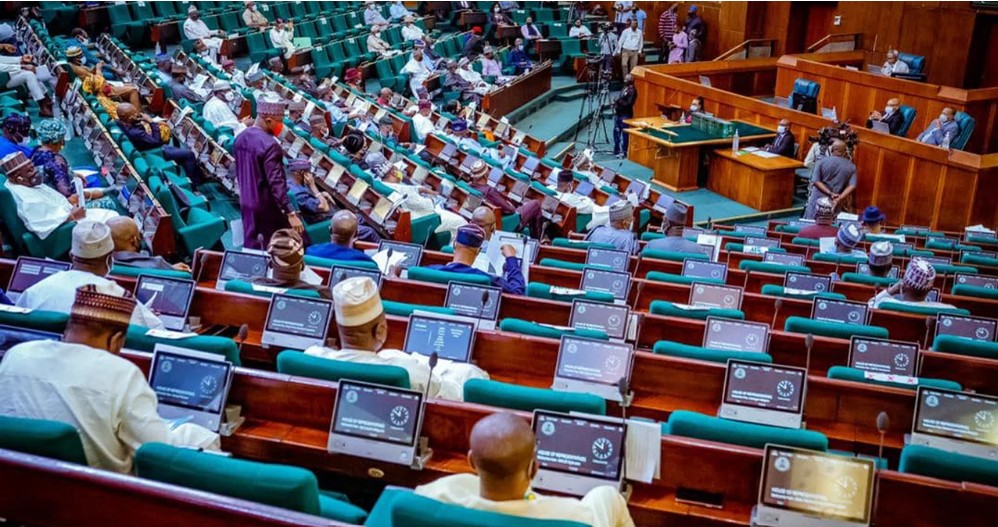
The House of Representatives has resolved to invite the heads of the National Agency for Food and Drug Administration and Control, the Department of State Services and the Nigeria Police Force to brief its relevant committees on measures being taken to tackle the growing circulation of fake drugs and adulterated drinks across the country.

The resolution followed the adoption of a motion of urgent public importance moved on Wednesday by the member representing Obi/Oju Federal Constituency of Benue State, Mr David Agada, following reports that the consumption of a suspected poisonous herbal medicine had claimed four lives in the constituency.

The motion, titled “Urgent need to investigate the alleged distribution and administration of suspected poisonous, unregistered/substandard herbal medicinal products in Obi/Oju Federal Constituency, Benue State to prevent further loss of lives,” called for urgent intervention to establish the circumstances surrounding the incident and prevent further casualties.

Moving the motion, Agada reminded lawmakers of their responsibility to protect the lives and welfare of their constituents.

He noted that the NAFDAC Act empowers the agency to regulate and control the manufacture, distribution, sale and use of drugs, herbal medicinal products and other regulated health-related products in Nigeria.

He also cited the Food and Drugs Act and the Counterfeit and Fake Drugs and Unwholesome Processed Foods (Miscellaneous Provisions) Act, which prohibit the manufacture, distribution and sale of unsafe, adulterated, counterfeit or unwholesome drugs and related products.

Speaking on the incident, Agada said, “The House is concerned that on October 31 2026, three individuals identified as Muhammad Sani Adamu, Musa Alhaji Kala who claim to come from Sokoto State and Alhaji Muhammad Sule from Bauchi States allegedly introduced and distributed a herbal medicinal product in Oju/Obi Federal Constituency, Benue State, claiming that the product could cure typhoid fever, waist pain and other ailments.

See also  Court Adjourns El-Rufai’s Fundamental Rights Suit Against ICPC

“We are concerned that several residents reportedly purchased and consumed the said product, after which a number of them developed severe symptoms within hours and were rushed to different hospitals for emergency medical attention.

“The House is disturbed that the incident has reportedly resulted in the deaths of four persons, namely-Awugo Joseph Oyije, who died on 2nd November, 2026; James Ogah Onma, who died on 4th November, 2026, following referral for further medical treatment; Ode Friday Ogah died on November 5, 2026; and Mr Agi Edugbeke who died on the 11th day of November, 2026.”

He added that 11 other persons were reportedly affected and were receiving medical attention, with two referred to hospitals in Makurdi, the Benue State capital.

The affected persons were identified as Otumala Ochele, Binta Sule, Onu Oboh, Adoga Onu, Upa James, Igbo Pius, Ochele Genesis, Otumala Amos, Uwa Baku, Ate Vivian Okpune and Roman Ehile.

Agada further warned that other residents might have consumed the suspected product without being identified or could be receiving treatment outside recognised health facilities, raising the risk of additional casualties.

According to him, “The House is worried that other residents within the affected communities may have consumed the suspected product without being identified or may be receiving treatment outside recognised health facilities, thereby increasing the possibility of further casualties.

“The House is further worried that the composition, source, manufacturing conditions, NAFDAC registration status, safety, dosage and possible adverse effects of the product remain unverified, raising serious concerns about the possible circulation of poisonous, adulterated, unregistered or substandard herbal medicinal products.”


He said the incident constituted a serious public health concern requiring immediate intervention by relevant federal and state authorities to establish the circumstances surrounding the deaths, prevent further exposure and ensure that those responsible, where culpability was established, were brought to justice.

Contributing to the debate, the House Leader, Prof. Julius Ihonvbere, said the proliferation of fake drugs and drinks had become a national challenge requiring a broader response beyond NAFDAC’s current capacity.

See also  Rivers elders appeal to Fubara, assembly to avoid further conflict

He said the agency was struggling with inadequate personnel, noting that its workforce of about 2,000 was insufficient to effectively police the country’s drug distribution network.

“This issue has gone beyond NAFDAC which has only a staff strength of about 2,000 people. The agency requires at least 10,000 staff members to be able to execute its mandate. NAFDAC does not have a presence everywhere; it is not in my village in Edo State.

“I think we need to have a holistic conversation about this problem because it is getting out of hand. If we do not do something quickly, more Nigerians will continue to die of fake drugs and drinks.”

Ihonvbere urged the House to recommend stiffer penalties for manufacturers and distributors of fake and contaminated products.

“Mr Speaker, I think we can suggest life imprisonment or even the death penalty for those involved in this criminal enterprise and may bring the DG of NAFDAC to come and tell us where they are on this matter,” he added.

Similarly, Ali Shettima (APC, Yobe) urged lawmakers to look beyond the Benue incident and address the nationwide consequences of the circulation of fake drugs.

“Let us look beyond Benue and focus on what the issue of fake drugs is doing throughout the country. NAFDAC needs to intensify its work in regulating the activities of herbal medicine producers. Selling fake products to innocent citizens in the name of drugs and drinks is very unfortunate. An enabling law should be enacted to ensure that those involved in this are penalised if they are found guilty,” he said.

Another Yobe lawmaker, Fatima Talba, however, urged caution, arguing that many Nigerians patronised unregulated herbal medicine sellers partly because of limited access to affordable and reliable healthcare alternatives.

See also  Nurses shun FG talks, begin warning strike today

She said, “Some of the people who patronise these do not have any other place to go to. It is not as if these people are forced to buy these products because even in the hospitals, there are fake drugs. We cannot tell these people not to patronise these fake herbal drug sellers because we have not given then alternatives.”

Peter Uzoekwe (NDC, Anambra) proposed holding market leadership accountable for the sale and distribution of counterfeit drugs, suggesting that the executives of markets where such products were manufactured or sold should be removed.

“Let us make it a duty that any market where fake drugs are manufactured or sold, we will depose the executives. If we do this, you will see that those executives would act as taskforce,” he said.

Also contributing, Ismaila Haruna, who represents Toro Federal Constituency of Bauchi State, called for an investigation into deaths allegedly linked to the use of sexual performance-enhancing drugs.


“There are existing laws in place guiding the regulation of herbal medicine. What is left is enforcement. Is NAFDAC doing its job? Again, we need to investigate why men are dying in their numbers because many times, we hear of men dying in hotel rooms and what have you,” he said.

At the end of the debate, the House resolved to invite NAFDAC, the Nigeria Police Force and the DSS to brief its relevant committees on measures being taken to curb the circulation of fake herbal medicines and adulterated drinks across the country.

Source: punchng.com

FOLLOW US ON:
FACEBOOK

WHATSAPP CHANNEL

TWITTER

PINTEREST

TIKTOK

YOUTUBE

LINKEDIN

INSTAGRAM

Continue Reading

News

Police seek family of Nigerian-Canadian killed in Lagos crash, read details

Published

on

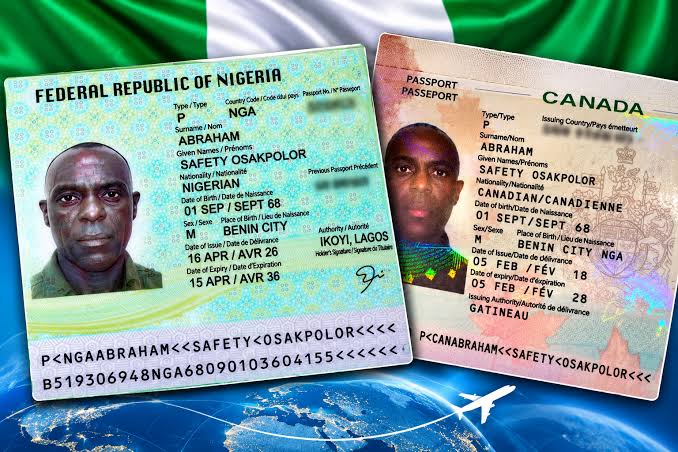
The Airport Police Command has appealed to the public to help locate the family of a man with dual Nigerian-Canadian passports, Abraham Safety Osakpolor, who died after being hit by a vehicle along the Murtala Muhammed International Airport access road in Lagos.

The command noted that the 58-year-old, who was born in Benin City, Edo State, on September 1, 1968, died following the accident on Friday.

The command’s Public Relations Officer, Adeola Mohammed, disclosed this in a statement on Wednesday, saying the victim was struck by a moving vehicle while walking along the expressway leading from the airport towards the Oshodi axis.

Mohammed stated that Osakpolor was rushed to a hospital, where he was pronounced dead, adding that his remains had been deposited in the morgue.

He stated, “The victim, identified as Abraham Safety Osakpolor, born in Benin City, Edo State, on 1st September, 1968, was hit by a moving vehicle and subsequently rushed to a hospital, where he was pronounced dead.

“His remains have been deposited in the hospital morgue. The motorist involved in the accident was immediately apprehended by the Airport Police Command and will be charged in court.”

The PPRO added that officers recovered a Nigerian passport and a mobile phone without a SIM card from the deceased’s belongings during an initial search.

He added that mortuary attendants later discovered a Canadian passport among the victim’s possessions.

He added, “During an initial search of the deceased’s belongings, a Nigerian passport with passport number B51930694 and a mobile device without a SIM card were recovered.

“The mortuary attendants subsequently informed the Command that a Canadian passport with passport number AE763025 had also been discovered among his belongings during a further search.

See also  Group lauds Nwoko’s call for Anioma State creation

“Despite concerted efforts by the police to establish contact with his family or persons who may know him, these efforts have so far proved unsuccessful.”

The command urged members of the public, particularly those who knew Osakpolor or his relatives and associates, to help notify his family of the incident.

Adeola appealed to anyone with useful information to contact the Airport Police Command through its X account, @airportcommand, or Facebook page, Airport Command.

He also provided the following contact details for the command’s spokesperson: 08058342093, X: @Moh_Adeola and Instagram: @moh_adeola.

Source: punchng.com

FOLLOW US ON:

FACEBOOK

WHATSAPP CHANNEL

TWITTER

PINTEREST

TIKTOK

YOUTUBE

LINKEDIN

INSTAGRAM

Continue Reading

News

Tinubu sends state police bill to AGF, read details

Published

on

President Bola Tinubu has received the Constitution (Sixth Alteration) Bill establishing state police after all 36 state Houses of Assembly approved the proposed amendment, paving the way for its presidential assent.

The Chief of Staff to the President, Femi Gbajabiamila, announced the development in a statement on Wednesday, saying Tinubu would assent to the bill at a formal signing ceremony.

The bill was transmitted to the President by his Special Advisers on Senate and House of Representatives Matters, Senator Basheer Lado and Dr Wasiu Olanrewaju-Smart, Gbajabiamila disclosed.

He said all 36 state Houses of Assembly had approved the bill, exceeding the constitutional requirement of at least 24 states, representing two-thirds of the 36 states, under Section 9(2) of the 1999 Constitution.

“President Tinubu will review the Constitution Alteration Bill in consultation with the Attorney-General of the Federation. He will assent to the Bill at a formal signing ceremony,” Gbajabiamila affirmed.

The development followed the Senate’s declaration that the constitutional amendment process for establishing state police had been completed, following the approval of the proposed legislation by all 36 state Houses of Assembly.

The Senate reached the resolution after considering a motion sponsored by its Leader, Opeyemi Bamidele, who told the chamber on Wednesday that the bill had fulfilled all constitutional requirements for amending the 1999 Constitution.

The proposed legislation, known as the Constitution of the Federal Republic of Nigeria (Sixth Alteration) Bill, 2026, seeks to establish State Police Services as part of the country’s national policing structure.

Bamidele recalled that the Senate and the House of Representatives had overwhelmingly passed the bill on June 24 and July 23, 2026, respectively, with more than the constitutionally required two-thirds majority.

See also  UK to bar eligible visitors without ETA from February 25

He said the bill was subsequently transmitted to the 36 state Houses of Assembly for approval in accordance with Section 9(2) of the 1999 Constitution.

The senator representing Ekiti Central listed all 36 states as having transmitted their resolutions on the amendment to the National Assembly, describing the development as the fulfilment of the constitutional conditions required for the bill’s passage.

In his motion, Bamidele said, “The Bill has fulfilled the conditions set out in Sections 9(1) and (2) of the Constitution for a Constitutional amendment of this nature to be passed.”

He consequently urged the Senate to authorise the Clerk to the National Assembly to transmit the bill to Tinubu for assent in line with the Acts Authentication Act, 2004.

The Senate adopted the recommendation, marking the completion of the legislative process for the proposed constitutional amendment and paving the way for the President to consider it.


The motion also commended Tinubu for his support for the initiative, acknowledging his role in advancing the proposal throughout the legislative process.

It stated, “We thank Mr President for taking ownership and boldly supporting the Bill throughout the process.”

However, the Senate said constitutional approval alone would not provide the operational framework for the proposed policing arrangement. It urged the President to forward a National Policing Bill to the National Assembly for “legislative scrutiny and expeditious passage” to enable the operationalisation of subnational policing.

Gbajabiamila, who also chairs the Presidential Working Group on State Police, disclosed that a parallel legislative process was underway to develop the operational framework for the proposed system.

See also  Group lauds Nwoko’s call for Anioma State creation

He said the working group had concluded extensive nationwide consultations and stakeholder engagements towards developing a draft National Policing Bill, which had been submitted to the Federal Ministry of Justice for legislative drafting validation.

“Upon receipt of the validated version, the Working Group will review it and present it, alongside its report, to Mr President for consideration,” he said.

The National Policing Bill is expected to provide the legislative framework for implementing the proposed state police system, including the modalities for its operation.

Tinubu expressed appreciation to the President of the Senate, the Speaker of the House of Representatives, members of the National Assembly, the Clerk to the National Assembly, the 36 state governors, state Houses of Assembly and all Nigerians for their “shared commitment to addressing the nation’s security challenges.”

The move represents a major step towards decentralising Nigeria’s policing structure, which has remained largely under the control of the Federal Government amid growing calls for state-level security arrangements to address worsening insecurity.

The push for state police dates to the return of democratic governance in 1999, when the Constitution established a centralised federal police force, the Nigeria Police Force, as the country’s sole constitutional policing authority.

For over two decades, state governors, security experts and civil society groups have argued that a single federal force of roughly 400,000 officers was structurally incapable of policing a country of over 200 million people spread across 36 states and 774 local government areas.

The concerns intensified as bandits, kidnappers and insurgents operated across vast rural areas with limited federal police presence.

See also  ‘If You’ve Removed Subsidy, Why Still Borrowing?’, Emir Sanusi II Queries Federal Govt’s Fiscal Strategy

States such as Ondo, under former Governor Rotimi Akeredolu, responded by creating quasi-security outfits such as Amotekun South-West, launched in January 2020.

The push for state police under the Tinubu administration gained more momentum in early 2026 during the Ramadan Iftar dinners the President hosted for governors and National Assembly leaders.


In May 2024, the National Assembly passed the Constitution (Fifth Alteration) Bill on state police, but the process stalled at the state assemblies, requiring it to be re-transmitted and re-ratified.

The bill returned to the front burner in 2025 when worsening insecurity, particularly banditry in the North-West and kidnappings in the South-East, intensified pressure on the Tinubu-led government.

Source: punchng.com

FOLLOW US ON:

FACEBOOK

WHATSAPP CHANNEL

TWITTER

PINTEREST

TIKTOK

YOUTUBE

LINKEDIN

INSTAGRAM

Continue Reading

Trending