




Connect with us

Business

Tinubu unveils tax calculator to show impact on incomes

Published

on

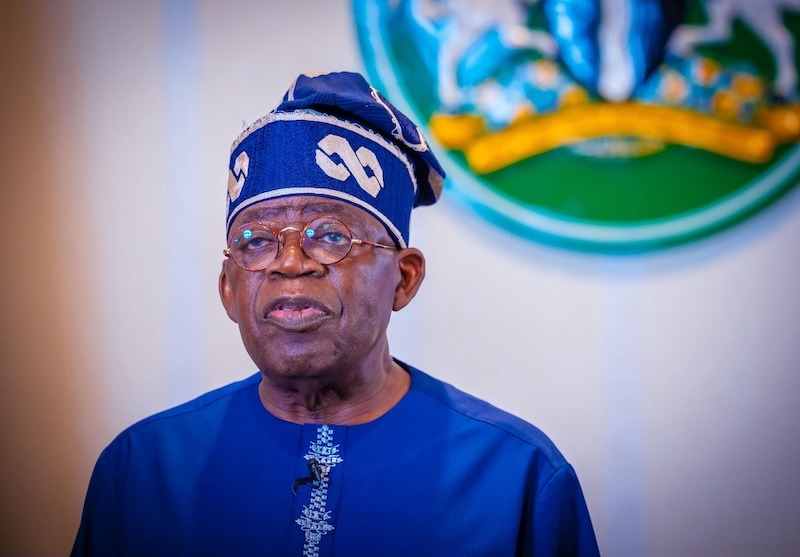
President Bola Tinubu on Friday urged Nigerians to try a newly launched Personal Income Tax calculator that estimates how much would be paid under the tax reforms his administration recently signed into law.

In a post on his official X account, the President said the calculator allows citizens to compare their estimated tax under the proposed reforms with current rates, and ensure a clear understanding of the impact on individual incomes.

Tinubu said the reforms, which take effect from January 2026, are intended to establish a fair tax system, one that never punishes poverty or weighs down the most vulnerable.

He said, “A fair tax system must never punish poverty or weigh down the most vulnerable.

“With the new tax laws I recently signed, taking effect from January 2026, we have lifted this burden and created a path of equity, fairness, and true redistribution in our economy.

“A Personal Income Tax Calculator has been developed. It allows you to check your estimated tax under the new laws against what you currently pay.

“It shows clearly how these reforms protect low-income earners, ensure progressivity, and simplify compliance in order to deliver a transparent system that works for all.”

Tinubu stated further, “Together, we are renewing hope in the Nigeria of our dreams.

“Take a bet on our country. Bet on Nigeria to work for you, your family, and your community.”

The Personal Income Tax calculator can be accessed on https://fiscalreforms.ng/index.php/pit-calculator/.

FOLLOW US ON:

FACEBOOK

TWITTER

PINTEREST

TIKTOK

YOUTUBE

LINKEDIN

TUMBLR

INSTAGRAM

See also  Wike distributes subsidised fertilisers to Abuja farmers
Continue Reading
Click to comment

Leave a Reply

Your email address will not be published. Required fields are marked *

Business

FG defers 70% of 2025 capital projects to 2026

Published

on

The Federal Government has ordered ministries, departments, and agencies to carry over 70 per cent of their 2025 capital budget into the 2026 fiscal year as the administration moves to prioritise the completion of existing projects and contain spending pressures in the face of weak revenues.

This directive is contained in the 2026 Abridged Budget Call Circular issued by the Federal Ministry of Budget and Economic Planning and circulated to all ministers, service chiefs, heads of agencies and top government officials in Abuja.

The circular, which was seen by The PUNCH on Monday, stated that the annual budget estimates must follow strict guidelines and that all officers responsible for budget preparation were expected to comply fully. The circular made clear that the preparations for the 2026 budget would not allow the introduction of new capital projects.

It stated that ministries and agencies must continue with the allocations already approved in the 2025 budget rather than seeking fresh projects. The document said MDAs are required to upload 70 per cent of their 2025 budget to continue next year, and that this must be done in line with national priorities.

It explained that the rollover is based on what it described as the immediate needs of the country and the development priorities of the administration. It listed the priorities that align with the policy direction of the government, such as national security, the economy, education, health, agriculture, infrastructure, power and energy, as well as social safety nets, including women and youth empowerment.

According to the circular, “MDAs are to upload 70 per cent of their 2025 FGN Budget to continue in FY2026. All such rollover and uploads MUST be in line with the immediate needs of the country as well as government’s development priorities that aligns with the policy direction of the new administration which hinges on National Security, the Economy, Education, Health, Agriculture, Infrastructure, Power & Energy as well as social safety nets, women & youth empowerment.”

The circular stated that the government had established a framework that sets capital budget ceilings for 2026 at 70 per cent of the 2025 project allocations. It also explained that only 30 per cent of the 2025 capital budget would be released within the current fiscal year, while the remaining 70 per cent would serve as the foundation for the 2026 capital budget, replacing the previous method of a traditional rollover.

It said this would ensure continuity for ongoing projects and eliminate wasteful duplication. The document emphasised that ministries must not attempt to exceed their overhead ceilings from 2025 when preparing their 2026 submissions.

It acknowledged that inflation is affecting costs but said the government is constrained by revenue challenges. It added that the government would sustain the effort to achieve full release of the overhead budget but warned that proposals that go beyond approved ceilings would be adjusted downward.

According to the circular, “MDAs are required to work within and not exceed their 2025 overhead ceilings (Executive Proposal) for the purpose of preparing their 2026 Overhead budget submissions. While we note the impact of inflation on overhead costs, we are, however, constrained by revenue challenges in providing significantly more for overheads. We will, however, sustain the effort to achieve full release of the overhead budget.”

See also  NAFDAC bans sachet and small-bottle alcohol in Nigeria

The circular explained that budget estimates must take into consideration the policies and strategies contained in the 2026 to 2028 Medium Term Expenditure Framework and Fiscal Strategy Paper, which it described as the Federal Government’s pre-budget statement.

It said the MTEF outlines development priorities and that the annual budget must be prepared in line with the policy thrust of the administration. It referred to the direction under the Renewed Hope Agenda, including the Renewed Hope Infrastructure Development Plan and Ward Development Plan, the National Development Plan, and other programmes, including the Accelerated Stabilisation and Actualisation Plan.

The circular said all expenditure would be properly scrutinised to allow only essential spending and to ensure value for money. It stated that the government remains committed to improving the efficiency and quality of spending and to strengthening budget formulation, implementation, monitoring, and evaluation.

MDAs were informed that they must submit their budgets online using the GIFMIS Budget Preparation Subsystem, while government-owned enterprises must submit theirs through the Budget Information Management and Monitoring System. Both submissions must be completed not later than Tuesday, December 9, 2025.

The circular warned that it is not the responsibility of budget officers to upload any submission on behalf of any ministry, department, or agency. On personnel costs, the circular stated that the Budget Office had already prepared estimates based on information obtained from the Integrated Personnel and Payroll Information System or submitted earlier by ministries.

It said each ministry would be advised of its personnel cost budget for the 2026 fiscal year. The financial framework accompanying the circular showed a tighter revenue position alongside rising debt service obligations. The amount available for the Federal Government budget, including government-owned enterprises, in 2026 is N54.46tn compared to N54.99tn in 2025.

Statutory transfers are projected at N3.15tn in 2026 compared with N3.64tn for 2025, while recurrent non-debt expenditure is projected at N15.26tn. Debt service increases from N13.94tn in 2025 to N15.52tn in 2026, according to the document. Aggregate capital expenditure is projected at N22.37tn in 2026, down from N26.19tn in the current year.

This is made up of capital supplementation, capital in statutory transfers, special intervention programmes, MDA’s capital expenditure, GOEs capital expenditure, grants, and donor-funded projects and project-tied loans. The amount available for MDA’s capital expenditure falls from N12.39tn in 2025 to N8.67tn in 2026, while the volume of project-tied loans declines sharply from N3.36tn to N2.05tn.

The deficit increases from N14.10tn in the current year to N20.12tn in 2026. Economist and professor at the Olabisi Onabanjo University, Sheriffdeen Tella, earlier faulted the basis of preparing the 2026 budget when implementation of the 2025 budget had barely begun.

Tella questioned how the government arrived at a deficit of N20tn when, according to him, the 2025 budget started late and had not generated any performance indicators to justify new projections.

He said he found the 2026 deficit troubling because “the budget of 2026 is supposed to be premised on the implementation or performance of 2025,” yet “they have just started implementing the 2025 budget… in December 2025.”

See also  NUPENG accuses Dangote of sponsoring division among tanker drivers

Tella added that “there is no basis for any budget because what they had, they have not implemented” and supported that the government should have rolled over the 2025 plan into 2026 instead of preparing a fresh document. The professor expressed concern that Nigeria risked operating multiple budgets in the same year, calling it a sign of fiscal disorder.

The National President of the Nigerian Economic Society, Professor Adeola Adenikinju, also criticised the government for drifting away from the January to December budget cycle. He said the timing of the MTEF FSP approval showed that Nigeria was again running behind schedule, which undermines predictability and complicates economic planning.

Adenikinju said, “The 2026 budget should have been in the National Assembly for consultation so that we can keep to this January 1st thing. That makes our fiscal system predictable.” He argued that the late budget presentation prevents the National Assembly from carrying out proper scrutiny.

The economist said the rush to approve budgets “does not allow for proper analysis” and prevents ministries and departments from fully defending their plans. He warned that the practice was creating a disorganised fiscal environment. According to him, “we are running two or three budgets in the same year,” and the pattern “makes the whole process very disorganised.”

Nevertheless, the Federal Government has said the 2026 budget will focus on ward-based development, infrastructure, security, and stronger domestic production as Nigeria adjusts to declining global aid.

Speaking in Abuja on Monday, at a stakeholders’ engagement with the Nigeria International Non-Governmental Organisation Forum, Minister of Budget and Economic Planning, Senator Abubakar Bagudu, said the next budget cycle will support the country’s $1tn economy target.

He explained that the Medium-Term Expenditure Framework approved by the Federal Executive Council sets out the assumptions for the 2026 fiscal year, including revenue projections, production targets, and the new strategy to drive growth at the community level.

Economists speak

Economists on Monday gave contrasting views on the government’s decision to carry over 70 per cent of the 2025 capital budget into 2026, speaking with The PUNCH in separate telephone conversations.

A development economist and Chief Executive of CSA Advisory, Dr Aliyu Ilias, took a critical stance, saying the decision reflected poor fiscal discipline.

He argued that the approach had already denied citizens the benefits of projects that should have been completed. He said the Federal Government “has failed” and that “they have fiscal discipline problems.” He questioned how the government could be “ruling over a budget about 70 per cent” and warned that it meant “Nigeria’s business has suffered.”

According to him, capital projects that should have delivered services were already stalled. He said, “All the capital projects that were supposed to have been done for us to benefit from have failed already.”

He added that the carryover broke the continuity that previous administrations tried to protect. In his words, “They have also eroded President Muhammadu Buhari’s continuous effort to maintain the January to December budget.”

He described the situation as a gap that could encourage abuse. “This is a room for corruption,” he said, querying how oversight would be maintained when the government was rolling over spending.

See also  SAHCO seeks FG incentives as asset base rises

He said, “How do we know that this is what they are rolling over, this is what they are not rolling over?”

He argued that Nigerians rely heavily on capital projects and any delay would lead to hardship.

He described the situation as “an announced suffering” and said capital projects had “been suffered now because you don’t have a clear oversight on them, and it’s a problem.”

He insisted that government performance on fiscal and budget discipline “for now has not done well” and suggested that the lapses were deliberate. “I am sure I want to say that it is intentional because you could have seen that this is becoming an error,” he said.

Ilias said the problem also rested with the National Assembly, which he accused of failing in its oversight duty.

He said the legislature was tolerating inefficiencies, adding that “The National Assembly is also failing, failing in the sense that it is their own responsibility to make sure that those things do not really fly.”

He said lawmakers “seem to have a pity-pity with the National Assembly, they are tolerating those inefficiencies.”

He concluded that his doubts about the government’s fiscal discipline remained strong. “For me, I have doubts in the fiscal discipline and budget discipline for this government,” he said, adding that any solution might only come much later. He said, “Perhaps, maybe in 2027, they may correct it.”

In contrast, the Director of the Centre for the Promotion of Private Enterprise, Dr Muda Yusuf, supported the rollover decision.

He said it was a necessary step to restore credibility to the budget process. He described it as a way to “normalise things because there will be no end to continuous rolling wells of budgets” if the situation were allowed to continue indefinitely.

Yusuf explained that it was unrealistic to keep approving fresh capital allocations when previous ones were still unimplemented.

He said, “It is not realistic to have another set of capital to just enjoy the budget, given all the backlog that you have in 2025, even 2024.” He added that the rollover would help clean up what he called “an anomaly.”

He argued that the proposal would improve confidence in the system. He said, “I think what is being proposed is a way of cleaning it up so that you can normalise the situation in a way that it brings some credibility to the budget process.”

Yusuf linked the issue to wider weaknesses in budget planning and revenue assumptions, saying that unrealistic projections were part of the problem.

He explained that the decision was tied to ensuring that expenditure and revenue plans align better.

He said, “When you have assumptions that are not realistic, you have expenditure plans that are not realistic.” He insisted that the new approach was an attempt to make the system more grounded.

He said that achieving balance between spending and income was crucial. “We have to be realistic with our expenditure and with our revenue as well,” he said.

punch.ng

FOLLOW US ON:

FACEBOOK

TWITTER

PINTEREST

TIKTOK

YOUTUBE

LINKEDIN

TUMBLR

INSTAGRAM

Continue Reading

Business

PoS takeover: FG ends cash payments in MDAs

Published

on

The Federal Government has outlawed the use of physical cash for the payment of revenue and directed Ministries, Departments, and Agencies to install Point of Sale terminals within 45 days.

The directive formed part of four Treasury circulars issued by the Office of the Accountant-General of the Federation and obtained by The PUNCH on Monday. In the documents, the Accountant-General, Shamseldeen Ogunjimi, said all payments to the Federal Government must now be made electronically and routed through channels approved by the Treasury.

“All payments to government must be made through electronic channels approved by the Office of the Accountant-General of the Federation and integrated into the appropriate Treasury Single Account,” the circular read, warning that the continued acceptance of physical cash was prohibited.

“In view of the above, it is hereby directed that collections and/or acceptance of physical cash (in Naira or other currencies) for all revenues due to the Federal Government is strictly prohibited. All revenue collections, for and on behalf of the Federal Government, must be made via electronic processing,” the circular stated.

The first circular, titled ‘Enforcement of No Physical Cash Receipt Policy for All Federal Government Revenue Transactions’, dated November 24, 2025, said the government was alarmed at the “continued physical cash collection” at MDA revenue points despite existing rules on e-payment and the Treasury Single Account.

It said physical cash collection violated extant policies and “weakens the integrity of Federal Government e-collection and e-payment systems.” The circular directed all MDAs and Federal Government Owned Enterprises to immediately sensitise staff and the public on the ban and to display notices reading “NO PHYSICAL CASH RECEIPT” and “NO CASH PAYMENT” at all revenue collection points.

See also  Obasanjo to FG: Stop apologising, negotiating with terrorists

It added that any MDA currently collecting cash must, within 45 days, deploy functional POS terminals or other approved electronic devices at all locations. To enforce compliance, it warned that accounting officers would be held responsible for any breach.

A second circular, dated November 25, 2025, and titled ‘Immediate Cessation of Direct Deductions on MDAs’ Dedicated Collection Systems’, focused on unauthorised deductions made by MDAs through customised payment platforms.

According to the document, the Treasury observed that MDAs were using front-end applications linked to various Payment Solution Service Providers through which charges, fees, and commissions were deducted before the net amount was remitted to the Treasury Single Account.

It said the practice violated existing regulations and had resulted in “significant revenue leakages, which undermine the Federal Government’s efforts to achieve fiscal transparency.” The circular ordered an immediate halt, saying all revenues must be remitted to designated TSA or Sub-TSA accounts “without any deduction(s).”

It stressed that any fees arising from service provision must now be paid directly from Treasury accounts rather than being deducted at source. All existing portals and PSSPs used for revenue collection must also be regularised with the OAGF on or before December 31, 2025.

MDAs involved in public-private partnerships were advised to seek further guidance from the Treasury. The document warned that non-compliant MDAs would have their access to the Government Integrated Financial Management Information System and TSA accounts disabled.

A third circular, titled ‘Adoption of the Federal Treasury e-Receipt (FTe-R)’ and dated November 26, 2025, introduced a mandatory national e-receipt system. The circular said the Federal Treasury would, from January 1, 2026, begin issuing a unified electronic receipt for all Government payments.

See also  Burkina Faso grounds Nigerian military aircraft over airspace violation

It added that only the centrally-issued FTe-R would be recognised as valid proof of federal transactions. “With effect from 1st January 2026, the Treasury will commence the issuance of FTe-R,” the circular stated.

The receipts will be issued through the Revenue Optimisation platform and delivered electronically via channels selected by each MDA. The FTe-R will serve both as a receipt for the payer and as official proof of revenue collection for the government entity.

The fourth circular, dated November 27, 2025, was titled ‘Rollout and Implementation Guidelines on the Adoption of the Revenue Optimisation (RevOP) Platform’. It said the government was now deploying a digital platform to improve visibility of revenue collections, streamline billing, and allow real-time monitoring of accounts held by MDAs.

RevOP has been adopted as the approved service-wide platform for end-to-end revenue optimisation. According to the document, it would provide unified automation of billing, reconciliation, and treasury visibility, and integrate with TSA, GIFMIS, CBN, NIBSS, FIRS, and revenue-collecting banks.

Each MDA is required to nominate three officers to serve as RevOP focal personnel within seven working days and ensure integration of existing financial systems with the platform.

The circular added that only Payment Solution Service Providers licensed by the Central Bank and recommended by NITDA and approved by the OAGF would be allowed to operate. All PSSPs currently used by MDAs must connect to the platform for “instant harmonisation of Government collections.”

The Treasury also ordered MDAs to submit full details of all local and foreign currency accounts and ensure compliance within 60 days. All four circulars were signed by Ogunjimi, who directed accounting officers, finance directors, and internal auditors to give the documents the widest circulation and ensure strict compliance.

See also  Sterling Bank unveils first 30 beneficiaries of N2bn scholarship

The measures represent some of the most far-reaching changes to federal revenue administration since the introduction of the Treasury Single Account a decade ago.

Earlier in March 2025, The PUNCH reported that the Federal Government unveiled a new payment platform named Treasury Management & Revenue Assurance System, which is designed to streamline and manage federal revenue collections and payments across ministries, departments, and agencies, including those benefiting from donor funds, trust funds, social security funds, and special funds.

According to a memo seen by The PUNCH, the first phase would cover payments and collections for the naira component only. It would also enable the OAGF and MDAs to generate bank statements, track balances, and activate automatic deduction and remittance of taxes associated with vendor and contractor payments, including VAT, Withholding Tax, and Stamp Duty.

The second phase, expected to commence on June 1, 2025, would cover collections and payments involving foreign exchange and integration with MDA Enterprise Resource Planning systems.

punch.ng

FOLLOW US ON:

FACEBOOK

TWITTER

PINTEREST

TIKTOK

YOUTUBE

LINKEDIN

TUMBLR

INSTAGRAM

Continue Reading

Business

Nigeria’s World Bank debt to hit $9.65bn

Published

on

World Bank loans to Nigeria between 2023 and 2025 are projected to reach $9.65bn by the end of this year as fresh approvals, ongoing negotiations, and disbursements gather pace across key sectors.

The amount covers International Bank for Reconstruction and Development and International Development Association loans only, according to an analysis of data on the bank’s website by The PUNCH. When grants are added, total World Bank support rises to about $9.77bn within the three-year window.

The International Bank for Reconstruction and Development provides loans on commercial or near-commercial terms to middle-income and creditworthy low-income countries, while the International Development Association offers highly concessional loans and grants to the world’s poorest nations.

The figures show a steady build-up of commitments with government officials pushing ahead with digital infrastructure, social protection, power, education, and health programmes while defending the concessional nature of the borrowings.

The Federal Government is expected to secure another $500m facility on December 19, 2025, under the Fostering Inclusive Finance for MSMEs in Nigeria project. The operation is being prepared for Board consideration and will be implemented through the Development Bank of Nigeria.

The borrowing cycle under the administration of Bola Tinubu began with $2.7bn in loans in 2023 across four major projects. Financing that year was dominated by power sector recovery, renewable energy access, girls’ education, and women’s economic empowerment.

The Nigeria Distributed Access through Renewable Energy Scale-up project received $750m in IDA financing to expand private sector-led clean energy access. Another $700m IDA credit was approved for girls’ secondary education in participating states. Women’s economic empowerment attracted $500m IDA through the Nigeria for Women Programme Scale Up.

The AF Power Sector Recovery operation received $449m in IBRD financing and $301m in IDA to improve the reliability of the electricity supply and restore financial sustainability in the sector. There were no grant components in 2023, so the entire amount consisted of loans.

The volume of loans rose sharply in 2024 as new approvals reached $4.25bn, representing a 57.4 per cent increase compared with the preceding year. The increase was driven largely by two policy-based operations and three separate $500m IDA investment packages.

The Nigeria Reforms for Economic Stabilisation to Enable Transformation programme provided $1.5bn in loans, split between $750m IBRD and $750m IDA, as the government sought fiscal space and protection for vulnerable populations while reforms continued.

Another $750m IBRD loan was approved for the NG Accelerating Resource Mobilisation Reforms programme to boost non-oil revenues and safeguard oil and gas receipts.

The World Bank also cleared $500m IDA each for rural road access, primary healthcare strengthening, and dam safety and irrigation programmes. The primary healthcare programme included a $70m grant, which lifted total World Bank support for 2024, including grants, to about $4.32bn.

See also  IG appoints Hundeyin as new Force PRO

For 2025, the data shows $2.695bn in loans at various stages of project processing alongside $52.18m in grants. Nine operations have already been identified across financial inclusion, digital broadband, health, education, social protection, and institutional capacity.

The largest facilities are tied to $500m IDA each for broadband expansion, basic education, and livelihood support for poor and vulnerable households. Health security, nutrition, and internally displaced communities account for another $630m, while procurement standards receive $65m from IDA.

A $400m IBRD component is included for the MSME finance programme, along with a $100m IDA portion. Also, the Central Bank of Nigeria is to receive a $6.8m grant to strengthen technology-enabled oversight of the banking sector and deepen understanding of payment and remittance systems.

Compared with 2024, the 2025 loan pipeline represents a decline of about 36.6 per cent, though it is broadly in line with the $2.7bn reached in 2023. Across the three years, IDA loans account for about $7.30bn while IBRD loans contribute roughly $2.35bn. Grants add another $122.19m, rising from zero in 2023 to $70.01m in 2024 before easing to $52.18m in 2025.

The portfolio highlights the scale of financing underpinning Nigeria’s reform programme as authorities continue to seek low-cost multilateral resources even as concerns persist over debt sustainability and the need to strengthen domestic revenue mobilisation.

The PUNCH earlier reported that Nigeria’s stock of World Bank International Development Association loans rose to $18.5bn, making it the largest IDA borrower in Africa and the third-biggest in the world.

Fresh data from the IDA’s unaudited financial statements for the third quarter of 2025 confirmed that the country has maintained the ranking it first attained in 2024, when it climbed to third place after overtaking India. The country was the fourth-largest borrower in 2023.

According to the report, Nigeria’s exposure increased from $17.1bn in September 2024 to $18.5bn in September 2025, representing a rise of $1.4bn or 8.2 per cent. The increase reflects the country’s heavier reliance on concessional financing to plug infrastructure gaps, stabilise its reform programme, and support social spending amid volatile oil earnings.

Economists warn that the rising loan pipeline, while potentially beneficial for long-term development, could deepen fiscal pressures if not matched with stronger domestic revenue mobilisation and prudent expenditure management.

Lagos-based economist, Adewale Abimbola, reacting to the rising World Bank commitments to Nigeria, said loans from multilateral institutions such as the World Bank are largely concessionary, with interest rates typically below market levels and longer repayment tenors.

He noted that the critical question is not whether Nigeria should be borrowing, but whether the loans are structured and deployed effectively. “If it’s concessionary and tied to viable projects with medium-term revenue prospects, I don’t think it’s a bad idea,” Abimbola explained. “Borrowing isn’t bad; what matters is utilisation.”

He stressed that the economic impact of such loans depends on how well they are channelled into projects that can generate sustainable growth, strengthen revenue, and improve public services over time.

See also  Fuel distribution controversy: Dangote restores marketers amid mounting pressure

Development economist and CEO of CSA Advisory, Dr Aliyu Ilias, has expressed strong reservations about Nigeria’s rising debt profile in light of the World Bank’s fresh commitments.

While acknowledging that borrowing is not inherently bad for an economy, he questioned the rationale for taking on more debt at a time when the government claims to have higher revenues. Ilias pointed out that following the removal of fuel subsidy, Tinubu had announced increased revenue inflows.

He added that both the Federal Inland Revenue Service and the Nigeria Customs Service had declared revenue surpluses, further suggesting the government should be able to fund projects without resorting to heavy borrowing.

According to him, the impact of the current borrowing spree is being felt in reduced public service delivery, particularly in capital expenditure, as debt servicing now consumes a significant portion of available revenue.

He warned that this crowding-out effect limits job creation, fuels inflation, and worsens Nigeria’s foreign-exchange imbalance, with the naira trading at historically low levels.

He argued that given the claimed revenue surpluses, the Tinubu administration should not have needed to borrow within its first two years in office, let alone at the scale currently being witnessed.

Economist and CEO of the Centre for the Promotion of Private Enterprise, Dr Muda Yusuf, said the rising World Bank commitments to Nigeria should be examined within the context of the country’s Medium-Term Expenditure Framework and annual budgets, which already provide for both domestic and foreign borrowing.

He noted that deficit financing is a common feature of budgets worldwide and is not inherently wrong, as it allows governments to make critical investments without waiting to generate all the required revenue upfront.

However, he stressed that borrowing should always be backed by sound economic reasoning and clear development priorities. Yusuf emphasised that the key issue is debt sustainability, which depends primarily on the country’s revenue capacity to service its obligations.

Without strong cash flow to meet repayment schedules, he warned, Nigeria risks falling into a vicious cycle of borrowing to service existing loans, thereby perpetuating fiscal vulnerability. He said it is essential that projects funded by loans directly support the economy’s capacity to repay.

According to him, Nigeria should be cautious with foreign loans due to the exchange rate risks they pose, noting that domestic debt is generally easier to manage. Excessive foreign borrowing, he warned, could put pressure on the country’s reserves and further weaken the exchange rate. He stressed that a disciplined approach to debt sustainability will be crucial for Nigeria to avoid long-term fiscal distress.

See also  Wike distributes subsidised fertilisers to Abuja farmers

Meanwhile, data from the Debt Management Office showed Nigeria’s external debt stood at $46.98bn as of June 30, 2025. Of this amount, the World Bank Group accounted for $19.39bn—comprising $18.04bn from the International Development Association and $1.35bn from the International Bank for Reconstruction and Development.

This means the World Bank holds 41.3 per cent of the total, reinforcing its outsized role in funding Nigeria’s development programmes.

The Minister of Budget and Economic Planning, Senator Abubakar Bagudu, recently called on the World Bank to support Nigeria’s Renewed Hope Ward Development Programme, a grassroots initiative he described as central to achieving President Bola Tinubu’s target of building a $1tn economy by 2030.

The minister praised the World Bank for its consistent backing of Nigeria’s reforms, describing the last 28 months of partnership as both challenging and transformative. “The World Bank team has collaborated with us not just as partners but as members of the same team. We could not have achieved the results we have today without your support,” he said.

Speaking with the minister in August 2025, the World Bank Country Director, Matthew Verghis, commended Nigeria for making bold decisions that could reset its development trajectory.

“Nigeria’s recent decisions represent a critical moment. Such choices are not easy, but they create opportunities for a new path,” Verghis said. “The World Bank stands ready to continue supporting Nigeria in maintaining these reforms and increasing their impact.”

However, The PUNCH also reported in September 2025 that about six loans worth $2bn, signed for Nigeria by the World Bank in 2024, were yet to be disbursed nearly a year after the bank’s approval.

Responding to an enquiry by The PUNCH, the Senior External Affairs Officer at the World Bank, Mansir Nasir, noted that funds for projects financed by the institution were not disbursed at once but in instalments, depending on the nature of the project and financing instruments.

“Projects financed by the World Bank run for a certain time, which varies depending on the specific project. The total amount of the project is not disbursed as a one-off, but rather in instalments depending on the financing instruments—e.g., IPF or PforR—which require certain milestones for specific disbursement values.

“If you look at the portal, you will see the specific disbursement timelines and values,” Nasir added. He further stated that before a new project can begin disbursement, it must meet certain agreed conditions between the Federal Government and the World Bank.

punch.ng

FOLLOW US ON:

FACEBOOK

TWITTER

PINTEREST

TIKTOK

YOUTUBE

LINKEDIN

TUMBLR

INSTAGRAM

Continue Reading

Trending