





Connect with us

News

Zamfara Governor – I can end banditry in two months

Published

on

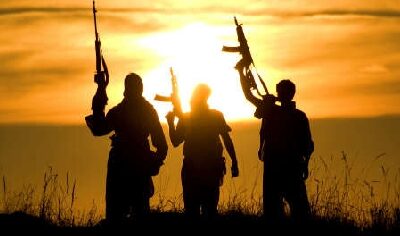
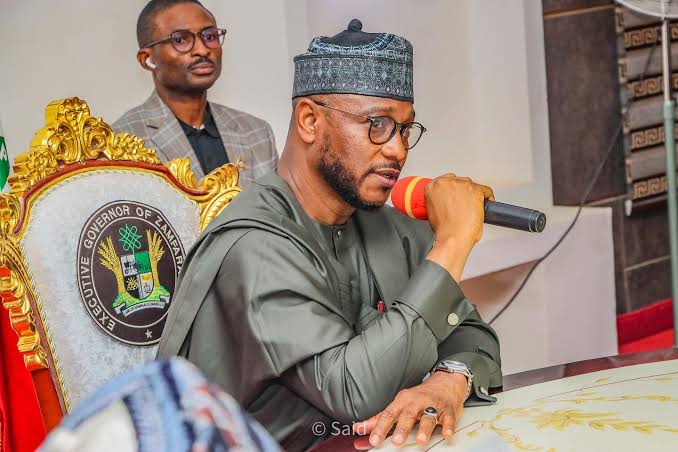
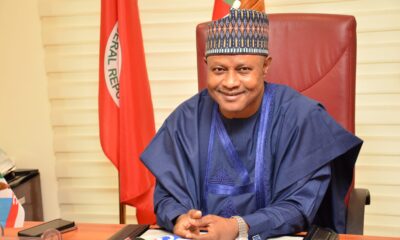
Governor Dauda Lawal of Zamfara State has declared that he has the capacity to wipe out banditry in the state within two months if given direct control of security agencies.

The governor, who broke down in tears while recounting recent attacks in a video which went viral on Wednesday, said the major obstacle to ending the crisis is that security operatives in Zamfara still take instructions from Abuja rather than the state government.

Lawal insisted that with his knowledge of the terrain and the locations of criminal leaders, he could swiftly end the menace if he had the necessary powers.

“I can tell you the whereabouts of every bandit kingpin in Zamfara, even with my phone. I can point to you where they are right now. But I do not control security agencies, and that is the problem,” he lamented.

He cited a recent incident in Shinkafi Local Government where dozens were killed, saying security forces on the ground refused to move because they lacked authorisation from Abuja.

“People were under attack, and I kept calling the security agencies. They told me they were waiting for orders from Abuja. How do I save my people in such a situation?” the governor added in frustration.

Despite the restrictions, Lawal noted that his administration has continued to support security operatives with logistics and funding.

He also stressed the need to address the root causes of rural violence.

See also  Afenifere, northern leaders demand state police amid delays

“We are working to provide water, schools and other amenities because we know that when people live well, peace is easier to achieve,” he explained.

The governor accused political opponents of exploiting the crisis for selfish gain, warning that their actions were damaging the welfare of Zamfara people.

“The politicisation of insecurity is not hurting me as a person; it is destroying Zamfara. Some people do not want us to succeed, but I will not stop trying,” he stated.

Lawal further pointed to the heavy security deployment during a recent by-election in the state as proof that resources exist but are being prioritised for politics rather than the protection of lives.

While Boko Haram and its splinter group, ISWAP, have terrorised the North-East for over a decade, claiming more than 35,000 lives and displacing over two million people, the North-West has faced a different but equally devastating wave of violence.

In Zamfara, Katsina, Kaduna and Sokoto, armed groups rooted in cattle-rustling have grown into heavily armed networks carrying out mass abductions and rural raids.

Zamfara has been one of the hardest-hit states by banditry in the North-West, with armed groups carrying out mass abductions, killings and attacks on farming communities. Many residents have been displaced from their villages, while farmers have abandoned their fields for fear of attacks.

In February 2021, about 300 schoolgirls were kidnapped from Jangebe in Zamfara; in December 2020, over 300 schoolboys were abducted in neighbouring Katsina. Both incidents drew global attention to Nigeria’s worsening insecurity.

Lawal’s outcry comes as President Bola Tinubu and the National Economic Council are considering the establishment of state police, a reform long demanded by governors in violence-plagued states.

See also  FG raises allowances, boosts welfare for civil servants

His remarks underscore the frustration of state leaders who face mounting pressure from citizens but lack authority over the security apparatus.

For residents of Zamfara, where villages are being emptied by gunmen and farming is grinding to a halt, the governor’s claim that he could end banditry in two months if empowered is both a promise of hope and a reminder of the limitations of Nigeria’s centralised security system.

Since assuming office in May 2023, Governor Lawal has repeatedly called for the establishment of state police, echoing President Bola Tinubu’s recent endorsement of the idea.

Proponents argue that local police would enable state governments to take direct responsibility for their security challenges, while critics fear misuse by politicians.

FOLLOW US ON:

FACEBOOK

TWITTER

PINTEREST

TIKTOK

YOUTUBE

LINKEDIN

TUMBLR

INSTAGRAM

Continue Reading
Click to comment

Leave a Reply

Your email address will not be published. Required fields are marked *

News

North Is the biggest beneficiary of my economic reforms – Tinubu

Published

on

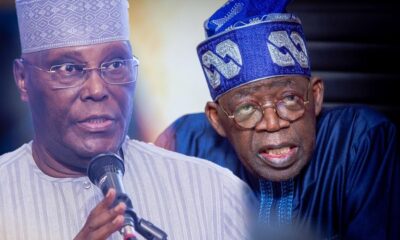
President Bola Tinubu has asserted that Northern Nigeria stands as the primary beneficiary of his administration’s economic reforms, maintaining that the removal of fuel subsidies rescued the nation from severe fiscal distress and redirected public funds toward critical infrastructure and productive sectors.

The President’s position was presented by the National Chairman of the All Progressives Congress (APC), Nentawe Yilwatda, who represented Tinubu on Tuesday at the second edition of the Policy Roundtable organized by the APC Professionals Forum in Abuja, titled The Asiwaju Scorecard Series.

Restating his administration’s economic trajectory, President Tinubu highlighted key macroeconomic indicators, noting that gross external reserves had reached approximately $52.7 billion by August 2026, while real Gross Domestic Product (GDP) grew by 4.43 percent in the second quarter of 2026 as inflation moderated toward 15.4 percent.

Linking these outcomes to the administration’s $1 trillion economy target by 2030, the President emphasized major infrastructure projects, including the Sokoto-Badagry Super Highway, the Lagos-Kano rail corridor, and the Ajaokuta-Kaduna-Kano (AKK) gas pipeline project—as transformative assets for the region.

“The biggest beneficiaries of this economy will be the Northern part of Nigeria, because they will now be trading with countries, trading with Niger, trading with Chad, trading with Burkina Faso, trading with Southern Sudan, trading with Northern Cameroon, trading with Central African Republic… The North is the next business destination of Nigeria,” the President stated.

The President’s claim, however, drew mixed reactions from prominent regional organizations.

The Arewa Consultative Forum (ACF) and the Middle Belt Forum (MBF) rejected the assessment, arguing that the economic policies have exacerbated poverty, inflation, and living costs across Northern communities.

See also  Many abandoned estates in Abuja owned by civil servants who stole public funds - EFCC boss, Ola Olukoyede

Conversely, the Northern Christian Association of Nigeria (CAN) endorsed the administration’s progress, maintaining that President Tinubu’s structural reforms and infrastructure distribution represent a clear improvement over previous administrative outputs.

Addressing campaign proposals ahead of the 2027 general elections, the APC leadership also criticized opposition pledges—including statements by African Democratic Congress (ADC) presidential candidate Atiku Abubakar—to reinstate fuel subsidies.

Dr. Isa Yuguda, Chairman of the Board of Trustees for the APC Professionals Forum, warned that returning to the former subsidy framework would risk reviving systemic financial leakages and undermine the fiscal foundation currently funding national student loans, border security, and regional transport infrastructure.

FOLLOW US ON:

FACEBOOK

TWITTER

PINTEREST

TIKTOK

YOUTUBE

LINKEDIN

INSTAGRAM

Continue Reading

News

AU to unveil African credit rating agency October 7

Published

on

The African Union has announced that the African Credit Rating Agency will be officially launched on October 7, 2026, in Port Louis, Mauritius, where the agency is headquartered.

The launch marks a major step in Africa’s efforts to strengthen its financial independence and address concerns over how the continent’s economies are assessed by global credit rating agencies.

The AU announced the launch on Wednesday in a post on its official X account, describing AfCRA as a landmark achievement for Africa’s financial sovereignty.

“For decades, skewed risk perceptions have forced African nations to pay an unfair ‘risk premium’ on global capital,” the AU said.

“The African Credit Rating Agency (AfCRA), headquartered in Mauritius, is created to rewrite that narrative with context-driven credit opinions for sovereign and corporate entities.”

In a video accompanying the announcement, the Union said African economies have historically been assessed within a global financial system that does not always fully reflect the continent’s economic realities, resilience and growth potential.

“AfCRA is our response. A bold assertion of African agency, financial sovereignty and institutional confidence,” the AU said.

“It is a powerful answer to the pessimism that too often defines perceptions of Africa.”

The agency is intended to provide an alternative African perspective to the dominant global rating agencies, including Fitch Ratings, Moody’s Ratings and S&P Global Ratings.

The initiative comes amid long-standing concerns among African governments and policymakers about the way sovereign credit risks are assessed and priced by international agencies.

Countries including Ghana and Zambia have argued that repeated credit downgrades have contributed to higher borrowing costs and worsened their debt challenges.

See also  Crude-for-loans: NNPCL battles N8.07tn outstanding debt

The African Peer Review Mechanism (APRM) has also criticised Fitch Ratings over its downgrade of the African Export-Import Bank, alleging that the assessment reflected a misunderstanding of African financial institutions.

Fitch has defended its approach, maintaining that its ratings are based on globally consistent and transparent criteria.

AfCRA was initially scheduled to launch in September 2025 but was delayed. To protect its credibility and independence, the agency will not be owned by African governments.

It is also expected to focus primarily on ratings for local-currency debt instruments.

The AU said the agency would demonstrate Africa’s capacity to build its own institutions, shape its own economic narrative and exercise greater control over its financial future.

The October 7 launch in Mauritius is expected to draw attention as African countries seek to reshape perceptions of the continent’s creditworthiness and reduce the impact of what they view as unfair risk assessments in global capital markets.

Source: punchng.com

FOLLOW US ON:
FACEBOOK

TWITTER

PINTEREST

TIKTOK

YOUTUBE

LINKEDIN

INSTAGRAM

Continue Reading

News

NDA releases admission list for 78 regular combatant course

Published

on

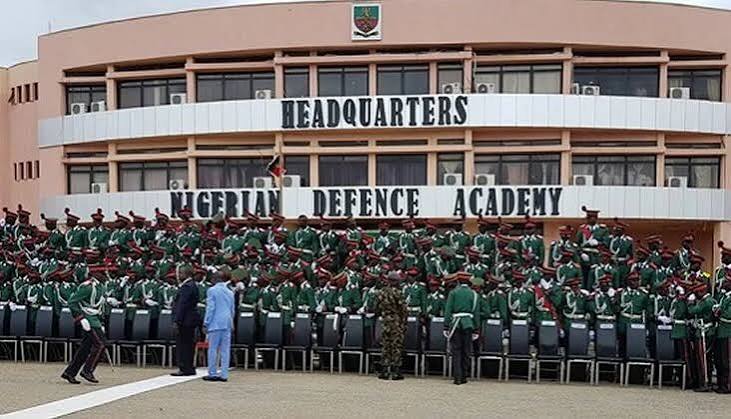
The Nigerian Defence Academy has released the list of successful and reserve candidates for admission into the 78 Regular Combatant Course (78RC).

The Armed Forces Selection Board exercise for the 78 Regular Course was conducted from July 4 to August 19, 2026, with successful candidates offered admission into the Academy.

According to the NDA in a statement signed by the Academy Registrar, Brigadier General OA Ogunleye on its X handle on Wednesday, successful candidates are expected to report to the NDA Ribadu Campus (Old Site), Kaduna, on Saturday, September 12, 2026.

The Academy warned that any candidate who fails to report by Monday, September 14, 2026, “will forfeit his or her place.”

It added that only selected candidates are expected to report to the Academy, where they will be received at the Drill Shed, NDA Old Site, Ribadu Cantonment.

The NDA said candidates on the reserve list “may be called as the need arises through their registered e-mails and phone numbers.”

Successful candidates have also been directed to present the original copies of their credentials, including their First School Leaving Certificate, Primary School Testimonial, WAEC/NECO results, Senior Secondary School Testimonial, Birth Certificate or Declaration of Age, and Letter of State of Origin.

The Academy stressed that candidates must also present the “original copy of duly endorsed Parent/Guardian Consent Form,” warning that photocopies would not be accepted.

“Any candidate who fails to present originals of the stated documents will not be accepted into the Academy,” the notice stated.

See also  2027 Elections - Jonathan splits South-South PDP

In addition to their credentials, successful candidates are required to come with specified clothing, footwear, sportswear, bedding and personal items, including black and white trousers, a dark-coloured lounge suit, national dress, black cover shoes, white and brown canvas shoes, football boots, a hockey stick, white shirts, socks, bed sheets and a pressing iron.

Female candidates are also required to bring black low-heel cover shoes, dark-coloured lounge skirts, black or blue short tights and trouser suits.

The NDA further directed all selected candidates to upload their O’Level results on the JAMB portal before reporting to the Academy.

Candidates who were not offered their preferred academic department are required to log into the JAMB portal to effect the necessary change.

The Academy also instructed all selected candidates to accept their admission through the JAMB Central Admissions Processing System (CAPS) before reporting.

The NDA warned that selected candidates would not be allowed to receive visitors or leave the Academy during the first three months of training.

“Selected candidates and their parents are to please note the above for strict compliance,” the notice stated.

Source: punchng.com

FOLLOW US ON:

FACEBOOK

TWITTER

PINTEREST

TIKTOK

YOUTUBE

LINKEDIN

INSTAGRAM

Continue Reading

Trending