Connect with us

Business

Reps to mediate in PENGASSAN, Dangote refinery dispute

Published

on

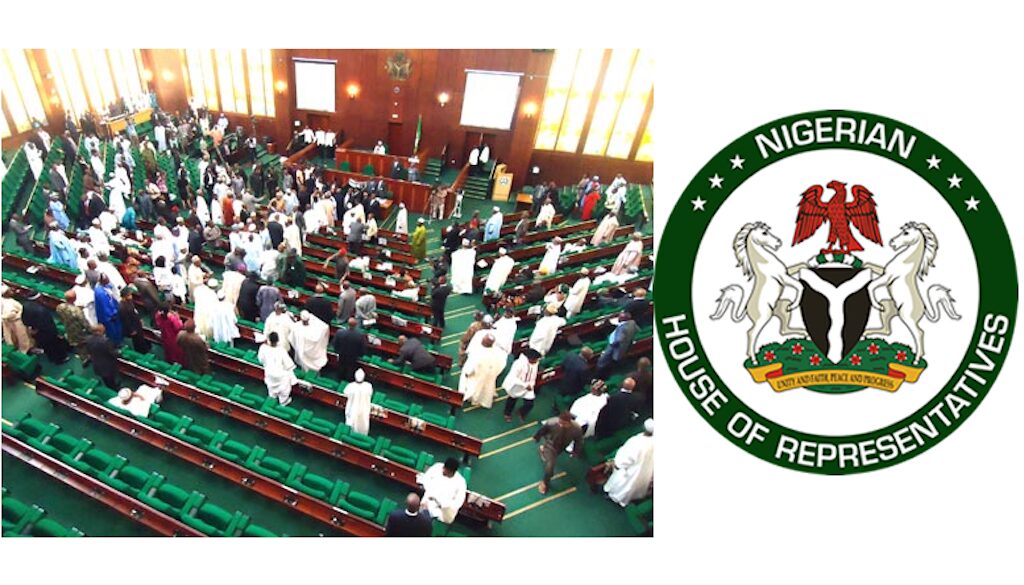
The House of Representatives on Tuesday resolved to intervene in the recent face-off between members of the Petroleum and Natural Gas Senior Staff Association of Nigeria and the Dangote Refinery, which had disrupted petroleum product distribution nationwide.

The resolution of the House followed the consideration and adoption of a motion of urgent public importance co-sponsored by Kano and Sokoto lawmakers, Alhassan Doguwa and Abdussamad Dasuki, respectively, at Tuesday’s plenary.

Titled: “Need to protect private investment from adversarial unionism,” the lawmakers drew the attention of their colleagues to the significance of the Dangote Refinery, describing it as the largest private petroleum refinery in Africa.

The face-off between PENGASSAN and the Dangote Refinery led to an industrial action which commenced on September 29, 2025, disrupting the operations at the $20bn refinery.

It also led to a disruption in Nigeria’s crude oil production, with a reported daily loss of approximately 200,000 barrels over three days.

The disruption worsened the petroleum supply situation across the country, resulting in scarcity and long queues at filling stations in several states, resulting in severe hardship for millions of Nigerians.

Speaking on the motion, Doguwa, who represents Doguwa/Tudun Wada Federal Constituency, Kano State, stressed the need to protect the Dangote Refinery given its strategic significance to the nation’s economy.

He said, “The House is aware that the Dangote Refinery is a strategic private investment of immense national importance, with the potential to guarantee energy security, reduce import dependency, generate employment, and conserve foreign exchange.

“We are aware that the Dangote Refinery operates within a Free Trade Zone, and therefore falls under the regulatory framework of the Nigeria Export Processing Zones Authority, particularly Section 18(5) of the Nigeria Export Processing Zones Act which clearly states that ‘Employment in the free zone shall be governed by rules and regulations made by the Authority and not subject to the provisions of any enactments relating to employment matters.’

See also  Sahara Group eyes 7,000MW in major power sector push

“The House is concerned that actions by labour unions that disregard the legal protections conferred on Free Zones under the NEPZA Act not only constitute a breach of law but also create a hostile investment environment that may deter future local and foreign investors;

“We are worried that if private investments of strategic national importance are continually subjected to unlawful disruptions by adversarial unionism, Nigeria risks not only the failure of key economic assets but also the erosion of investor confidence necessary for national growth and development.”

In his contribution, the member representing Chibok/Damboa/Gwoza Federal Constituency, Ahmad Jaha, urged the House to tread carefully, adding that the call for a probe as prayed by the motion was ill-timed.

Following the adoption of the motion, the House urged its leadership to broker peace between the two parties in the interest of the nation.

It also urged the Federal Ministries of Labour and Employment, Industry, Trade and Investment, as well as Justice, to “Jointly develop and implement a national framework or set of policies to safeguard private investments of strategic national importance from adversarial and unlawful union actions.”

It further charged the Federal Ministry of Justice and NEPZA to ensure full enforcement and compliance with the provisions of Section 18(5) of the Nigeria Export Processing Zones Act in all relevant Free Zone operations.

punch.ng

FOLLOW US ON:

FACEBOOK

TWITTER

PINTEREST

TIKTOK

YOUTUBE

LINKEDIN

TUMBLR

INSTAGRAM

Continue Reading
Click to comment

Leave a Reply

Your email address will not be published. Required fields are marked *

Business

Highest bidder won’t automatically get oil blocks — FG

Published

on

The Federal Government on Tuesday said the highest financial bidder would not automatically emerge as the winner of an oil block in the ongoing 2025 Licensing Round, insisting that technical competence and operational capability would play a decisive role in determining successful bidders.

Speaking at the 2025 Commercial Bid Conference in Abuja, the Chief Executive of the Nigerian Upstream Petroleum Regulatory Commission, Oritsemeyiwa Eyesan, said the commission’s evaluation process was designed to ensure petroleum assets were awarded to companies capable of developing them, rather than firms that simply submitted the highest financial offers.

She said the assessment process was rigorous, objective and aimed at securing the best long-term value for Nigeria’s upstream petroleum sector.

“The evaluation was rigorous. It was objective. It was simple. And it was to place assets in the hands of bidders capable of delivering the best overall long-term value. It wasn’t, or it isn’t going to be just about your ability to be the highest bidder.

“We want to ensure that you have the right capabilities to deliver the assets, in addition to having the financial resources to deliver these assets. The team carefully assessed each bidder’s competence and experience, organisational and operational capacity, credibility of their proposed work programme, resource commitment to execution, and the ability to deliver within the proposed time frame,” Eyesan said.

She explained that the commission assessed bidders based on competence, experience, operational capacity, the credibility of their work programmes, resource commitment and their ability to execute projects within specified timelines.

See also  States pocket N2.37tn VAT under new tax regime

“Today, the commercial components of the qualified bids will be opened. And as was said earlier, forget whatever you’ve been told, forget whatever you’ve heard, nobody has seen anybody’s commercial bids. And we will demonstrate that today.

“This approach of ensuring close bids is in recognition of the fact that these equities must be operated by credible, competent operators. Not, I repeat, by operators who can bid the highest,” she added.

The commercial bid opening marks the final stage of the licensing process before the successful companies are announced.

PUNCH Online reports that the 2025 Licensing Round was announced on November 11, 2025, in line with the Petroleum Industry Act 2021, with 50 oil and gas blocks offered across seven sedimentary basins.

The assets comprise 16 Niger Delta onshore blocks, 18 shallow water blocks, one deep offshore block, three blocks in the Benin Basin, four in the Anambra Basin, four in the Chad Basin and four in the Benue Trough.

The bid portal opened on December 1, 2025, while a pre-bid conference was held on January 14, 2026, in Lagos to guide prospective investors on the bidding requirements.

Registration and prequalification submissions closed on February 27, 2026, with the prequalification process completed on March 16.

Under the licensing guidelines, winning bids are determined through a weighted evaluation of signature bonus commitments, proposed work programmes and performance security, combining both technical and commercial scores rather than financial offers alone.

The framework is intended to ensure that petroleum assets are awarded to investors with the financial strength, technical expertise and operational capacity required to accelerate exploration and production in Nigeria’s upstream sector.

See also  How Obasanjo insulted me over diesel deregulation – Otedola

punch.ng

FOLLOW US ON:

FACEBOOK

TWITTER

PINTEREST

TIKTOK

YOUTUBE

LINKEDIN

Continue Reading

Business

FG securities deliver positive real returns to investors

Published

on

Nigeria’s fixed-income market is offering investors something that has been scarce in recent years – real returns that outpace the inflation rate.

When investment returns beat the inflation rate, investors gain, as the value of their money grows in purchasing power terms, not just in nominal value. This is exactly what the Federal Government bonds and treasury bills now offer investors.

Headline inflation fell to 15.91 per cent in June 2026 from 15.93 per cent in May, halting three straight months of increases, according to the National Bureau of Statistics showed.

The slight decline has been enough to push the yields on some government debt instruments above the inflation rate, allowing investors to preserve and grow their purchasing power after a long period of negative real returns.

The improvement, however, has not extended to all products. The latest FGN Savings Bond, targeted mainly at retail investors, still offers a maximum coupon of 15.716 per cent, leaving it marginally below the prevailing inflation rate.

But higher sovereign borrowing costs have largely driven the return to positive real yields. At the June FGN bond auction, the January 2035 and April 2037 bonds cleared at marginal rates of 18.34 per cent and 18.35 per cent, translating to positive real returns of roughly 244 basis points above June’s inflation rate.

Likewise, the 364-day treasury bill sold at the 15 July auction recorded a stop rate of 17.66 per cent, still remaining ahead of inflation.

There is a stronger investor appetite as market participants reposition their portfolios.

See also  Bank of England cuts rate amid tariff concerns

Treasury bill turnover increased 137.49 per cent to N1.51tn, while FGN bond turnover climbed 75.91 per cent to N1.20tn in the week ended 19 June, reflecting stronger trading activity across the sovereign debt market.

“Positive real returns make treasury bills and government bonds attractive again because investors are rewarded in real, inflation-adjusted terms,” said an emerging markets expert, Ike Ibeabuchi.

The Financial Markets Dealers Association said pricing in the domestic fixed-income market continues to be shaped by inflation expectations and liquidity conditions, even as several major central banks around the world begin shifting towards monetary policy easing.

Analysts, however, caution that the current period of attractive inflation-adjusted returns may be temporary. A former central banker, Chukwunonso Iheoma, estimates the Monetary Policy Rate to fall to 25.5 per cent by the last quarter of 2025.

Standard Chartered, on the other hand, expects the MPR to decline to 25 per cent by the end of 2026. Chief economist, Razia Khan, said the bank now sees room for 150 basis points of monetary easing this year. An Abuja-based fixed income analyst, Joshua Tan, agreed with Khan, but stressed that impending higher energy prices could kibosh positive expectations about lower inflation and interest rate cuts this year.

Cowry Research expects the Monetary Policy Committee to retain its cautious stance at its July meeting but believes sustained moderation in inflation could open the door to the first interest rate cut in September.

But S&P Global warned that rising energy prices could erode the positive real returns currently available on government securities: “Increases in fuel costs as a result of the war in the Middle East have driven up costs among sub-Saharan African companies, putting upwards pressure on inflation and likely bringing to an end cycle of interest rate easing seen in a number of economies in the region.”

See also  Despite Increased Earnings, Most States Silent On End-Of-Year Bonus For Workers

A Professor of Economics and Public Policy at the University of Uyo, Prof Akpan Ekpo, noted that the MPC would likely maintain the current rate because of the uncertainty created by the US-Iran conflict.

According to GTI Limited, Treasury bills, particularly the 364-day instruments, currently provide the strongest mix of yield, liquidity and inflation protection. In contrast, FGN Savings Bonds remain slightly below inflation, highlighting the widening gap between institutional fixed-income instruments and retail-focused savings products.

punch.ng

FOLLOW US ON:

FACEBOOK

TWITTER

PINTEREST

TIKTOK

YOUTUBE

LINKEDIN

Continue Reading

Business

Oil cargoes meant for naira-for-crude deal supplied to Dangote – NNPC

Published

on

The Nigerian National Petroleum Company Limited has insisted that it supplied all available crude oil cargoes allocated under the Federal Government’s naira-for-crude initiative to the Dangote Petroleum Refinery, saying there had been no withholding on its part.

The national oil company stated this even as a top management official of the Dangote Group disclosed exclusively to The PUNCH that the refinery was receiving just four million barrels of crude oil monthly under the arrangement, instead of about 13 million barrels envisaged after President Bola Tinubu’s 2024 directive.

The refinery had attributed its decision to switch from naira-denominated fuel sales to dollar transactions to the crude supply shortfall, saying it would also increase exports of refined petroleum products to earn foreign exchange.

Responding on Monday, the NNPC, through its spokesman, Andy Odeh, said the company had fully discharged its obligations under the naira-for-crude policy. “As a 7.25 per cent equity shareholder in Dangote Petroleum Refinery and Petrochemicals, NNPC Limited has a direct and genuine interest in seeing the refinery operate at full capacity. That is not in dispute.

“What the figures being cited require is context. Under the naira-denominated crude supply arrangement, NNPC Limited has allocated 100 per cent of all available naira crude cargoes to DPRP in 2026 — there has been no withholding on our part. Actual off-take in any period is shaped by several variables: crude availability, nomination timelines, and the refinery’s own operational scheduling.

Odeh said the NNPC has met its obligations to the refinery, saying the two parties are resolving any existing gaps together. “NNPC Limited has met its 2026 supply obligations to the refinery. Our engagement with DPRP management remains constructive, and where any gaps exist, we are resolving them together — as the partners we are.

“A fully supplied, fully operational Dangote refinery serving the Nigerian market is an obligation NNPC Limited shares without reservation,” he added.

However, the Dangote Group maintained that the crude volumes supplied under the arrangement were inadequate to sustain naira-denominated fuel sales.

A top management official of the Dangote Group had told The PUNCH that crude supply under the naira-for-crude arrangement had been limited to just four million barrels monthly despite the increase in Nigeria’s crude oil production.

See also  Nigeria, UAE Ports Group Sign Landmark MoU On Maritime Development

The official, who pleaded anonymity because of the sensitivity of the matter, said the refinery was now set to export a larger percentage of its products in exchange for foreign exchange.

“Since the traders have brought lots of imported products to the market, we are focusing on exports. We can’t, and we shouldn’t be fighting against the government’s policies,” the source said.

Our correspondent told the official that exporting without adequately supplying the domestic market would not be good for the country, but he responded with a question: “Is issuing massive import licences and releasing forex for imports good for the country, when 45 per cent of our production can meet 100 per cent of the entire country’s requirements in terms of petrol, diesel and aviation fuel?”

When told that the NNPC said it had increased crude supply to the Dangote refinery, the official replied, “Do you think that they will keep quiet if we process the naira crude and export the products? We are getting just four million barrels monthly.”

With the sale of petrol in dollars to local marketers, the Dangote official disclosed that the refinery would now process whatever crude it receives under the naira arrangement and supply the equivalent refined products in naira to the Nigerian market through the NNPC.

“We will account for every barrel of crude we receive against the naira payment by supplying equivalent products in naira. We will do that through the NNPC. The NNPC buys a lot from us,” he said.

The refinery had maintained that the inability to secure the expected crude volumes under the naira-for-crude initiative compelled it to abandon naira-denominated fuel sales and adopt dollar pricing for petroleum products.

Last week, the refinery announced a new dollar-denominated pricing template, fixing the ex-depot price of petrol at $0.779 per litre, diesel at $1.087 per litre and aviation fuel at $0.942 per litre.

The move has drawn criticism from petroleum marketers, who warned that it could increase pressure on fuel prices, although the Nigerian Midstream and Downstream Petroleum Regulatory Authority said the decision was consistent with the provisions of the Petroleum Industry Act, which allows refiners to recover their costs.

Supply worsens

Meanwhile, petrol supply in the Federal Capital Territory, Abuja, worsened on Monday with the closure of some major filling stations in Abuja and a fresh increase in the pump price of petrol.

See also  Despite Increased Earnings, Most States Silent On End-Of-Year Bonus For Workers

Checks by one of our correspondents showed that some stations operated by NNPC Limited and MRS along the Airport Road Expressway were shut when visited on Monday.

At stations that were dispensing the product, petrol was being sold at between N1,250 and N1,280 per litre. Bovas sold petrol at N1,250 per litre, while Azman Filling Station at 6th Avenue dispensed the product at N1,280 per litre. Salbas also sold petrol at N1,280 per litre.

The development has further heightened concerns among motorists and other consumers over the rising cost and availability of petrol in the nation’s capital. For motorists in Abuja, Monday’s development meant longer searches for petrol, closed stations and prices as high as N1,280 per litre at outlets that had the product available.

Meanwhile, truck traffic has surged across major private petroleum depots in Lagos as marketers scramble for petrol supplies following the fifth consecutive day of suspended loading at Dangote Petroleum Refinery amid growing expectations that wholesale prices could rise when operations resume.

Expert reacts

Meanwhile, Professor Emeritus of Petroleum Economics and Principal Facilitator at the FUPRE Energy Business School, Wumi Iledare, said the Dangote refinery’s decision to sell petrol in dollars should be viewed within the broader context of petroleum economics and Nigeria’s energy security rather than merely the currency in which products are priced.

According to Iledare, the move is a commercial response to the realities of the global oil market, where crude oil, the refinery’s major feedstock, is traded in United States dollars.

Iledare explained that pricing refined products in dollars enables the refinery to reduce its exposure to exchange rate volatility and provides greater revenue certainty, although it shifts part of the foreign exchange risk to fuel marketers and, ultimately, consumers, where the costs are passed on.

He stressed that the refinery’s dollar pricing would not automatically translate to higher fuel prices, noting that domestic petrol prices would instead become more closely tied to movements in international crude oil prices and the naira-dollar exchange rate.

“Does this necessarily mean higher fuel prices? Not necessarily. What it does mean is that domestic fuel prices become more closely linked to two key variables: international crude oil prices and the naira-dollar exchange rate. If crude prices rise or the naira weakens, pump prices are likely to increase. Conversely, if crude prices decline or the naira strengthens, consumers should also expect prices to adjust downward. That is how a market-oriented pricing system is expected to function,” he said.

See also  TUC rejects health ministry ‘no work, no pay’ circular

The petroleum expert maintained that despite concerns over dollar-denominated pricing, the Dangote refinery had strengthened Nigeria’s energy security by reducing dependence on imported petrol and improving the availability of petroleum products.

He, however, noted that domestic refining alone could not guarantee affordability, saying fuel prices would continue to depend on exchange rate stability, international crude prices, logistics costs and the level of competition in the downstream sector.

“The refinery has significantly improved the availability of petroleum products by reducing Nigeria’s dependence on imported PMS. That alone makes the country less vulnerable to disruptions in international supply chains and enhances supply reliability.

“This is why I would say that Dangote Refinery can shield Nigeria more effectively from supply shocks than from price shocks. Domestic refining improves energy security, but it cannot completely insulate Nigeria from global petroleum market dynamics because crude oil still has an international opportunity cost, whether it is refined in Lagos, Rotterdam, or Houston,” he stated.

On the implications for the naira, Iledare argued that pricing petroleum products in dollars would not automatically weaken the local currency. “As for the impact on the naira, the answer is more nuanced than many assume. Dollar pricing by itself does not automatically weaken the naira. What matters is whether the arrangement increases or reduces Nigeria’s net demand for foreign exchange,” he said.

He urged policymakers to focus less on the currency in which petroleum products are priced and more on building an efficient and competitive downstream market.

“The real issue is therefore not the currency of pricing. The real issue is whether Nigeria’s downstream petroleum market satisfies the four tests of good public policy: efficiency, effectiveness, equity, and ethics. Those are the standards by which this development should be judged,” he added.

punch.ng

FOLLOW US ON:

FACEBOOK

TWITTER

PINTEREST

TIKTOK

YOUTUBE

LINKEDIN

Continue Reading

Trending